Everyone is pouring huge sums of money into AI, but why is Microsoft the only one that gets rewarded by the market today?
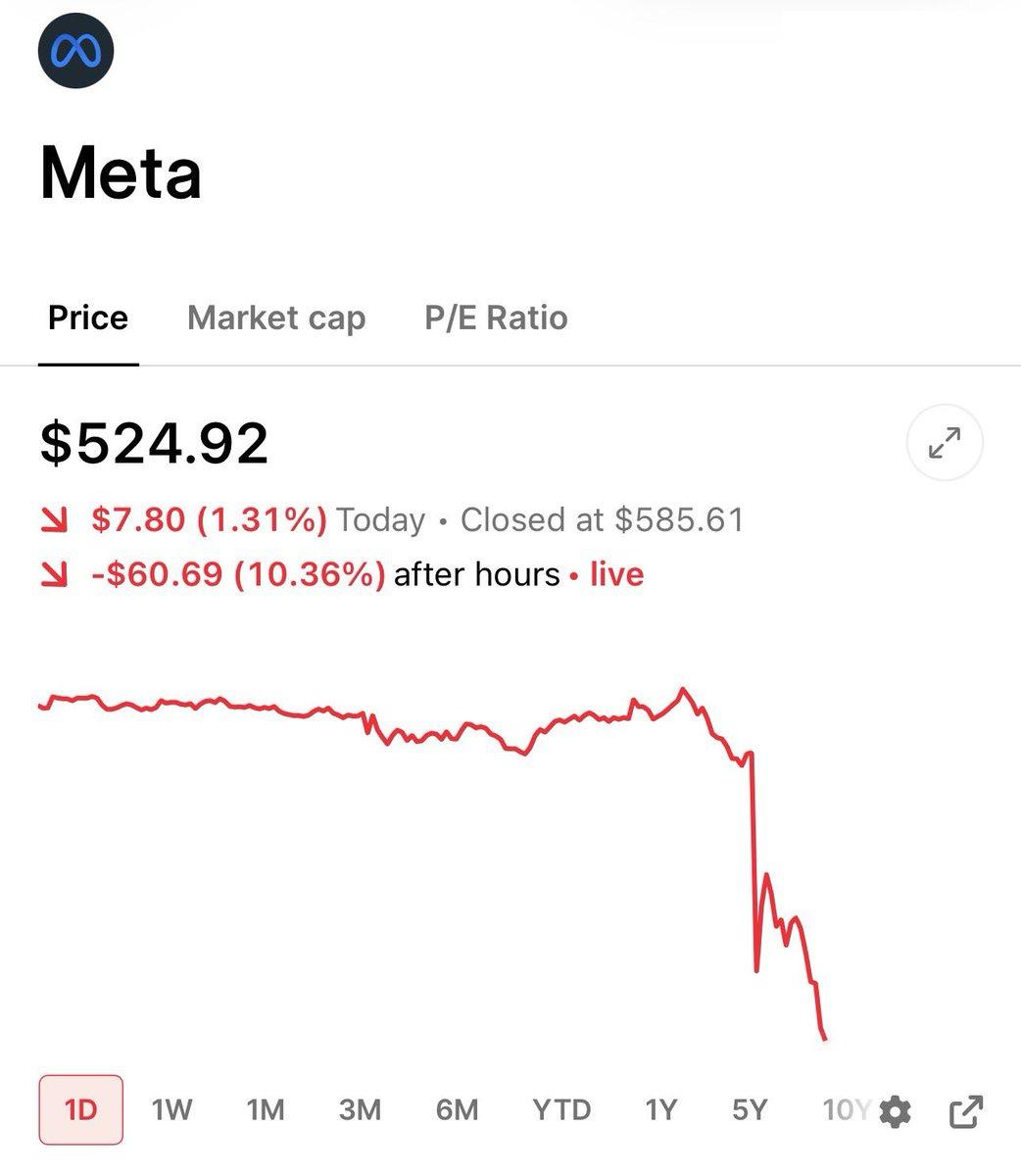
Microsoft's after-hours share price rose by roughly 10%, while Meta's fell by nearly 1%. Both companies are pouring massive amounts of capital into AI, yet Wall Street has delivered completely opposite reactions.
The reason is extremely straightforward: the market no longer pays a premium for "who dares to spend money" at present, and only rewards companies that can prove their investment can immediately translate into revenue.
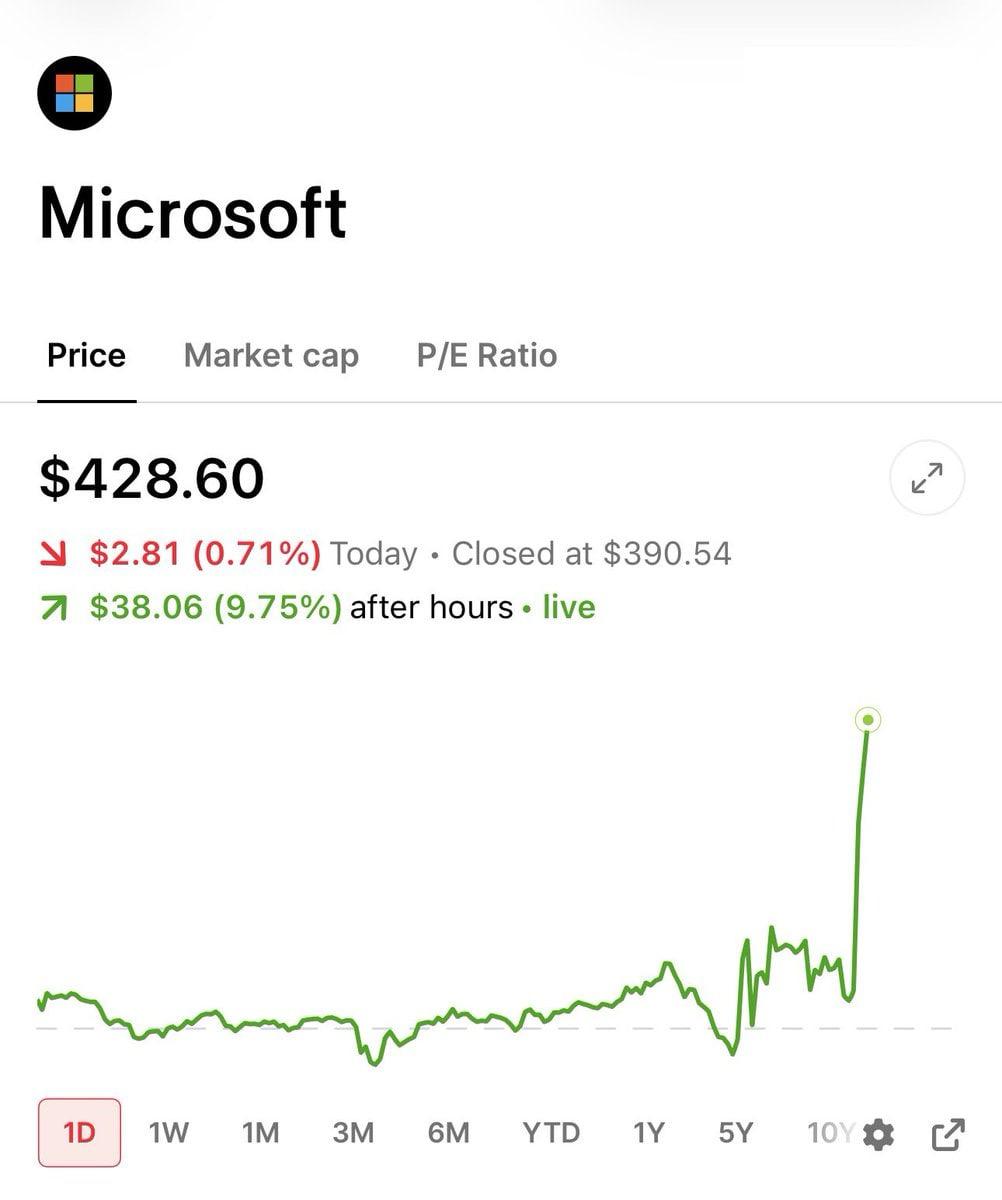
First, Let's Look at Microsoft
The sharp rally of Microsoft this time seemingly came from Azure's 43% quarterly growth rate that beat expectations, but the real driving force came from the earnings call — the management gave a roughly 45% growth guidance for the next quarter, and emphasized that demand is still constrained by computing power supply, and all newly added production capacity will be absorbed by customers immediately after going online.
This statement is critical to the market: Microsoft does not build data centers first and then wait for customers slowly, instead, customers are queuing up, and computing power can turn into Azure revenue as soon as it is deployed. The demand brought by open-source models and multi-model deployment also continuously consumes cloud computing resources.
As for the full-year CapEx being lowered from 190 billion US dollars to 175 billion US dollars, do not be misled by the accounting caliber. Only the financial processing method has changed — part of the funds previously counted as "asset purchases" are now classified as "long-term rent", so the cash expenditure for the current year shown on the book is reduced, but the future rent commitments to be paid have risen from about 197 billion US dollars to 329 billion US dollars instead.
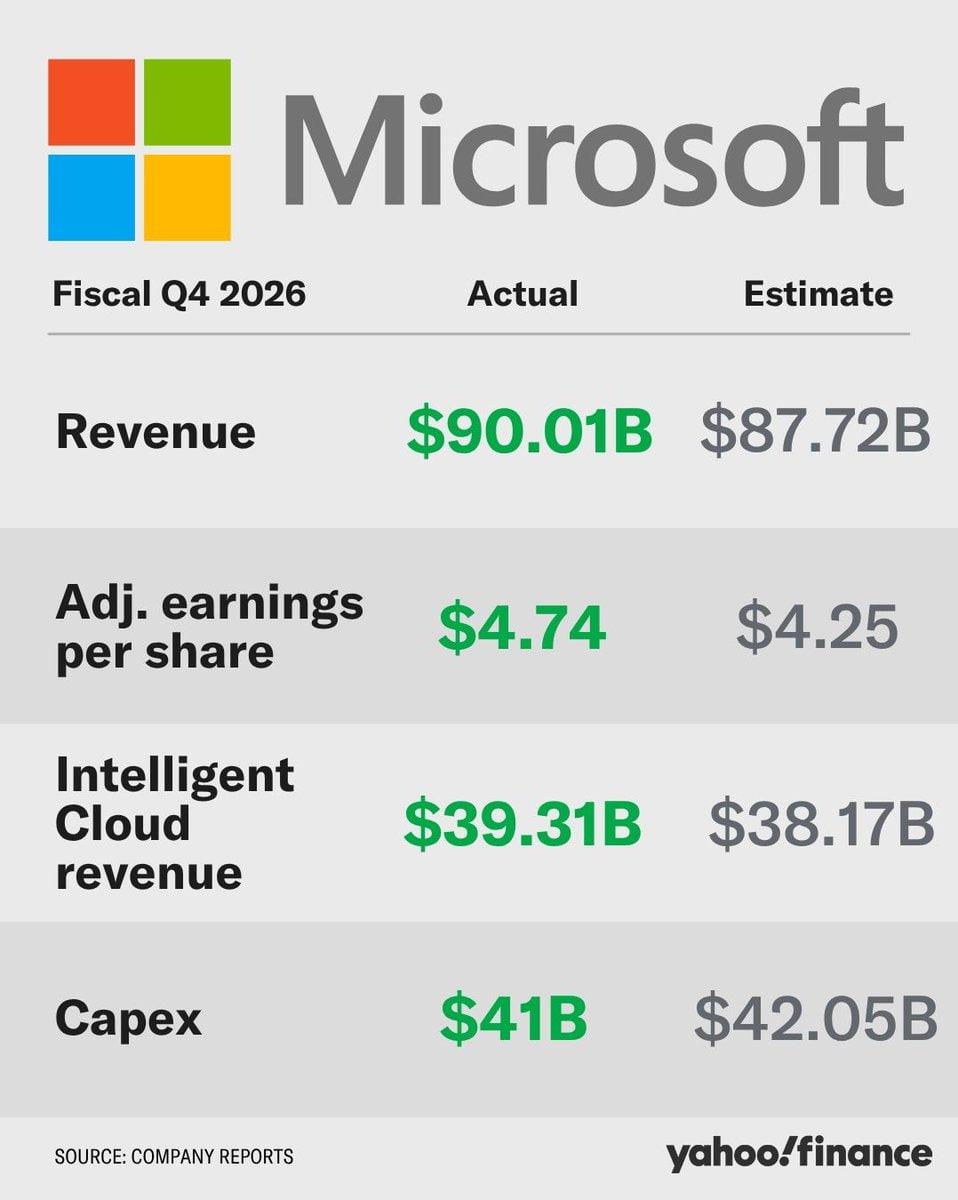
What really impressed the market about Microsoft is that there is no new out-of-control increment in CapEx, while Azure's growth continues to accelerate from 43% to 45%, and the management also emphasized that free cash flow will remain positive in FY27.
The closed loop of "investment - production capacity - revenue - cash flow" has been fully realized.
Next, Let's Look at Meta
Meta's problem is not that its CapEx is higher than Microsoft's, but that this sum of money has not yet delivered an equally clear return path for the time being.
Revenue grew 28% this quarter, which does not look bad, but costs and expenses rose 55%, operating profit fell 8%, and EPS decreased by 13%.
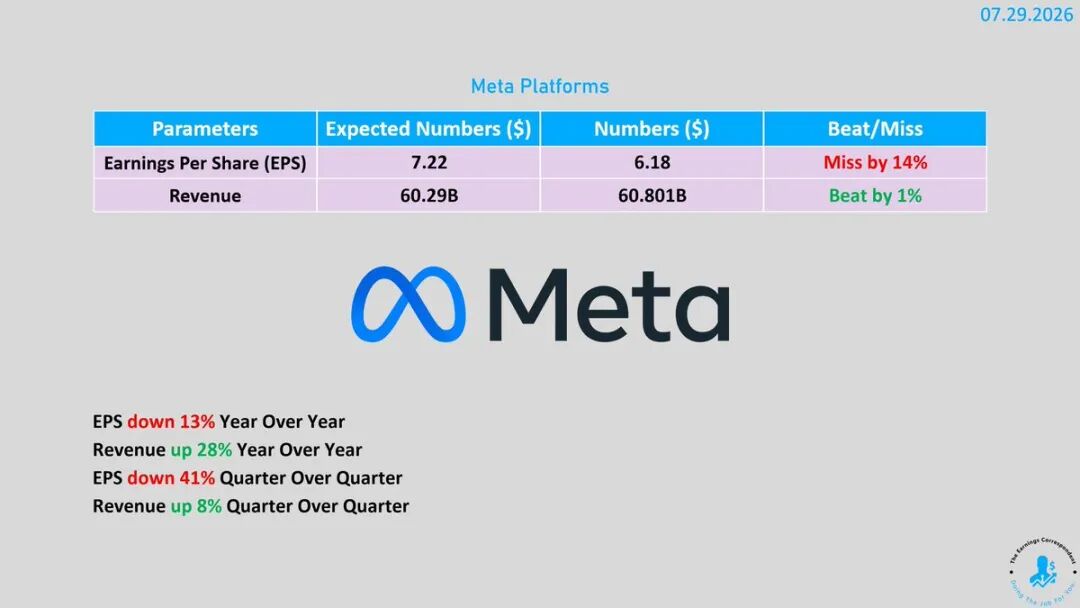
What is more striking is that the capital expenditure for the quarter reached 31.1 billion US dollars, leaving free cash flow at only 784 million US dollars.
To put it in perspective: a giant enterprise with a market value of 1.5 trillion US dollars only has more than 700 million US dollars in cash left in its pocket after a whole quarter of operation. It is equivalent to claiming that you have a net worth of 10,000 yuan, but after searching all your pockets, you only have 5 yuan left — it is not that you do not have enough assets, but all your money is tied up in houses and cars, leaving almost no disposable cash in hand.
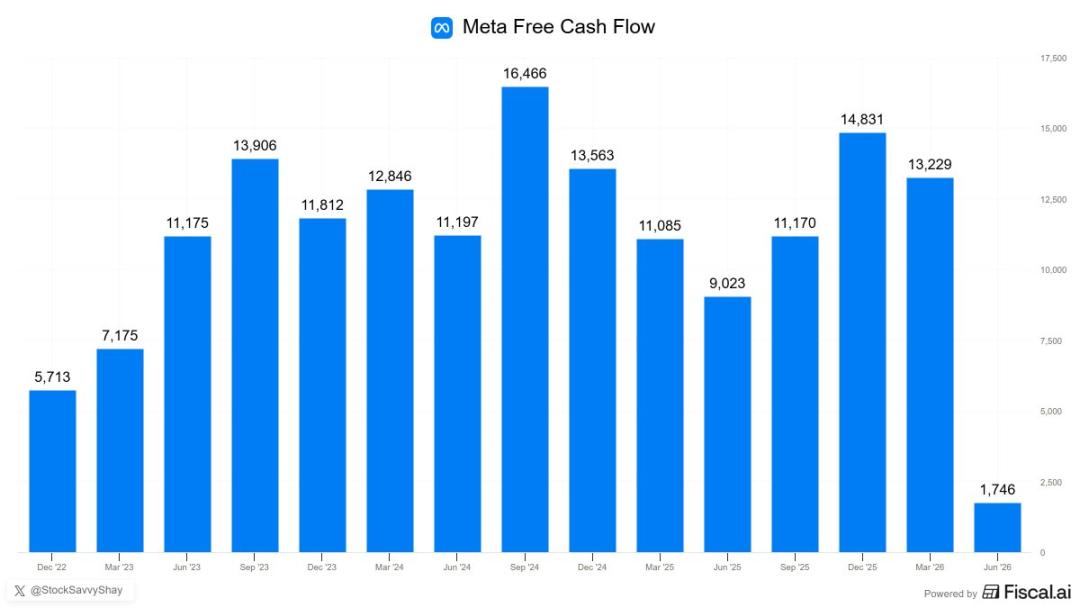
The full-year CapEx guidance was only narrowed from 125-145 billion US dollars to 130-145 billion US dollars, and there was no out-of-control upward adjustment that the market worried about, but the revenue guidance for the third quarter did not bring enough surprises either.
This is why the market is not buying it: Meta told the market "I will continue to invest", but did not show an external revenue indicator of 45% Azure growth like Microsoft did, to prove that the newly added computing power is realizing returns rapidly.
Meta's AI can indeed improve recommendation and advertising efficiency, but these gains are overshadowed by faster-growing depreciation, infrastructure and personnel costs — Investment is increasing, but the return path remains unclear.
Looking Back at Google
Google Cloud's revenue grew 82% to 24.8 billion US dollars this quarter, and its operating profit rose from 2.8 billion US dollars to 8.8 billion US dollars, indicating that the demand for AI cloud is indeed strong.
However, the capital expenditure for the quarter reached 44.9 billion US dollars, exceeding the operating cash flow of 39 billion US dollars, resulting in negative free cash flow of 5.9 billion US dollars. Subsequently, Google raised its full-year CapEx expectation again, and its after-hours share price once fell by nearly 7%.
Google's problem is very typical: it is not that there is no return on AI investment, but that both returns and cash consumption are surging at the same time.
The market is willing to recognize the accelerated growth of Cloud, but cannot ignore the fact that free cash flow has been greatly eroded.
Looking Ahead to Amazon
AWS will release its earnings report after the market closes on Thursday. AWS grew 28% in the previous quarter, hitting its fastest growth rate in 15 quarters, but its free cash flow in the past 12 months plummeted from 25.9 billion US dollars to 1.2 billion US dollars, mainly due to a 59.3 billion US dollar year-on-year increase in investment in AI equipment.
With the earnings reports of Microsoft, Meta and Google as precedents, Amazon is fully aware of what the market is fearing.
It is very unlikely to be foolish enough to directly state "capital expenditure will continue to skyrocket" in the headline. Even if it needs to raise CapEx, the management will most likely use a more moderate statement — for example, highlighting the cost advantage of self-developed chips, emphasizing that customer orders are queuing up, or using long-term lease commitments to reduce the impact on the book records.
However, changing the way of expression cannot alter the market's assessment criteria. Wall Street only cares about three things: can AWS continue to accelerate its growth? Can free cash flow stop falling? Can the newly added computing power generate revenue immediately once it goes online?
This article is from the WeChat official account "US Stock Investment Network" (ID: tradesmax), the author is StockWe.com, and it is published with authorization from 36Kr.