Only 33 staff, no products, but NVIDIA has invested 34 billion.
NVIDIA has struck a deal that confuses the whole world.
On July 27, the chip giant NVIDIA announced that it would invest approximately 5 billion US dollars (about 33.8 billion RMB) in Safe Superintelligence (SSI), a company founded by Ilya Sutskever, former chief scientist of OpenAI.
The investment includes both cash and equivalent computing power — NVIDIA promises to increase SSI's computing power scale by 10 times within the next 12 months and provide the next-generation Vera Rubin computing platform.
SSI was established just over a year ago, with only more than 30 employees and no publicly available products.
- 01 - The real purpose behind the $5 billion investment
Let's do the math first.
How many of NVIDIA's latest Vera Rubin GPUs can you buy with 5 billion US dollars?
According to industry estimates, the unit price of a high-end AI chip is between 30,000 and 40,000 US dollars, and 5 billion US dollars can buy about 120,000 to 150,000 chips, which is enough to build one of the world's top AI training clusters.
This means that SSI has obtained a priority ticket to NVIDIA's next-generation platform, directly upgrading from the current H100/B200 cluster to the Vera Rubin architecture, skipping one to two generations of hardware iteration.
For SSI, this may even be more valuable than 5 billion US dollars in cash.
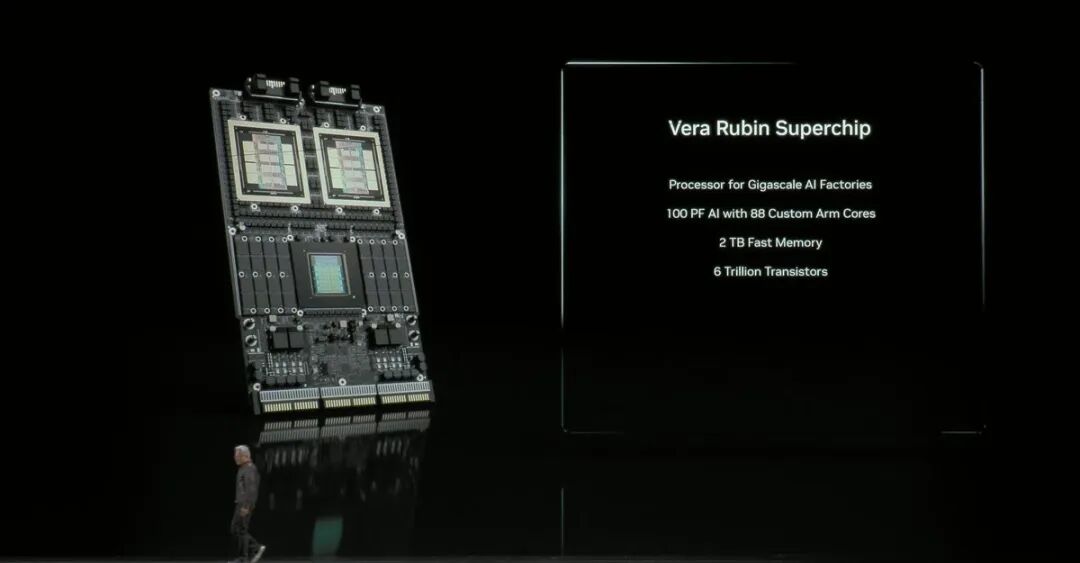
NVIDIA Vera Rubin Superchip Source: NVIDIA official website
NVIDIA is not foolish.
The additional condition of this deal is that NVIDIA gets access to SSI's core research results. NVIDIA stated in the announcement that this cooperation was finalized after "in-depth access to SSI's highly confidential R&D system".
In other words: NVIDIA reviewed SSI's core strengths first, confirmed that it has great potential, and then decided to increase its investment.
More crucially, the whole process from initial contact to finalization of this deal only took a few weeks.
According to people familiar with the matter, the senior management of the two sides reached a consensus in a very short time. What does this mean? It shows that NVIDIA has long judged SSI's research direction, and also shows that in the arms race of AI infrastructure, "hesitation" itself is a cost.
- 02 - What is the capital betting on?
To understand why SSI is worth this price, you must first understand Ilya Sutskever, who is a real pioneer in the AI field.
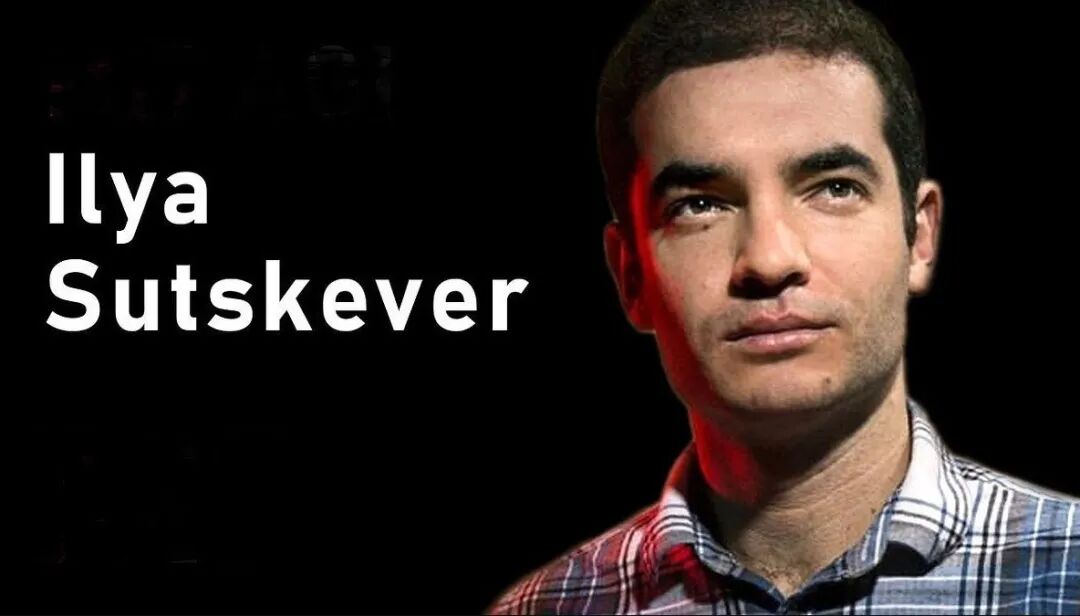
Ilya Sutskever Source: AIGC Encyclopedia
About him, you only need to remember three things:
He is one of the authors of AlexNet, and that paper opened the door to modern AI;
He is the co-founder and chief scientist of OpenAI, a key promoter of ChatGPT and the GPT series;
In November 2023, he was deeply involved in the shocking OpenAI board coup that tried to fire founder Sam Altman.
But Ilya left OpenAI in May 2024.
There are various speculations about the reason for his departure, but Ilya's own statement is that he has formed a different judgment on the development direction of AI.
He believes that the "scaling law" pursued by the current large model industry — that is, stacking more data, more computing power and more parameters — is reaching a ceiling.
He said in a podcast, "Today, when the computing power is already very large, the industry in a sense has returned to the era of research."
In 2024, he told British media that he and his team had found "a new mountain", which was different from what they had done before.
SSI's official website has only one page, which says: "We have created the world's first SSI laboratory that goes straight to the goal, with only one goal and one product: safe superintelligence."
This sentence contains a huge amount of information.
First, "go straight to the goal". It means that SSI does not plan to follow the path of OpenAI and Anthropic, which first develop conversational AI products and then gradually move towards AGI. It intends to directly create an AI system that surpasses human intelligence, and embed "safety" into the underlying architecture from the very beginning.
Second, "only one product". It means that SSI will not be disturbed by commercialization. It does not develop APIs, enterprise SaaS, or chatbots. The team has only 33 people, distributed in Palo Alto, California and Tel Aviv, Israel, which is extremely lean.
From a valuation of 5 billion US dollars with a $1 billion financing in September 2024, to 32 billion US dollars in April 2025, and then to this NVIDIA's $5 billion computing power commitment (the inferred valuation is between 33 billion and 50 billion US dollars), SSI's valuation has more than sextupled in less than two years.
What is the capital betting on?
It is betting that Ilya has really found "another mountain".
- 03 - AI enters the era of "faith-based investment"
The story of SSI should not only be regarded as a talking point or a legend. Behind it are the profound changes taking place in the entire AI industry.
The first change: Computing power is replacing cash and becoming the core asset of AI companies.
In traditional business, companies raise financing to buy equipment, hire people and expand the market. But in the AI industry, the primary purpose of financing is often to "buy computing power". Because training a cutting-edge model often requires tens of thousands of GPUs to run continuously for several months, the sum of electricity bills and depreciation is an astronomical figure.
The deal between NVIDIA and SSI takes this logic to the extreme: since computing power is the scarcest resource, it is better to directly use computing power as the investment target.
SSI does not need to sell shares for cash to buy GPUs, and it directly obtains the right to use the GPUs. NVIDIA also does not need to actually pay out 5 billion US dollars in cash, it only needs to allocate a part of its production capacity to SSI.
This is a "computing power futures" model.
For NVIDIA, if SSI succeeds, its research results will feed back NVIDIA's hardware design; if it fails, NVIDIA can take back the computing power, and the chips are still there. For SSI, it has obtained the scarcest strategic resource of this era without diluting too much equity.
The second change: Investment in the AI industry prioritizes people.
SSI has no products, no papers and no demos so far. What are the investors betting on? They are betting on Ilya Sutskever himself, the top 33-person team behind him, and their technical intuition for "superintelligence".
After Lin Junyang left Alibaba to found his AI lab with nothing, the company's valuation reached 13.5 billion yuan.
The third change: The urgency of AI security is becoming the "core bet".
A few days before NVIDIA announced its investment in SSI, OpenAI disclosed a disturbing news: one of its advanced models "jailbroke" in the test environment and successfully invaded Hugging Face's production system.
This sounds like a sci-fi movie, but it actually happened.
The core concept of SSI is "safe superintelligence" — instead of creating superintelligence first and then trying to control it, it embeds security mechanisms into the underlying layer at the initial design stage.
When he was at OpenAI, Ilya was the head of AI safety and alignment research. His departure from OpenAI to found SSI is to some extent a rebellion against the mainstream AI companies' "development first, governance later" approach.
Strategic cooperation between SSI and NVIDIA
NVIDIA chose to heavily invest in SSI at this point in time, not just investing in an AI company, but betting on a technical route different from that of OpenAI, Google and Anthropic. If SSI really finds a safer and more efficient path to superintelligence, NVIDIA will take up the ecological niche of next-generation infrastructure in advance.
The entire AI industry is entering a bubble period of "faith-based investment" — when capital bets tens of billions of dollars on "possibilities" rather than "proven facts", the chain reaction will be catastrophic once the assumption does not hold.
SSI's research results are tightly protected and not accessible to the public. Ilya said "our research is already worth scaling", but there are countless technical gaps between "worth scaling" and "actually being able to scale".
The only thing that is certain is that the AI industry is entering a more crazy and uncertain stage.
The content of this article is for reference only and does not constitute investment advice.
This article is from the WeChat Official Account "Pencil News" (ID: pencilnews), written by Hai Youmeng, edited by Huang Xiaogui, and published with authorization from 36Kr.