Momenta's New Robotaxi Story: Securing Operation Qualification Across the Entire Germany, Forming a Close Partnership with Uber, and Mass-Produced Vehicles Are Already on the Way.
Share price surged by over 10%, and Momenta has presented a "new" story to the capital market once again.
On July 29, this autonomous driving company, which just landed on the Hong Kong Stock Exchange as the "first stock of Physical AI", announced that it has recently officially obtained the L4-level autonomous driving test license issued by the German Federal Motor Transport Authority (KBA), allowing it to conduct tests on urban roads across Germany. This marks the first time a Chinese enterprise has obtained L4 test qualification covering urban roads nationwide in Germany.
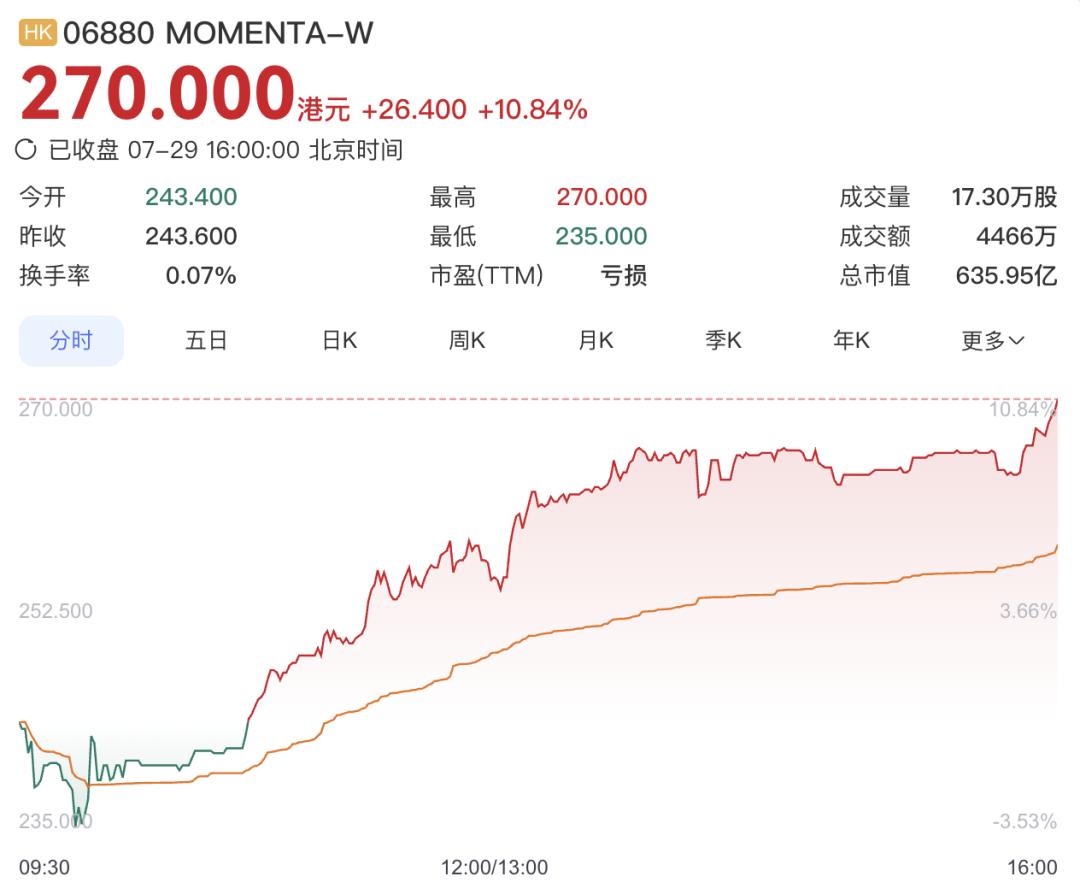
Latest share price of Momenta
As soon as the news came out, Momenta's share price rose sharply immediately.
Why did the capital market react so strongly to a German license? The answer lies in the layout this company has built over the past few years.
What does a German license leverage
KBA is one of the world's most stringent traffic safety regulatory authorities. Previously, most entities that could obtain nationwide L4 test licenses in Germany were local German automakers or leading Tier 1 suppliers, with very few cases of non-European enterprises being approved.
Cao Xudong, CEO of Momenta, put it bluntly: Germany is one of the global benchmarks for autonomous driving regulation. Obtaining a national test license is a validation of its world model technical route, and also lays a foundation for the implementation of unmanned driving business in Germany.

Cao Xudong, Founder and CEO of Momenta
As a "national pass", Momenta does not need to apply for approval city by city afterwards, and can carry out L4 tests on urban roads across Germany, with safety standards directly aligned with the EU framework. For a company that wants to promote Robotaxi implementation in multiple cities around the world at the same time, the "one certification, full-domain access" model saves time and capital costs calculated in months.
Behind this is Momenta's years of deep cultivation in Germany. Previously, Momenta has established in-depth cooperation with local automakers such as Mercedes-Benz, BMW, Audi and Volkswagen.
The deeper driving force behind this is Uber.
In 2025, Momenta announced that it has reached a strategic cooperation with Uber to connect Robotaxi to the Uber platform, and in the same year, the two sides announced that Munich, Germany would be the debut city of their cooperative Robotaxi project. The acquisition of the nationwide test license this time is regarded as a full paving for Uber's European projects.
What Momenta values is not just one single client, but the user pool, order network and urban operation capabilities behind Uber, which are the three most scarce elements for large-scale Robotaxi development.
If the cooperation between the two sides in Munich can be successfully operated, this model is likely to be replicated to other cities. Momenta's mass production business has spread all over the world, and the data and technical capabilities accumulated by mass-produced vehicles can in turn support the rapid adaptation of Robotaxi in different regions.
Apart from business cooperation, the capital-level bond between the two sides is also very close.
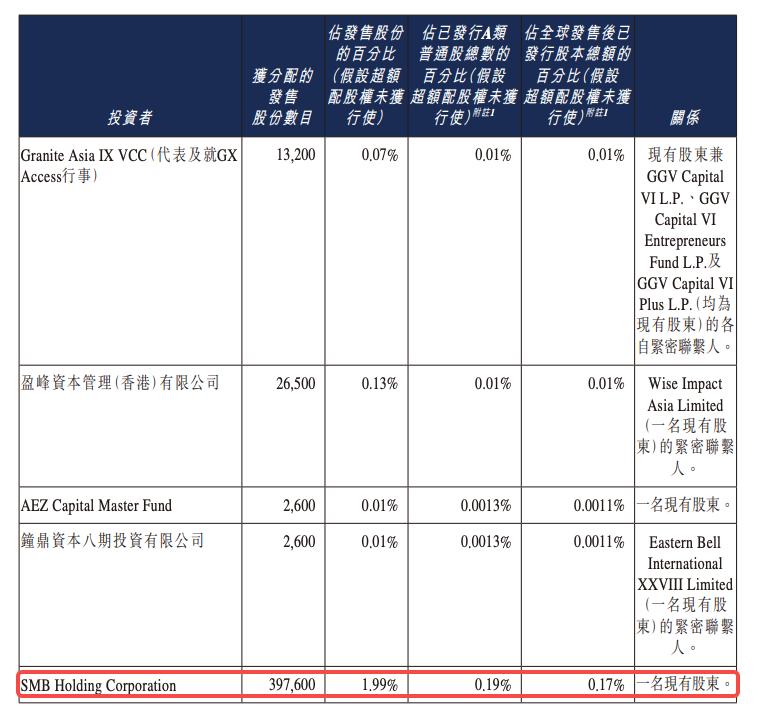
SMB was allocated 397,600 shares in Momenta's public placement during its listing
During Momenta's Hong Kong Stock Exchange IPO, Uber further increased its equity investment through its wholly-owned subsidiary SMB Holding Corporation. Public placement information shows that SMB was allocated 397,600 shares. As previously disclosed in Momenta's prospectus, SMB participated in the Series C financing in September 2025 and held 791,055 preferred shares. Combined, Uber holds approximately 1.1887 million shares of Momenta.
Business cooperation comes first, followed by capital support. The relationship between Momenta and Uber has long gone beyond the ordinary supplier-client relationship, forming a three-dimensional bond of "business cooperation + capital support + overseas expansion". What Uber wants is unmanned driving capacity to reduce travel costs, while what Momenta wants is the implementation scenarios of the world's largest travel network to verify technologies and accumulate data. Both sides get what they need.
The business model of Robotaxi
Germany is just a part of Momenta's global Robotaxi territory.
Momenta claims that it is the first company to provide Robotaxi services with mass-produced vehicles, and started preparing for the large-scale deployment of autonomous taxis as early as 2020.
Why emphasize pre-installed mass production? Because for Robotaxi to develop from "being able to run" to "being profitable", it must solve the bottlenecks of insufficient production capacity and poor consistency of refitted vehicles. Only pre-installed mass production can reduce the cost per vehicle and improve operational efficiency.
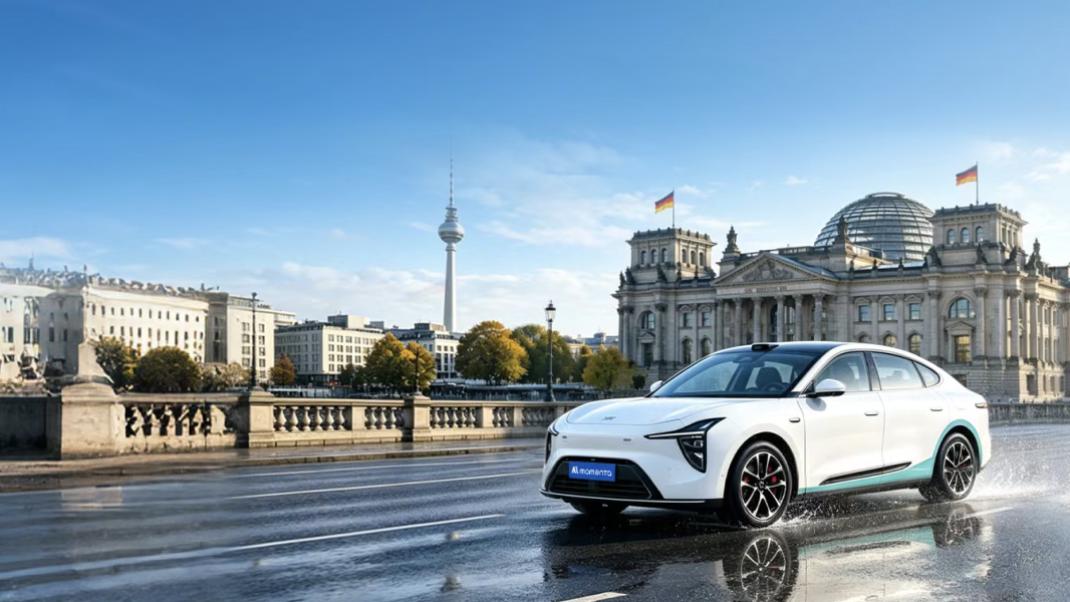
Up to now, in China, Momenta Robotaxi has been successively launched in Shanghai, Suzhou and Wuxi. In July this year, it obtained the road test license for intelligent connected vehicles in Shenzhen to carry out L4-level field tests locally.
The significance of Shenzhen is more than just adding a new city. The revised "Regulations on the Administration of Intelligent Connected Vehicles in the Shenzhen Special Economic Zone" came into effect officially in July, with adjustments made in details such as lowering the application threshold and supporting fully unmanned tests, which will explore full-domain open road tests in an orderly manner. Momenta obtained the license at this node, which exactly aligns with the pace of policy liberalization.
In overseas markets, in addition to Germany, Momenta has also obtained test licenses in Abu Dhabi, the United Arab Emirates.
In terms of business model, Momenta's Robotaxi has a clear division of labor logic: The travel platform is responsible for user acquisition, order scheduling, customer interface and fleet operation; vehicles are provided by Momenta in cooperation with OEMs; Momenta focuses on the delivery of autonomous driving systems. The three parties perform their respective duties, forming a closed loop from R&D and production to implementation and operation.
Take Xiangdao Travel as an example. At the 2026 World Artificial Intelligence Conference, Xiangdao Travel announced the launch of SAIC Motor's mass-produced customized Robotaxi project, which is equipped with Momenta's L4-level intelligent driving system and is scheduled to debut in 2027. SAIC Motor is responsible for production, Momenta provides the intelligent driving solution, and Xiangdao Travel is responsible for operation.
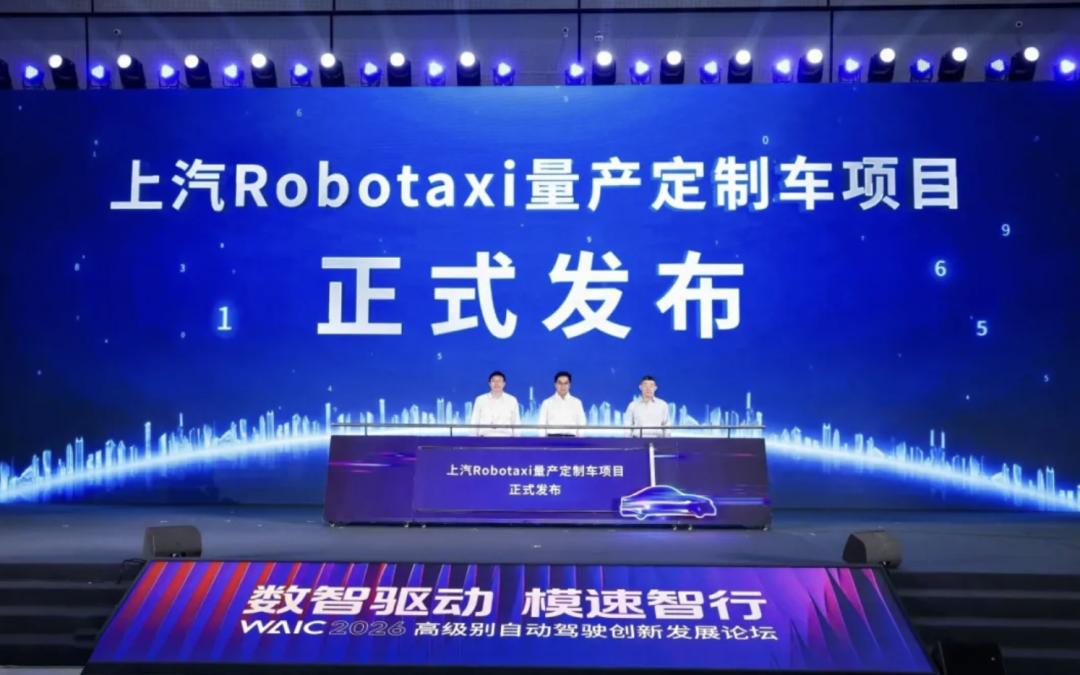
Xiangdao Travel announces the launch of the mass-produced customized Robotaxi project
Momenta's global ecosystem is expanding rapidly. On the travel platform side, it has gathered Uber, Grab, Lumo and Xiangdao Travel, covering Asia, Europe and global travel networks; on the automaker side, it has established cooperation with OEMs such as Mercedes-Benz, BMW, Audi and Volkswagen.
With the operation network and user scale of travel platforms on one side, and the mass production capacity and channels of OEMs on the other, Momenta is in the middle, connecting technologies with scenarios. Once this model is successfully verified, it will have the possibility of being replicated globally.
One set of model "covers" more scenarios
The business is running globally, but making this model work in different cities relies on another layer of capability.
In April this year, Momenta released the R7 reinforcement learning world model, and announced that it has been installed on mass-produced vehicles. The company's self-positioning has also changed accordingly: it is no longer just an intelligent driving solution provider, but a "builder of the Physical AI infrastructure platform".
What is a "world model"?
Cao Xudong's logic is that prediction is the core cornerstone of intelligent evolution. Large language models compress the common sense of the digital world by "predicting the next word"; Physical AI needs to "predict the next frame of the physical world" to understand the physical properties of objects, the causal relationship of motion, and the potential possibilities of interaction.
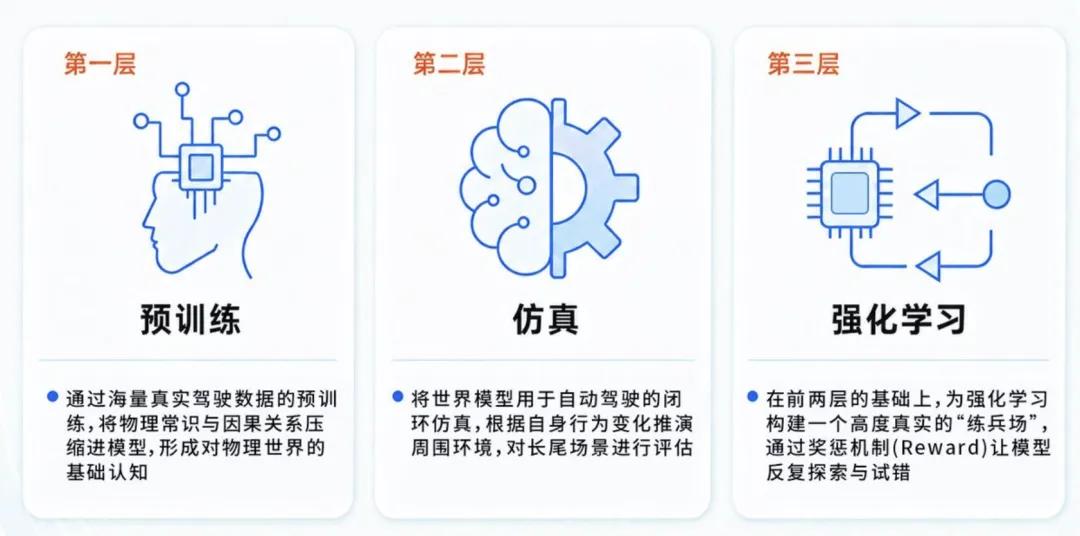
Three-tier architecture of Momenta R7 world model
The R7 world model is based on over 120 billion kilometers of driving mileage and over 100 million segments of key scenario data, iterated through a three-tier architecture: world model pre-training, closed-loop simulation, and reinforcement learning in the model. After three tiers of iteration, the system evolves from "imitation learning" to "imagination and exploration", and the vehicle's game capability, lane selection strategy and narrow space passing capability in complex scenarios are improved.
The premise of this idea is the massive real-world data brought by the mass production business. There is a mutually feeding relationship between mass-produced vehicles and the world model.
Momenta's business model thus has a far-reaching direction: not to make complete vehicles, but to build "Android for the physical world". Using one set of large model to support the large-scale implementation of passenger vehicles, Robovan, Robotruck and Robotaxi at the same time, and expand to embodied intelligence in the future. One set of model can be reused in multiple scenarios with decreasing marginal cost — this is the core logic of platform-based business.
This strategy is already being implemented.
Not long ago, Momenta announced its entry into the unmanned delivery track, and its Robovan models have been put into operation in scenarios such as JD Logistics parks, with related business advancement lasting for more than four months. This is the first time Momenta has extended its autonomous driving capability from passenger vehicles to logistics and delivery, which means that its platform-based strategy of "one set of model, multi-scenario reuse" has entered a substantive stage. According to the plan, it will expand to the Robotruck sector in 2027.
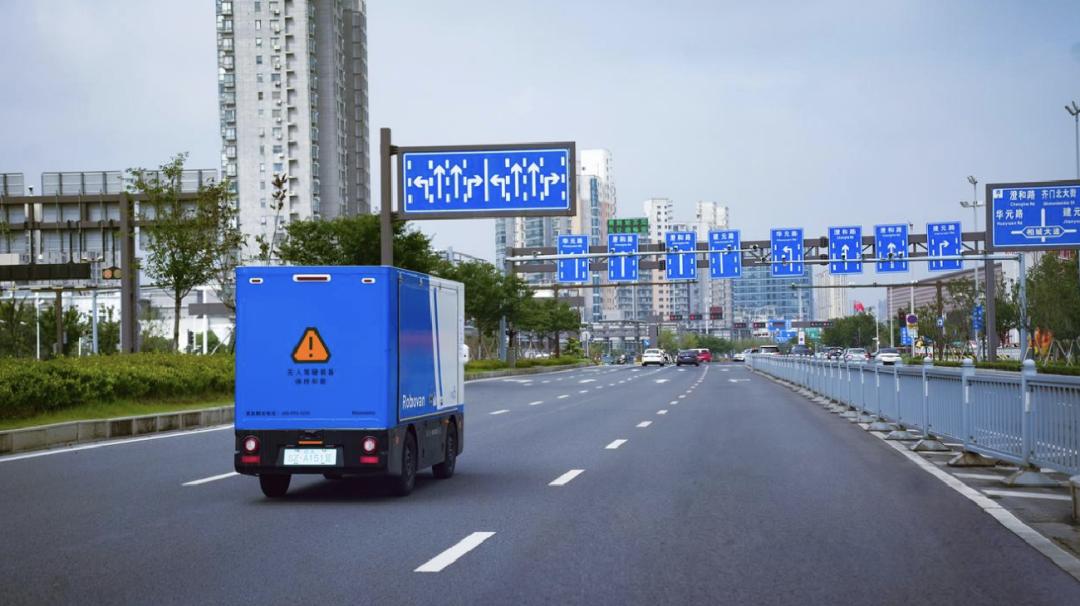
Momenta's unmanned delivery business is launched in Suzhou
Every additional business scenario brings one more source of revenue.
Cao Xudong gave a clear timetable during the IPO period: there may still be strategic losses this year, but it will narrow compared with last year, break even next year, and achieve profitability the year after next.
The launch of Robovan means that the company's growth narrative has been upgraded from "passenger vehicle intelligent driving supplier" to a three-pillar-driven model of "L2 mass production + L4 unmanned travel + L4 unmanned logistics". Every additional business scenario adds one more cash flow channel.
This article is from the WeChat Official Account "Cyber-car" (ID: Cyber-car), written by Zhang Lianyi, edited by Qiu Kaijun, and authorized for release by 36Kr.