The big story of new entertainment: the new generation of animated films
In June, at the Shanghai International Film Festival, Wang Changtian, Chairman of Light Chaser Media, mentioned a figure during a dialogue with scholar Liu Qing: there are no more than 20 directors across China who can independently produce high-quality animated feature films.
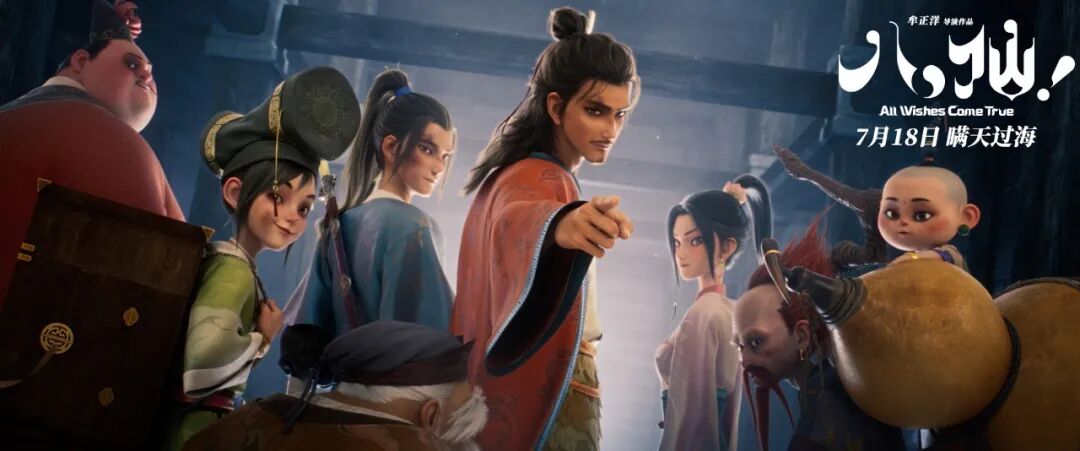
By that standard, it was unclear back then whether Mu Zhengyang counted as one of them. But just one month later, Eight Immortals!, the debut feature directed by post-90s director Mu Zhengyang, hit theaters.
Eight Immortals! opened with an 8.3 rating on Douban, and its box office saw a reverse increase on the second day of release. Both Maoyan and Beacon predicted its total box office would exceed 20 billion yuan. A new creator who had barely been validated by the market before, paired with a relatively "niche" traditional mythological theme compared to well-known IPs like the Journey to the West, has delivered the most impressive performance in this year's summer film season so far.
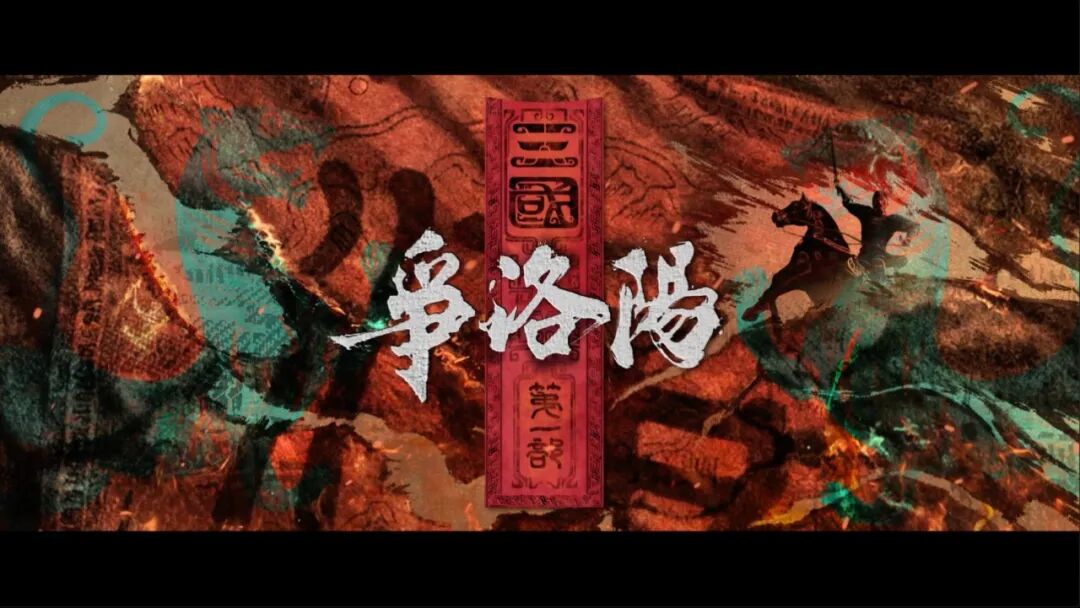
Meanwhile, Three Kingdoms Part 1: The Battle for Luoyang, the new work in Light Chaser Animation's "New Culture" series, was also in theaters. The film received wide acclaim for its historical research, war scenes and power-struggle narrative, but it must be admitted that its market popularity and box office performance are far from matching its reputation, and the distributor has decided to reschedule its release to a later slot.
On one side, an original work by a new director emerged as a dark horse; on the other side, a high-quality production from a well-established studio failed to fully ignite the market. To some extent, the 2026 summer animated film market can be described as "extreme contrast between ice and fire".
But then again, if there were no opportunities in the industry, this kind of dual-track situation would not exist at all.
The coexistence of "ice" and "fire" is exactly a reflection of the expanding foundation of the industry. It also aligns with the trend that the animated film industry is shifting from relying on occasional explosive hits from a small number of top projects to a more diversified and complex competitive landscape.
Looking back at the midpoint of 2026, the industrial foundation of animated films is completely different from that of a few years ago (animated films are now the focus of global capital enthusiasm). Genre tracks are more segmented, genre labels are more distinct, and user mindsets have shifted accordingly.
The more underlying structural change is that participants in the animated film sector are expanding from traditional animation studios to the entire pan-entertainment industry, which brings new imagination for IP ecosystem: the role of animated films in the pan-entertainment and IP industrial chain has been "upgraded" — they not only connect upstream content creativity with downstream non-ticket revenue from IP derivatives, cultural tourism and other sectors, but also drive user migration and value amplification across different media forms such as animated series, games and live-action films.
Combined with policy orientations like "Film+" and industry trends, after East West Entertainment communicated with multiple creators and institutions, the consensus is that it is certain that now is the best time for animated films to build IP assets.
But when it comes to animated films and animation itself, with the prevalence of AI, some issues are far less certain.
Animated Films Are Catching Up With Live-Action Films
This year, animated films feel more and more like "live-action films". Not only in terms of content themes, but also in product forms, promotion and distribution strategies, and even audience expectations, they are gradually aligning with live-action films to a certain extent.
Last year, the total annual box office of animated films exceeded 25 billion yuan. Four animated films, Ne Zha: The Devil's Birth 2, Zootopia 2, Little Monster of Langlang Mountain and Boonie Bears: Reverse the Future, ranked in the top 10 of the box office chart, contributing nearly half of the total national annual film box office. By 2026, although there is no phenomenal blockbuster like Ne Zha 2, the sector has maintained diversified development, and its overall supply capacity has managed to sustain the market scale of the previous year.

More importantly, in the past, the genre label of animated films was often single — "animation" itself was regarded as a standalone genre label. But taking the animated films of the 2026 summer season as an example, the division of genre tracks is becoming clearer and clearer.
Three Kingdoms Part 1: The Battle for Luoyang, the new work in Light Chaser Animation's "New Culture" series, features heavy narratives including war confrontations, power game struggles and the fate of an era, making it a "historical war film" presented in animated form.
Demon Detective of Tang Dynasty produced by Sunac's entertainment arm is positioned as a family-friendly suspense detective comedy, integrating popular labels favored by mainstream movie audiences such as suspense and comedy. And Go to Your Island, scheduled for release on Chinese Valentine's Day, is adapted from a top-tier web novel IP on Jinjiang. It is an adult romance film with fantasy elements, themed around farewell and grief, with a certain aesthetic style of tragic endings.
Historical war, suspense detective comedy, fantasy romance... These distinct genre labels, which used to be the classification tools for live-action films, are now naturally applied to the market positioning of animated films.
This also makes animated films no longer rely on vague positioning such as "domestic animation" and "ACG". Their layered analysis of target audiences, precise scheduling strategies for release windows, and social media topic operations are also converging with the promotion and distribution methods of live-action films in many dimensions.
Of course, these genres did not emerge out of thin air this year.
Take "fantasy romance" as an example. As early as 2016 when Big Fish & Begonia was released, the film already had the embryonic form of this genre, but at that time, audience discussions focused more on its Chinese-style art style and tortuous production process.
After that, domestic releases of Makoto Shinkai's films such as Your Name. and Suzume gradually verified the appeal of fantasy romance animated films to audiences of traditional live-action romance films. Last year, Son of Time, an original animated film not adapted from any existing IP, emerged as a dark horse, whose box office performance even surpassed that of some live-action romance films. Years of accumulation have provided certain market basis for subsequent product planning in the film industry.
The audience side is also changing accordingly, and their expectations for animated films are also more aligned with those for live-action films.
For a long time in the past, audience expectations for animated films stayed at the level of "good-looking visuals" or even "supporting domestic animation out of passion". But more and more animated films failed due to their weak plots. Now, excellent art and sophisticated scenes have become standard configurations, and in most cases, what sets films apart is still their narrative.
Audiences of animated films demand good stories, well-written characters, smooth pacing, and emotional resonance that they can find in the narrative — these are also the essential qualities that live-action films need to achieve high box office performance.
The success of Little Monster of Langlang Mountain last year, to some extent, followed this exact logic. The film's narrative focuses on the daily work struggles and emotional dilemmas of office workers, arousing inner resonance among audiences, which is no different from the path many live-action films take to leverage social emotions.
And this summer season, Eight Immortals! opened with an 8.3 rating on Douban, and its box office trend exceeded many people's pre-release expectations, which further confirms this change.
Its high reputation mainly comes from its high-standard industrialized film narrative: with smooth and flowing multiple plot twists, carefully laid and recovered foreshadowing, high-density information, and precise comedy rhythm, it delivers a viewing experience whose completion degree is comparable to that of a live-action commercial blockbuster. The evaluation criteria for it are no different from those for judging a live-action commercial film in many aspects.
2026: Who Are Entering the Animated Film Sector
At this year's Shanghai International Film Festival, Wang Changtian, Chairman of Light Chaser Media, stated that there are no more than 20 directors across China who can independently produce high-quality animated feature films, while you can easily find 200 live-action directors.
The original intention of this statement is to point out that the shortage of animation film talents limits the production capacity and supply of animated films. At the industrial level, it also means that the animated film market in the past had obvious periodic characteristics, which was greatly affected by individual blockbuster hits.
However, with the continuous maturity of genre development and the change in audiences' viewing mindset, a group of new participants are entering the animated film industry, expanding from traditional animation studios to the entire pan-entertainment industry.
According to the published film project filing announcements this year, in late February 2026, a total of 19 animated films were filed nationwide; in late March, a single batch of filings reached 48, followed by 32 in late April and 23 in late May. The number of filings in less than half a year is already close to the 127 filings for the whole of 2025, while back in 2022, the annual figure was only 53.
What is more noteworthy than the quantity is the composition of the filing entities. Among the projects that have been officially announced or filed, the entities are not limited to traditional studios in the animated film sector such as Light Chaser Pictures and Light Chaser Animation. Live-action film companies, long-video platforms, game companies and other players are all entering the market, and more and more of them are taking full control of their projects.
There were similar cross-sector attempts in the past, but most of them were limited to single-film cooperation or co-investment. Now, all parties are entering the market directly with their own IPs, users and creative teams, which is a fundamentally different situation.
First of all, live-action film forces are entering the animated film sector, not just in the form of capital investment, but gradually extending from behind the scenes to core creative positions, taking charge of the entire IP project. To some extent, this also further promotes the alignment of animated films with live-action films. (Previous analysis👉 Chinese animated films will eventually have their own "Big Six" | Annual Insight)
Many behind-the-scenes creators of live-action films have already participated in animated film productions. For example, Su Hang, action director of Eight Immortals!, is the 7th generation member of the Jackie Chan Stunt Team, who won the Hong Kong Film Awards for Best Action Choreography last year for Chasing the Wind and Shadow. Some of the fight scenes in the film were also completed through motion capture shot by professional martial arts actors.
Now, live-action film companies are directly producing animated films. Lianrui Pictures, which is known for its live-action films, filed the animated film project Demon Half: Si Teng this year, with Ren Mengyao, the screenwriter of the live-action drama version, in charge of the script. Noon Sunshine has launched the animated film project for Nirvana in Fire, which takes Feiliu, the character played by actor Wu Lei in the TV series version, as the protagonist. It is produced by the team behind I Am What I Am, and has announced that it will integrate cultural elements such as traditional deity parade performances and Yingge dance from Chaoshan region.
Secondly, driven mainly by long-video platforms, top-tier animated series IPs are entering the theater market.
Overseas, releasing theatrical films based on animation IPs is already a mature business model. "New Year staple" films like Doraemon have been released for decades, and the theatrical version of Demon Slayer: Kimetsu no Yaiba has further elevated the global influence of the IP. After years of accumulation, domestic animated series have been proven to be one of the core content categories that help video platforms attract new users, retain existing users and drive paid subscriptions. The user base of some top-tier works can also support their extension to the big screen.
In the past two years, major video platforms have been stepping into this sector intensively, with Tencent Video being the most active.
In August last year, Tencent Video announced a ten-year development plan for IPs including Douluo Continent, Renegade Immortal, Sword of Coming and Slaughter the Gods, and officially announced for the first time that it would launch "theatrical feature versions", with at least one theatrical film for each of the four major IPs.
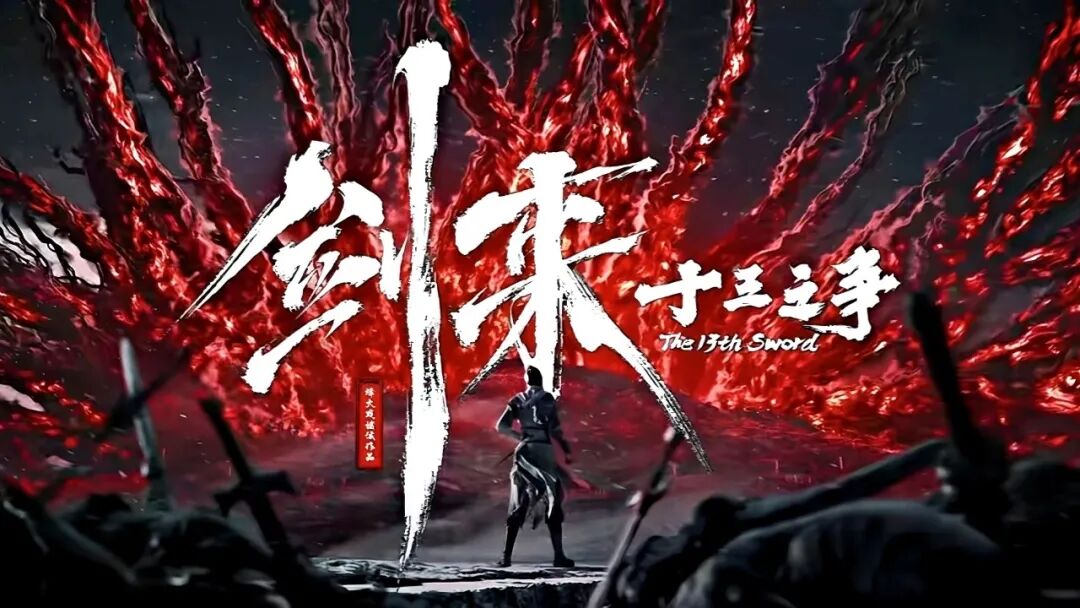
At present, Douluo Continent Theatrical Version: Legend of the Divine Realm and Sword of Coming: The Thirteen Disputes have both been filed. Shrouding the Heavens also announced the launch of its theatrical animated feature in June this year, positioned as "derivative and upgraded content of the annual animated series", which will present the story of the Earth arc on the big screen with higher production standards. In addition, the Tencent-backed IP Under One Person filed the theatrical animated film Under One Person: Bloody Battle of Mian Mountain in late March this year, with Mi Er, the original author of the comic, personally writing the script. The filing entity Beijing Menggu Culture has Zhang Bo, President of Maoyan, as its legal representative.
In the same period, A Record of a Mortal's Journey to Immortality: The Mysterious Sea, a theatrical animated film produced by iQiyi, is scheduled to be released in 2027; for Youku's top 3D animation Cang Yuan Tu, Damai Entertainment filed its theatrical animated film project in late April this year.
Finally, leading game manufacturers are also taking charge of more animated films adapted from game IPs.
Tencent's Honor of Kings announced the launch of a family-friendly animated feature plan last October, which will be directed and scripted by Zhang Chiyu, a live-action comedy director, with production support from Mahua FunAge Pictures. This national-level game IP is clearly targeting the mass family entertainment market. Sky: Children of the Light published by NetEase Games, which is widely praised for its warm and healing style, has also filed the animated film project Sky: Twin Stars.
While Moonton announced its cross-sector expansion from the gaming field to full ecological incubation of film-game IPs, the animated film project You Ming Zhi was filed by Shanghai Nuverse Culture Media under ByteDance, with Ran Ping as the screenwriter. This IP released its promotional video back in 2023, drawing widespread attention for its oriental fantasy aesthetic style rooted in Chinese folk culture. After several twists and turns, it finally decided to launch the animated film project, while simultaneously developing its mobile game.
