Behind FIFA's $4.2 billion fundraising, the capitalization of sports IP has become the norm.
FIFA, which has just wrapped up the most profitable World Cup in history, is still not satisfied. On July 28 local time, the Financial Times broke the news first that FIFA plans to set up a new commercial entity named "FIFA Forward Enterprise (FFE)", which will integrate all commercial operation interests of core tournaments including the World Cup and the Club World Cup, and coordinate revenue-generating activities such as media copyrights, ticket sales, licensing and sponsorship.
FIFA released an announcement two hours later, acknowledging that it will create FFE and has launched relevant consultation procedures. The announcement states that FIFA will control the enterprise, but will offer minority stakes to private investors. Among them, the initial equity valuation of FFE is 20 billion US dollars, and it plans to raise 4.2 billion US dollars from external investors by selling a 21% minority non-controlling stake. All net profits generated by FFE will be fully returned and reinvested in the global football sector.
Shortly afterwards, external investors quickly surfaced. New York-based investment institution Thrive Eternal will lead the formation of the proposed investor group for FFE. The founder of this institution is Joshua Kushner, whose older brother Jared Kushner is the son-in-law of US President Trump. In the North American market, Joshua Kushner and Thrive Eternal have also invested in teams such as the NBA's Miami Heat and the NFL's San Francisco 49ers.
In addition, JPMorgan Chase will continue to provide consulting services to FIFA for this project. OpenEconomics, a Rome-based consulting firm, and Greg Maffei, CEO of BANN Ventures, will also serve as project consultants. Nearly 10 years ago, Maffei, in his capacity as President and CEO of Liberty Media Group, oversaw the entire 8 billion US dollar acquisition of F1. This also means that with the entry of US capital and industry experts, FIFA's "financing plan" has been accelerated.
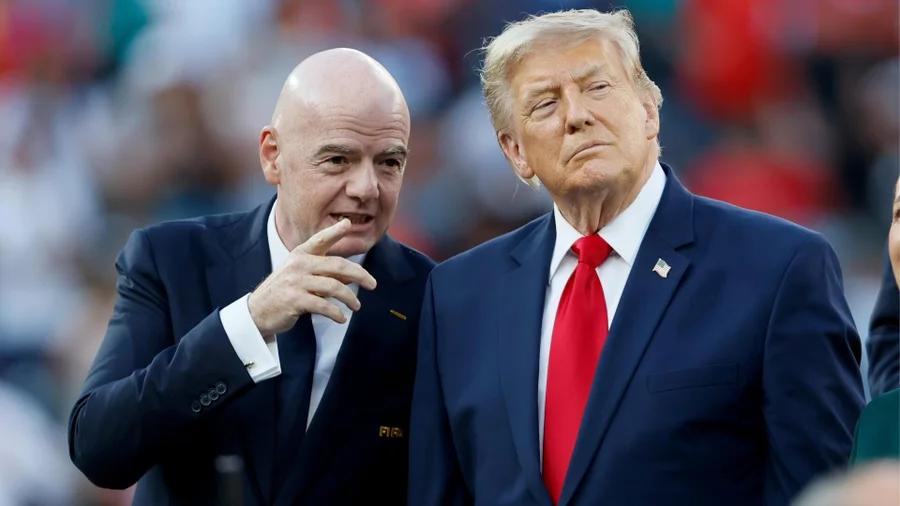
In fact, this is not the first time Gianni Infantino has tried to commercialize FIFA's assets by introducing external investment. According to media reports including The New York Times, in 2018, Infantino once cooperated with SoftBank Group of Japan to put forward a 12-year acquisition plan with a total amount of up to 25 billion US dollars, and planned to create a global tournament called "Global Nations League".
In the 12-year contract at that time, Masayoshi Son's Vision Fund, which had hundreds of billions of dollars under management, promised to invest 2 billion US dollars in each edition of the Global Nations League and 3 billion US dollars in the expanded Club World Cup. Vision Fund was known as "the world's largest investor in the technology sector" at that time, with Saudi Arabia also participating behind it. But in the end, this plan failed to operate smoothly due to strong opposition from UEFA.
Eight years later, Infantino changed his approach and made a comeback. In FIFA's press release, Infantino described football as "an extraordinary engine for human and social development", and said that the governing body's "responsibility" is to ensure that the "extraordinary commercial value" of football is shared more fairly around the world. "Every FIFA member association should have the opportunity to secure a fair share of funding, so as to shape its own future and make independent decisions instead of relying on others. This is about the democratization of football on a global scale."
The implementation of this "inclusive logic" is extremely direct — large-scale and continuous capital injection to member associations around the world. According to the fund distribution plan announced by FIFA, after the FFE plan is implemented, all 211 member associations around the world can apply for a one-time special infrastructure fund of up to 20 million US dollars for long-term projects such as stadium construction, youth training system building and women's football development.
Next, in the next World Cup cycle (2027-2030), the development funds allocated to each association will be increased from 8 million US dollars to 20 million US dollars; after that, it will be 22 million US dollars in the 2031-2034 cycle and 24 million US dollars in the 2035-2038 cycle. The announcement also specifically mentioned that 10 years of continuous support through FIFA's "Forward Programme" has helped first-time participating countries such as Cape Verde and Curaçao to step onto the World Cup stage.
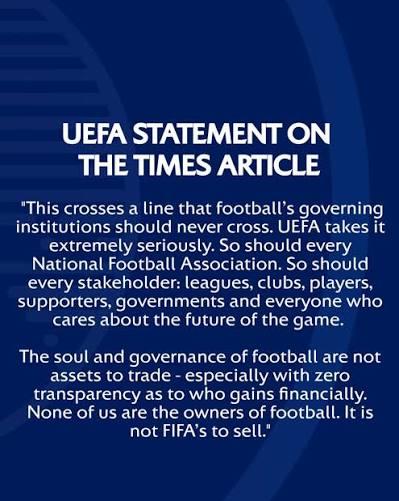
Other continents and member associations have not had time to express their opinions, but UEFA has immediately issued a strongly worded opposition statement, emphasizing that this move "crosses a line that football governing bodies should never cross", and claiming that "the soul and governance of football are not tradable assets". According to ESPN, 55 member associations of UEFA will attend an online emergency meeting this week to discuss how to resist FIFA's move. In addition, former FIFA President Sepp Blatter and new British Prime Minister Andy Burnham have also publicly criticized the plan. Blatter mentioned on social media that "the close relationship between the FIFA President and the US President has extended to the monetary level, which has harmed football itself."
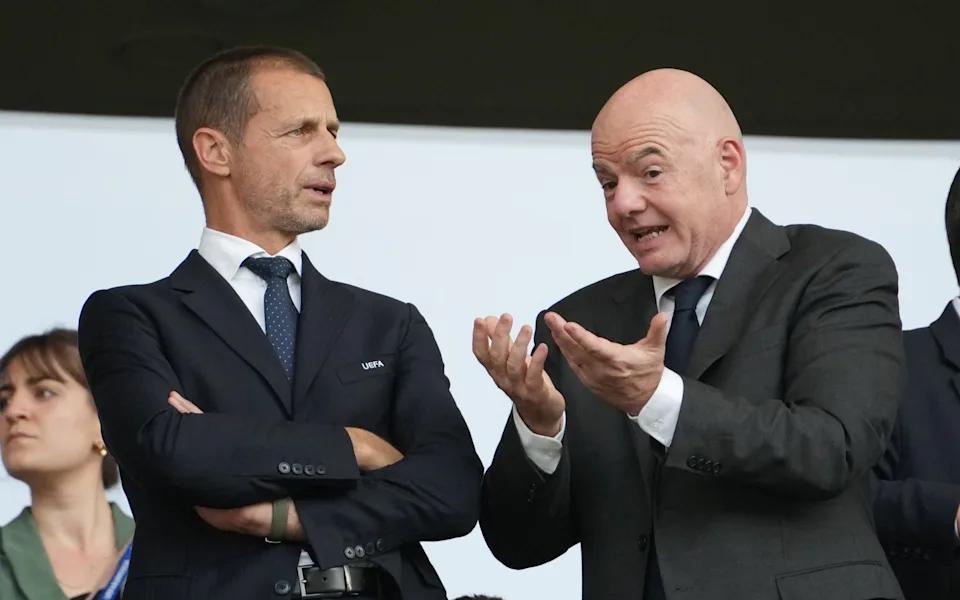
Of course, in addition to defending the "soul of football", UEFA's commercial development is also facing competition from FIFA. From the 1 billion US dollar prize pool set up for the expanded 2025 Club World Cup, to the potential 130 billion US dollar revenue increase FIFA may generate from the expanded World Cup, these FIFA reforms are constantly impacting UEFA's commercial foundation. In 2025, UEFA terminated its long-term cooperation with TEAM Marketing AG, the agency for commercial rights of club competitions that had helped it earn 50 billion euros, and its next partner Relevent Sports Group also has a US background. (Extended reading: It is not unexpected that the agency for the Champions League is "fired", even if it helped UEFA earn 50 billion euros)
Perhaps FIFA and UEFA will have disputes over whether "football has become a tradable asset", but they both acknowledge one fact: Americans can make football earn more money.
In fact, in the global sports market, this structure that integrates the commercial rights of sports assets into a new commercial entity and transfers the equity and revenue sharing rights of the commercial entity has become a conventional practice in the past five years. The cooperation between LaLiga and CVC Capital Partners, the financing obtained by New Zealand's All Blacks rugby team from Silver Lake, and the University of Utah becoming the first large university sports department in the United States to introduce institutional capital, all rely on this model to obtain capital injection. (Extended reading: Valued at 9 billion pounds, the "sports version of LVMH" created by CVC launches financing)
So in terms of model, this kind of commercial logic is already replicable. FIFA's narrative is also very clever: it uses 4.2 billion US dollars to subsidize member associations, creates a positive image of "narrowing the rich-poor gap in the football world and supporting women's football and grassroots football", and wins over the vast majority of small and medium-sized associations to stabilize the base of votes at future FIFA congresses. It should be noted that Infantino, who is currently the only candidate for FIFA President, has already received official support from more than 200 FIFA members and is highly expected to be re-elected next March. The member associations that have not yet stated their support for Infantino include the German Football Association and a few other member associations under UEFA.
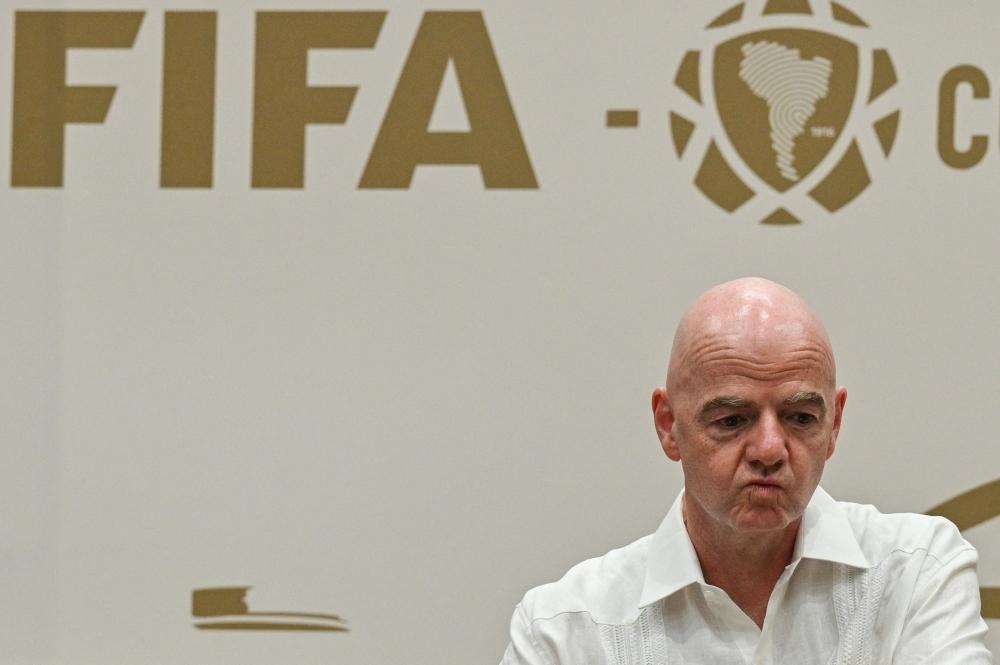
According to sports media The Athletic, FIFA may set up a position similar to chief executive officer for Infantino in FFE. In terms of remuneration, The Times said that this position will be benchmarked against Roger Goodell, the commissioner of the US NFL, with an annual salary of up to 64 million US dollars, about 10 times of Infantino's current income. FIFA also said in a statement on Tuesday that if approved by member associations, the FIFA President and FIFA management must play a leading role in the new entity.
The increase in remuneration is only a small aspect. It is certain that after the capital injection, FIFA's pursuit of higher revenue figures will only become more intense. At this US-Mexico-Canada World Cup, we have already witnessed rising ticket prices, overlapping commercial advertising scenarios, and a series of impacts brought by the expanded tournament. In the future, whether it is the World Cup, the Club World Cup, or women's football and youth tournaments, they will all face the continuous pursuit of commercial expansion. As the sport with the highest global participation, strongest public attribute and widest geographical coverage, whether football should serve commercial benefits or take into account competition performance, viewing experience, and even emotional and cultural values may no longer be a questionable issue.
But in any case, a 20 billion US dollar football "nuclear bomb" has already hung over the global football market. The new capital era of world football has also arrived irreversibly.
This article is from the WeChat official account "Lanxiong Sports" (ID: lanxiongsports), written by Qiao Feng, and authorized for release by 36Kr.