"Light off-roading" becomes the new market darling, as BYD, Geely and HarmonyOS all place big bets on this track, while hardcore off-roading has been reduced to a niche toy.
Recently, the automotive industry has been almost completely flooded with news about the upcoming new model Xiangjie G9 from Harmony Intelligent Mobility Alliance. However, this product, known as "the first off-road vehicle of Harmony Intelligent Mobility Alliance", is not favored by many off-road enthusiasts, for the reason that this model is not "hardcore" enough.
Indeed, the symbols of hardcore off-road vehicles are "body-on-frame structure + professional four-wheel drive system + differential lock", but the Xiangjie G9, which is equipped with a monocoque body, cannot even meet the first standard. This type of "boxy" vehicle with a monocoque body is usually called "light off-road" or "pan off-road", which has certain off-road capabilities but cannot cope with extreme road conditions.
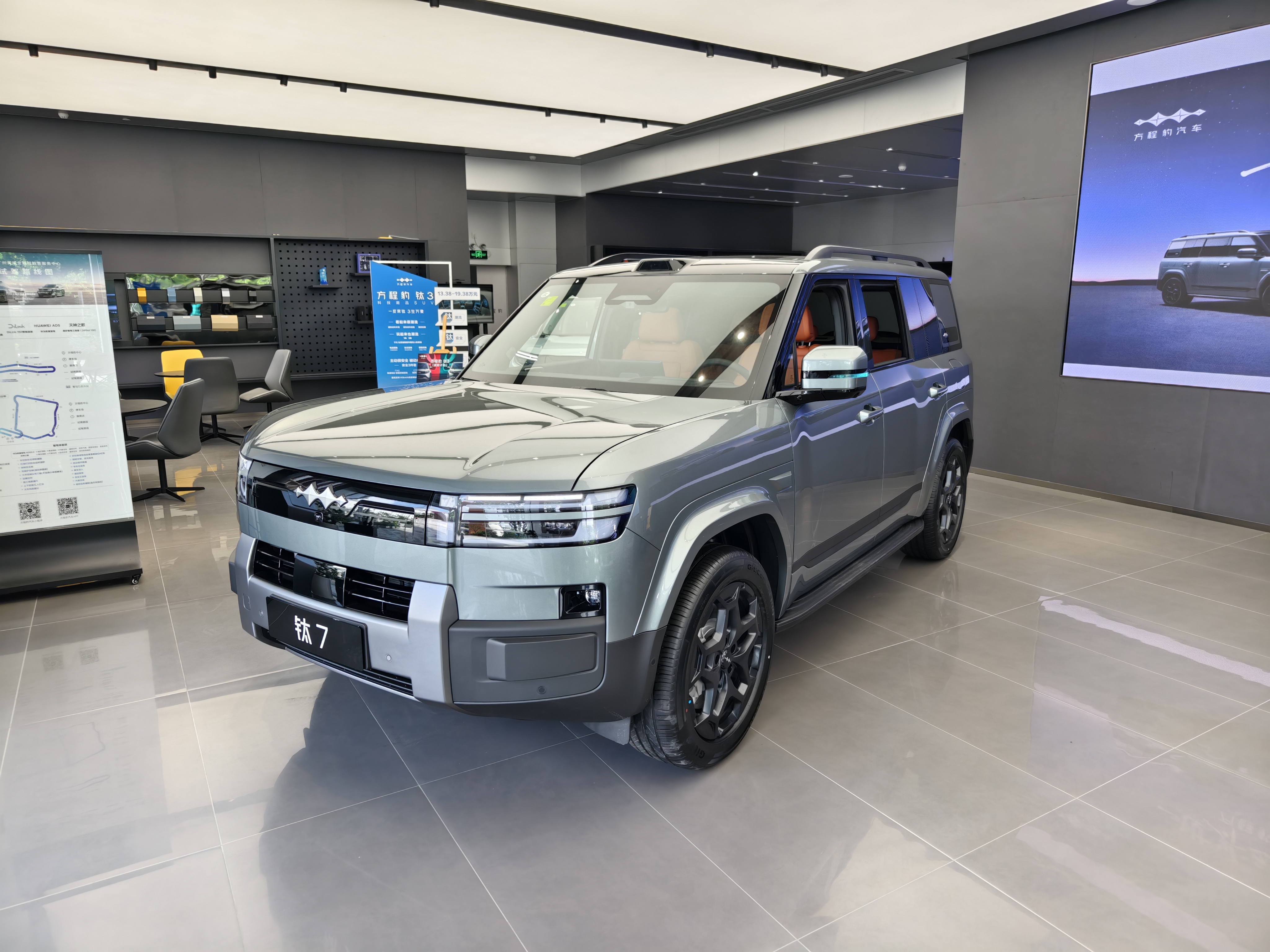
It is not only Harmony Intelligent Mobility Alliance, Dongfeng M-Hero, which focuses on hardcore off-road vehicles, was recently exposed to launch a light off-road model in the fourth quarter of this year, targeting BYD's Fangchengbao Titanium 7.
Looking at the entire automotive industry, it seems that light off-road has become the mainstream choice of the industry.
New Models Launched in Clusters, Light Off-Road Is Truly Booming
After entering the new energy era, the off-road vehicle market has suddenly become a highly sought-after track, with countless car manufacturers flocking to it. However, as the industry gradually stabilizes, Dianchetong (ID: dianchetong233) has found that compared with hardcore off-road vehicles, car manufacturers and consumers obviously prefer light off-road models.
About 7 months of 2026 have passed, and around 20 off-road models have been launched, including the Great Wall Tank 300/700 series, Fangchengbao Bao 5/Bao 8, Yangwang U8, Dongfeng M-Hero 917/M817, Land Rover Defender and other models.
As for the light off-road models that have been launched, the number has exceeded 20, including Great Wall Haval Raptor PLUS/Dagou/H10, Chery iCAR V23/V27, Baojun Off-road PLUS, Fangchengbao Titanium 3/Titanium 7 and other models.
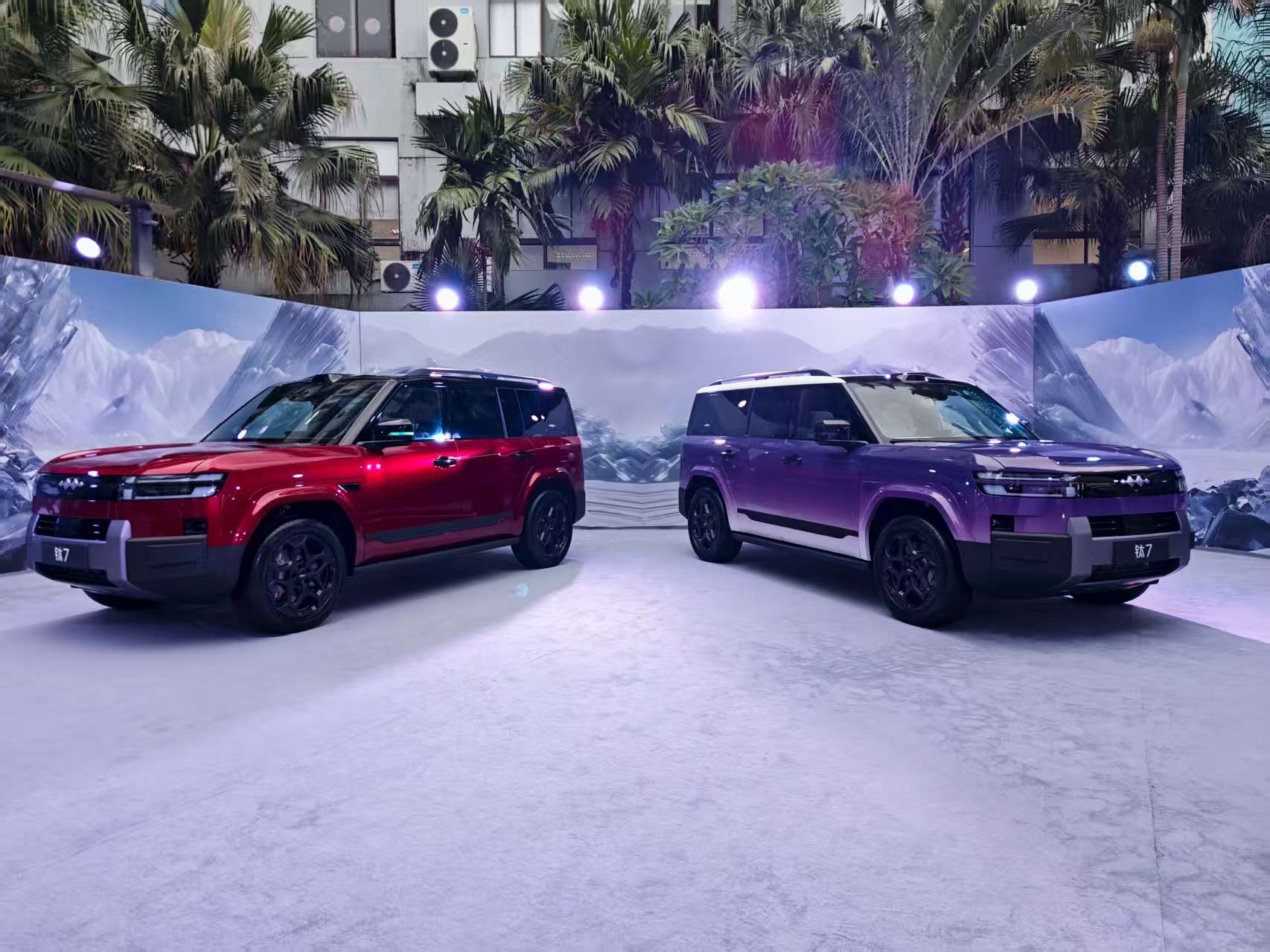
(Source: Photo taken by Dianchetong)
In addition to the aforementioned Xiangjie G9 and the new Dongfeng M-Hero model, there are also Geely Galaxy Battleship 700, GAC Trumpchi Yue 7, Great Wall H9 New Energy Version, Chery Wanderer and so on.
The reason why car manufacturers are flocking into the light off-road market is that light off-road vehicles are extremely profitable.
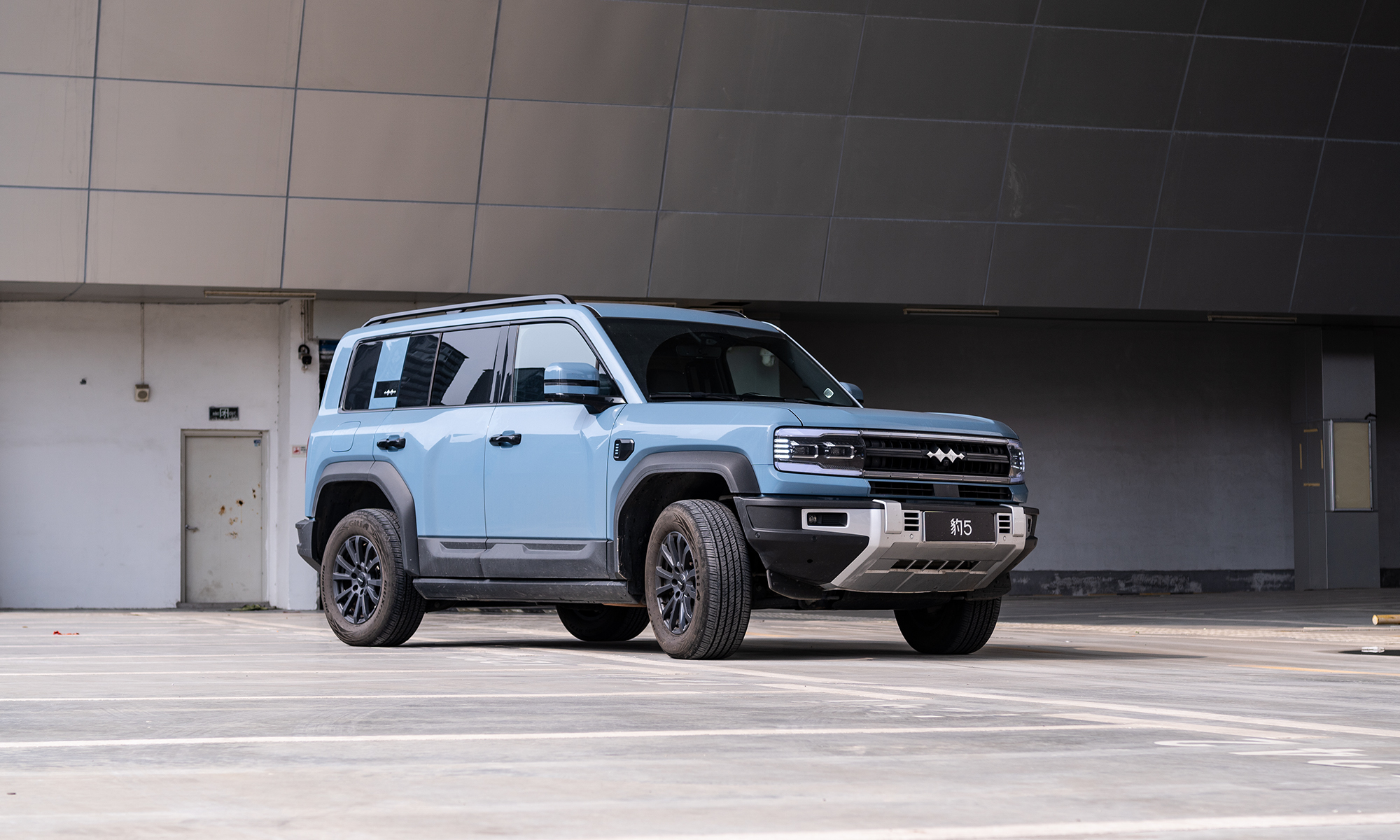
Take BYD's Fangchengbao brand as an example, the brand has two hardcore off-road models, Bao 5 and Bao 8, as well as two light off-road models, Titanium 3 and Titanium 7.
In June this year, Fangchengbao delivered a total of 35607 vehicles, of which 5502 units were Titanium 3, 19165 units were the hybrid version of Titanium 7, and 4544 units were the fast charging version. If it were not restricted by the production capacity of the second-generation Blade Battery, the sales volume of Titanium 7 would have increased significantly.
In other words, the combined sales volume of Bao 5 and Bao 8 is not as high as the delivery volume of the hybrid version of Titanium 7 alone, and the gap is obvious.
(Source: Photo taken by Dianchetong)
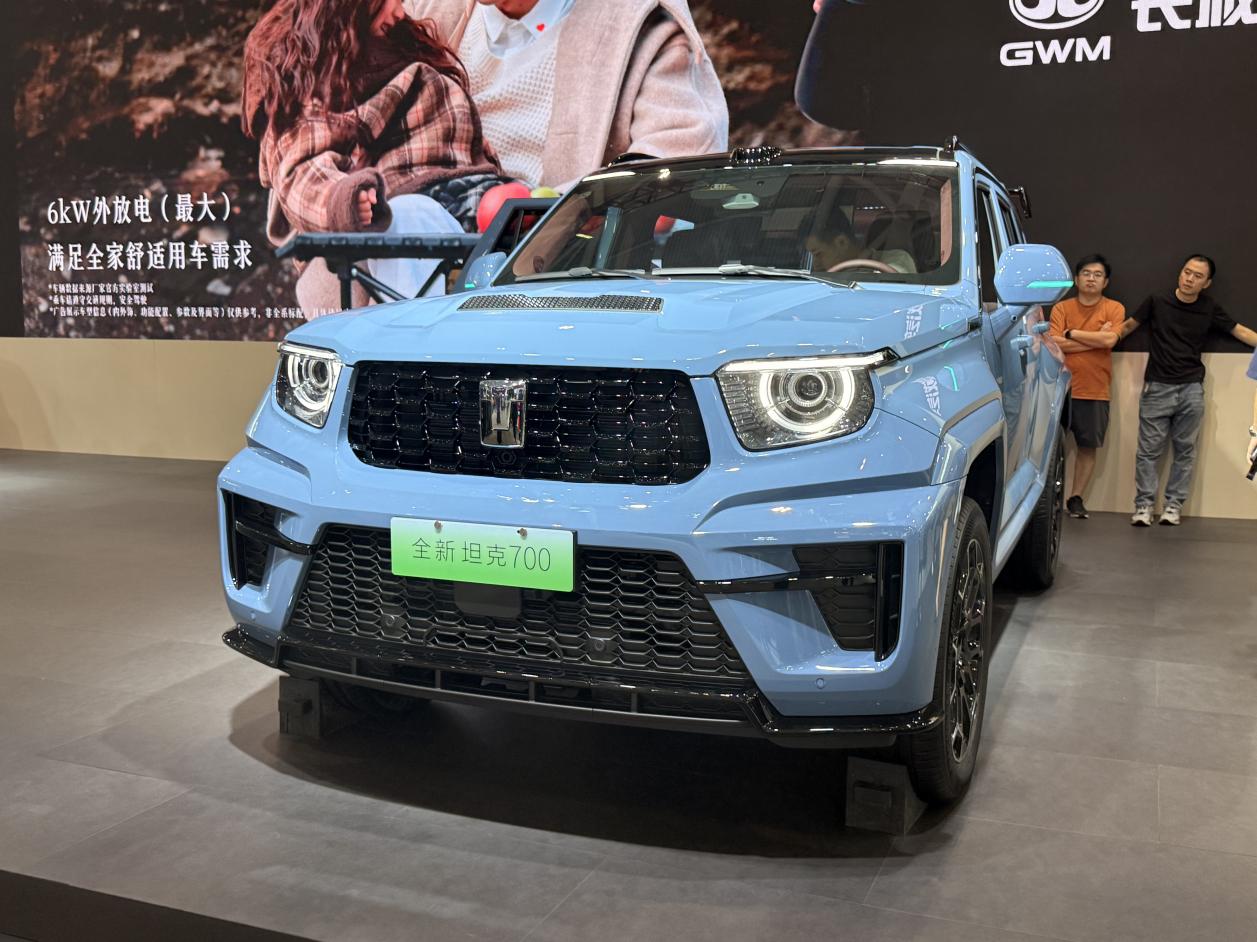
As the leader in the domestic off-road vehicle market, Great Wall's boxy models delivered a total of 48358 units in June, of which the Tank brand delivered 21571 units.
In the domestic sales ranking of boxy models in the first half of 2026, only two hardcore off-road models, the Tank 300 and the Beijing BJ40, are in the top 10, and the other eight are all light off-road models.
The number of new models and delivery data are sufficient to prove that the light off-road market leads the hardcore off-road market in both market scale and development space. In addition, the core configuration of off-road vehicles "body-on-frame structure + professional four-wheel drive system + differential lock" has a high cost, while light off-road models are different, as long as they have a boxy shape, they are qualified.
Take the Beijing BJ40 as an example, this model is a low-priced hardcore off-road vehicle, equipped with a body-on-frame structure, and the starting price of the part-time four-wheel drive version is as high as 139900 yuan. The BJ30 with a monocoque body has an official guide price starting from 69900 yuan.
In addition, compared with hardcore off-road vehicles, light off-road models are more suitable for the vehicle usage scenarios of the vast majority of domestic consumers.
Camping Is the No.1 Demand for "Off-Road"
The biggest advantage of hardcore off-road vehicles is their passing ability when facing extreme scenarios. Light off-road models are positioned between off-road vehicles and urban SUVs, with certain off-road capabilities, as well as the characteristics of high comfort, low energy consumption (compared with hardcore off-road vehicles) and rich intelligent functions of urban SUVs.
The problem is that extreme off-roading requires a lot of time and money. To cross a desert, the cost of guides and supplies ranges from thousands of yuan at the least to tens of thousands or even hundreds of thousands of yuan at most, and usually takes several days. There are many challengers for the "10000-yuan Slope" across the country, but even if the challenge is successfully completed, the bonus may not be enough to cover the car repair cost, not to mention the risks existing in extreme off-road scenarios.
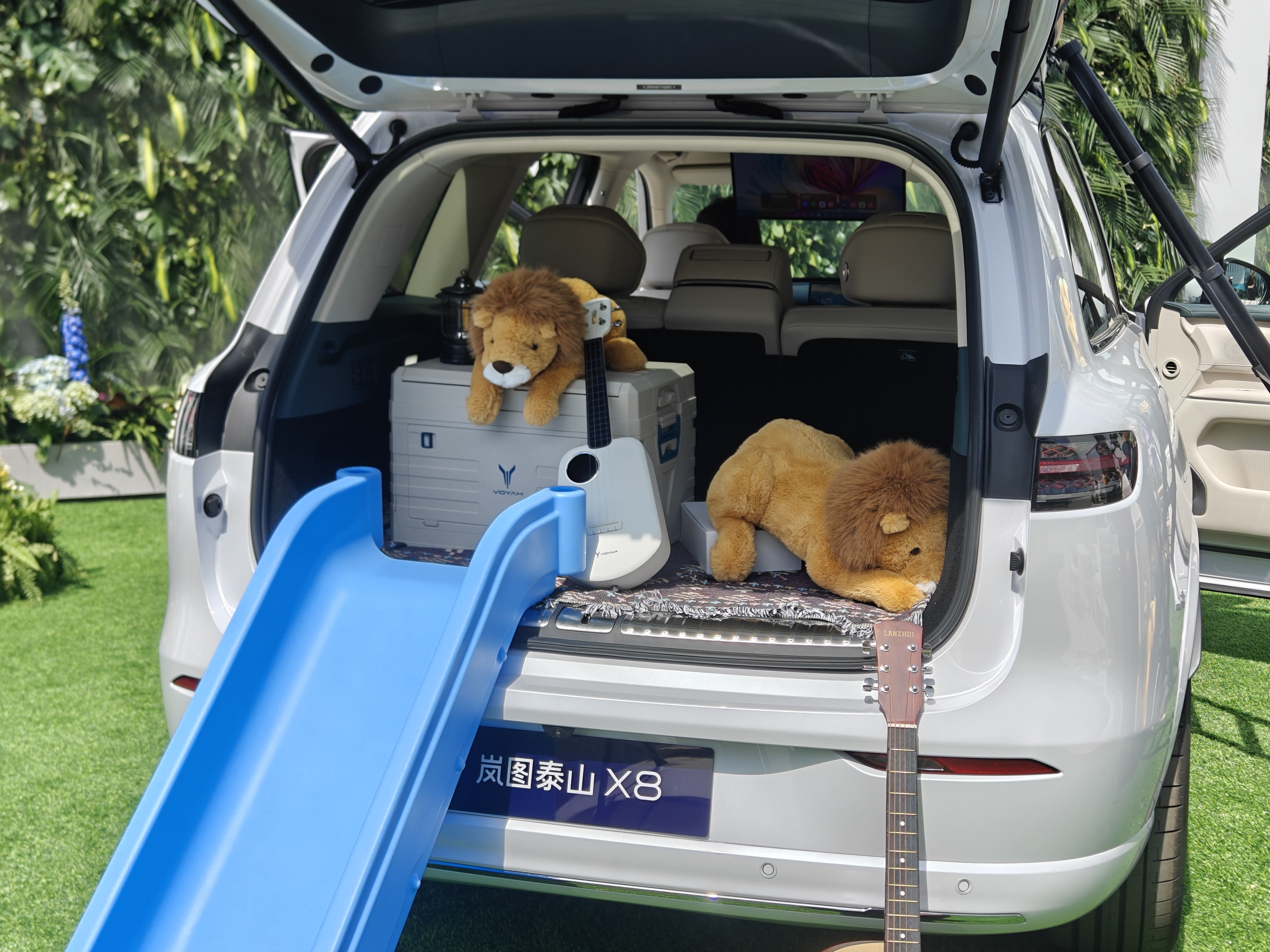
The two major factors of money and free time have built a natural barrier for off-road vehicles. Driving to parks and suburbs with family for camping on weekends is the main scenario for us to use vehicles outdoors far away from cities.
(Source: Photo taken by Dianchetong)
For this reason, in recent years, car manufacturers have been adding outdoor camping-related functions to their products. For example, the "projector headlight" function added to many previous models of Harmony Intelligent Mobility Alliance allows the front headlight to be used as a projector, and a small outdoor cinema can be built in the wild with a curtain.
The high-end version of the Xiaomi Pengcheng N90 series is equipped with an integrated electric hydraulic pop-up roof tent, which can summon a "second-floor bedroom" with one click. It is an SUV when driving, and a two-story RV after parking. Brands such as Xpeng, NIO and Voyah use automatically deployed air mattresses, combined with the design of flat-folding front seats or reclining rear seats, to create a large bed inside the vehicle.
The key to these functions and designs is to meet users' needs for outdoor camping on weekends. For such consumers, the passing ability of light off-road vehicles can already meet their outdoor vehicle usage needs, while hardcore off-road vehicles have "excessive performance".
In addition, the double-layer structure of the frame and body of the body-on-frame structure of hardcore off-road vehicles has a larger overall weight and greater inertia. It is prone to slight misalignment and shaking between the frame and the body when passing through continuous undulating roads. When encountering high-frequency fine vibrations (urban speed bumps, damaged asphalt roads), the vibrations are difficult to be absorbed by the frame, and are easily transmitted rigidly into the cockpit, so the comfort is not as good as that of light off-road models.
(Source: Photo taken by Dianchetong)
Even for real off-road vehicle users, most of the time they do not drive outdoors, and paved roads are the scenarios where we drive the most mileage. The characteristics of light off-road models such as comfort and low energy consumption have great advantages over hardcore off-road vehicles.
In general, light off-road vehicles focus on "balanced practicality and full-scenario adaptation", and their core advantages are reflected in comprehensive product capabilities. The monocoque body structure it adopts is lighter, has higher space utilization, and its chassis comfort and driving quietness are comprehensively better than those of hardcore off-road vehicles; the new energy power architecture enables it to have lower energy consumption and longer cruising range, greatly reducing daily usage costs; high-level intelligent configurations, luxurious cockpits and rich household expansion functions make it fully qualified to be the main family vehicle.
Although light off-road models are not as good as hardcore off-road vehicles in extreme self-rescue and heavy off-road scenarios, for the vast majority of ordinary users, light off-road achieves a perfect balance of appearance, passing ability, comfort, economy and intelligence, and is the optimal solution that truly fits the public's vehicle usage needs.
The market no longer needs excessive hardcore performance, and consumers' demands have long changed from "pursuing extreme off-road capability" to "balancing appearance, practicality, economy and all-round performance". The explosive growth of light off-road is the embodiment of the automotive market returning to the essence of consumption.
Light Off-Road Rises to Be the Mainstream, Hardcore SUV Enters the Dual-Track Era
From the circle controversy caused by Xiangjie G9 to the head car manufacturers such as BYD, Chery, Changan, Great Wall and Dongfeng M-Hero collectively betting on the light off-road track, the current iteration of the off-road SUV market is essentially a structural transformation from niche toys to mass consumer goods.
In the long run, hardcore off-road will no longer be the only standard answer in the off-road market. With accurate product positioning, people-friendly cost advantages and full-scenario adaptation capabilities, light off-road will completely become the core mainstream route of the future hardcore SUV market, and the industry will officially enter the dual-track era of "mass light off-road as the mainstay and professional hardcore off-road as the supplement".
(Source: Photo taken by Dianchetong)
In the future, the stratification of the off-road market will become more and more distinct, and the two tracks will form completely differentiated development logic. Traditional pure hardcore off-road vehicles will not disappear, but will continue to move towards high-end, niche and customized development, focusing on vertical circles such as extreme cross-country and professional off-roading, relying on exclusive mechanical quality and extreme passing ability to maintain high premium, and become the technical benchmark and image card of car manufacturers' brands, no longer taking large-scale sales as the core goal.
The light off-road track will continue to expand and iterate. Industry competition will no longer be limited to the boxy appearance, but will be deeply upgraded towards electrification, intelligence and scenario-based design, relying on configurations such as intelligent four-wheel drive, high-level intelligent driving and outdoor ecological cockpit to continuously bridge the experience gap between urban SUVs and traditional off-road vehicles.
In the final analysis, the rise of light off-road is not a downgrade of off-road capability, but the popularization of off-road categories. It solves the industry pain point that traditional hardcore off-road vehicles are not practical for family use, and meets the core vehicle usage needs of domestic users for light outdoor activities and heavy daily use.
With the continuous advancement of rational consumption and popularization of car manufacturers' technologies, light off-road vehicles that focus on balanced and all-round performance will continue to seize the market share of mainstream SUVs, and become the absolute growth pillar and mainstream development direction of the domestic off-road SUV market in the next few years.