The prompt for the Opus 5 game has gone viral, and AAA masterpieces can be reproduced within 24 hours.
Wow! Recently, an Opus 5 game prompt has gone viral on X!
Millions of people are watching online, with this cheat code in hand, AI games can be generated infinitely...
The most impressive part is that netizen Anshu, all by himself, in just 24 hours, built a full-fledged copy of Outer Wilds from scratch!
The logic behind the Prompt is also very simple:
The main Agent breaks down tasks, sub-Agents do the work, plus an independent Agent that supervises with constant pressure to push for better results.
As long as the generated visuals are not as good as those of similar games, the work will be automatically sent back for rework, and the AI is not allowed to stop until the output meets the required standards.
The effect is incredibly good —
The original author Matt Shumer directly created the Call of Duty Opus 5 version all by himself, with all textures, animations and sounds generated by AI.
What's more! No external assets were used at all!
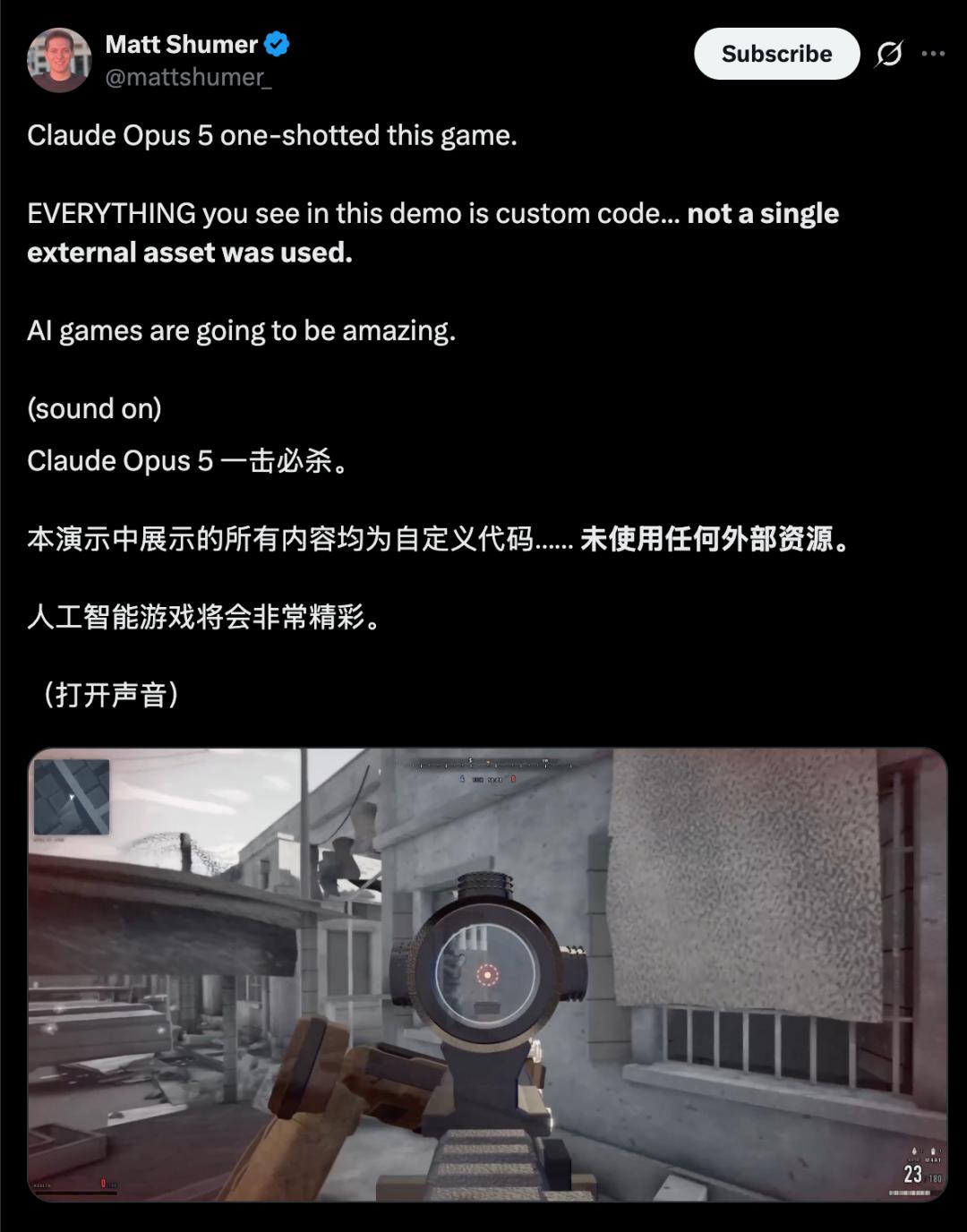
Non-stop operation for 24 hours
This wildly popular prompt across the entire network was officially named "Challenge Loop" by its author Matt Shumer:
I need you to create a first-person shooter game with graphics quality on par with the latest Call of Duty series... You need to iterate on every piece of content in a loop, and assign dedicated sub-Agents to conduct visual checks to ensure the overall visuals meet AAA game standards... The system must use blind side-by-side comparison to distinguish the quality of visuals between the two works.
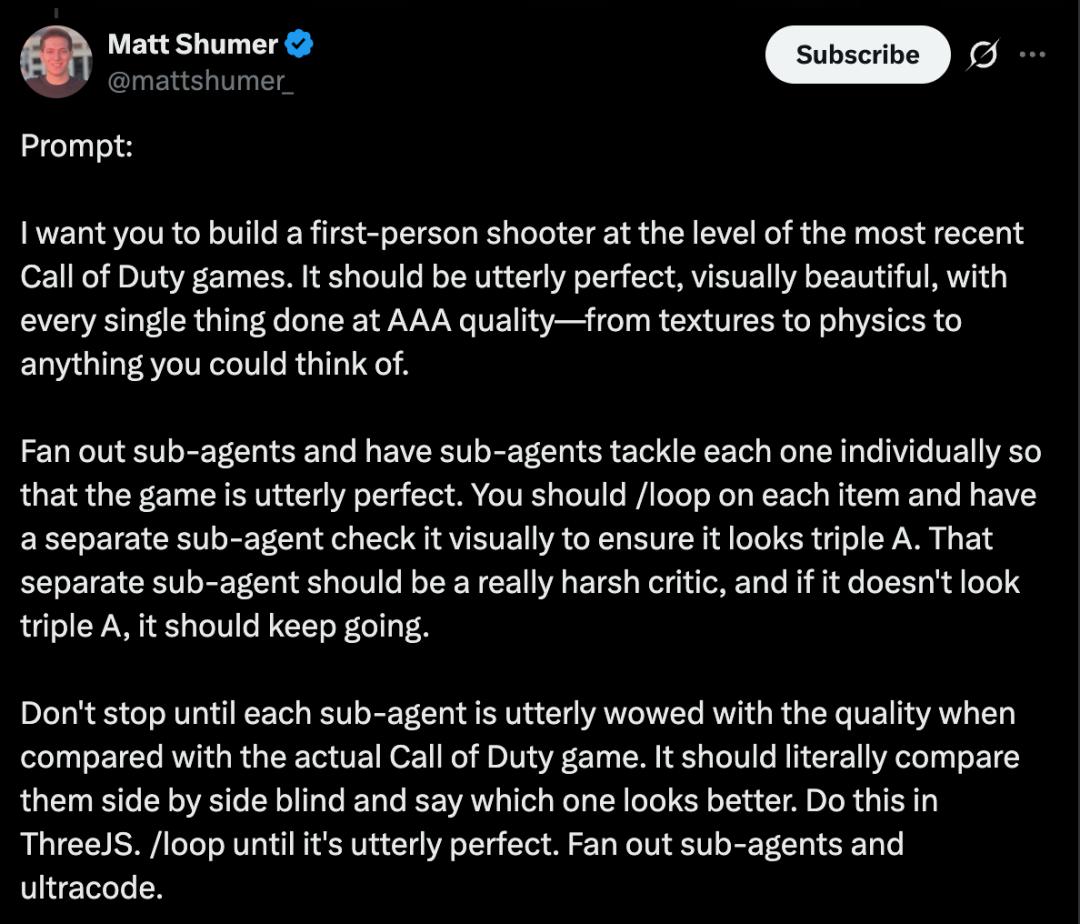
In short, after the main Agent receives the task objective, it will automatically split the task into several parts, and then assign a specialized production Agent for each part.
The first half of the instruction is almost identical to the common multi-Agent game development process, and the key lies in the newly added acceptance link:
The judge Agent will check the output, compare it with the selected real reference, and once the generated result is inferior to real AAA games, continuous rework and optimization will be required.
Of course, it is still impossible to fully reach the level of AAA blockbusters right now, so users need to stop it in time, and only use this prompt as a means of extreme pressure to push Opus 5 to demonstrate its autonomous planning and long-term iteration capabilities.
Netizen Anshu's 24-hour space exploration game The Long Silence is created exactly in this way:
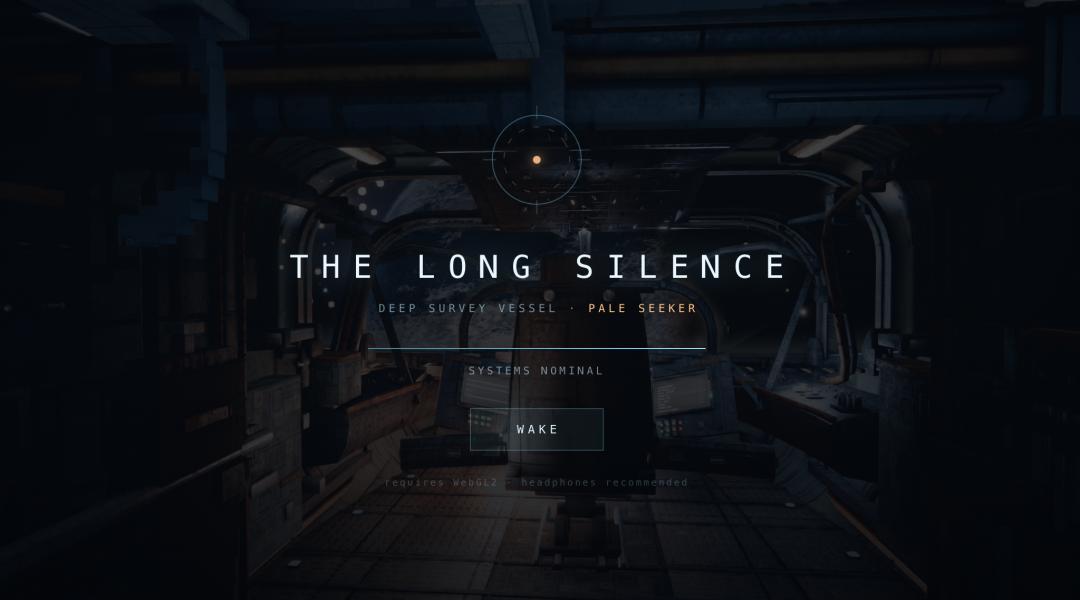
The specific production process is divided into several stages:
Step 1: Require Opus 5 to use Three.js to create a space exploration game.
Users only need to give basic objectives, such as allowing players to walk around in the game, drive spaceships, avoid overly cheap-looking visuals, and run as stably as possible at 60 FPS in the browser.
The rest of the game's worldview and technical architecture are all left to Opus 5 to decide on its own.
In terms of assets, after Claude Code installs Blender MCP, it will find tools to do modeling on its own.
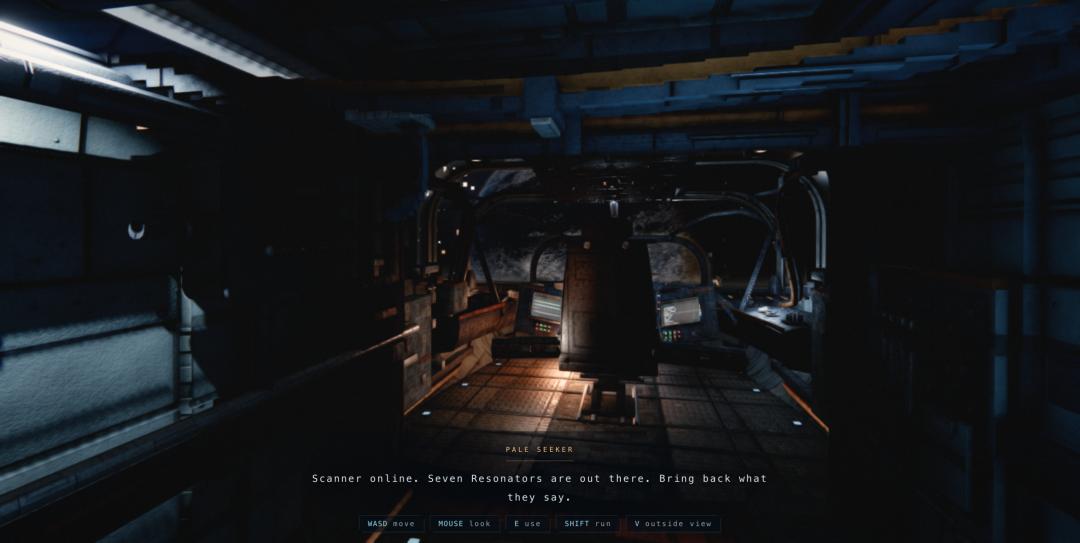
Step 2: After the first playable version is ready, assign Opus 5 a 24-hour continuous goal to require it to comprehensively improve the visual effects.
At this point, multiple sub-Agents start working in parallel to improve efficiency; the judge Agent will compare game screenshots item by item with AAA space games such as Starfield, and Opus 5 is not allowed to secretly lower the evaluation standards during this period.
Author Anshu reminds that you also need to give Opus 5 appropriate positive encouragement here:
You have the ability to achieve this goal — do your best and don't give up. (doge)
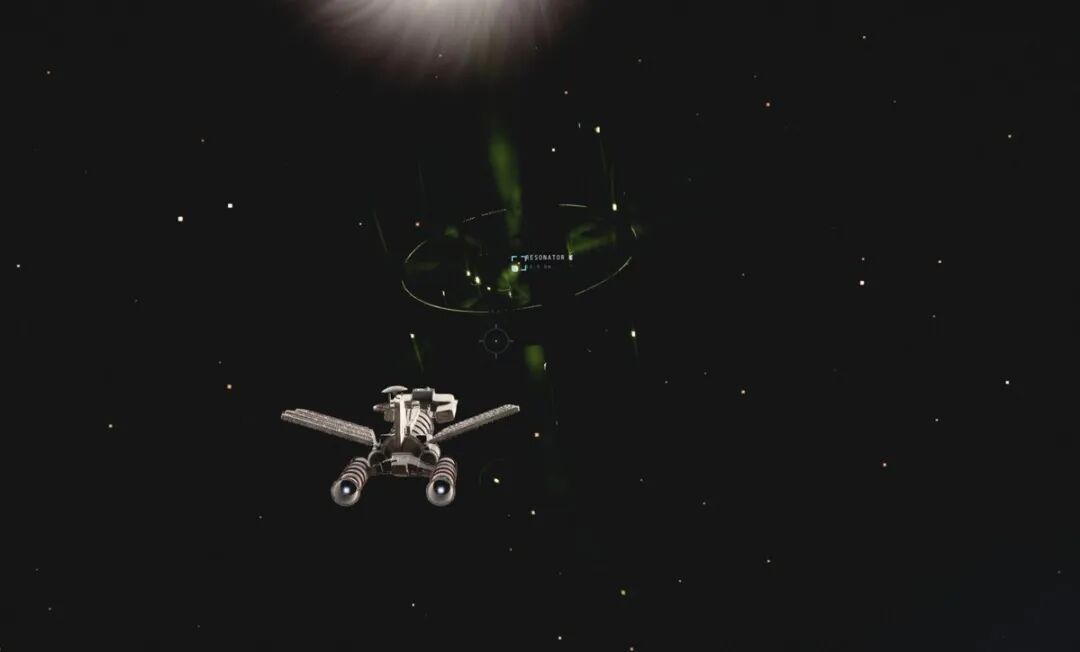
Step 3: Manual optimization + skill generation.
Anshu checks the progress through his mobile phone, and when the model spends too much time on the planet scenes, he will ask it to adjust the priority.
After stopping the operation, use other Claude instances to fix rendering issues, clean up the code and complete deployment.
Finally, require Opus 5 to summarize the experience into a skill and upload it to GitHub.
According to the open source repository, Opus 5 even built a set of acceptance tools by itself during the review process, which has 17 built-in mandatory verification processes. The tool script will also automatically capture comparisons of different scenes, count frame rates, and analyze exposure data.
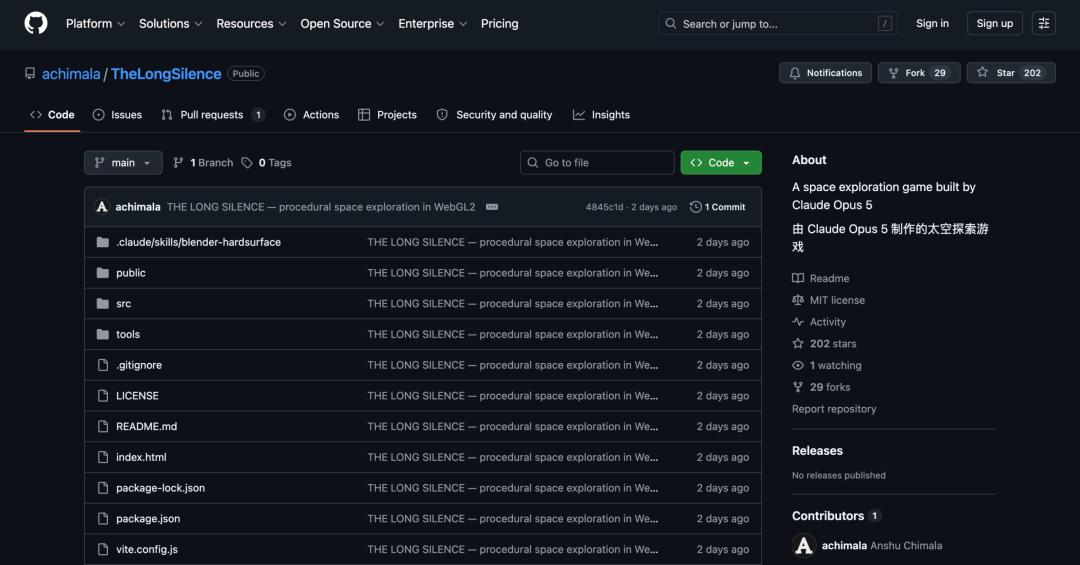
BTW, this game can now be directly played in the browser (https://longsilence.anshu.dev/). I just tried it out myself, and my evaluation can be summed up in three words:
Absolutely mind-blowing!
Netizens are all copying the method and sharing their own results
Word spreads fast, this prompt has directly set off the Opus 5 game craze.
People start playing as soon as they open their eyes!
Netizen Ryan Campbell used this method to iterate a go-kart game. Opus 5 continuously improved local rendering, mobile performance, controls and camera, and the finished product can also be directly played in the browser.
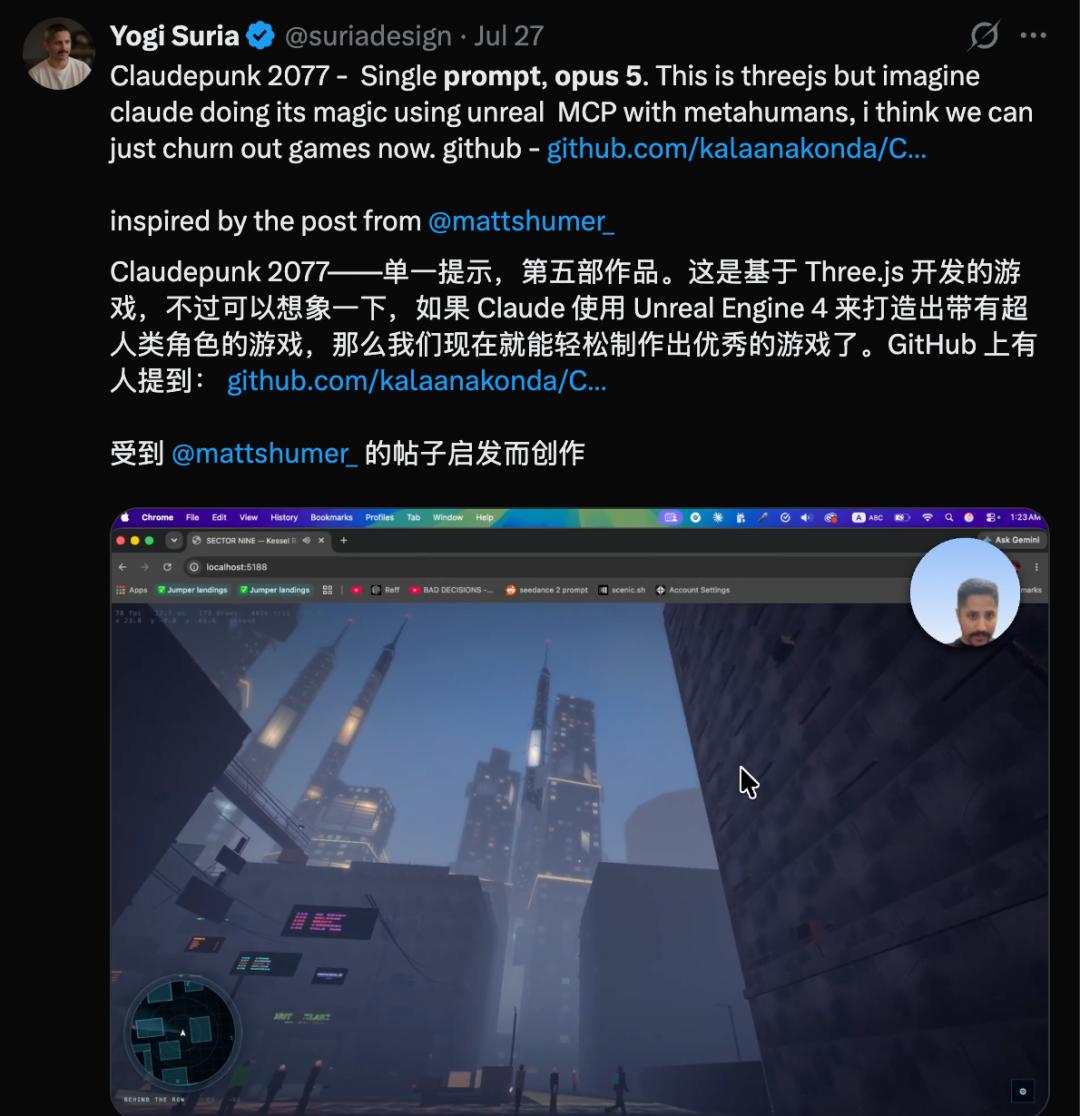
Netizen Yogi Suria directly used it to create Claudepunk 2077...
The same instruction migrated to GPT-5.6 Sol also delivers pretty good results, only slightly inferior to Opus 5.
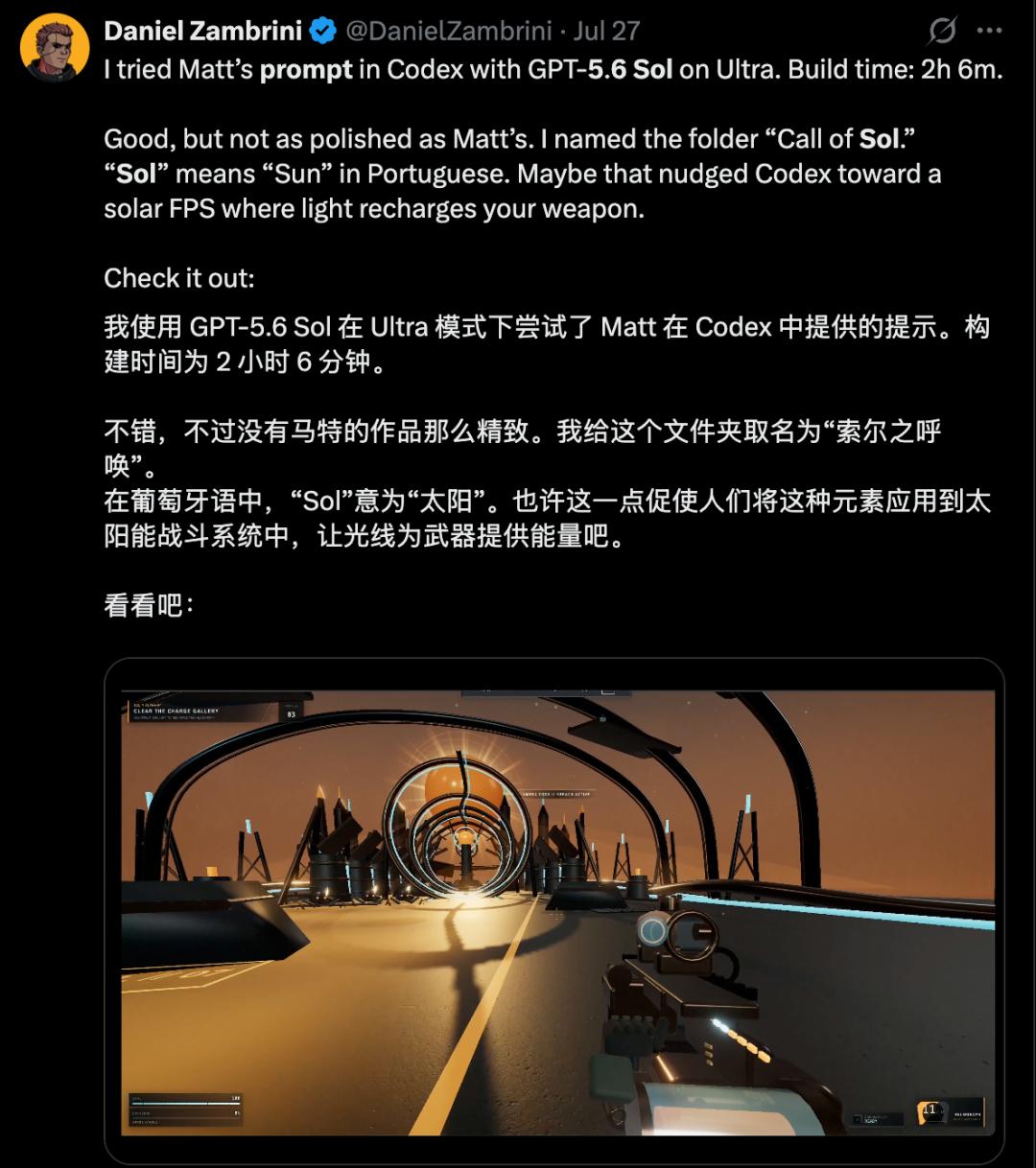
It can be seen that the existence of the judge Agent does amplify the model's capabilities, and different developers can use it to make game prototypes of all kinds of genres.
This exactly corresponds to the capability Anthropic emphasized when releasing Opus 5: the model is more suitable for long-duration, multi-step tasks, and is more willing to check results, find errors and iterate continuously.
From this perspective, the Challenge Loop prompt is more like adding a stricter correction mechanism to Opus 5's existing capabilities.

As for Matt Shumer, the inventor of this set of gameplay, he is himself an AI entrepreneur and investor.
In February this year, his long article titled *Something Big Is Happening* went viral in the tech industry, with more than 80 million total views.
The article argues that the public's perception of the capabilities of cutting-edge models has lagged far behind the actual experience of AI practitioners.
This Opus 5 game craze just adds a real sample to Matt's judgment.
Reference links:
[1]https://x.com/anshuc/status/2081801979131818412
[2]https://x.com/mattshumer_/status/2081830214384886228
[3]https://x.com/mattshumer_/status/2081054356405731740
This article is from the WeChat official account "QbitAI", author: Focus on cutting-edge technology, published with authorization from 36Kr.