Earn money from the new energy industry and invest it in embodied intelligence.
At the 2025 Spring Festival Gala, 16 Unitree Robotics robots dressed in Northeast China-style red flower cotton-padded jackets performed the Yangko dance on the stage. This is not the first time that robots have appeared on the Spring Festival Gala stage, but it kicked off a massive wave of robot financing.
According to incomplete statistics, there were more than 170 financing cases in the robotics sector in 2024. Taking the 2025 Year of the Snake Spring Festival Gala as a turning point, the number of financing cases in the robotics sector skyrocketed to nearly 450 last year. The growth in total financing amount is even more staggering, surging 3 times from about 140 billion yuan in 2024 to about 560 billion yuan.
The boom has continued to this day. Since the beginning of this year, nearly 20 robotics startups have become new unicorns, many of which have completed 3 to 5 rounds of financing in the first half of this year, with the single-round financing amount constantly hitting new records. In the first half of the year, there were nearly 300 financing cases in the robotics sector, and the total disclosed financing amount accumulated to about 460 billion yuan.
Apart from traditional investment institutions such as state-owned capital and venture capital, a new participant has joined this round of robotics investment boom: supply chain enterprises of new energy vehicles, which provide financing for robotics startups directly or through participation in industrial funds. For themselves, this is not only a precautionary measure for the return of new energy vehicle growth to normal, but also an exploration for a second growth point oriented to the future.

The most profitable automotive supply chain enterprises are pouring the largest amount of capital into the robotics sector
The landmark event that marked the deep financial tie between the new energy vehicle supply chain and the robotics sector took place in June 2025, when CATL and its subsidiary Puhquan Capital led a RMB 1.1 billion Series B financing for Galaxy Universal Robotics, which was the highest record for single-round financing in China's embodied intelligence sector at that time.
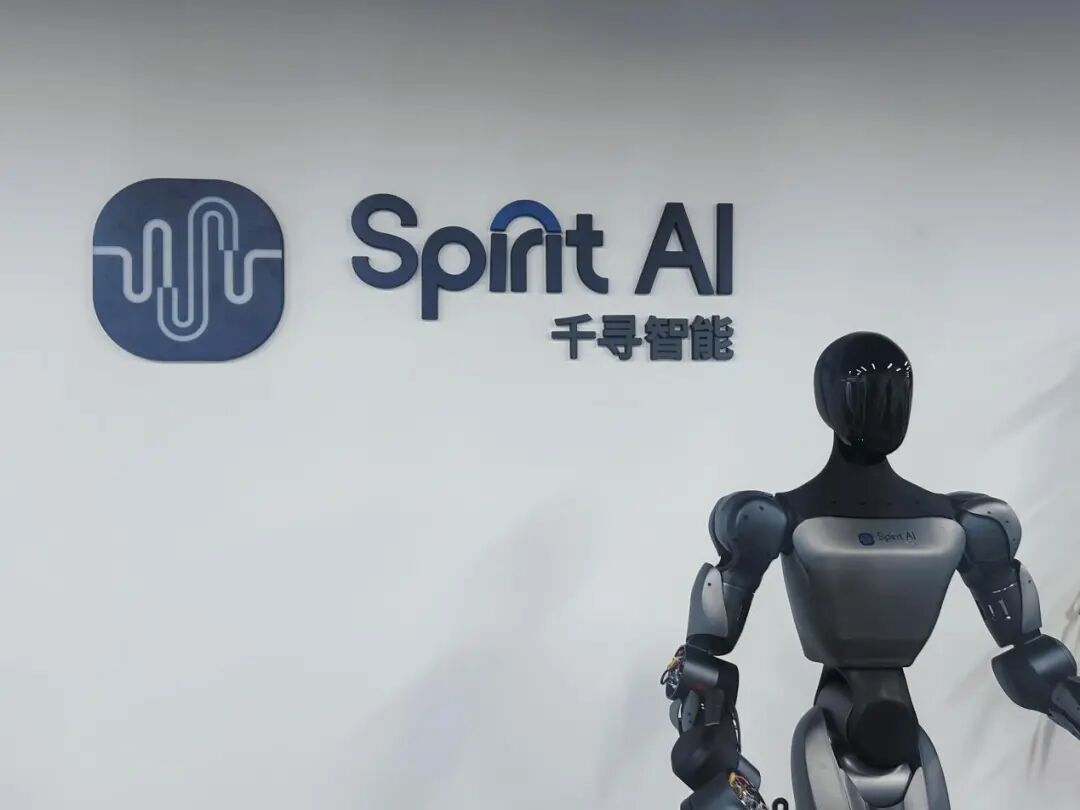
However, the investment of CATL-affiliated capital in the robotics sector can be traced back to November 2024, when Bairui Capital founded by Li Ping, co-founder and vice chairman of CATL, exclusively invested in the angel round of Qianxun Intelligence, and continuously increased its stake afterwards. This year, the Moz1 small Mo robot independently developed by Qianxun Intelligence has been deployed on the lithium battery PACK production line of CATL.
Through its three major investment platforms, CATL has invested in well-known robotics startups, including Galaxy Universal, Qianxun Intelligence, Songyan Dynamics, Weita Dynamics, and Zhongqing Robotics. The two latest investments of CATL-affiliated capital in the robotics sector are Bluepoint Touch and Natural Will.
CATL-affiliated investments in the robotics sector cover a very wide range, including industrial robots, general-purpose robots, consumer robots, embodied ontology, large models, sensors, controllers, physical AI, etc. According to incomplete statistics, CATL's cumulative investment in the robotics sector has exceeded 2 billion yuan, with more than 10 invested enterprises.
New energy vehicle giant BYD is also keen on investing in robotics startups, and made layouts earlier than CATL. However, different from CATL, BYD adheres to the simultaneous development of "investment + independent R&D". As early as August 2023, BYD invested in Agibot. Last year, BYD-affiliated capital successively invested in Paxini and Sino Future. The former focuses on multi-dimensional tactile sensors and end effectors for humanoid robots, while the latter mainly provides full-stack solutions for dexterous hands.
An investor who participated in the financing of the same robotics startup together with CATL-affiliated capital said bluntly that the investment of enterprises like CATL in the robotics sector has a greater effect than the investments of giants such as Tencent, Alibaba and ByteDance in the internet industry. "Robotics is ultimately a manufacturing industry. CATL not only has sufficient capital, but also has rich manufacturing experience. At the same time, it can also provide massive training data and landing application scenarios that robotics startups must have."
"Robotics startups do not lack enthusiasm from investors, but they are often more willing to cooperate with new energy vehicle supply chain enterprises. Almost every startup's financing has the participation of related enterprises or industrial funds. Compared with capital, more valuable assets are stable supply chain, high-quality data and feasible landing scenarios," said a co-founder of a robotics startup at Series A stage.
His statement is not exaggerated. Kunlunxing Robotics, co-founded by Ren Geng, who once took charge of Alibaba Cloud's China region business, and Lang Xianpeng, the former top leader of intelligent driving at Li Auto, completed 3 rounds of financing in less than 100 days after its establishment with no product launched, and became a new unicorn in the robotics sector. Kunlunxing Robotics aims to introduce physical causal modeling capabilities on the basis of VLA (Vision-Language-Action model), so as to build a dual-system intelligent robot architecture with the Kunlun world model as the core, and finally form an integrated full-stack hardware technology system covering ontology, motion control and integrated testing.
Delta Intelligence, a humanoid robot foundational model company, successively completed 5 rounds of financing within half a year. Its investors include not only leading robotics startups such as Starsea Map and Agibot, but also investors from the automotive industry and semiconductor industry.
Represented by Kunlunxing and Delta Intelligence, according to the tracking statistics of IT Juzi, a platform for internet venture capital data, 20 new unicorn enterprises were added in the robotics sector in the first half of this year, including Zhisquare, Zibianliang, Qianxun Intelligence, Sudo Tech, Tashi Zihang, Digua Robotics, Wujie Dynamics, Juji Dynamics, etc.
These robotics startups generally have support from the new energy vehicle industry chain, including Wuzhou Xinchun, Horizon Robotics, Zhongding Co., Ltd., Guangyang Co., Ltd., Joyson Electronics, Longcheer Precision, CATL, Envision Group, Broad-Ocean Motor and Wanfeng Holding.
Zhisquare, founded in 2023, obtained a new round of financing of 5 billion yuan in July this year, setting a new record for the single-round financing amount of Chinese robotics startups. The list of shareholders participating in this round of financing includes new energy vehicle industry chain enterprises such as Wuzhou Xinchun, Wanfeng Holding and Zhongbei Communication.
The logic of new energy vehicle enterprises' bets: risk reduction, cost reduction and supply chain collaboration
The difference is that there are very few financing cases for the robotics business departments of new energy vehicle enterprises, even though they made layouts in the robotics sector much earlier. XPeng, Li Auto, Xiaomi, Chery, Dongfeng, SAIC, Seres and BYD all have independent R&D departments for robots. The cross-sector development of robots by new energy vehicle enterprises was first driven by new car-making forces, mainly XPeng and Li Auto.
Over the past two years, Li Xiang, Chairman of Li Auto, has shifted his core goal to carriers centered on artificial intelligence. At XPeng AI Day last November, XPeng's IRON humanoid robot made its debut, and once sparked discussions of "being played by a real person" due to its overly anthropomorphic walking pace. However, in this round of robotics financing boom, there are few financing news for robotics projects led by new energy vehicle enterprises.
But new energy vehicle enterprises have made more aggressive investments in the robotics sector. In addition to BYD, SAIC-affiliated capital, Xiaomi-affiliated capital, Geely-affiliated capital and BAIC-affiliated capital have all placed heavy bets on the robotics sector, among which SAIC-affiliated capital is the most active, having invested in 4 of the 20 new robotics unicorns this year; Geely-affiliated capital, which only invested in 1 robotics startup last year, has made 6 investments this year. NIO Capital, which is highly related to NIO, also participated in the financing of Juji Dynamics.
An investor who has long focused on the robotics sector pointed out that new energy vehicle enterprises are more keen on external investment at present, mainly for three reasons. First, robot R&D has a long cycle and large capital demand. For new energy vehicle enterprises with thin profit margins or even still losing money, independent R&D alone is tantamount to self-consumption, which can only be achieved by a few enterprises with excellent financial performance. Second, when new energy vehicle enterprises develop robots, they emphasize business collaboration, such as sharing R&D costs, sharing training data and codes of large models, and replacing manual labor in the manufacturing process. Third, external investment has lower risks and can also achieve the second goal mentioned above.
In addition, fundamentally speaking, robots, autonomous driving vehicles (including Robotaxi) and low-altitude aircraft are only applications of artificial intelligence in different scenarios, so the core supply chains of new energy vehicles and robots are highly overlapped — robotics startups attach more importance to the supply chain integration capabilities and manufacturing quality control standards of new energy vehicle enterprises.
Xie Ling, founder and CEO of Yufeng Future, a large electric vertical takeoff and landing (eVTOL) aircraft startup, once said that both low-altitude aircraft and robots benefit from the technology and supply chain spillovers brought by the development of the new energy vehicle industry. Taking low-altitude aircraft as an example, the power system and fuselage raw materials almost overlap with the new energy vehicle supply chain, so do robots.
Fang Jianhua, founding partner of Guoke New Energy Venture Capital, an investment institution focusing on the new energy vehicle track, revealed that the overlap rate of the core supply chains between new energy vehicles and robots exceeds 60%, which means that the reuse ratio of controllers, power systems, chips and sensors between the two can exceed more than 60%.
Furthermore, there is the integration of application scenarios. At the Q1 earnings call in May this year, Li Xiang elaborated on Li Auto's robotics plan: "Humanoid robots are needed in factories, stores and by users. From the perspective of market pattern, we believe that startups, mid-sized enterprises like us with revenue of hundreds of billions of yuan, and larger enterprises will all enter the robotics track." Li Auto reorganized its autonomous driving department this year, adding three secondary departments related to embodied intelligence: embodied engineering, embodied interaction and embodied behavior, under the foundational model R&D department.
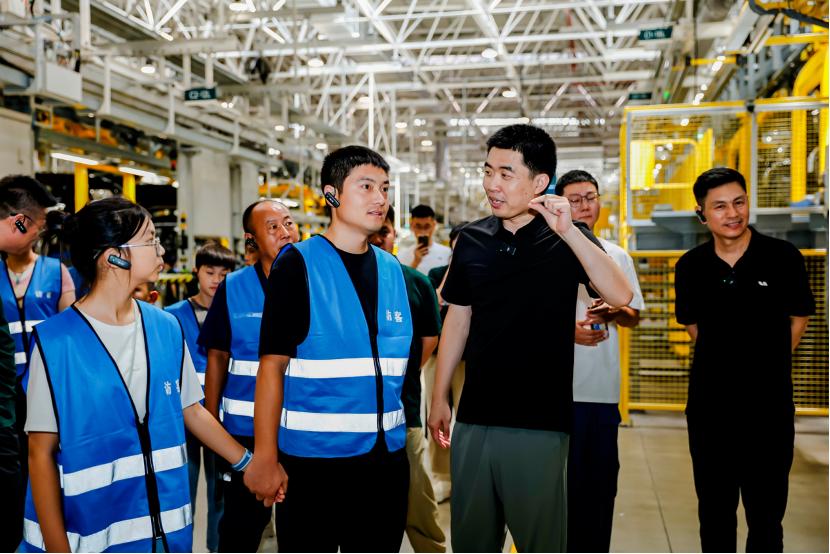
For example, NIO Capital invested in Juji Dynamics, and is optimistic about the application of humanoid robots in the whole vehicle production line, where the final assembly process of whole vehicle production still highly relies on manpower. In March this year, SAIC Group deployed humanoid robots on the mass production line of batteries for Buick Electra E7, which was developed by Agibot, an invested enterprise of SAIC-affiliated capital.
The aforementioned investor focusing on the robotics sector told Dianchang that the upstream suppliers of the new energy vehicle industry chain and whole vehicle enterprises invest capital in the robotics sector. On the one hand, they hope to improve the automation level of production, manufacturing and other links to reduce costs; for whole vehicle enterprises, the more long-term logic is that they hope to reconstruct the valuation model of the capital market through this move.
"What we least want is to be defined as an automotive company, but as a future-oriented high-tech, embodied innovative company," said Yin Tongyue, Chairman of Chery Automobile Group, at the delivery ceremony of Chery Mojo robots in April this year.
This article is from the WeChat official account "Dianchang", written by Hua Zijian, and authorized for release by 36Kr.