The Real "Staged Shooting": The Traffic Breakthrough of Pastoral Lifestyle Bloggers
Five pounds of crayfish were poured into the rice paddy and quickly burrowed into the mud and grass. Shao Bin fished back and forth with a net bag, but in the end, he retrieved less than two pounds.
He bought these crayfish from the market that same day. The purpose of putting them into the rice paddy and then fishing them out again was to create a clip of rural life that looked like it happened naturally. Shao Bin did not shy away from this, and as he fished, he said to the camera, "Let's see how many we can get back in the end."
In the past, he rarely spoke in his videos, only silently catching freshwater seafood, picking wild vegetables, and turning the ingredients into a local delicacy. This time, for the first time, he personally revealed how the idyllic rural life presented in the footage was created.
Netizens teased him for being "an honest guy making Douyin videos" while pushing the view count of this video to nearly 20 million. The three pounds of escaped crayfish were not recovered, but they brought him nearly 100,000 new followers.
It has long been an unspoken secret among audiences that idyllic rural videos are scripted, but viewers still resent being treated as uninformed people. Huang Shaobin handed the staged shooting process to the audience, which precisely hit this subtle emotion. However, when "confession" becomes replicable, it gradually grows into another set of scripts.
01 Beyond the Lens
There are not many clams in the stream. To make the footage look better, Huang Shaobin specially replaced the iron strainer he usually uses with a bamboo basket, stood barefoot in the stream, bent over to fish repeatedly, and then poured the clams together with sand and stones into a large silver basin.
"I fished for a whole morning to get this much, but in the video, it may look like I finished the work in just a dozen minutes."
While sitting by the stream to rest, Huang Shaobin explained to the camera for the first time how this video was shot.
It was not easy to speak up. He was used to appearing in the frame in silence. When he suddenly had to speak to the camera, he always felt that his pauses were awkward and his expression was not smooth enough. When reviewing the footage, he thought his expression was too stiff. For a short segment of voiceover, he recorded it over and over many times before picking out a satisfying one.
Later he said that voiceover has always been the most stressful part of filming. Sometimes a single sentence has to be recorded more than ten times, or even dozens of times, and what the audience finally sees is only the most natural take among them.
The second half of the video transitions to the rice paddy. Huang Shaobin poured the five pounds of crayfish he bought from the market that day into the ditch, then picked up the net bag to fish them out again: "Let's see how many we can get back in the end." The crayfish quickly scattered and crawled away, and less than two pounds were finally fished up.
In previous videos, he always silently caught freshwater seafood, picked wild vegetables, and then made a local delicacy. There were only the sounds of flowing water and hot oil in the footage, the stream was clear, the green plants were lush, and even the stones looked as if they had just been washed by rain.
This time, he personally broke the tranquility of the picture, and also revealed how this idyllic rural life was created. The comment section was particularly lively: some people teased him for being "an honest guy making Douyin videos", while others said they had long known that the videos were staged, but it was the first time they saw a blogger admit it himself.
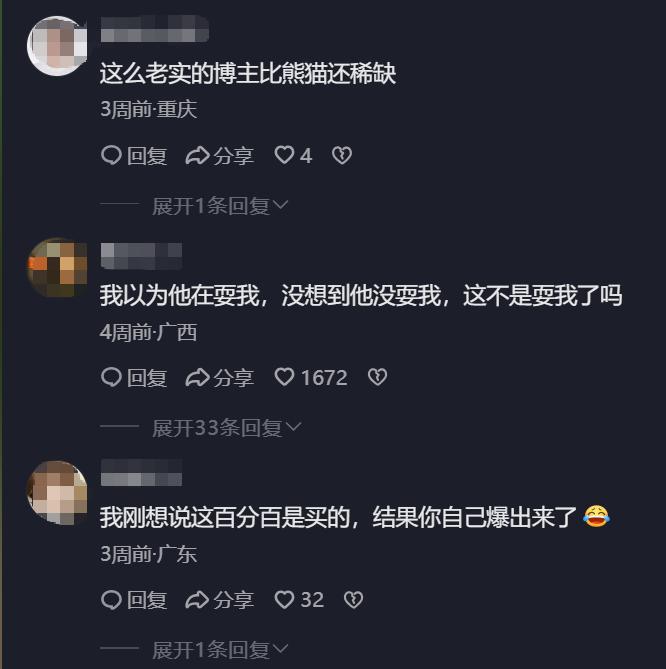
This video, which was shot for two or three days in total, finally had a view count approaching 20 million, bringing nearly 100,000 new followers to Huang Shaobin. Previously, although his single video also had around a million views, the number of new followers gained was usually only a few hundred to a few thousand.
The attracted fans gradually found that the paradise surrounded by mountains and with clear streams in the videos was not the daily scene that Huang Shaobin could see as soon as he opened the door every day.
Huang Shaobin's home is in a natural village under Xingzi Town, Lianzhou, Guangdong. It is located in northern Guangdong, adjacent to Hunan, and 200 kilometers away from the urban area of Qingyuan. The stream that appears most often in the videos is actually in the neighboring village, and he has to ride an electric bike there every time. Huang Shaobin's favorite shooting location is in Jinkeng Village, 20 kilometers away, where the stream is clearer and the pebbles are clearly visible.
The village where he lives has more red sandy soil, fewer trees and more weeds, which does not look good on camera. Over time, Huang Shaobin began to travel back and forth between several nearby towns and villages, and he has long been very familiar with which village has clearer streams and which mountain path is suitable for shooting sunsets.
"A good shot really requires the right time, place and people", he said. So Huang Shaobin has now developed the habit of checking the weather forecast every day. On sunny days with direct sunlight, the water surface reflects too much light, which is not good for shooting. On the contrary, after rain or on humid overcast days, the color of plants is darker and the stream looks clearer, making the footage look the best.
Once the real-time weather showed that it would rain at 11 o'clock, he prepared the shooting equipment in advance and went out as soon as the rain stopped.
He completes shooting, appearing on camera and editing all by himself. Scouting locations, preparing ingredients, shooting and editing, a video of several minutes usually takes two or three days, and if the weather changes, additional shooting is needed.
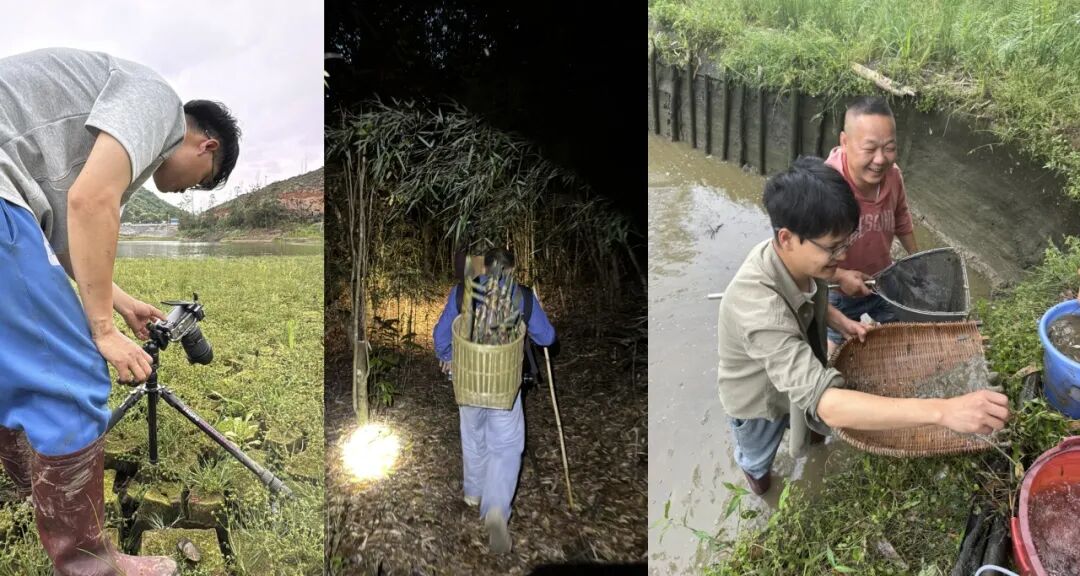
The vegetables in the videos are not picked from his own field either, most of them are taken from his neighbor Brother Hui's house. Huang Shaobin greets him in advance, and after picking, he either goes to the city to buy new ones to make up for it, or pays directly.
Brother Hui is also a young man who returned to his hometown to do self-media. His parents work in agriculture at home, and there are more varieties of vegetables in the vegetable field. The two help each other: when Huang Shaobin goes to the city, he will bring things back for Brother Hui, and Brother Hui allows him to come and pick vegetables at any time.
The wild vegetables are real. Huang Shaobin has been familiar with watercress, purslane and other wild vegetables since he was a child. Freshwater seafood can indeed be caught, but the time spent is difficult to match the update rhythm of the videos. In order to catch enough seafood for one video, the shooting cycle may have to be extended by one or two more days. In contrast, buying them from the market and then putting them in the water for shooting saves more time.
Mountain crabs are an exception. They are hard to buy in the market, so he can only go to the river to catch them at night, and then put them back for shooting during the day. But he is reluctant to eat them — they were Huang Shaobin's playmates in childhood, and some of them look very cute. After shooting, he only keeps those that are no longer very vigorous and can hardly survive even if put back, and puts the rest back into the river.
The green mountains and clear waters outside the lens are not as safe as they look. There is often no signal in the mountains, the air is humid in summer, and the road surface is slippery, so you may fall down if you are not careful. Mosquitoes and insects are the most unbearable, and there are all kinds of snakes around. Once, when Huang Shaobin got home and checked the footage, he found that a snake had crawled through the grass behind him when he was shooting.
Huang Shaobin has a dog named Kongkong. To deal with the dangers that may appear at any time in the mountains, Huang Shaobin often takes it with him. If there is any movement around, Kongkong can remind him earlier.
Fans often ask, "Where is this place? I want to travel there", and Huang Shaobin always persuades them not to come: "It is really not as beautiful as in the videos".
The streams, trees and villages are not fictional, but reality will not always stay at the moment most suitable for shooting. Huang Shaobin has to wait for the weather and look for light in different places, and then spend several days editing the scattered scenery into a few minutes of idyllic rural life.
02 In the Track
When Huang Shaobin decided to make the shooting process public, the audience had long been wary of the staged shooting in idyllic rural videos. In 2024, "Northeast Yu Jie" caused controversy by staging the scene of catching river crabs in the rice paddy, and later admitted that the crabs were put in advance. The long-standing trust problem of idyllic rural videos was once again pushed to the forefront.
When Shao Bin first started posting videos, people kept asking in the comment section: Are the fish and shrimp bought? Is the scene arranged in advance? He would answer truthfully, but these explanations stayed in the comment section and were hard to be seen by more people.
"It really took me a long time to hold back and finally tell the truth."
He once thought about making a separate voiceover video to explain the process of location scouting, purchasing and staged shooting all at once, but then he thought that if he just explained to the camera purely, the audience might not be willing to stop and watch.
In the end, he chose to let the audience first enter a familiar fishing scene: watch him walk into the stream, catch clams, and then pour the crayfish into the rice paddy. After the footage has attracted people's attention, he suddenly tells the audience how all this was arranged.
"Shoot first to attract everyone's attention, and then speak out, which may be more unexpected for people".
Huang Shaobin knows what the audience is asking, and is also judging how to speak out to be more easily seen. But even he himself did not expect that this change would bring such a huge amount of traffic.
This is related to the situation when he entered this track.
Li Ziqi once made poetic idyllic content a mature short video language. Green mountains, cooking smoke, wooden houses and seasonal food provided urban audiences with a spiritual hometown where they could stay for a short time. Since then, a large number of creators have entered the countryside along the same path, and similar compositions, themes and narratives have been continuously replicated. The footage has become more and more exquisite, but there are fewer and fewer surprises.
The top account "Taoxi Brothers" also catches aquatic products in the mountains and makes food. With quiet footage and a no-talking style, it has accumulated more than 5.2 million fans. Judging only from the content, the most obvious difference between Huang Shaobin and them seems to be that the shooting location has changed from Wuyuan, Jiangxi to Lianzhou, northern Guangdong.
Huang Shaobin does not shy away from this. When he first started shooting, he would study accounts that had gone ahead, such as Taoxi Brothers and Zhu Xiaomao, and also imitate their shots and shooting methods. He thinks the audience prefers beautiful enough footage, and as long as the shots are more exquisite, it is easier to get traffic.
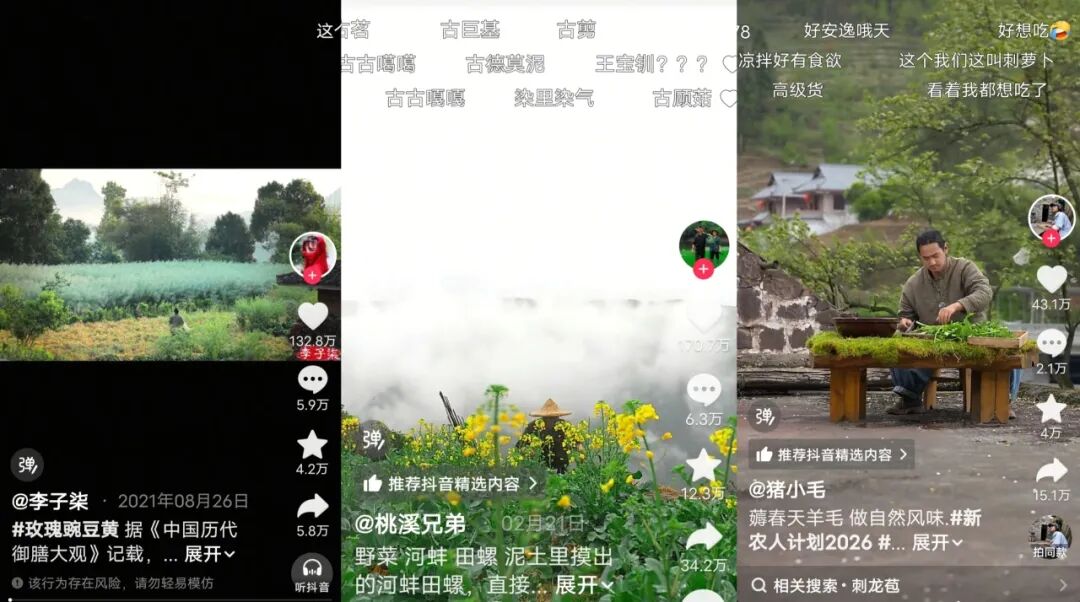
This is the direction that Huang Shaobin is familiar with and is willing to bet on.
He majored in computer science in college, worked for China Unicom and China Mobile successively after graduation, and later returned to the county town to open a breakfast shop. While running the business, he took the civil service examination for four or five years. Most of the positions he could apply for had no professional restrictions, and hundreds of people often competed for one quota.
Huang Shaobin really came into contact with agriculture, rural areas and farmers (SAN NONG) videos because of Chestnut, a young man from the same town. Chestnut studied photography and was the first to return to his hometown to do self-media. At that time, Huang Shaobin was still running the breakfast shop in the county town, and in his spare time he would shoot some daily videos, having accumulated nearly 10,000 fans. Chestnut found him and hoped that the two would jointly run a rural account. However, Huang Shaobin had to take care of the shop and was preparing for the civil service examination, so he had no energy to devote to it full-time for the time being, and the cooperation was put on hold.
Until the end of 2024, when Chestnut's account began to get traffic revenue, Huang Shaobin began to seriously consider this path again. The breakfast shop business was not good, and he had not succeeded in the civil service examination for a long time. He finally closed the shop and returned to the village to shoot full-time.
Huang Shaobin started with a mobile phone and a tripod, learned composition and editing from Chestnut, and later successively bought a camera, lenses and a drone.
At the beginning, he not only shot rural food, but also tried intangible cultural heritage themes, imitating Yao headdresses with cans. However, this kind of content was more difficult to produce, and the traffic feedback was not ideal, so he gradually shifted his focus to streams, wild vegetables and rural food.
However, this path that is easier to be seen has long been crowded with latecomers. In 2021, there were more than 40,000 SAN NONG creators with more than 10,000 followers on Douyin, and by 2025, this number exceeded 95,000. According to Yi En's observation of SAN NONG content in 2024, the number of related videos posted and the average view count both decreased year-on-year.
But Huang Shaobin still chose to move on. The countryside is not only the content he is most familiar with, but also the life he really likes. He has known wild vegetables in the mountains and fish and shrimp in the rivers since he was a child. Compared with lively social interactions, he is more used to reading books and climbing mountains alone. When he encounters a beautiful stream, he can lie down next to it directly and do nothing.
For Huang Shaobin, the countryside is not a temporarily borrowed set. But this real life also needs to be selected before it can become the idyllic scenery in short videos.
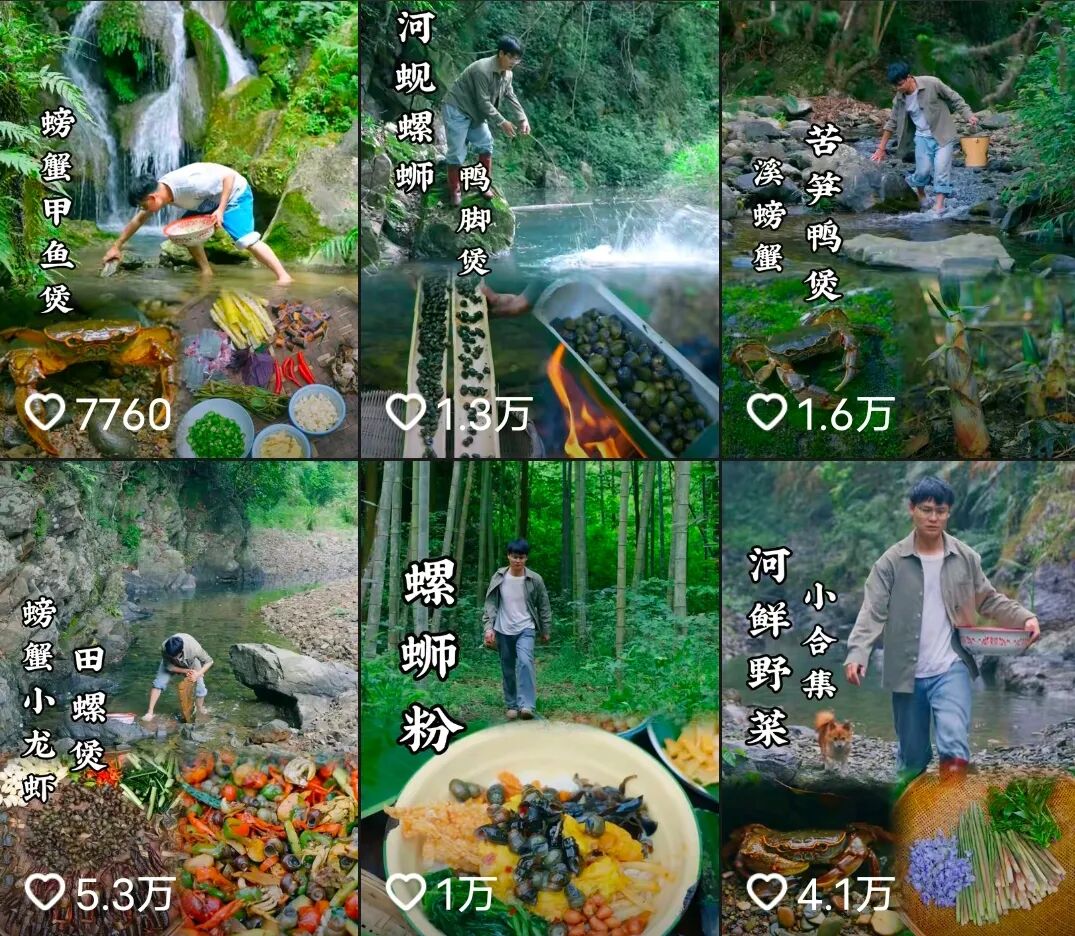
After that hit video, Huang Shaobin still buys crayfish in advance, looks for streams, and waits for good weather. Staged shooting itself has not disappeared, and the change has taken place in the position of the audience.
They are no longer the people kept in the dark, but the people who know the script in advance and watch the blogger complete the performance. Sometimes the audience even calculates with Huang Shaobin how many of the five pounds of crayfish can be recovered in the end, and which scenery was shot by taking a special detour.
For an audience who is already familiar with the staged shooting routines, this admission is more unexpected than another perfect idyllic video.
03 After the Traffic
Half a month after that "self-exposing" video became popular, Shi Yuan was still worrying about not getting traffic.
Shi Yuan is also a young man who returned to his hometown from the same