Even with a large 10000mAh battery, why is the phone still not having enough power?
Smartphones in 2026 are increasingly resembling those "One Hit 999" browser games that frantically stack up numerical stats.
Don't get me wrong, we're not talking about prices here, but batteries —
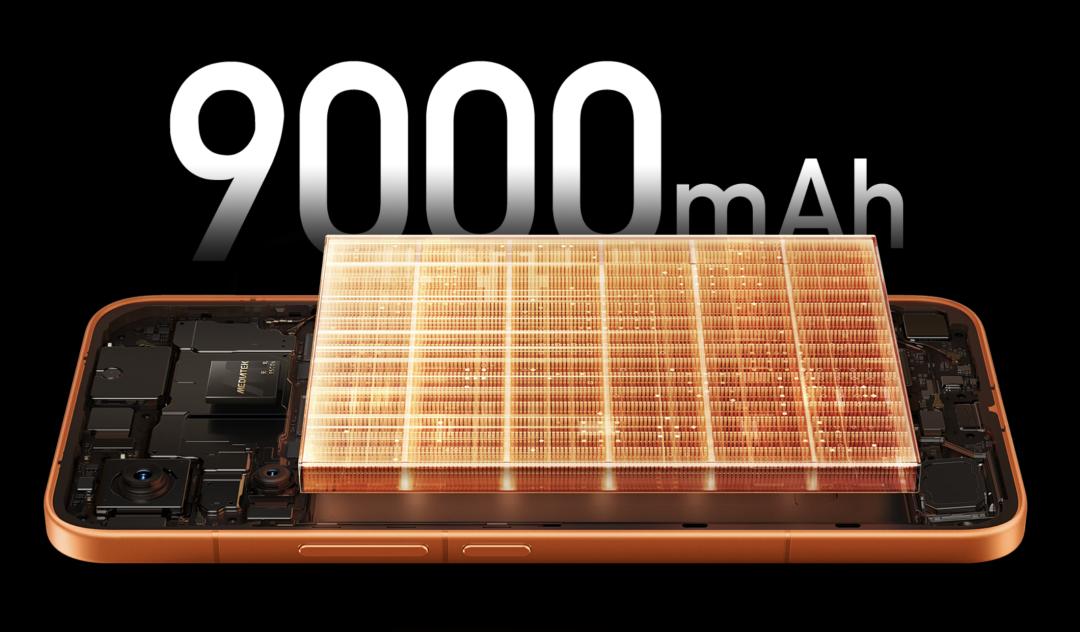
Photo|Source: Xiaomi official website
Once 5000mAh was recognized as a large-capacity battery without a doubt, but as the commercialization of silicon-carbon anode technology accelerates, 7000mAh and 8000mAh capacities have long lost their news value.
Towards the end of last year, Honor WIN RT raised the figure to 10000mAh, making it the well-deserved "Battery King" in this current track:
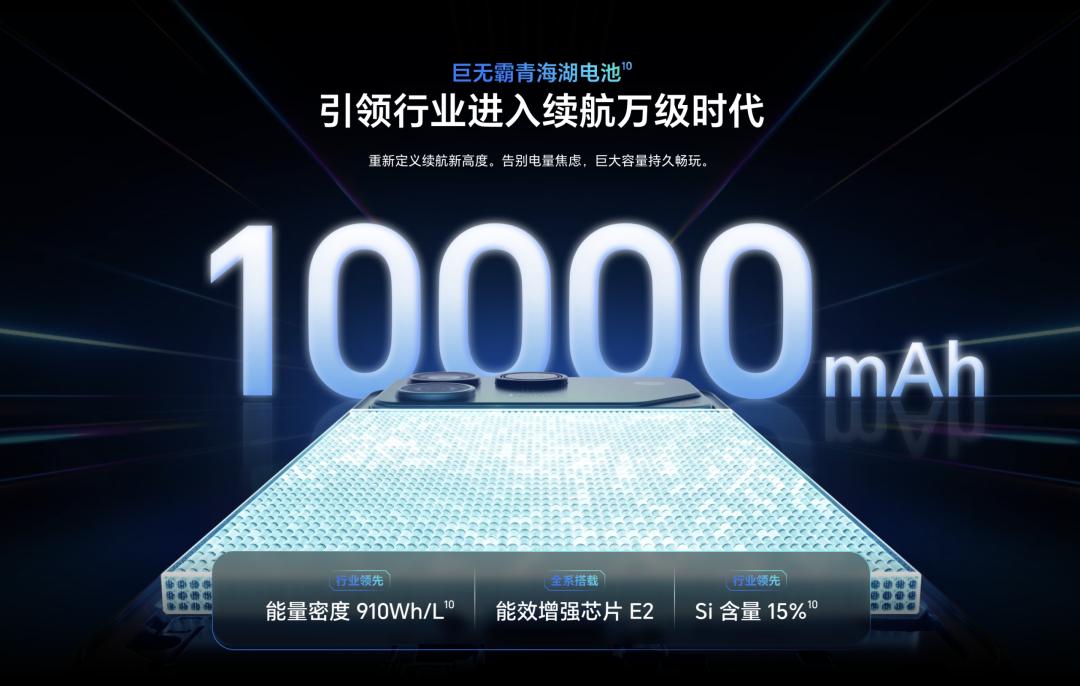
Photo|Source: Honor official website
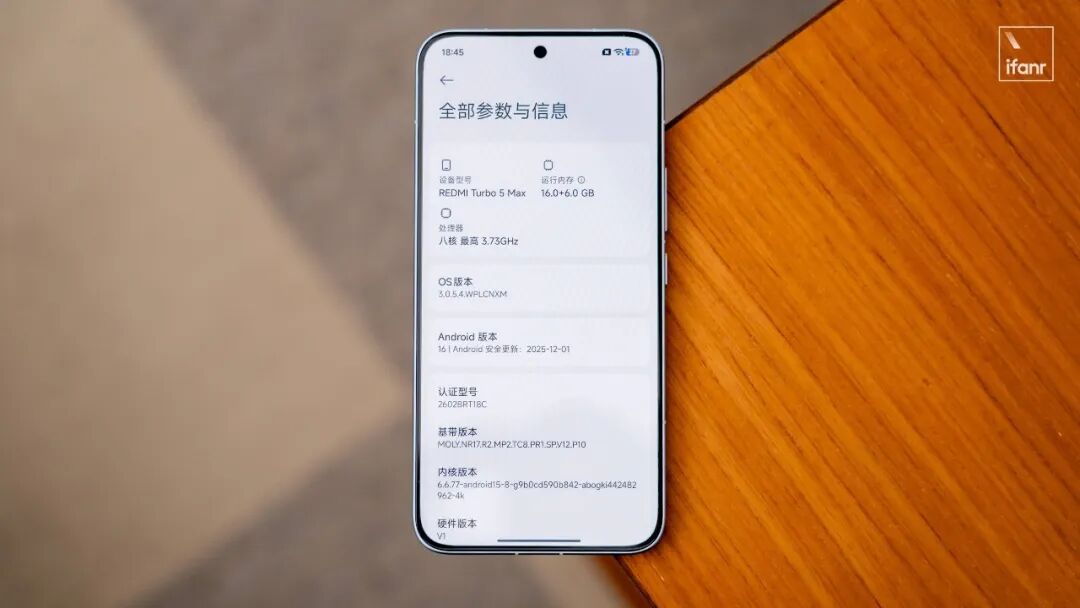
Since then, ifanr has successively tested smartphones with ultra-large batteries including Redmi Turbo 5 Max, iQOO Z11 and other models. But during the review process, we noticed a phenomenon:
When converting 9000mAh or 10000mAh into actual daily battery life, the lead in performance does not seem to be as significant as the numbers suggest on paper.
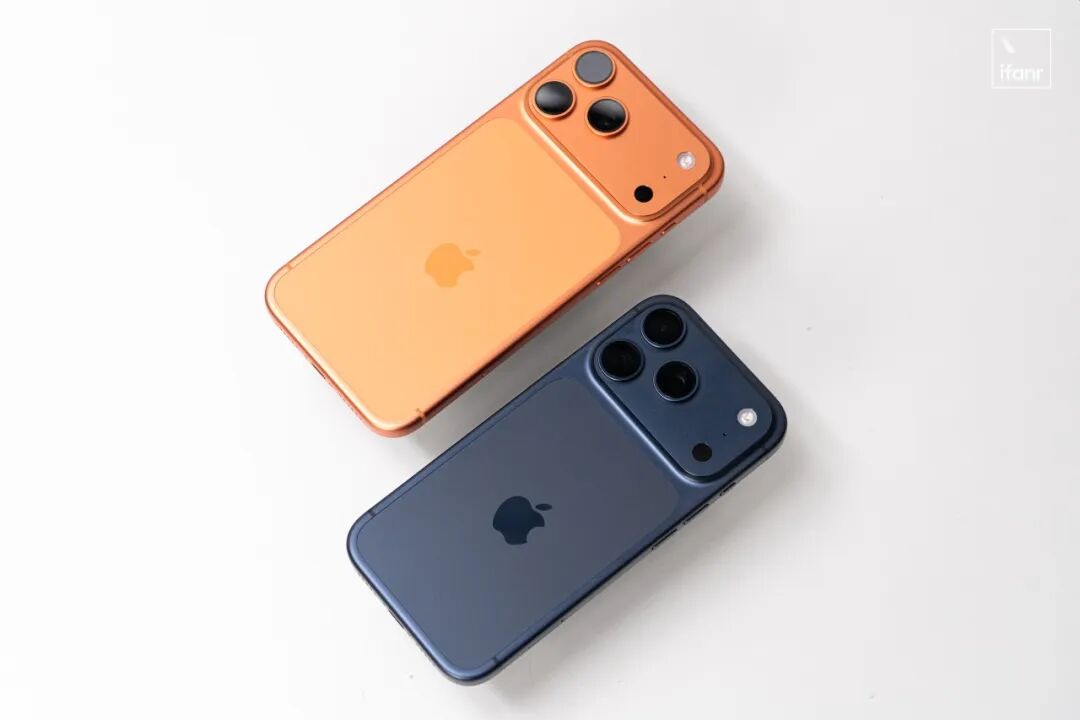
Take iPhone 17 Pro Max as an example, it uses a "small battery" of 4823mAh, and can still achieve 7 to 8 hours of real-world battery life —
Apple's battery only has about 50% of the capacity of these "Battery Kings", but delivers nearly 70% of their total battery life runtime.
This certainly does not mean "large batteries are useless", on the contrary, it reveals deeper underlying information:
As a product with extremely complex comprehensive operating conditions, the battery life performance of a smartphone has never been a simple "capacity equivalent substitution". It is a composite parameter composed of available energy, average power consumption, temperature control and energy management strategy.
Now that batteries have entered the 10,000 mAh era, we should instead abandon the "mAh-only theory".
Capacity ≠ Long Lasting
The most simplified formula for smartphone battery life can be expressed as "available battery energy ÷ average device power consumption".
First of all, we need to know that the familiar unit mAh (milliampere-hour) describes the amount of electric charge, which is not equal to energy. For a rigorous comparison, we should refer to Wh (watt-hour), the value obtained by multiplying milliampere-hour by voltage.
The reason why milliampere-hour has dominated manufacturer promotion is mainly because the standard voltage of smartphone batteries is approximately consistent, mAh has partial reference value, and figures in thousands or tens of thousands look far more impactful:
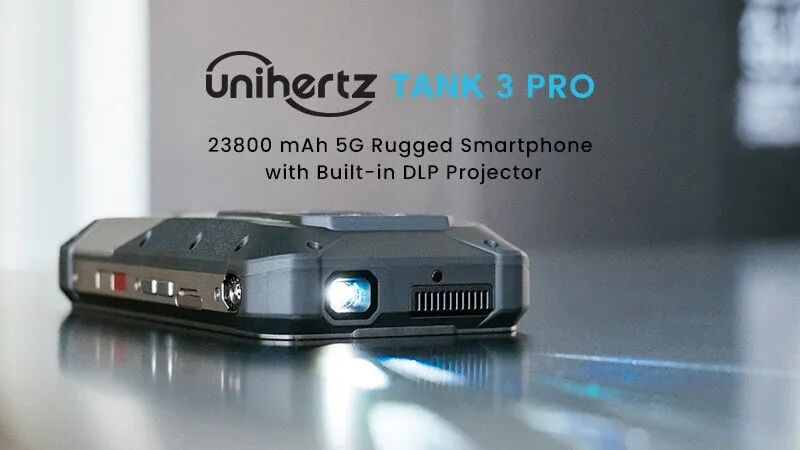
Photo|Source: Unihertz
But we can't only look at how much water the pool can hold, we also need to look at the speed at which water flows out of the pool.
After all, factors such as processor energy efficiency, system scheduling, and software ecosystem will all affect the actual battery performance. A larger battery can act as a safety net, but it cannot offset poor energy efficiency performance —
Photo|Source: Notebookcheck
This is also the reason why iPhone 17 Pro Max uses roughly 50% of the capacity of domestic "Battery Kings" to achieve 70% of their battery life —
With full control over processor R&D, system development and software ecosystem, targeted optimization will naturally be more effective.
In addition, we must not forget Andy and Bill's Law. Now that the battery base is larger, manufacturers and app developers naturally want to enhance the performance and usage experience of smartphones, whether it is peak brightness or instantaneous frequency.

Photo|Source: Honor official website
All things considered, this is similar to the problem we encounter when saving money:
Within a certain range, more principal does not necessarily make people more conservative, on the contrary, it encourages more aggressive spending strategies.
You have huge capacity, let me lock some of it
In addition to the differences in complex daily usage, some inherent limitations of silicon-carbon anode technology itself are also reasons for the huge gap between the perceived battery capacity and actual real-world battery life of smartphones.
In principle, the reason why silicon-carbon anode batteries can store more power is that the "theoretical specific capacity" of silicon atoms is much higher than that of carbon atoms, but this large capacity does not come without a cost.
This cost is the expansion coefficient — silicon will produce a much more drastic volume change when lithium is intercalated during charging than graphite, and the expansion rate of pure silicon material can even exceed 300%.
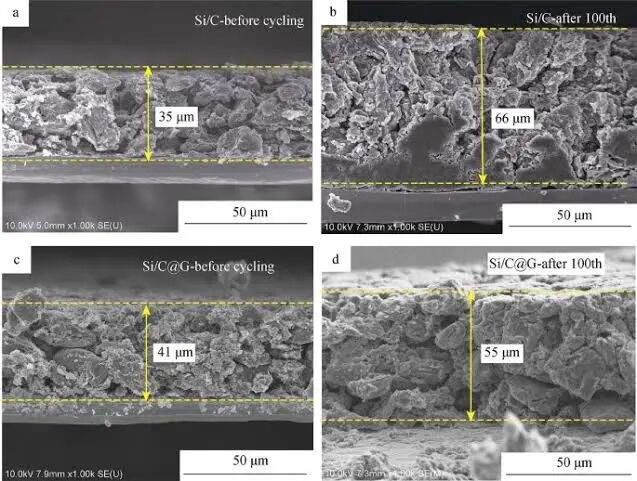
Photo|Source: Springer Nature
Even if silicon and carbon are mixed to control expansion, the simplest way to increase capacity is to increase the silicon doping ratio, and volume expansion cannot be completely avoided.
The repeated expansion and contraction of the anode area inside the battery will most intuitively cause macroscopic cracks, as well as lithium ion loss caused by repeated rupture and reconstruction of the Solid Electrolyte Interphase (SEI) film, which consumes battery life.

Photo|Source: ScienceDirect
In order to avoid severe swelling and shrinking cycles inside the battery, manufacturers usually set the upper limit of "allowed charge and discharge" to about 80% to 90% of the physical capacity of the battery through the battery firmware.
In addition, on the low power side, for considerations such as avoiding over-discharge and retaining the shutdown function, manufacturers will also set the software 0% shutdown line at about 10% of the physical capacity.
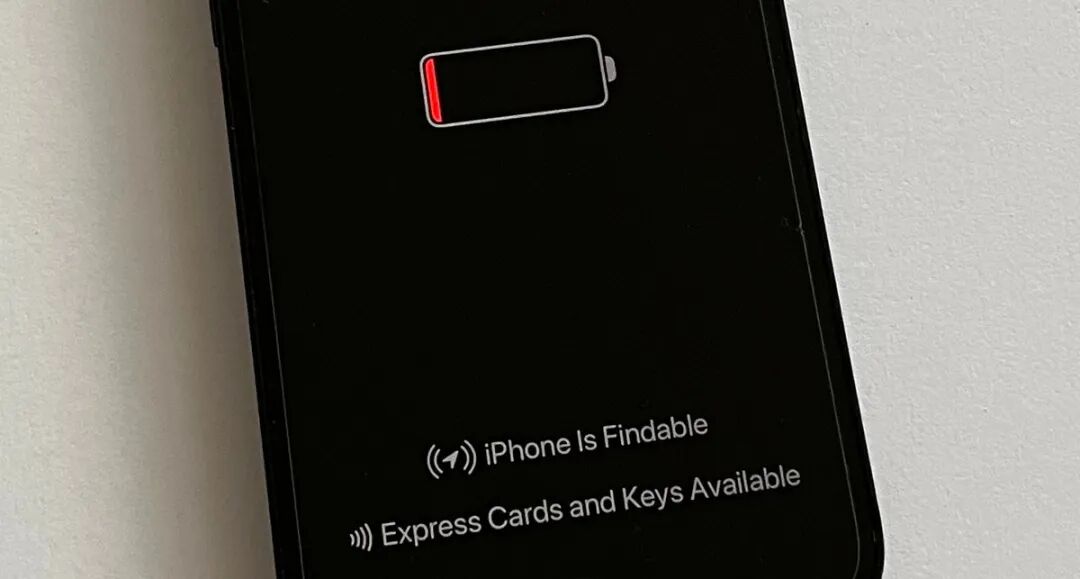
Photo|Source: X @naehrdine
These two occupied ends result in the "available capacity" of the smartphone battery only being the middle section of the physical capacity, and the battery management system only opens a working window within it — in layman's terms, this is capacity locking.
Similar strategies already existed in traditional lithium-ion batteries, but with silicon-carbon technology, the greatly increased capacity makes the trade-off between lifespan, expansion and charge-discharge far more prominent.

Photo|Source: Xiaomi official website
However, the key point of the problem is not whether a buffer should be reserved, but whether consumers are aware of it:
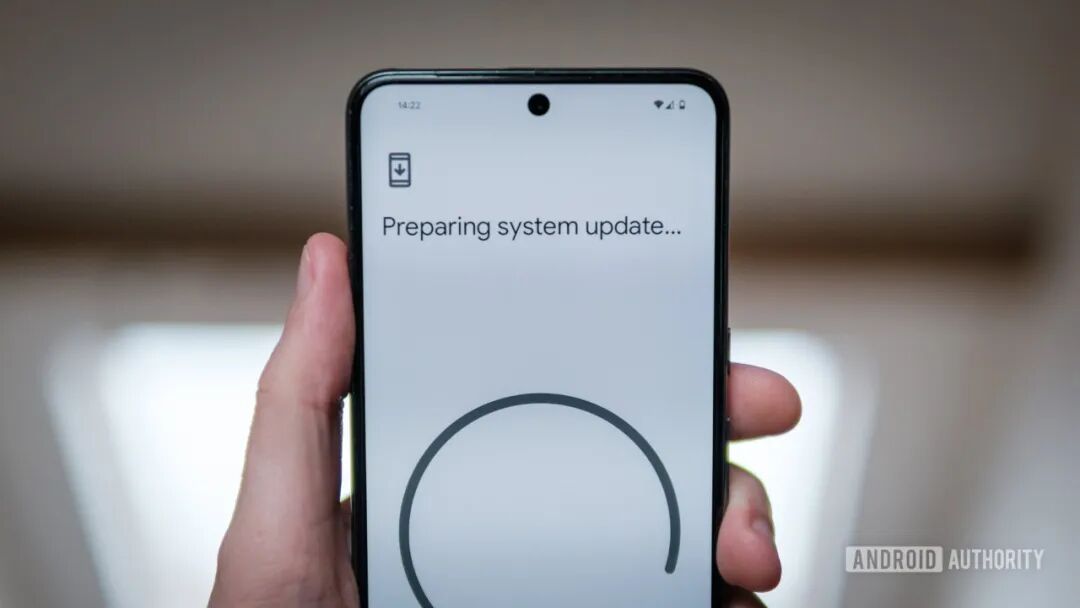
Current laws require distinguishing between the typical value of a battery (the capacity of most batteries in a batch) and the rated value (the minimum capacity that will not be lower in the batch), but neither of these two values can represent the manufacturer's capacity locking strategy.
In the "black box" of battery capacity locking strategy, consumers cannot directly judge how much power they can actually use through the marked typical value and rated value, which is very close to misleading publicity.
Photo|Source: Android Authority
A more reasonable approach is to require manufacturers to disclose the rated available energy under specified temperature and charge-discharge conditions, as well as the upper and lower cut-off voltages, in addition to the nominal capacity.
Technology can be conservative, but parameters should not be ambiguous.
The 15 Minutes Belonging to Fast Charging
Andy Warhol, a representative of pop art and a famous American modern artist, once said this sentence:
In the future, everyone will be famous for 15 minutes.
Coincidentally, for high-power fast charging on smartphones, every time it works is its "15 minutes of fame" — or even less than 15 minutes.
Photo|Source: Imgflip
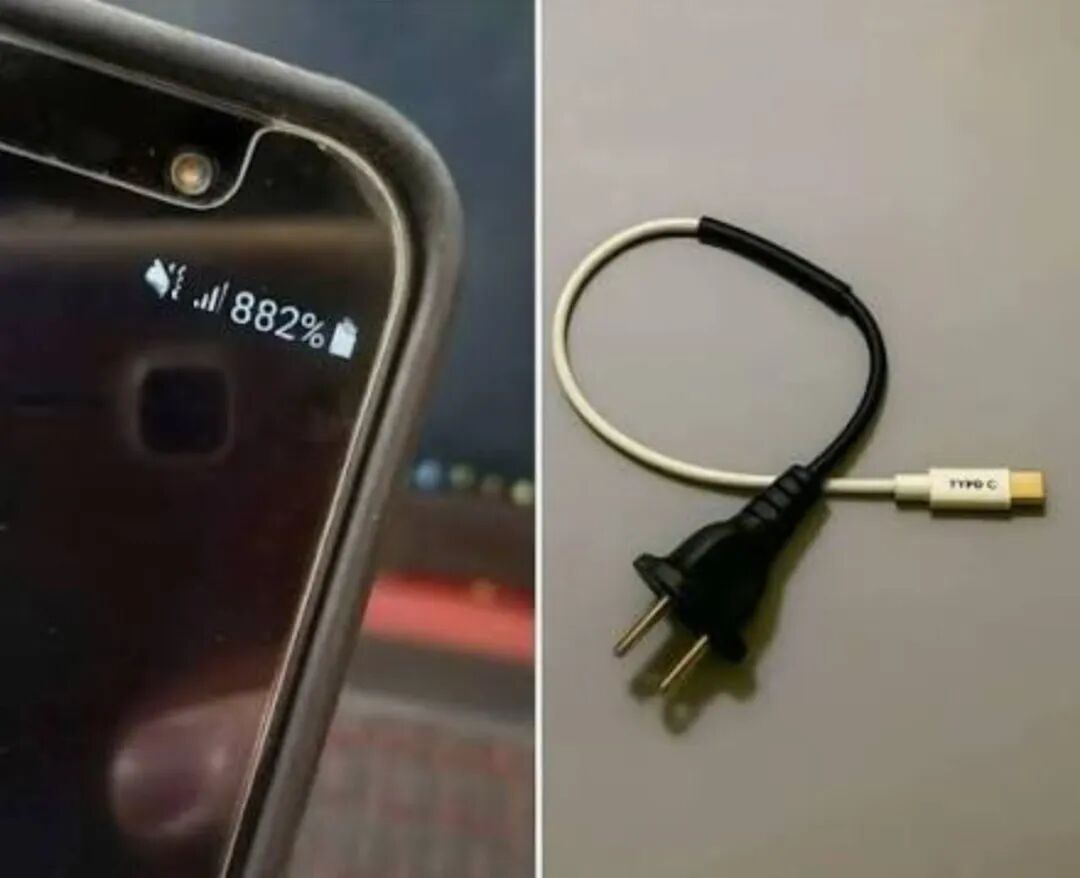
Since high-power fast charging has become a parameter widely concerned by consumers, all manufacturers are highlighting peak power figures. Today you launch 50W, tomorrow I launch 80W, and the day after tomorrow a 120W model pops up.
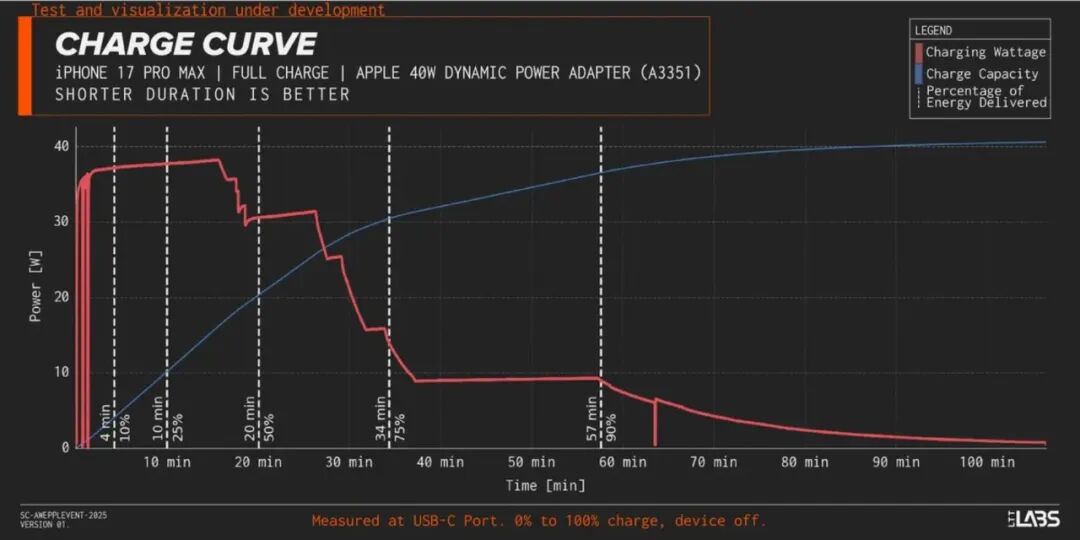
The reason why peak power is called peak power is that it does not stay at the peak for most of the time —
Photo|Source: LTT Labs
To trigger peak power, you often need the original charger, a specific cable, a sufficiently low starting power level, appropriate body temperature, low system load, and some models even require you to manually turn on the ultra-fast charging option...
For example, the vivo Y600 Pro, which also has a 10,000mAh battery, adds this note in the footnote of its official website page:
90W flash charging means the maximum output power of the charger is 90W. The actual charging power will be dynamically adjusted according to different scenarios, please refer to the actual usage situation.
This small print is actually much closer to daily usage experience than the huge "90W" text in the center of the page.

Photo|