Allegations of "loafer-style operations" and "charging for photo-taking" that smear frontline fast-moving consumer goods business teams cannot resolve the problem of boosting in-store product sales.
When sales are sluggish, all sorts of odd phenomena will emerge. This time, the frontline sales teams have become the target of public criticism, being labeled as "loiterers" who enter the store without greeting, take a few photos and leave. As a result, some retail store owners paste two white sheets of paper in their shops, which read: 20 yuan for sales staff taking photos, 50 yuan for supervisors taking photos.
All of the above forms the latest traffic pool on WeChat Channels. In the past, only a small number of small retail store owners would post photos of their deserted stores, implying that in the current era where e-commerce is increasingly thriving, physical stores are driven to a dead end. Perhaps there are too many people playing the "poor-mouthing" trick, so this track needs a new target. To chase traffic, these retail store owners have set their sights on frontline sales staff.
Alienated Relationships at Retail Terminals
The sales staff labeled as "loiterers" refer to those who lack initiative, fail to drive sales forward, and can only mechanically complete perfunctory store visits as required by the company's assessment: take a photo, pretend to adjust the product display shelf and take another photo, build a few stacks of goods and take a photo again, arrange some terminal activation materials and take yet another photo... Each action is paired with three or four photos, yet none of the actual problems existing in the terminal market are solved.
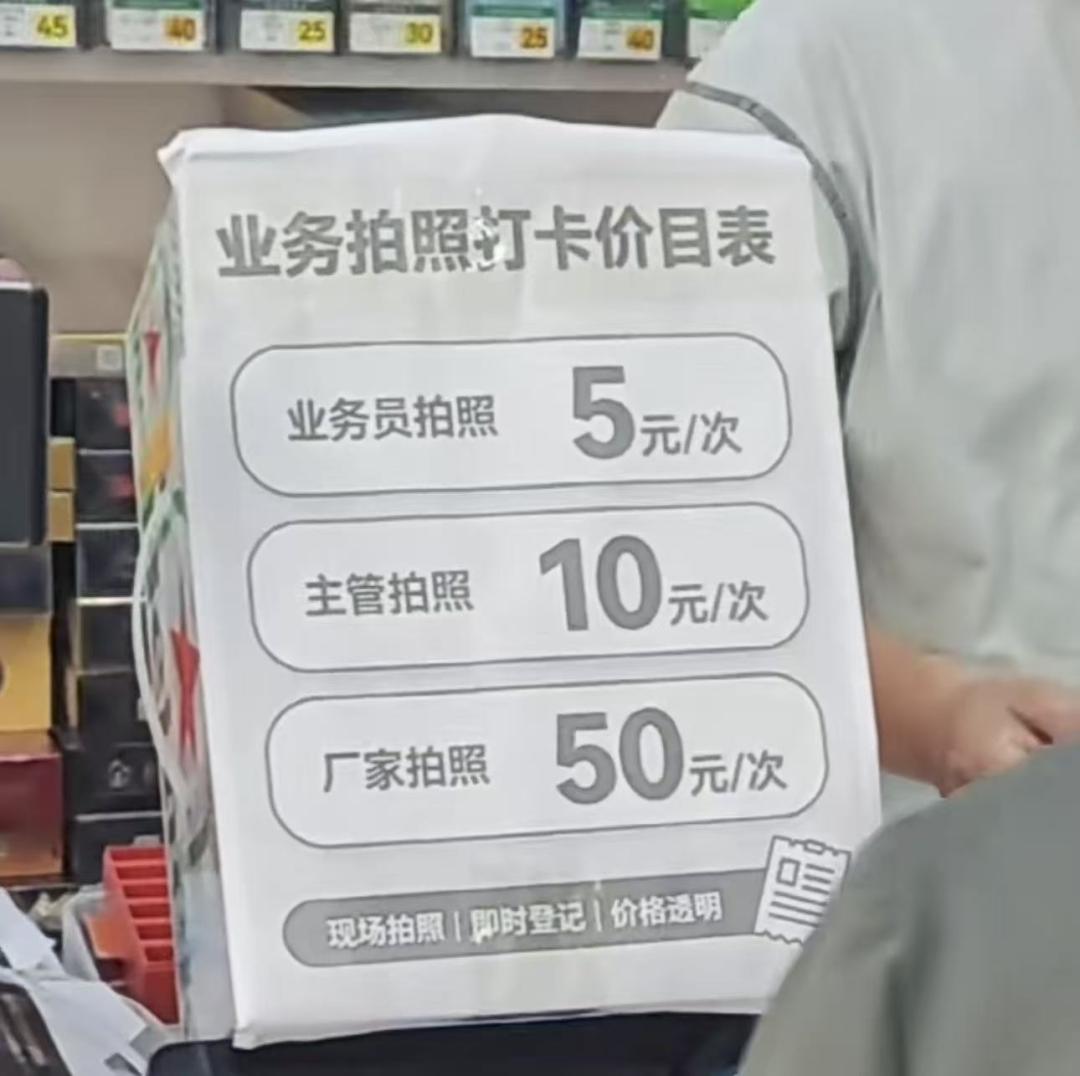
Therefore, store owners say these sales staff are no different from loiterers, meaning that it makes no difference whether they come or not, as they live for their phones and photos every day. In this case, they will charge fees for taking photos in the store later. In fact, most remarks like this are just for the needs of plot performances, which exaggerate some common minor problems to attract attention. Real store owners will never charge for taking photos — I have been engaged in the FMCG industry for nearly 20 years, and I still visit stores with sales colleagues every week. Normal store owners will not charge for taking photos, and what they often say is: Don't mess up the product display.
First of all, we need to make it clear that when sales staff visit the terminal market, the problems they can solve include replacing expired products to ensure FIFO (first in, first out) of goods, and settling all promised expenses such as display fees (for shelves and promotional materials), electricity fees for refrigeration, floor stacks and two-tier display racks. The photos taken by sales staff are proof of these expenses. Only after these photos are reviewed by the company's system can the corresponding fees be paid to the store owners.
The reason why many retail store owners, even though they know the goods on e-commerce platforms are cheaper, still purchase a certain amount of goods from wholesalers, is that they can exchange unsold goods for new ones and enjoy the service of sales staff helping them organize product displays. Low prices cannot solve all sales problems. FMCG is a category for impulsive consumption. Price-sensitive consumers will place orders on e-commerce platforms themselves, so why do they still go to physical stores? Consumers who step into physical stores are already willing to pay a slightly higher price. For store owners, the consumers who come in are potential impulsive buyers: they may find the drink cold enough, the product fresh enough (e-commerce platforms often sell products near their expiry dates), they don't want to wait for courier delivery, or they just have an immediate demand for the product which is well displayed on the shelf in the store.
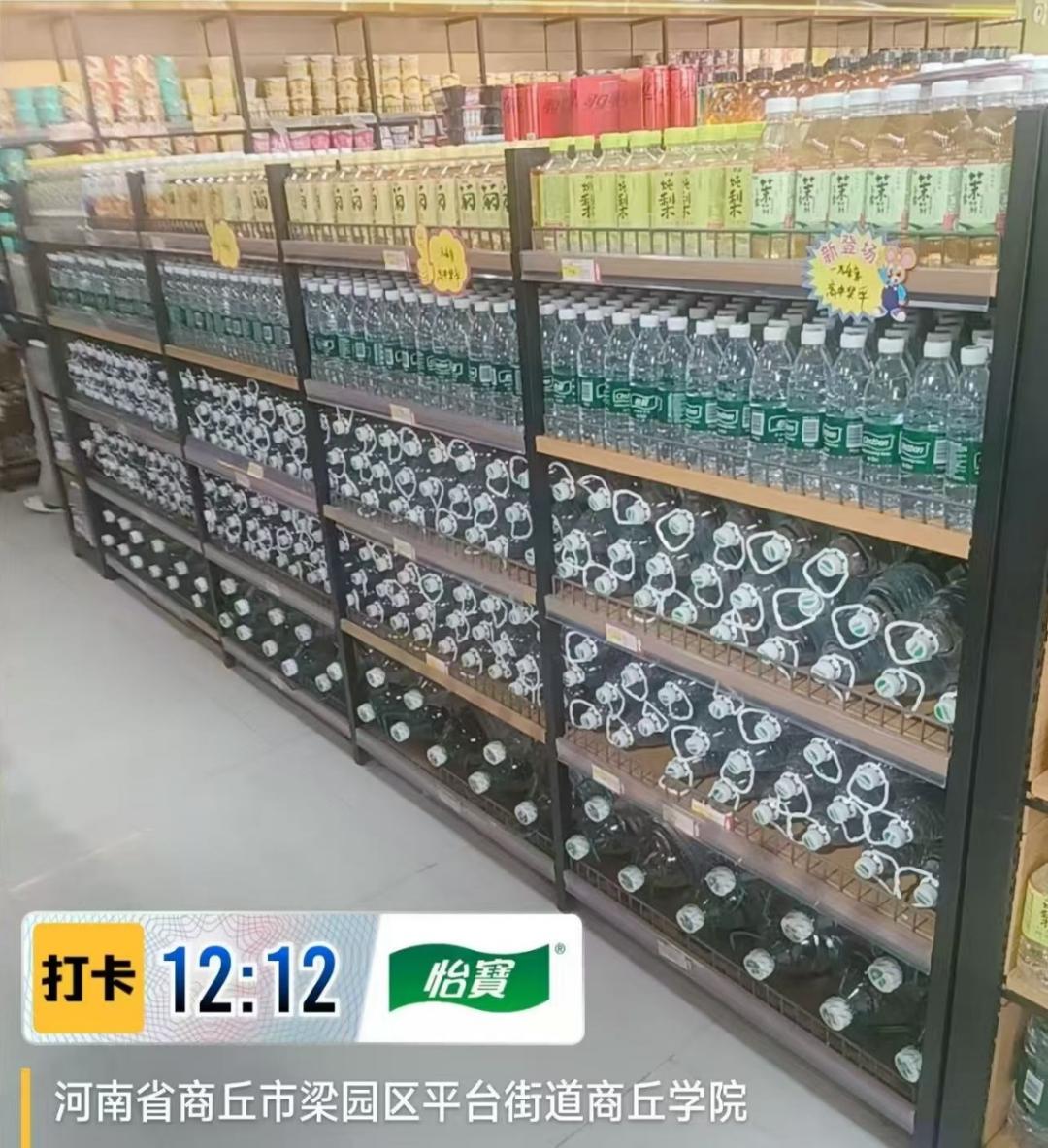
(Product displays are all supported by corresponding expenses)
If we only rely on e-commerce and online promotion without the support of on-site sales teams, White Elephant should have been the top instant noodle brand by now. But in fact, the sales volume of Master Kong and Uni-President has been rising in recent years, while that of White Elephant is declining. The root cause of the decline lies in the poor execution at the terminal level: those photo-taking behaviors, perfunctory display adjustments and goods exchange services that you dislike are exactly what drive sales. Photo taking is never only an assessment method for sales staff, but also a guarantee for the implementation of expenses for retail store owners.
In the end, normal retail store owners hope that various sales staff can visit their stores more often. Frequent visits prove that the store is located in a good position and the business is promising. If no sales staff come to visit or help organize the shelves, the store owners will start to doubt the operation of their business. In a word, why are manufacturers' sales staff and managers visiting RT-Mart much less frequently now? Because the business of RT-Mart is not as good as before. Can you imagine that seven or eight years ago, a manufacturer's sales staff would not visit the store for half a year or a year and still want to assign the business to distributors? That's impossible. In the past, people had to queue up to meet RT-Mart's buyers and store supervisors, and manufacturers had to find ways to pay all kinds of required fees, apply for special approvals and submit reports, because RT-Mart had huge sales volumes.
What normal store owners hate most is that the manufacturer's sales staff do not show up for several months, and when they do come, they only force the store to overstock goods. For example, Wahaha, which adopts the same traffic-focused operation model as White Elephant, had a shortage of supplies across the market at its peak in 2024. However, many retail store owners and distributors are still not optimistic about Wahaha, because Wahaha's sales staff have not visited terminal stores for many years.
At that time, a distributor of Wahaha and Uni-President in East China said that although Wahaha is very popular now, it will eventually lose to Nongfu Spring. From my personal experience, Uni-President's sales staff visit far more stores than Wahaha's, because the number of stores in Uni-President's system is crawled from Amap, while the number of stores recorded in Wahaha's system is much smaller. There is such a big gap in execution between Wahaha's sales staff and Uni-President's, how can Wahaha beat the more aggressive Nongfu Spring?
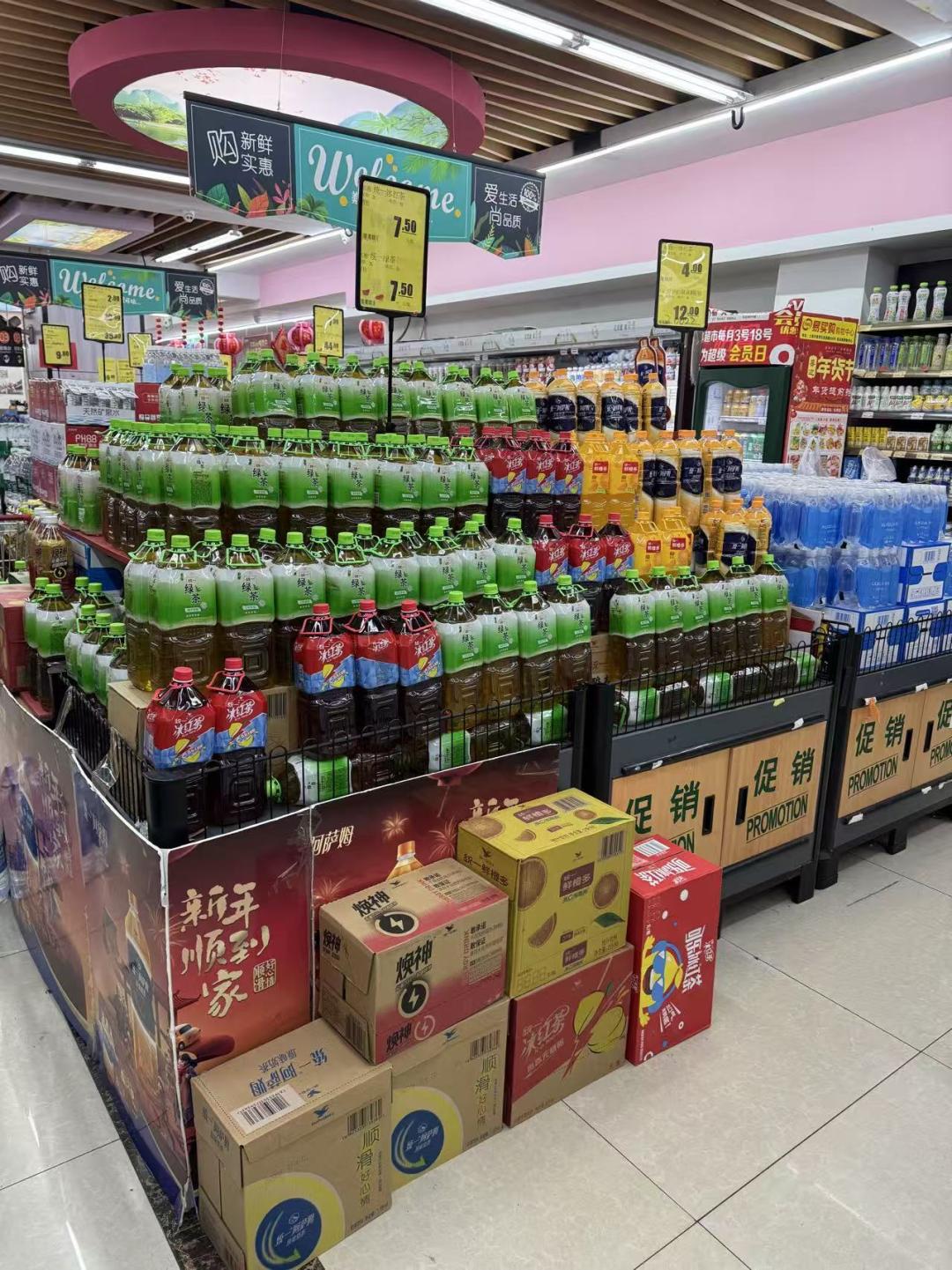
(Terminal display and product bundling are all manifestations of sales capabilities)
The photo-taking store visits that you dislike are a symbol in the eyes of retail store owners and distributors, representing whether the enterprise has a sound informatization system and whether the sales staff have strong execution. Even if the sales staff only stay in the store for a few minutes to show their presence, for the retail store, doing business is never about a certain brand, but about the familiar sales staff who visit regularly.
Stigmatized Sales Staff
We also need to understand that there are some general trends that sales staff cannot change. For example, sales staff cannot control the weather, cannot reverse consumers' pursuit of healthy lifestyles, cannot stop the impact of freshly made drinks on bottled beverages, and cannot solve the problem that the company has no best-selling products. Because sales staff are on the front line, all factors are already fixed by the time they receive the tasks: the policies are set, the products are finalized, their voices cannot be heard by the company, and even if the senior management hears them, they will say that everyone should take the overall situation into consideration.
Take Coca-Cola this year as an example. Some people say that the reason why carbonated drinks do not sell well is that consumers' health awareness has improved, and sugar-free drinks and health-focused water products are more popular in the domestic market. From the perspective of frontline sales, Coca-Cola's sales staff have the highest daily visit data in the entire industry: each of them visits 35 to 45 stores per day, and each manages 400 terminal stores. In comparison, sales staff of most other enterprises only visit 20 to 25 stores a day (16 in township areas), and manage 200 to 225 stores in total.
In terms of the number of store visits, the quality of managed stores, the number of terminal freezers, and the cooperation degree of store owners, Coca-Cola's sales staff are among the best in the industry. Some of them even pay for the required expenses out of their own pockets in advance, but Coca-Cola's sales are still sluggish. The sales of sugar-free tea and energy drinks are mediocre, and the 2-yuan bottled water products are completely outcompeted by rivals, while 1-yuan bottled water is more popular in the current market. How can tens of thousands of frontline sales staff reverse such problems? What can they do to turn the tide?
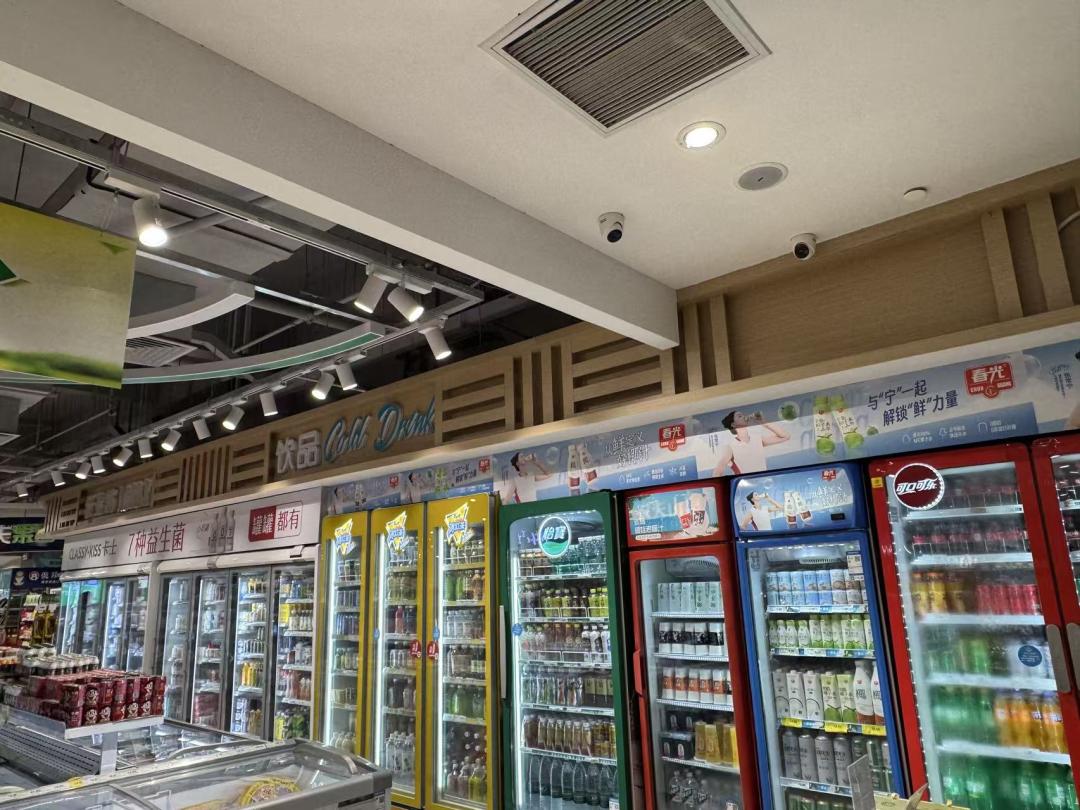
(Consumers cannot see the efforts of frontline sales staff)
Do they dare to seal Nongfu Spring's freezer? Do they dare to stop Dongpeng Special Drink from launching its "1-yuan lucky draw" promotion? They even dare not tell the store owners that if you stock certain competing products, you cannot sell Coca-Cola, nor dare they tell distributors that if you represent a certain competing product, you cannot represent Coca-Cola anymore. To put it exaggeratedly, even the rule set by Coca-Cola itself that employees cannot drink Pepsi products is criticized for being narrow-minded. Those "choose one from two" practices that e-commerce platforms can implement, and the exclusive cooperation policies that large manufacturers can adopt, cannot be promoted by Coca-Cola even with its huge scale advantage. How can a sales staff who only earns 3000 to 4000 yuan a month solve such problems? That's even more impossible than asking him to defeat the Monkey King, Piggy and Sandy from the Journey to the West.

In the past 20 years, I would believe that sales staff were "muddling along" in the early days. In the early years, sales staff would finish the morning meeting, have breakfast, and then go their separate ways: some went back to their own family's stores, some went to Internet cafes to kill time. Because in the era of oversupply, sales staff clearly knew which stores in their sales territory could receive goods and when. After 20 years of elimination, the current sales staff are facing extremely fierce internal competition, and those old tricks of muddling along no longer work. If you don't work hard, other manufacturers will not hire you. There are fewer and fewer young sales staff at the terminal level, and those who cannot survive have long changed jobs to deliver express parcels. The remaining sales staff may not be young anymore, but their execution, professionalism and sense of responsibility are worthy of recognition.
Sales staff say that the 225 store points required by the company are too many, and they simply don't have enough time to communicate with store owners. But they all work overtime to finish their daily visit routes. Sales staff have to act as accountants, cashiers, porters, shelf stockers, cleaners, designers and form-making assistants, and being a photographer is the most reluctant part of their job.
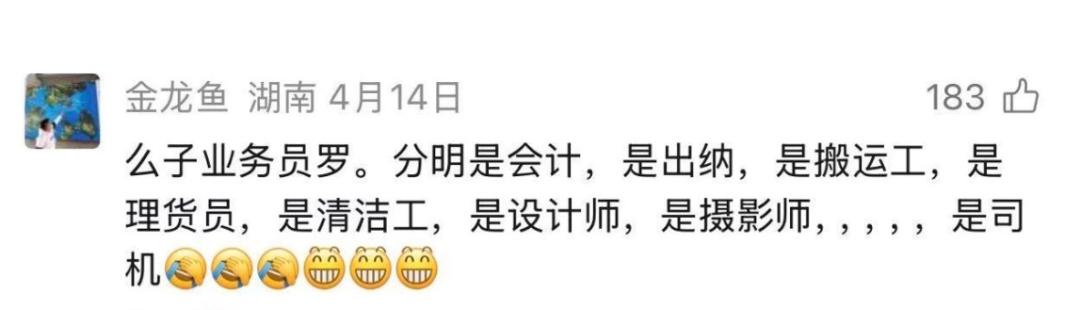
Enterprises claim to reduce the burden on sales staff, but in fact the workload is getting heavier and heavier.
This year, the overall FMCG sales volume is declining. The poor performance of the entire industry cannot be reversed by frontline sales staff, and they cannot take the blame for this. They cannot even get their full salary as it is, but they are still stigmatized in various ways. We don't ask for too much understanding, we just hope they can be allowed to focus on doing their job well...
This article is from the WeChat official account "Food Insider", written by an author who respects readers' time, and authorized for release by 36Kr.