Is AI gaming companion a pseudo-demand?
Taking off the name tag of "cost reduction and efficiency improvement", AI has now entered a more relaxed and private scenario — playing games with human beings.
In the past two years, "AI gaming companions" have evolved from a novel geek toy to a daily part of ordinary players' lives. Doudou AI and OBeeBee float at the edge of the computer screen, praising your operations and responding to your jokes; when you get stuck at a level, Hakko AI provides specific tactical guidance via voice. At the same time, Lenovo integrates AI gaming assistants into its tablet systems, while Sony builds AI playmates directly into game controllers.
Changes within games are equally radical. AI teammates in Peace Elite introduce the images and voices of celebrities and esports players, who can not only execute tactical instructions but also provide emotional support; AI NPCs set in games like Justice Online and World of Jade Dynasty can remember players' past behaviors and choices, and continuously interact with them.
It is not hard to find that although all of them function as "gaming companions" on the surface, they are actually in different product forms. Competition around this track involves not only game developers, but also tech giants, hardware companies, and a large number of third-party startup teams.
Notably, for this fast-growing "new species" in its explosive growth phase, how should its role boundary be defined? What kind of product logic, user groups and business strategies correspond to different directions? What challenges are currently existing?
All are AI gaming companions, but not the same type of product
There are various forms of "AI gaming companions" on the market, but if classified by their relationship with the game itself, they can basically be summarized into three major categories:
The first category follows the "indigenous native" route.
This type of AI gaming companion is natively developed by game manufacturers, deeply embedded in the worldview and gameplay system of a specific game, and cannot exist independently from the game. As part of the game world, it has complete "worldview memory". It knows its own identity, stance and affiliated camp, can continuously remember what the player has done and who they have helped, perceive the player's behaviors such as attacking, moving, and trading in the game, and then trigger new storylines, hidden quests and character relationships.
For example, the AI celebrity teammates in Peace Elite can remember the player's address form and combat habits, and continue the interaction across different matches; the AI combat dog "Bruce" supports voice commands, can stand guard, transport supplies, rescue teammates, and even interact like a real pet. The AI retainers in Justice Online can travel and take photos together with players, and also accept voice commands to complete tasks such as running errands and learning combat skills. According to the official data released by Justice Online, as of July 2026, the number of AI retainers in the game has exceeded 40 million, becoming an important part of the game's content ecosystem.
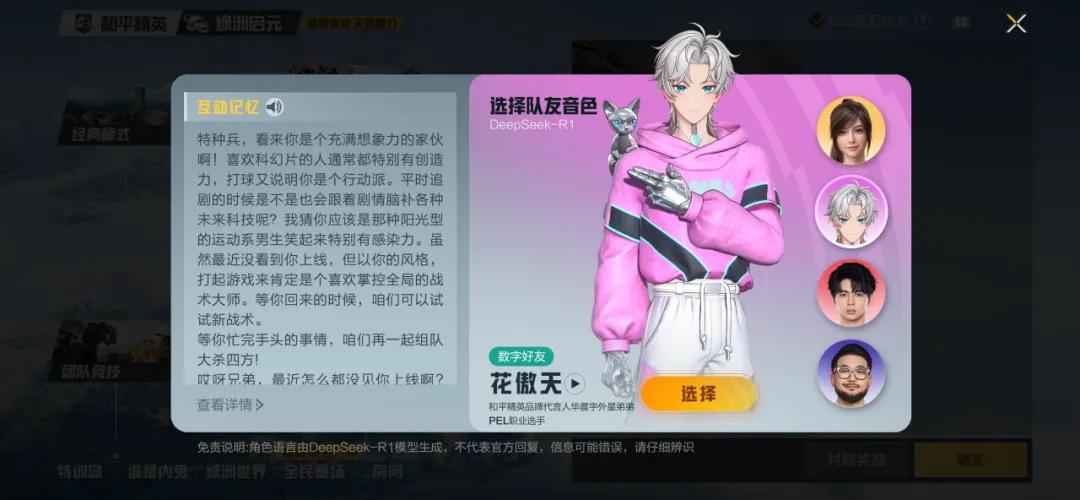
Peace Elite AI celebrity teammate
The second type of AI gaming companion stays outside the game.
They do not belong to any single game, but read screen content to participate in the entire game process by floating on the desktop, just like a real friend or accompanying coach sitting next to the player, and can accompany the player across multiple games.
Inside this route, there are actually two completely different directions.
One direction pursues competitive efficiency. For example, Hakko AI focuses more on solving actual pain points such as players being interrupted when checking strategy guides while playing alone, which is suitable for heavy core players who need to obtain accurate game decision support frequently, and sprint players who want to quickly increase their win rate and rank when hitting a bottleneck. At the same time, hardware manufacturers are also concentrated in this category. For example, AI game assistants have been added to Lenovo's AI tablets and Sony's game controllers, and it can be seen from their names that their core focus is to provide guidance and strategy help.
Hakko AI
The other direction puts more emphasis on companionship. For the vast majority of players, playing games is not to become a professional player. What they need more is someone to share their highlight moments, complain about bad failures, or give a quick strategy tip when they get stuck. As a result, products such as Doudou AI and OBeeBee have emerged, which will actively respond to conversations, mark enemy positions, praise and even make complaints, and are designed with very cute 2D cartoon images and rich action feedback, more like a game buddy with a real human feel.

Doudou AI
The third category actually makes the "companion" itself a game.
Compared with the first two categories, this type of product has broken away from the traditional game framework, no longer relies on monster hunting, leveling up or competition, but takes building long-term relationships with virtual characters as the core gameplay.
miHoYo's BSide: Olivia Lin, and Whispers from the Star launched by the overseas team founded by Cai Haoyu, co-founder of miHoYo, both belong to this direction. Players do not need to complete complex tasks, but chat, write letters, pour out their feelings and listen to music with desktop characters in daily life, and the focus of interaction has shifted to emotional companionship.

miHoYo BSide: Olivia Lin
Game manufacturers hope to reshape the gaming experience with AI, third-party startups try to seize players' time across games, and companion-type AI games try to separate companionship from games and extend it to players' daily lives. Under the same broad concept, the focus of competition for all parties is actually different.
Why are stakeholders from different fields all crowding into this track
The diverse forms of "AI gaming companions" are rooted in the different backgrounds and demands of the stakeholders behind them.
For game manufacturers, the core purpose of developing AI gaming companions is still to enrich game content and extend the game life cycle.
In the past, to improve the sense of freshness and playability of a game, developers mostly kept adding more content: more NPCs, more storylines, and more complex side quests. All content relies on manual production, and each added storyline tree or character means higher development costs. Once players finish experiencing the fixed content, the value of the content is consumed.
Compared with continuously producing more content, AI teammates and AI NPCs are trying to make the same set of content continuously generate new stories. Every choice, every conversation and every relationship of the player can become part of the subsequent experience, allowing the game world to continuously generate new interactions, instead of relying on developers to write every possibility in advance. Tencent's Peace Elite and NetEase's Justice Online are both following this path.
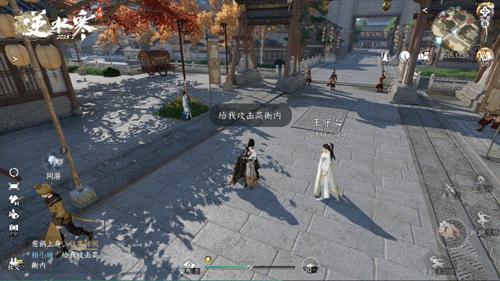
Justice Online AI retainer wanted NPC "Gao Yanei"
The reason why games backed by large internet companies can quickly launch multiple AI companion forms is largely due to the group's continuous investment in large model R&D, with the integrated capability from model to product; while more game manufacturers choose to cooperate with tech companies to quickly introduce mature AI capabilities into games to achieve product implementation.
The PUBG Ally AI companion system for PlayerUnknown's Battlegrounds, which was officially launched recently, is co-built by game developer Krafton and NVIDIA. The game developer is responsible for defining the role positioning and gameplay design of AI in PUBG, while NVIDIA ACE provides underlying intelligent character capabilities.
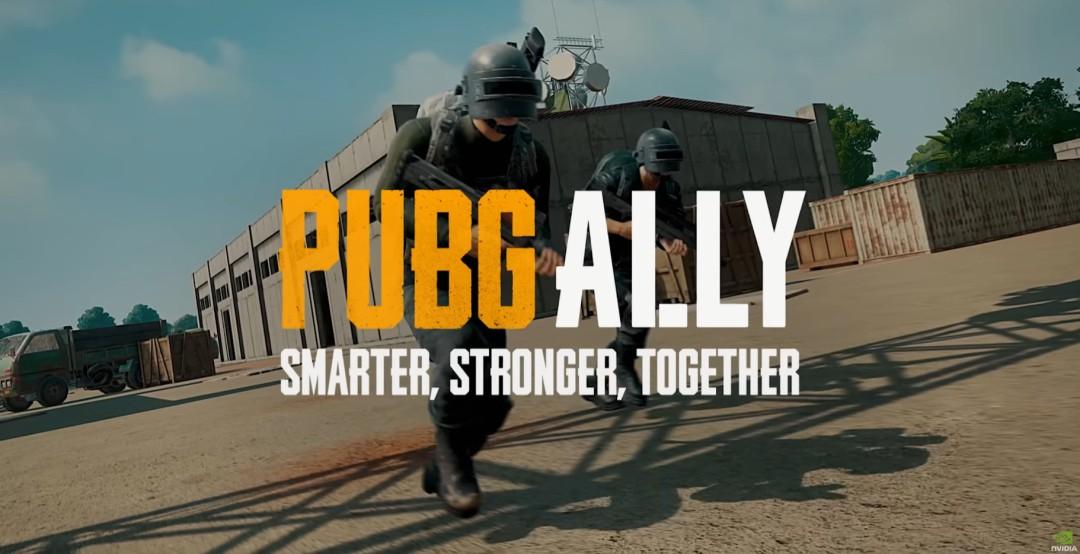
PUBG AI companion system PUBG Ally
Not just NVIDIA, during GDC 2026 this year, Qualcomm also launched the Snapdragon Game AI SDK, hoping to help developers quickly introduce on-device AI capabilities into mobile and PC games, to realize capabilities such as intelligent NPCs, adaptive AI teammates, personalized AI companionship and real-time AI coaches. Intel also launched the "AI Game Assistant Ecosystem Open Program" this year, hoping to cooperate with independent software developer partners to jointly explore application innovations of AI technology in dimensions such as game optimization, player assistance and intelligent interaction.
NVIDIA, Qualcomm and Intel are essentially doing the "shovels-selling" business in the AI + gaming field. They do not directly build AI gaming companions for players, but hope to become the technology providers behind all AI companions. In the future, no matter which game manufacturer launches AI NPCs, AI teammates or AI coaches, it is possible that they are built on the models, inference capabilities and development frameworks provided by these companies.
Different from game manufacturers and tech companies that want to keep AI in the game world, teams developing "desktop pet" type AI gaming companions actually hope to use games to build a companionship relationship that can extend to real life.
Most startup companies choose independent forms such as floating windows and desktop pets that exist outside the game, because the game is essentially an entry point, which naturally has the characteristics of high frequency, long duration and strong emotion, and is the easiest scenario for young people to build trust and usage habits with AI.
At GDC 2026 this year, Razer's demonstrated intelligent desktop assistant Razer AVA is an extension of this idea. It can not only provide real-time assistance in games, but also act as a desktop AI to manage schedules and handle daily affairs, and games are just one of its usage scenarios. Liu Binxin, founder of Doudou AI, also clearly mentioned in an interview that the next step is to expand companionship from games to broader digital life scenarios such as watching dramas, shopping and taking online classes.
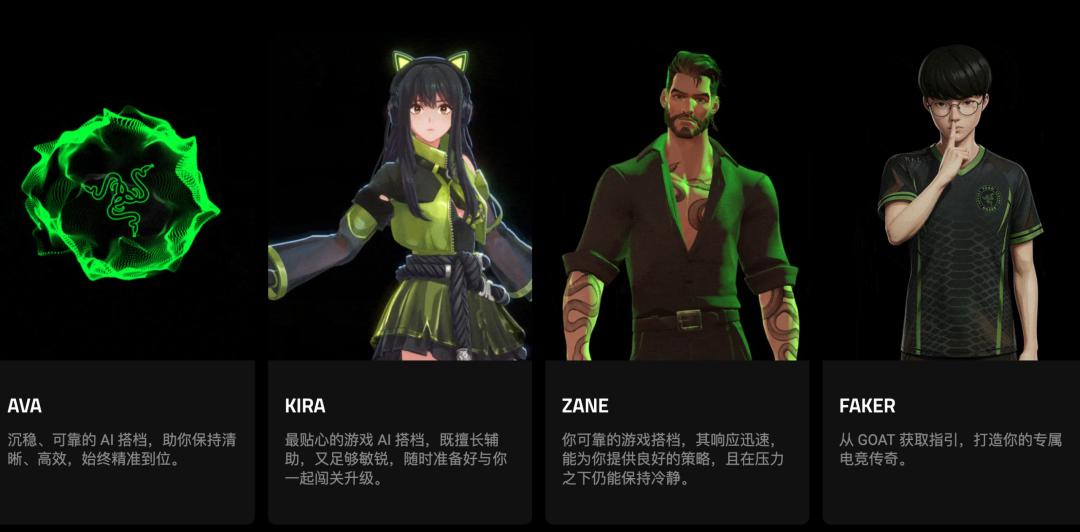
Razer intelligent desktop assistant Razer AVA
For hardware manufacturers, the significance of AI gaming companions is not just adding new features, but updating the gaming terminal devices themselves.
In the past, no matter it was gaming PCs, gaming tablets or game controllers, the core of their competition was more about performance: higher frame rate, lower latency and better heat dissipation. But as AI gradually enters the gaming process, hardware starts to take on new roles — not only responsible for running games, but also for understanding players' behaviors in real time, reasoning the game situation, and continuously interacting with players.
Lenovo integrates the AI gaming assistant directly into the underlying Legion system, and Sony tries to embed AI into the form of game controllers. For them, the AI gaming companion is not a software that can be downloaded and installed, but the basic capability of the next-generation gaming terminals. The focus of competition for gaming devices will gradually shift from performance parameters to intelligent experience.
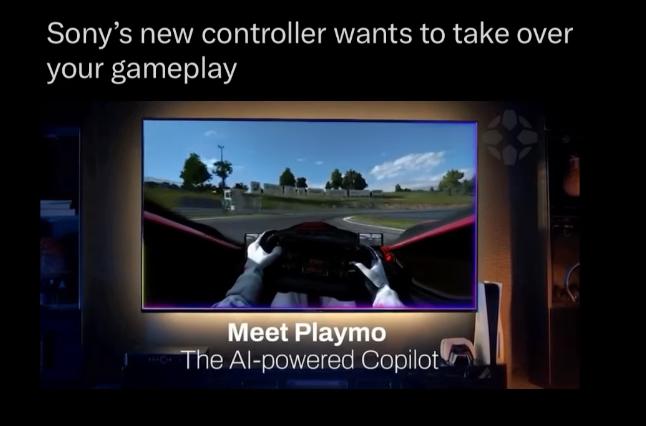
Sony game controller AI Ghost Player
Challenges and risks behind the prosperity
With the gradual maturity of technologies such as underlying large models, multimodal understanding and on-device inference, it can be predicted that even if some current AI gaming companions have stuttering and latency issues, they will become smarter and more like real "companions" in the future. The real challenges faced by different types of AI gaming companions are a series of practical issues such as product experience, scenario expansion and compliance boundaries.
For game manufacturers, the biggest challenge still comes from the gaming experience itself.
Whether developing AI teammates or AI NPCs, after AI truly enters the game, it needs to integrate into a highly complex and real-time changing gameplay mechanism, instead of completing a simple round of conversation. For example, in games that emphasize team collaboration and instant response such as shooting and action games, if AI teammates cannot accurately understand players' constantly changing tactical intentions, problems such as blocking positions, snatching monsters, blocking bullets, and misjudging tactics may occur, which will instead damage the gaming experience. On the other hand, if AI NPCs or AI teammates have too high autonomous capabilities, players may find ways to use AI to evade game mechanisms, farm resources or optimize benefits, thus undermining the game's numerical balance and long-term ecosystem.
In contrast, the AI gaming companions that are independent of games and float on the desktop face more challenges from scenario limitations.
At present, almost all of them are deployed on the PC side, while both iOS and Android on the mobile side have stricter permission management, making it difficult to achieve similar system-level capabilities. If the restrictions on the mobile side cannot be broken, the vision of these startup developers to further extend the companionship relationship to more life scenarios such as watching dramas and shopping, and build an "all-weather digital companion" will be difficult to realize.
In addition, it is worth noting that the entire AI gaming companion track will also face increasingly clear regulatory requirements.
The Interim Measures for the Administration of Artificial Intelligence Anthropomorphic Interaction Services, which came into effect in July this year, has for the first time drawn clear boundaries for anthropomorphic interaction services. The measures clearly stipulate that anthropomorphic AI shall not take replacing social interaction, inducing emotional dependence, or controlling user psychology as service objectives; for users who use the service for more than two consecutive hours, it is required to actively remind the user of