After the road network has been densely laid out, Jiangsu has started to optimize its algorithms.
To get rich, build roads first. If all roads are already well-constructed, what else can be developed next?
Jiangsu's answer is: develop algorithms.
On July 23, a roadshow held at Xikang Hotel in Nanjing, Jiangsu, with live video connection to all the 13 major prefecture-level cities of Jiangsu, attracted widespread attention from a large number of artificial intelligence enterprises.
During this roadshow, the "Implementation Plan for 'AI + Transportation' of Jiangsu Province" and the list of the first batch of service providers were officially released to the public. The goal is to build a high-quality development demonstration zone of "AI + transportation" by 2030.
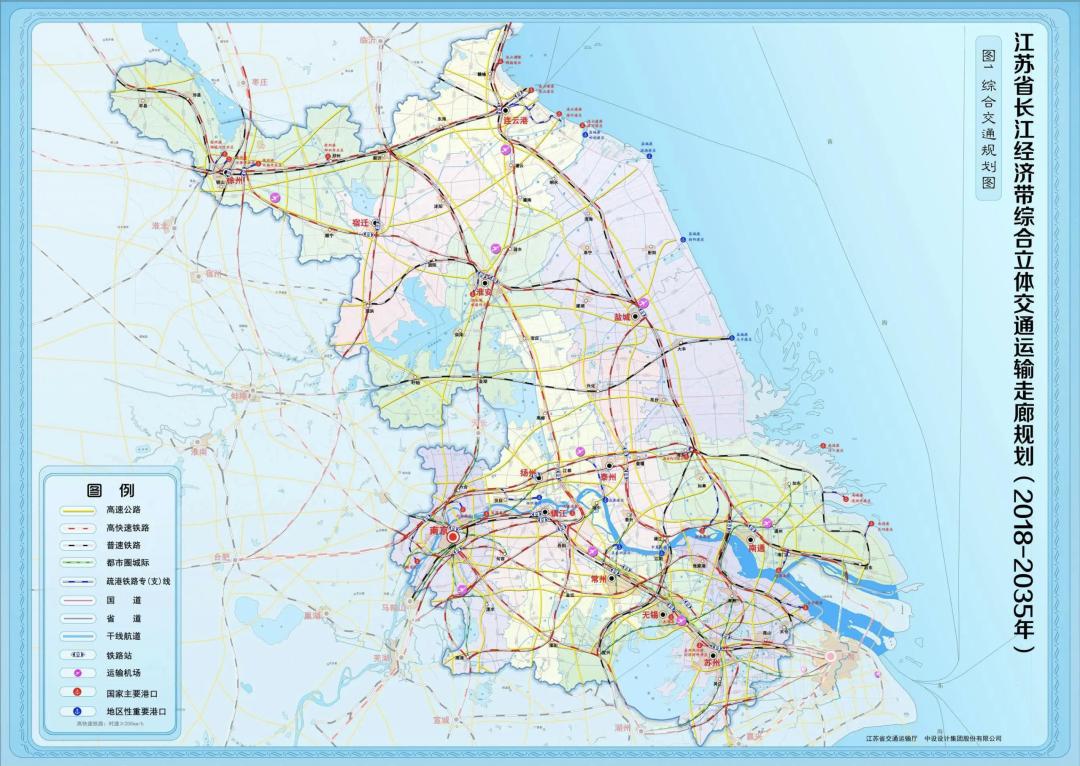
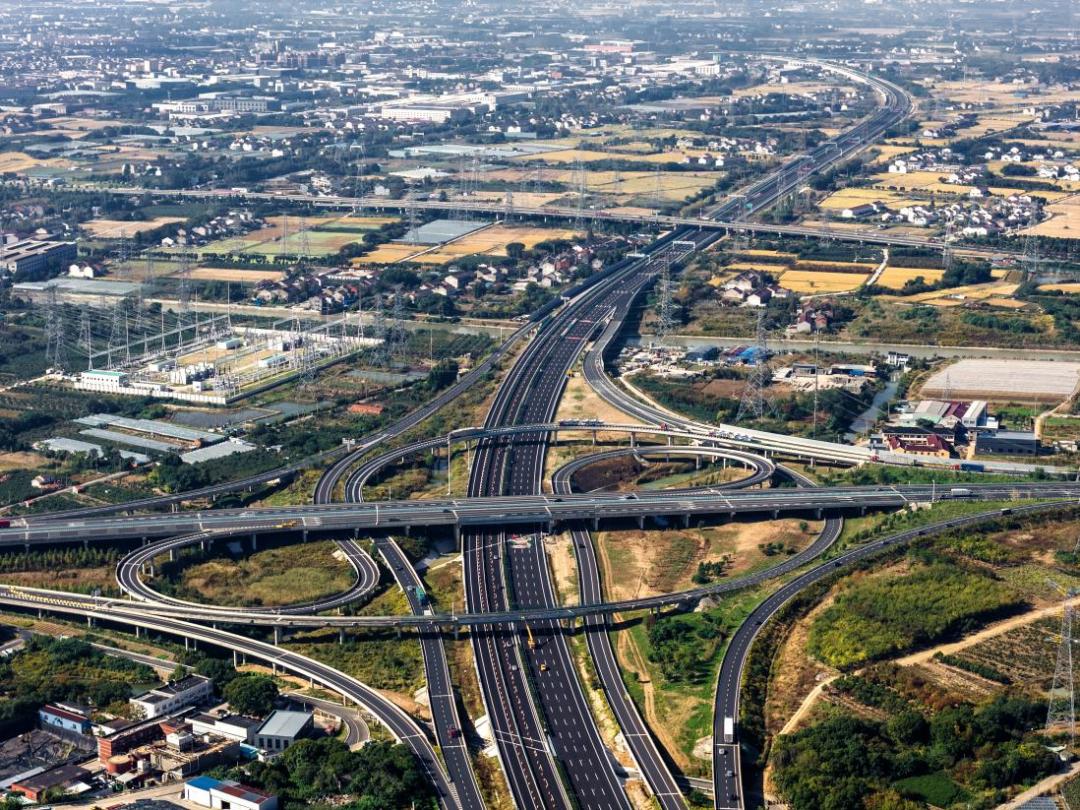
Jiangsu ranks first in China in the density of highway network. Its expressways, accounting for only 2.8% of the total national expressway mileage, carry 7.2% of the total national expressway traffic flow. After the dividend of infrastructure construction reaches its peak, the empowerment of artificial intelligence has become the key to tapping incremental value from the existing stock of resources.
The 2004 film *I, Robot* depicts the following scenario:
In Chicago in 2035, all vehicles are connected to the "vehicle-road coordination" network. Traffic lights can adjust their operation automatically according to traffic flow, and the traffic accident rate is reduced to nearly zero.
In the past, this was only a special effect scene in movies. Now, Jiangsu has decided to take the lead in turning this vision into reality.
Jiangsu is sprinting ahead of the national AI development timeline
To understand the significance of the "Implementation Plan for 'AI + Transportation' of Jiangsu Province", we need to first shift our perspective to Beijing.
In June 2026, the Ministry of Transport, together with the National Railway Administration of China, the Civil Aviation Administration of China, the State Post Bureau of China and China State Railway Group, issued the "Action Plan for Innovation of Typical Application Scenarios of 'AI + Transportation'". It clearly defines the development path of "technology breakthrough - scenario verification - industrial application - system upgrading", and strives to form a number of replicable and promotable landmark achievements during the 15th Five-Year Plan period.
The central government has put forward the top-level framework and development timeline, and what Jiangsu needs to do is to turn the blueprint into detailed construction drawings, and even build a standard demonstration model.
In fact, Jiangsu has always taken leading actions. As early as December last year, the Jiangsu Provincial Department of Transport launched relevant policies to empower the transportation industry with artificial intelligence, and put forward the medium and long-term construction plan:
By 2027, artificial intelligence will run through the whole process of "construction, management, maintenance, operation and service" of the transportation industry, and 100 typical application scenarios with strong demonstration effect, high user experience and wide driving influence will be formed. By 2030, the transformation from "breakthroughs in individual points" to "large-scale development across the whole field" will be realized, and a national leading demonstration province for integrated application of artificial intelligence will be built.
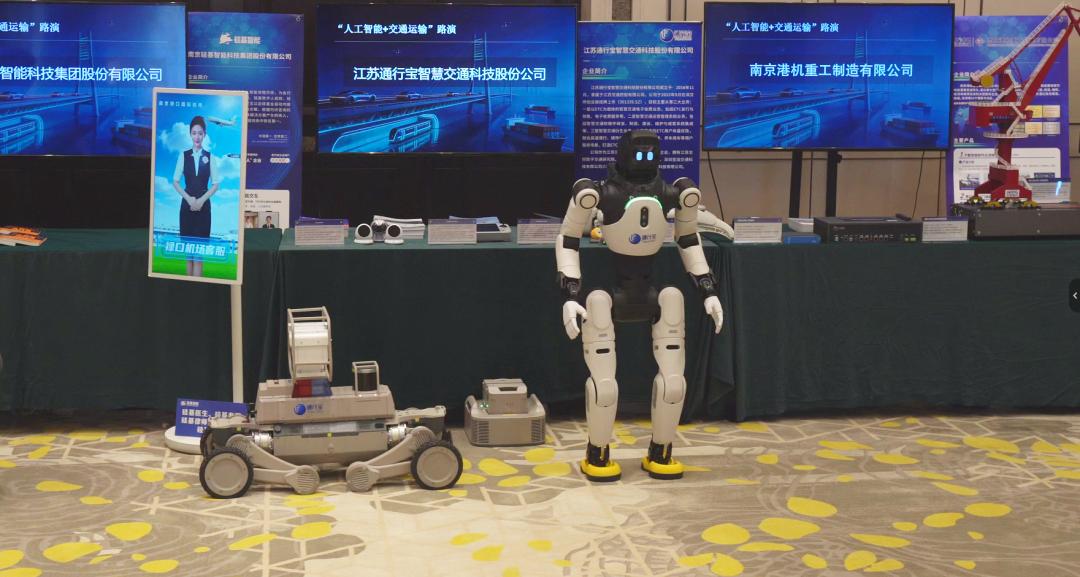
Although Chongqing, Anhui, Guangdong and Fujian are all intensively issuing similar plans, the special feature of Jiangsu is that it is the only province in China that takes "100 scenarios" as a mandatory key performance indicator (KPI), and has already supported a matching service provider resource pool and industrial alliance.
Why does Jiangsu dare to write this goal into its KPI system?
First of all, Jiangsu has solid foundation and large investment intensity.
During the 14th Five-Year Plan period, Jiangsu completed an investment of 1 trillion yuan in transportation infrastructure construction, 1.6 times that of the 13th Five-Year Plan period. It is planned that the investment will exceed 1 trillion yuan again during the 15th Five-Year Plan period. In 2026, Jiangsu's planned investment in fixed assets for transportation will reach as high as 240 billion yuan.
Few other provinces can achieve such a large investment intensity.
Secondly, there is a sense of urgency for development.
The expressways in Jiangsu carry a far higher proportion of traffic flow than the national average. In addition, the total mileage of high-speed railways in the province reaches 2594 kilometers, ranking first among all provincial-level administrative regions in China in terms of mileage density, and it is difficult to make further breakthroughs in this indicator. Therefore, tapping the "data dividend" has become an inevitable choice.
Finally, Jiangsu has a solid industrial foundation.
As a major province with advanced manufacturing industry, Jiangsu has cultivated distinctive emerging industrial clusters including AI driving, AI equipment and AI logistics. Three large-scale transportation models including Yunmanman, T3 Travel and Suzhou Haiguanjia Logistics have completed the filing of generative AI services of the Cyberspace Administration of China. A number of leading enterprises such as Motional, Hesai Technology and Jiuzhi Intelligent have also emerged.
Now, Jiangsu plans to make overall arrangements at the provincial level, further boost the model capability and product capability of enterprises through scenario opening and data supply on the government side, so that enterprises can iterate their products based on actual scenarios, and in turn improve the efficiency of transportation governance.
This development mode of "exchanging scenarios for industrial development and nurturing the ecosystem with data" is transforming Jiangsu's advantages in transportation into first-mover advantages in the AI industry.
AI + Transportation is far more than autonomous driving
Many people mistakenly believe that "AI + Transportation" only means developing autonomous driving and installing cameras. However, Jiangsu has a thorough understanding of the essence of this "+".
Transportation is not just about roads. Elements including waterways, ports, navigation channels, hubs and transportation services can all be empowered by artificial intelligence.
For example, in the field of construction, precast girders are the "skeleton" of expressways, and there can be no slightest mistake in their quality. In the past, workers inspected them with naked eyes, which led to high missed detection rate and inconsistent standards. Now, the intelligent production of precast girders in Jiangsu has realized full-process AI quality control, which can focus on the surface cracks, honeycomb and pitted surface of each girder, with accuracy and efficiency far higher than manual work. The project of the headquarters of Xitai Expressway Suzhou Section has thus been selected into the first batch of typical application scenario list of Jiangsu Province.
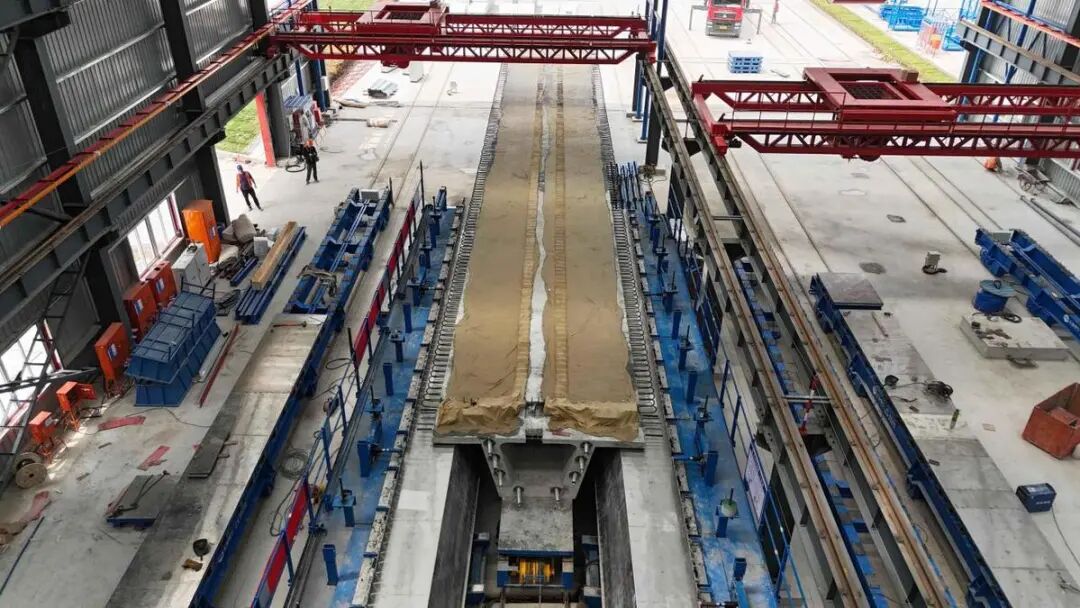
"Smart Beam Yard" production line Source: China Daily Website
In terms of management services, Jiangsu's approach is to turn AI into a "safety officer who never rests". Xuzhou took the lead in launching the intelligent monitoring system for the operation of ordinary national and provincial highway networks. The system can identify scattered objects on roads, illegal occupation of roads and traffic accidents within seconds and give automatic alarms, which no longer relies on manual patrol.
In the field of road maintenance, AI is changing the passive situation of "repairing roads only after they are damaged". On the trunk highways of Changzhou, drones equipped with high-definition cameras and infrared thermal imaging devices automatically inspect pavement damages, and can complete the workload of one week in the past within one day. Yangzhou has deployed lightweight sensing devices at the edge of highways to collect real-time pavement state data, and automatically diagnose the type and severity of damages combined with AI models, so as to generate maintenance suggestions.
Suzhou has gone a step further and developed an AI decision-making agent for ordinary highway pavements. It can predict which section of the road may have problems at what time based on historical data and real-time monitoring, and arrange maintenance in advance, which truly realizes "treating the disease before it occurs".
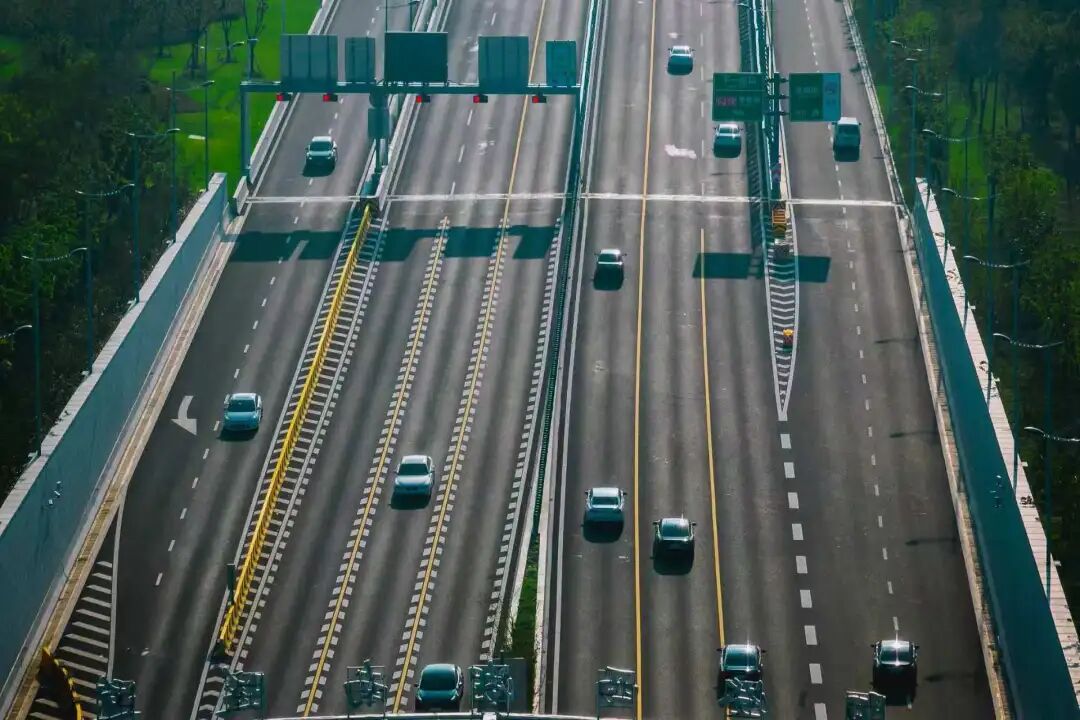
Jiangsu has broken down every link of construction, management, maintenance, transportation and service into scenario application cases of artificial intelligence.
Now, the Jiangsu Provincial Department of Transport has released the "First Batch of Typical Application Scenario List of 'AI + Transportation'". The 62 projects on the list specify in detail the applicable scenarios, adopted technologies, expected effects and other contents.
For example, the "mobile phone +" card-free passage service is launched to solve the problem of slow card collection for non-ETC vehicles. There is also the "second approval" service for oversize transportation, which realizes 100% intelligent approval for intra-provincial transportation and removes the inspection blockages on roads.
In addition, Jiangsu will also implement the "one-code pass" for dangerous goods transportation, assign unique codes to all dangerous goods transport vehicles, personnel and enterprises, realize full-chain traceability of loading, transportation and unloading processes, build a provincial-level industrial SaaS platform, and complete data governance and AI reasoning deployment.
In the field of ship shipping, Jiangsu plans to install intelligent navigation systems on new energy ships to realize conditional autonomous driving, and launch the "intelligent shipping pilot route" in the Grand Canal to realize efficient collaboration among ships, ports, navigation channels and locks.
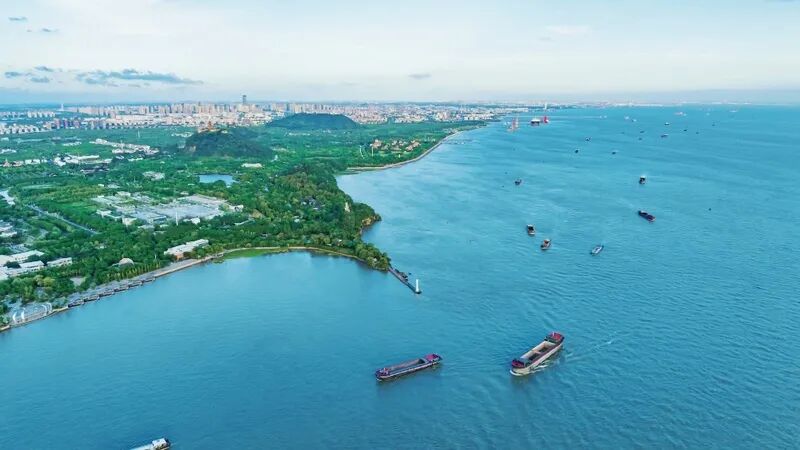
Traditional smart transportation projects usually follow the mode that the government puts forward demands, enterprises bid for the projects, deliver the completed works and finish the acceptance, and the projects end completely after that.
The wisdom of Jiangsu is that it does not work behind closed doors. It directly releases the plans to the market, and even opens up scenarios for AI enterprises as "training grounds". In essence, this approach replaces the "party A mindset" with the "partnership mindset". The provincial government helps AI enterprises bear part of the R&D costs, and takes the most valuable "real scenarios" as an incubator to cooperate with enterprises.
Prior to this, Jiangsu has launched the 2026 Jiangsu "Chuang Qing Chun" AI + Transportation Innovation and Entrepreneurship Competition, focusing on difficulties and pain points, setting up the "unveiling the list to take on challenges" application track and the "free innovation" open track, and providing multi-dimensional event packages covering capital, talents and scenarios.
To show its sincerity, at the roadshow on July 23, Jiangsu also presented three major packages to the partners at the scene:
The first package is a trusted data space. Data is the fuel of large models. Jiangsu actively extracts the "oil" of highway, railway, waterway and air transportation data, cleans it up, so that all parties can use it with confidence.
The second package is Token coupons, namely computing power coupons. Relying on the provincial integrated computing power monitoring and scheduling platform, Token coupons are issued to small and medium-sized enterprises to help them reduce the cost of computing power use.
The third package is the industrial alliance. The chairman unit is Jiangsu Transportation Holdings, and more than 60 key enterprises have joined as the first batch of members, so that enterprises can find their belonging and available resources.
It is worth mentioning that the Jiangsu Provincial Department of Transport and the transport bureaus of all cities and counties will also use AI technology to carry out intelligent classification and dispatch of the "12328" hotline. This means that the landing of government affairs AI in the transportation field has a clear carrier, which is a direct benefit for manufacturers developing government-oriented large models.
Responsibility of a strong province in innovation
If we look at the issue from a higher perspective, we will find that Jiangsu's move is far more than the development of the transportation industry.
In the past decades, Jiangsu's transportation industry is "strong" in infrastructure density and traffic flow scale. But in the intelligent era, the logic of "being strong" has changed.
The competition in the international market focuses on large models, computing power and application scenarios.
In January 2026, the Jiangsu Provincial Government held a press conference for the "Action Plan for 'AI Development' of Jiangsu Province", clearly proposing to build Jiangsu into a strong province with leading artificial intelligence innovation capability.
How to achieve this goal? This "Implementation Plan for AI + Transportation" further decomposes, refines and deploys the previous plans:
The first step is to build "one industry-specific trusted data space".
This is a key intersection between Jiangsu's plan and the national plan. The data space means that data becomes confirmable, circulatable and priced data assets. Jiangsu Communications Holdings is now fully promoting the resource utilization, assetization and capitalization of transportation data.
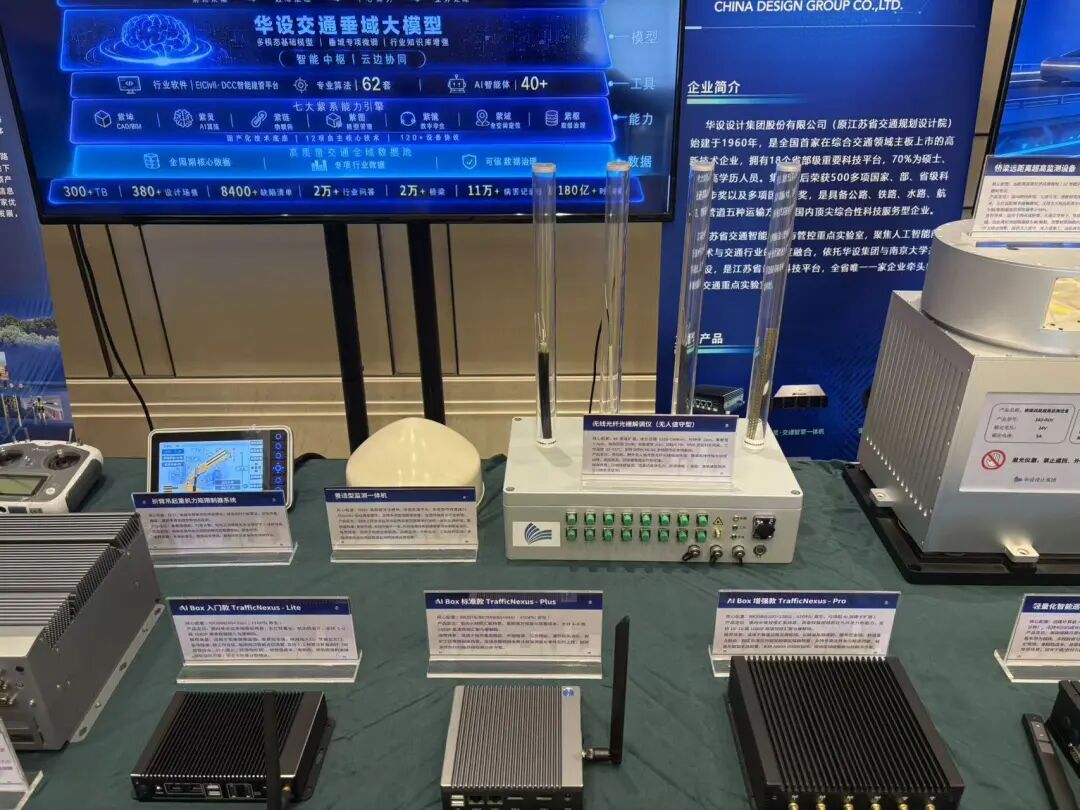
The second step is to clarify the indicator of "20 industry-specific vertical application models".
General large models cannot solve the professional problems in the transportation industry, such as bridge crack identification, navigation channel congestion prediction, risk warning for dangerous chemical vehicles, port cargo handling optimization... Each scenario requires different models, different training data and different algorithm tuning.
If you only access a general large model, it is like asking a general practitioner to conduct specialist outpatient diagnosis. The doctor can chat with you for a while, but cannot prescribe the right medicine. Jiangsu plans to independently develop 20 vertical models for the transportation industry, and equip each sub-sector scenario with a "specialist doctor".
This is where Jiangsu stands out from other provinces. Across the country, Jiangsu is currently the only province that takes both "data space" and "vertical model" as key performance indicators. The former solves the problem of "whether the data can be used", and the latter solves the problem of "whether the model is professional". The two are indispensable.
The choice of this time window is also very strategic. 2026 is known as the "first year of AI application". All walks of life are looking for large-scale landing scenarios. The transportation industry, which features large data volume, rich scenarios and clear pain points, is recognized as one of the best tracks for AI implementation. Jiangsu chooses to focus on development at this node, which is not only conforming to the general trend, but also seizing the first opportunity.
Looking deeper, the significance of this experiment goes far beyond the transportation industry.
With scenario standardization, service provider resource pooling, data spatialization and computing power inclusiveness, the methodology that Jiangsu has explored in the transportation field can be