The market share has fallen below the 25% warning line, and joint-venture automakers have entered their most precarious moment.
CheDongXi news on July 27, the 2026 China Automotive Forum held in Shanghai recently set up for the first time a closed-door and special forum with the theme of "The Path to Breakthrough for Brands in the New Joint Venture Era".
At the beginning of the forum, Wang Qian, Deputy General Manager of Dongfeng Nissan Passenger Vehicle Sales Co., Ltd., presented a striking set of data: "In June 2026, the market share of joint-venture and foreign brands in China's auto market dropped to only 24.5%, roughly a quarter."
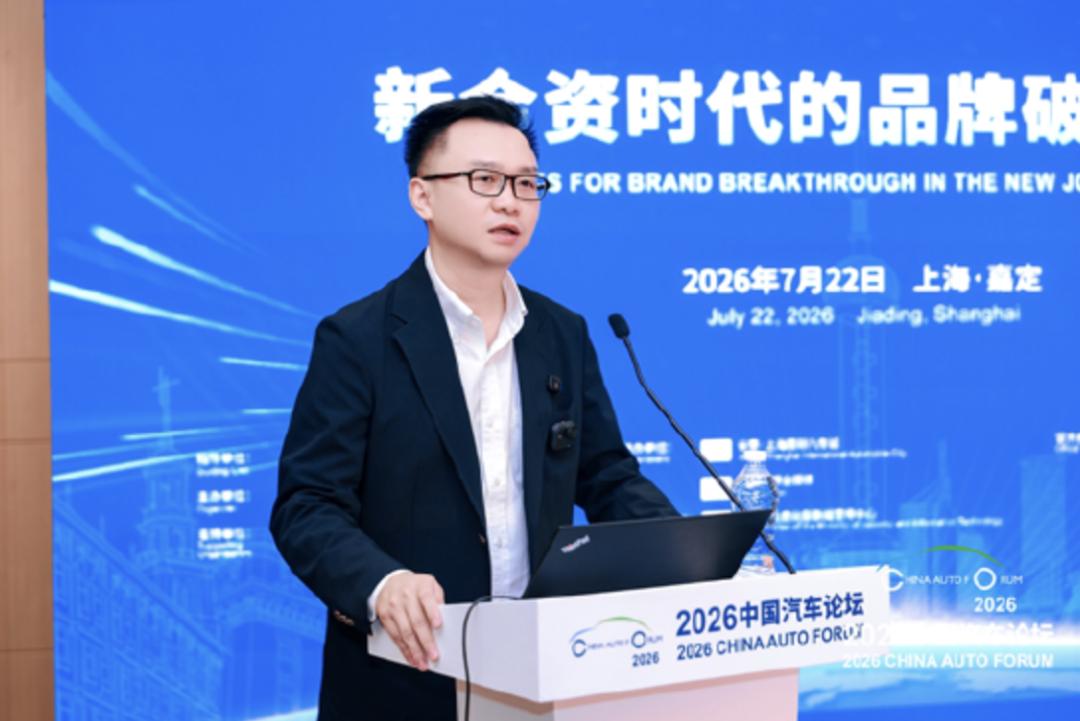
Wang Qian, Deputy General Manager of Dongfeng Nissan Passenger Vehicle Sales Co., Ltd.
The essence of automobile manufacturing is a business of economies of scale. The drop of Chinese market share of joint-venture automakers below 25% is not only about the decline in sales volume, but also means that the scale effect is continuously weakening, which may trigger cascading pressure on cost advantages, supply chain bargaining power and brand competitiveness. Eventually, automakers may fall into a vicious cycle of "the less you produce, the higher the unit cost, the more you lose on each sale" and "the more reluctant consumers are to buy, the lower the sales".
Focusing on this topic, the executives of joint ventures present did not shy away from the current difficulties faced by joint-venture automakers, conducted in-depth collective analysis on the dilemmas, and put forward their respective solutions to break through the situation.
01. The Tides Have Turned: Joint-Venture Automakers Are Facing Collective Sales Pressure in China
From the perspective of changes in market share, over the past six years, Chinese brands and joint-venture brands have almost completed a complete shift of offensive and defensive positions.
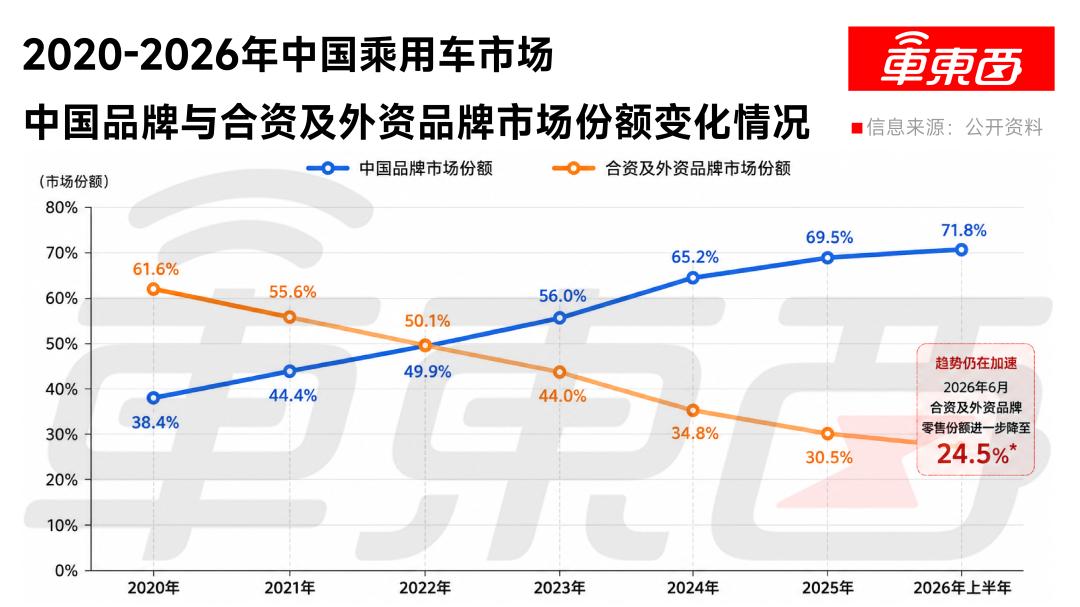
Chart of Market Share Changes of Chinese Brands and Joint-Venture & Foreign Brands in China's Passenger Vehicle Market from 2020 to 2026
In 2020, joint-venture and foreign brands took up 61.6% of the market share in China's passenger vehicle market, while Chinese brands accounted for 38.4%, maintaining a 60-40 offensive and defensive pattern.
In 2021 and 2022, the market share of Chinese brand passenger vehicles rose from 44.4% to 49.9%, while that of joint-venture and foreign brands correspondingly dropped from 55.6% to 50.1%, with the two sides almost evenly matched;
In 2023, Chinese brands exceeded 56% and became the dominant force in the passenger vehicle market for the first time; from 2024 to 2025, the market share of Chinese brands increased from 65.2% to 69.5%, while that of joint-venture and foreign brands fell from 34.8% to 30.5% accordingly; entering 2026, this trend is still accelerating.
According to data from the China Association of Automobile Manufacturers (CAAM), in the first half of this year, the cumulative sales of Chinese brand passenger vehicles reached 9.138 million units, with a market share of 71.8%. Correspondingly, the market share of joint-venture and foreign brands has dropped to 28.2%.
Further focusing on June, data from the China Passenger Car Association (CPCA) shows that the retail sales of Chinese self-owned brand passenger vehicles reached about 1.1 million units that month, while the retail sales of mainstream joint-venture brands were only 330,000 units, and the overall market share of joint-venture and foreign brands dropped to 24.5%. Among them, the retail share of German brands was 12.8%, that of Japanese brands was 11.0%, and that of American brands was 5.8%.
In just six years, the overall share of joint-venture brands in China's passenger vehicle market has dropped from over 60% to less than a quarter.
For the automobile manufacturing industry, economies of scale have always been the foundation of its commercial operation. When joint-venture automakers were in the dominant position in the past, dozens of factories operated nonstop, and the fixed cost per vehicle was greatly diluted. As the market share of the joint-venture camp in China shrinks, the capacity utilization rate of their factories will also drop significantly, gradually falling into the vicious cycle of "the less you produce, the higher the unit cost, the more you lose on each sale".
At the same time, the appeal of these joint-venture automakers to upstream suppliers may also plummet. They can no longer get the low procurement prices they used to enjoy, and may even be marginalized in the intelligent supply system due to too small order volume. Excessively low market share may also bring brand marginalization to joint-venture automakers. Consumers will worry about whether the automaker will withdraw from China and whether there will be no place to repair their cars in the future, thus forming another vicious cycle of "the more reluctant consumers are to buy, the lower the sales".
Wang Qian from Dongfeng Nissan also said, "Now many media don't even bother to list joint ventures as a separate line in their industry reports, and their sense of presence is indeed very weak."
The continuous decline in market share is also directly reflected in the sales performance of major joint-venture automakers in the first half of this year.
The overall downward pressure on the German camp is obvious. Public data shows that Volkswagen Group delivered 971,000 vehicles in China in the first half of this year, a year-on-year decline of nearly 26%. The equity operating profit of Volkswagen's joint ventures in China was only 184 million euros (about 1.42 billion RMB), with profit shrinking by more than 60%.
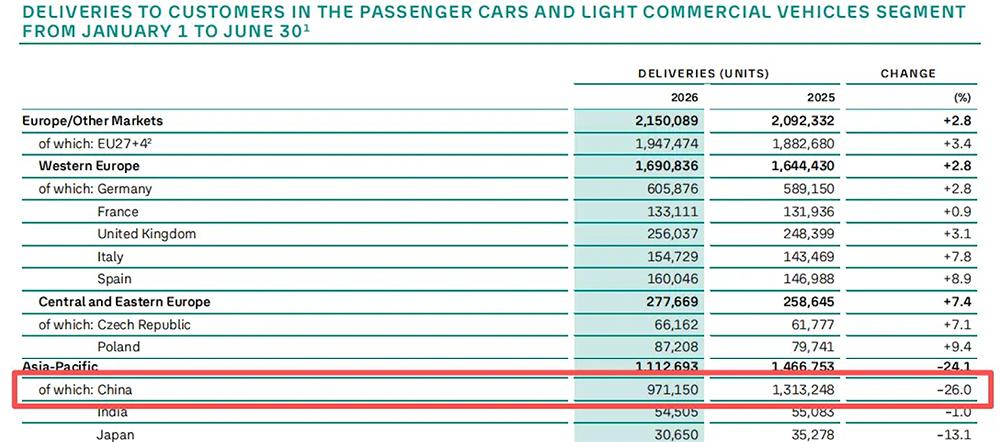
Volkswagen Group delivered 971,000 vehicles in China in the first half of this year
In the first half of this year, BMW China delivered a total of 261,800 new vehicles, down 20.4% year on year; Mercedes-Benz China delivered a total of 210,200 new vehicles, down 28% year on year; Porsche sold only 14,500 vehicles, down 32% year on year.
The three leading Japanese automakers are also facing great market pressure. Public data shows that Honda China saw the largest decline, with sales of 205,800 units in the first half of the year, plummeting 34.7% year on year; Toyota China delivered 694,700 new vehicles in the first half of the year, down 17.1% year on year; Nissan China sold 237,000 units in the first half of the year, down 15% year on year.
The sales of American and Korean automakers also remained sluggish. Changan Ford's cumulative sales in the first half of this year were only 28,800 units, down 39% year on year; SAIC General Motors sold 231,200 units in the first half of this year, down 5.68% year on year; Beijing Hyundai's cumulative sales in the first half of this year were 94,697 units, down 5.3% year on year.
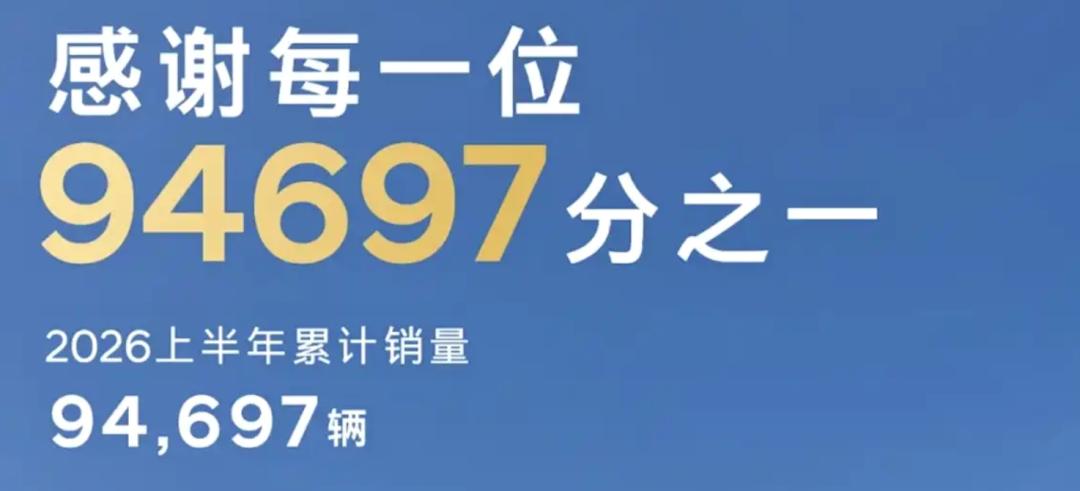
Beijing Hyundai's cumulative sales in the first half of 2026 reached 94,697 units
02. Competition Rules Have Been Rewritten: Joint-Venture Automakers Start to Hand Over R&D Decision-Making Power to China
At the forum, regarding the shrinking market share, Wang Qian emphasized that the pain of joint-venture brands lies in the complete rewriting of competition logic.
He believes that the traditional joint venture model of "foreign side provides technology, Chinese side provides channels, and exchanges cost advantages for scale" has completely failed in China's auto market in 2026. Nowadays, the new vehicle development cycle of Chinese brands has been shortened to less than 18 months, while joint-venture brands are still waiting for the approval process of their global headquarters; consumer demand has evolved from "just having a car is enough" to "wanting everything at the same time", and industry competition has upgraded from single product competition to the competition of full-chain comprehensive strength.
In this regard, he put forward a new perspective on breaking through the situation: joint venture only represents the capital composition, and does not limit the upper limit of enterprise development. The system capabilities, quality control standards and supply chain resilience accumulated by joint-venture automakers over decades still have high industry value. "The key lies in whether you are willing to put these old foundations into the new market logic for reconstruction and activation."
He also gave the direction of breaking through the situation: "The window for joint ventures has not closed, it has just shifted from the 'global introduction' window to the 'local creation' window."
Zheng Yun, Global Senior Partner of Roland Berger and Head of Automotive Business for Asia-Pacific, believes that in the future, multinational automakers should first achieve local technology R&D, and transfer the definition and R&D authority of core products such as complete vehicles, three-electric systems and intelligent cockpits from overseas headquarters to independent or joint R&D centers in China; second, realize complementary advantages between Chinese and foreign resources, with the Chinese side outputting local intelligent and digital capabilities, and the foreign side outputting mature vehicle manufacturing and global channel systems.
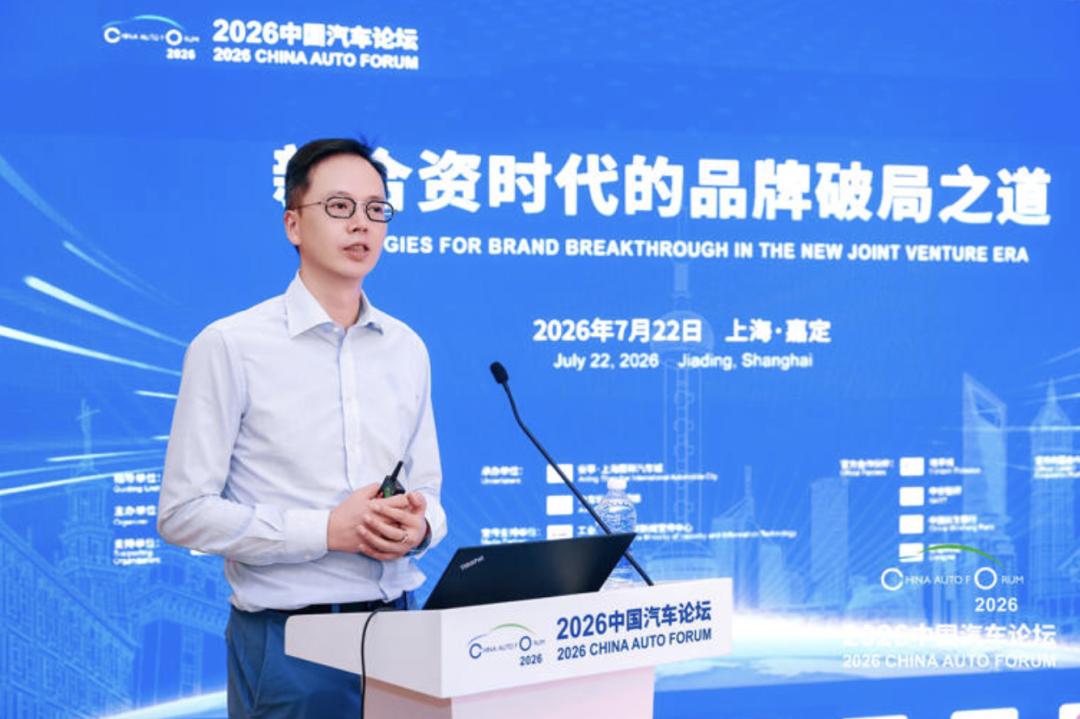
Zheng Yun, Global Senior Partner of Roland Berger and Head of Automotive Business for Asia-Pacific
Liu Zhanshu, CEO of Volkswagen (Anhui) Digital Sales and Service Co., Ltd., analyzed from the perspective of underlying rules, "Electrification gives rise to intelligence, intelligence brings standardization, standardization leads to price parity, and price parity finally promotes the return of automobile value. At present, the focus of competition in the automotive industry has shifted to the construction of a complete ecosystem covering three-electric systems, intelligent driving and intelligent cockpit."
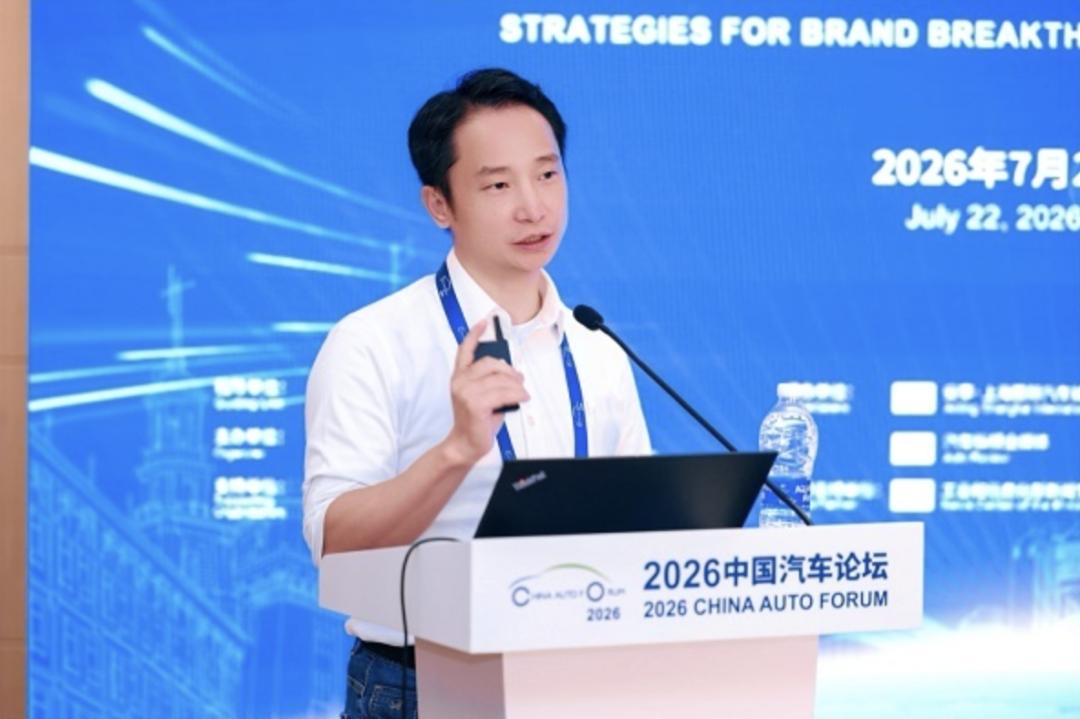
Liu Zhanshu, CEO of Volkswagen (Anhui) Digital Sales and Service Co., Ltd.
In terms of specific measures to break through the situation, major joint-venture automakers are carrying out self-rescue from multiple dimensions.
Dongfeng Nissan adopts the GLOCAL model, granting full-process decision-making power over product definition, technical route and pricing strategy to the local Chinese team. The new energy "N Series", which is led by the Chinese team in decision-making and independent R&D, saw its 100,000th vehicle roll off the production line last month, with new energy sales in the first half of the year increasing by 192% year on year.
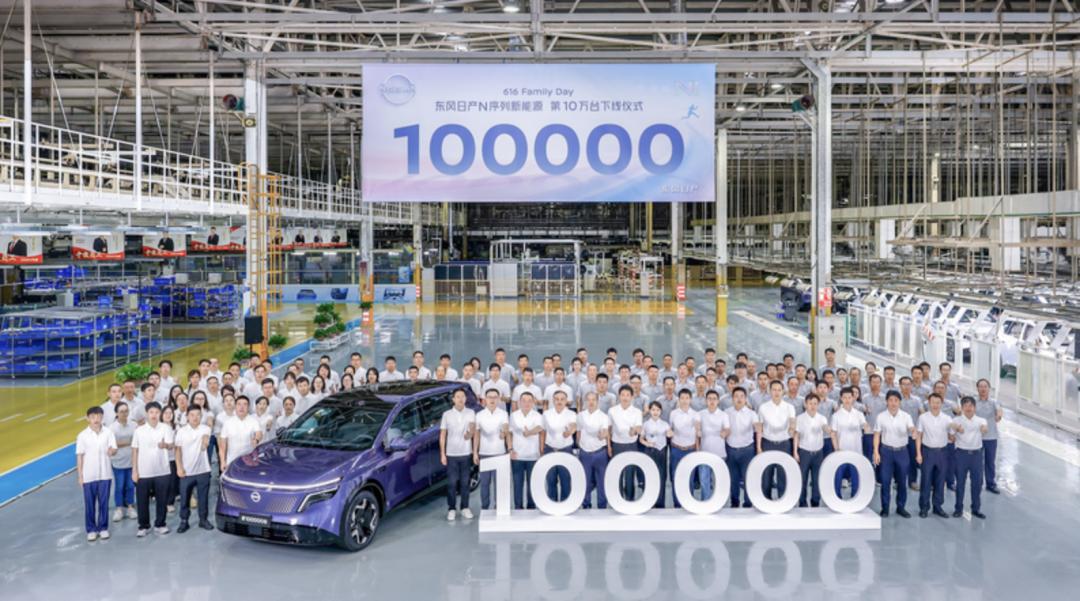
The 100,000th vehicle of Dongfeng Nissan's N Series new energy models rolls off the production line
Toyota, on the one hand, continues to strengthen its ONE R&D system and China Chief Engineer (RCE) system, granting its Chinese R&D team independent resource allocation power and technical decision-making power; on the other hand, focusing on the BZ series of new energy products, it accelerates cooperation with local Chinese supply chain enterprises such as Huawei, Momenta and Pony.ai, and promotes the construction of Lexus' wholly-owned new energy plant in Shanghai, which is expected to be put into operation in 2027.
Volkswagen Anhui is following the route of "German chassis genes + local intelligent development" in the product segment. Relying on the Hefei R&D center, the China-exclusive local electrical and electronic architecture (CEA) led by the Chinese team took only 18 months from concept to mass production, setting the fastest record in the group.
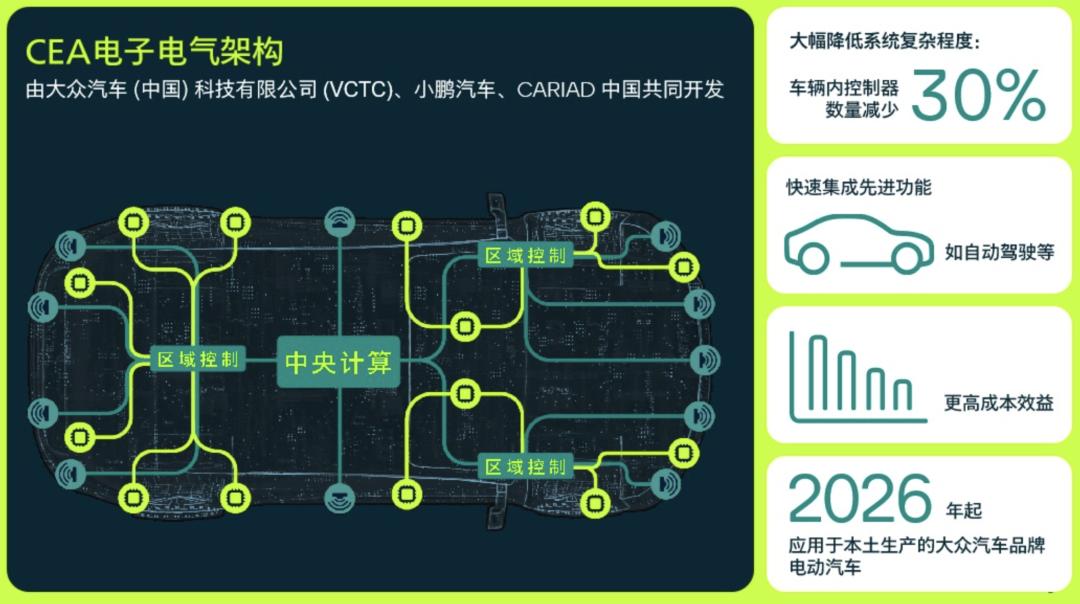
CEA Electrical and Electronic Architecture
Since the beginning of this year, BMW has continuously strengthened the status of its China R&D center in the global R&D network. It not only carries out local Chinese development for the new Neue Klasse models, but also integrates local Alibaba AI large model and DeepSeek technology in the Chinese market to create an AI personal assistant that meets the needs of local Chinese users.
Mercedes-Benz also launched the MB.OS operating system of "Mercedes-Benz self-developed architecture + China-exclusive solutions" on its newly launched all-electric GLC, equipped with a mind-reading voice assistant developed by Mercedes-Benz's local Chinese team, and also introduced the Doubao large model and super-anthropomorphic TTS technology.
03. Conclusion: "China-led" May Be the Key for Joint-Venture Automakers to Break Through the Situation
From a 60% market share in 2026 to 24.5% in June 2026, this data records one of the most profound structural reshuffles in China's automotive industry over the past 30 years.
The signal released by the 2026 China Automotive Forum is very clear: the era of "lying to win" by relying on the prestige of past global platforms has completely ended. The quality control system, manufacturing capabilities and capital reserves accumulated over decades are still the hard assets of joint-venture automakers