Who Is Defining Reality: The Strategic Value of "Paradigm Language Action" in the AI Era
Generative artificial intelligence is reshaping the value structure of corporate language.
On the one hand, traditional rhetorical language is rapidly depreciating. A large number of standardized expressions, promotional scripts and information processing work are gradually being replaced by AI. On the other hand, those high-order language capabilities that can name reality, define reality and organize reality are becoming increasingly scarce. This paper generalizes this high-order language behavior as "paradigmatic speech acts".
With the help of the speech act theory of J. L. Austin and John Searle, as well as the perspectives of cybernetics and second-order cybernetics, this paper points out that paradigmatic speech acts are not just language that "describes reality", but an ontological utterance that can directly shape reality. It has practical behavioral effects, that is, "performativity".
This kind of language action functions mainly through four mechanisms:
(1) Providing transcendent reference points;
(2) Integrating collective intentionality;
(3) Embedding value preferences into organizational feedback loops;
(4) Rewriting competition rules.
As a result, organizations can form an "orchestration advantage" that goes beyond traditional market advantages. Against the background that AI is driving organizations to move towards tokenization and "performative organization", the core role of strategic managers is also shifting from resource coordinators to "paradigmatic language architects". Therefore, the core issue of management in the AI era is shifting from "how to optimize the organization" to "who has the ability to utter a new world sufficient to sustain the existence of the organization".
Introduction
After the rapid popularization of generative artificial intelligence, a seemingly logical judgment has become prevalent: language is depreciating. When machines can generate fluent, appropriate and almost impeccable corporate scripts at extremely low cost and on a large scale, language no longer seems to constitute a real competitive barrier. There are more and more "fine expressions" in the market, but fewer and fewer truly distinctive expressions.
But this judgment is only half right. More accurately, what is depreciating is the rhetorical language that can be easily copied by large models; while another type of language is rapidly appreciating. This type of language can name reality, define reality, and further organize reality.
"What is truly scarce in the AI era is not 'being able to speak', but 'being able to persuade'; furthermore, it is 'being able to construct a belief world that is empathetic and allows collaborative action through language'."
Palantir Technologies provides a typical case for understanding this phenomenon. In recent years, its CEO Alex Karp has repeatedly emphasized a core judgment through open letters, speeches and articles: Software is no longer just a tool to improve efficiency, but an infrastructure for geopolitical survival; if state apparatuses and large organizations lack a unified "ontology", they will lose their ability to act in the information noise of the AI era. Different from the common Silicon Valley narratives of efficiency, growth, platform and disruptive innovation, Karp's discourse system significantly resorts to civilizational order, state capacity, political philosophy and even "the survival of the West". This means that Palantir is not just claiming that "our products are more advanced", but that "the world has changed, and we know what it is becoming".
For this reason, what Palantir provides to its customers is not just software, but a set of language systems that explain business, risks and the future. Big data, digital twins, knowledge graphs and agents are only the software forms of this language system; its forward deployed engineers are not just software architects, but more like language architects: they work with customers to envision future scenarios, unify cognition and organize actions with the same set of ontological language, and embed this cognitive framework into the implementation process.
This phenomenon reminds us that the competition among leading enterprises is shifting from "who has better tools" to "who can name reality, define reality and finally create reality with higher-order language". This paper explains what "paradigmatic speech acts" are and tries to answer three questions: First, what is the theoretical connotation of paradigmatic speech acts; Second, why can it form an "orchestration advantage"; Third, under the background of organizational form transformation in the AI era, why strategic managers must turn to "paradigmatic language architects".
Paradigmatic Speech Acts: From Speech Acts to Reality Construction
1 Language is not packaging, but action
Austin and Searle have long pointed out that language is not only used to describe the world, but is itself action (speech acts). A marriage vow is not a static statement of the state of love, but the establishment of a commitment relationship; a judge's verdict is not a simple restatement of facts, but directly defines rights and responsibilities within the institutional framework. The so-called "speech is action" emphasizes that: Once certain utterances are spoken, they will change the real structure in which the speaker and the listener are located.
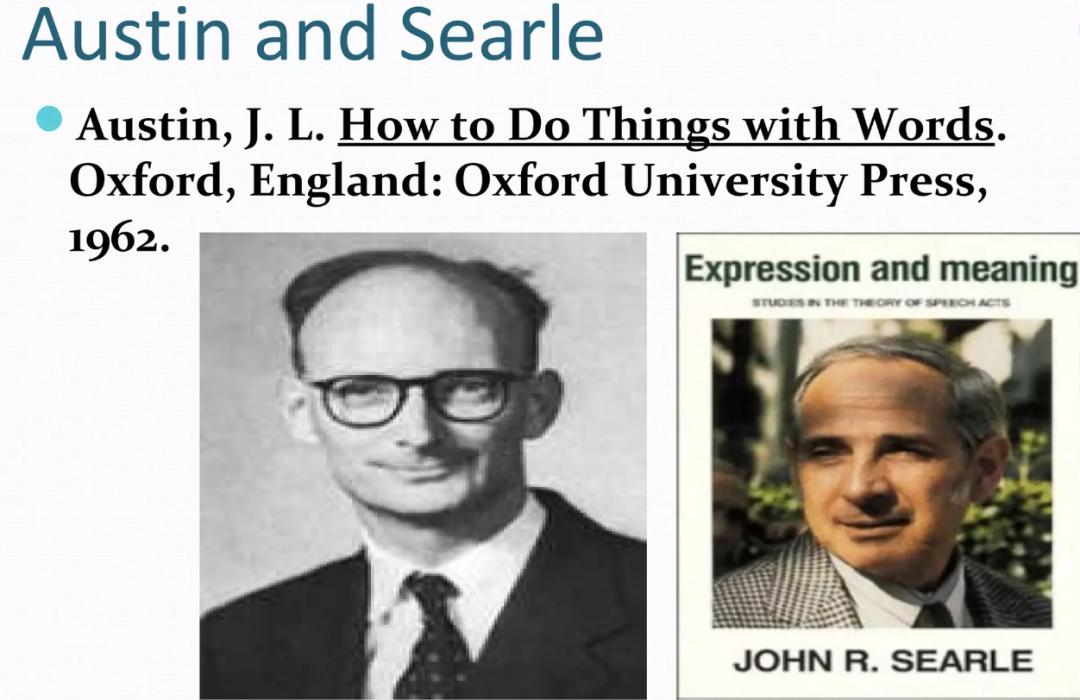
Searle further proposed that human thinking naturally has intentionality, and language is the external form of this intentionality. Truly organizational language does not only express personal views, but can reintegrate scattered, swinging and even conflicting individual intentions into collective intentionality. Therefore, the power of language lies not only in transmitting information, but also in organizing cognition, anchoring directions and creating institutional facts. For example, what paper money expresses is an institutional fact based on financial order.
From this perspective, corporate language is not just a communication tool. In many cases, it directly participates in the formation of organizational order. Especially in the current environment of increasing uncertainty, weakening consensus foundation and rapid technological change, language is no longer just the surface rhetoric of external communication, but has become one of the earliest operating control mechanisms within the organization.
2 What is "paradigmatic speech acts"
The "paradigmatic speech acts" referred to in this paper refers to a high-order language behavior that makes a solemn assertion of the new order from a high-dimensional perspective, and reconstructs the cognitive and action boundaries of reality accordingly. It usually comprehensively uses various forms of speech acts such as assertion, declaration, promise, guidance and expression, but its key does not lie in expression skills, but in establishing a systematic narrative that is empathetic and allows collaborative action. Paradigmatic language often includes anchored worldviews and values, so that it has inherent appeal of belief.
Different from general vision statements, paradigmatic speech acts do not mainly answer "what we are going to do", but first answer "what kind of world we are in" and "what counts as reality from now on". It is similar in nature to the meaning of "paradigm" put forward by Thomas Kuhn, that is, an overall framework that defines problems, delineates boundaries and establishes standards. Once a certain paradigm is accepted, what actors face is not just a change in answers, but the problem itself is redefined.
"Paradigmatic language is not choosing a route on the map, but redrawing the map."
The reason why paradigmatic language is important is that it does not fight for position in the existing order, but rewrites the way of understanding the order at a higher level. For organizations, this means that it not only provides goals, but also a new real framework; it not only motivates actions, but also presets the coordinate system in which actions take place.
3 High-dimensional perspective, cognitive gravity and order construction
A basic reality faced by contemporary organizations is that: Information is getting richer, but consensus is getting scarcer.
People are often not short of facts, but fighting over "where should we look at the facts". Under such conditions, if leaders only stay in the debate of partial facts, they will often be dragged into endless semantic entanglements and cannot form a stable order of action.
The role of paradigmatic language is precisely to provide an observation position that transcends fragmented reality, so that scattered information can be re-integrated at this position, and conflicting narratives can be reorganized into reasons for positive actions at this position. What it forms is not a simple persuasive effect, but a "cognitive gravitational field": when a high-dimensional perspective is distinct and complete enough, organizational members, partners and even competitors will tend to readjust their own understanding, expression and action around this perspective.
This cognitive gravity has clear management implications. In the fragmented, disorderly drifting state of cognitive vertigo, whoever first puts forward a high-dimensional narrative that can explain complex reality will more easily occupy the right of interpretation in the local order. Other actors will redefine problems, adjust priorities and arrange resource flows accordingly. The additional benefits brought by this automatic centripetal behavior are an important source of "orchestration advantage". Just like musicians, they can play freely, while the direction and boundaries have long been orchestrated by the score and the conductor.
How Paradigmatic Speech Acts Generate Orchestration Advantage
"Orchestration advantage" is not just the first-mover advantage or resource advantage in the usual sense. The first-mover advantage emphasizes taking the lead in entering the market and seizing effective resources; the orchestration advantage goes a step further, which means that an actor takes the lead in setting the grammar, framework and coordinate system for others to act on. At this time, it does not necessarily directly control every link, but can make more and more organizational behaviors automatically develop along the internally set logic.
1 Language as control signal
Cybernetics helps to further understand this mechanism. Norbert Wiener pointed out that complex systems do not simply rely on information accumulation, but on signals to organize feedback. The reason why signals are important is that they not only transmit information, but also have directionality and action orientation. Traffic lights do not explain road conditions, but directly stipulate the next behavior.
Heinz von Foerster's second-order cybernetics further shows that the observer is not outside the system, but a participant who enters the system and changes the system. In other words, in the organizational context, the party that puts forward the high-dimensional narrative is not explaining the system from the outside, but shaping the feedback logic of the system from the inside. Its value preferences, goal tendencies and path selection standards will first enter the organizational cognition through language, and then enter the operation layer through systems, processes, models and technical devices.
"Language is not the rhetoric on the surface of the organization, but one of the earliest coded control signals of the system."
Therefore, what finally appears as organizational order often has its direction set at the language stage. The reason why paradigmatic language is stronger than ordinary expressions is that it can pre-orchestrate the signal layer.
2 Triple Mechanism of Orchestration Advantage
Paradigmatic speech acts are transformed into orchestration advantages in at least three ways.
First, language constitutes the focus of resource convergence. In an environment where the cognitive coordinate system is not clear, a distinct statement with a sense of destiny summons can provide a common convergence point for scattered resources just like the focal point equilibrium in game theory. Originally heterogeneous participants will reduce coordination costs because of sharing this framework, and take the initiative to move closer to it. Paradigmatic language has the power to guide self-organizing actions.
Second, language constitutes a loyalty screening device. Paradigmatic language does not seek to attract everyone; on the contrary, it often forms a screening mechanism through distinct boundaries and high-risk commitments. It excludes short-term opportunists, and at the same time attracts deep participants who are willing to bind their identity, career path and capital investment to the narrative. What the organization gains from this is not general attention, but high-intensity identification. Those who accept paradigmatic language are more likely to see and commit to take action because they believe.
Third, language constitutes a rule rewriting mechanism. The deepest orchestration advantage is not executing faster than competitors, but forcing competitors to compete in the semantic framework set by themselves. Once an actor successfully obtains the naming right of technology, industry or institutional issues, its competitive advantage is no longer just on the market share, but the possession of the right to interpret reality and the right to institutional language. Paradigmatic language changes the rules of the game, highlights worthy strategic goals, and delineates the path choices for realization.
Differences Between Paradigmatic Language and Traditional Vision Narrative
The reason why paradigmatic speech acts deserve to be proposed separately is that it is not equivalent to the vision narrative commonly used by enterprises in daily life.
First, the two are at different language levels. Traditional vision language is teleological, which usually appears in the form of temporal commitments, such as "becoming the number one in the industry" and "becoming a leading solution provider". Such discourses can set goals, unite the team and unify performance evaluation, but they default that the competition rules, market boundaries and institutional environment are already given. It is navigating on the existing map.
Paradigmatic language is ontological. It does not first discuss "where are we going", but first stipulate "what world are we in". Therefore, it is not fighting for a better position in the existing rules, but changing the rules themselves at a higher level. What it changes is not the path, but the map; not the strategic details, but the boundaries of reality.
Second, traditional vision is mainly used to describe the future, while paradigmatic language directly participates in rule rewriting. If a leader declares that a certain technology is no longer just a tool, but a new survival infrastructure, this is no longer just a description of the future, but promoting capital, organizations, policies and the public to jointly change the institutional understanding of the technology. At this time, language is no longer an accessory of strategic communication, but part of the reality generation mechanism.
Finally, the main function of traditional vision is mobilization, while the deeper function of paradigmatic language is reality anchoring. When organizational members, investors and the policy environment lack consensus on basic judgments, the most urgent problem is not "boosting morale", but establishing a real framework that is jointly endorsed. Therefore, paradigmatic language is first a tool of order, and then a tool of motivation; first a mechanism of meaning construction, and then a tool of communication.
It is precisely because of this that paradigmatic language often has several remarkable features: First, it has ontological sovereignty, which can endow objects with new identities and positions; Second, it provides transcendent reference points to bring actors who lack common context into the same discourse field; Third, it has the ability to absorb paradoxes, which establishes order not by eliminating complexity, but by reframing complexity to make contradictions the material for order generation; Fourth, it is often accompanied by controversy and reputation risks, because it is not only a description, but also an open value commitment.
Practices of Paradigmatic Language in Business History
Paradigmatic speech acts are not new inventions in the AI era, but their effects have been dramatically amplified under the background of AI. Many important turning points in business history are accompanied by changes in the way of naming reality.
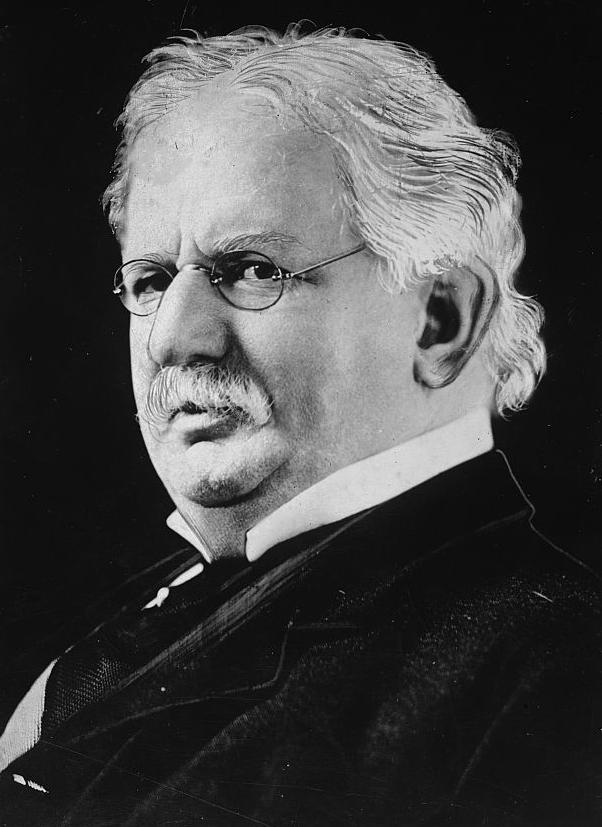
Theodore Vail (Image source: Wikipedia)
At the beginning of the 20th century, the American telephone industry quickly became fragmented after the patent expired, a large number of independent telephone companies were incompatible with each other, and the market order was highly chaotic. In 1907, Theodore Vail, president of AT&T, put forward "One Policy, One System, Universal Service". The power of this expression lies not mainly in its moral appeal, but in the fact that it rewrites the institutional identity of the telephone: the telephone is no longer just a scattered and competitive commercial commodity, but a public service infrastructure with unified allocation. Vail did not just win the market, but redefined the market at a higher level.
Amazon's "if you don't move to the cloud, you will be delisted" strategy (AWS API Mandate) in 2002 is the same. On the surface, it was just a technical management requirement; in essence, it reconstructed Amazon's organizational ontology. Amazon is no longer just a retail enterprise, but redefined as an architectural enterprise composed of service interfaces. The collaboration between