As luxury goods sales continue to slump, Poizon has been forced to venture into the rental business.
Even POIZON has lowered its stance to launch product rental services.
On July 28, the POIZON App officially launched the "Rental" service. More than 100 product categories were available in the first batch, covering digital products, gaming devices, mobile phones and computers, apparel accessories, luxury bags, watches and many other fields. The platform has simultaneously launched service mechanisms such as no-deposit rental and credit-based deduction.
In the early hours of the same day, LVMH, the world's largest luxury group, released its 2026 H1 financial report, recording total revenue of 38.644 billion euros, a 3% year-on-year decline on a reported basis. The Fashion & Leather Goods division, which accounts for nearly 47% of the group's revenue, posted a 5% drop in the first half of the year on a reported basis. In the core Asian market including China, the growth rate in Q2 slowed to 4% from 7% in Q1.
Kering Group reported revenue of 14.675 billion euros in 2025, down 13% year-on-year. In Q1 2026, the revenue of its core brand Gucci decreased by 14%, marking the 11th consecutive quarter of decline.
The latest data from Bain & Company shows that the global luxury consumer base dropped from 400 million in 2022 to 340 million in 2025. According to the research report of Zhongtai Securities, 99% of non-core luxury consumers contribute 79% of the demand.
On one hand, luxury giants have delivered weak performance results, on the other hand, trend-focused e-commerce platforms have quietly opened rental entrances, and the consumption logic in the new era has changed.
Why did POIZON enter the "rental" business, this slow-moving industry?
In 2010, a store named "Bangjia Rental" opened in Hangzhou, with rental products covering 9 major categories including home appliances, furniture, automobiles, digital electronics, and luxury goods, with international brand bags from LV, GUCCI and other brands prominently listed. However, shortly after opening, LV bags were removed from shelves. Pressure from LVMH China argued that the rental company could not prove that the bag rented to customers was genuine.
That was the first attempt at luxury rental in China, which came fast and went fast too.
In the following years, this track entered a slow budding period.
In 2013, Secoo launched the "Zero-yuan Rental for Top Brands" service; in 2015, Panghu Technology was founded, providing luxury rental and auction services; in 2017, "Baozupo" was launched, focusing on time-sharing rental of idle bags; in the same year, "Youmiao" entered the luxury bag rental sector with a C2C model; in 2018, "Xingdong" received investment from Zhang Ziyi.
Over the past decade, batches of platforms have poured in, expanded, shrunk, and transformed. Luxury rental has never become mainstream, but it has never truly disappeared. It is like an underground river that keeps flowing beneath the surface.
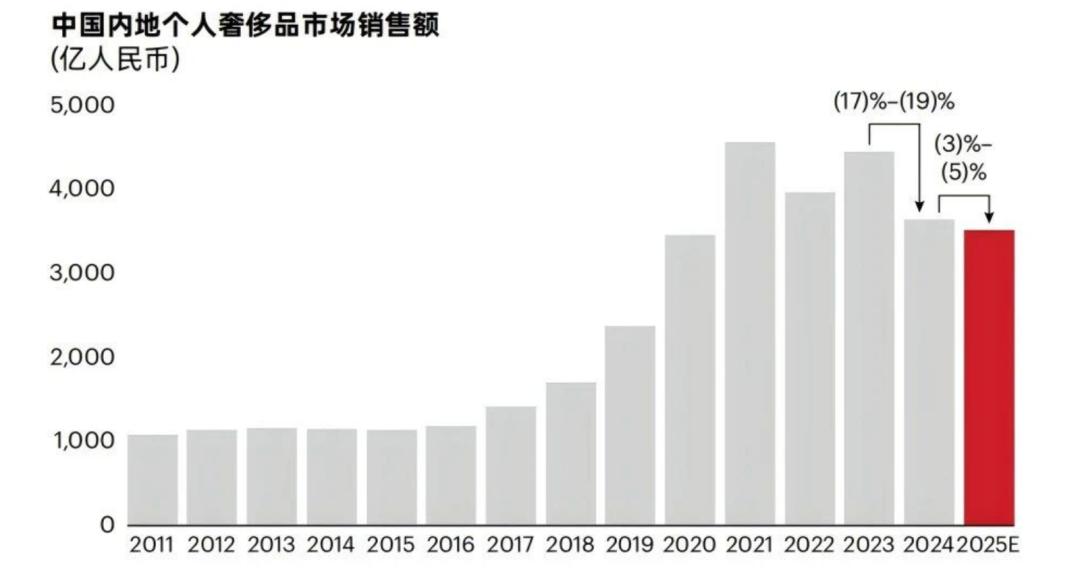
China's luxury market in 2026 is at a delicate juncture. The *2025 China Personal Luxury Report* released by Bain shows that the 2025 sales of China's mainland personal luxury market dropped by 3% to 5% year-on-year. Although the decline has narrowed compared with the 17% to 19% drop in 2024, and the market is expected to achieve moderate growth in 2026, the very word "moderate" itself speaks volumes: luxury goods are no longer as easy to sell as they were a few years ago.
At the same time, another set of data is on the rise. The market size of China's luxury rental industry expanded from 4.26 billion yuan in 2021 to 18.73 billion yuan in 2025, with an average annual compound growth rate of 35.2%. The market size is expected to reach 42 billion yuan in 2026. Between the one decline and one rise lies the structural change of consumption logic.
POIZON's choice to enter the market at this time is not so much an active strategic expansion as a passive business complement.
In 2024, POIZON was selected to the Hurun Global Unicorn List with a valuation of 71 billion yuan. At the 2026 all-hands meeting, the platform announced its achievements over the past year: its business achieved double-digit growth, the scale of merchant settlement increased by more than 60%, and the number of users using online appraisal services increased by 184%. The number of users exceeded 600 million, and its penetration rate among young people under 30 reached 50%.
However, under the glossy data, hidden worries are equally obvious. According to reports from China.com Finance, as of March 2026, the total number of complaints about POIZON on the Black Cat Complaint Platform has exceeded 280,000, with core complaints targeting counterfeit sales and inaccurate appraisal, and the controversy of "acting as both athlete and referee" has always lingered.
Greater challenges come from the growth logic itself. POIZON started from the trading of trendy sneakers and fashion items, with its core business model centered on "buying and selling": the platform provides appraisal services, facilitates transactions, and charges commissions. This model developed rapidly from 2018 to 2022, but by 2026, its ceiling has gradually emerged.
On one hand, the overall growth of luxury consumption is slowing down; on the other hand, the mindset of young consumers is changing. A survey by China Youth Daily shows that 77.3% of young people have had the consumption experience of "renting instead of buying", and the proportion among Gen Z is as high as 82.2%. Digital products are the most frequently rented category, accounting for 42.5%.
The concept of "ownership equals value" is loosening, and the logic of "usage equals satisfaction" is taking the lead. Data from the 00xiangzu platform shows that users under 30 years old account for more than 60% of the current rental market, and the order volume of Gen Z doubled year-on-year.
When your core user group starts to think that "renting is more cost-effective than buying", but you are still only running the "selling" business, slowing growth is only a matter of time.
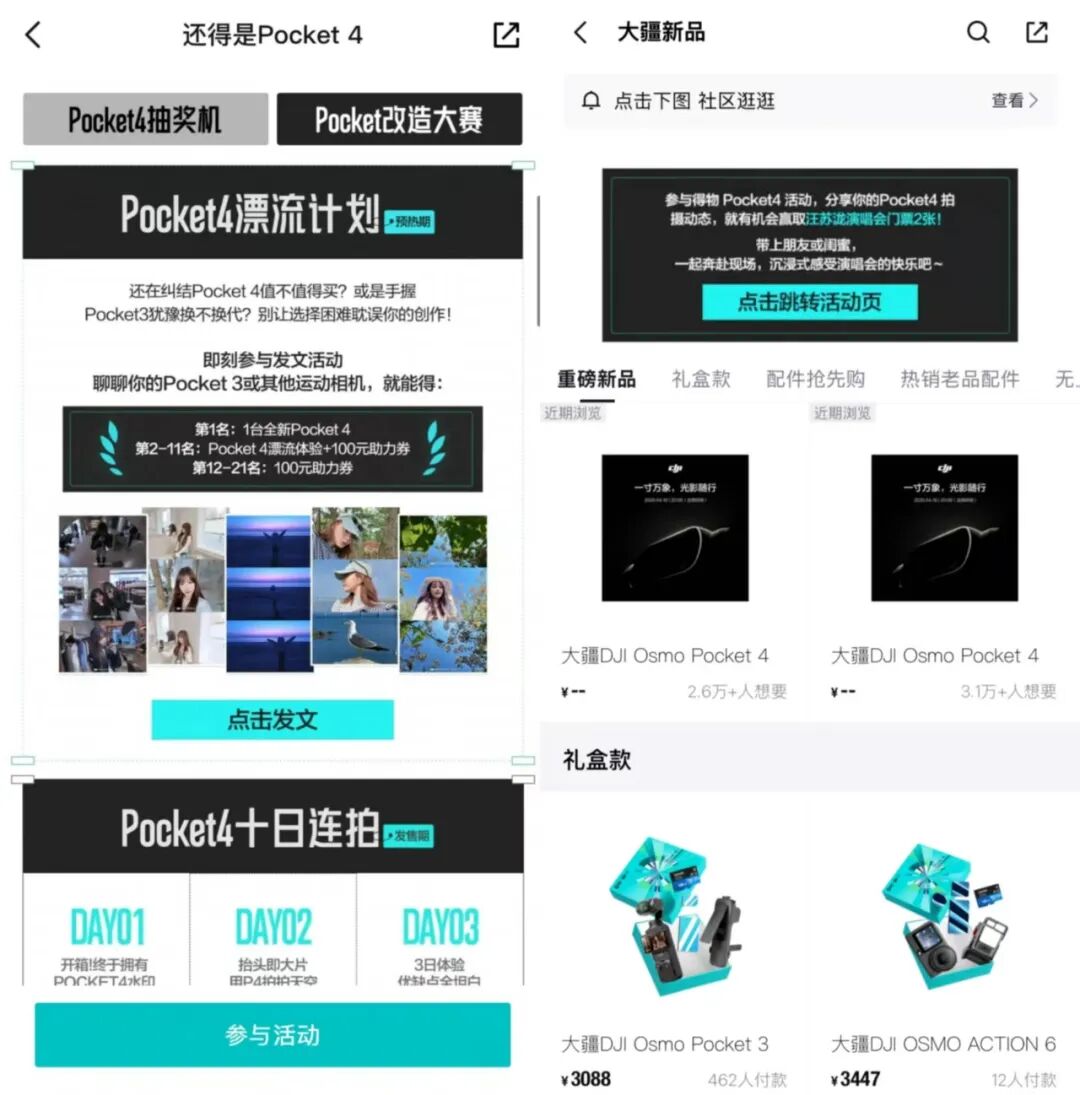
Among the first batch of categories launched for POIZON's rental service, digital products account for a considerable proportion, including DJI Pocket 4P, Switch 2, Ricoh cameras, quadruped robotic dogs, AR/VR glasses and so on.
These products share common features: strong experience attributes, fast iteration speed, and prominent staged usage demands. POIZON's survey shows that nearly 80% of consumers are willing to continuously choose rental services, especially in scenarios such as travel recording, concert shooting, and content creation, where the staged usage demand for 3C digital products is more prominent.
This precisely shows that POIZON has a clear judgment on its own situation: instead of struggling in the "selling" track, it is better to find new growth space in the "rental" track.
From "Sneaker Speculation" to "Device Rental", POIZON's Two Transformations
POIZON's rental business did not emerge out of nowhere.
In 2015, the "Poizon App" was launched, which was initially just a sneaker appraisal and information exchange platform incubated by Hupu. In 2017, in-platform transactions were realized, and the "appraisal first, then delivery" model was recognized by the market; in 2018, it separated from Hupu and operated independently, with monthly GMV stabilizing at around 200 million yuan that year; in 2019, its monthly active users surged from 1 million to nearly 8 million; in 2020, it was renamed POIZON, and its GMV exceeded 80 billion yuan in 2021.
POIZON's rise rode on two trends: the first was the explosion of sneaker culture, and the second was the establishment of the "genuine verification" trust mechanism. In that era, a pair of limited-edition sneakers could be traded at several times the original price in the secondary market, and POIZON was both a trading platform and a pricing center.
However, the ceiling of this model is also very obvious. The 2019 NBA Morey Incident and the 2020 Xinjiang Cotton Incident successively impacted the sneaker market centered on Nike and Adidas. In the following three years, the trendy toy market as a whole fell into a downturn, and POIZON experienced layoffs and strikes by outsourced warehouse employees in 2024.
The logic of "sneaker speculation" is asset premium: sneakers are not only commodities to wear on feet, but also tradable and appreciable assets. But when the tide recedes, POIZON needs to find a new growth fulcrum.
In particular, POIZON's core user group, young people, are changing their relationship with commodities. They are no longer obsessed with "ownership", but pay more attention to "usage".
The launch of the rental service is essentially a response to this change in consumption attitudes. From "helping you buy genuine products" to "helping you use genuine products", POIZON's role is shifting from a transaction intermediary to a usage service provider.
Behind this, there is another more practical business consideration: POIZON has accumulated sufficient experience in the 3C digital field. At present, thousands of digital brands including Huawei, Xiaomi, Nintendo, DJI, and Insta360 continue to launch new products on POIZON. In 2025, DJI's sales on POIZON increased by more than 6 times year-on-year, and the new products of Insta360 sold out within 2 minutes of their first release.
With sufficient brand supply and a large user pool, rental has become a natural business extension. It does not start from scratch, but reuses existing capabilities.
In fact, before launching the rental service, POIZON had already deployed the second-hand trading platform "95fen". "95fen" mainly sells high-value second-hand products such as apparel and trendy sneakers, and replicates POIZON's appraisal model. The commission for some products exceeds 20%, and consignment sellers also need to pay warehousing fees. Second-hand trading and rental are essentially both ways to extend the life cycle of products and improve their turnover efficiency.
From "Du" to POIZON, from POIZON to "95fen", and from "95fen" to rental, the trajectory of this business extension is very clear: Appraisal capability is the anchor point. Around this anchor point, the platform continuously expands the ways to interact with commodities. First it is purchase, then second-hand resale, and now it is rental.
However, the business logic of the rental industry is completely different from that of e-commerce. E-commerce earns from price differences and commissions, while rental earns from rent and depreciation. The former relies on transaction scale, while the latter relies on asset operation efficiency. To transform from a "matching platform" to an "asset operation platform", POIZON needs to cross a significant capability gap.
In 2026, Yang Bing, the founder of POIZON, clarified the company's route for the next decade at the all-hands meeting: to help users make optimal decisions. The company will increase investment in the "emotional consumption" and "non-standard service" business sectors. Rental is precisely the most representative one among "non-standard services".
When the narrative of "ownership" loses its validity, the narrative of "usage" is becoming the new business language. POIZON's rental business is just a footnote to this language transformation.
This article is from the WeChat official account "Super Focus foci", written by Gu Deman, and authorized for release by 36Kr.