The penetration rate of L2 intelligent driving has exceeded 70%, and Chinese automakers are fiercely competing in the intelligent driving sector, with self-developed chips, VLA and world models all flourishing.
At the media roundtable of the 2026 World Intelligent Connected Vehicles Conference held recently, Guo Shougang, Director of the First Equipment Industry Department of the Ministry of Industry and Information Technology, stated that since the beginning of this year, the penetration rate of passenger vehicles with L2-level combined assisted driving functions in China has reached 70.5%, and the penetration rate of passenger vehicles with navigation-assisted driving functions has hit 34.2%.
According to the information released by data analytics agency JATO Dynamics, the penetration rate of L2-level assisted driving in five European countries (Germany, France, Italy, Spain, the United Kingdom) in 2025 was only 35%, far lower than that of China.
As developed economies, the five European countries lead China in per capita GDP and income, but their penetration rate of L2-level assisted driving is far behind China. The reason may be that "European automakers have not put in sufficient efforts".
Self-developed Chips and Technologies, Independent Brands Take the Lead with Heavy Investments
In recent years, there has been an obvious trend among domestic automakers in the field of intelligent driving, which is to self-develop chips, such as NIO's Shenji NX9031, Xpeng's Turing, Li Auto's Mach M100, etc. Established automaker BYD also released the Xuanji A3 not long ago.
Looking overseas, only Tesla and General Motors are the automakers that have clearly self-developed intelligent driving chips. Traditional luxury car brands such as Mercedes-Benz, BMW, and Audi are more inclined to purchase chips from suppliers.
Of course, with a large number of chip suppliers including NVIDIA, Infineon, Renesas, Horizon Robotics, and Qualcomm available, self-developed chips are not the only criterion for judging the overall strength of automakers, but the active layout of independent R&D fully demonstrates the brand's strategic emphasis on the long-term implementation of high-level intelligent driving.
Take Xpeng as an example. In addition to the Turing chip, it also released and rolled out the second-generation VLA in March this year, which is centered on large physical world model + full-scenario coverage + global compatibility + rapid iteration, directly outputting vehicle control commands based on visual information to operate the car as skillfully as an experienced driver.
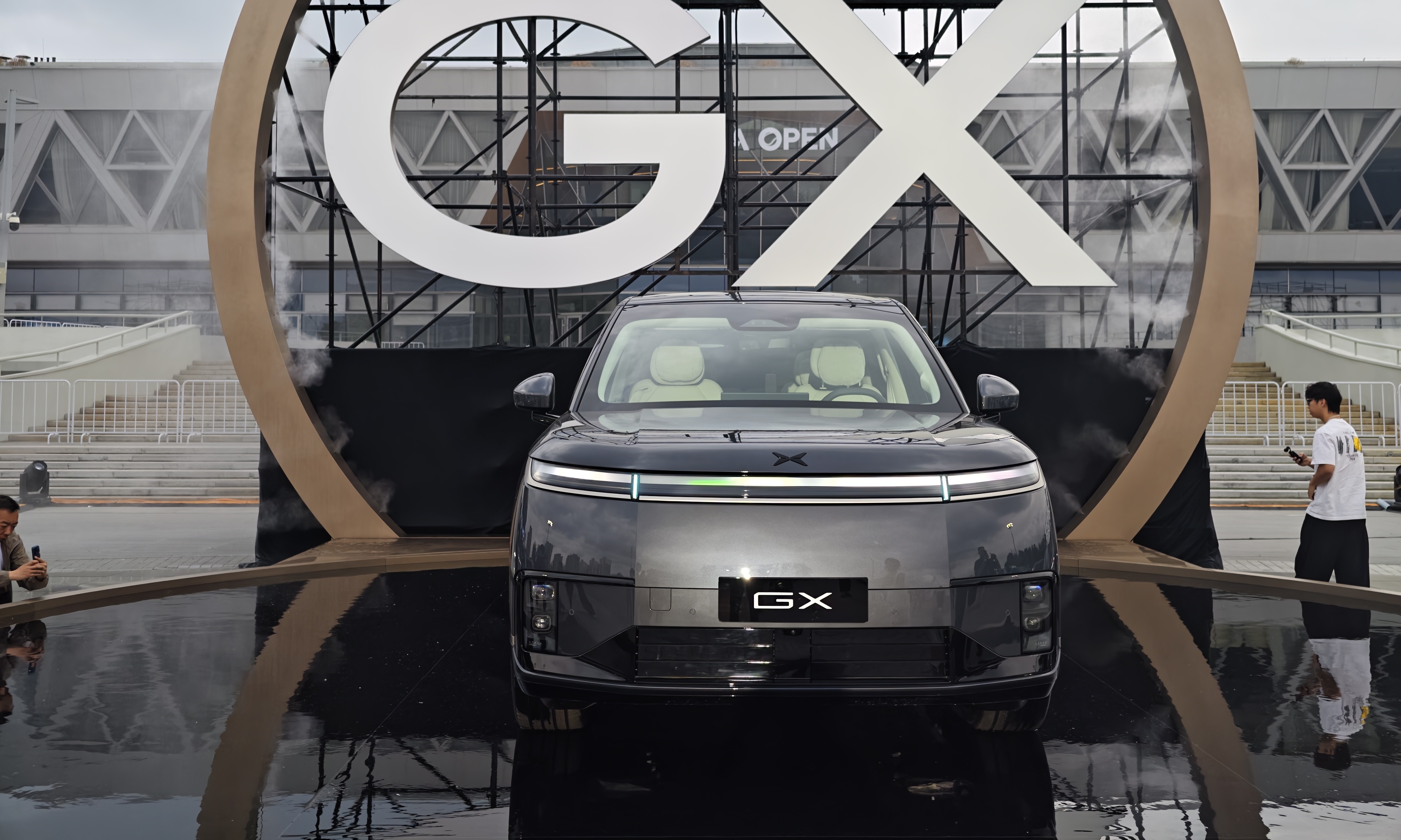
(Source: Shot by EV Insight)
To achieve this goal, Xpeng announced back in 2024 that it would invest 3.5 billion yuan in R&D in the AI field focusing on intelligent driving every year. In the first quarter of this year alone, Xpeng's R&D investment reached 2.91 billion yuan.
The same applies to NIO and Li Auto, who have made remarkable achievements with huge R&D investment. Among them, NIO released its brand-new world model NWM in January this year, adopting the architecture of "world model + supervised fine-tuning + closed-loop reinforcement learning", realizing China's first end-to-end direct control where the model directly outputs steering wheel, accelerator and brake signals to achieve integrated longitudinal and lateral control, and supports full-scenario coverage without high-precision maps and U-turns in all scenarios.
In June this year, this solution was officially pushed to NIO users, covering brands including NIO and Leida, and all models equipped with 4 Orin-X or Shenji NX9031 chips are compatible with it. Functions such as in-city navigation battery swapping have also been launched simultaneously, realizing full-scenario navigation on highways, in urban areas, in villages, and in underground garages.
In the view of Li Xiang, CEO of Li Auto, traditional intelligent driving has three major pain points: takeover risks, weak scenario adaptability, and low traffic efficiency. Li Auto successively released the MindVLA-o1, the Mach VLA driver large model, and the Mach M100 chip this year, aiming to solve these pain points, and integrate the four attributes of electric vehicle, professional driver, AI computer, and life assistant, making the car a real "mobile space".
The Mach VLA driver large model retains the language layer, builds a unified multi-modal training system, and achieves five major breakthroughs including 3D spatial understanding, multi-modal thinking, unified behavior generation, closed-loop reinforcement learning, and hardware-software collaboration. It will fully connect smart home devices and improve the response speed of the intelligent driving system in the future.
As an indispensable player in the domestic intelligent driving sector, Harmony Intelligent Mobility is an undisputed leader in intelligent driving. Whether it is the 896-line dual-optical LiDAR released in March, or the WEWA 2.0 architecture released in April, it has shocked the industry time and time again.
WEWA 2.0 consists of the cloud-side WE world engine and the vehicle-side WA world execution unit working in collaboration, getting rid of the traditional linear perception and decision-making link. The cloud side simulates the interaction of road participants relying on the multi-agent group game mechanism, paired with online reinforcement learning to accelerate the iteration of long-tail scenarios; the vehicle side introduces a 3D safety risk field model to evaluate the full-scenario road condition risks in real time, driving the Driving Agent to independently output driving strategies. Compared with the previous generation, WEWA 2.0 has significantly enhanced prediction capabilities and defensive driving capabilities, effectively reducing stuttering and sudden braking.
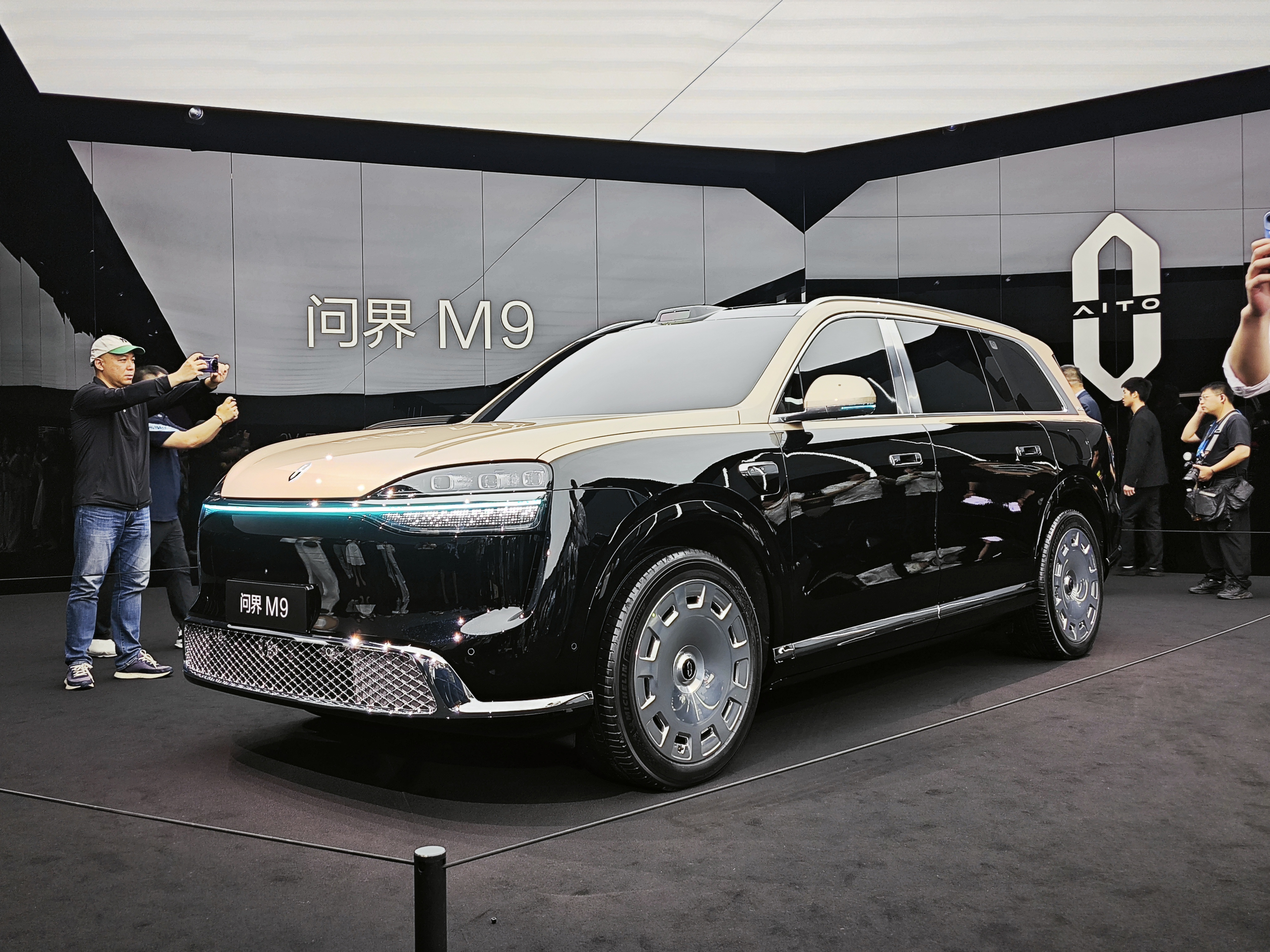
(Source: Shot by EV)
Huawei ADS 5 based on WEWA 2.0 has started rolling out, first equipped on the Qijing GT7, and other released models will receive OTA upgrades one after another.
For a very long time in the past, navigation-assisted driving was a dedicated configuration for high-end luxury cars due to high costs, so Leapmotor, which focuses on the low and mid-end market, has not made many achievements in the field of intelligent driving. However, in March, Leapmotor officially announced the full implementation of the VLA large model intelligent driving solution, launching a comprehensive upgrade of the brand's intelligent driving technology; in the second quarter, it officially launched the nationwide in-city navigation-assisted function, breaking the previous limitation of regional pilots.
Recently, Leapmotor completed the first VLA in-city navigation OTA push for the D19 model, focusing on optimizing core capabilities such as defensive deceleration, risk avoidance, and intersection passing, greatly improving the safety under complex road conditions. According to the annual plan, Leapmotor will complete the full construction of the intelligent driving base model by the end of 2026, forming a mature mass production system of large-model intelligent driving, lowering the implementation threshold of high-level urban NOA with the advantage of high cost-effectiveness, and realizing the implementation of full-scenario high-level intelligent driving on 100,000-yuan-class vehicles.
Although intelligence is not regarded as the advantage of traditional automakers, they are also making efforts to move forward. On May 28 this year, BYD released the Xuanji A3 intelligent driving chip, with a single-chip computing power exceeding 700 TOPS, and the total computing power of three coordinated chips exceeding 2100 TOPS, providing a computing power foundation for the God's Eye A/B/C systems.
In the view of EV Insight, the greatest significance of BYD's self-developed intelligent driving chip is to reduce chip procurement costs, realize the continuous penetration of the God's Eye system into the mass market, and fully promote "intelligent driving for all".
Compared with most overseas automakers, domestic automakers obviously attach more importance to independent R&D of technologies. Even if some automakers have reached cooperation with intelligent driving enterprises and some products are equipped with intelligent driving solutions provided by suppliers, they are still independently developing intelligent driving technologies and chips. It is this hardworking spirit that brings domestic intelligent driving technologies into the global first tier, leading the world in the penetration rate of L2-level assisted driving.
Moreover, in the view of domestic automakers, not only electric vehicles need to realize intelligence, but fuel vehicles should not fall too far behind in terms of intelligence.
Fuel Vehicles Also Need Intelligence
Although the penetration rate of new energy vehicles is increasing day by day, fuel vehicles still occupy half of the automotive market. The penetration rate of L2-level assisted driving as high as 70% means that automakers have not ignored the needs of fuel vehicle owners in terms of intelligence.
Strictly speaking, due to the mechanical hysteresis of the engine and transmission, the torque output of fuel vehicles is non-linear, which makes it difficult to meet the millisecond-level precise longitudinal and lateral control requirements of intelligent driving. In addition, the 12V power supply system cannot carry high-power devices such as high-computing-power domain controllers and multiple LiDARs, which is very likely to cause power loss and insufficient load, leading to low compatibility with intelligent driving. But difficulties are meant to be overcome.
Take Great Wall Motors as an example. Models including Haval H6, Big Dog, and Chitu are already equipped with L2-level assisted driving, including full-speed domain ACC, lane centering, active braking, 540° panoramic imaging, lane change assist and other functions. Power control, drive-by-wire chassis, and the four-wheel drive coordination function of high-end versions are Great Wall Motors' tricks to solve the problem of slow mechanical response delay.
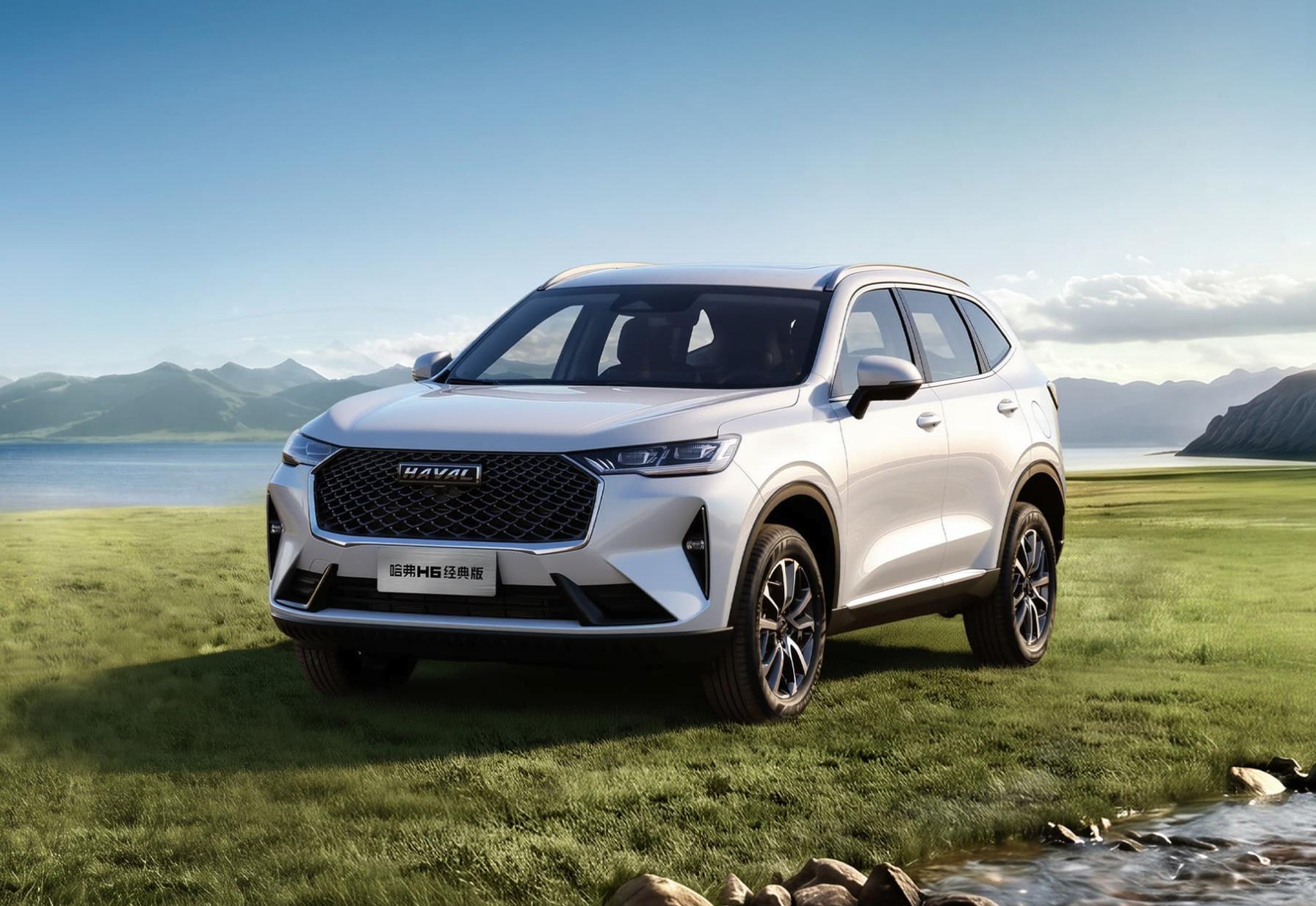
(Source: Great Wall Motors)
Changan, Chery, Geely and other automakers are following the same path. Among them, Chery Tiggo 9 Automatic 4WD Falcon 500 Edition realizes highway NOA based on the self-developed Falcon 500 system, which is probably the fuel vehicle with the strongest intelligent driving performance within 200,000 yuan.
Reducing mechanical delay is the key for fuel vehicles to realize high-level intelligent driving, but the engine + transmission structure determines that the mechanical delay of fuel vehicles will definitely be higher than that of new energy vehicles.
However, automakers are also adding higher-level intelligent driving functions to "non-pure" fuel vehicles through other solutions. For example, the Changan CS75 PLUS 4th Gen Blue Whale Super Sky Pilot Edition is equipped with the Skyline Intelligent Driving Assist Vision version, supporting functions such as high-speed and expressway navigation-assisted driving and ALC lane change assist.
The Xingrui i-HEV Smart Hybrid Wangshu Edition under Geely goes a step further, equipped with the Horizon Robotics J6M chip with a computing power of 128 TOPS and the Qianli Haohan H3 assisted driving system, supporting functions such as ICC lane navigation assist, urban AEB anti-collision, toggle lane change, and APA intelligent parking assist.
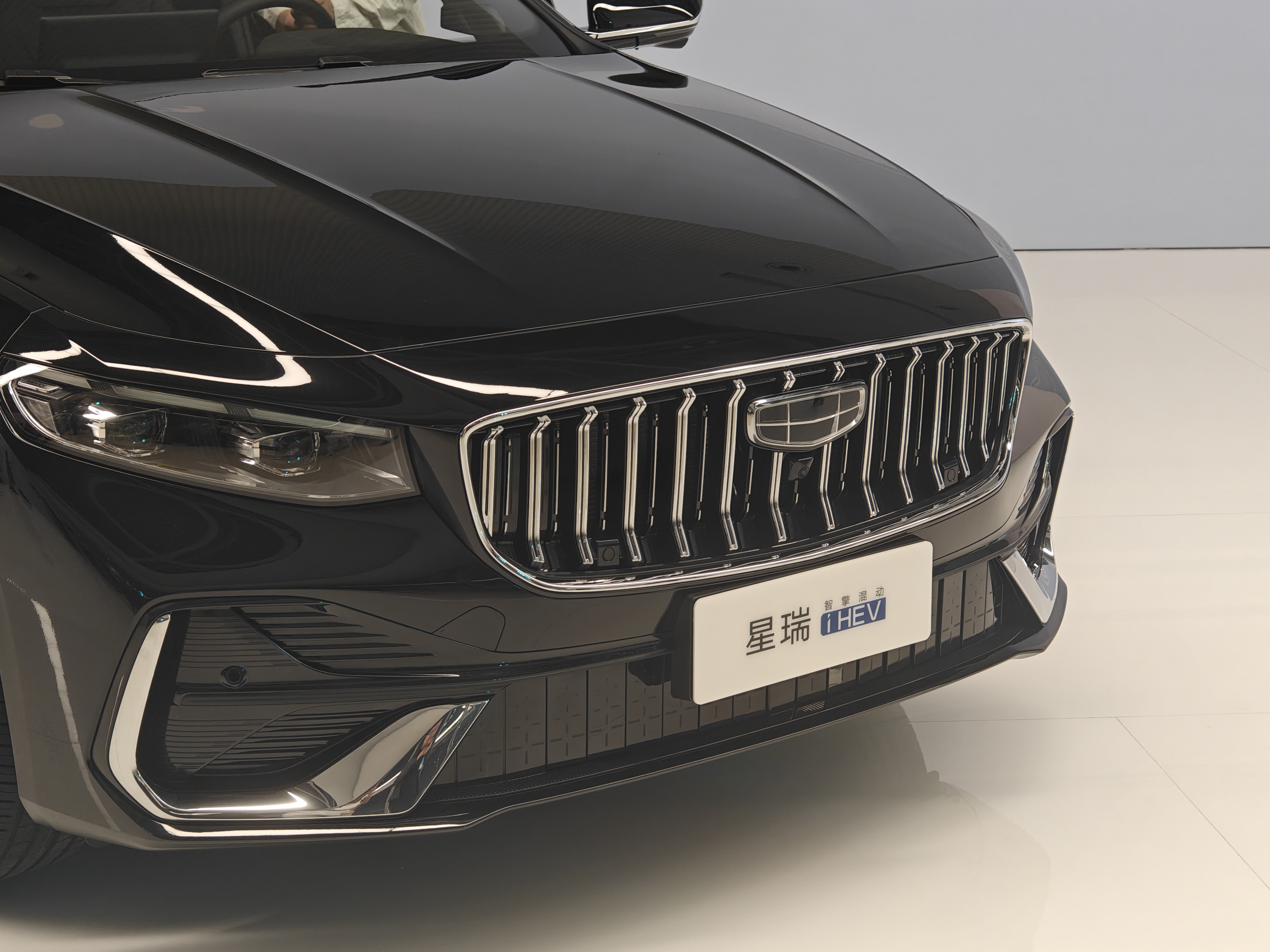
(Source: Shot by EV Insight)
Different from traditional fuel vehicles, these two models from Changan and Geely are built with small batteries and motors. At low and medium speeds, they can improve energy efficiency by generating electricity via fuel and driving with motors. At the same time, the fast response characteristic of the motor ensures that their AEB still responds sensitively on urban roads.
As for higher-level intelligent driving, some fuel vehicles are also equipped with it. For example, Audi Q5L, A6L, and A5L are equipped with Huawei Qiankun intelligent driving, supporting high-speed + urban NOA. The Mercedes-Benz E-Class is equipped with an intelligent driving solution developed by a China-led team, which can realize adaptive cruise control. Of course, the price of these models is much higher than that of models from Changan, Great Wall Motors, Chery, and Geely.
EV Insight believes that the problem of slow response of engines and transmissions cannot be completely solved. Following the example of Changan Blue Whale Super Engine and Geely i-HEV, adding small batteries and motors to fuel vehicles and using the characteristic of fast motor response to optimize intelligent driving performance may be the optimal solution for fuel vehicle intelligent driving upgrades, and small batteries and motors have little impact on the overall vehicle cost.
VLA + World Model, the Ultimate Solution for Intelligent Driving?
This year, when major automakers and intelligent driving enterprises introduce their technologies, the two most frequently mentioned terms are probably VLA and world model. Intelligent driving technology has iterated from traditional rule-based algorithms to end-to-end solutions, completing the underlying architecture upgrade, and then evolving from the visual language model VLM to VLA, achieving a leapfrog improvement in environmental understanding capabilities.
VLA (Vision-Language-Action Model) can not only parse image and text information, but also realize human-like reasoning and global understanding. Among Harmony Intelligent Mobility, NIO, Xpeng, and Li Auto, Xpeng and Li Auto firmly follow the VLA route, with the world model as an auxiliary, aiming to not only perceive and understand the world, but also predict the world.
NIO and Harmony Intelligent Mobility have chosen the route dominated by the world model, directly generating trajectory planning through the generative model, that is, directly generating control commands from original sensor data, skipping the L (language) intermediate layer.
However, there are differences between the solutions of the two players. NIO's NWM world model is centered on "cognitive driving", adopting the dual architecture of cloud-side training + vehicle-side reasoning, to avoid risks through future deduction and realize autonomous decision-making by the model. Harmony Intelligent Mobility's WEWA 2.0 is based on cloud-side strategy + real-time vehicle-side risk assessment, with the cloud-side WE taking the lead and the vehicle-side WA performing lightweight execution.
In general, the world model is the "core deduction engine" of physical AI. Automakers are generally embarking on the world model path, with the difference lying in whether to take the world model as the core or take VLA as the core. Harmony Intelligent Mobility and NIO have chosen the latter, while Xpeng and Li Auto have chosen the former. However, the world model and VLA are not mutually exclusive: NIO's NWM contains partial features of VLA, and Xpeng and Li Auto's VLA also integrate the characteristics of the world model.
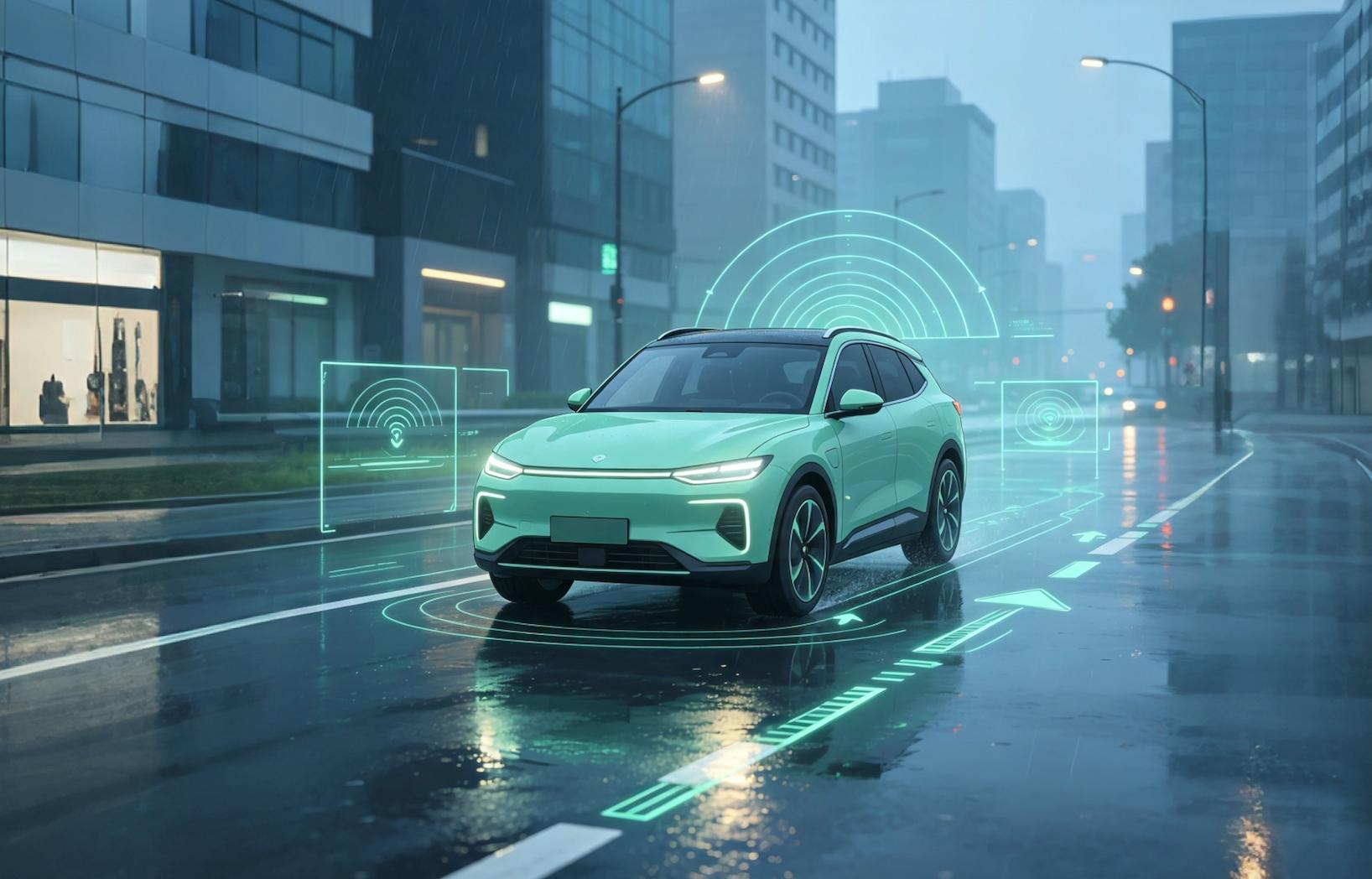
(Source: Generated by Doubao AI)
As for the perception solution, most enterprises adopt the parallel mode of pure vision and LiDAR. But among mainstream independent brands, only Xpeng is a firm advocate of the pure vision solution, and even its high-end models are not equipped with LiDAR. Other automakers generally adopt pure vision solutions for low-end models and LiDAR + vision fusion solutions for high-end models.
EV Insight believes that the first principle can certainly avoid interference from multi-source information, but the intelligent driving system is not the human brain after all and lacks abstract thinking ability. For a long time in the future, high-level intelligent driving still needs LiDAR as safety redundancy.
Compared with the conservative supply chain procurement model of overseas automakers, domestic automakers adhere to high independent R&D investment, achieving full-stack breakthroughs in intelligent driving chips, AI models, and vehicle architecture, developing two mainstream technical routes of VLA and world model, and forming differentiated technical barriers.
At the same time, the industry has broken the inherent cognition that "intelligence is exclusive to new energy vehicles".