Apple is begging China's chip sector for a lifeline, while Micron is frantically obstructing the move: the United States has itself created an impasse.
Recently, The Wall Street Journal exposed a surreal annual drama unfolding in Washington, starring two top-tier American tech giants locked in a fierce, red-faced argument. The core issue at stake is surprisingly simple: whether they are allowed to purchase Chinese-made memory chips.
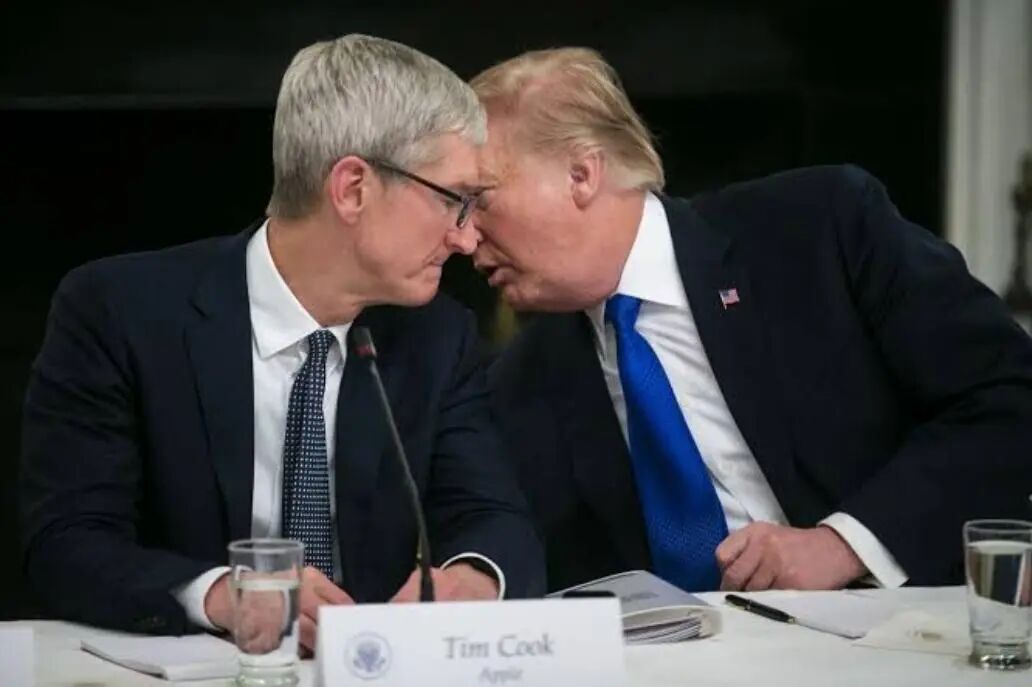
On one side, Tim Cook leads his executive team to the White House at frequent intervals, lobbying in turn to President Trump, Commerce Secretary Lutnick, and Treasury Secretary Bessent with an extremely humble posture, begging for one single thing: Permission for Apple to use chips from Changxin Memory Technologies and Yangtze Memory Technologies in products sold in markets outside the United States.

On the other side, Micron CEO Sanjay Mehrotra has been confronting the very same officials with tough warnings: If this opening is allowed, the entire U.S. memory industry will be completely destroyed.
Both companies have donated to Trump's political campaigns and are hailed as the faces of American tech. Now they are tearing each other apart in Washington over Chinese chips — a scenario that reeks of dark humor.
It was the United States that once vowed to strangle China's chip industry in its cradle, yet now it is American enterprises that are humbly begging to buy Chinese chips to save their own skins.
Chip Prices Skyrocket: Apple Literally Can't Take It Anymore
The reason Apple has stooped to begging is that it has been cornered with no other options.
What ignited this whole mess is the AI-driven memory supercycle. Previously, the three giants — Samsung, SK Hynix, and Micron — controlled over 90% of the world's DRAM production capacity, enjoying a very stable and comfortable market position.
Then, the AI large model explosion happened: data center customers waved their checkbooks to snap up HBM high-bandwidth memory, offering high prices and huge profit margins. Without hesitation, Samsung, SK Hynix, and Micron all diverted more than 40% of their advanced production capacity to AI memory production.
Capacity for consumer electronics was slashed abruptly, so prices naturally rocketed upward like a ride on a rocket.
Data from TechInsights shows that prices of some mature memory chips have quadrupled in the past year. The 12GB LPDDR5X chips widely adopted by Apple saw a price surge of nearly 90% in just one quarter.
Goldman Sachs has raised its full-year 2026 DRAM price growth forecast to 250%-280%. The industry widely expects another 50% price increase in the third quarter, followed by 40% more in the fourth quarter, with no inflection point in prices expected before 2028.
This is a fatal blow to Apple.
Apple is the world's largest consumer electronics company, and memory chips are critical core components for its products.
Previously, memory chips only accounted for 10%-15% of its product costs. As the world's largest procurement buyer, Apple used its bargaining power to suppress prices so hard that suppliers could only complain in silence.
Now the cost proportion has directly soared to 30%-40%, and for some low-end models, it is even approaching 50%.
If prices keep rising, the profit Apple earns from selling one phone will be less than what chip manufacturers make from supplying the memory.
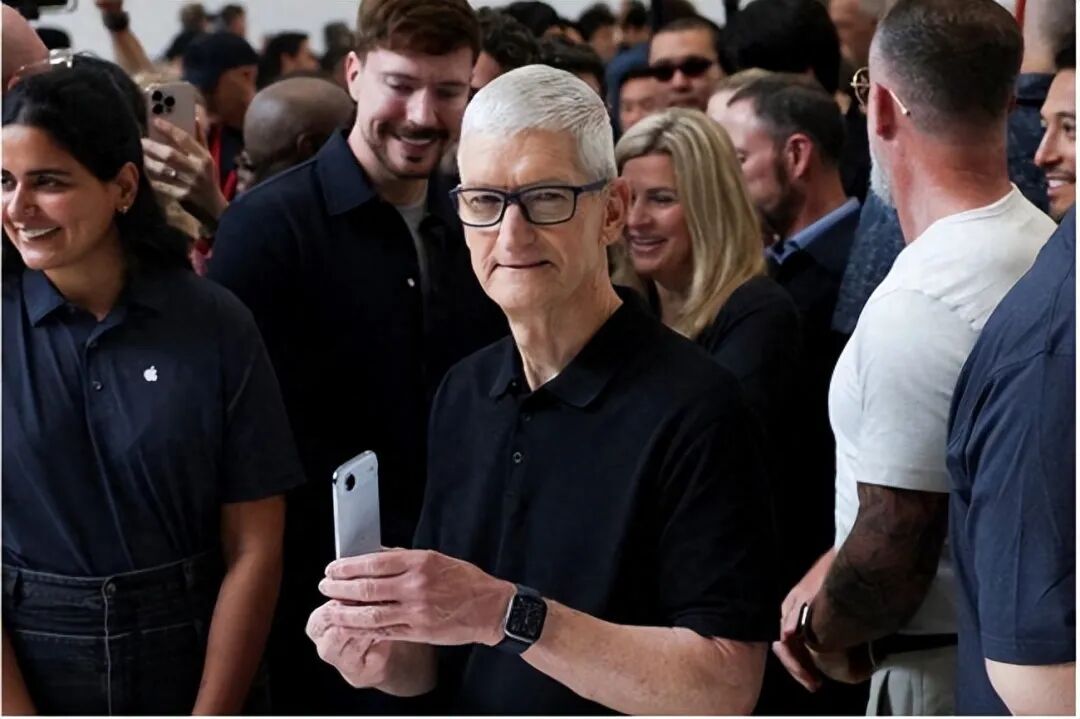
Unable to bear the cost pressure, Apple had no choice but to raise prices: prices of all Mac and iPad lines increased by 15%-25%, with the top-tier configurations costing over 3,000 yuan more, and even the Vision Pro saw a price adjustment.
The consequence was a 6% single-day plunge in its stock price. Tim Cook openly stated that this was "a supply chain crisis I have never seen in my more than 40 years of career."
What makes Apple even more aggrieved is that it used to be the dominant party with absolute say, but now it has to depend on the three giants' moods to secure its supplies. Those giants prioritize their production capacity for big AI clients, so Apple's orders can be delayed or reduced arbitrarily, and Apple has lost all bargaining power.
Around the globe, the only remaining players that can provide large-scale consumer-grade memory capacity at affordable prices are China's Changxin Memory Technologies and Yangtze Memory Technologies.
What Micron Is Panicked About Is Not Industrial Security, But Its Own Excessive Profits
Apple's proposal already took U.S. interests into consideration: it does not intend to use Chinese chips in products sold within the United States. Instead, it plans to use chips from Changxin Memory Technologies and Yangtze Memory Technologies in Apple products sold in markets outside the United States.
In short, the U.S. domestic market will continue to use American, Samsung, or SK Hynix chips, while Chinese chips will only be used in overseas markets.
This proposal has already made major concessions, but Micron still refuses to accept it, claiming that once this opening is made, Chinese chips will, just like how they disrupted the steel and manufacturing industries in the past, crush the U.S. domestic memory industry.

These words sound high-sounding, but underneath it all, it's purely about business interests.
Right now, Micron is enjoying its most comfortable period ever: its production capacity is prioritized for AI clients, it can set prices arbitrarily, its gross margin has soared above 80%, and it can earn huge profits without breaking a sweat.
Once Apple sets a precedent for purchasing Chinese chips, Samsung's smartphone division, Lenovo's computer business, and Sony's gaming console division will all follow suit, and global consumer electronics manufacturers will turn to Changxin and Yangtze Memory for their supplies.
At that point, the three giants' pricing power will vanish, and Micron's sky-high gross margin will immediately drop back down to realistic levels.
The so-called "survival of the industry" is essentially nothing but an excuse to preserve its own monopolistic windfall profits.
Micron also knows its argument is untenable. While opposing the proposal, it is painting a rosy picture by promising to invest 250 billion U.S. dollars in capacity expansion in the U.S. But anyone with a discerning eye can see that the new capacity will still be prioritized for higher-profit AI clients, and the gap in consumer electronics supply will never be filled.
What's even more ironic is that while Micron keeps claiming Chinese chips are unsafe, it has never stopped selling its own products in the Chinese market, raking in huge profits. Now that Chinese enterprises have developed products of comparable competitiveness, it immediately brandishes the "national security" big stick. Frankly speaking, it's a case of "only I am allowed to make money, no one else can share the cake."
The Most Ironic Twist: One Wants to Cry, the Other Wants to Laugh
The situation has now reversed: facing these highly cost-effective Chinese chips, Apple wants to use them, but it is not allowed to by its own camp, while Huawei, on the other hand, is using 100% domestically produced chips.
China's memory industry, which today can make Apple stoop to beg for purchases and make Micron fight tooth and nail to block them, was precisely forged by the United States itself over the past few years through its crackdowns.

Just a few years ago, the global memory market was completely dominated by the three giants, and Chinese manufacturers didn't even have a ticket to enter the game.
The United States used patent walls to contain China on one hand, and export controls to block equipment on the other. But they never expected that their blockade would not strangle their competitors; instead, it created the perfect growth environment for Chinese enterprises.
During the industry downturn, while others cut production to prop up prices, Changxin chose to expand capacity against the cycle; while others chased quick profits and stopped investing in R&D, Changxin gritted its teeth to advance manufacturing processes and improve yield rates.
In just a few years, Changxin's global DRAM market share grew from zero to 8% in the first quarter of 2026, firmly ranking fourth worldwide. Its monthly production capacity will reach 350,000 wafers by the end of the year, approaching Micron's 385,000 wafers very closely.
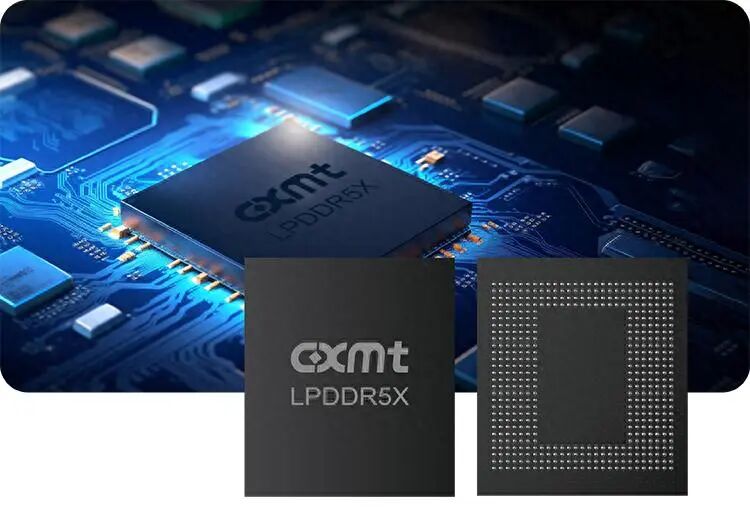
Yangtze Memory has also made rapid progress in the NAND field. Combined, the total market share of China's memory industry has skyrocketed from just over 20% last year to nearly half of the global market today.
In the mobile phone industry, Huawei, under relentless sanctions, has been steadily moving toward a fully domestic supply chain, with its high-end models selling extremely well. Apple, by contrast, wants to use Chinese memory chips to cut costs, but is blocked by its own allies.
One side sees its fully domestic products selling better and better, while the other side wants to use Chinese-made chips but is held back by its own people. It is crystal clear who is the real winner here.
This Is an Unsolvable Deadlock That the U.S. Cannot Break Through
If the U.S. approves Apple's request, consumers will get cheaper products, but Micron's monopoly position will be at great risk, and the domestic memory industry may be hit by more cost-effective Chinese products.
If the U.S. rejects the request, Apple will continue to raise prices, making Macs, iPads, and the upcoming iPhone 18 all significantly more expensive. U.S. consumers will be furious, and how can the midterm elections proceed smoothly? It would also mean publicly admitting that Chinese memory chips have reached international standards, making all the sanctions of the past few years a total joke — the political cost would be too high.
More importantly, even if the U.S. bans Apple from buying Chinese chips, other manufacturers around the world will still purchase them. The rise of China's memory industry will not be stopped by a single ban, and in the end, only American tech companies will suffer losses.
Do you want cheaper chips, or a "secure" monopoly? The U.S. wants both, but the result of trying to have it all is that it will end up with neither.
It can be said that this is a deadlock created by the United States itself: in the name of "national security", it blocked Chinese chips behind high walls, trying to lock its rivals out. But the rivals behind those walls focused on R&D and expanded their production capacity, eventually growing strong enough to stand as an equal competitor. Meanwhile, the U.S. itself diverted all memory capacity to AI, forcing its own consumers and tech companies to pay the price.
Back then you turned up your nose at Chinese chips; now you can no longer afford them. This ironic turn of events is, in its own way, perfectly fair.
This article is from the WeChat official account "Hotspot Micro Review" (ID: redianweiping), written by Wang Xinyi, and published by 36Kr with authorization.