The author of that never-ending serialized work you are following has probably long since gone completely off the rails and stopped acting like a responsible creator who takes their work and readers seriously.
"My favorite web fiction author turned his serialized story into a patchwork of disjointed fragments using AI."
If you ask what the most taboo topic in writing circles is right now, it is definitely AI.
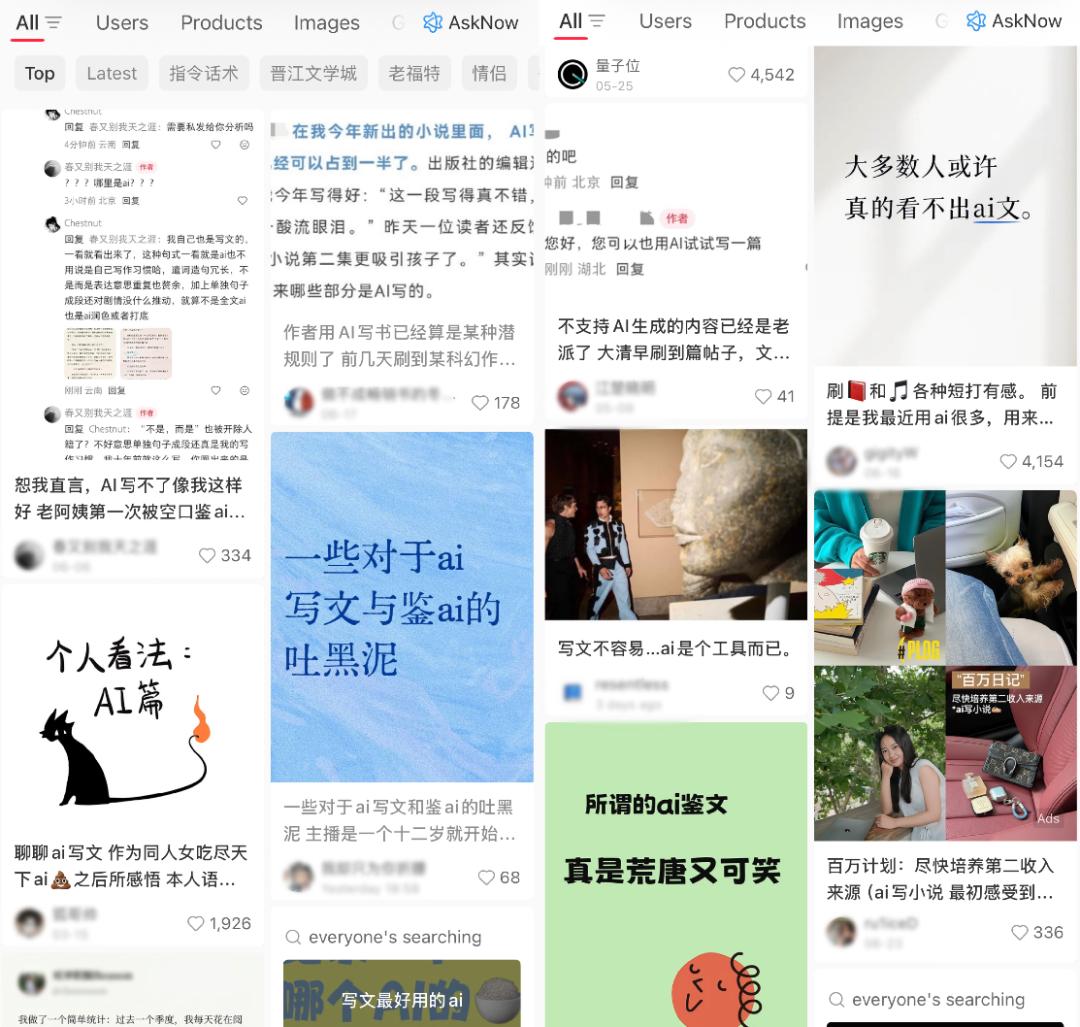
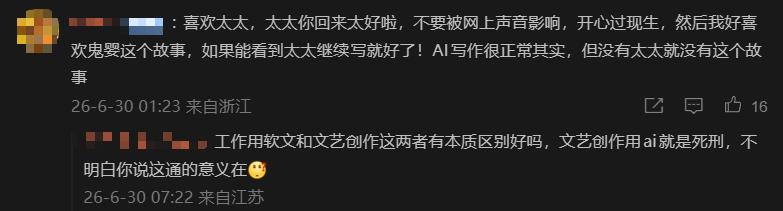
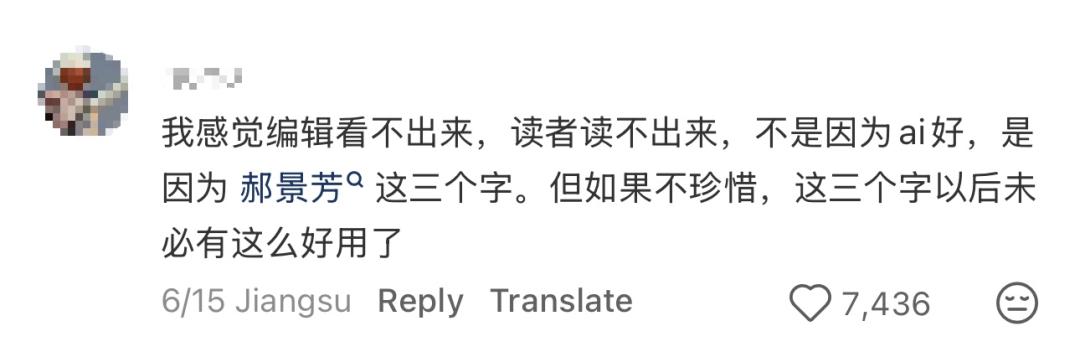
Earlier, Hao Jingfang, the author of *Beijing Folding*, was widely criticized after publicly admitting that her new book incorporated AI-generated content; later, the web novel *Ghost Baby* was exposed as entirely AI-written, leading its author to delete their account and vanish, with the comment section of their apology post on Weibo flooded with thousands of angry replies.
The simultaneous missteps of both traditional literature and web fiction have pushed "AI writing" straight to the top of trending searches, pitting readers against readers, authors against authors, and readers against authors in chaotic, endless arguments.
Some consider using AI in artistic creation a cardinal sin, while others believe AI writing is completely justifiable.
Originally, before delving deep into this issue, I (the author from Chaping) was in the laid-back camp. After all, every industry is grappling with the limits of AI, and it's hard to say whether it will ultimately bring disaster or a boon.
But after investigation, I found that AI writing itself is not terrifying. What's terrifying is that the abuse of AI is creating an irreparable collapse of trust between readers and authors.
As a moderately well-known author in the web fiction circle, Xiao A told me that the industry's disputes over AI writing this year are far more intense and frequent than ever before.
Since last year, a host of domestic large models represented by DeepSeek have risen. For a small cost, they can produce fluent Chinese, which has brought a considerable impact to the web fiction industry overnight.
Before the AI era, a tireless web fiction writer who updates 6,000 words per day could produce a million words for roughly 5,000 to 10,000 yuan. To be fair, this price is not high, but it's the limit of human beings, not AI.
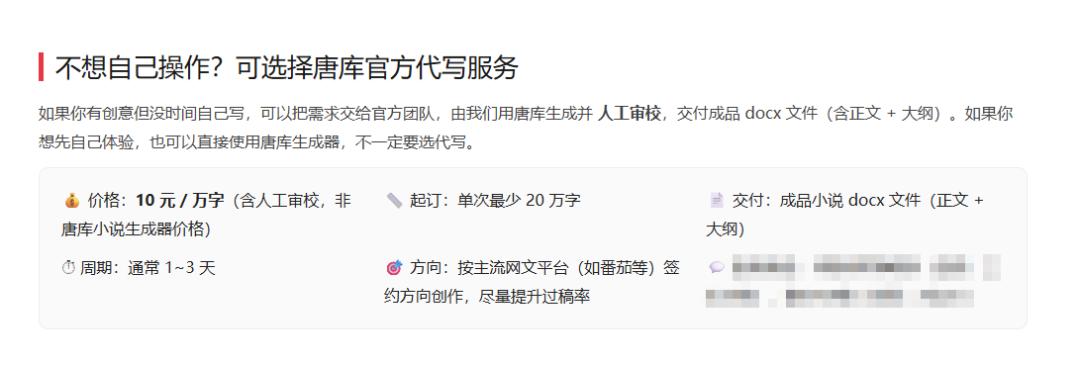
Now, taking the public quotation from Tangku Creative Network as an example, the cost of producing a million words with AI generation plus manual review is only 1,000 yuan. As for time, humans have no advantage at all: what takes humans several months to write manually takes AI just a day or two.
It can be said that AI writing is subverting the profit logic of the industry.
First there was *Chronicle of the Immortal Officials*, then *Phantom Sorcerer in the Fate/Extra World*, *Starting from the Forging Knife Competition While Studying at Northwest University*, and many others. Major platforms are seeing a surge of viral AI-generated novels. With the terrifying speed of tens of thousands of words updated daily, these works easily top bestseller lists, reaping huge dividends from AI-generated filler content.
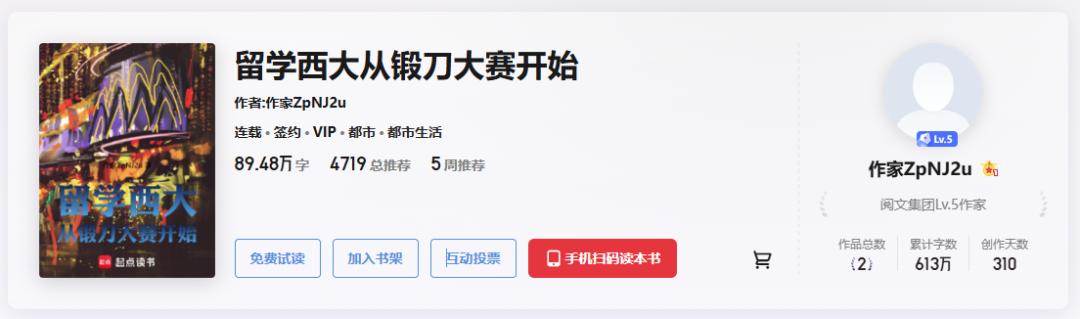
These AI-generated novels usually carry no label indicating they are AI-produced, and compete for traffic alongside human-written works. Human authors who refuse to use AI can't catch up no matter how hard they work at their keyboards. This is a competition that can never be fair.
In such a chaotic environment, "Almost all legitimate authors are against AI writing, only a tiny minority of people who make money from AI writing, selling courses, or selling software shout loudly." Xiao A said.
While the conflict among authors is fierce, readers have also suffered badly from AI writing.
I don't know if you've heard the story of the "legendary" web novel *Phantom Sorcerer in the Fate/Extra World*. For the free serialized chapters of this novel, the author used AI to generate content and then manually polished it.
Many readers read the first hundreds of thousands of words without noticing any trace of AI, thought the writing was good, and subscribed without any suspicion.
However, on the day the work went paid, the author directly used AI to produce twenty consecutive updates. With 70,000 words in a single day, the author made a fortune relying on readers' automatic subscriptions, and the novel immediately climbed to the top of the bestseller list.
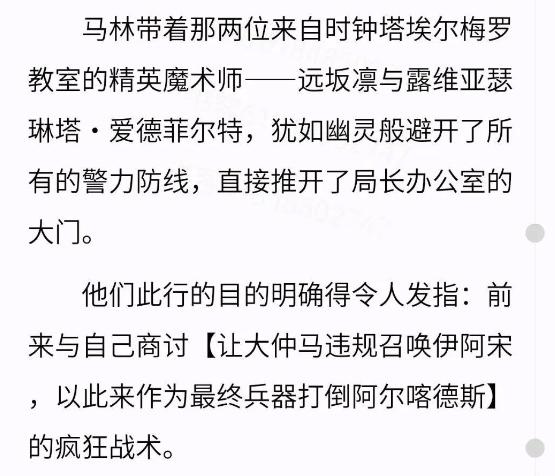
Is this a betrayal? This is simply fraud...
Xiao A told me, "In the case of free works, there is indeed a small group of readers who support the idea 'it doesn't matter as long as the AI-written work is good'. But for paid content, if readers find out that an unlabeled novel is AI-generated, they will only feel deceived, and this is draining the credibility of the entire industry."
However, even though the proliferation of AI-generated novels is widely resented by the vast majority of readers and authors, this has not stopped the number of AI works from growing.
The traditional publishing industry has not escaped this trend either. More and more AI-generated works are climbing popular rankings, and some bestseller editors even say that using AI to write books has become an unspoken rule.
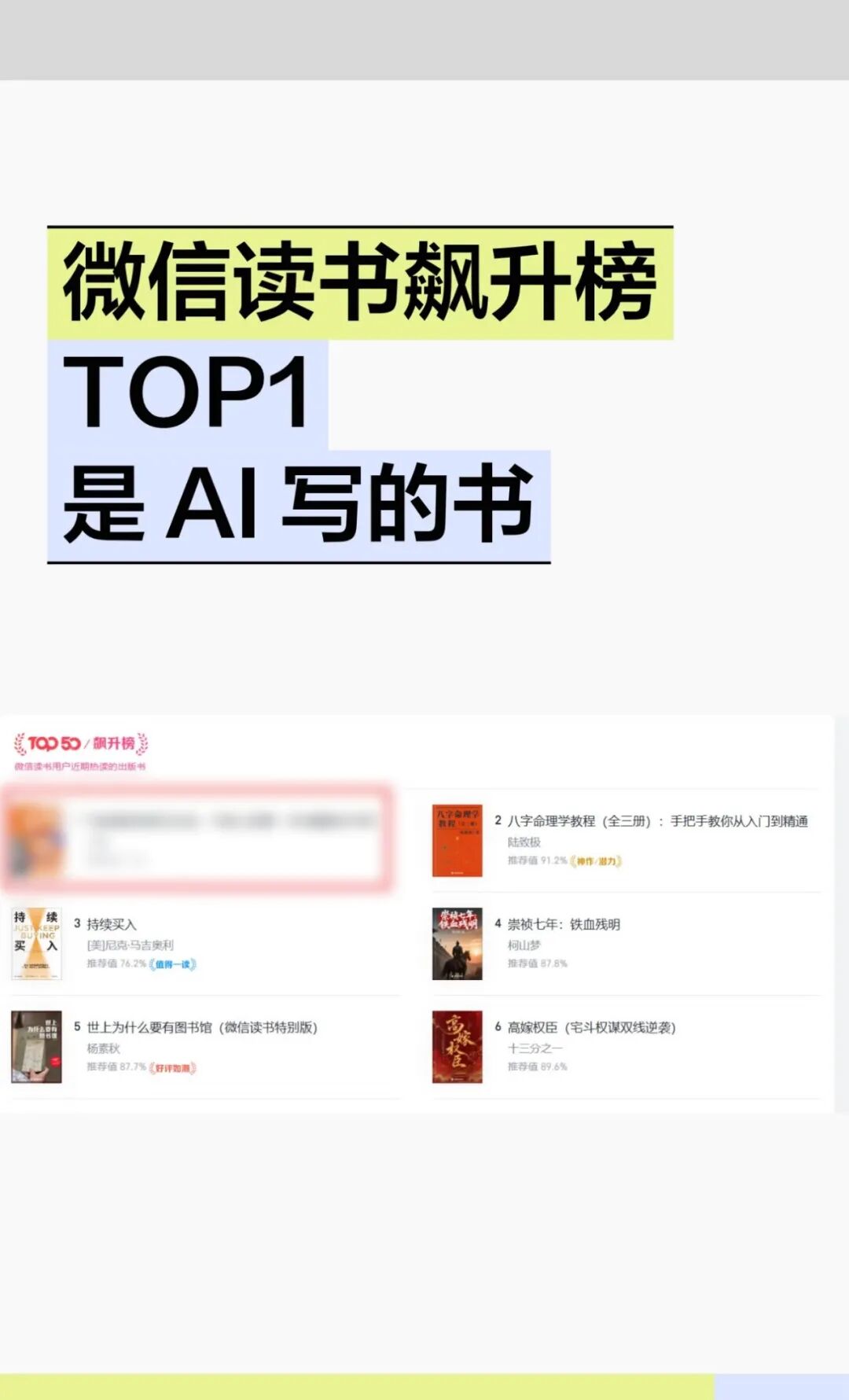
Source: Xiaohongshu @Jiafei Feiyu
Readers don't know this when they buy books. They open one, find halfway through that it's AI-written, then open another and it's also AI. They get completely fed up, and start suspecting every book they read is AI-generated.
Xiao A heard of a fully human author who was even suspected of using AI just because he liked using ellipses a lot. The pressure was so high that he had to start a live stream to type in real time to prove his innocence.
Not to mention others, I myself am often judged as AI-written just because I use the phrase "not... but...", and my carefully handcrafted content is mistaken for AI-generated, which makes me really upset.
People who abuse AI use it to replicate human language, while original authors, to avoid being misunderstood, lose their natural fluency in creation.
In the end, these dishonest AI works are driving out high-quality human creations, harming both readers and authors.
So is there any way we can fix this? Shouldn't we establish some rules to save this crumbling trust?
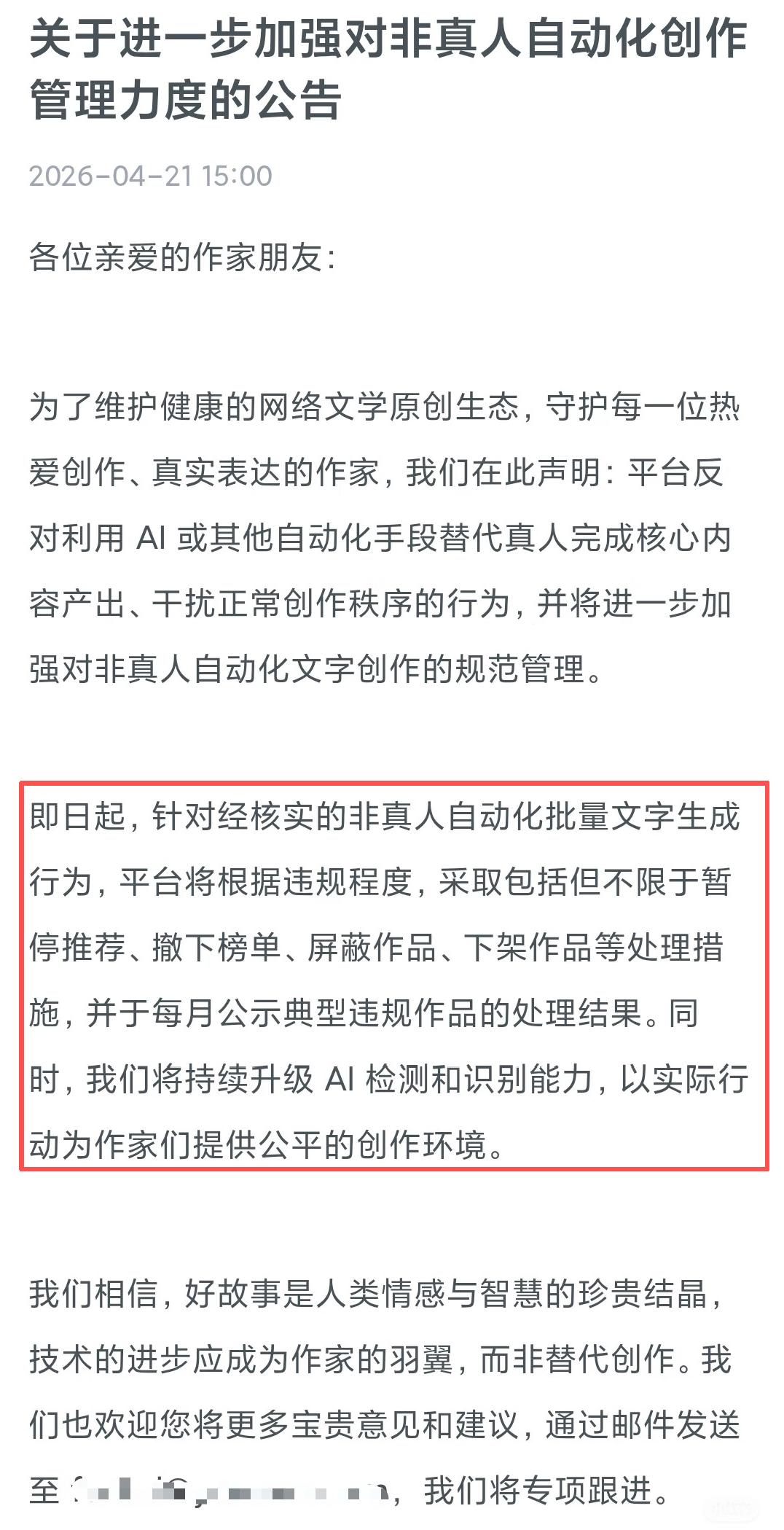
Xiao A said that after a series of scandals involving AI novels, many platforms have released announcements to strengthen the review of AI-generated content.
Qidian has completely banned AI novels. All editors are explicitly told not to accept AI works, and if a work slips through the cracks and is later discovered, its recommendation will be suspended, it will be removed from rankings, blocked, and finally taken down from the platform.
Similarly, Fanqie, which was once a heavily affected area, has also started to rectify the problem, limiting the number of posts per account to prevent traffic inflation, requiring face recognition for withdrawals, and strengthening evaluation methods. In June alone, Fanqie removed nearly 150,000 AI-generated and low-quality novels.
But these rules seem strict on the surface. In reality, countless AI works that haven't been discovered are still circulating in both the web fiction circle and the traditional publishing industry.
I think the simplest solution is to preserve the readers' right to know before they pay for a work.
During my communication with Xiao A, he repeatedly emphasized that he is not against using AI to write, but against the behavior of using AI without clear labeling, trying to mislead readers into thinking AI-generated works are human-written, thus engaging in unfair competition against human authors.
The same logic applies to readers. Handmade products and assembly line goods can have different prices, but you can't remove their labels and mix them together to sell.
Therefore, we can set up a dedicated AI content section, clearly marking AI-generated works, so that people who like AI novels can read AI content, and people who prefer human-written stories can read human works. With clear pricing, no one disturbs each other, and their benefits are separate.
Whether AI can write well is a matter of capability, but whether you disclose that you used AI is a matter of integrity.
Maybe one day in the future, AI will be able to write content that no human can match. But even then, readers still have the right to know whether what they are buying is machine-generated content or the expression of a real human being.
This article is from WeChat Official Account "Chaping X.PIN", Author: Momomotian, Editor: Jiangjiang & Mianxian, published by 36Kr with authorization.