After partnering with Anthropic, has the Bitcoin mining firm staged a dramatic comeback from the doldrums?
On July 6, Bitcoin mining company TeraWulf signed a 20-year data center lease with Anthropic, with a total contract value of approximately $19 billion. Two weeks later, another mining firm Hut 8 announced a $9.8 billion long-term lease, under which it will build an AI data center in Texas, leasing 352MW of computer room space and power capacity to an undisclosed major client for a 15-year term, with total rent amounting to around $9.8 billion.
This is already the second contract of equivalent scale that Hut 8 has secured at its Beacon Point campus, bringing the combined contract value of the two phases of the project to $19.6 billion.
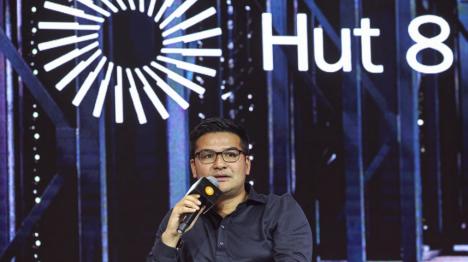
Caption: Asher Genoot, CEO of Hut 8, speaking at the Bitcoin Asia conference in Hong Kong
Both companies that landed these two massive deals built their businesses initially on Bitcoin mining.
Until a few years ago, the core business of TeraWulf and Hut 8 was still Bitcoin mining. They would add more mining rigs when cryptocurrency prices rose, and shut down some equipment when prices dropped or electricity costs became too high, leading their revenues to fluctuate drastically alongside Bitcoin's price movements.
Now, some mining rigs are being removed, and former mining sites are being converted into AI data centers. The business of these mining companies has shifted from self-mining Bitcoin to leasing space and power capacity to AI enterprises.
While generations of mining rigs have been phased out, the mining facilities themselves have remained. The land, power supply, and grid interconnection qualifications prepared for mining in the past may now be more valuable than the mining equipment itself.
To understand why mining companies have reached this juncture, we have to start with the bankruptcy of Core Scientific.
North America's "Mining King" Goes Bankrupt Within a Year
From the second half of 2020 to the end of 2021, Bitcoin experienced a major bull market, with its price surging from around $10,000 to nearly $69,000.
Taking advantage of this bull market, Core Scientific continuously purchased mining rigs and expanded its mining facilities, constructing large-scale mining operations in Texas, North Carolina, Georgia, and other locations, at one point becoming one of the largest publicly traded mining companies in North America.
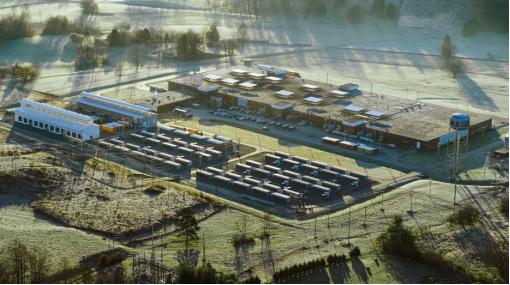
Caption: Core Scientific's Marble mining facility in North Carolina. (Source: Core Scientific)
The logic behind Core Scientific's aggressive expansion was not complicated. Bitcoin mining companies invest computing power to compete across the entire network: the higher their share of total hash rate, the more Bitcoin they can typically earn. As long as cryptocurrency prices stay high, buying more rigs and building more mining sites would allow them to recoup their investments faster.
However, this expansion relied on a precondition that mining companies could not control: Bitcoin prices had to remain high enough to cover equipment and electricity costs.
In 2022, this precondition was shattered. Bitcoin's price plummeted from its all-time high, while energy prices for natural gas and other sources rose. Mining companies still had to pay for electricity and equipment installments. Every additional day their rigs ran incurred new costs, but the Bitcoin being mined could no longer support the earlier expansion.
By the end of that year, Core Scientific's cash reserves were rapidly depleted, and the former "Mining King" of North America ultimately filed for bankruptcy protection.
Core Scientific was not the only mining company in this predicament: the entire industry was squeezed between falling cryptocurrency prices and rising operating costs.
Another publicly traded mining firm, Riot, mined 5,554 Bitcoins in 2022, a 46% increase from the previous year, yet its mining revenue dropped from $184 million to $157 million. The company posted a net loss of $509.6 million that year, most of which came from impairment of mining rigs, Bitcoin holdings, and acquired assets.
Riot's data also exposed another layer of pressure facing mining companies.
Mining is a non-stop equipment race. As more and more mining rigs join the network, the Bitcoin protocol automatically increases mining difficulty, reducing the amount of Bitcoin each individual rig can mine. Older rigs have lower computing speeds and higher power consumption, delivering diminishing returns for the same electricity expenditure.
To maintain production and keep power costs down, mining companies have to continuously purchase new rigs with higher hash rates and lower energy consumption. This means they not only have to pay ongoing electricity bills but also repeatedly invest capital to upgrade equipment. Once Bitcoin's price drops, the value of newly purchased rigs and existing Bitcoin holdings both decline, while the already high electricity costs remain unchanged.
Business deals that seemed endlessly replicable during a bull market quickly turn into cash black holes in a bear market.
Worse still, starting from early 2023, Bitcoin's price gradually recovered from its lows and surpassed the previous bull market's all-time high in 2024. However, the profitability of mining companies did not bounce back along with the price.
In April 2024, Bitcoin underwent its fourth halving, reducing the block reward from 6.25 Bitcoins to 3.125 Bitcoins per block mined.
The so-called "halving" refers to the Bitcoin network's mechanism that cuts block rewards by 50% approximately every four years.
This means that even with the same amount of computing power invested, mining companies would earn significantly less new Bitcoin. Costs for mining rigs, electricity, and labor do not decrease accordingly, yet output is immediately cut in half, further squeezing profit margins.
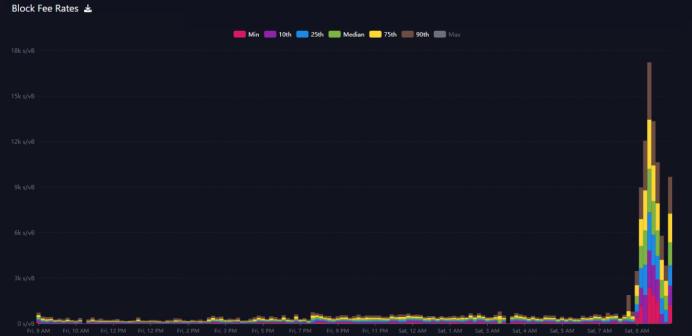
Caption: A chart from Mempool.space showing a sharp surge in Bitcoin transaction fees. (Source: Mempool.space)
At the same time, the total network hash rate continued to grow, and the equipment race did not stop after the halving.
If mining companies do not replace their rigs, their mining costs will rise. If they do upgrade, they have to pour in more capital.
The revenue brought by rising Bitcoin prices was quickly and ruthlessly eroded by the halving, hash rate competition, and equipment expenditures.
Core Scientific was hit particularly hard.
In 2024, the company's Bitcoin production decreased by 52% year-on-year. By 2025, its annual output dropped from 6,595 to 2,276 Bitcoins, and its self-mining revenue fell from $409 million to $229 million, nearly a 50% decline.
As mining became increasingly unviable, Core Scientific had to find alternative uses for its existing mining facilities.
Fortunately, even if the mining sites were no longer used for Bitcoin mining, the land Core Scientific had purchased and the power supply infrastructure it had built could still be utilized. These facilities were already connected to large-scale power grids, capable of supporting other computing equipment that requires massive amounts of electricity.
This is precisely the resource that AI companies are most lacking.
Just a few months after Core Scientific completed its bankruptcy restructuring, an old peer who had also transitioned from the cryptocurrency industry came knocking on its door.
The Tenant Tried to Buy the Landlord Out Twice
The old peer that reached out was CoreWeave.
CoreWeave is now one of the most high-profile AI cloud computing companies. All the GPUs it currently uses are supplied by NVIDIA, which is not only its supplier and technology partner but also a major shareholder. NVIDIA invested an additional $2 billion in CoreWeave in 2026. Leveraging its large-scale GPU clusters, CoreWeave provides large model companies with the computing power required for model training and inference operations.
However, before becoming a major buyer of NVIDIA GPUs, CoreWeave was also a mining company, and it mined Ethereum.
In 2016, CoreWeave's founding team bought their first GPU, placed it on a pool table in their New York office, and mined their first Ethereum block. After that, the number of GPUs grew from a single card to hundreds, then to tens of thousands.
After the crypto market entered a cold spell from 2018 to 2019, CoreWeave took advantage of the mass exit of mining companies to purchase GPUs and data center resources at low prices.
Fortunately, CoreWeave used GPUs for Ethereum mining. Unlike Bitcoin ASIC rigs that can only perform specific calculations, GPUs have a much wider range of use cases.
As the crypto market cooled down, CoreWeave began renting out these devices to film and television special effects studios and machine learning clients, gradually shifting from mining to cloud computing services.
This transition later allowed CoreWeave to ride the generative AI boom. As large model companies began scrambling for GPU computing power, CoreWeave's GPUs, data centers, and scheduling expertise immediately found new purpose, propelling the company to the center of the AI cloud computing market.
But as the company purchased more and more GPUs, a new problem emerged: where to place all these machines?
High-end GPUs can only generate meaningful computing power when connected to sufficient electricity and network infrastructure.
CoreWeave could acquire more chips, but it was extremely difficult to find pre-electrified data centers in a short period of time.
On the other side, Core Scientific had ready-made mining sites, power supply, and grid interconnection qualifications, but was in need of new clients willing to pay long-term rent.
The two companies that both originated from the cryptocurrency industry thus crossed paths again amid the AI boom.
In June 2024, Core Scientific signed a series of 12-year contracts with CoreWeave to provide approximately 200 megawatts of data center infrastructure for the latter. The two sides continued to expand their cooperation, and by early 2025, the power capacity leased by CoreWeave had reached nearly 590 megawatts.
It was a perfect match. CoreWeave became the tenant, while Core Scientific, relying on the mining facilities left over from the previous bull market, transformed from a bankrupt mining company into an AI infrastructure provider.
The story soon took an unexpected turn.
Shortly after signing the first batch of leases, CoreWeave directly proposed acquiring Core Scientific for approximately $1 billion. However, Core Scientific deemed the $5.75 per share offer too low and refused to sell the company to its newly arrived tenant.
A year later, CoreWeave made a second bid. This time, the two sides reached an agreement, with Core Scientific agreeing to accept an all-stock acquisition valued at around $9 billion. However, some of Core Scientific's shareholders argued that the power resources the company controlled would continue to appreciate, and that paying for the acquisition with CoreWeave's stock would expose the deal's value to fluctuations in CoreWeave's share price.
In October 2025, the acquisition failed to secure sufficient shareholder support, and the two parties ultimately terminated the merger.
Although the deal fell through, the fact that the tenant twice attempted to buy out the landlord clearly demonstrates the shift in value of old mining facilities. For AI companies eager to expand, the land, power supply, and grid interconnection qualifications controlled by Core Scientific are extremely attractive, far more valuable than those outdated mining rigs.
Building a large-scale data center is far more complex than just constructing several server rooms. The project must first verify that the local power grid can provide sufficient electricity, then complete the approval processes for power transmission, transformation, and grid interconnection. As AI data centers have concentrated their applications for electricity access, the grid connection queues in many regions of North America have stretched several years into the future. Even if AI companies have already purchased GPUs, they might have to leave their equipment idle for a long time because their data centers cannot get connected to the power grid.
Core Scientific's mining facilities, which already had large-scale power access capabilities and were ready for further renovation, allowed AI companies to skip the most time-consuming grid interconnection waiting period.
The partnership between Core Scientific and CoreWeave also showed other mining companies the newfound value of old mining sites.
In 2024, TeraWulf sold a 25% stake in its Nautilus mining facility for approximately $92 million in consideration.
Nautilus, a joint project invested by TeraWulf and energy company Talen Energy, was built adjacent to the Susquehanna nuclear power plant in Pennsylvania. It was the first Bitcoin mining facility to directly use nuclear power plant electricity and run entirely on nuclear energy, once regarded as a model for clean energy mining.
This transaction carried symbolic significance. TeraWulf sold its stake in this landmark mining facility and redirected the recovered capital to invest in AI and high-performance computing infrastructure.
Hut 8 went a step further by spinning off its mining business directly. In 2025, Hut 8 separated most of its mining rigs and mining operations, forming the subsidiary American Bitcoin with investors including Eric Trump, the second son of U.S. President Donald Trump, and held a majority stake in the new entity.
After that, American Bitcoin took charge of financing, purchasing mining rigs, mining, and reserving Bitcoin. Hut 8 retained its power and data center resources, providing site and operational services for the subsidiary. Following the spin-off of its mining business, the parent company Hut 8 began to channel more capital and resources into AI data center development.
After Core Scientific and other companies took the lead in this transition, more and more mining companies started seeking AI clients.
Are the Good Days Back?
Mining companies that were the first to secure AI clients have already reaped the benefits.
In the first quarter of 2026, TeraWulf's AI data center leasing revenue reached $21 million, surpassing its Bitcoin mining revenue of $13 million for the first time. After the $19 billion Anthropic contract was announced on July 6, TeraWulf's share price surged by approximately 19% at one point during intraday trading.
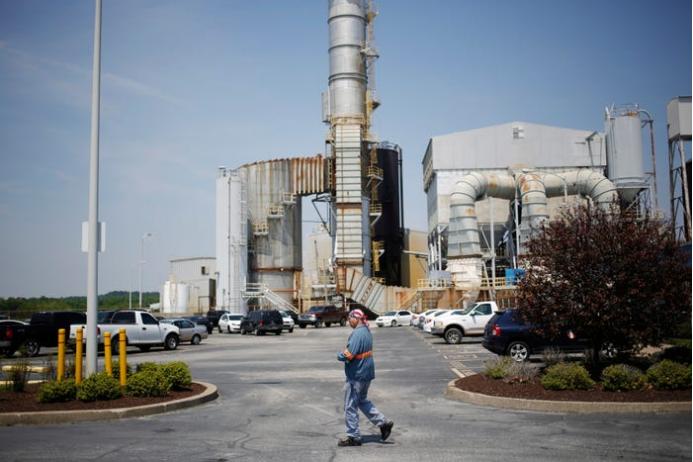
Caption: The former Century Aluminum smelter in Hawesville, Kentucky, photographed in 2017. After TeraWulf acquired the site, it is being converted into an AI data center for Anthropic.
The market reaction for Hut 8 was equally pronounced. In May 2026, it signed the first 15-year, $9.8 billion lease for its Beacon Point campus in Texas. On July 20, the same client