When talking about China's Internet, why can't we bypass these three people from Shaanxi?
When it comes to internet enterprises, the first cities that come to mind are definitely the five hubs: Beijing, Shanghai, Shenzhen, Guangzhou, and Hangzhou.
After all, according to the 2025 list of China's top 100 internet companies, these five cities account for as high as two-thirds of the total.
However, when sorting out the development history of China's internet, we will find a province that is easily overlooked yet has far-reaching influence — Shaanxi.
Three Shaanxi-born figures have exerted a significant impact on China's internet industry:
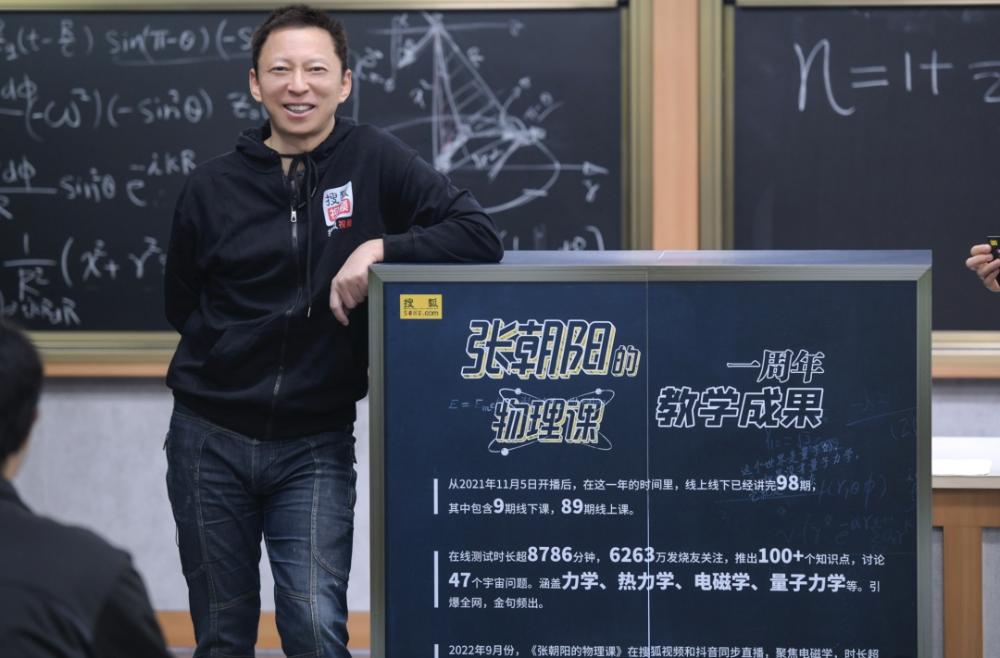
Zhang Chaoyang, a native of Xi'an (founder of Sohu), is the "pioneer" of China's internet and the trailblazer of the web portal era.
Zuo Hui, a native of Weinan (founder of Lianjia and KE), reshaped the trillion-dollar residential service industry with internet thinking and the philosophy of "pursuing truth and eliminating falsehood".
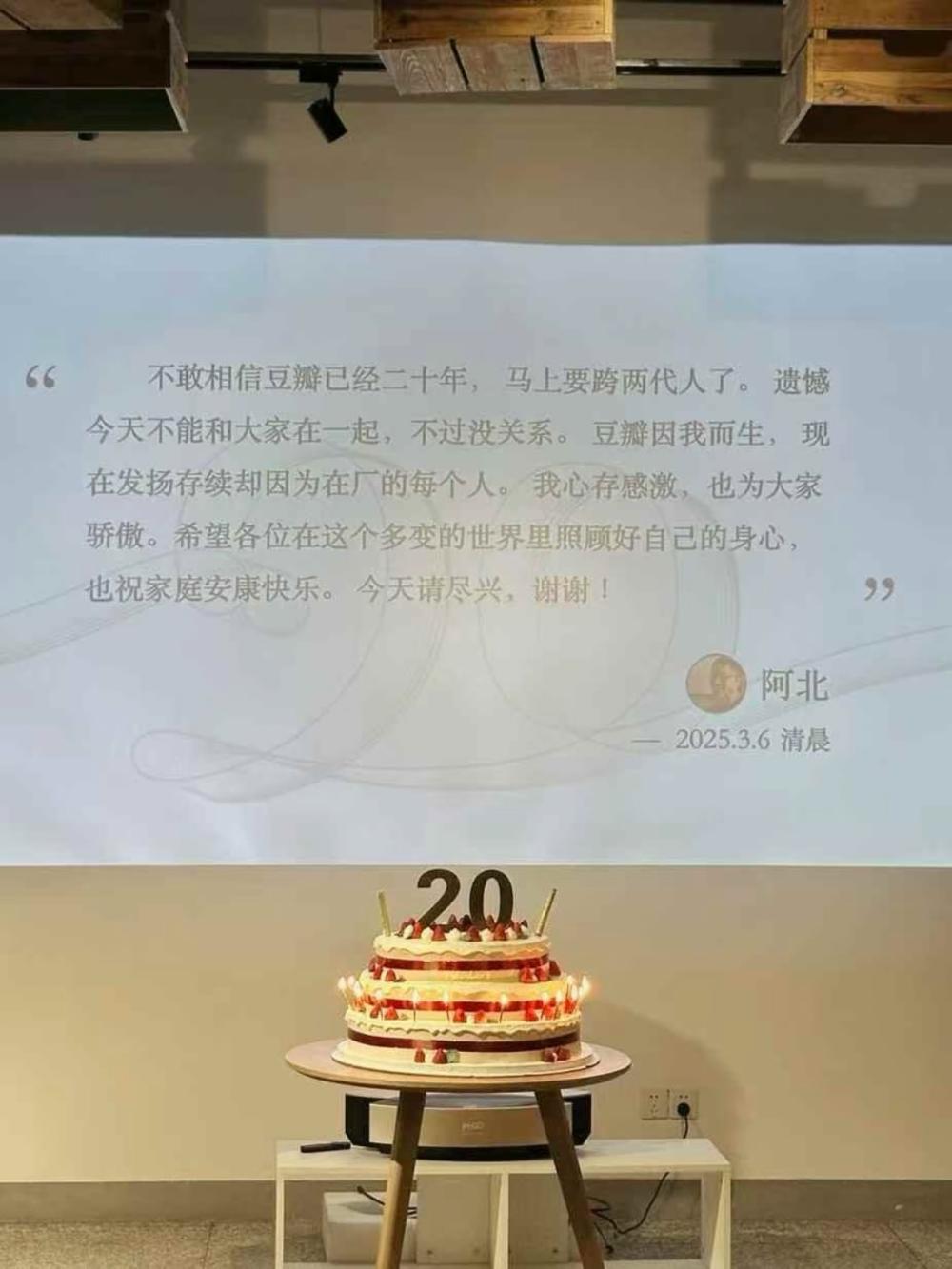
Yang Bo, a native of Hanzhong (founder of Douban), is the founding father of China's internet content communities, who built a gathering place for literary and artistic youth passionate about books, films, and music.
Why did a region outside the core internet hub produce so many internet giants?
01 The Idealists in the Internet Era
Zhang Chaoyang, who was born in Xi'an, embodies the purest chivalrous spirit and free-spirited nature of people from Northwest China. Back when he founded Sohu, he emphasized that making profits was not the primary goal, and he "just wanted to accomplish one meaningful thing".
In 2000, Zhang Chaoyang led Sohu to a successful listing on the NASDAQ in the United States. As the founder of China's web portals, Zhang Chaoyang was hailed as "the first person of China's internet", and Sohu reached its all-time high market value of 4.3 billion US dollars in 2011.
Zhang Chaoyang not only opened the door to China's internet, but also enlightened many early internet entrepreneurs. In 1999, when he gave a speech in Shenzhen, one of the audience members was a young man named Ma Huateng, who was inspired to develop OICQ, the predecessor of QQ, shortly afterwards.
The traits of "being easy-going and fun-loving" as well as generous and magnanimous are most vividly demonstrated in Zhang Chaoyang.
In the early stage when China's real estate agency industry was mixed with good and bad players, it can be said that Zuo Hui single-handedly reshaped the entire industry — by launching only genuine housing listings, building an information-sharing platform, and implementing a cooperative mechanism of team collaboration and mutual profit-making.
Even when facing the joint exclusion of other competitors, and complaints and departures from his company's employees, Zuo Hui remained firm in his business principles.
Zuo Hui once publicly revealed his business strategy: "My current business logic is that everything I do is to prepare for 10 years from now. When I am fully prepared, I will wait quietly for it to blossom and bear fruit. I will wait far ahead, waiting for consumers to catch up, waiting for them to start paying, and waiting for them to start embracing these things that are truly important and of high quality."
"Doing difficult but right things, and creating value-added things" is not only the value Zuo Hui practiced throughout his life, but also deeply embedded in every operational detail of Lianjia and KE.

In the internet jungle law that prioritizes "speed over everything", Yang Bo (who usually calls himself Abei) is one of the very few people who dares to openly resist excessive commercialization. His scholarly demeanor makes him stand out distinctly among a crowd of internet entrepreneurs.
From the very beginning of founding Douban, Yang Bo did not take profit-making as his goal, and even consistently adhered to anti-commercial rules: no hierarchical system, no paid privileges, no point incentives, no algorithmic push, and the influence of users depends entirely on the quality of their content.
His belief is extremely simple: "We don't want users to come many times a day, we just hope that every time they come, they can see something valuable." Douban does not use attention-grabbing algorithm recommendations, nor does it profit by occupying users' time. Instead, through rating and communication about books, films and music, as well as information interaction between groups, it provides a spiritual world free from commercial coercion for more people.
In the fierce competition of the mobile internet era, when everyone laughed at Douban for "falling behind", he responded calmly: "The value of Douban lies not in its scale, but in the sense of resonance it creates."
It is precisely because Yang Bo has always adhered to intrinsic value that he has laid an invincible foundation for Douban. Today, Douban is already 21 years old.
Different from the flexible adaptability of Zhejiang merchants and the adventurous spirit of Cantonese merchants, the business core and original aspiration of these three Shaanxi entrepreneurs — Zhang Chaoyang, Zuo Hui, and Yang Bo — always carry a unique cultural trait: idealism.
02 From the Pre-Internet Era
The book *On Shaanxi Merchants* mentions, "Shaanxi has thousands of miles of fertile land with yellow soil, which has nurtured the inherent, unadorned, upright, and unyielding character of the people of Qin."
This cultural gene rooted in the land still profoundly influences the business philosophy of modern Shaanxi merchants even after thousands of years.
In the history of commercial civilization, Shaanxi merchants are regarded as the earliest merchant groups in China formed on the basis of regional kinship. Their glory lies not in the meticulousness of small-scale business, but in their broad vision that allowed them to control the border trade in the central and western regions.
"Transporting tea to Gansu and Qinghai, trading salt in the Yangtze and Huaihe river basins, shipping cloth to Suzhou and Huzhou, and selling fur in Jiangsu and Zhejiang", Shaanxi merchants monopolized the central and western trade for as long as 500 years during the Ming Dynasty. Their trade territory was full of gobi deserts, snow-capped mountains, and long ancient camel trails. This extremely harsh business environment forged the mindset of Shaanxi merchants who are not afraid of hardships and are willing to delay gratification.
This is exactly the same as the underlying character of Zhang Chaoyang, Zuo Hui, and others.
After going through a low point in his life, Zhang Chaoyang said frankly, "A life that only focuses on making money is not a good life. We must do meaningful things and make our own contributions."
In an era where algorithmic recommendations are fully implemented, commercial monetization efficiency is emphasized, and content is shifting to fragmented lightweight formats, Zhang Chaoyang went against the trend, taking a slower pace to create more substantial high-quality content.
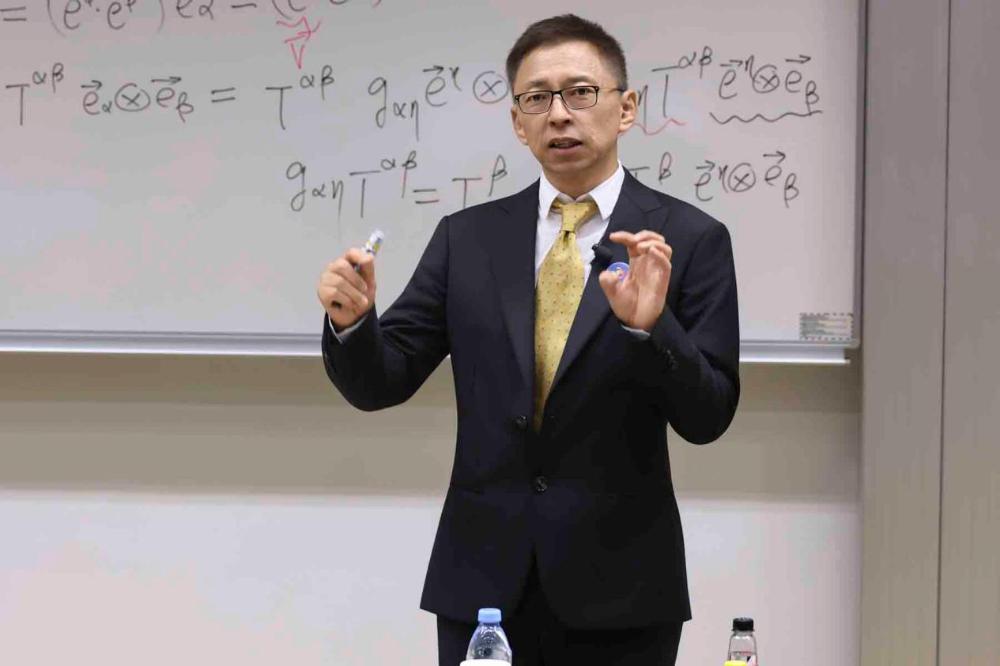
Since November 2021, Zhang Chaoyang has been hosting the serialized hardcore popular science live stream *Zhang Chaoyang's Physics Class*. The course content ranges from deriving E=mc², discussing cutting-edge sciences such as quantum field theory and superstring theory, to even deconstructing the physical principles behind new energy vehicles and rocket launches. He insists on writing formulas by hand and advocates independent thinking in the AI era.
In addition, Zhang Chaoyang insists on doing four English live streams on Sohu Video every week. He also visits top universities such as Tsinghua University to hold dialogues with leading scientists including the Nobel laureate David Gross, and has published three popular science books that are collected by the National Library of China.
These actions are not only providing a scarce form of content that returns to the essence of knowledge, but also aiming to stimulate the public's passion for science and advocate the concept of lifelong learning — these are exactly the meaningful things that Zhang Chaoyang believes in and has been putting into practice.
The *Shanxi General Annals* also records that "Yongzhou has deep soil and abundant water, and its people are honest, sincere, and straightforward".
Shaanxi, a land covered by thick loess, is one of the core birthplaces of Chinese civilization. Four major dynasties — Zhou, Qin, Han, and Tang — all established their capitals in Shaanxi. The "Rites of Zhou" laid the foundation for the ritual and music civilization and patriarchal system, while the "Qin System" established the centralized power and great unification ideology.
The "honest, sincere, and straightforward" character of Shaanxi people, as well as their strength in building order and rules, has been passed down consistently. As the "godfather of real estate agencies", what things did Zuo Hui do to rewrite the game rules of the entire industry, so as to accumulate such a high reputation in the industry?
Facing the widespread unspoken rule of "price gouging through hidden differences" in the real estate agency industry at that time, Zuo Hui took the lead in putting forward the ironclad rule of "no hidden price differences, sign tripartite agreements" in 2004, requiring full transparency in transactions. Later, he took action against the chronic problem of "false housing listings".
In the past, "false housing listings" served as a "sales tool" for real estate agents. First, it was used to increase the number of viewings, attracting more customers to contact the agency for on-site house inspections. Second, it helped manage customer expectations, and through the intuitive comparison of "highlighting the bad and downplaying the good", it paved the way for the conversion of genuine housing listings.
In May 2011, Lianjia became the first real estate agency in China to promise "100 yuan compensation for each fake listing" for genuine housing sources. At the same time, it was not only jointly "squeezed out" by other agency companies, but most internal real estate agents were also confused, with one-third of the agents in many stores leaving. However, none of these events shook Zuo Hui's determination to "purify the industry and pursue truth for the benefit of others".

While launching the "genuine housing listings" initiative, Lianjia also began to build a housing dictionary, which can be understood as the predecessor of the Lianjia and KE apps. Most people can find public information such as the house area, address, selling price, building age, and surrounding facilities in it.
After solving the problem of information authenticity, Zuo Hui started to reshape the internal collaborative order of the industry. In the past, the income of real estate agents mainly came from transaction commissions, so real estate agents would try their best to "take charge of" every link, and would not easily share the new housing sources they discovered and the customer information they developed with their colleagues. It can be said that this is a field where peers are naturally mutually exclusive, and everyone's interests conflict with others'.
Zuo Hui changed the "commission method", replacing the single income structure with an income distribution system divided by modules and contributions, namely the Agent Cooperation Network (ACN). On the one hand, this allows agents from different regions and stores to cooperate fully with transparent information, increasing the possibility of more transactions. On the other hand, it raises the average income of agents (especially the treatment of grassroots agents), giving "newbie agents" who are new to the industry more time to grow. Otherwise, most people would choose to leave the industry within less than a year due to income issues.
Zuo Hui said that profitability is not that important. "Value comes from the growth of the organization. We must continuously create the real value that belongs to your organization, and create real value for consumers."
He not only created value for consumers, but also positively influenced millions of practitioners in the industry.
03 Far More Than Just the Internet
Many people believe that the founder is the "soul" of an enterprise. If the founder is gone, even with the management of professional managers, the development prospects of the company will be questioned.
With the elite aura brought by early fame and a personal net worth of hundreds of millions of yuan, it was exposed in 2011 that Zhang Chaoyang suffered from severe depression, and he had to step down from his frontline management position to start a period of seclusion and recuperation.
During the booming development of the internet industry, with the absence of the helmsman, Sohu's pace gradually slowed down, and it missed almost all the industry outlets such as social media, e-commerce, short videos, and algorithmic recommendations. Sina has Weibo, NetEase has mobile games, Tencent has WeChat, while Sohu has almost no competitive mobile products except for its aging portal and game businesses.
Zhang Chaoyang himself also admitted: "We missed the initial opportunity window of the mobile internet."
Today, Sohu's stock price has shrunk by 10 times compared with its peak period. At a time when Chinese internet companies are all plunging into the "arms race" of large models with hundreds of billions of parameters, Zhang Chaoyang gave a "reverse" answer: Sohu will not join the first camp of large model R&D, but instead focus on the implementation of AI applications.
Rejecting the involution of traffic, betting on high-quality content, and at the same time lowering the priority of recommendation algorithms, aiming to build a real social platform dominated by "follow feeds".
Without the mildness of maritime trade and the convenience of canal wharves, the rise of Shaanxi merchants was almost achieved step by step through their footprints and the ropes on their shoulders.
This tenacious character has been internalized as a special temperament of contemporary Shaanxi entrepreneurs. Even though Sohu is no longer among the mainstream internet giants, it still maintains its own pace.
Zhang Chaoyang once said, "If you adhere to long-termism and keep doing one valuable thing, opportunities will continue to emerge." Having experienced business ups and downs and physical illnesses, he still has not given up the cultivation of long-termism, which has inspired generations