Selling "old money style" clothing at a 10% discount, it has opened 3,000 stores and reaped more than 1 billion yuan in revenue within a year.
One weekend afternoon in July, at a clothing store in Xitou Intime Department Store, Xihu District, Hangzhou, a middle-aged female customer with a child skillfully picked up a off-white knit cardigan, first flipped the hangtag, then checked the care label.
"I wandered in by chance while shopping last year, and found the cut was pretty good after trying it on," she told *Contemporary Enterprise*.
What really made her a returning customer was the discounted price quoted by the store clerk. She said many basic styles in the store are priced as low as 10% off, and you can get one item for 99 to 200 yuan, which is perfect for stocking up on daily commuting, school, and outing essentials for her child and husband, while the brand's hangtag prices are often over a thousand yuan.
This store is called POLOWALK. Since the literal translation of its brand name is close to "Paul's Walk", netizens also use this as a playful nickname for the brand, which is operated by Shanghai Hezhao Apparel. Its dark green storefront, displays, product style, and polo visual elements easily give people the illusion that it is an "old money" international luxury brand.
This brand has quietly gained popularity in recent years. According to Jiemian News, POLOWALK now has approximately 3,000 stores nationwide. It has established deep partnerships with commercial real estate and retail enterprises such as Wanda, CapitaLand Group, and Pang Donglai, with over 200 stores located in Wanda properties alone.
This store count scale in the Chinese market is almost on par with the long-established men's wear brand Jiumu Wang, and is more than 10 times the number of stores of the "old money" men's wear pioneers such as Ralph Lauren and Brooks Brothers.
During visits to POLOWALK stores in Hangzhou's European Financial City (EFC), Meitang Plaza, and Xitou Intime, *Contemporary Enterprise* observed a noteworthy facet of offline retail: POLOWALK is not hidden in the corners of shopping malls. It has entered the consumption radius of urban commercial complexes, and in some complexes, two brands with similar styles can even appear at the same time, one of which is POLOWALK.
Industry insiders analyzed that at the end of 2024, POLOWALK had a total of about 600 stores, and in less than two years, it added over 2,400 new stores, becoming a non-negligible presence in China's men's wear market.
What force exactly drove its explosive popularity? Which trend in the current consumer market did it tap into? The more critical question is: where is the ceiling for this business?
The allure of "dupe": whose business did POLOWALK capture?
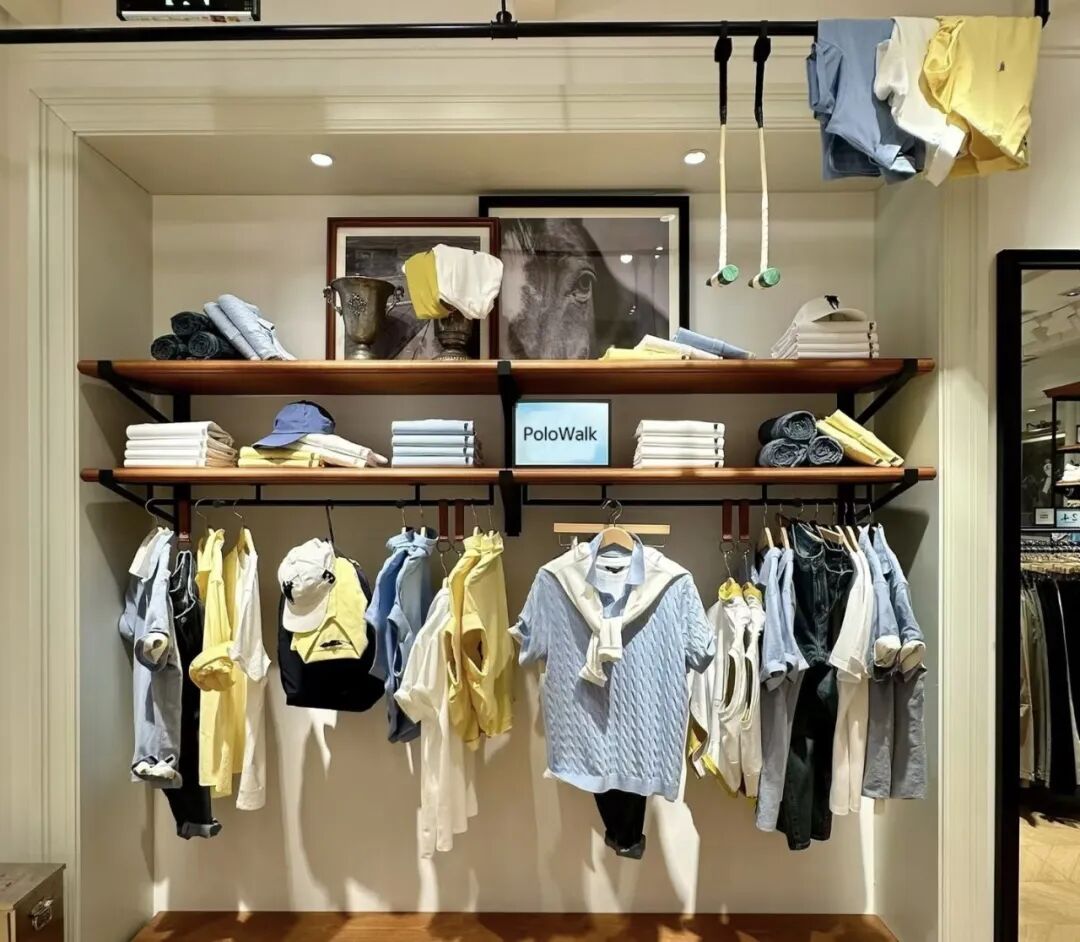
If you only look at the storefront, POLOWALK can easily be mistaken for a mid-to-high-end men's wear brand. Dark-toned stores, wooden shelves, coordinated full outfits, combined with product lines such as knitwear, POLO shirts, shirts, casual trousers, and jacket coats, together form a mature men's wear aesthetic that has been repeatedly validated by the market.
Compared to chasing trends, POLOWALK's style is more basic, office-appropriate, and relatively easy to coordinate.
*Contemporary Enterprise* observed that customers entering the store generally fall into three categories: the first category is middle-aged men; the second category is female customers picking clothes for their husbands, fathers, or children; the third category is young consumers who enter the store with a playful meme mentality, only to be won over by the prices in the end.
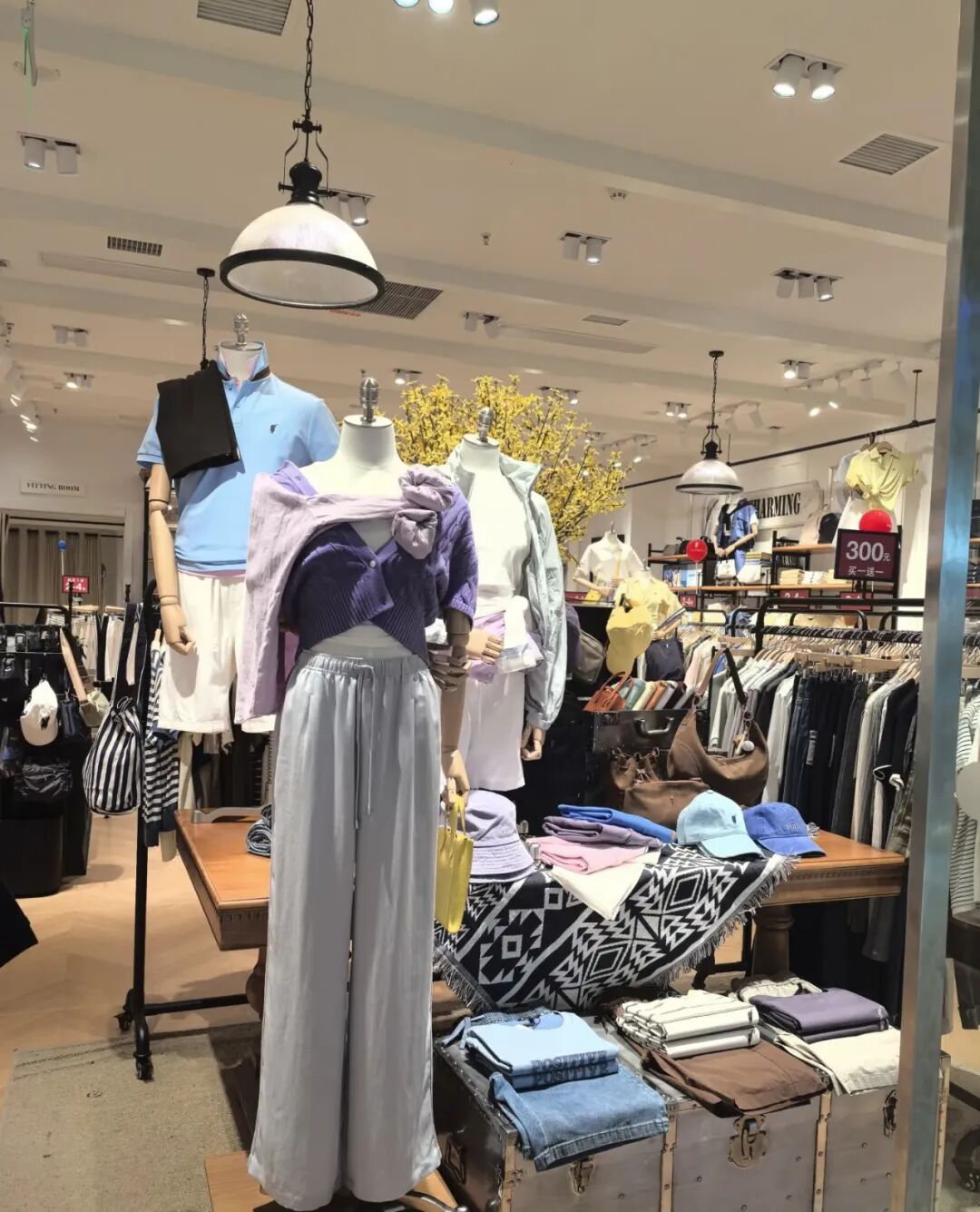
A female customer in her early 30s waited outside the fitting area for her husband to change clothes. She knew POLOWALK was not an international luxury brand, but her main reason for purchasing was still the garment's cut and ease of coordination. In the end, she picked a POLO shirt without a prominent logo and a pair of shorts.
This type of consumer psychology is very common. The customer base near EFC is more focused on commuting and price-sensitive, while the consumption atmosphere at Meitang Plaza is more lifestyle-oriented, with some customers stopping by the store on their way after meals, spending little time trying on clothes and making quick purchasing decisions. With discounted items priced at 50-100 yuan displayed at the entrance, many consumers will stop to touch the fabric and check the cut of the clothes.
A store clerk mentioned that the most frequent question customers ask is the discounted price. As long as the garment looks smart when worn and the price falls within their psychological comfort zone, a deal is easily closed.
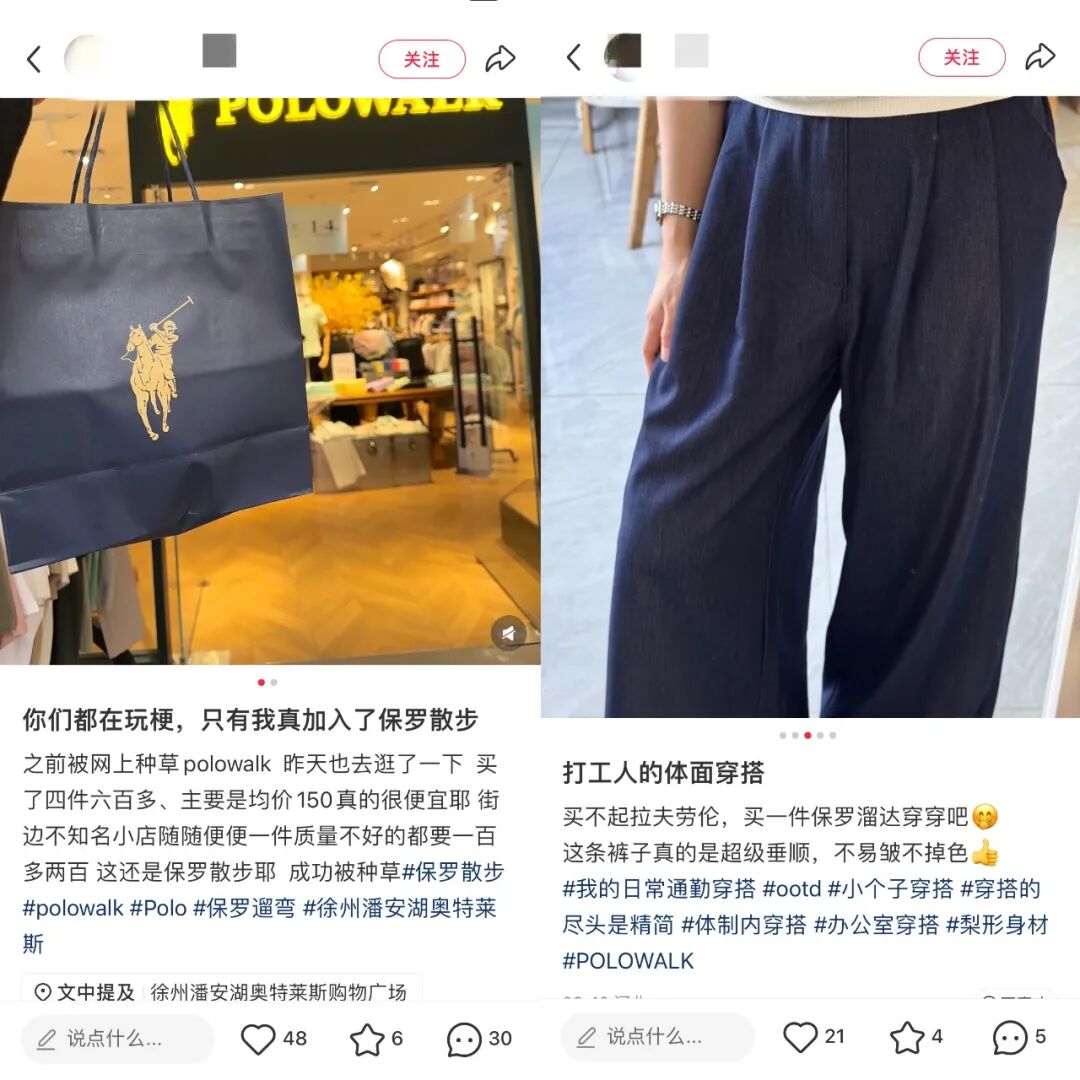
POLOWALK's operational efficiency is precisely reflected in turning this process into a set of standardized actions: it attracts customers with a store image close to that of mid-to-high-end brands, and then converts them with cost-effective prices. Hangtag prices provide a psychological anchor point, while long-term discounts offer the thrill of snagging a bargain.
This practice makes sense in outlet malls, but is even more attractive in shopping centers. International luxury brands have limited leased areas and high rent negotiation thresholds. Brands like POLOWALK can not only fill large retail spaces, but also attract low-to-middle-income customers with low prices, forming a complementary misaligned positioning with high-end brands. Under stock market competition, shopping malls have an urgent demand for brands that can quickly drive foot traffic, and the large-scale replication of the franchise model perfectly meets the demands for occupancy rates and customer flow.
This has also allowed POLOWALK to secure prime locations far exceeding its brand strength — it is increasingly appearing in high-traffic spots on the men's wear floors of major shopping malls, and can even move into the first floor to be neighbors with UNIQLO and Starbucks. Despite its visual language being highly similar to that of international luxury brands, it has still been accepted by the mainstream commercial system.
Riding the coattails of luxury brand logos and reaping the dividends of "value-for-money consumption"
Behind POLOWALK's rise in popularity, there is actually a long hidden storyline.
Public reports show that Shanghai Hezhao Apparel was founded in 2009. In its early years, it started with brand agency business, mainly accumulating channels and capital by representing established international polo or casual wear brands such as "Saint Paul", and around 2024, it shifted its channel resources, supply chain system, and terminal operation capabilities to "POLOWALK".
In recent years, Ralph Lauren has regained momentum in the Chinese market. The popularity of the old money aesthetic and quiet luxury trends has made POLO shirts, cable-knit sweaters, Oxford shirts, and casual jackets high-frequency items on content platforms again.
Ralph Lauren has also found renewed growth in the Chinese market. According to its FY2026 financial report ending March 28, 2026, the company's full-year revenue reached 8.115 billion US dollars, a 15% year-on-year increase, marking the first time in history that it has exceeded 8 billion US dollars; fourth-quarter revenue was 1.979 billion US dollars, with a 17% year-on-year growth rate.
By region, the Asian market is the fastest-growing market: full-year revenue was 2.104 billion US dollars, a sharp 23.1% year-on-year increase; the fourth-quarter growth rate further climbed to 30.6%. The Chinese market contributed key incremental growth — fourth-quarter sales in the Chinese market increased by more than 50% year-on-year, maintaining 22 consecutive quarters of positive growth. As previously disclosed by Ralph Lauren's Asia-Pacific CEO, its sales in China nearly doubled over the past three years, with its proportion of group revenue rising from about 5% to over 8%.
This trend has provided POLOWALK with a rare favorable market tailwind. Judging from visits in Hangzhou, POLOWALK's channel strategy is already quite clear. It secures high-traffic locations in community-focused and commuter-oriented commercial complexes in new first-tier cities. Customers do not need to make a special trip to find the brand; they see it on their way and complete the purchase naturally, which is more suitable for mature men's wear than simply being an online dupe brand.
The supply chain is another factor supporting its expansion. According to the 2021 prospectus of domestic textile and apparel OEM Zhejiang Shengtai Apparel Group Co., Ltd., from 2019 to 2020, both Ralph Lauren and Shanghai Hezhao were among the company's top five customers.
However, sharing or overlapping supply chains does not mean identical products or quality. Even if high-end brands and affordable brands use the same OEM system, there may be significant differences in fabric grades, pattern development, accessory standards, quality inspection requirements, and order management — even the same factory can simultaneously undertake two order lines with unit prices per meter differing several times over.
This difference can also be perceived in physical stores.
Although it resembles Ralph Lauren, POLOWALK adopts a completely different product and positioning strategy. Some of POLOWALK's styles excel in visual safety and low prices, but a closer look at the cuts, stitching, and fabric composition reveals that it is more of a mature supply chain-driven retail brand that uses high-frequency SKUs (Stock Keeping Units) and low decision-making thresholds to meet market demand in the mid-to-low price range.
A store clerk repeatedly emphasized two words when introducing products: easy to coordinate and cost-effective. She steered the conversation toward usage scenarios: "You can wear it to work, when meeting elders, or while traveling. Buying full outfits saves you more money."
This sales approach embodies POLOWALK's core competence: converting mature, easy-to-match clothing styles into a replicable retail system. Store visuals are responsible for attracting customers, discount mechanisms drive transactions, and the supply chain supports new product launch efficiency and pricing.
In essence, its rapid expansion is a highly standardized retail business.
According to the investment promotion staff of Hezhao Apparel, POLOWALK currently adopts a "joint operation + zero inventory" model. No franchise fee is charged; only a merchandise deposit is collected based on the store area. The company handles unified merchandise allocation, and off-season unsold items are also processed centrally by the headquarters. For franchisees, inventory risk is eliminated. With only a deposit plus renovation and rent costs, they can open a store that "looks like a luxury brand", almost without having to judge the seasonal and style risks of clothing. This model has become the flywheel driving its rapid expansion.
After surpassing 3,000 stores, how long can POLOWALK stay popular?
POLOWALK's biggest dividend is that it has found a market gap by "borrowing the limelight" from luxury brands, but its biggest risk also lies here.
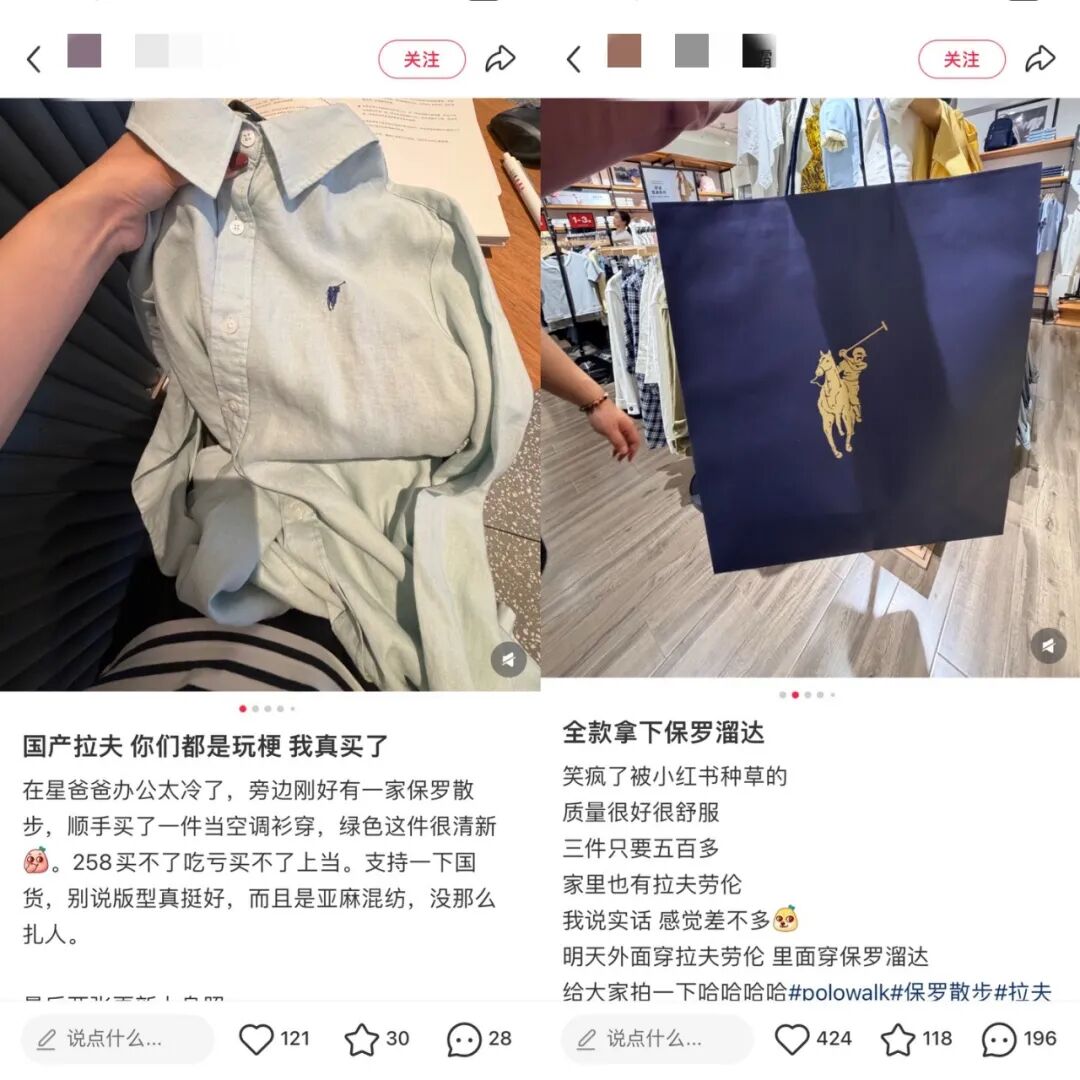
In the Xitou Intime store, some customers deliberately choose styles without prominent logos, while others think that as long as the clothes look good, no one will stare at the labels. This detail shows that POLOWALK has closed sales, but has not necessarily gained true recognition.
POLOWALK seems to have realized this problem too.
During visits, *Contemporary Enterprise* found that some new styles in the store have begun to downplay the iconic polo logo, or reduce the logo to a barely noticeable size, and have launched some original styles.
At the same time, industry competition in the "dupe clothing" space is becoming increasingly crowded.
POLOWALK is not the only brand focusing on POLO, polo themes, old money aesthetic, and commuter casual styles. Similar-style brands such as POLO SHIELD and POLO VILLAE are not uncommon in the men's wear zones of shopping malls. They share the same design aesthetic, as well as the same group of price-sensitive, dignity-pursuing mature customers.
The problem is that when everyone points to the same visual reference framework, consumers will ultimately only make choices based on price, location, and promotional intensity.
This means POLOWALK has to bear higher costs than no-name brands, but does not necessarily have stronger brand loyalty than them. It has to maintain the image of a shopping mall store, implement unified displays, maintain decent decoration and shopping guide services, and also bear the long-term uncertainty brought about by intellectual property disputes. Yet the price consumers are willing to pay still stays in the range of a few hundred yuan.
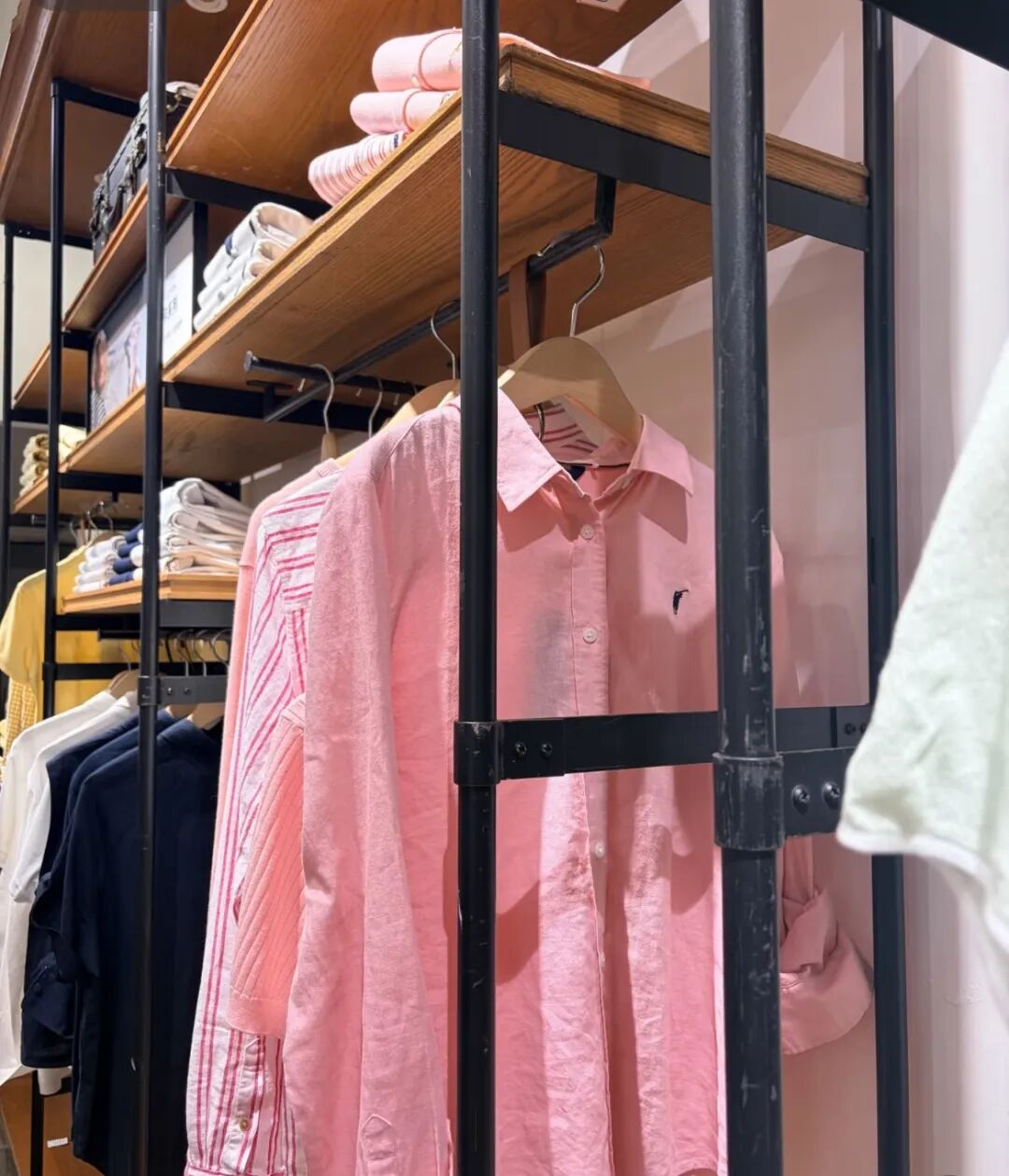
Greater external pressure comes from the systemic risk of intellectual property issues. As Ralph Lauren continues to upgrade its Chinese stores, strengthen local marketing, and enhance consumer education, the brand recognition that was once diluted by POLO-line counterfeit brands may be recaptured. As consumers' trademark awareness increases, it will become more difficult for dupe brands to continue reaping dividends solely by relying on visual similarities.
If POLOWALK wants to go further, it must answer a core question: when consumers no longer need luxury brand dupes, what else can it offer?
If the answer is still cheaper prices, more similar looks, and better discount strategies, then its growth will be replicated by latecomers. The clothing industry does not have particularly high style barriers. Especially today, when the supply chain is highly mature, content platforms accelerate product seeding, and factory stores directly face consumers, a viral knitwear, a basic POLO shirt, or a preppy jacket will soon appear in multiple versions across different channels.
POLOWALK has proven one thing: when consumption returns to rationality, "value-for-money consumption" will become an important opportunity for offline clothing retail. It has also exposed another thing: if it cannot convert traffic into consumers' recognition of the brand's aesthetic, the more popular it becomes, the more it will be scrutinized under the spotlight.
The borrowed wind cannot keep blowing forever. If POLOWALK cannot evolve from "looking like someone else" to "being its own unique self", the current prosperity will eventually fade away.
This article is from the WeChat official account "Contemporary Enterprise World", author: Contemporary Enterprise, published with authorization from 36Kr.