Chen Yusen played the first card
On July 27, the official website of Qianwen Office went live, with Windows, macOS Beta versions and the HarmonyOS computer preview version available for download simultaneously. The web version and the DingTalk embedded version will be launched at a later date.
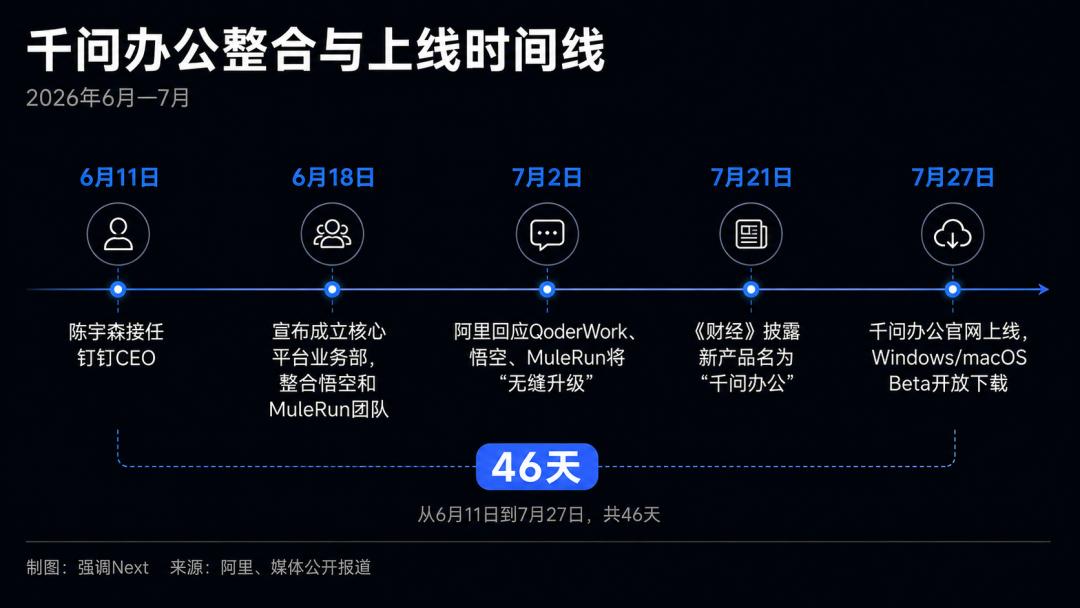
This is the first product publicly delivered by Chen Yusen after he took over as CEO of DingTalk on June 11. The entire development process took 46 days.
According to the official website, the personal edition of Qianwen Office has three tiers: Free, 98 yuan, and 198 yuan, with continuous monthly subscription prices set at 78 yuan and 158 yuan. The enterprise standard edition is priced at 198 yuan per month per seat, while the flagship edition requires separate inquiries for pricing. The capabilities listed on the official website include enterprise IM collaboration, Office document generation and editing, multi-modal processing, web page generation, professional data source integration, and a skills marketplace.
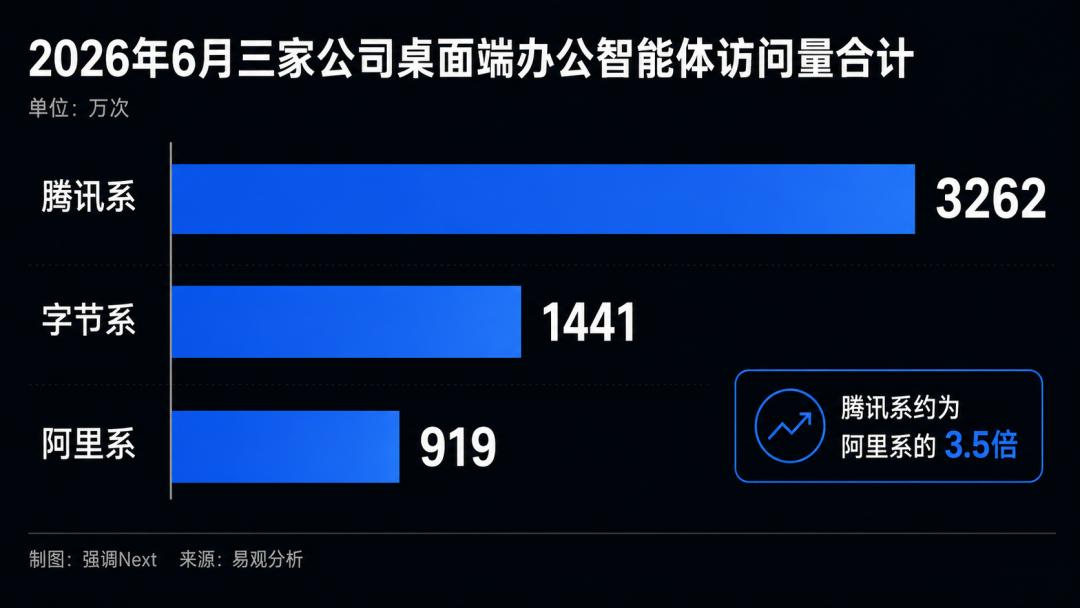
The decision to launch the product before all features are fully prepared clearly demonstrates the significant competitive pressure Tencent has exerted on Alibaba. Data from Analysys shows that in June this year, the number of visits to Tencent's intelligent agents reached approximately 3.5 times that of Alibaba's intelligent agents.
Forty-six days is clearly not enough time to develop a mature office Agent from scratch. The main tasks Chen Yusen completed during this period were to finalize the core product of Alibaba's office Agent, integrate cross-functional teams, and roll out a commercialization roadmap.
46 Days: Ending the Internal Horse Race First
In early 2026, the popularity of office Agents surged driven by OpenClaw, and three competing products — QoderWork, Wukong, and MuleRun — were developed within Alibaba.
Each product had its own focus. QoderWork, derived from the programming tool Qoder, excels at manipulating local files, invoking desktop tools, and delivering office documents. Wukong, incubated by DingTalk, is more aligned with enterprise organizational management and collaboration scenarios. MuleRun focuses on 7×24-hour cloud operation, scheduled tasks, and skill reuse.
The core problem was that the three products had overlapping positioning, and they were developed by separate teams. Continuing parallel development would disperse user entry points, R&D resources, and computing power investments simultaneously.
One week after taking office, Chen Yusen issued his first all-staff letter, announcing the integration of the Wukong and MuleRun teams, and merging the direct sales, telesales, pre-sales, delivery, and customer success teams into the Customer Development Department.
In early July, QoderWork was also brought into the integration scope. The finally launched Qianwen Office is built on the foundation of QoderWork, incorporating the complementary capabilities of Wukong and MuleRun.
This decision was based on practical considerations.
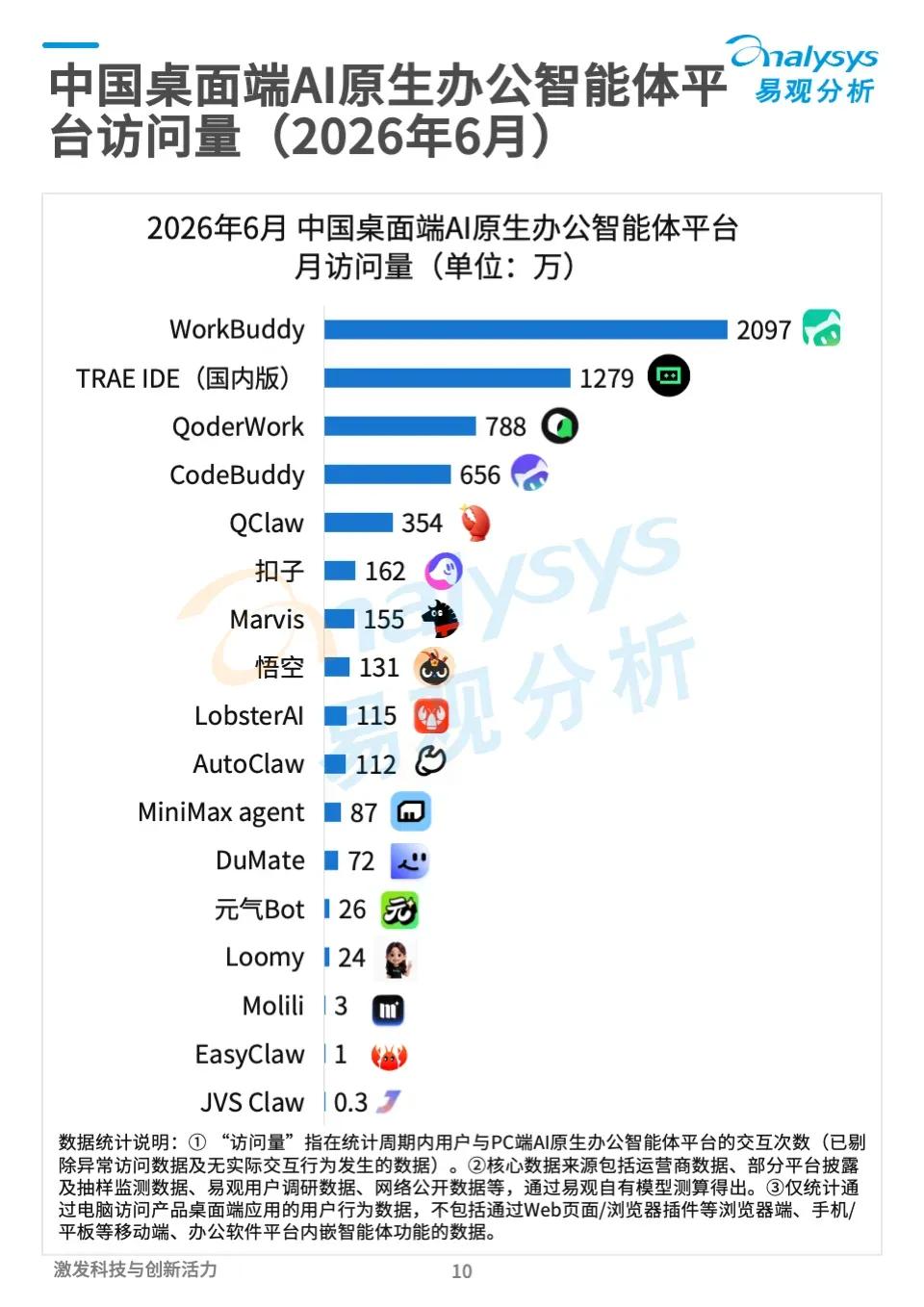
Data from Analysys shows that in June 2026, the total number of visits to 17 domestic desktop AI-native office agents exceeded 60 million. Tencent's WorkBuddy recorded 20.97 million visits, ByteDance's domestic version of TRAE IDE had 12.79 million visits, and QoderWork had 7.88 million visits. QoderWork was the product with the strongest existing user base within Alibaba.
It is particularly noteworthy that Chen Yusen did not directly prioritize MuleRun, which he had previously led the incubation of. Instead, he selected QoderWork as the front-end product, and split MuleRun into two independent modules: cloud operation capabilities and skill capabilities.
This reveals Chen Yusen's product methodology after taking office: stop the redundant internal competition, identify the core product based on user feedback, and then allocate teams and resources around this core.
Qianwen Office has thus formed a relatively clear division of labor. QoderWork is responsible for desktop interaction and local task execution, MuleRun provides continuous cloud operation capabilities, Wukong connects to enterprise business scenarios, and DingTalk undertakes the organization, permission, data, and customer system.
The standalone client is just one product form under this architecture, and there is no need to overemphasize its strategic significance. What truly matters is that Alibaba has finally clarified the priority order for its previously scattered office Agent product lines.
The First Product: Directly Validate Paying User Demand
Qianwen Office announced its full pricing structure shortly after entering the Beta testing phase.
The continuous monthly subscription price for the personal premium edition is 158 yuan, and the enterprise standard edition is 198 yuan per month per seat. This price range has reached the level of professional productivity software. Instead of prioritizing free user acquisition to scale up the user base, Alibaba is testing actual usage demand and users' willingness to pay simultaneously.
This also means that Qianwen Office cannot compete solely by relying on its underlying model capabilities.
Generating PPTs, writing documents, analyzing spreadsheets, and creating web pages have all become standard features of mainstream office Agents. As model capabilities gradually converge, product differentiation has shifted to task execution performance: whether the product can read local and enterprise data, stably invoke various tools, control operation permissions, and seamlessly push results into existing collaboration and approval workflows.
Alibaba already has all the necessary resources for these capabilities.
Qianwen provides the large language model, QoderWork offers the desktop entry point, MuleRun provides the cloud execution environment, and DingTalk has a complete organizational relationship system, enterprise workflows, and a solid customer base. What Chen Yusen needs to accomplish is to combine these scattered capabilities — which previously only existed as separate items on a product feature list — into a continuous, end-to-end workflow that users can use seamlessly.
If users still need to repeatedly authorize permissions, upload files, and copy results across different products, Qianwen Office will be nothing more than a superficial brand integration. The integration can only be considered truly successful when tasks can run continuously across local devices, cloud execution environments, and enterprise systems.
The paid model will force Qianwen Office to resolve these issues as soon as possible.
Individual users may tolerate occasional errors, but when enterprises purchase hundreds of seats, they pay more attention to task completion rates, data security, permission control, and result traceability. The 198 yuan per month per seat pricing cannot only cover a set of AI features, but also guarantees reliable enterprise-level service delivery.
Launching Is Just the First Milestone
Tencent has already gained a first-mover advantage in the office Agent market. Data from Analysys shows that WorkBuddy recorded 20.97 million visits in June this year, approximately 2.7 times that of QoderWork. On July 20, the relevant business of the QClaw product center and part of its team were transferred to the 6th Cloud Product Division where WorkBuddy is located, indicating that Tencent is also consolidating its related resources.
The launch of Qianwen Office at this moment is first and foremost a catch-up campaign.
Chen Yusen has already resolved three early-stage issues: which product to use as the front-end core, how to reorganize the teams, and how to set product pricing. The next step is to verify the depth of integration between the three products, and whether DingTalk's enterprise-level capabilities can be truly connected to Qianwen Office.
The success metrics should not be limited to visit volume alone. Active task users, task completion rates, enterprise seat activation rates, and subscription renewal rates are better indicators of whether the product is commercially viable.
At present, Qianwen Office is still in a small-scale testing phase, with the web version and DingTalk embedded version yet to be launched. The user rights, data, and teams of the original products also require further integration. Chen Yusen has only submitted his first-phase answer sheet.
But his core strategy is already clear: select the product with the strongest existing user base, put an end to internal strategic wavering, concentrate resources, and validate real market demand through paid services as early as possible.
The 46-day development cycle reflects the speed of decision-making. Whether Qianwen Office can gain a firm foothold in the market depends on whether Chen Yusen can integrate Alibaba's existing large model, Agent, and enterprise service capabilities into a product that can deliver stable performance and achieve sustainable subscription renewals.
This article is from the WeChat Official Account "Emphasize Next" (ID: leo89203898), author: Yixiu, published with authorization from 36Kr.