149 new shopping malls opened nationwide in the first half of the year, but very few of them are real blockbuster hits.
In the first half of 2026, the retail commercial market saw a wave of new openings amid a cautious operating environment. While the number of new projects was considerable, there were not many landmark large-scale developments that could truly be called "game-changing hits".
According to incomplete statistics from Winshang Big Data, from January to June 2026, a total of 149 concentrated commercial venues (including shopping malls, independent department stores, cultural tourism commercial complexes, commercial streets, and creative industrial parks) opened across the country, with a total commercial floor area of approximately 8.6897 million square meters. Among these, 40 projects were redeveloped from existing stock properties and reopened, accounting for over 26% of the total.
■ High-tier cities account for more than half, and the number of new commercial projects in fourth-tier cities surpasses that in second-tier cities: Over 60% of the new projects in the first half of the year are located in high-tier cities, with first-tier and new first-tier commercial cities taking the lead, each launching 33 new projects. Notably, fourth-tier commercial cities continue to grow rapidly, with 29 new venues opening, a figure that has exceeded the number of new projects in second-tier commercial cities.
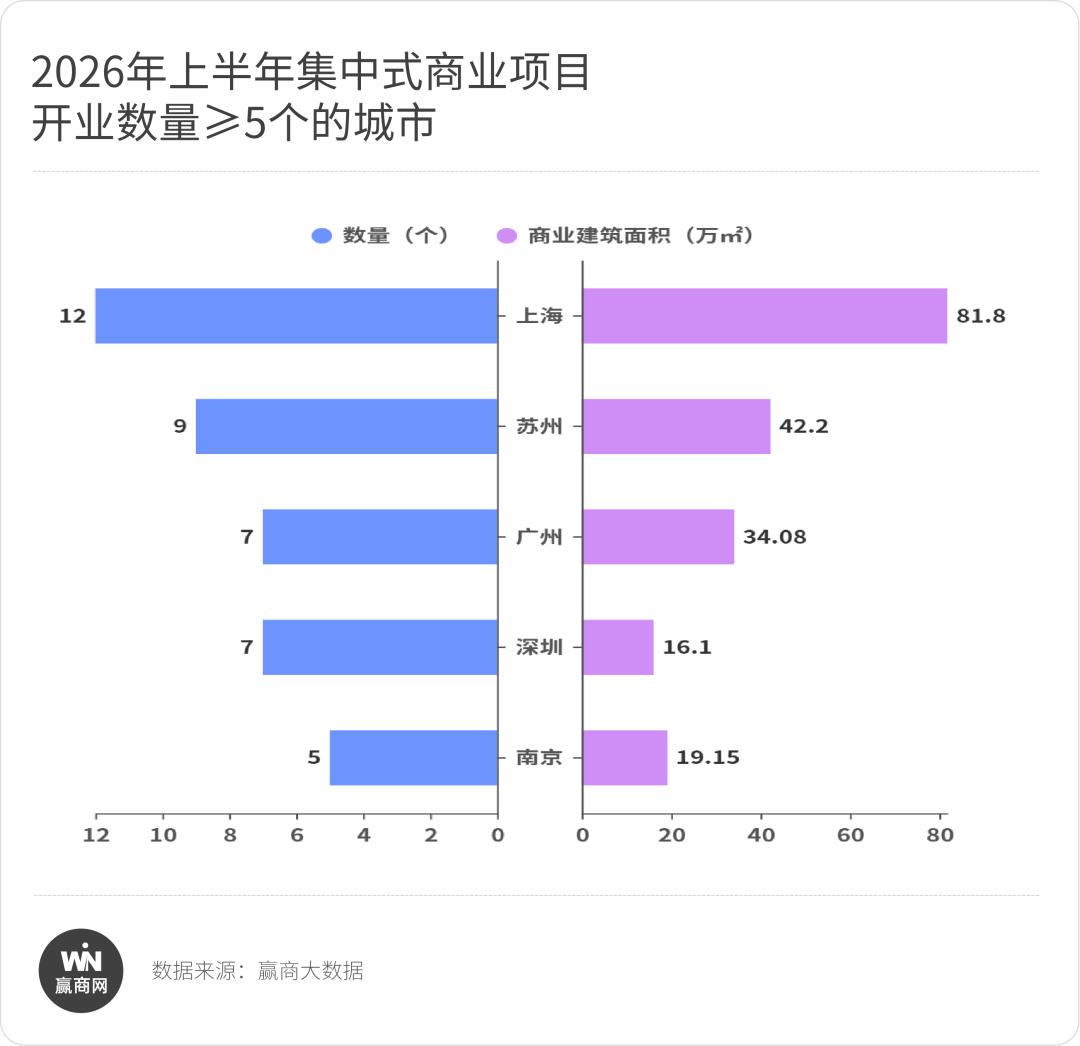
■ Seven cities launched 5 or more new projects, with Shanghai topping the ranking: In the first half of the year, seven cities opened 5 or more new commercial venues. Shanghai (12 projects), Suzhou (9 projects), Guangzhou (7 projects), and Shenzhen (7 projects) took the top four spots, followed by Nanjing which opened 5 new projects.
■ Small and medium-sized community commercial venues dominate the market: New projects in the first half of the year mainly focus on small and medium-sized community-oriented and theme-based developments. Projects with a floor area of ≤ 50,000 square meters are the most numerous, totaling 84 and accounting for nearly 55% of the total, while only 16 projects cover an area of over 100,000 square meters, making up less than 11% of all new openings.
■ Five commercial management enterprises launched 3 or more new projects, with Bailian taking the lead: Only five enterprises opened 3 or more new commercial venues in the first half of the year. Bailian Group led the pack with 5 new projects, followed by Xincheng Holdings (4 projects), Wanqianhui Commercial Management (3 projects), and CIFI Holdings (3 projects). Notably, Zhuhai Wanda Commercial Management recorded zero new project openings in the first half of the year, marking the first such instance in 16 years.
01.
High-end malls and outlet centers collectively pursue "expansion"
Unlocking new approaches to tap into incremental consumption
As competition in the high-end commercial sector becomes increasingly fierce and the suburban traffic dividend for outlet centers reaches its peak, both segments have chosen "expansion" as a breakthrough strategy. Through diverse models such as on-site expansion, new land development, and urban renewal, they are scaling up operations to unlock entirely new consumption growth.
In the first half of the year, multiple expansion projects were successively opened, including Phase II of Xiamen MixC, the West Zone of Wuxi MixC, the East Zone of Shanghai Zhangyuan, the Huamei Gathering Area at Phase II of Hangzhou Linping Bailian Outlets, Suzhou Bicester Village (Phase III), and Jinan Hainacheng Bailian Outlets (Phase II). The two sectors have adopted distinct expansion strategies, each carving out its own exclusive pool of new consumption opportunities.
High-end malls: Complementing business formats to cover the entire consumption chain
The East Zone of Shanghai Zhangyuan connects the West Zone of Zhangyuan, HKRI Taikoo Hui, and Shanghai China Resources Center through a nearly 100-meter "Corridor of Time", enabling seamless flow of high-net-worth visitors between venues. At the same time, it introduces trendy luxury brands such as Palm Angels, APEE, and Palace Skateboards, and hosts national debut limited-time events like the Barbie Summer Ice Pop-up, forming a precise complement to the luxury-focused West Zone. This allows the entire area to retain its top-tier luxury positioning while injecting a youthful, trendy atmosphere.
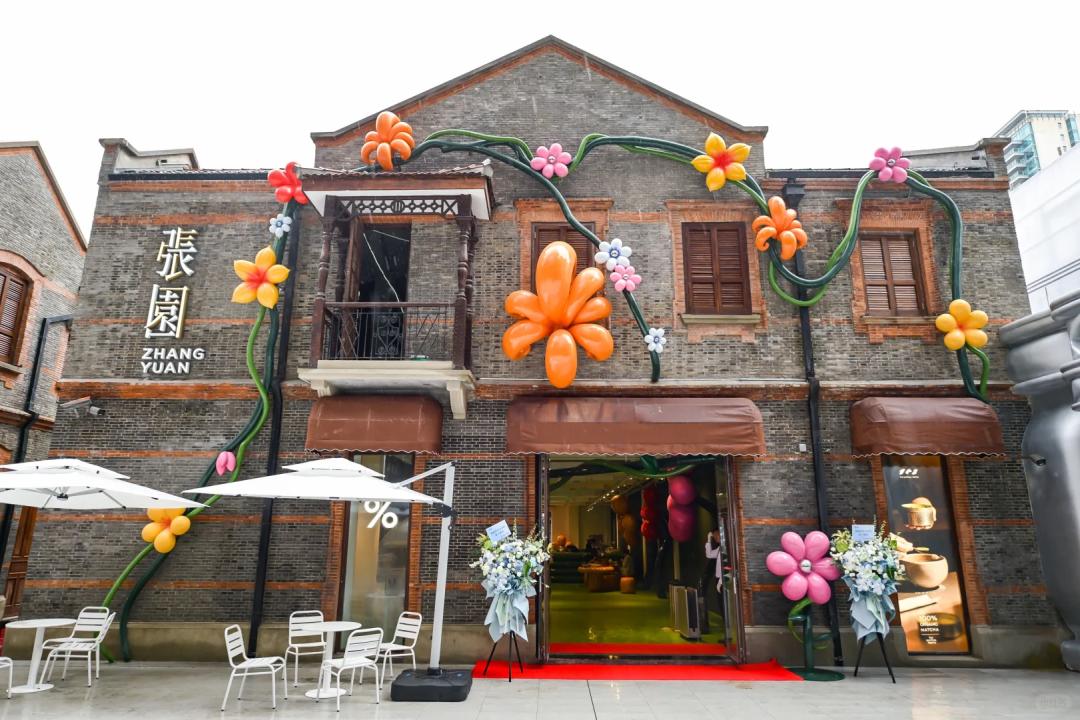
Image source: Official Xiaohongshu account of Shanghai Zhangyuan
Outlet centers: Upgrading from "simple discount venues" to "micro-vacation destinations"
The Huamei Gathering Area at Phase II of Hangzhou Linping Bailian Outlets breaks away from the traditional single model of pure brand discounting. With the theme of "Huamei Gathering", it creates an open commercial block centered on local elements such as the plum blossoms of Chaoshan Mountain and the ancient town of Tangqi, focusing on Jiangnan culture, local cuisine, and youth social interaction. It significantly increases the proportion of catering, leisure, and experience-oriented formats, transforming the outlet into a short-distance micro-vacation destination that covers weekend short-haul consumer groups from Hangzhou and surrounding cities.
02.
Community commerce emerges as a new hot track,
CR Land Mixc Life enters the market while Wanqianhui accelerates its expansion
Driven by multiple factors including policies, consumption trends, scenario innovation, and cost optimization, community commerce has entered a new explosive growth phase. Not only leading commercial management enterprises are accelerating their layout, but more and more regional projects are also shifting toward the "community commerce" model, making "community-oriented shopping mall development" a major industry trend.
In May this year, Jinan Huaiyin MixC Lane, the country's first "MixC Lane" community commercial project developed by CR Land Mixc Life and Jinan Chengtou Group, opened for business. This marks that CR Land Mixc Life has officially completed full product line coverage from high-end shopping malls to the community commerce segment.
Meanwhile, Wanqianhui, which focuses on the community commerce sector, is also growing rapidly. It launched 3 projects in the first half of the year, including Shanghai Binjiang Wanqianhui, Qingyuan Central Plaza, and Guiyang Zhengxi Plaza, covering first-tier to fourth-tier commercial cities and further consolidating its market share in the community commerce track.
In addition, multiple community commercial projects with segmented positioning were launched in the first half of the year, such as Shanghai Caohejing M+ Commercial Center, an AI smart community project focusing on "technology + commerce"; Shangrao CIFI Lane, which features a full range of parent-child supporting facilities and family-oriented consumption scenarios; Wuxi Liangxi Jinghai Plaza, themed on "down-to-earth vibes + trendiness"; and Shanghai Jing'an Daning Time Lane, focusing on light leisure and low-pressure experiences.
Going forward, the core competitiveness of community commerce lies in "accurate positioning" — how projects can achieve precise matching of business formats and scenarios through refined customer group segmentation.
03.
New hit cultural tourism commercial projects emerge,
Unlocking the top-tier appeal of irreplicable local culture
In the second phase of the cultural tourism commercial sector, the core competition no longer lies in simply replicating popular foreign IPs, but in the deep operational capability of "irreplicable local culture" — transforming local culture from a "decorative backdrop" into a core productive force that can be experienced, consumed, and shared. This is fully demonstrated by the two hit cultural tourism projects opened in the first half of the year: Sanya Haitang Story and Nanjing Jinling Changlefang. Both have built exclusive competitive barriers through deeply localized content, achieving immediate popularity upon opening.
Developed by the team behind Chengdu Kuanzhai Alley and innovatively adopting the dual-track model of "commercial complex + scenic service", Sanya Haitang Story is the city's first dining block with the highest density of Michelin/Black Pearl-rated restaurants! With all these advantages, Sanya Haitang Story has quickly become a top popular check-in spot since its first phase officially opened in February (the North Zone is expected to be fully completed by the end of 2026, and the entire project is scheduled to be fully delivered in 2028). Of course, Haitang Story does not copy the "Kuanzhai Alley" IP, but "allows culture to grow locally". Taking "tropical coastal lifestyle" as the core, it plans four commercial themes: Haitang Alley, Feast of All Flavors, Haitang Night Fantasy, and Art Center.
Nanjing Jinling Changlefang, which launched trial operations on the third day of the Lunar New Year, is East China's first immersive commercial space themed on Ming Dynasty culture. It takes the story line of "Ming Dynasty scholars boating to take the imperial examination", connecting the complete cultural route from "preparing for the exam" to "passing the exam and achieving success". Using Ming Dynasty official architectural elements such as vermilion columns and green decorative paintings, it integrates the "Forty Scenes of Nanjing in the Ming Dynasty" into the spaces on each floor. During the first three days of trial operation, passenger flow exceeded 220,000, total Spring Festival passenger flow surpassed 700,000, and the total number of views of related topics across all platforms exceeded 100 million.
Launching a grand urban cultural festival that integrates culture, art, trendiness, and down-to-earth vibes! Ningbo Xiushui Street received over 600,000 visitors in the first three days of its opening (May 29 to 31). With "integration of culture, business, and tourism" as its core direction, it emphasizes "content-based investment promotion" and "creator ecosystem". The project does not simply introduce commercial tenants, but selects brand owners and cultural co-creators who can co-create and resonate with the block.
04.
No longer blind renovation — stock redevelopment finds new breakthroughs!
Renewed old landmarks attract visitors from mature business districts through differentiated positioning
Surviving in the highly competitive Xujiahui business district, which is home to giants like Shanghai Grand Gateway 66 and Metro City, Pacific Department Store has re-entered the market after three years as "New 600 YOUNG". Abandoning its passive role as a "supplementary venue", it has undergone a full transformation across layout, space, and operations to become a "new urban family refined life experience commercial complex", creating four unique themed scenarios: "urban playground", "co-growing life hub", "urban social space", and "youth sports venue".
In Luohu Renmin South Business District, which carries the early consumption memories of Shenzhen residents, International Trade Tianhong has been transformed into "International Trade Spring". Adhering to the renovation concept of "preserving the old while empowering new vitality", the project avoids large-scale demolition and reconstruction. It retains the classic architecture of the International Trade Tower, while reorganizing the functional layout, optimizing and upgrading the facade and hardware supporting facilities, and increasing the proportion of catering and parent-child entertainment formats, striking a perfect balance between historical heritage and future development.
Transforming idle assets into rare commercial carriers — old warehouse clusters become 3A-level scenic spots
The long-dormant red brick old warehouse cluster has been transformed into a "National 3A-level Scenic Area". A series of innovations at Suzhou Wujian Meiluo Luxury-focused Center is truly impressive. It is not a fleeting internet-famous check-in spot; its positioning as a "hub for global premium products, world cuisines, and cultural exchange" endows it with long-term value. The park gathers national-themed pavilions including the UK Pavilion and Italy Pavilion, aiming to introduce 100,000 SKUs of international niche brands by the end of 2026. At the same time, it eliminates the traditional multi-layer agency system, retaining four core nodes: "global brand owners, Wujian Live Streaming Alliance, consumers, and Wujian Meiluo", to build a "win-win-win ecosystem".
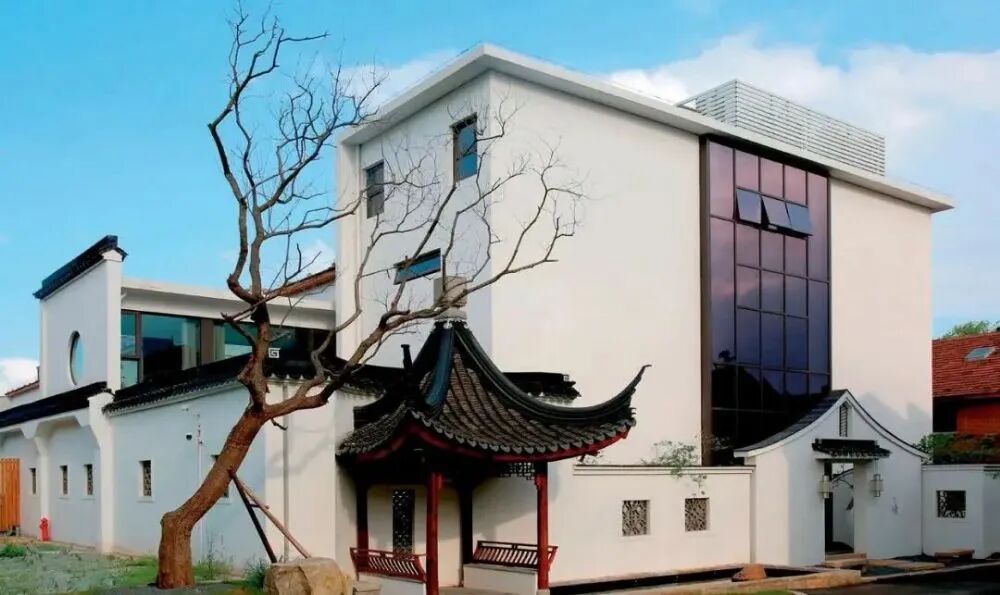
Image source: Official WeChat public account of Suzhou Meiluo Department Store
This article is from the WeChat public account "Winshang", author: Winshang Editorial Team, and published with authorization from 36Kr.