More and more home buyers choose to meet all their housing needs in one step.
In the first half of this year, approximately 520,000 new residential units (only counting ordinary homes, excluding villas) were sold via online signing across 35 key cities nationwide.
Behind this set of data, 520,000 families have actually cast their votes for the market with real money. The home purchase preferences of property buyers are hidden within these figures.
In the first half of this year, the 90-120 sq.m. segment remained the core transaction volume driver across the 35 cities, with a total of 212,000 units sold, accounting for 40.7% of the total.
This means that among all families who purchased homes this year, 2 out of every 5 opted for properties in the 90-120 sq.m. range.
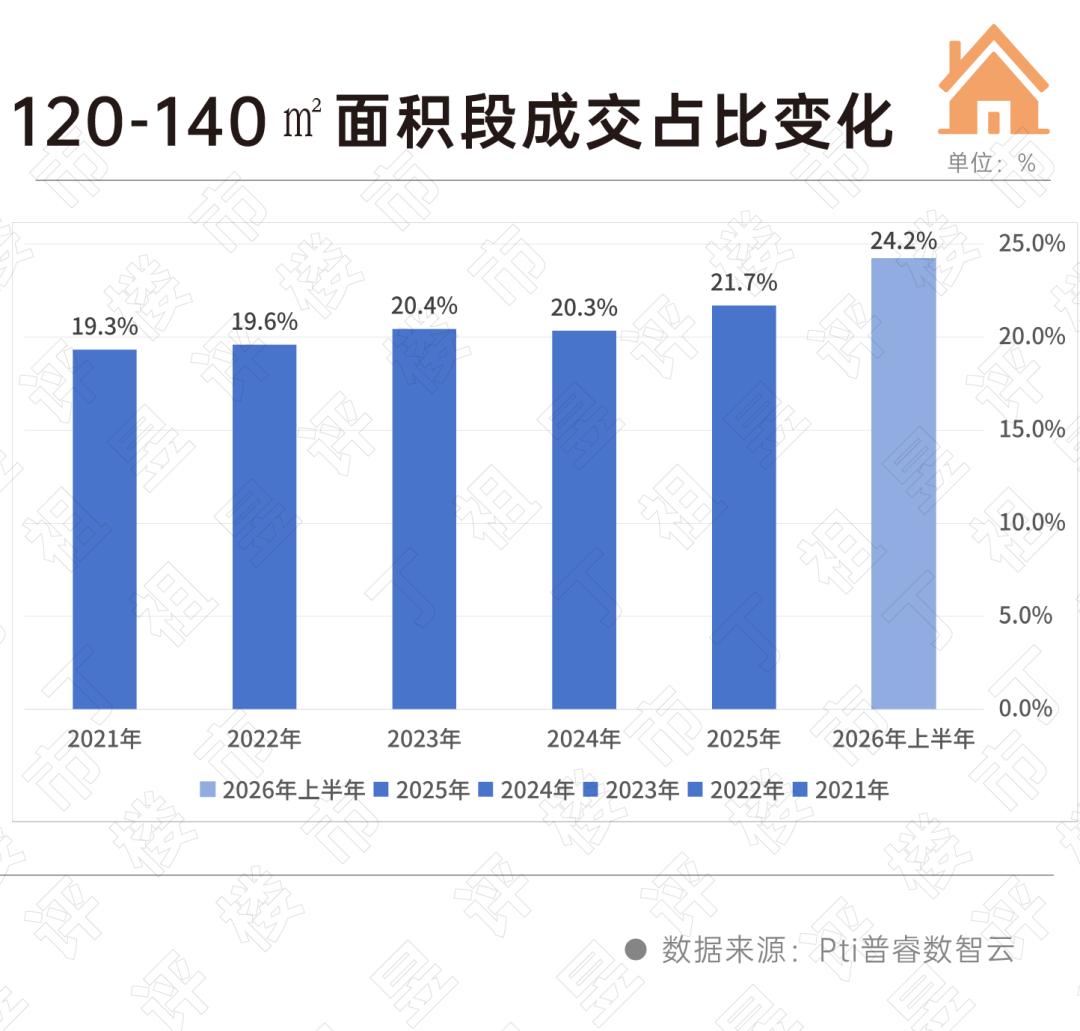
In terms of growth trends, the proportion of new home transactions in the 120-140 sq.m. segment saw the most significant increase among all size categories, reaching 24.2% in the first half of the year, up 3.3 percentage points year-on-year. The core of new home transactions is continuously shifting toward larger floor plans.
01
Taking 120 sq.m. as the threshold, the transaction share of properties larger than 120 sq.m. has risen compared to the same period last year, while the proportion of properties smaller than 120 sq.m. has continued to shrink.
Even with the relaxation of usable floor area policies and the increase in actual indoor usable space, upgrading-oriented housing demand continues to escalate, and new homes are iterating toward "premium living" products with more complete functions and richer spaces.
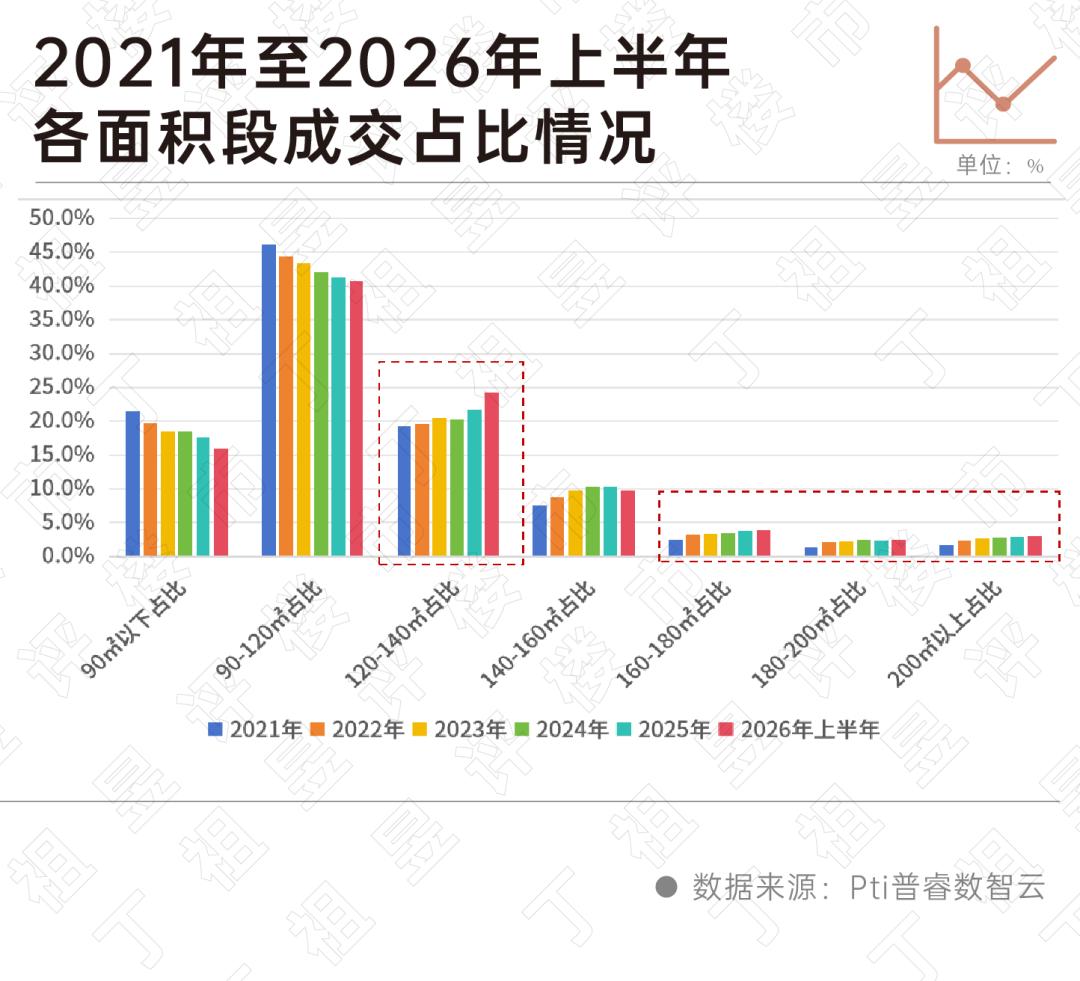
Upon further breakdown, the combined transaction share of properties in the 90-120 sq.m. and 120-140 sq.m. segments reaches approximately 65%, forming the foundational base of new home transactions.
Among these, the transaction weight of 120-140 sq.m. upgrading-focused properties has seen the most notable growth across all size segments, with 126,000 units sold in the first half of the year, accounting for 24.2% of total transactions — an increase of 3.3 percentage points compared to the same period last year, marking the highest transaction share in the past five years.
Why the 120-140 sq.m. segment?
This floor plan addresses the core housing pain points of mainstream upgrading families today: it eliminates the cramped feel of entry-level upgrading layouts, offering configurations of large three-bedroom or standard four-bedroom units that accommodate the living needs of nuclear families, two-child families, and even multi-generational households with elderly relatives. At the same time, it does not carry the excessively high total price of premium properties above 140 sq.m. Comparatively, properties under 140 sq.m. incur lower taxes: under current tax policies, properties below 140 sq.m. are subject to a 1% deed tax rate, units above that threshold face a 1.5% rate, and second homes are taxed at 2%.
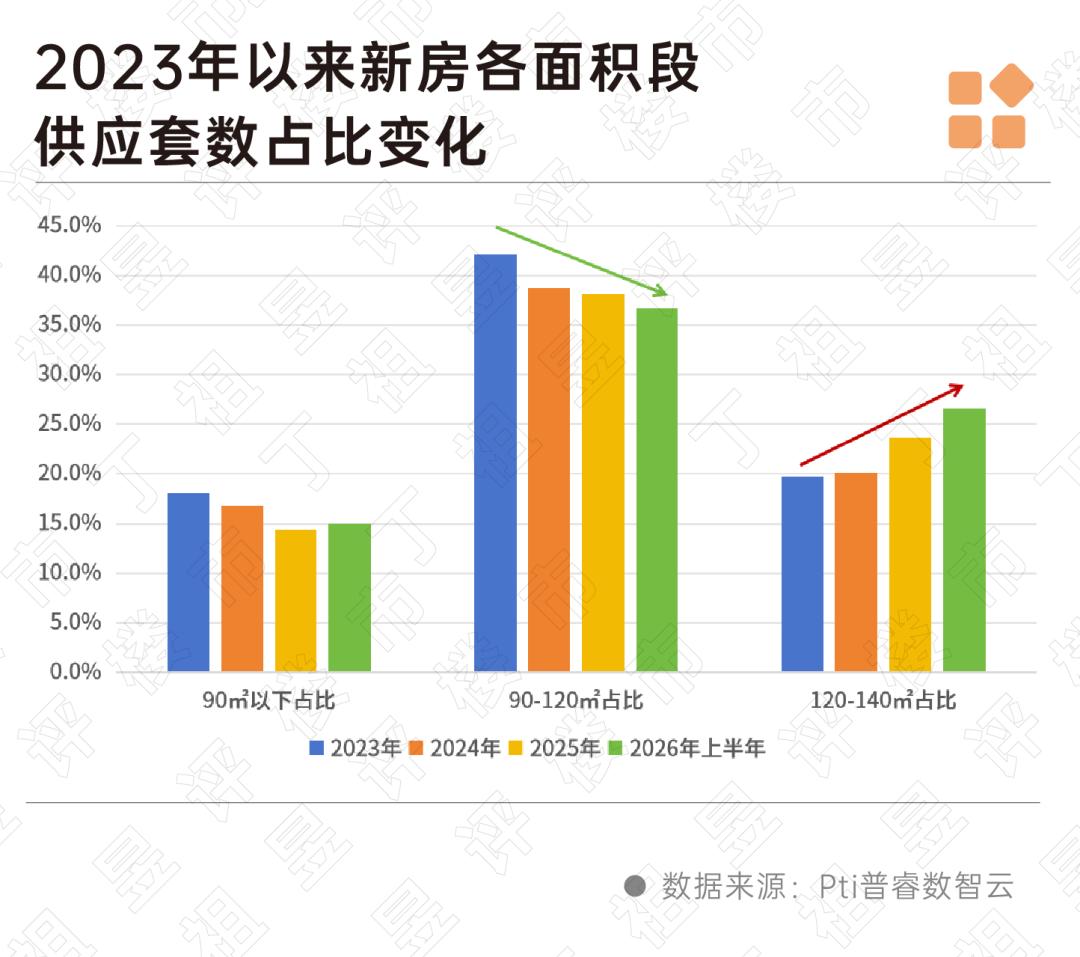
Developers' supply strategies are also tilting toward this size segment. The supply share of 120-140 sq.m. units has risen from 22% in the same period last year to 26.6%, representing the largest supply growth among all floor plan categories.
02
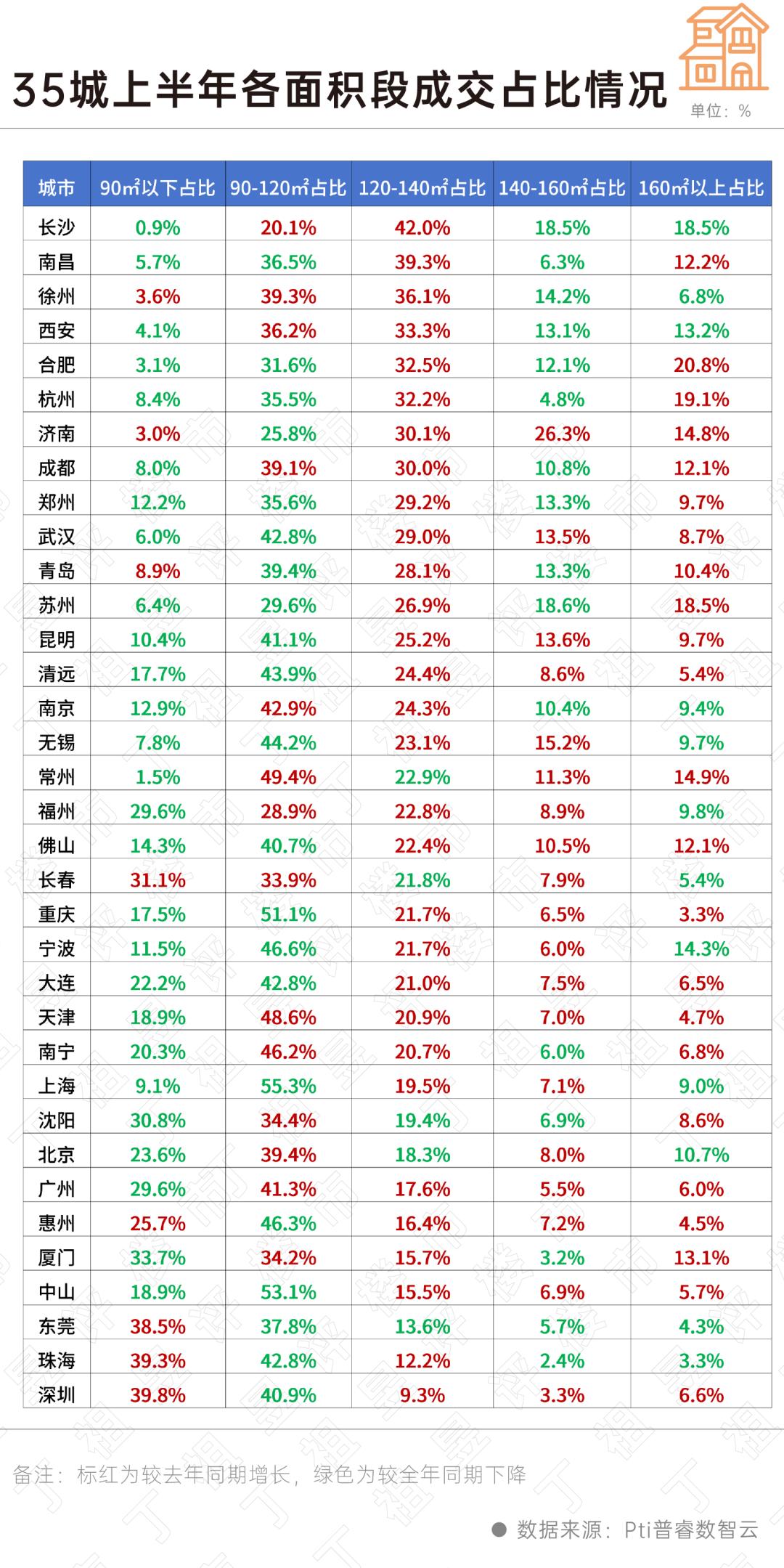
In terms of performance across individual cities, 12 out of the 35 key cities have a transaction share of over 50% for properties larger than 120 sq.m., with Changsha and Jinan both recording this segment's transaction share above 70%, indicating a clear surge in homebuyers' "one-stop fulfillment" housing demand.
Looking at the changes in transaction structures across different cities, their home purchase logics and product preferences have long developed distinct market trajectories.
Affected by high housing prices and supply constraints in first-tier cities, the transaction share of properties above 120 sq.m. remained below 40% in the first half of the year. In terms of changes, except for Beijing which saw a year-on-year decline in this segment's transaction share, Shanghai, Guangzhou, and Shenzhen all recorded an increase in the proportion of transactions for properties above 120 sq.m., with Shanghai's share rising 6.3 percentage points to 35.6%.
In three cities — Changsha, Hefei, and Nanchang — the core transaction floor plan has fully shifted to the 120-140 sq.m. range.
Changsha stands out as the most typical case: 6,259 units in this segment were sold in the first half of the year, a slight 1.2% year-on-year increase. Its transaction share has reached 42%, up 9 percentage points from the same period last year, the highest among the 35 key cities. Additionally, the transaction share of properties above 120 sq.m. in Changsha is approaching 80%, with upgrading demand fully dominating the new home market.
The structural reversal in Hefei is equally representative. In just one year, Hefei's new home core floor plan completed a full transition: from the 90-120 sq.m. mass market and entry-level upgrading dominance in the first half of 2025, it directly shifted to a 120-140 sq.m. upgrading-focused market, with the transaction share of this segment rising from 24.3% to 32.5%, making it the core transaction floor plan in the first half of the year. The foundational mass market demand continues to weaken, and upgrading has become the new mainstream of the market.
Nanchang has followed suit in this upgrading trend, with 120-140 sq.m. entry-level upgrading layouts firmly taking the lead in transactions, while the share of small-sized mass market units continues to shrink.
Cities like Xi'an, Hangzhou, and Chengdu have a more stable upgrading-focused housing structure, with the transaction share of the mainstream 120-140 sq.m. segment steadily staying above 30%. These cities share a highly consistent characteristic: small-sized mass market units are continuously losing market traction, and the transaction share of properties below 90 sq.m. has been compressed to less than 10%. Market purchasing power is highly concentrated in upgrading products that offer higher comfort and stronger functionality.
Against the nationwide trend of "larger floor plan upgrading", three Pearl River Delta cities — Dongguan, Zhuhai, and Shenzhen — have charted an independent market trajectory, with the transaction share of units below 90 sq.m. still close to 40%, a proportion that has even risen against the broader trend compared to the same period last year. Their core transaction floor plan remains below 120 sq.m.
The reasons lie in Shenzhen's high housing price thresholds and scarce land, which create high barriers for first-time and entry-level upgrading buyers to enter the market. Meanwhile, Dongguan and Zhuhai attract continuous inflows of young populations, and their low-total-price small units fit the needs of new residents settling down and seeking transitional self-occupation, forming a stark contrast with the housing replacement and upgrading logic seen in other cities.
As the new home market transitions from focusing on "having a home" to "owning a quality home", the market center of gravity is further tilting toward upgrading demand, small-sized mass market units continue to shrink, and the trend of homebuyers pursuing "one-stop fulfillment" property purchases in the new home market is becoming increasingly prominent.
The 120-140 sq.m. large floor plan segment has become the core growth driver for both new home transactions and developer supply. From the perspective of product competitiveness, this segment is expected to become the most fiercely competitive and rapidly iterating track in the new home market.
This article is sourced from the WeChat Official Account "Ding Zuyu's Real Estate Review", authored by the editorial team, and published with authorization from 36Kr.