QuestMobile 2026 Short Drama Marketing Industry Report: 800 million users underpin the value of short dramas, the differentiated landscape of channels and content has initially taken shape, and three major factors drive brand short drama marketing toward "refined and meticulous operation"
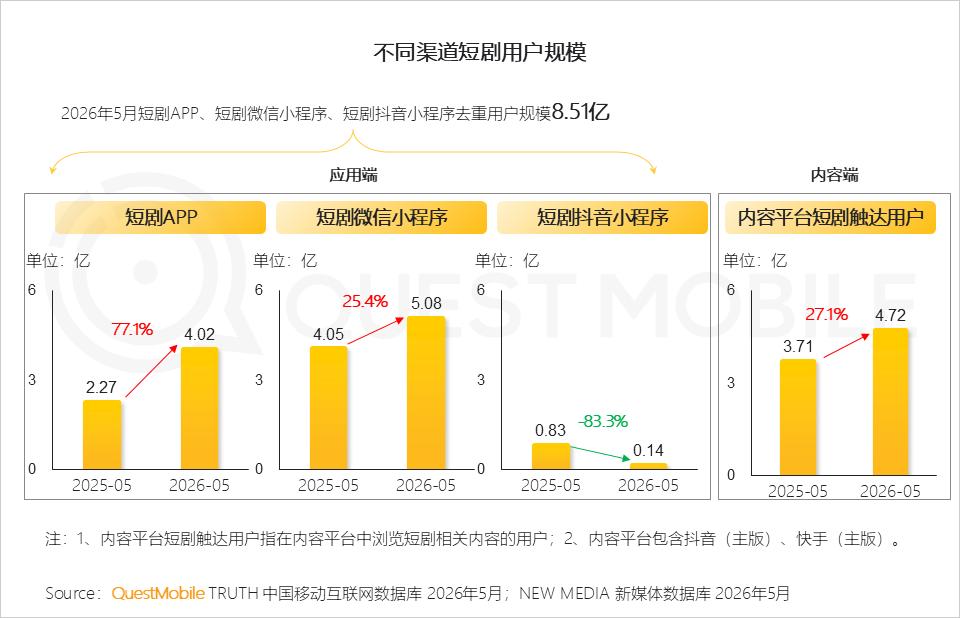
According to QuestMobile data, as of May 2026, the unique user base of the short drama industry has reached 851 million. Among them, the user scales of short drama apps, short drama WeChat Mini Programs, and short drama Douyin Mini Programs are 402 million, 508 million, and 14 million respectively, representing year-on-year growth of 77.1%, 25.4%, and a decline of 83.3%. Meanwhile, the number of users reached by short dramas on content platforms (main Douyin app, main Kuaishou app) is 472 million, with a year-on-year increase of 27.1%.
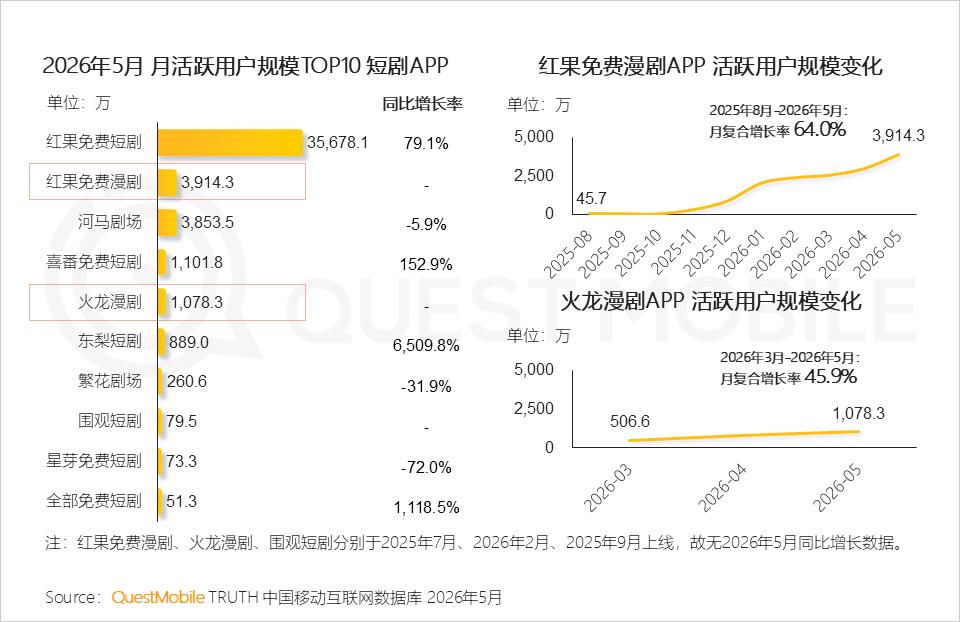
Specifically for short drama apps, the monthly active users of Hongguo Free Short Drama, Hongguo Free Comic Drama, Hippo Theater, Xifan Free Short Drama, and Huolong Comic Drama have reached 356 million, 39 million, 38 million, 11 million, and 10 million respectively. Among them, Hongguo Free Short Drama has achieved a 79.1% year-on-year growth, maintaining continuous rapid growth over the past year. Leveraging AI technology to build the advantages of low-cost and fast-output comic dramas, the Hongguo Free Comic Drama app and Huolong Comic Drama have grown from scratch to form an independent content track.
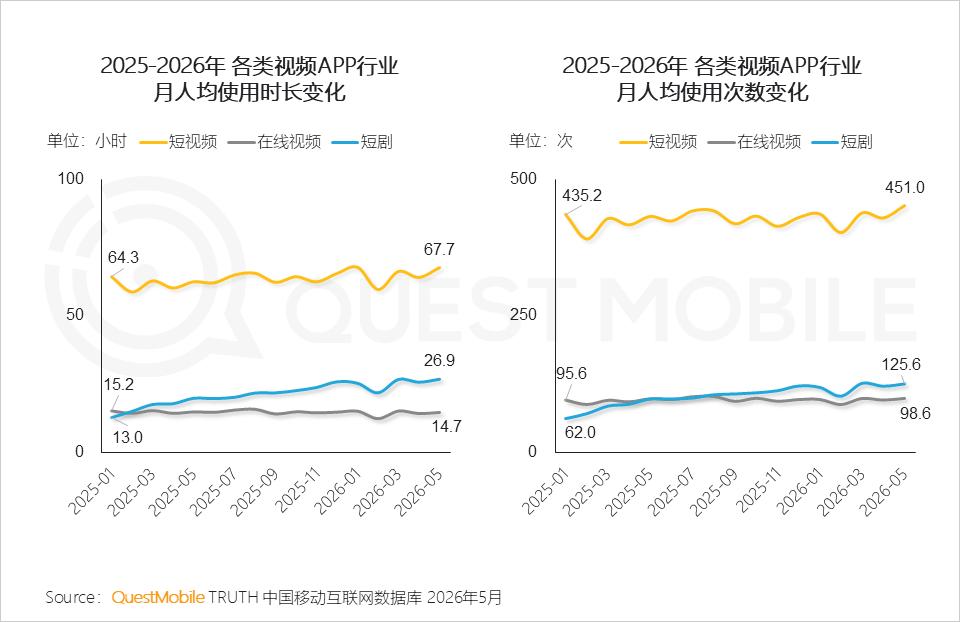
It can be said that in terms of user growth, short drama apps have become the core driving force, while content platforms and short drama WeChat Mini Programs continue to penetrate the market. This is further reflected in user stickiness: in May, the average monthly usage duration and average monthly usage times per user of short drama apps reached 26.9 hours and 125.6 times respectively, both exceeding those of online video platforms, and the gap is showing a widening trend.
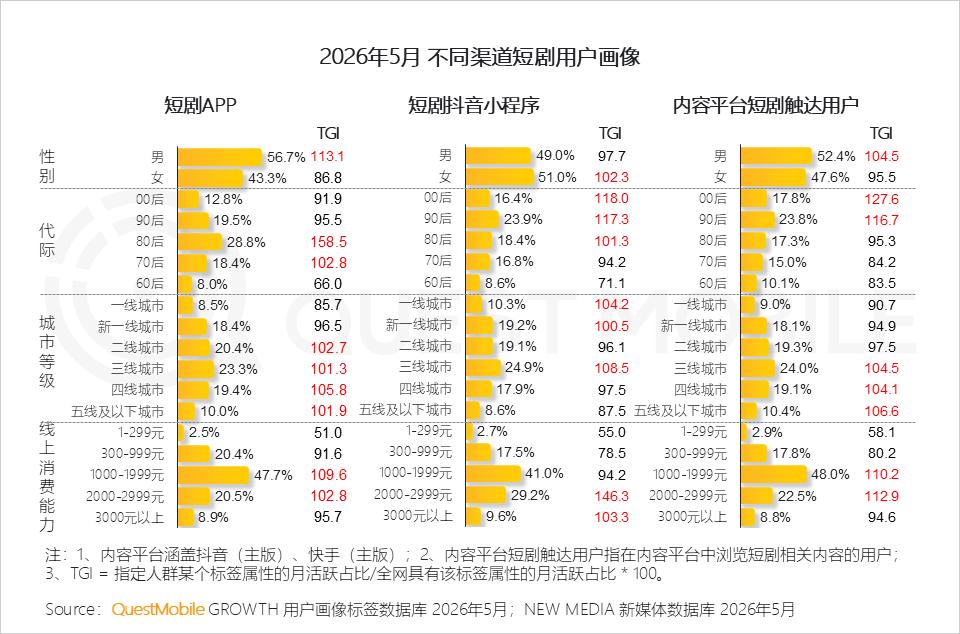
The user portraits across different channels have also presented a differentiated pattern: users born in the 1970s and 1980s account for 47.2% of short drama app users, and users from second-tier, third-tier, and fourth-tier cities account for 63.1%; among users reached by short dramas on content platforms, those born in the 1990s and 2000s make up 41.6%, and users from third-tier and lower-tier cities account for 53.5%.
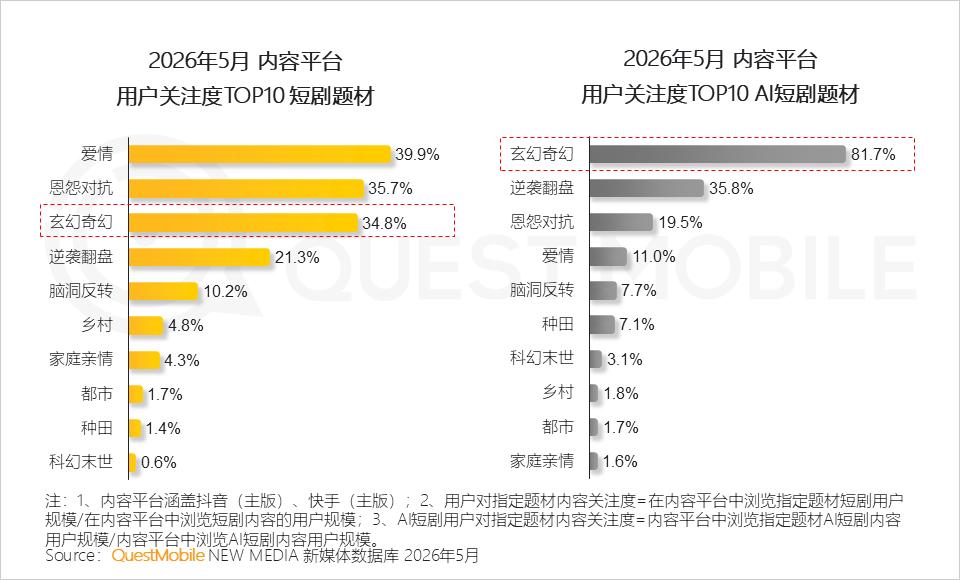
Looking more closely at content stratification, the differentiation among users of different short drama themes is even clearer. For example, in all short drama themes, the user attention shares of romance, revenge and confrontation, and fantasy and supernatural are 39.9%, 35.7%, and 34.8% respectively; while in AI short drama themes, the user attention shares of fantasy and supernatural, underdog comeback, and revenge and confrontation are 81.7%, 35.8%, and 19.5% respectively.
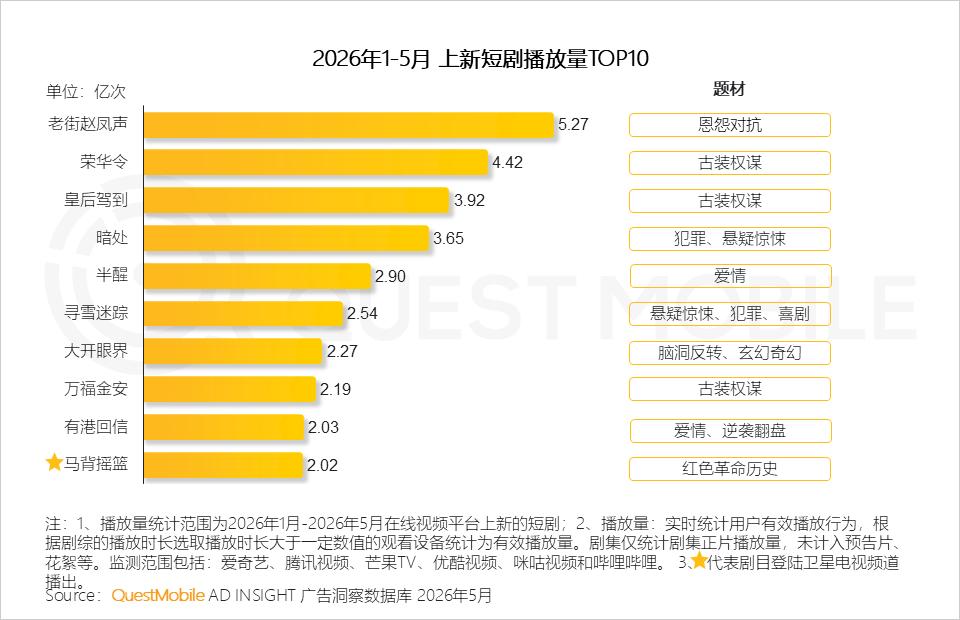
The differentiation of audiences across channels and themes brings different brand marketing values. Coupled with the explosive growth of short drama content, competition in the short drama industry has become more intense, with a clear trend of user traffic concentrating on top-performing works. For example, the top five newly released short dramas by play volume from January to May 2026 are *Old Street Zhao Fengsheng* (527 million views), *Ronghua Order* (442 million views), *The Empress Arrives* (392 million views), *In the Dark* (365 million views), and *Half Awake* (290 million views). Marketing resources are also concentrated on high-quality projects. At the same time, stricter regulatory requirements have made brand cooperation and investment more prudent.
These three major factors have pushed brand short drama marketing to shift from a "scattergun" approach to "precision cultivation"... To see how this is done, let's look at the report.
2026 Short Drama Marketing Industry Report Abstract
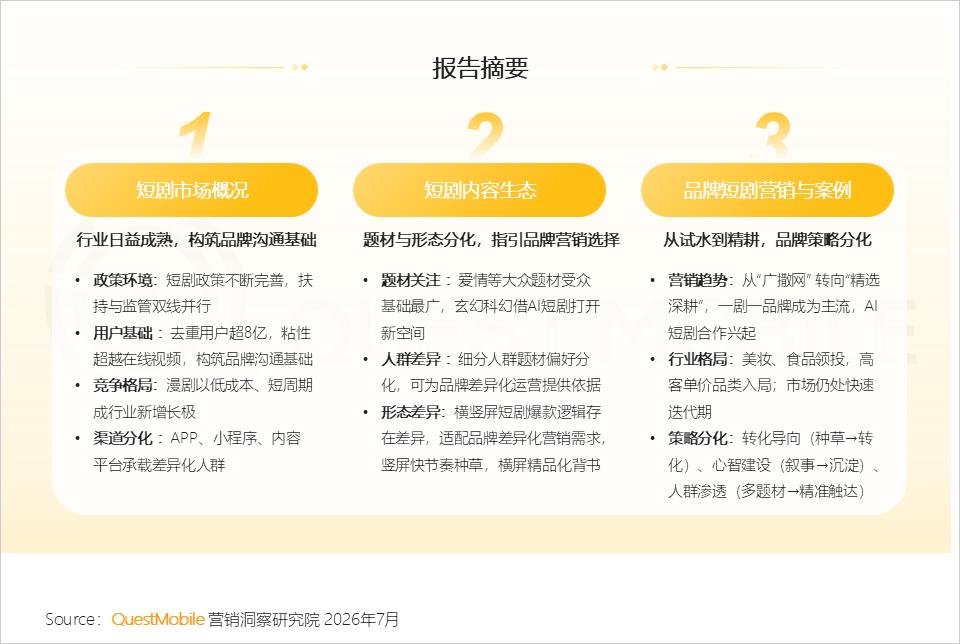
I. Market Overview: Short drama content forms are becoming increasingly mature, with continuous growth in user scale and stickiness, opening up multi-dimensional value for brands ranging from traffic exposure to content asset operation
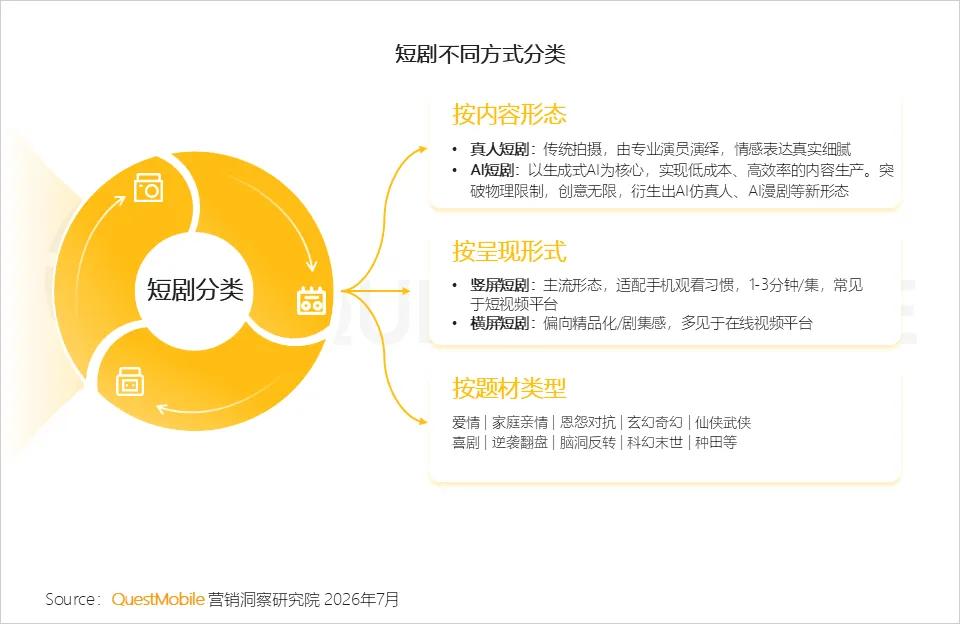
1. Short dramas have evolved from a single vertical-screen format to a diverse content ecosystem featuring both live-action and AI productions, as well as parallel vertical-screen and horizontal-screen works.
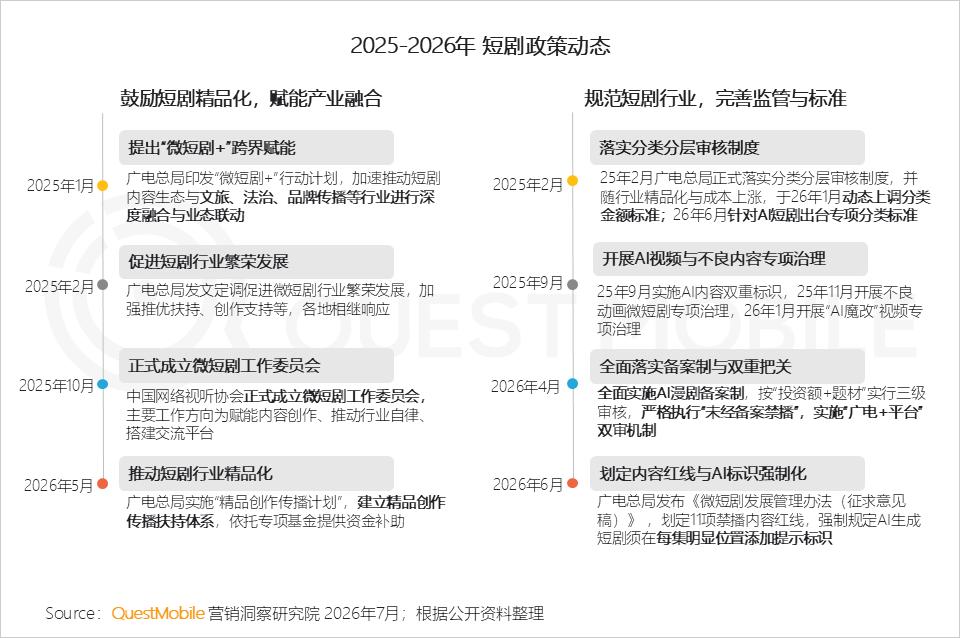
2. As the short drama ecosystem matures, the policy system has also become more complete, with both support and supervision advancing in parallel.
On one hand, high-quality creation programs and "micro-short drama +" initiatives are used to encourage industrial integration; on the other hand, AI short dramas and comic dramas are included in the classified review system, promoting the industry to shift from scale expansion to standardized operation.
3. The user scale of short dramas continues to expand, with unique users exceeding 800 million.
Different channels of short dramas undertake different functions: apps cater to deep users, Mini Programs support social fission, and short video platforms contribute to broad audience reach. Driven by the free-to-watch with ads model, short drama apps have seen the fastest user growth, while Douyin Mini Programs have shown a downward trend in users.
4. Short drama user stickiness has surpassed that of online videos, and the formation of the habit of watching short dramas has provided a user base for brands to carry out in-depth communication.
5. Different channels attract differentiated audiences, allowing brands to select marketing channels based on their target groups.
Short drama apps are more popular among users born in the 1970s and 1980s, with a medium consumption capacity; Douyin Mini Programs have a higher proportion of young users with above-average consumption power; users reached by content platforms are concentrated among those born in the 1990s and 2000s, showing more obvious characteristics of lower-tier markets.
6. Comic dramas have become a new growth engine for short dramas with their differentiated positioning, while providing new marketing options for brands.
Driven by AI technology, comic dramas have achieved explosive growth with lower production costs and faster output cycles, and have independently become a major content track. Two independent comic drama apps already occupy important positions among the top 10 short drama apps by active user scale.
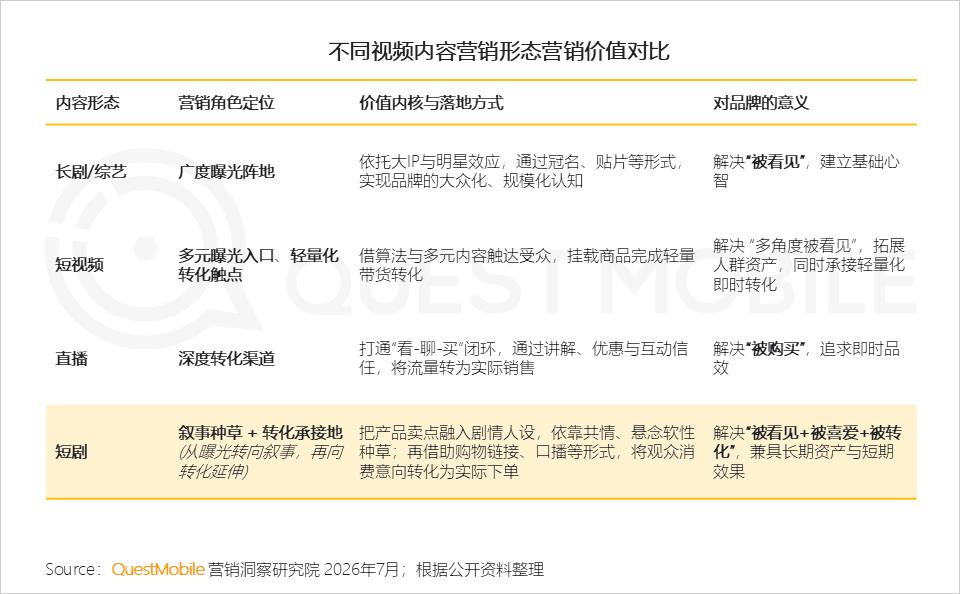
7. Short dramas have established a large-scale user base and marketing value. In a brand's video matrix, their unique advantage lies in shifting from simple exposure to narrative and extending to conversion.
In comparison, the core marketing value of long dramas/variety shows is broad exposure, short videos increase the entry points and forms of exposure, and live streaming adds channels for marketing conversion. These four formats have their respective roles and are not mutually substitutable. Brands can combine them according to their current marketing goals to leverage their respective strengths.
II. Analysis of Short Drama Content Ecosystem: The enrichment of the short drama content ecosystem provides brands with multi-level entry points from theme matching to channel layout
1. Short dramas on content platforms: There are clear group differences in users' content preferences for short dramas, which can serve as a basis for brand theme matching.
1.1 Mainstream themes such as romance have a stable audience base, making them a safe zone for brand short drama cooperation.
AI short dramas have an advantage in user attention for visually-driven themes such as fantasy and science fiction, providing brands with a new option to test differentiated themes at low cost.
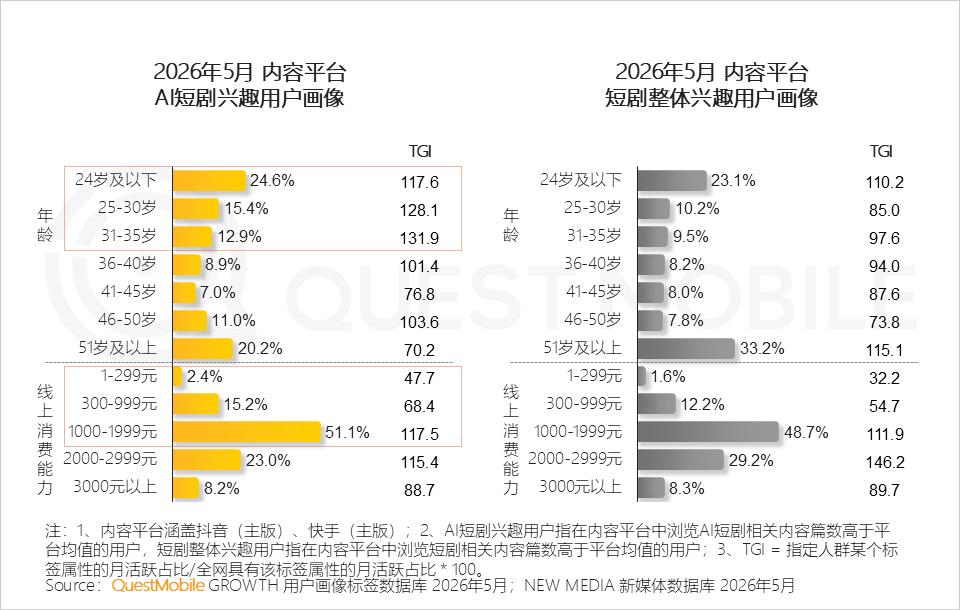
1.2 AI short dramas attract more young users, helping brands reach younger customer groups and are more suitable for promoting high-frequency, low-unit-price product categories.
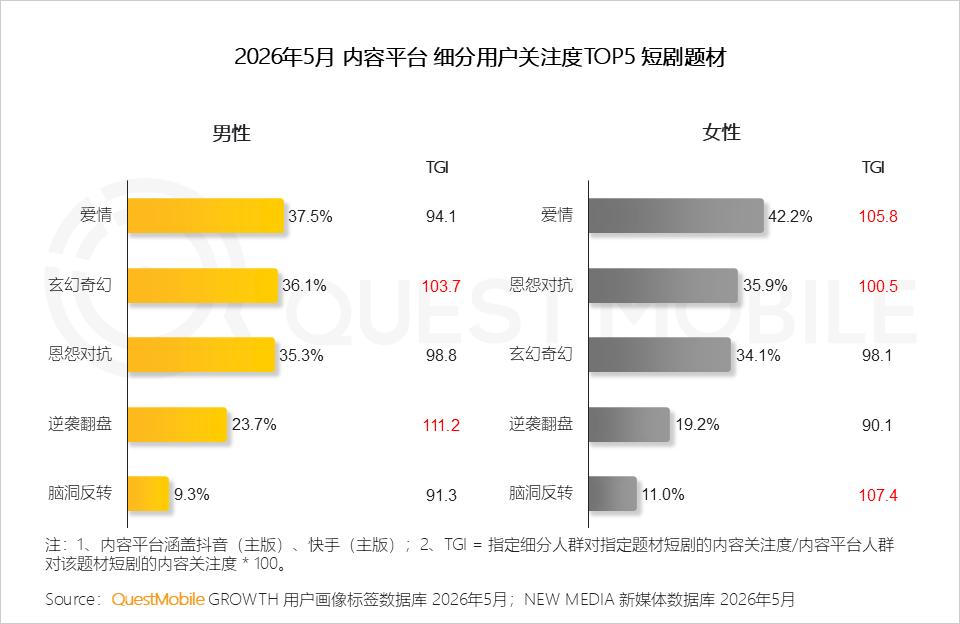
1.3 There are differences in theme preferences among different short drama audiences, and brands can choose themes based on their target groups.
For example, from a gender perspective, although both men and women pay the highest attention to romance themes, in terms of TGI (Target Group Index), men prefer fantasy and underdog comeback storylines, while women prefer romance and imaginative plot twists.
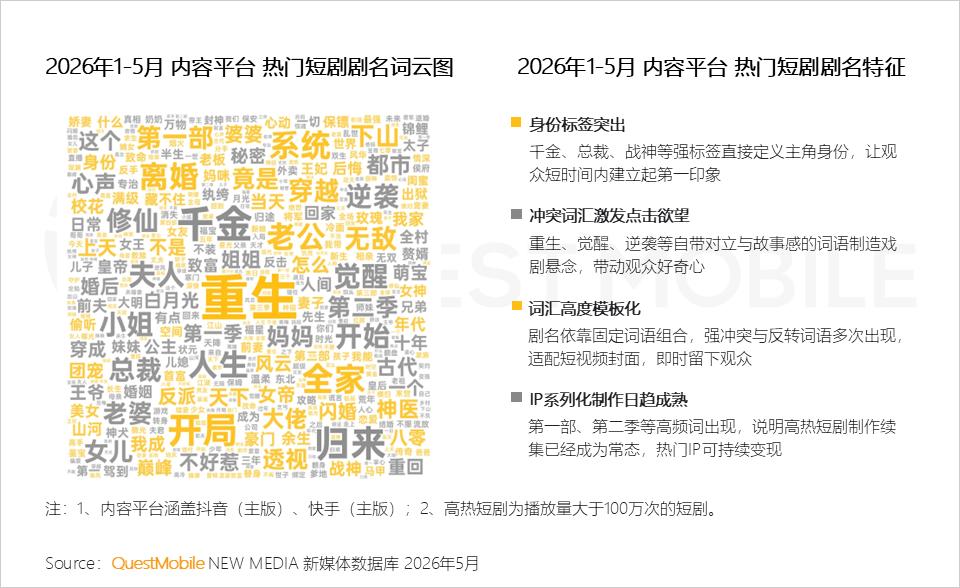
1.4 In terms of short drama naming, popular short drama titles generally adopt a straightforward "identity + conflict" structure to reduce user comprehension costs and improve drainage efficiency, which can be referenced for brand short drama naming.
2. Short dramas on online video platforms: The proportion of short dramas in the platform's content matrix is increasing, making them a high-quality marketing position for brands.
2.1 Online video platforms continue to release new short dramas, and short dramas have been incorporated into the platform's regular content supply.
Brands' placement choices on online video platforms are extending from traditional pre-roll ads and mid-roll ads to the new format of short drama cooperation.
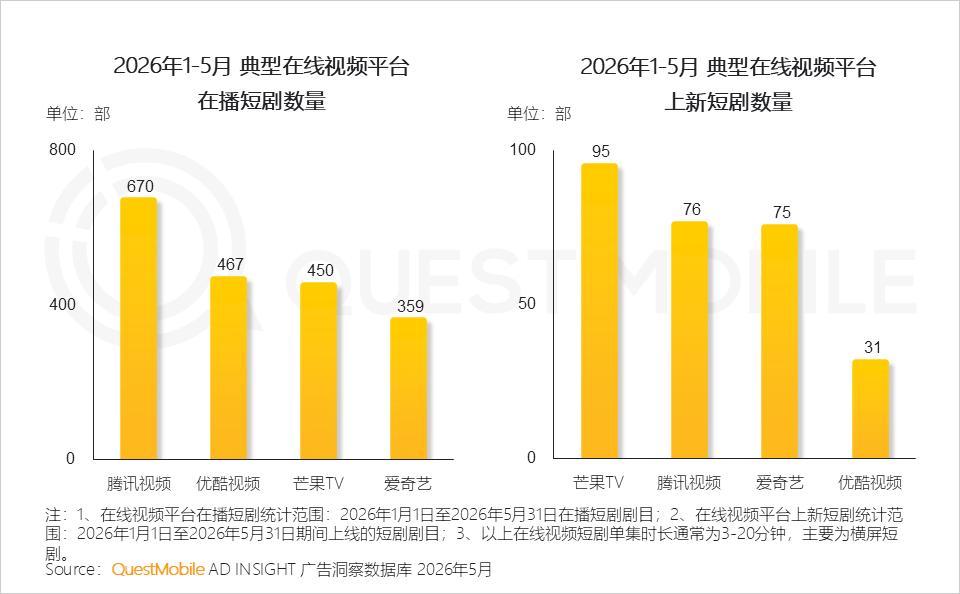
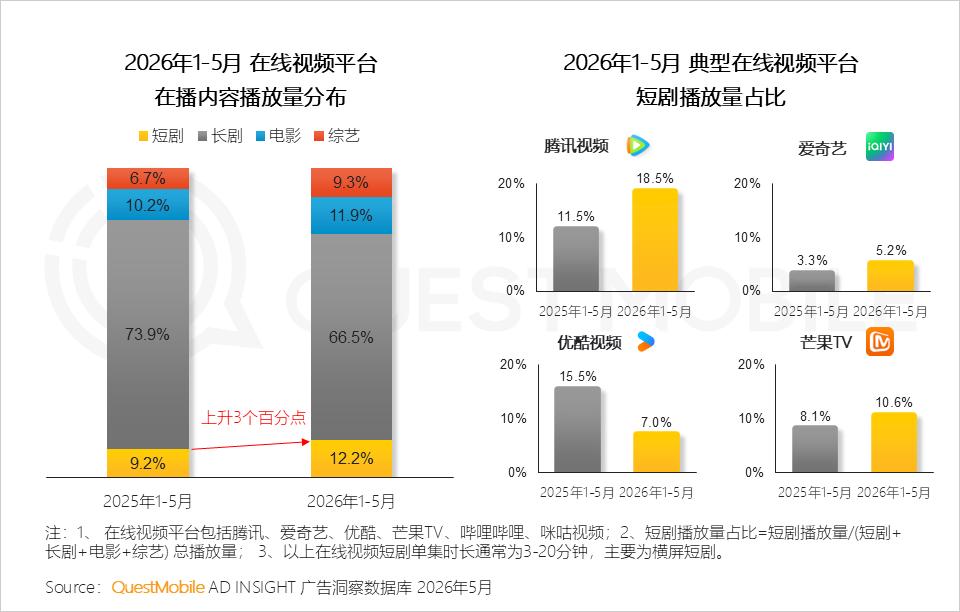
2.2 The proportion of short drama views on online video platforms is rising, and brands' exposure opportunities in this scenario are expanding simultaneously.
2.3 Popular short dramas on online video platforms have rich and diverse themes, and traffic is concentrated on top-performing works.
This top concentration means that focusing on verified top-performing projects is more certain for brands than testing with a scattergun approach.
2.4 Comparing vertical-screen and horizontal-screen short dramas, their hit-making logics are different. Brands need to select the appropriate short drama format according to their own marketing needs to maximize marketing efficiency.
Vertical-screen short dramas excel with dense information nodes and instant emotional satisfaction, making them more suitable for brands to quickly attract user interest; horizontal-screen short dramas stand out with exquisite production and full narrative, making them more suitable for brand quality endorsement and in-depth user communication.
