Tesla, the knife is already at your throat.
Whenever a major crisis strikes, there is bound to be an "open source" move. Last weekend, when Elon "Open Source" Musk officially announced that Tesla plans to fully open source its flagship models Model S and Model X, which it has already decided to discontinue and phase out, including their design blueprints and software systems, the author already realized that this old rascal must have run into some serious trouble again?
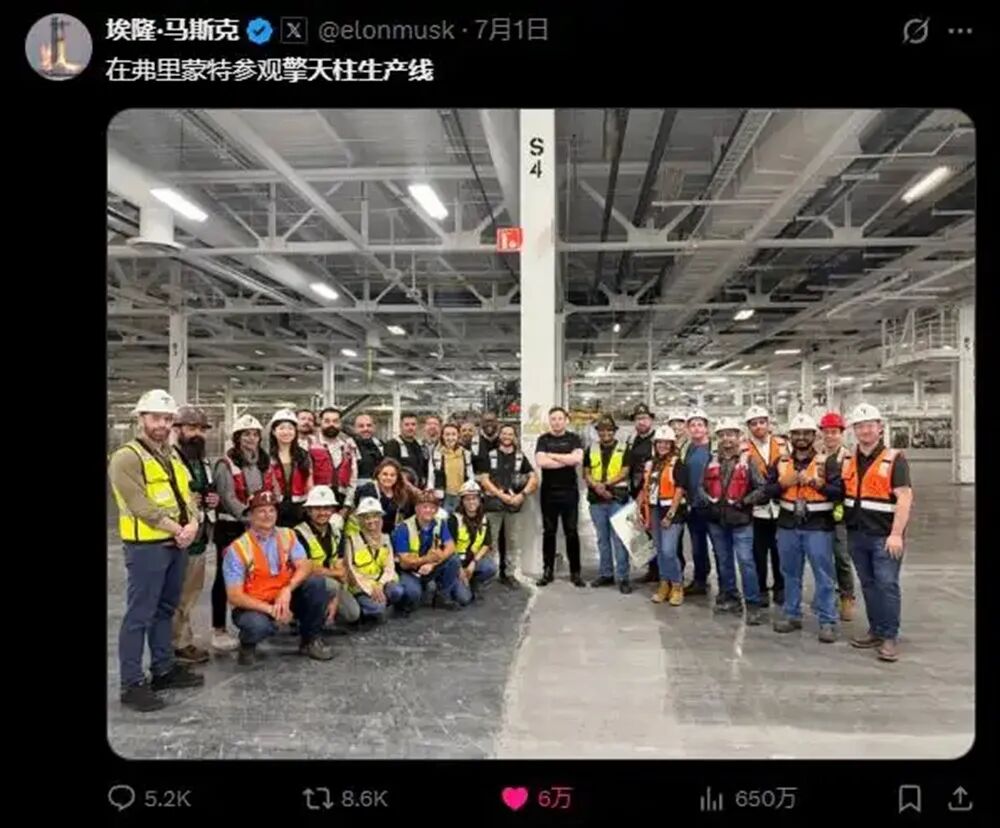
▲ Bad news: Earlier this month, the Model S and Model X assembly lines at the Fremont Factory were completely dismantled, and the site will later be converted into a production base for the Optimus humanoid robot
This is not groundless speculation, because Musk's exact words on the X platform on July 24 were: "Just like we open sourced the design and software of the original Roadster, we also plan to do the same for the Model S and Model X." It sounds grand, but pay attention to the timeline — the Model S and Model X were officially discontinued in the second quarter of this year, and the relevant production lines at the Fremont Factory have been dismantled and repurposed for the Optimus humanoid robot and Cybercab self-driving taxi.
In other words, what "Open Source Musk" is preparing to "open source" this time are actually two end-of-life discontinued vehicles whose original production lines no longer physically exist.
Some curious people have dug up old records: In November 2023, Musk grandly announced that "all designs and engineering of the original Roadster have been fully open sourced", claiming that "everything we have, you now have too". But according to subsequent results, that "open source" farce actually only released 8 files without any open source license. As for the open source prospects of the Model S/X, the industry generally expects that it will most likely still be a combination of several CAN databases, diagnostic software ISO standards, some circuit board Gerber files, and disclaimers, while core assets such as autonomous driving systems, drive units, and battery packs will not be truly opened up.
Mr. Musk's "open source" is undoubtedly a periodic marketing metronome — whenever the main business faces heavy regulatory pressure or public opinion crises, the news that "we are going open source" will ring on schedule.
Recently, the U.S. National Highway Traffic Safety Administration (NHTSA) has been steadily advancing its engineering analysis investigation (Investigation Project EA26002) into Tesla's Full-Self Driving (FSD) driver assistance system. The 24 document requests issued on July 2 set August 12 as the final deadline for responses. If delayed, Tesla will face a fine of $27,874 per day, with a maximum cap of $139 million.
On the judicial front, U.S. courts have previously ruled that Tesla must pay $234 million in compensation for multiple incidents where drivers were killed due to FSD malfunctions. All of Tesla's related appeals have now been rejected.
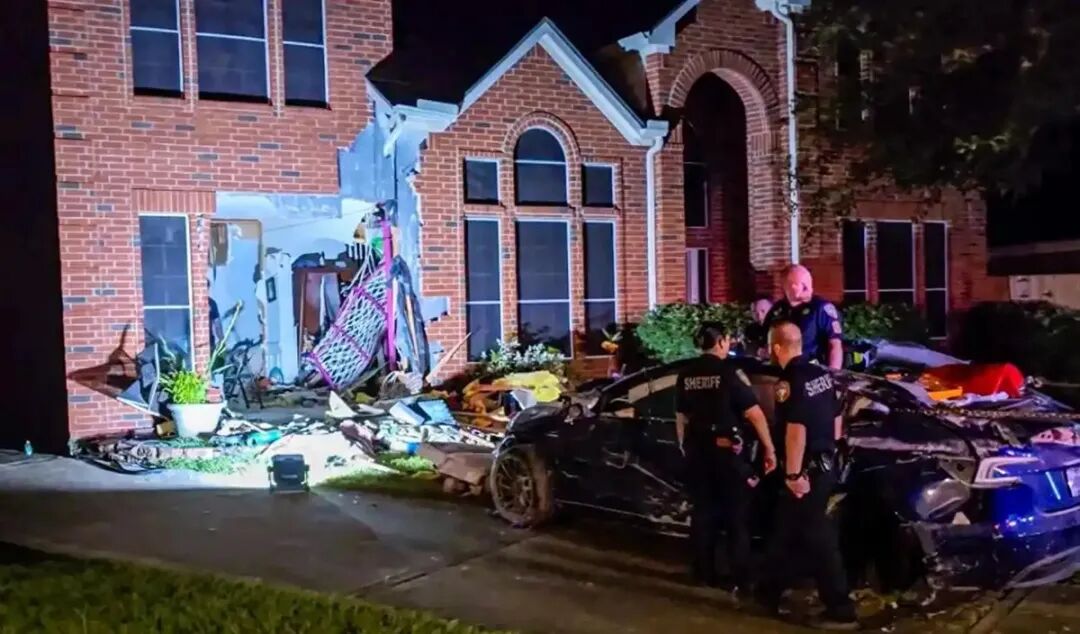
▲ On the night of June 19, 2026, a Tesla crashed into a private residence in Katy, Texas, killing a 76-year-old man. The driver stated that he was using the partial autonomous driving system at the time
With all these negative issues piling up, the obvious purpose of throwing out the Model S/X "open source" announcement at this critical juncture is self-evident, and the timing is coincidental enough to be laughable.
Of course, "open source" itself is not a bad thing. The release of discontinued vehicle data does have value for existing owners and third-party repair shops. But when a company turns this trick into a preemptive narrative tool every time it encounters a problem, it deserves to be examined under a microscope: Are those real, imminent problems once again being covered up by the fireworks of another "open source" announcement?
What this article aims to do is to sort out the full context of EA26002, the fundamental bottlenecks of FSD's pure vision approach, and Tesla's real situation under dual pressure from regulation and the judiciary, by stripping away all the false illusions created by the "open source grand event".
01 Musk is in Deep Trouble
Essentially, all the problems Tesla is currently facing stem from the inherent flaws of FSD, the intelligent driving assistance function provided by the Autopilot hardware system. These flaws manifest as the system effectively becoming "blind" when encountering sudden light and dark changes, or drastic drops in visibility caused by fog or dust, greatly increasing the accident rate.
In the EA26002 investigation summary, NHTSA's Office of Defects Investigation (ODI) narrowed the issue down to a very specific technical proposition: When road visibility decreases, can FSD's degradation detection system promptly perceive its own performance decline and leave the driver enough reaction time before a collision occurs?
Official documents point out that the core of the problem is that "FSD/Autopilot is a driving assistance system that relies entirely on visual cameras and related software to perceive and respond to the road ahead". Since mid-2021, it abandoned the traditional camera + radar model and adopted a very aggressive pure vision Tesla Vision solution, deploying a set of degradation detection systems via software updates.
The consequence of this radical move is that the entire system becomes extremely unreliable when facing sudden drastic changes in visibility/visual conditions. So far, the ODI has confirmed 9 accidents caused solely by sudden drops in visibility. In every single one of these accidents, FSD suddenly lost track of the vehicle ahead or failed to detect it at all. Regarding these issues, the lead investigator described in the report: In the reviewed accidents, the system failed to detect common road conditions that impair camera vision, "and also failed to provide alerts when camera performance deteriorated until the collision was imminent".
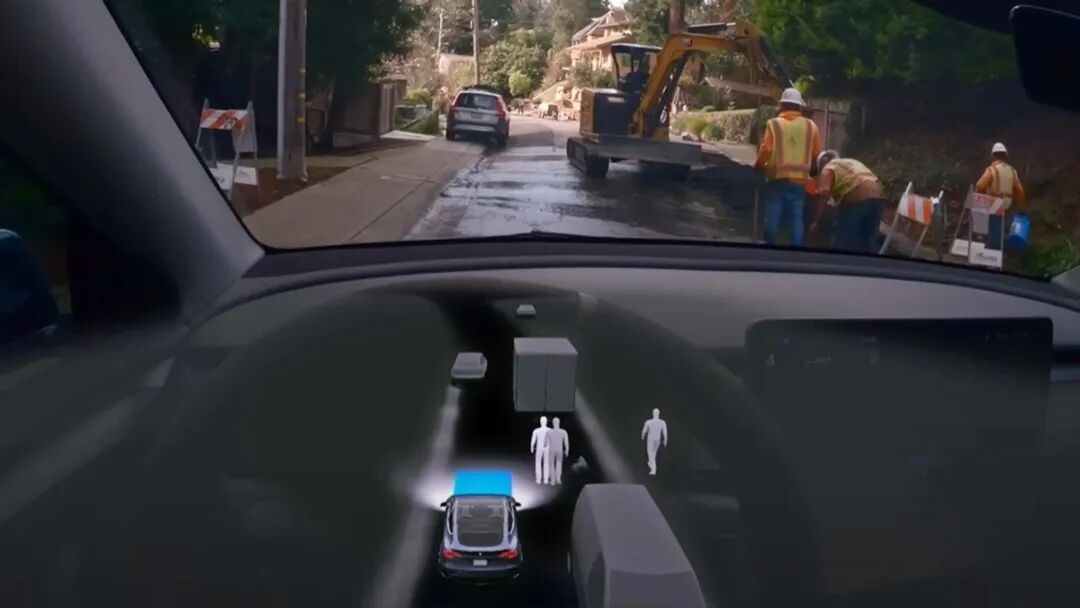
There have been many signs so far that Tesla has adopted a evasive and delaying attitude towards its own system problems. For example, in the fatal accident on the highway between Flagstaff and Phoenix, Arizona, on November 28, 2023, which killed an elderly man who had gotten out of his car to direct traffic, Tesla took a full seven months to submit its autonomous driving regulatory report (Standing General Order, SGO) to NHTSA. The day after submitting the report, Tesla began developing an update for the degradation detection system to address the cause of the accident.
In discussions between the ODI and Tesla regarding the above issues, Tesla also acknowledged that if the system had been updated earlier, the outcomes of 3 out of the 9 accidents could have been different. In addition, the limitations of Tesla's internal data and labeling system make it impossible to uniformly identify collision events when FSD is active, which the ODI believes may lead to the undercounting of related accidents in statistics. As for these emergency situations caused by "camera performance degradation", the ODI believes they could have been avoided if the system had redundant sensing methods other than vision, such as millimeter-wave radar.
In fact, the various document requests that officials have required Tesla to submit already contain the intention of clarifying the facts and distinguishing responsibilities. For example, Tesla was explicitly required to submit an internal document titled "Radar Saves Us", along with all internal communications, technical documents, test records, and raw experimental data related to it. This file name had never been made public before and was privately submitted by Tesla to the regulator during the initial investigation phase. The ODI pointed out in the letter that this document is "highly relevant to the relevant design changes of the degradation detection system and Tesla's understanding of the limitations of the pure vision OEDR system".
Of course, the official investigation also focused on Tesla's longstanding problem of overhyping its products. For example, the 12th document request explicitly requires a line-by-line review of 15 core promotional statements about FSD released by Tesla and Musk, to confirm whether each one "implies a level of automation beyond the system's current actual capabilities". The 14th item focuses on a major change Tesla made in 2024, when it downgraded the "FSD perception failure" alert from a red warning icon with a loud alarm sound to a yellow icon with no audio alert.
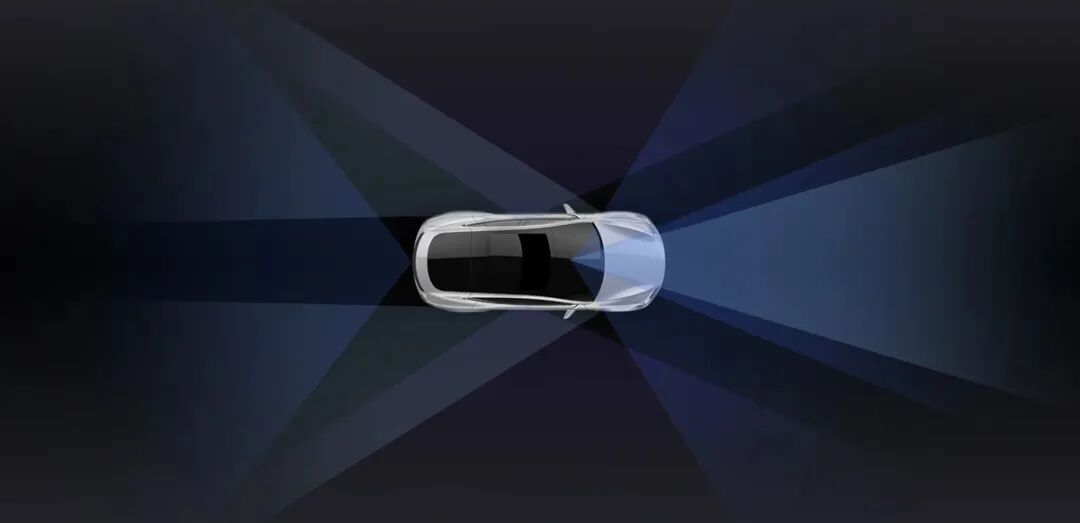
▲ The coverage area of the Model 3's on-board optical sensors
Tesla must provide a complete response by August 12. Otherwise, in addition to the huge fines mentioned above, officials have hinted that there will be "other additional penalties". It is worth noting that all written responses to these 24 items will be under "oath" under the U.S. judicial system, and can later be used as directly cited evidence in subsequent civil lawsuits.
02 Physical Bottlenecks and Real-World Dilemmas of the Pure Vision Approach
Putting all the clues together, the problems facing Tesla's current FSD system all seem to point back to the same starting point: the 2021 architectural decision to fully transition to pure vision. Originally, the FSD system had millimeter-wave radar as an auxiliary sensor to work in coordination with the cameras.
Simply put, this is a tragedy caused by the physical perception ceiling of a pure vision intelligent driving system combined with the failure of the system's warning mechanism. Let's first talk about the physical perception ceiling problem under the pure vision scheme.
As we all know, visual cameras are passive sensors that rely on ambient light and object surface texture. Their ranging is calculated through multi-frame parallax rather than direct physical feedback. Glare, dense fog, dust, unlit night conditions, low-texture or light-absorbing objects — these are exactly the common inducing factors of the nine accidents linked to EA26002. The temporary "blindness" of cameras under these conditions is essentially not an algorithm bug, but a probability distribution problem determined by the sensing principle. Neural network fitting can achieve smooth performance in most scenarios, but long-tail failures are precisely concentrated in that small set of critical scenarios that humans can handle but pure vision systems suddenly lose functionality in.
In addition, the current FSD/Autopilot system also suffers from insufficient hardware performance of its optical sensors.
Former Waymo CEO John Krafcik publicly pointed out during the 2026 CES that among the seven cameras in the existing system, only one has a narrow field of view and strong recognition capability, while the rest are wide-angle cameras. To put it metaphorically, the actual imaging quality is only equivalent to human vision at the 20/60 to 20/70 level.
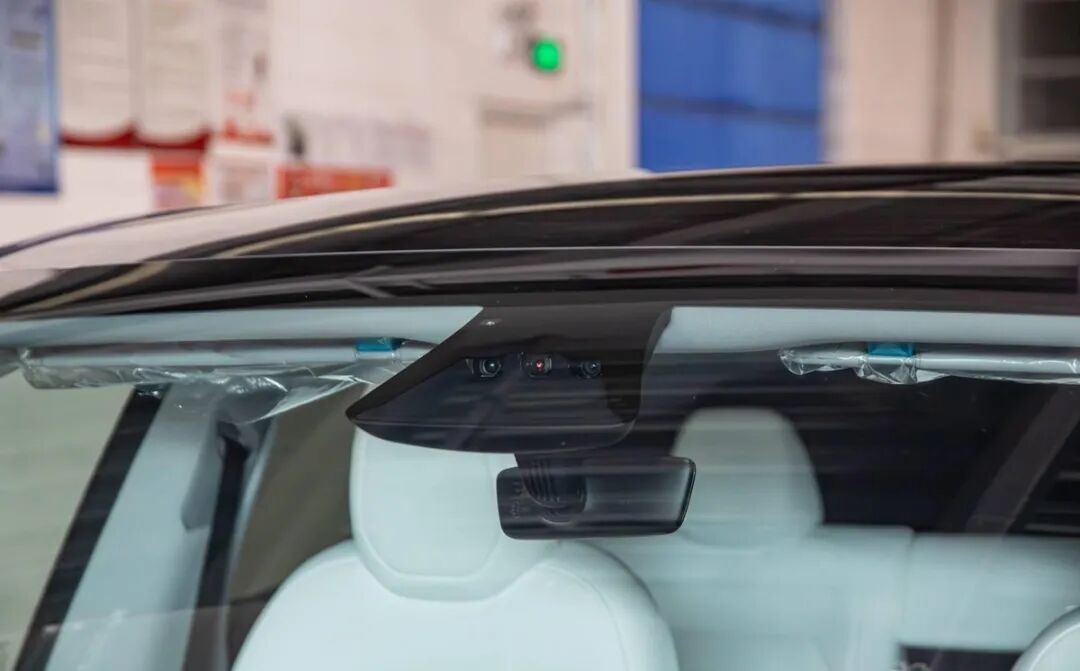
▲ The camera modules equipped on Tesla Model 3/Y are already completely behind in performance by 2026 standards
According to the standard Snellen visual acuity fraction system in optometry, this system is only equivalent to human 20/60 to 20/70 vision. Converted to the familiar decimal/5-point vision notation system, that is 0.33/5.52 and 0.29/4.47 respectively. In short, according to Chinese traffic laws, this level of vision requires correction to at least 0.8 before a person is allowed to drive on the road.
Although this evaluation is sharp and inevitably smacks of professional jealousy, it aligns in direction with the ODI investigation's conclusion that "the system failed to detect the vehicle ahead" — after all, it's basically "nearsighted".
In addition to the problem of upper limits on perception capabilities, the failure of degradation detection and warning mechanisms is also a key factor leading to the problems. This is also the core content of the EA26002 investigation.
First of all, the core of this problem is not whether the camera can see, but whether the system can promptly inform the driver when the camera cannot see. According to the ODI public summary, the existing system either fails to detect the degraded state under low visibility, or only alerts the driver moments before the collision. The deeper problem is the chaos in Tesla's internal data and labeling system, which makes it impossible to uniformly identify collision events when FSD is active — even if the system issues a warning, the subsequent data closed loop may not effectively capture these edge cases for model iteration.
Of course, all of the above is just the problem itself, and as mentioned earlier, there is another underlying issue behind it — the system has no redundancy capabilities.
Pure vision systems have no heterogeneous sensor backups. Once the cameras fail due to water on the lens, overexposure, or dust, the entire system immediately loses track of the vehicle ahead. In contrast, mainstream industry solutions generally adopt a heterogeneous redundant architecture of LiDAR + 4D millimeter-wave radar + cameras, where the three complement each other in failure modes.
A notable industry trend is that 4D high-definition millimeter-wave radar has seen widespread adoption this year, with point cloud imaging capabilities similar to LiDAR and rapidly declining costs. This means Musk's reasoning for cutting radar in 2021 — that high-definition radar was not yet widespread — is no longer valid today.
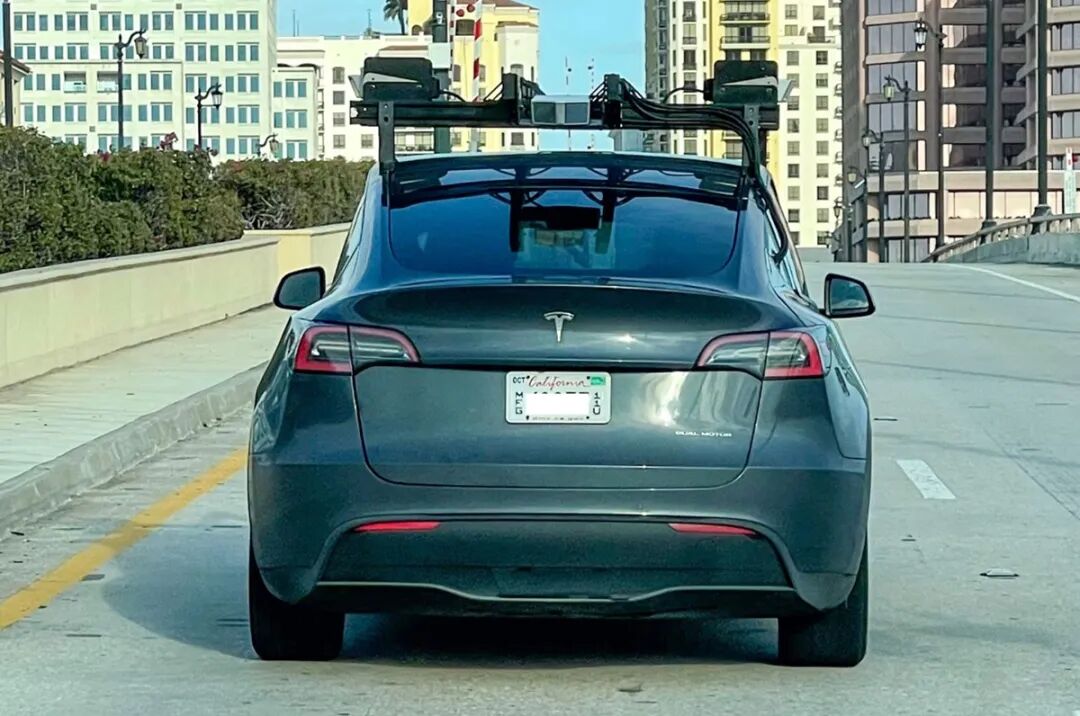
▲ Back in 2021, Tesla also tested solutions equipped with both LiDAR and millimeter-wave radar, but ultimately abandoned them due to cost issues
So can the existing system solve these problems? The answer has two layers. First, relying solely on software iterations cannot fundamentally eliminate pure vision perception failures under low visibility conditions.
Tesla's current response strategy is to stick to pure vision and continuously optimize algorithms: it has launched FSD V14 with a reconstructed neural network and is developing "photon counting technology" in an attempt to directly parse photon signals. But as revealed in regulatory documents, the root of the bottleneck lies in the sensing architecture itself, not the algorithm version number. Software can polish most scenarios to be smoother, but it cannot physically make up for that ever-present long tail — which regulators, insurance companies, and the public are precisely focusing on.
Secondly, there are two paths to truly break through this dilemma.
The first is to significantly enhance degradation detection and driver warnings via OTA, and actively restrict FSD functionality in low-visibility scenarios — but this would be tantamount to admitting that FSD is actually a L2+ system strictly constrained by weather conditions, which means Musk would have to backtrack on all the grand claims he has made over the years.
The second is to