Low-GI foods are surging in popularity and have "conquered" the shopping carts of the middle class.
Nowadays when you go to the supermarket, you will notice a curious phenomenon: rice crackers are available in low-GI versions, so are sachima, tangyuan, and even honey has started to be marketed as low-GI.
The logic behind these low-GI foods is that the public does not need to change their daily eating habits, and only needs to spend more money to buy "healthier" products. As a result, a large number of traditional foods have been rebranded under the low-GI label, seemingly completing product upgrades overnight.
The problem is that the GI value only describes the rate of blood sugar rise, and never guarantees that the food in question has fewer calories — this is the most common misconception most consumers have when shopping.
Can Everything Be Low-GI?
In the past two years, "low-GI" certification labels have begun to appear widely on the outer packaging of various food products, and many supermarkets have even set up special zones for low-GI foods. Low-GI foods are comprehensively "taking over" the shopping carts of the middle class.
Sam's Club offers low-GI mixed seed and nut crisps, low-GI oat milk, low-GI Shine Muscat raisins, and more; Hema Fresh sells low-GI high-fiber three-grain rice crackers, low-GI intangible cultural heritage dried tofu, low-GI high dietary fiber pumpkin seed crisp...
In fact, a quick tour of any offline supermarket will reveal that low-GI foods come in a huge variety, including cereals, cookies, bread, honey, rice crackers, and even universally recognized high-calorie foods like sachima have their low-GI variants.
Once labeled as low-GI, the prices of these products are noticeably higher, but their sales do not seem to be negatively affected as a result.
For example, a "low-GI multigrain rice" launched by Beichun contains 11 kinds of grains, and a 2.5kg pack is priced at 79.9 yuan, while a multigrain mixed rice of the same specification without the low-GI label only costs 49.9 yuan. Each low-GI corn at Sam's is sold for 7.5 yuan, and with the same amount of money, you can buy several regular corns at a local wet market; a bag of "low-GI mixed seed and nut crisps" costs 69.9 yuan, and has accumulated more than 10,000 reviews on the official app.
Industry data shows that for regular foods that seem to have little connection to health, after being labeled low-GI, their prices are 40%-60% higher than similar products, and their sales often rise simultaneously.
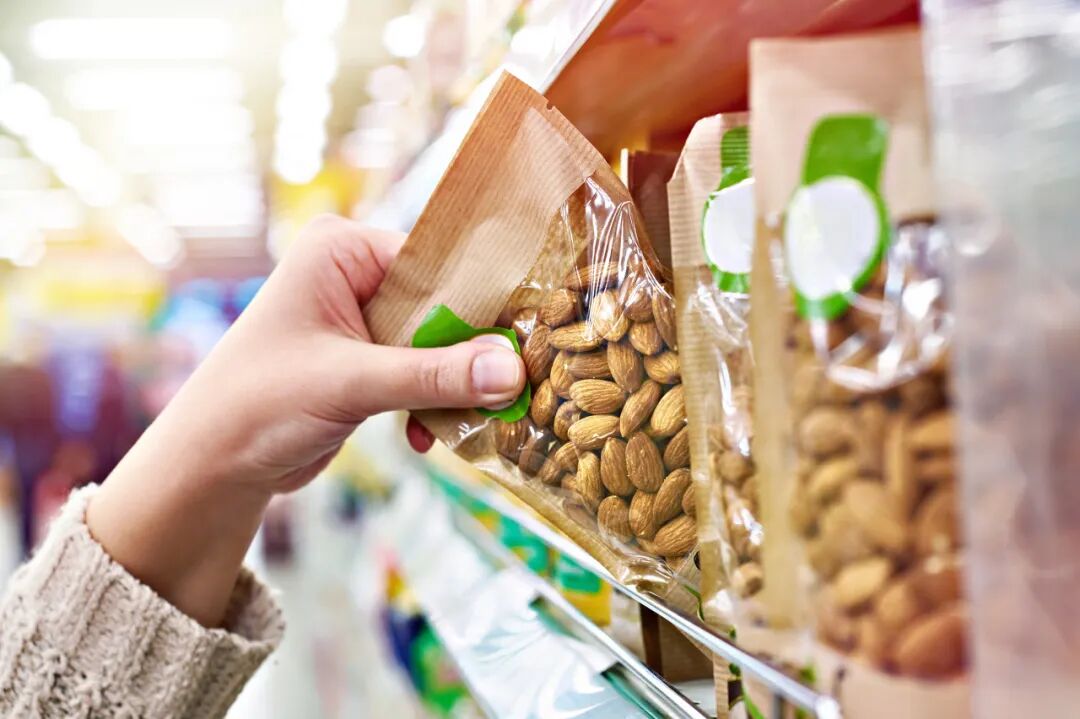
To figure out why low-GI foods are so popular, we first need to understand what the GI value is?
The GI value is not a brand-new concept. In 1981, Professor David Jenkins from Canada first proposed the concept of GI value, which is used to reflect the glycemic index of the human body. In simple terms, foods that are digested quickly, have a high absorption rate, and can cause the blood sugar index to rise rapidly have higher GI values, and vice versa.
The industry divides foods into three categories according to their GI values: foods with a GI value below 55 are low-GI, those between 55 and 70 are medium-GI, and those above 70 are high-GI. Common low-GI foods mainly include various dietary fiber-rich vegetables such as spinach and cucumbers; medium-GI foods include brown rice and whole wheat bread; high-GI foods include white rice, noodles, and New Year rice cakes.
In 2004, the concept of GI value was first introduced to China, and it was not until recent years, with the awakening of public health awareness, that low-GI foods became ubiquitous both online and offline.
Real Health or a Waste of Money?
Not long ago, a survey by the Shanghai Consumer Council revealed that 89.5% of people knew about low-GI, but only 13.8% accurately understood its meaning; 48.8% of people thought low-GI foods had less impact on blood sugar, but only 10.4% of the respondents would check for authoritative low-GI certification.
It is not difficult to see from this set of data that the public's current understanding of low-GI foods is not very high, and most people simply equate low-GI with health.
In fact, seemingly low-GI foods can easily be calorie bombs.
Take a popular low-GI rice cracker in a supermarket as an example. As a fried food, its ingredient list shows that every 100 grams of the rice cracker contains 21.1 grams of fat and 389 milligrams of sodium — both values exceed the limits specified in the "Labeling Specification". Similarly, Sam's "low-GI mixed seed and nut crisps" has butter and honey added to its ingredients, making it an absolutely high-calorie food.
There are many similar products: for example, low-GI sachima has a calorie content of up to 2054 kilojoules per 100 grams, and eating just two pieces can provide as much calories as a full meal.
Major brands are playing word games, rebranding high-sugar, high-oil, high-fat traditional snacks with low-GI certifications and putting them back on shelves, taking advantage of consumers' cognitive gaps.
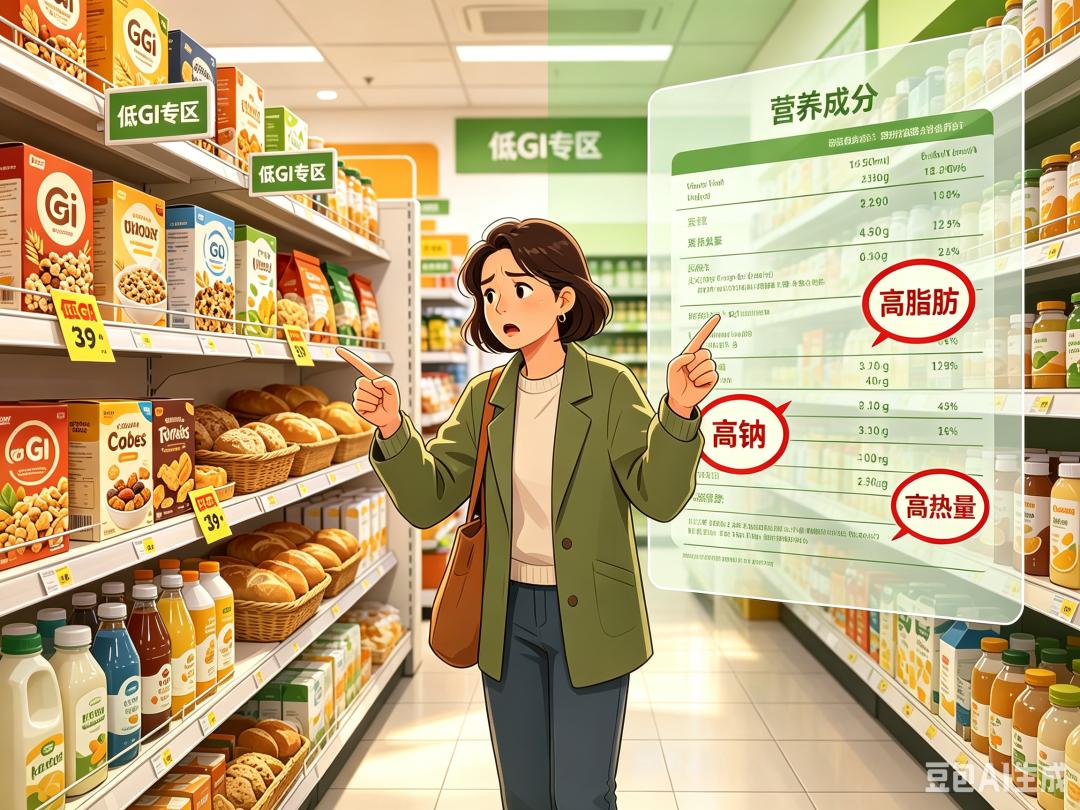
At present, the industry still lacks mandatory national standards, and low-GI certification has become a commercial game.
According to a report by *China Consumer News*, by the end of 2025, the Certification and Accreditation Administration of the People's Republic of China uniformly suspended the filing of low-GI food certification rules, prompting brands to turn to third-party institutions for evaluations, resulting in uneven quality of various certification marks.
Some low-GI products clearly indicate the name of the third-party certification body and the certificate number, while others directly print low-GI certification marks on the outer packaging, without providing specific values and test reports.
In fact, low-GI certification must go through long-cycle, high-cost human blood sugar tests, which is clearly inconsistent with the current explosive growth of low-GI foods.
A more hidden trick is that the GI value is by no means a fixed label.
For the same ingredient, different cooking methods and pairings will directly affect the final blood sugar rise effect. The GI value of millet rice is 64, but once it is cooked into millet porridge, it soars to 94; steamed buns themselves are not low-GI, but if you eat some vegetables before eating steamed buns, the blood sugar response will be much gentler.
Official Intervention, Industry Reshuffle Is Imminent
In July this year, *China Consumer News* published an article publicly naming the chaos in the low-GI market, clarifying the trend of standardized rectification in the industry. With the release of the draft national standard *Specification for the Determination and Labeling of Food Glycemic Index*, low-GI will have unified national standards, and the era of unregulated growth in the industry will eventually come to an end.
At present, the chaos lies in false labels and low-GI certifications, not in the low-GI concept itself. After all, the pursuit of a healthy lifestyle is a real demand of the public today.
Data from iiMedia Research shows that in 2023, the market size of low-GI foods in China was about 32 billion yuan, and it is expected to exceed 80 billion yuan by 2027, with an annual compound growth rate as high as 26%.
The market segment is expanding, but the entry threshold is also rising.
From the demand side, the audience and consumption scenarios of low-GI foods are continuously expanding. Initially only supplied to people with diabetes and obesity groups, they are now favored by fitness enthusiasts, people on fat loss diets, and sugar-controlling groups. More and more people are willing to pay a premium for healthy foods.
However, as consumers gradually deepen their understanding of the low-GI concept, those products that only rely on a certification mark for marketing will face unprecedented pressure. Consumers are learning to identify truly healthy products by checking ingredient lists, nutritional components, and more authoritative certifications.
This will force industrial upgrading. On the technical route, methods such as gene sequencing can be used to directionally breed low-glycemic raw materials, so as to control the GI value from the source. In terms of product categories, the stereotype that low-GI foods are only meal replacements should be broken, and low-GI concepts should be truly integrated with daily foods, instead of using low-GI as a guise to sell high-calorie products.
In this way, inferior brands can be continuously eliminated, and the entire industry can be pushed to develop towards real health.
From the once-popular 0-sugar 0-calorie trend, to the subsequent high-protein trend, and now to the low-GI trend, various labels in the food industry emerge in an endless stream, and each trend seems to go through the whole process from unregulated growth to natural precipitation.
Just like before, low-GI is not a short-term marketing fad. As the audience continues to expand and products become more perfect, only the brands that put in real effort will survive in the end.
This article is from the WeChat official account "Zebra Consumption" (ID: banmaxiaofei), written by Ren Jianxin, and published with authorization from 36Kr.