Right after DJI and Insta360 kicked off their fierce competition, are smartphone manufacturers also gearing up to enter the market to develop cameras?
DJI probably never imagined that after making the Pocket series for so many years, it would end up attracting smartphone manufacturers to the field.
In the past, DJI basically dominated this product category entirely. It almost single-handedly decided what the products looked like, which features to prioritize, and what price points to set. If you wanted a handheld camera that could fit in your pocket and start shooting instantly, after weighing all your options, you would most likely still end up choosing a Pocket.

But in the past two years, the situation has clearly changed — first, Insta360 stormed into the market with its own products and began to compete head-to-head with DJI; shortly after, smartphone brands including OPPO, vivo, and Xiaomi have also successively revealed news of project approval, prototyping, and even mass production of handheld cameras.
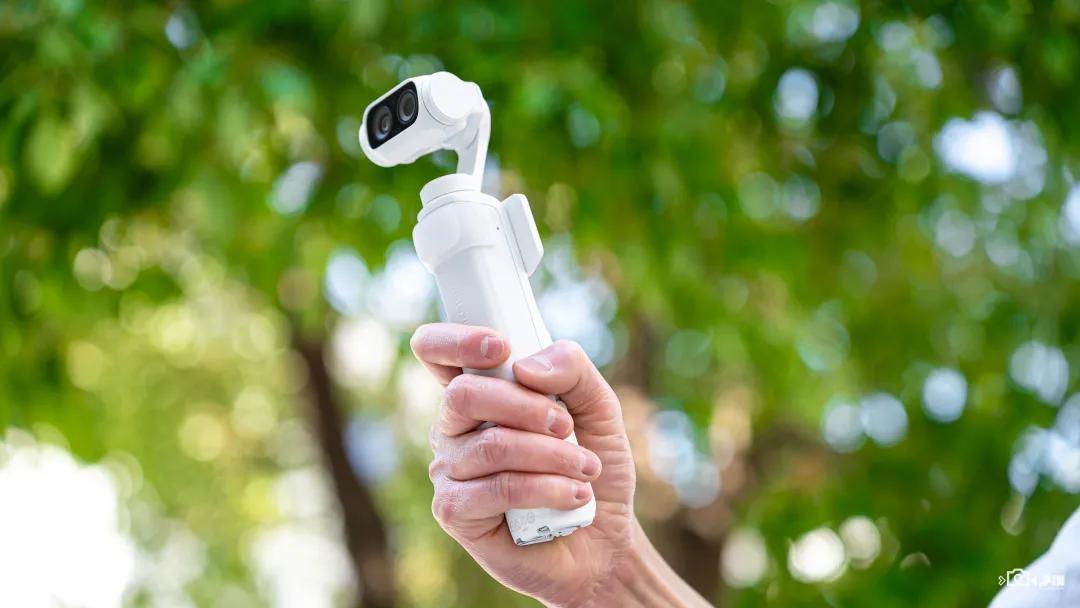
The most proactive player among them is undoubtedly vivo.
As early as the end of last year, leaks revealed that Vivo (colloquially known as "Blue Factory") had launched a dedicated Vlog camera project. The company did not keep it under wraps afterward, and officially confirmed the project was real, with the product directly positioned to compete against the Pocket series. By now, the testing phase of the engineering prototypes has been largely completed, with stocking expectations reaching the order of millions of units.
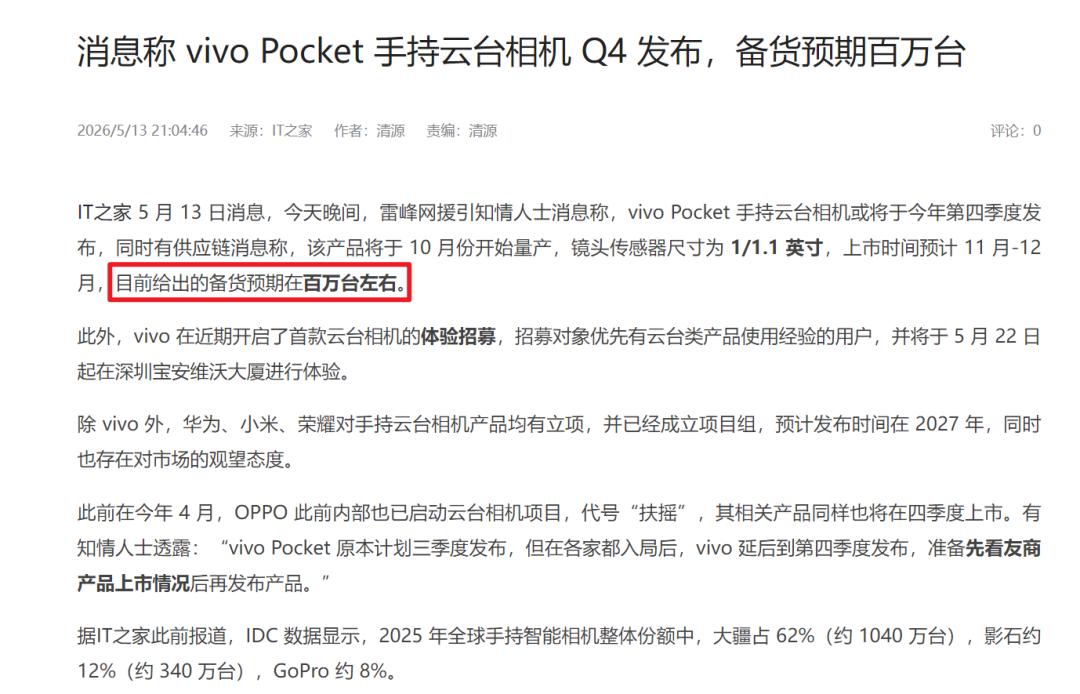
OPPO has also made significant moves in this direction.
It officially announced last year that it would develop "new-form imaging products", and the project officially kicked off in April this year under the internal codename "Fuyao", led personally by Liu Zuohu, the Chief Product Officer. The R&D team is roughly the same size as Vivo's, starting at 200 people, with a formal launch scheduled for the fourth quarter of this year.

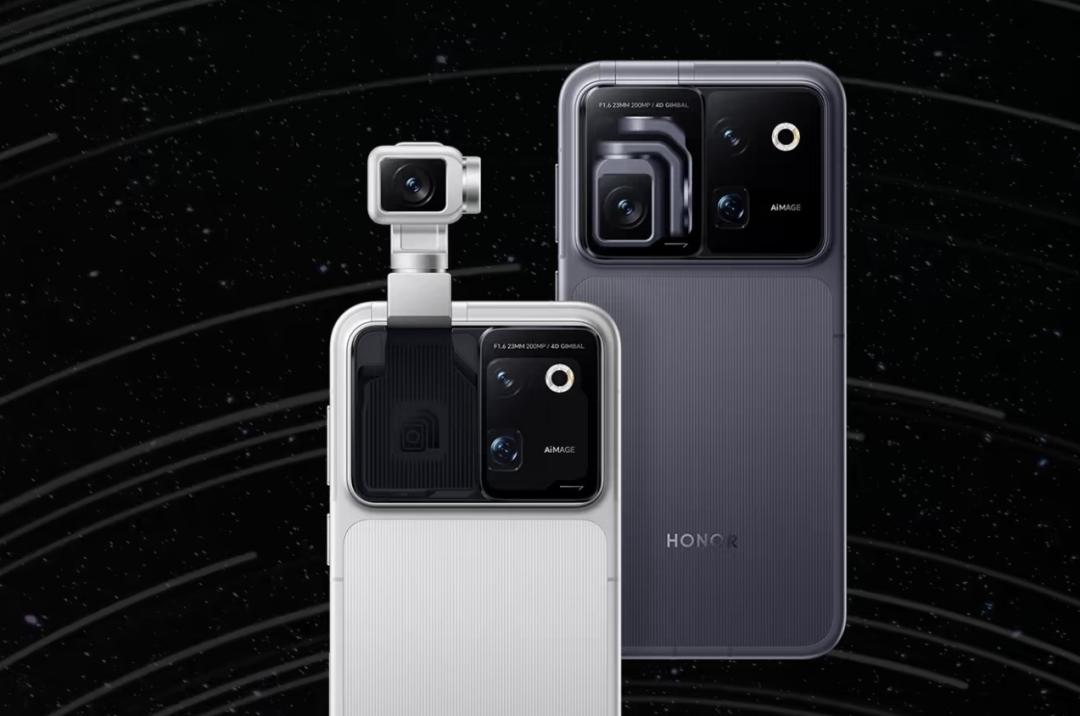
Different from the straightforward approach of the previous two brands that directly compete with standalone imaging devices, Honor has taken a completely different path.
It has no plans to make a separate camera in the Pocket form factor. Instead, it chose to integrate a gimbal directly into the smartphone body, eliminating the hassle of carrying an extra device when going out. At this year's MWC and WAIC events, Honor even demonstrated its engineering prototype on-site.
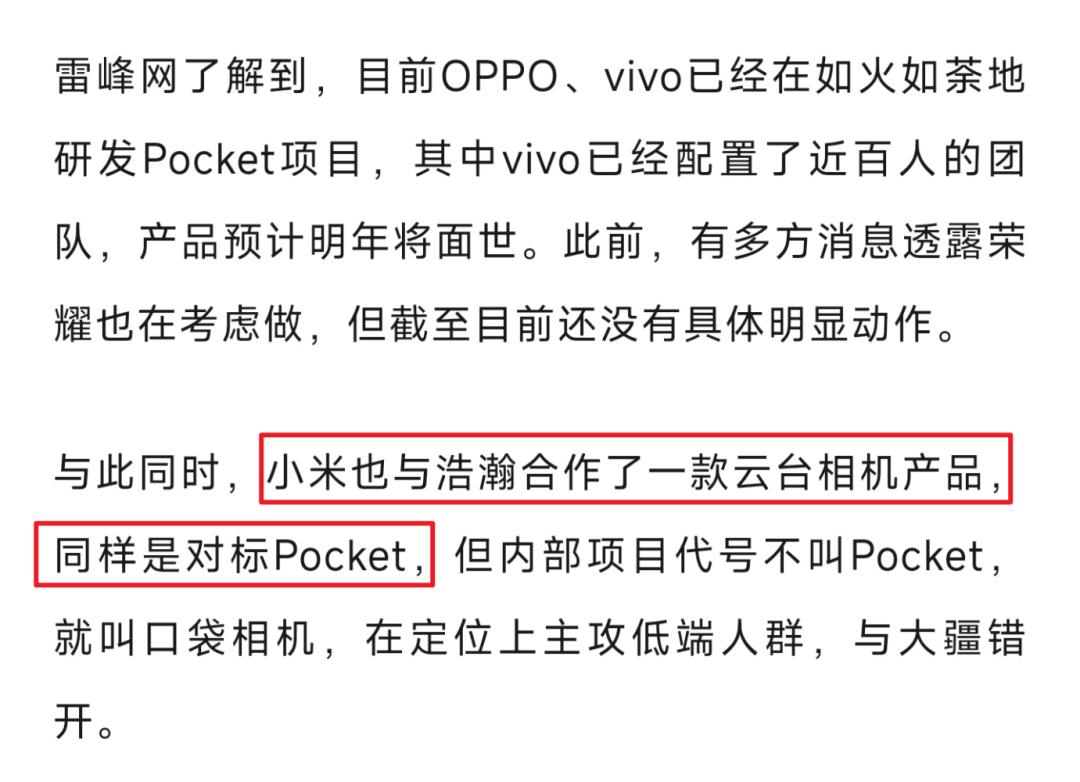
As for Xiaomi and Huawei, the circulating leaks in the market are rather ambiguous and confusing.
Some sources say they have long since approved the project and are working on it, while others claim they are still in the evaluation phase, meaning the product launch timeline will likely be delayed further. If they do release such a product, it will most likely not be until next year at the earliest. But judging by their usual market strategies, once OV's products sell well after entering the market, they will almost certainly follow suit quickly.
Wow, half of the smartphone industry has all set their sights on this track. No one would believe there isn't a compelling reason behind this sudden collective move...
So the next question arises: Why are these manufacturers suddenly flocking to make handheld cameras instead of focusing on competing for top-tier imaging smartphones? Is it because their own phones are no longer selling well, or is this product so outrageously profitable that it makes everyone jealous? And why do they think they can snatch this business away from DJI and Insta360?
01
In essence, this situation can be summed up in four words: ebb and flow.
Let me first state a fact: the smartphone business is genuinely difficult these days, and phones are getting harder and harder to sell. According to data from Counterpoint, global smartphone shipments in 2026 are expected to decline by 13.9% year-on-year, hitting the lowest annual level since 2013.
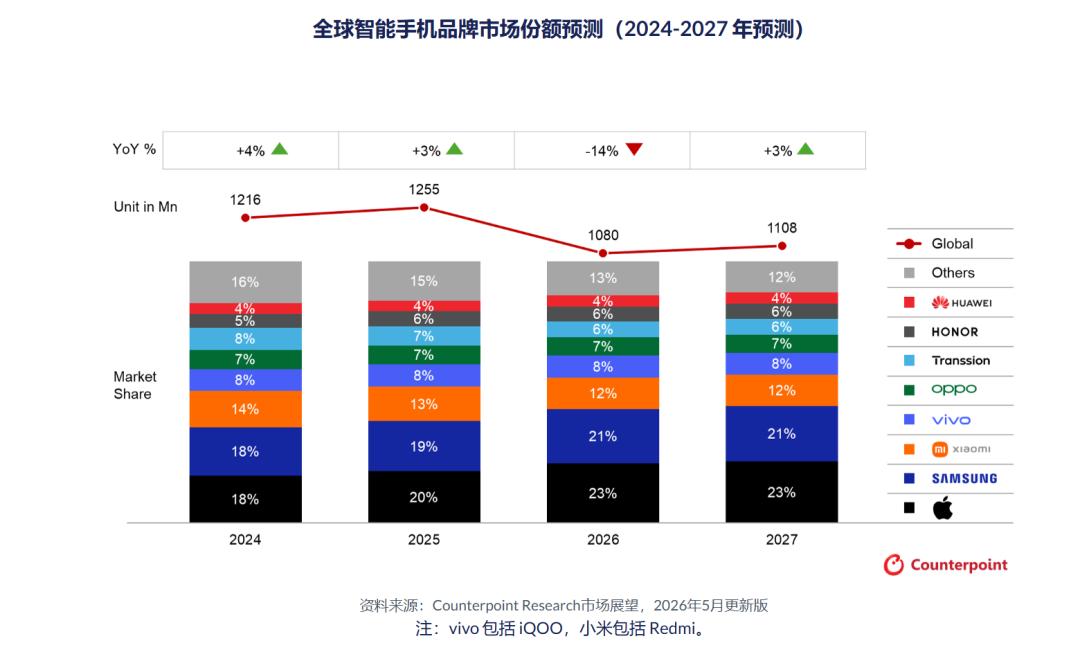
What does this mean? The entire industry is shrinking, and people's phone replacement cycles are getting longer and longer. Most people now follow this logic: they won't replace their phone as long as it's not broken, and will keep using it as long as it works. Smartphone manufacturers are competing fiercely over specs, prices, and imaging capabilities, but all this relentless competition can barely drive any meaningful growth in sales.
Worse still is the profit situation. Even for top-tier manufacturers, many models only have a gross margin of around ten percent, with mid-range models having even lower margins. It's all hard-earned money, yet R&D investment and hardware costs keep rising year by year, putting constant pressure on revenue and profits. Everyone is in a hurry to find a new growth path.
While the smartphone industry is mired in gloom, the handheld smart imaging track is quietly reaping huge profits — a report from IDC shows that global annual shipments of handheld smart cameras in 2025 reached 16.65 million units, skyrocketing 83% year-on-year, with total sales revenue exceeding 46.1 billion yuan.
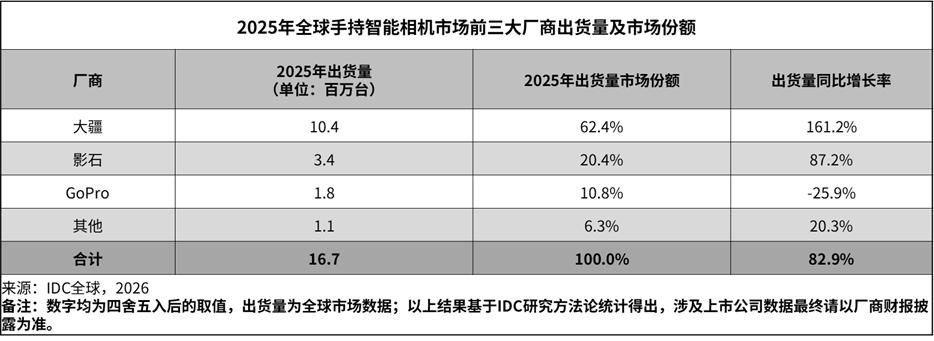
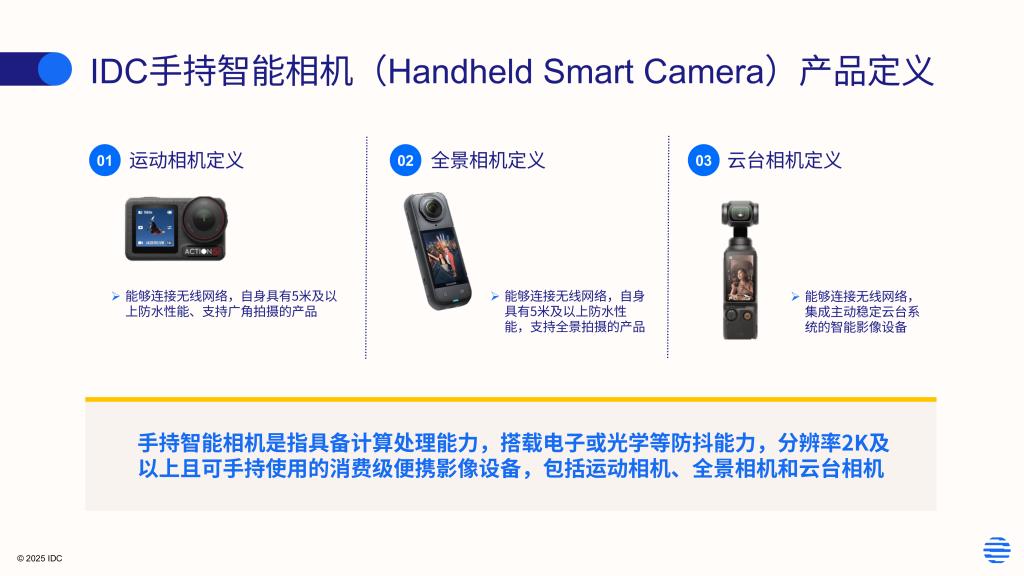
A closer look at the product segments reveals even more striking figures: among all types of smart cameras including action cameras, panoramic cameras, and gimbal cameras, the integrated gimbal camera category stands out as the top seller, with its year-on-year growth rate exceeding 100%, making it one of the very few tracks in the entire consumer electronics industry that is still doubling in growth.
Not only is the current growth explosive, but the momentum going forward is also incredibly strong.
Some institutions predict that the five-year compound annual growth rate of global handheld smart camera shipments from 2025 to 2030 will be around 18%~20%, and shipments will surpass 40 million units by 2030. To be fair, this growth rate is a standout outlier in the broader context of a sluggish consumer electronics industry.
It's not just the rapid growth that's impressive — the profit margins of these products are also shockingly high.
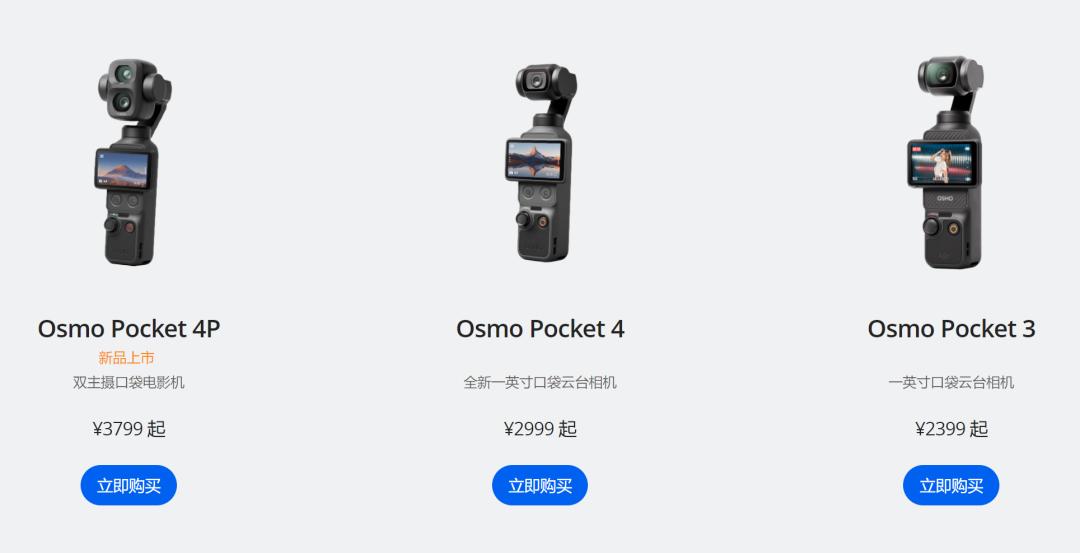
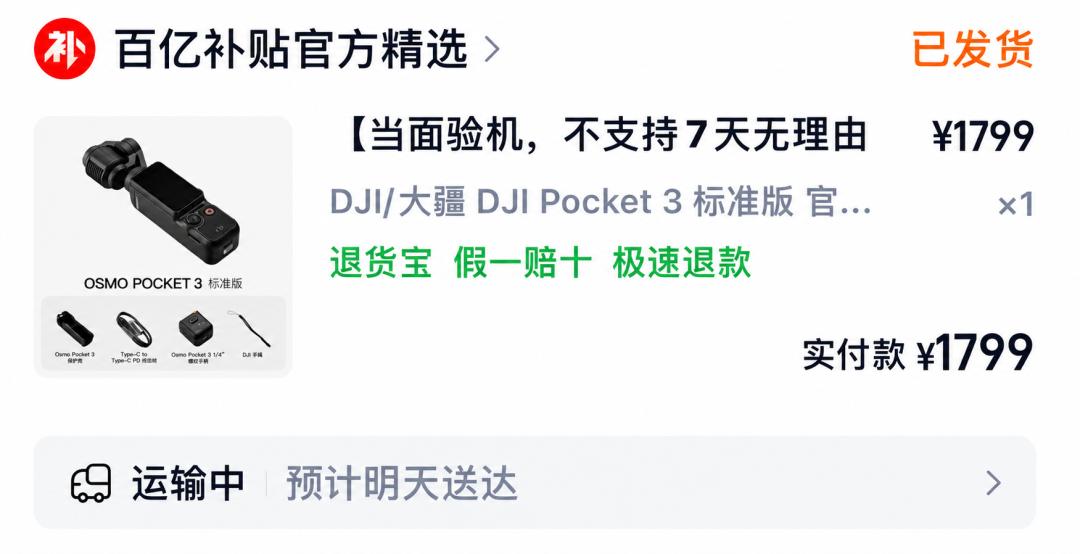
Take DJI Pocket 3 as an example: since its launch, its global cumulative sales have exceeded 10 million units, with total revenue surpassing 30 billion yuan. Industry insiders previously estimated that this blockbuster product can achieve a comprehensive gross margin of over 40%, and possibly even higher...
Users shared the purchase price of their Pocket 3:
On one side is a saturated red ocean market where competition is so fierce that manufacturers are exhausted, and on the other side is a growing blue ocean market where profits come easily. If you were a smartphone manufacturer, wouldn't you be tempted? What's more, for many smartphone brands, developing this type of product doesn't require starting from scratch at all — most of the required technologies are already mature and can be directly ported over.
Components like sensors, lenses, ISP chips, and processors are all proven mature solutions that have been used in the smartphone supply chain for years, with annual shipments of tens of millions of units already in place, maximizing the scale effect. As a result, the overall hardware cost of the gimbal cameras they produce might even be lower than that of DJI and Insta360.
I've even seen leaks claiming that OPPO and Vivo plan to equip their cameras with 3nm Snapdragon 8-series flagship chips, whose computing power is several times higher than the dedicated imaging chips used in mainstream gimbal cameras today. If this is true, it would be almost unfair competition in terms of processing power...

As for imaging algorithms, the advantage of smartphone brands is even more self-evident.
They have spent years refining imaging technologies such as portrait bokeh, night scene noise reduction, and color tuning, which they have been continuously optimizing. While DJI and Insta360 also have accumulated imaging technology expertise, they may not be able to match smartphone manufacturers in terms of the iteration speed of mobile imaging algorithms and the coverage of usage scenarios.
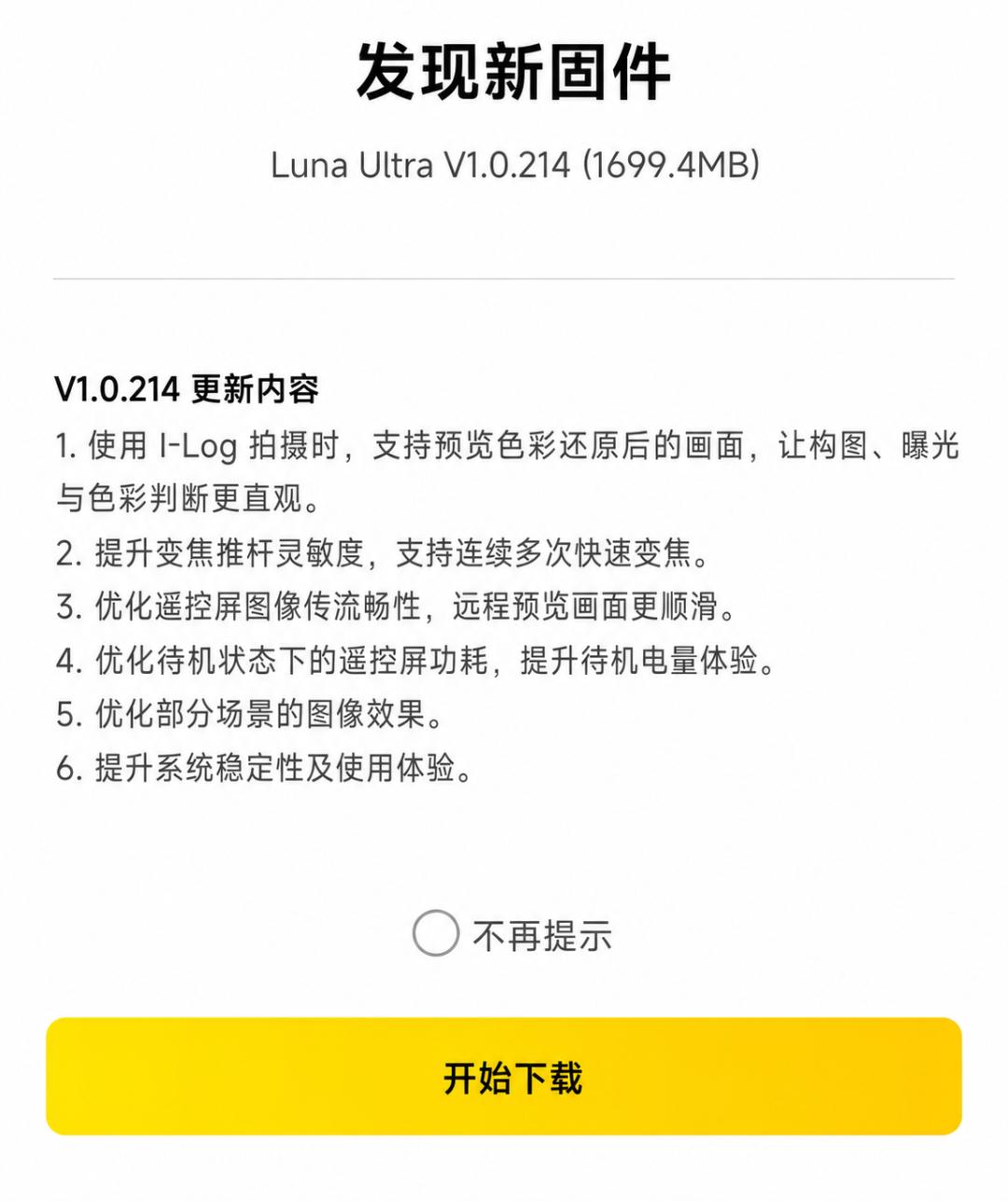
For example, current mainstream flagship smartphones can directly apply official LUTs for real-time preview when shooting Log footage, allowing users to see the final color tone of the footage while shooting.

But some gimbal cameras didn't support this feature when they were first released, and had to add it later via OTA updates after being widely criticized by users. Other details like smooth transition animations when switching between multiple focal lengths, or eliminating frame jumps when switching between landscape and portrait modes — experiences that smartphone brands have long mastered — are still far from perfect on many cameras.
And the ability to polish these subtle user experiences is precisely the core competence that smartphone manufacturers have honed over more than a decade in the mobile imaging track.
Moreover, following their usual product strategies, these new cameras will definitely be deeply integrated into their existing product ecosystems. If you use a smartphone and a gimbal camera from the same brand, they will most likely connect seamlessly to the system's photo gallery, allowing you to preview and edit footage immediately after shooting without relying on third-party apps or manually transferring files via memory cards.
02
All of the above are just the advantages on the product and experience side. Let's not forget that smartphone manufacturers also have a strong ace in the form of their distribution channels.
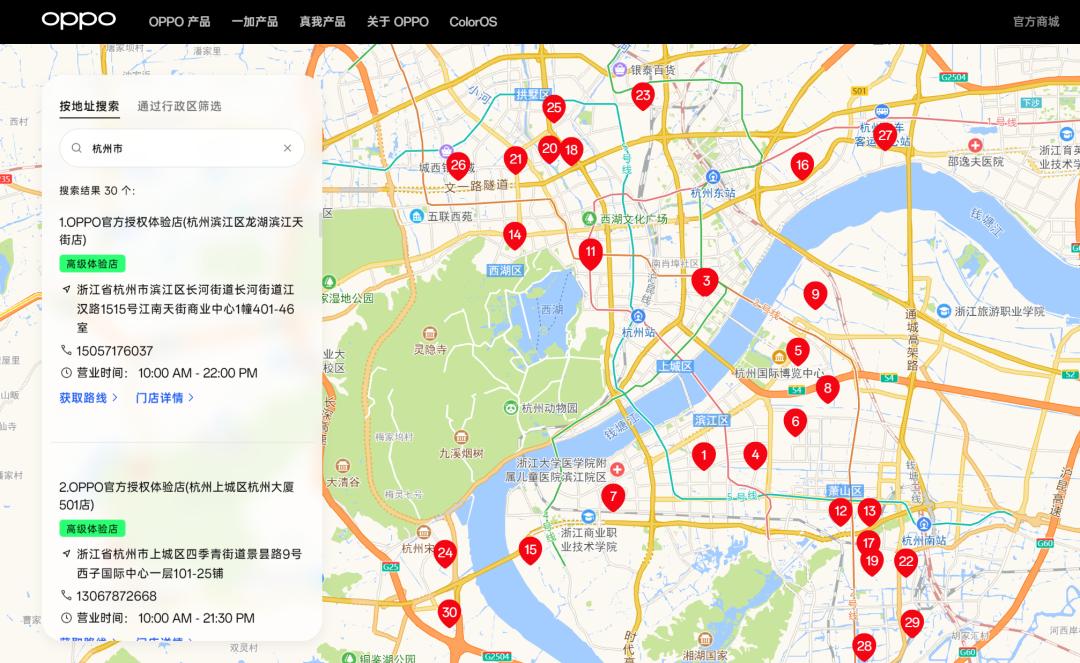
Although DJI is also expanding its offline retail network, its total number of authorized experience stores and specialty stores in China is only over 700, most of which are concentrated in core business districts of first- and second-tier cities. In contrast, OPPO and Vivo alone have tens of thousands of official brand experience stores, so their new products can be rolled out to retail outlets across the country immediately after launch.
So as you can see, with ready-made hardware, mature algorithms, existing ecosystems and established distribution channels, smartphone manufacturers entering the handheld camera market is