Trip.com was fined 5.179 billion yuan, but other platforms are also not blameless.
Trip.com has been fined 5.179 billion yuan.
You must have come across this big news over the weekend, right?
As soon as the news broke, related keywords immediately shot to the top of Weibo's trending searches, and the comment section was flooded with cheers, with people calling it a long-overdue justice and a beacon of fairness.
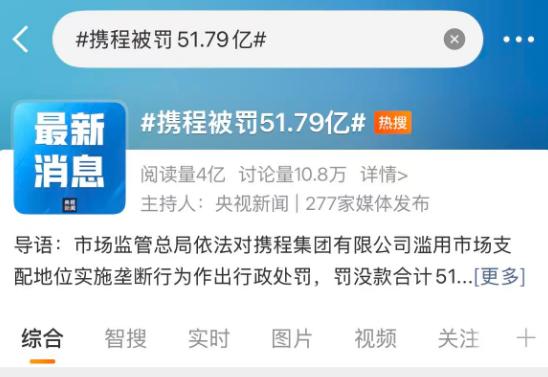
But in fact, many people misunderstood the situation. Their first reaction was that the fine was for the platform's big data price gouging against regular customers — a practice that has indeed been widely complained about. However, this time Trip.com's penalty is not actually for that issue.
Back in January this year, Trip.com was already placed under investigation, and now the matter has finally been fully concluded.
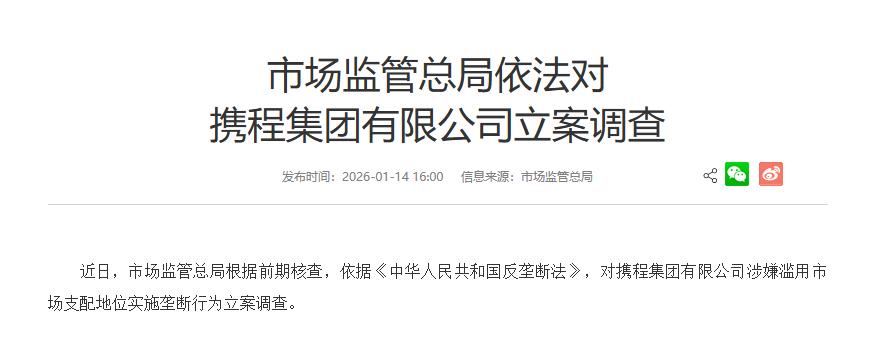
A close look at the official announcement reveals that Trip.com's issues mainly boil down to two points.
First, it required some hotels to enter into exclusive partnerships with it. In plain terms, if you want to run a good business on my platform, you can't cooperate with other platforms.
Second, it forced some hotels to offer the "lowest price across the entire internet". Even if a hotel is listed on multiple platforms, it must ensure that Trip.com sells its rooms at the cheapest price.
It is worth noting that the upper limit of fines under the Anti-Monopoly Law is 10%. Back then, Alibaba was only fined 4% for its "choose one from two" practice, but Trip.com was directly fined 7.5% this time, setting a new historical record.
Shortly after the fine was issued, Trip.com released an official statement saying that it would sincerely accept the penalty and resolutely comply with it, and immediately put forward 19 rectification measures.
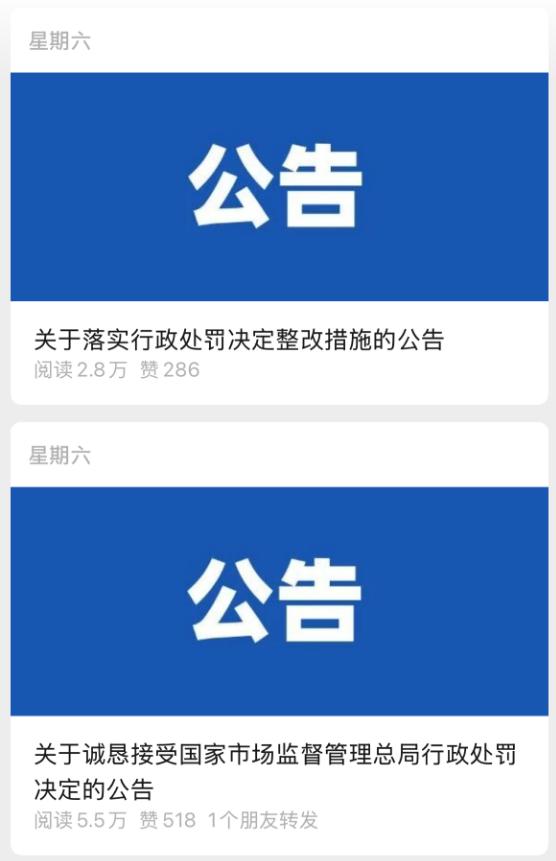
In short, it will no longer demand exclusive partnerships, abolish the "lowest price across the internet" requirement, take all price adjustment tools offline, strengthen management of its business staff, fully refund the 122 million yuan in order reserves (or deposits) that were forcibly deducted, and protect the rights and interests of merchants and consumers.
To be fair, the author of this article was not particularly surprised by this outcome.
If you often follow news related to OTAs (Online Travel Agencies), you will find that domestic OTA platforms represented by Trip.com have been summoned for talks many times by market regulatory authorities in various regions.
Last year, the Yunnan Tourism Homestay Industry Association released an announcement stating that it would launch anti-monopoly rights protection actions against OTA platforms including Trip.com, listing numerous grievances such as "choose one from two", arbitrary unilateral commission hikes, and unfair trading terms.
Therefore, this fine on Trip.com, in addition to making many people cheer, has also brought the long-standing grievances of OTA merchants, especially those running hotels and homestays, to the forefront.
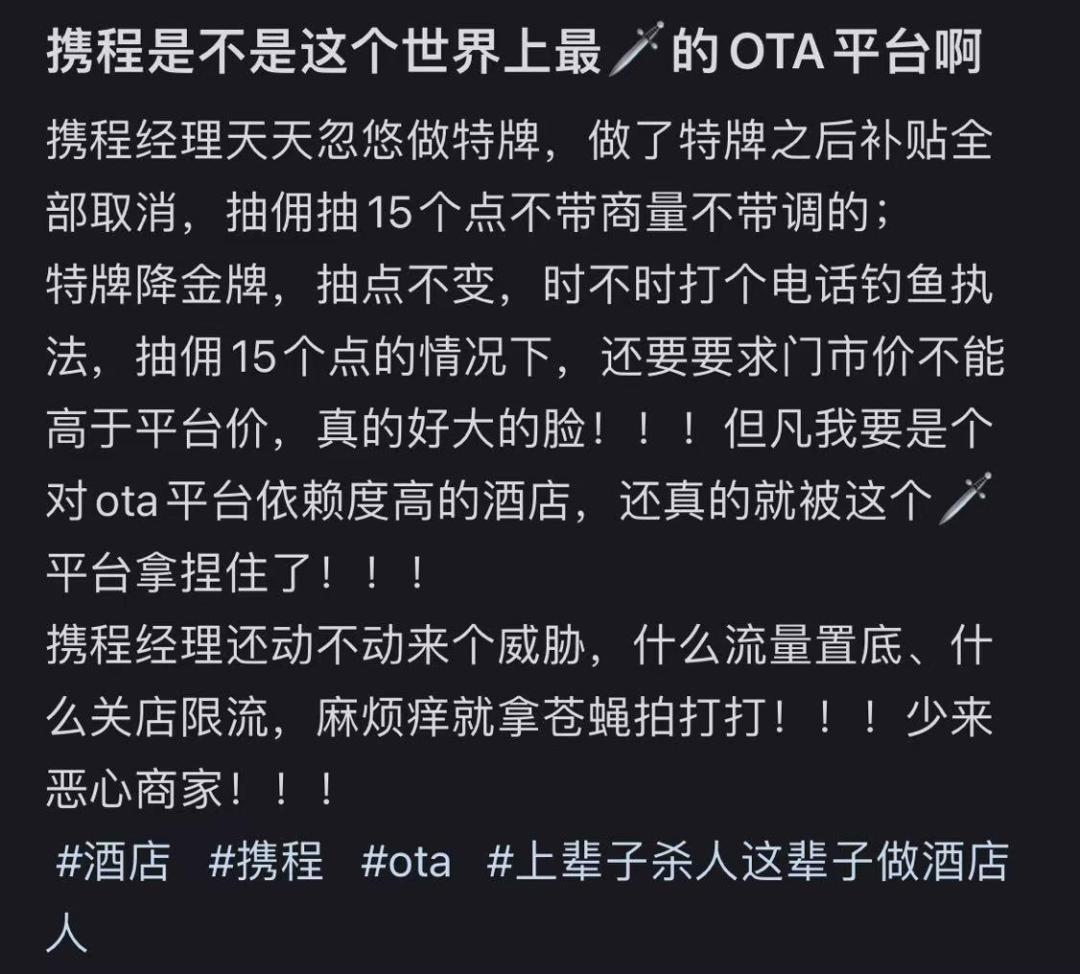
In fact, when the investigation was launched half a year ago, we successively talked to a number of hotel and homestay merchants.
At that time, the complaints from merchants were scattered in group chats and social media posts. It was not until this fine was issued that many of these claims were confirmed for the first time in an official announcement.
However, while the fine can draw a final conclusion on monopolistic behavior, it can hardly fully capture the distress that OTA merchants have endured.
Merchants have suffered from OTA platforms for a long time, and this problem is far from unique to Trip.com.
Good Wine Also Fears Deep Alleys
Without paying for promotions or participating in marketing campaigns, no matter how good your service is, you can basically say goodbye to a thriving business.
This is a deep impression the author got after talking to several hotel and homestay owners.
Because on OTA platforms, competition is not entirely based on reputation, but follows a paid ranking logic.
A hotel manager named Xiao Lin (pseudonym) explained to the author a key indicator called PSI (Performance Service Index), where a higher total score means a stronger ability to obtain traffic.
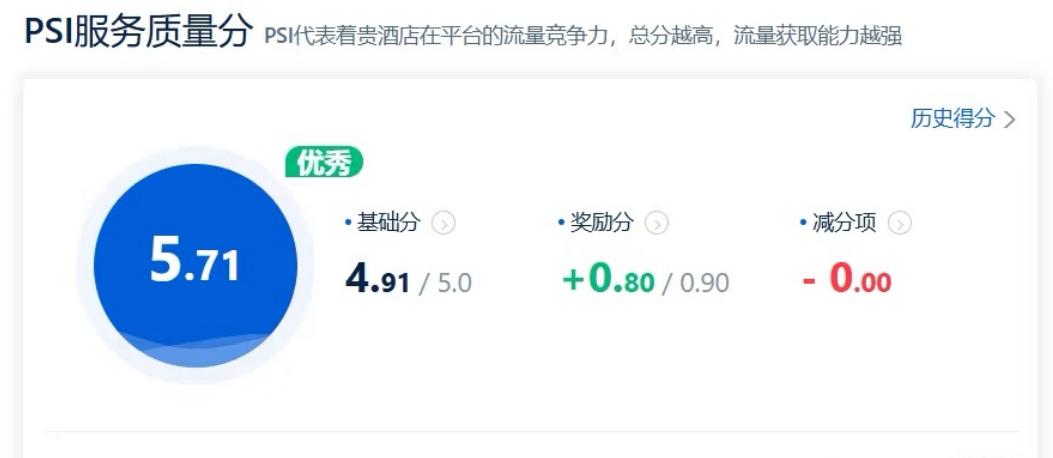
But getting a high score is no easy task.
The PSI indicator consists of 9 sub-items, among which the weight of room nights (the number of rooms sold for a certain number of nights) and sales volume is as high as 40%, and these sub-items like room nights, sales volume, and reviews are difficult to improve in a short period of time.
Therefore, in order to get more traffic and exposure, merchants have to resort to certain operational tactics.
For example, participating in the platform's basic promotions, marketing activities such as the points alliance and premium club, or enabling promotion tools like Yunti (Ladder to Cloud) and Pyramid.
Take the "Special Badge" and "Gold Badge" that are going to be taken offline as an example. Previously, whether a merchant displayed these badges and which type they used would affect the hotel's display ranking.
The yellow thumbs-up icon represents the Gold Badge, and the orange thumbs-up icon represents the Special Badge
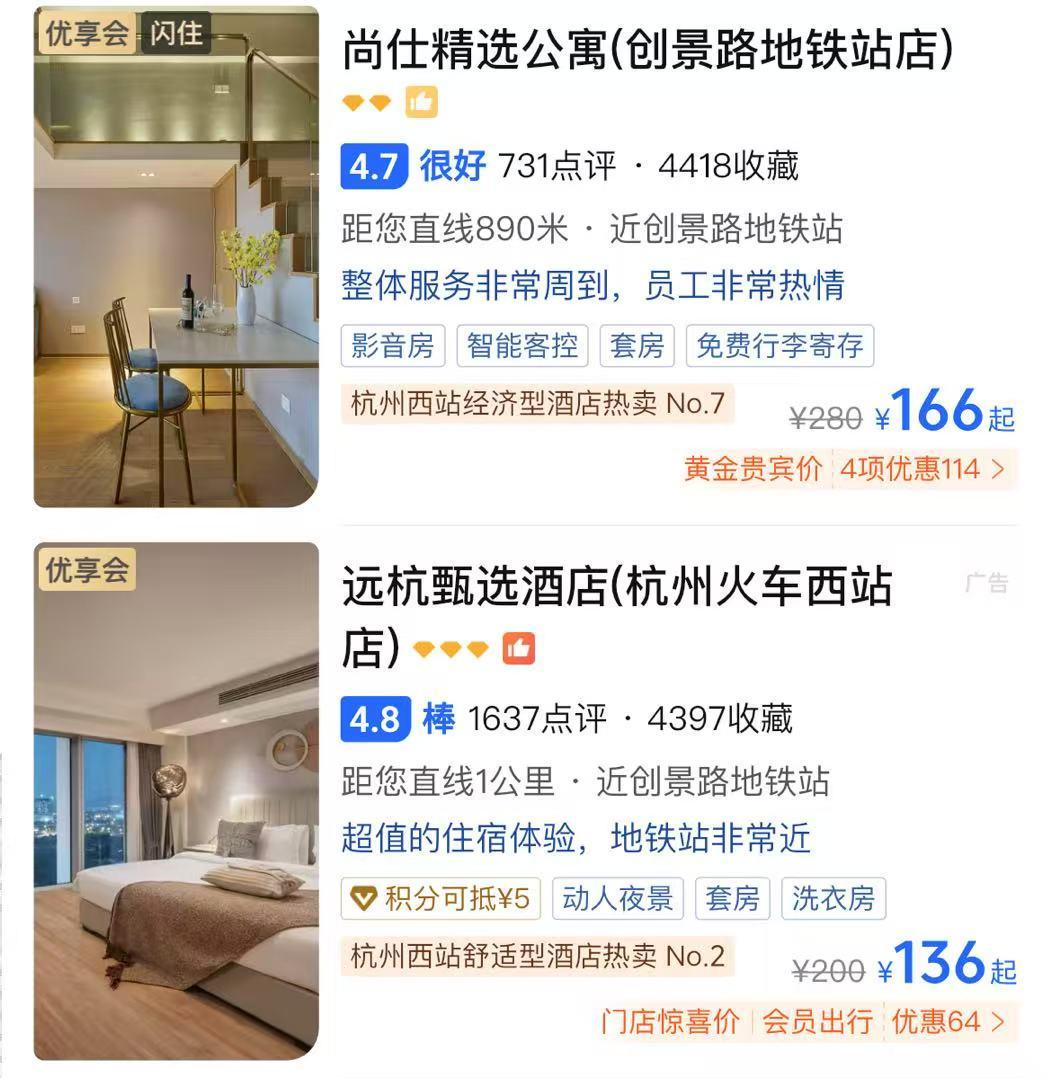
If you pay attention, you will find that previously when booking hotels on Trip.com, you would first see merchants with the thumbs-up icon, Special Badge, or Gold Badge. (Since the beginning of January this year, these icons are no longer displayed on the front end, but the corresponding rights in the merchant backend remain unchanged)
The "Special Badge" means you can only operate on this one platform and need to sign an exclusive agreement. While the "Gold Badge" allows you to list on other OTA platforms, you must guarantee a 5% price advantage on Trip.com and enable automatic price tracking by default.
If the system detects that your hotel's price is lower on other platforms, the platform will automatically adjust the price to match. If the system catches too many price discrepancies, your Gold Badge will be revoked.
But not all merchants are suitable for this set of rules.
To master these rules, you not only have to give up profits, but also arrange dedicated staff to monitor backend data every day. For small-scale economy hotels, especially homestays with only a few rooms, this is simply unaffordable.
Xiao Yang (pseudonym), who runs a homestay in Chongqing, told the author that her homestay is listed on Tujia (whose homestay listings are connected to the homestay sections of Trip.com and Qunar). She can't even remember when was the last time she received an order from the platform's natural traffic recommendation.
Her homestay is located in a prime location, a 50+ square meter duplex apartment that cost her 200,000 yuan just for decoration. She even made a 20+ page PPT for check-in instructions, and after more than three years of careful operation, she has maintained a perfect full score of positive reviews.
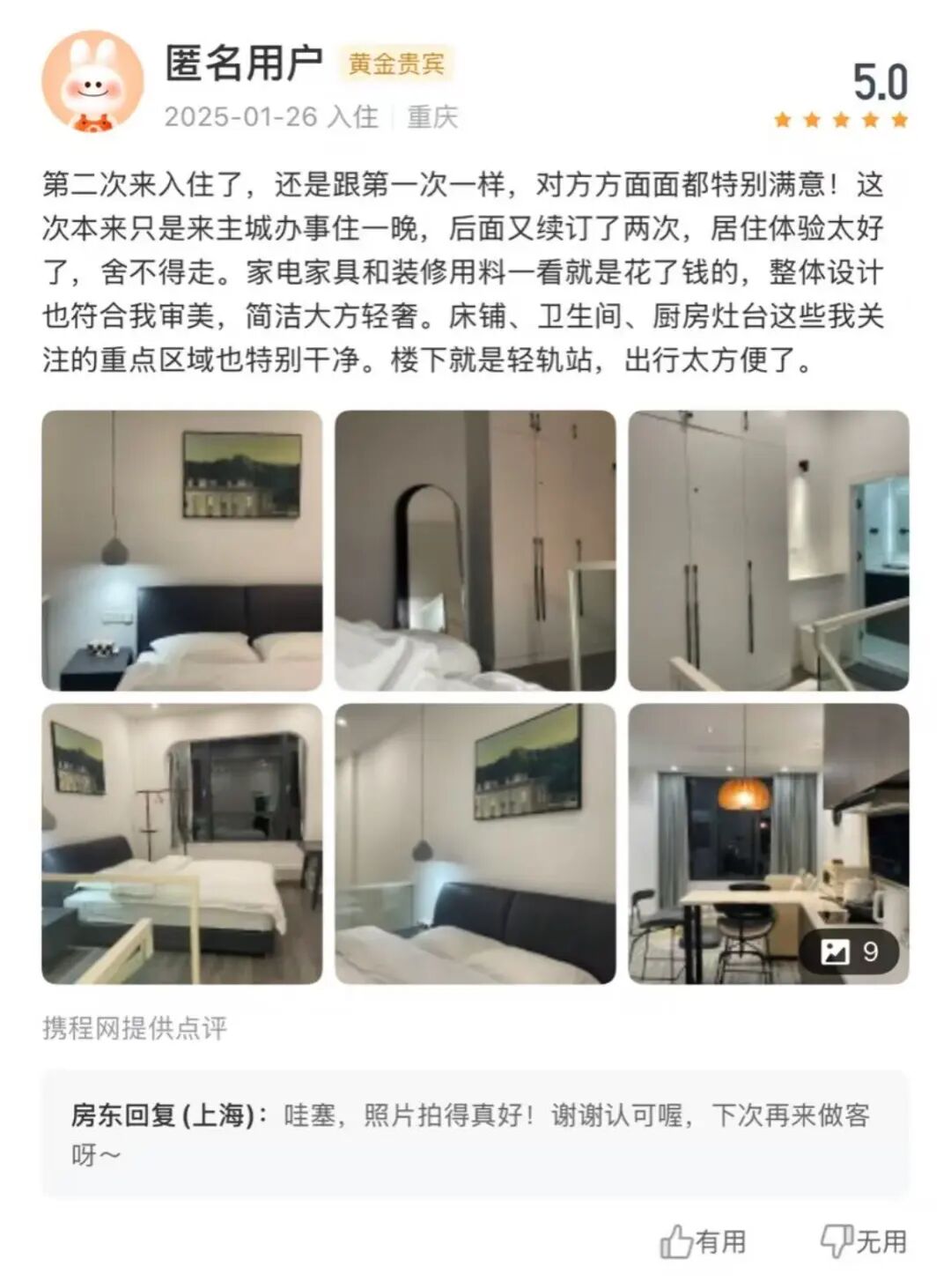
But because she barely spent money on promotions, the traffic she gets is extremely low.
Last year, the platform only brought her 46 orders in total, 33% of which were from repeat customers. As for the remaining new customers, 90% of them were attracted by the content she posted on Xiaohongshu, and then completed the transaction through the platform.
This is equivalent to "feeding orders" to the platform, because Xiao Yang thought that doing so might help her get some normal exposure.
But when the author tried to search for her listing, we had to apply a bunch of filter conditions and scroll down for a long time before we could find her property.
The account manager assigned to Xiao Yang often invited her to attend various live streams that claimed to "teach you how to do a good job in operation". But in Xiao Yang's opinion, these courses were just schemes to leech money from merchants, so she never went to any of them.
What made her even more helpless was that her homestay was only 300 meters away from the nearest Metro Station A, but on the platform page, her listing was associated with Metro Station B, which is 2 kilometers away.

The account manager explained that Metro Station B is a more popular station with higher search traffic. But Xiao Yang felt that this labeling not only failed to bring much traffic, but also easily made guests mistakenly think that her homestay had inconvenient transportation. She gave feedback several times, but the page information was never corrected.
In addition, in Xiao Yang's view, the platform's review mechanism further amplifies the impact of ratings on merchants.
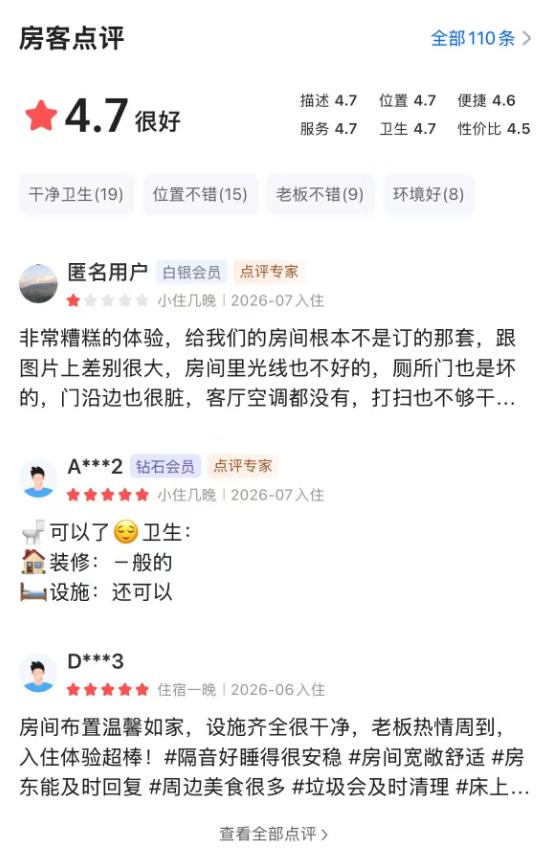
Screenshot from a homestay's homepage, not provided by Xiao Yang
"The cancellation terms are meaningless to consumers. Even if the cancellation period has passed or they booked a non-refundable preferential rate, they can contact customer service to cancel the reservation for a refund. If the merchant refuses, the guest will threaten to leave a bad review."
In order to keep her rating from dropping, she didn't ask for compensation when a guest damaged a corner of the wall while moving things. During the Spring Festival, when a guest asked if they could book a room at the usual non-holiday price, she agreed, but in the end, she still received a bad review saying her property was expensive and far away from transportation.
According to Xiao Yang, for a period of time, the platform blocked reviews that were more than three years old and excluded them from the rating calculation, while increasing the weight of recent reviews. One of her peers saw their overall rating drop from 4.9 to 4.3 just because of a single 4.7-point review.
Although the rating only dropped by a few tenths of a point, the listing's ranking and exposure would be severely affected.
If you are willing to bow to the pressure for traffic by participating in activities and buying promotions, you may get more orders, but at the same time, the commission you pay will also rise sharply.
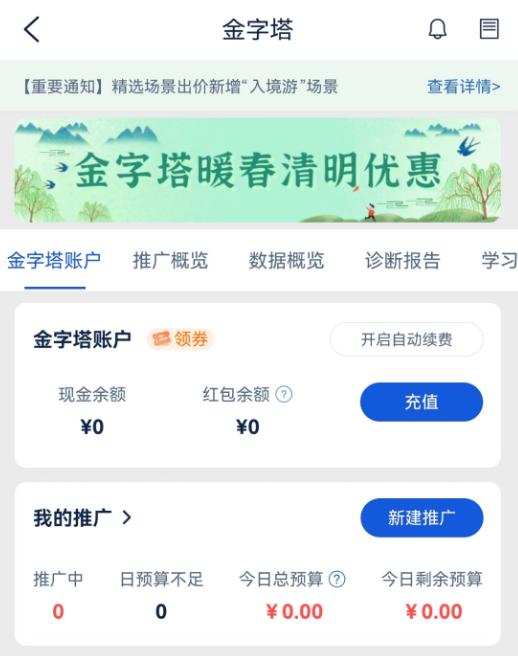
Source: Internet
For hotels and homestays, the platform usually charges a 10%-15% commission, which sounds considerable but is barely acceptable. But the author found through in-depth research that if merchants participate in activities, the commission will be far higher than that, with an extra 5% at least.
For example, joining the points alliance will draw an additional 5% commission based on the base price, and the Yunti tool will also deduct corresponding commissions based on its strategies. Adding all these up, it is not impossible for the total commission to reach 20%-30%, or even higher.
This means that when we spend 500 yuan to book a room, more than 100 yuan of it may go directly into the platform's pocket.
In order to maintain profits, merchants will most likely pass this cost on to consumers in the end.
Who Actually Holds the Pricing Power?
If the above-mentioned hidden tactics that force merchants to spend money can barely be regarded as a commercial game where both parties make their own choices, then there are even more outrageous practices that follow.
In March this year, Trip.com took the lead in removing a function called "AI Business Assistant", which is the controversial price adjustment assistant.
This price adjustment assistant is not unique to Trip.com. According to feedback from some hotel operators, other OTA platforms also have similar automatic price adjustment and price tracking mechanisms.
It may be hard to imagine