Future hotel groups will become the largest "advertising companies"
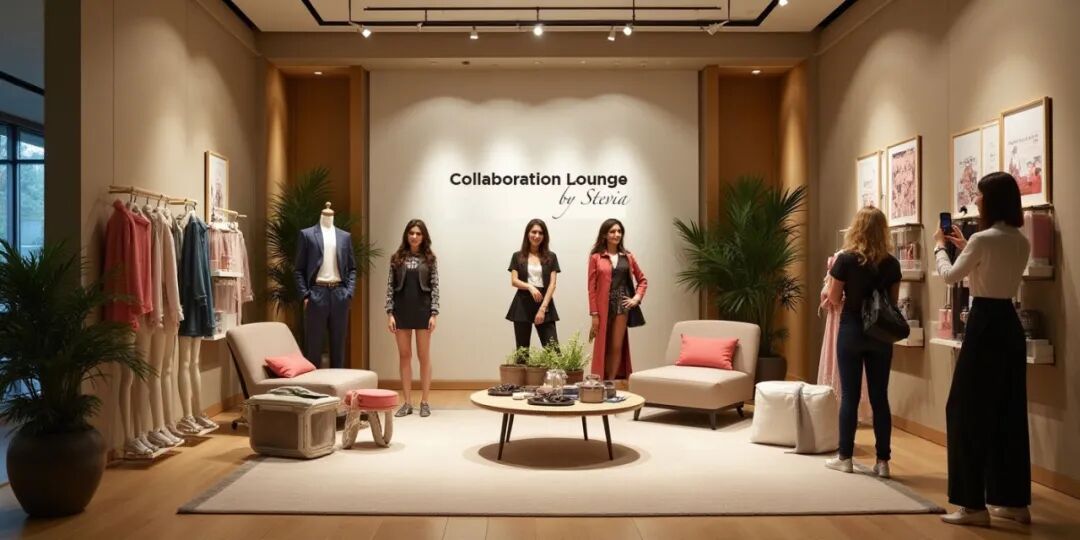
Image source: Google
While browsing Xiaohongshu these days, I found that The Ritz-Carlton has launched a collaboration with a beauty brand, which looks quite interesting.
To be precise, Hourglass has rolled out a collaborative "Gilded Glow & Luminous Charm" afternoon tea at The Ritz-Carlton, Tianjin. Several Ritz-Carlton properties in North America have also partnered with MERIT Beauty, launching a range of offerings including beauty carts on executive floors, in-room dining beauty kits, co-branded souvenirs, chocolate paired with skincare samples, and limited-edition co-branded beauty travel sets.
A brief introduction to these two brands:
Hourglass is a hidden champion in the North American high-end color cosmetics market. Its 4-gram "Pork Belly Blush" retails for 390 RMB, firmly positioning it as a pre-luxury brand for affluent consumers. MERIT Beauty, on the other hand, represents minimalist color cosmetics in North America, with an average price of $30-45 per product, equivalent to around 220-330 RMB, making it an entry-level brand in the high-end color cosmetics segment.
What The Ritz-Carlton plans to do next is introduce these two beauty brands to the guests who walk through its hotel doors.
These two collaborations alone wouldn't be that remarkable. What's truly interesting is that beyond The Ritz-Carlton, a growing number of hotels are leveraging their unique spatial advantages and immersive experiences to transform themselves into one "advertising spot" after another.
Beauty Brands and Hotels Have Become Business Buddies
Beauty brands and hotel brands have been business buddies for a long time.
In the early days, it was purely a B2B partnership. Beauty, hair care, and fragrance brands supplied products in bulk to hotels as standard in-room consumables such as shower gels, hair conditioners, body lotions, and soaps.
That changed when Marriott International teamed up with Ian Schrager, the father of boutique hotels, to create The EDITION. The brand explicitly rejected all traditional toiletries on the market, instead inviting salon fragrance brand Le Labo to exclusively develop a signature scent blending black tea and bergamot for The EDITION, which became an instant hit overseas.
More and more celebrities and middle-class consumers began asking on social media: "What exactly is the perfume used in The EDITION hotels?" A well-known overseas independent fashion and lifestyle blog even published a viral experience article titled "Le Labo: I Smell Like a Hotel" about this trend.
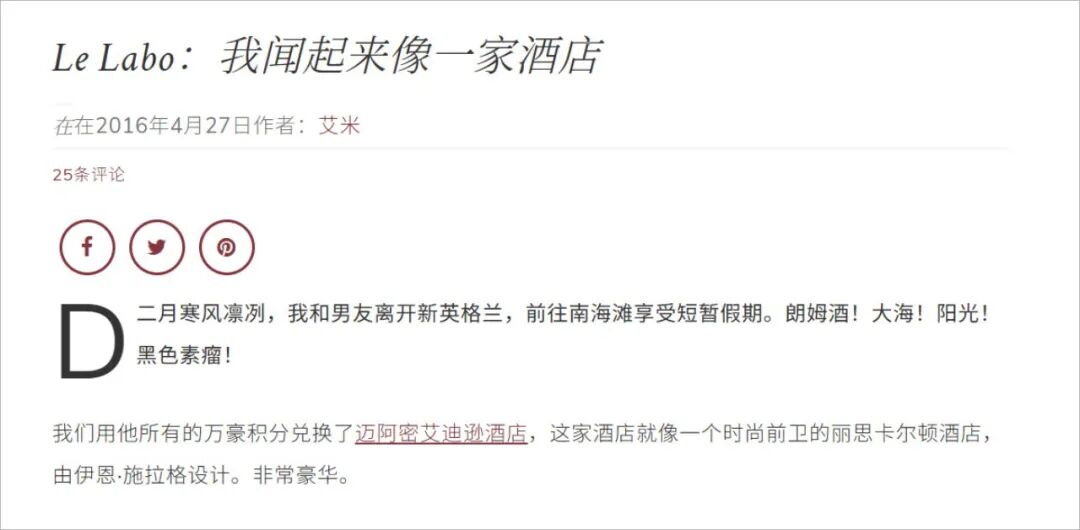
Image source: That’s Normal
Beauty and fragrance brands that finally woke up realized that the endorsement and immersive experience offered by a top-tier hotel deliver far more effective promotion than 100 pages of fashion magazines.
Since then, collaborations between major beauty brands and hotel brands have gradually escalated:
On one hand, Armani partnered with Niccolo Changsha to launch the co-branded afternoon tea "Shadow Light & Driftwood"; on the other, Guerlain announced that its first Guerlain SPA boutique flagship store in mainland China would open at The PuXuan Hotel and Spa in Beijing. Estée Lauder's Re-Nutriv Platinum line even collaborated with The Ritz-Carlton to launch themed guest rooms, focusing on a fully immersive experience.
But the question is: Why are hotels willing to turn themselves into other people's advertising spots?
Hotel brands are willing to do this, of course, because the benefits are impossible to turn down. Before beauty brands moved in, ultra-luxury hotels faced two very real business dilemmas: stagnant non-room revenue and aging customer base perception.
In the past, the hotel industry mostly attracted customers through accumulated membership points and word-of-mouth reputation, making it difficult to break through to younger demographics.
The entry of luxury beauty brands provided just the right solution: these brands boast top A-list celebrities, super influencers, and leading media resources, with strong premium capabilities and proven marketing strategies to resonate with younger audiences.
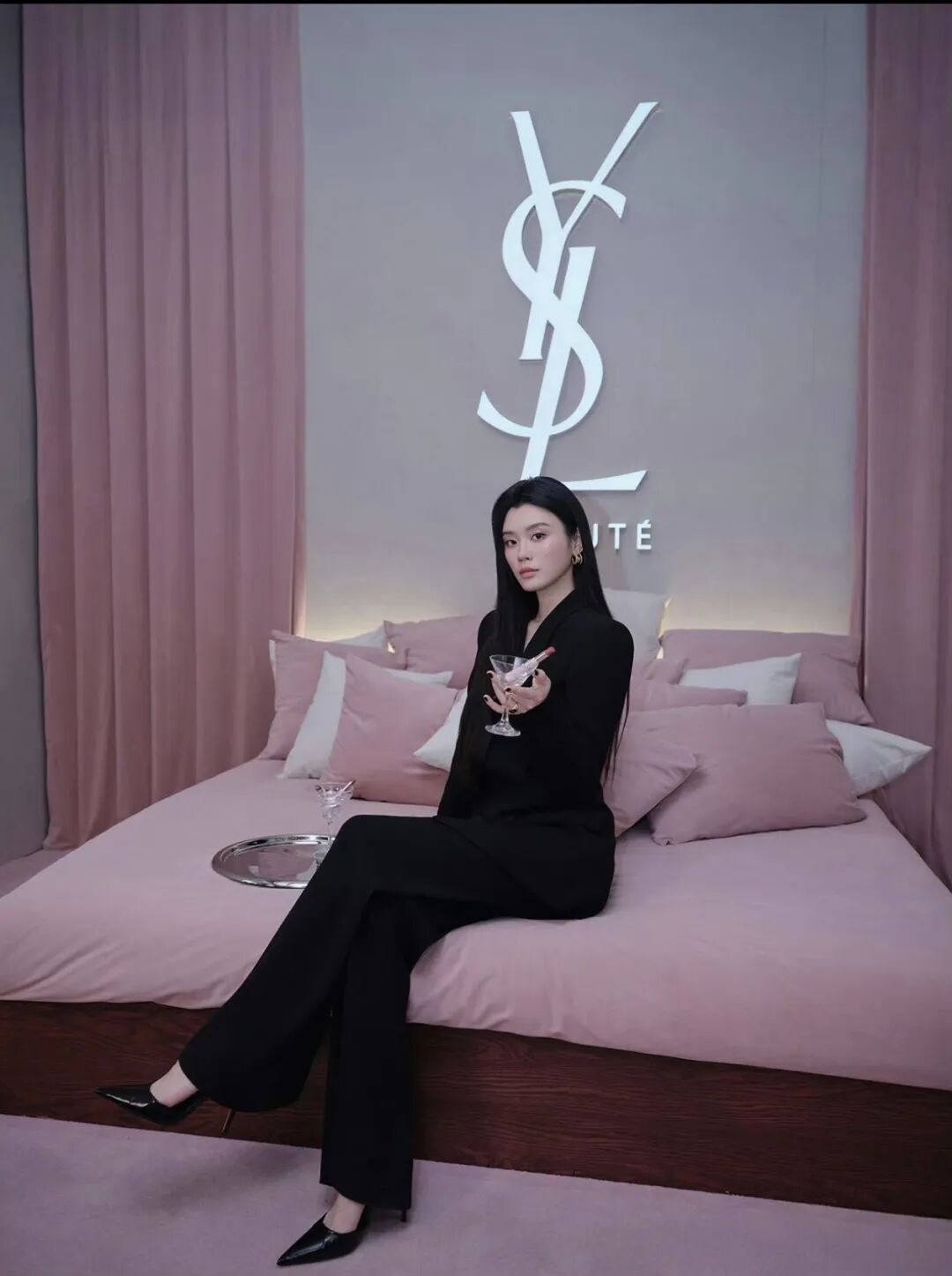
YSL "Do Not Disturb" Hotel invited celebrities for promotion, Image source: YSL Weibo
Such collaborations allow high-end beauty brands to bring their high-net-worth VIP customers to hotels for vacations, while hotels in turn filter out the most authentic old-money clientele for beauty brands. This is undoubtedly a win-win situation.
On the other hand, hotels have venues, foot traffic, and a distinct brand vibe — but how do they monetize these assets?
For forward-thinking hotel brands, partnerships with beauty brands are more than just one-off events. They represent an exploration of how to boost space efficiency and diversify revenue streams.
Will Hotels Become Large-Scale "Advertising Spots"?
In fact, hotels are already evolving into highly attractive communication media — this is not a future scenario, but a current ongoing trend.
Beyond beauty brands, Toshiba's art home appliances collaborated with J Hotel Shanghai Tower to launch a new rice cooker at the world's highest restaurant;
Arctic Ocean Beverage, the Teddy Bear Collection IP, and Orange Hotel formed a tripartite partnership to sell both beverages and trendy collectibles;
Sennheiser partnered with Park Hyatt to launch a limited-edition co-branded suite and held a new headphone launch event at Park Hyatt Beijing...

Image source: Orange Hotel Xiaohongshu
Home appliances, beauty products, beverages, trendy collectibles, headphones... the hotel scenario is meeting the growing demand of brands for an "immersive experience space", finding a wide variety of collaboration formats.
More and more brands are realizing that when guests step into a hotel, it marks the beginning of an immersive experience. Every touchpoint — from the sofas they sit on, to dining, relaxing, and socializing — is a prime opportunity for brand integration. What guests see and hear can easily turn into products they want to purchase.
It's not just retail brands that have recognized this potential — hotels themselves have too.
There are only a fixed number of rooms, so maximum occupancy caps room revenue. But hotel lobbies, restaurants, corridors, and even laundry rooms still have huge untapped potential to monetize foot traffic scenarios.
Hotels can fully transform from a "place that sells rooms" to a destination that sells attention, experiences, and products. They can become auctionable advertising spots and shelves for brands, evolving into brand experience centers.
Some hotel groups have even gone a step further by establishing their own media companies.
At the 2026 Cannes Lions International Festival of Creativity, Marriott International officially launched its global travel media network — MARRIOTT MEDIA — in Greater China. This marks the second core global market for Marriott Media after North America.
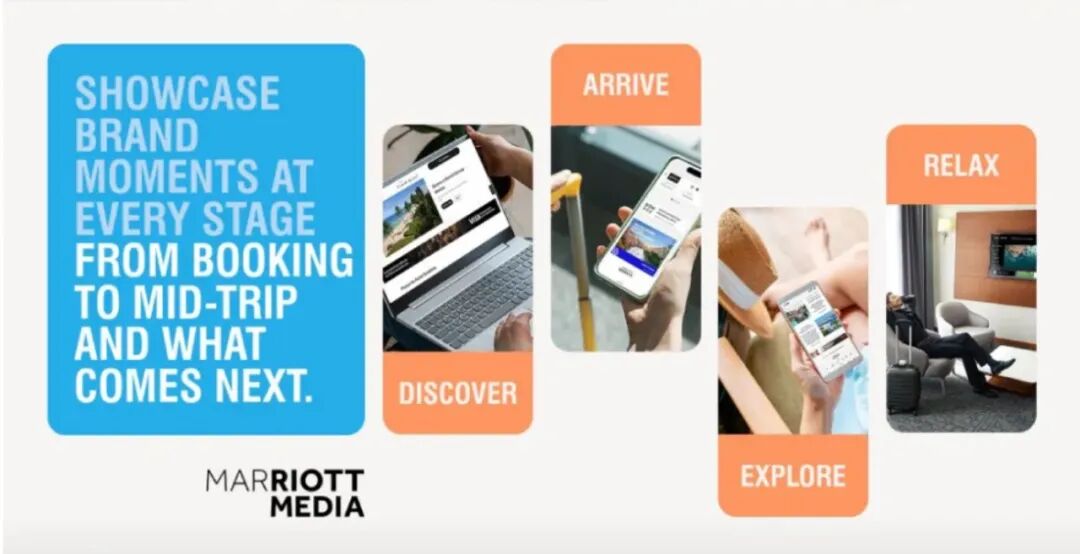
Image source: Marriott International Official WeChat Account
The logic is straightforward: according to data previously released by Marriott International, by the end of the first quarter of 2026, the number of global Marriott Bonvoy members had reached nearly 283 million. In 2025 alone, revenue from co-branded credit card usage fees amounted to approximately $716 million. This means Marriott holds a member traffic pool with extremely high consumption potential.
From online channels such as official platforms and mini-programs, to offline scenarios including in-room TVs and digital screens in public areas, and then to external social ecosystems and programmatic advertising channels, Marriott is fully capable of integrating scattered resources to create a comprehensive, three-dimensional travel media network, making advertising the hotel's next growth curve.
Who Says Hotels Can Only Sell Rooms?
As competition in the hotel industry intensifies, more and more people are realizing that if a hotel only sells rooms, it is essentially no different from a rental property. Eventually, it will be trapped in brutal price wars and the "peak-off season curse", wasting its most valuable prime locations, member assets, and monopoly over guests' time.
The revenue per square meter of guest rooms has a ceiling, but "non-room revenue" does not. During their limited stay at the hotel, guests will deeply experience every item in the property, whether it's pillows, mattresses, or toiletries and fragrances. This is exactly the ideal sales environment for retail brands.
Yelvyin, founder of Atour, once shared his product philosophy in a speech, which can be summarized into three points: build scenarios, not just products; make friends, not just sell rooms; be sincere, not just follow procedures.
Everyone knows Atour's Deep Sleep Pillow sells extremely well, and many consider it a benchmark for hotel non-room revenue. But if you break away from the "hit product mindset", you will find that Atour's entire retail line — including deep sleep quilts, mattresses, bedding sets, loungewear, and even silk eye masks — all centers around a unified "deep sleep scenario".

Image source: Atour Planet Tmall Flagship Store
If you only increase "non-room revenue" by developing standalone products, you are essentially starting a separate business, wasting the hotel's exceptional immersive experience scenario. A three-dimensional scenario, however, can drive sales of multiple products simultaneously. This is what it means to build scenarios, not just products.
In recent years, Huazhu Hotels Group has also been continuously expanding its "circle of friends".
In November 2024, it officially announced the launch of a co-branded membership card with Juneyao Airlines. In February 2025, it partnered with Didi Chuxing to launch co-branded memberships. This May, it officially announced a collaboration with NIO's LeDao brand, and in July, it joined hands with China Southern Airlines to launch co-branded benefits.
According to conventional thinking, hotels only need to provide good accommodation services for customers. But Huazhu refuses to be limited by this — it wants its members to still remember their "Huazhu Club" identity even after they leave the hotel.
Huazhu's collaborations with these travel companies essentially convey this message: "I provide you with value, but I don't expect you to stay with me tonight." Treating people as friends, not just traffic, is what it means to make friends, not just sell rooms.
When the relationship between guests and hotels goes beyond a purely transactional one, guests become less price-sensitive. If they see the hotel as a friend, they will be willing to attend its wine tastings and purchase its co-branded products, giving the hotel more opportunities to sell non-room offerings such as catering, retail, and events.
But what if a hotel has neither Atour's mature deep sleep scenario nor Huazhu's 300-million+ member pool? How can it sell products beyond rooms? The answer is to "be sincere".
From Huayang International Hotel in Luoyang to Jinyi Hotel in Inner Mongolia, many "hotel industry versions of Pang Donglai" (retail chain famous for exceptional service) have emerged in recent years.
88 types of unlimited breakfast, housekeeping staff voluntarily helping guests wash socks, disinfection of kettles, anti-spy camera checks... They don't just provide accommodation as an add-on service, but deliver a complete service experience where accommodation is only one part. Being sincere, not just following procedures, will make guests willingly pay a premium for rooms even during off-seasons.
When Jinyi's brand gains sufficient popularity online, guests will come from far and wide, willing to pay for that "sincerity". Its extended hot spring leisure, catering, and retail services will naturally find customers. The costs of those free services ultimately translate into more precious trust, which rewards the hotel doubly in other forms.
This June, JX Hotel Group proposed a concept on its official service account — Oriental Second Interface — inviting brands, art institutions, and curatorial teams to collaborate and explore new possibilities for hotel spaces.
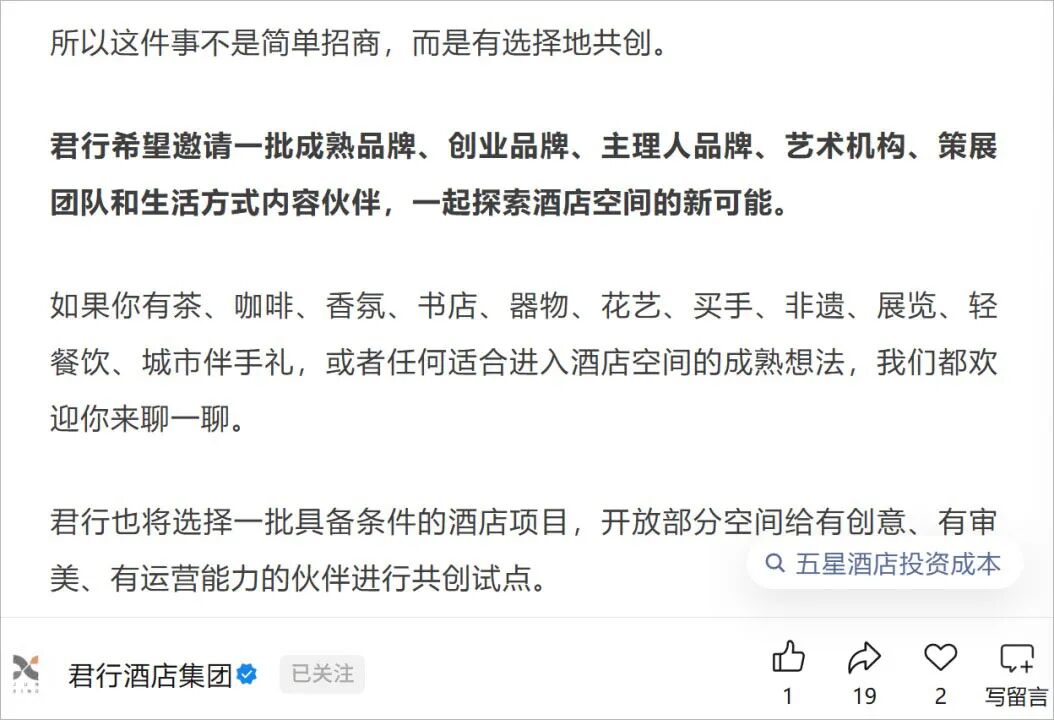
Image source: JX Hotel Group Official WeChat Account
Although it's still in its early stages, we are glad to see that amid increasingly fierce market competition, hotel brands are not treating price wars as their only way out. Instead, they are choosing to explore more diversified non-room revenue streams, broadening the market rather than narrowing their paths.
If an industry wants to become more vibrant, it must seek survival amid change. The environment is evolving, and hotels need to evolve too.
Sartre said that humans are free. Hopefully, hotels can be too.
This article is from the WeChat Official Account "Hotel Management Finance", written by Xinyi, and published with authorization from 36Kr.