Changxin Technology topped the A-share market in just one day, and its most important value lies precisely here.
Today, the most elated group of stock traders are likely the successful subscribers of Changxin Technology's new share offering.
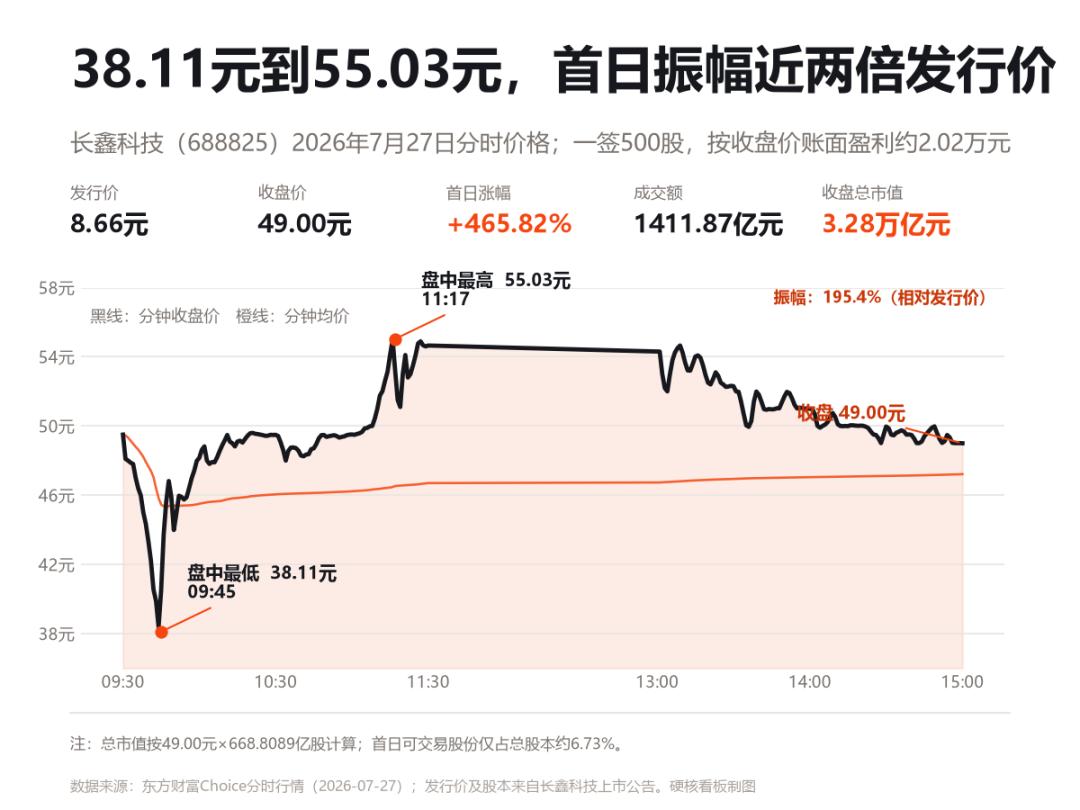
Changxin Technology's issue price is 8.66 yuan. One allotment consists of 500 shares, requiring a total payment of 4330 yuan. On its first trading day, Changxin Technology closed at 49 yuan, making those 500 shares worth 24500 yuan — a profit of 20000 yuan earned effortlessly (or even just by sitting still).
It's a genuine win (envious face).
For comparison, the winning probability for a single stake of the third prize in the Double Color Ball lottery is approximately 0.000914%, with a fixed bonus of 3000 yuan. Meanwhile, the final online subscription success rate for Changxin is 0.4714%, meaning roughly 1 out of every 212 allocation numbers wins. In other words, winning a Changxin allotment is about 516 times easier than taking the Double Color Ball third prize, and the profit earned is 6.7 times that of the lottery prize.
However, this is only the most eye-catching aspect of the company.
At today's close, Changxin Technology's total market value stood at roughly 3.28 trillion yuan, and it even surged to 3.68 trillion yuan at one point during the session — surpassing Intel's US market capitalization of 465.6 billion USD (approximately 3.15 trillion yuan) as of July 24. The 3.28 trillion yuan market cap also overtook the previously leading Industrial and Commercial Bank of China, making Changxin the highest-valued company on the A-share market, equivalent to roughly two Kweichow Moutai.
A company unknown to many consumers has taken the top spot in A-share market capitalization on its very first trading day. What exactly has it accomplished?
The New A-Share Leader: What Does It Actually Do?
Regarding memory semiconductors, there's a longstanding but still widely misunderstood concept that many people fail to distinguish clearly.
We commonly refer to memory sticks, solid-state drives, and mechanical hard drives all as "memory/storage", but they are fundamentally different technologies.
For example, when a phone is advertised with a 12+256GB configuration, this involves two distinct types of memory.
The 12GB refers to DRAM, which serves as temporary runtime data storage — all data stored in it is lost once the device is powered off. Its capacity determines how many programs your device can run simultaneously, as well as the speed of data access.
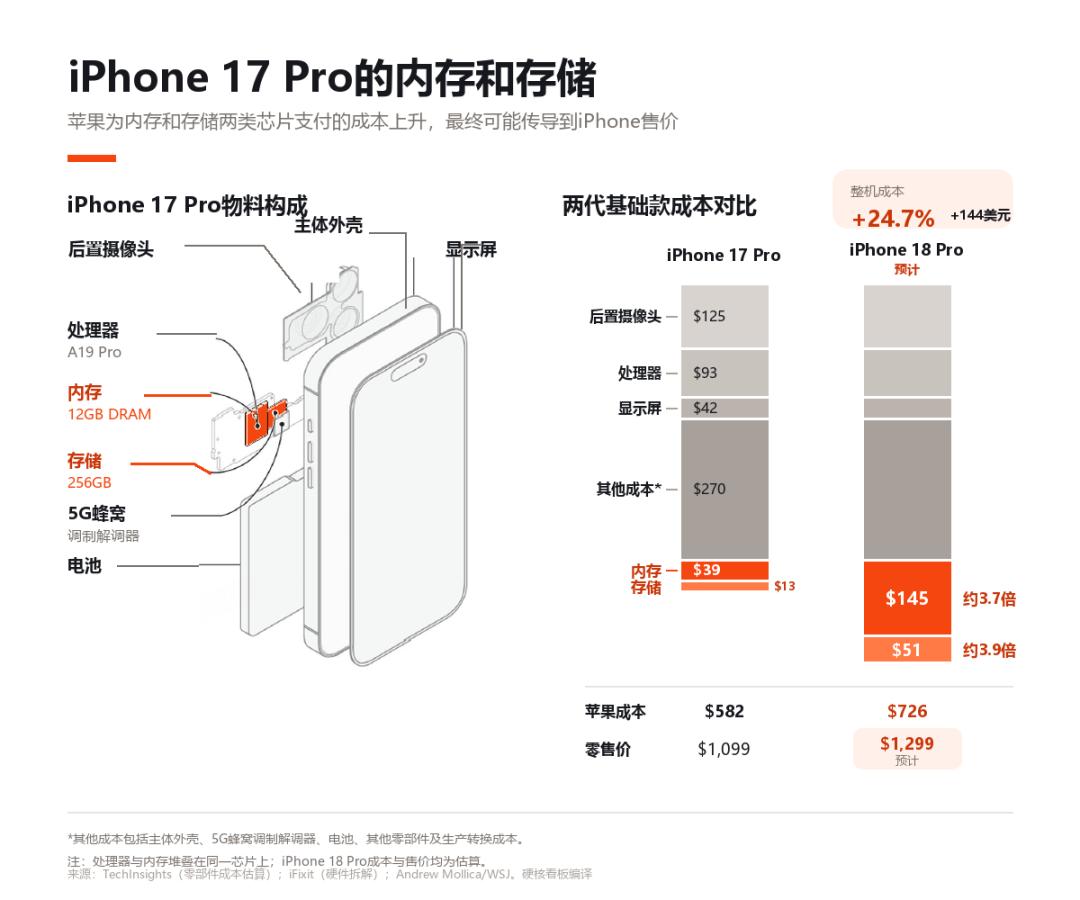
The 256GB refers to NAND flash memory. It functions more like a warehouse, storing photos from your phone and files on your solid-state drive, and retains all data even when power is cut off.
Therefore, when we talk about "China's memory industry", we must distinguish at least two distinct paths: Yangtze Memory focuses on NAND, while Changxin Technology specializes in DRAM.
Looking across the entire global memory market, Samsung, SK Hynix, and Micron are Changxin's direct competitors in the DRAM sector.
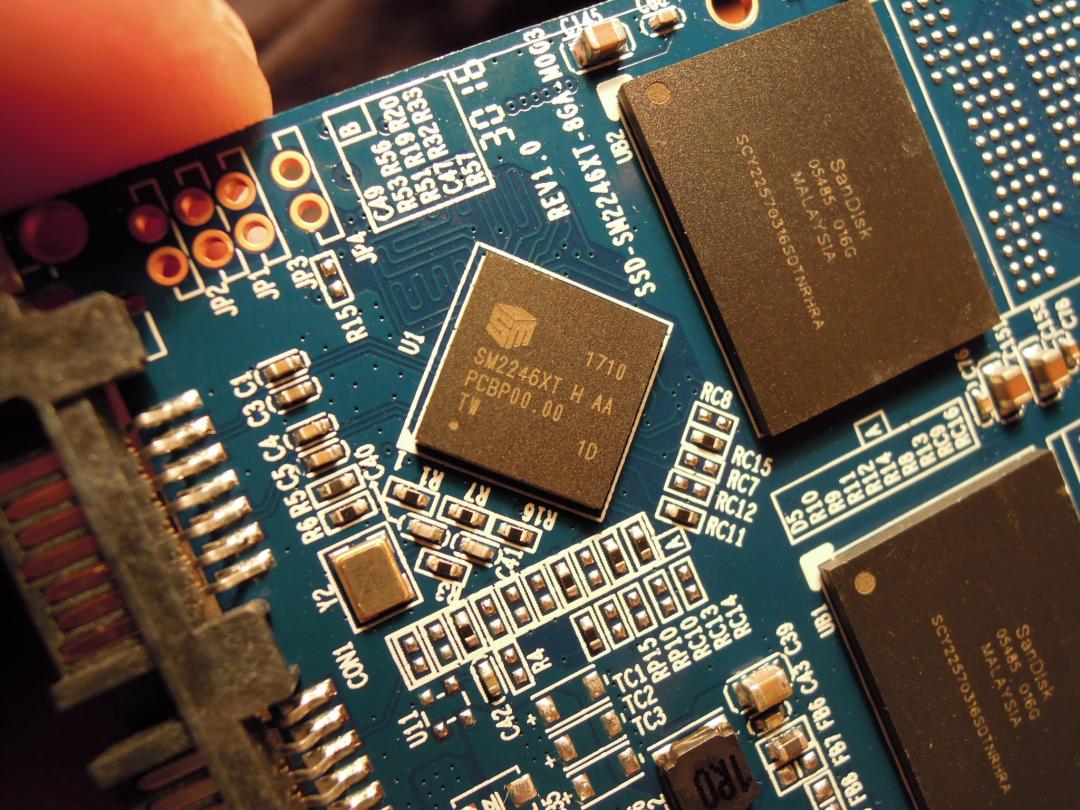
Kioxia and SanDisk primarily manufacture NAND flash memory and solid-state drives; SanDisk and Western Digital completed their corporate spin-off in 2025, after which Western Digital focused on mechanical hard drives. All of these are classified as "memory companies", but they do not all compete directly with Changxin in the DRAM market.
Kingston plays a different role entirely. It purchases DRAM chips from original chip manufacturers, then assembles these chips with PCBs and other components into complete memory sticks, handling the design, assembly, testing, and sales processes. As the world's largest third-party DRAM module manufacturer, Kingston is not an original DRAM wafer fabrication plant, so it does not appear in market share comparisons between Changxin, Samsung, SK Hynix, and Micron.
Back to Changxin: The low-power LPDDR series memory used in smartphones, and the DDR series memory mainly used in computers and servers, are all part of its product portfolio.
The company has already achieved mass production of LPDDR4X, LPDDR5, and LPDDR5X, and began volume production of DDR5 at the end of 2024. Multiple end-market brands including Xiaomi, OPPO, vivo, Honor, Transsion, and Lenovo are its customers or partners. Alibaba Cloud, ByteDance, and Tencent are also listed in the industrial cooperation disclosures from its prospectus.
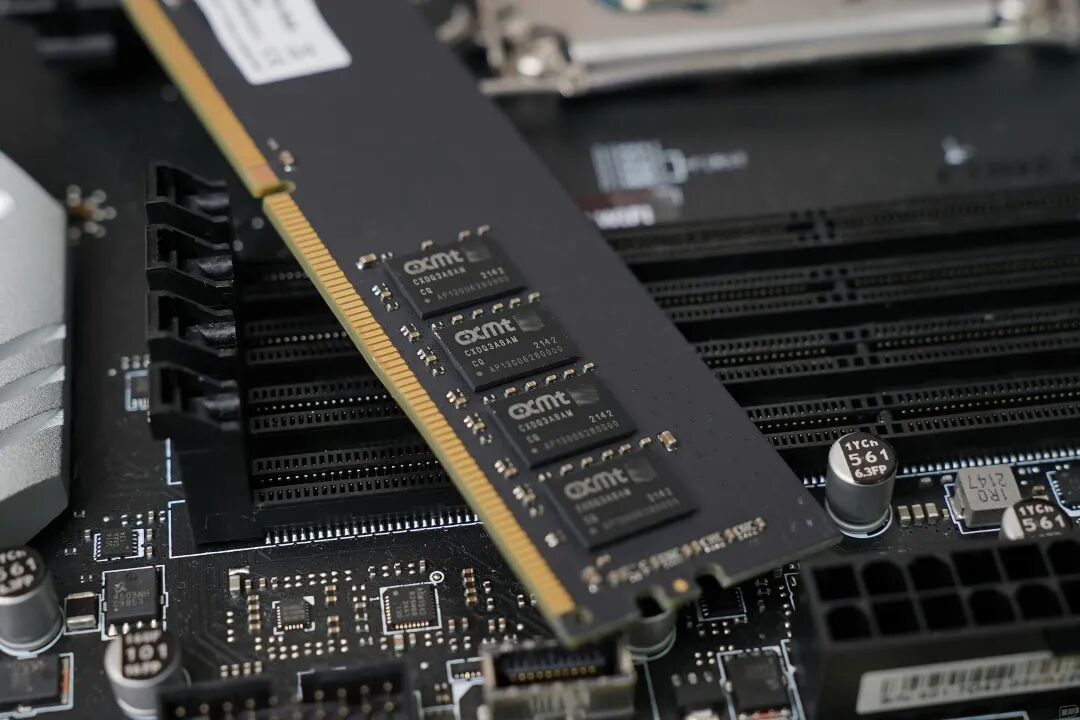
In other words, domestic Chinese smartphones, computers, and servers can now be equipped with mainstream DRAM produced on a large scale by a Chinese enterprise.
This is Changxin's most significant value: it has made China the owner of a DRAM manufacturer capable of continuous supply, ongoing technological iteration, and integration into mainstream consumer products for the first time.
However, there is still a considerable gap between this achievement and "global leadership".
According to Omdia data cited in Changxin's prospectus, in the fourth quarter of 2025, Changxin accounted for 7.67% of global DRAM sales, ranking fourth worldwide. Samsung Electronics, SK Hynix, and Micron combined still control roughly 90% of the entire market.
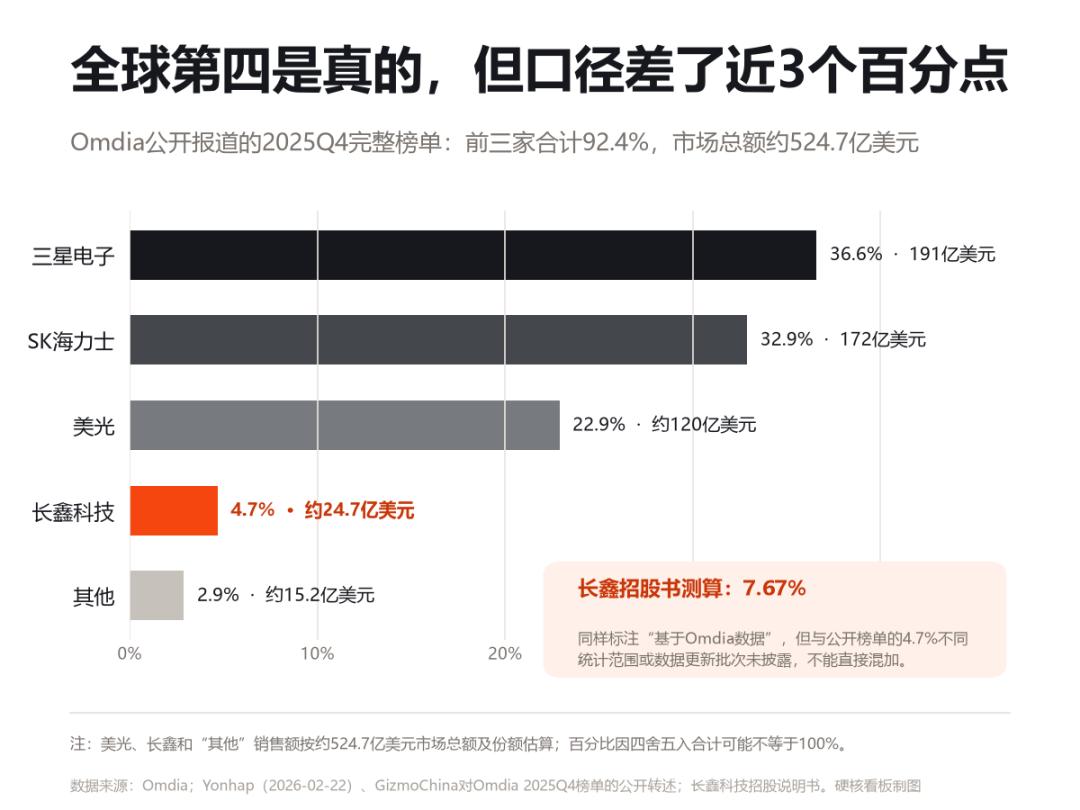
Thus, the "world's fourth-largest" ranking can be interpreted in two ways.
Optimistically, Changxin received its first order in 2019 and climbed from zero to the fourth global position in just a few years. But a more cautious perspective notes that the top three players form an unbroken mountain range of dominance, far from being just three isolated peaks.
Changxin has secured its ticket to the mainstream market, but it has not yet become a "fourth giant" with a comparable scale to the top three firms.
57.9 Billion Yuan Cannot Buy a Competitive Moat
At the issue price of 8.66 yuan, Changxin's current IPO will raise approximately 57.9 billion yuan, breaking the fundraising record for the Sci-Tech Innovation Board.
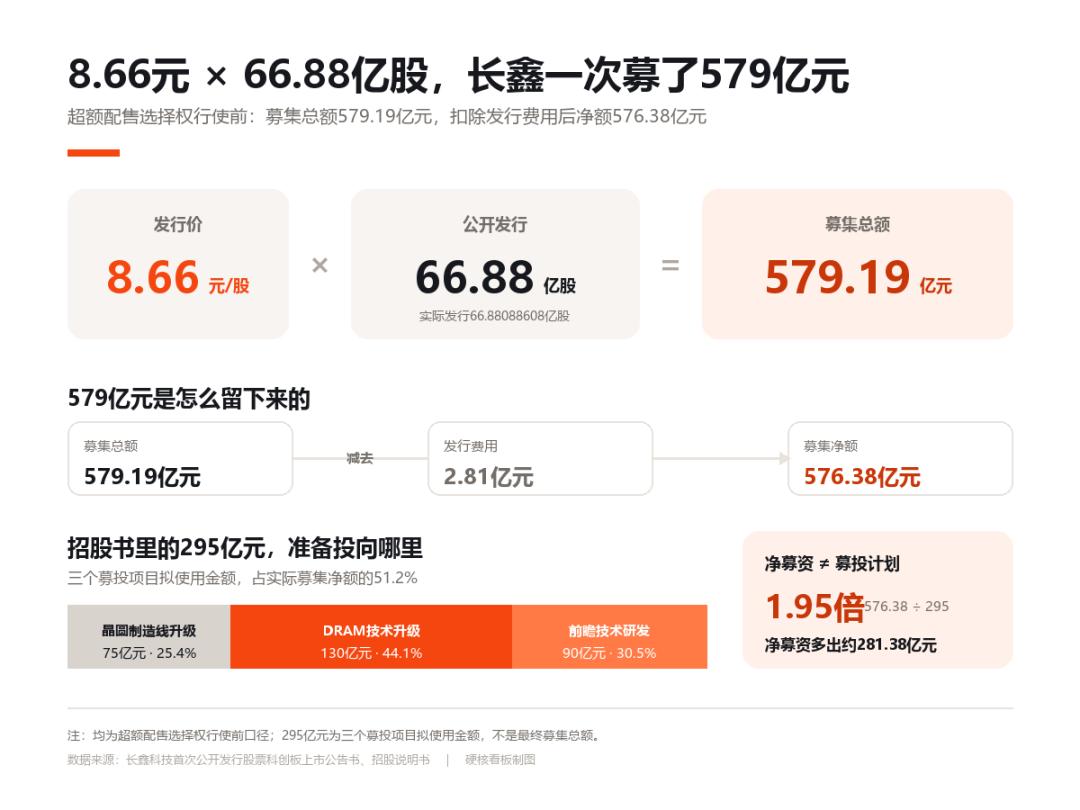
This capital can be used to purchase manufacturing equipment, expand production lines, and increase R&D investment — securing the heavy-asset ticket required to continue catching up with industry leaders.
But in the DRAM sector, 57.9 billion yuan is only "the capital to keep pace", not a "guarantee of definite success".
This is because the industry has invisible barriers to entry that are not immediately apparent.
DRAM is a highly standardized product. Users will not see drastically different web pages or game visuals simply because their memory chips come from different manufacturers.
Changxin's current mainstream DDR5 and LPDDR5X products have indeed passed customer certification, and the company has entered the supply chains of brands including Xiaomi, OPPO, vivo, Transsion, and Lenovo.
The real gaps lie in areas that consumers never see.
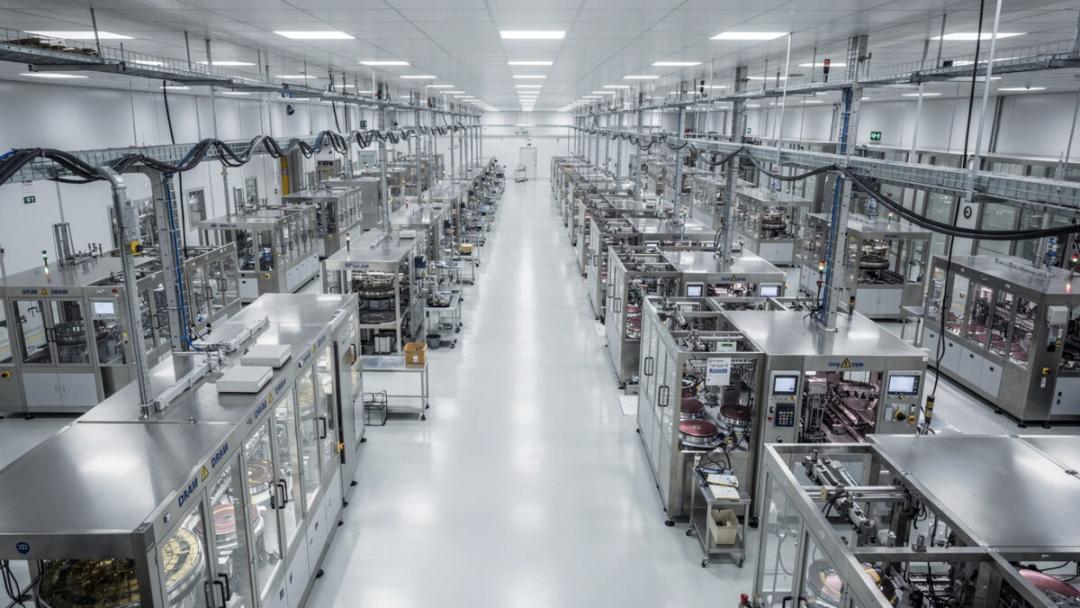
According to prospectus disclosures and industry documents, Changxin still has significant room for improvement in manufacturing processes, yield rates and cost control, production scale, product portfolio optimization, and customer certification coverage.
The most critical gap, however, is in advanced product development.
The most sought-after memory for AI servers is HBM — high-bandwidth memory that stacks multiple memory layers vertically to deliver high-speed data transmission for AI chips.
Counterpoint statistics show that in the fourth quarter of 2025, SK Hynix, Samsung, and Micron captured 57%, 22%, and 21% of global HBM sales respectively, combining for a full 100% market share.
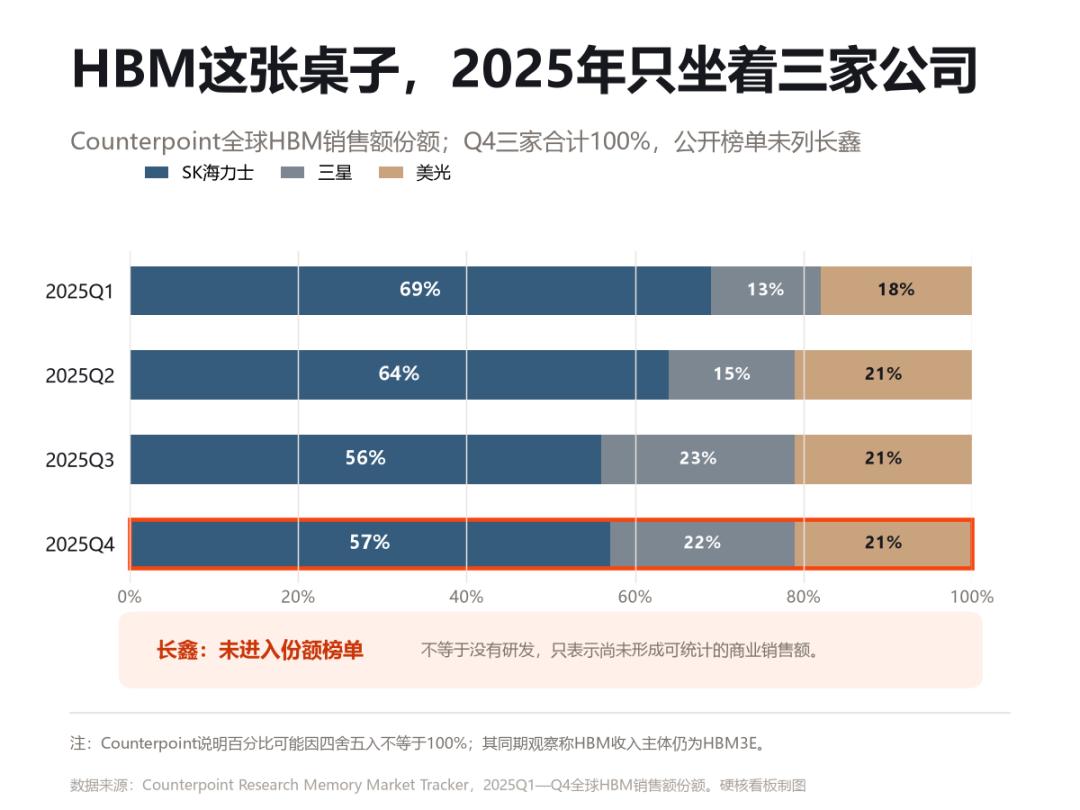
Changxin does not appear on this ranking list; the core products highlighted in its prospectus are still DDR and LPDDR, with no commercial HBM revenue reported.
This is the clearest and most unavoidable gap separating Changxin from the top three players.
If you want to measure exactly how far Changxin lags behind the industry leaders, HBM is the most concrete benchmark.
Some gaps can be closed with sufficient capital. New factories, equipment, R&D, and talent all require large investments, and 57.9 billion yuan will give Changxin much more momentum to advance. According to media reports, the majority of this 57.9 billion yuan raised will be invested in HBM production line construction and advanced process R&D.
But money can buy equipment, yet it cannot buy the decades of experience manufacturing billions of chips. After a new production process is initially validated, it still needs to go through yield rate improvement phases and full customer certification before reaching mass production.
Time is also a major constraint. Even after a wafer fab receives funding and starts expansion, it usually takes several years to build up stable, high-volume production capacity. By the time that stable capacity comes online, it is impossible to predict what stage the market cycle will be in.
What Does the Future Hold for Changxin?
Why do DRAM prices constantly swing between sharp increases and steep declines?
Because the industry has three defining characteristics: factories are extremely capital-intensive, production expansion takes many years, and the final products are highly standardized.
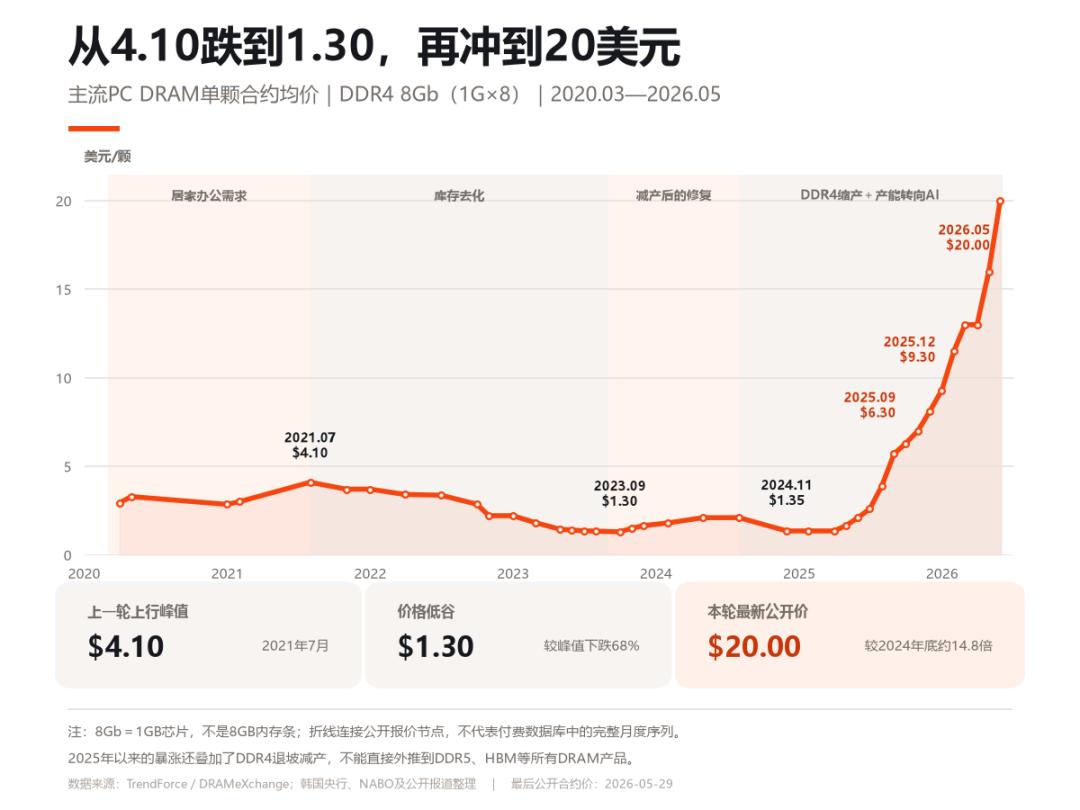
The traditional cyclical nature of the memory market has been stretched into an almost linear upward trend during this current extraordinary price boom.
When prices are rising, all major manufacturers have strong incentives to invest in new production capacity. But building a new wafer fab and ramping it up to stable mass production takes years. By the time new capacity finally comes online, customers may have already made sufficient purchases, and market demand for smartphones and PCs may have weakened. The market can suddenly shift from supply shortages to oversupply, forcing standardized chips to be sold at discounted prices to attract customers.
When prices hit a trough, manufacturers will cut capital expenditures and reduce factory utilization rates. A few years later, supply tightness returns, triggering the next round of price increases.
Changxin has already personally experienced this rollercoaster cycle.
The last cyclical trough for memory prices occurred in 2023. That year, Changxin recorded approximately 11.5 billion yuan in inventory impairment losses, with a net loss attributable to shareholders of 16.34 billion yuan.
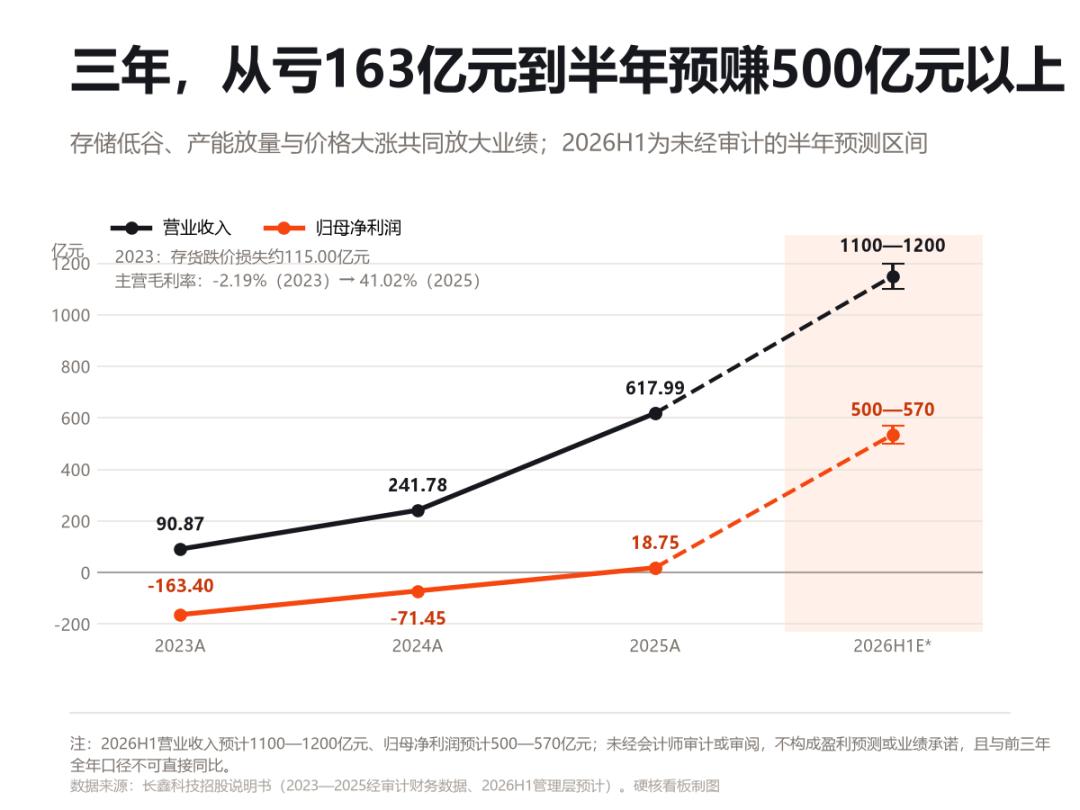
By 2025, as the industry recovered and production capacity expanded, Changxin achieved total revenue of 61.8 billion yuan, with net profit attributable to shareholders of around 18.8 billion yuan.
Entering 2026, DRAM prices continue to rise, and the company projects significant profit growth in the first half of the year. However, it also warned in its prospectus that if the supply-demand relationship reverses, this strong first-half performance growth may not be sustainable.
Even global industry giants cannot escape the challenges of this cyclical pattern.
In Micron's 2025 fiscal annual report, it disclosed that over the past five years, annual changes in average DRAM selling prices have ranged from a 40% increase to a 40% decrease, with NAND prices showing even greater volatility. Micron explicitly warned that memory prices have previously fallen below manufacturing costs, and this scenario could very well happen again in the future.
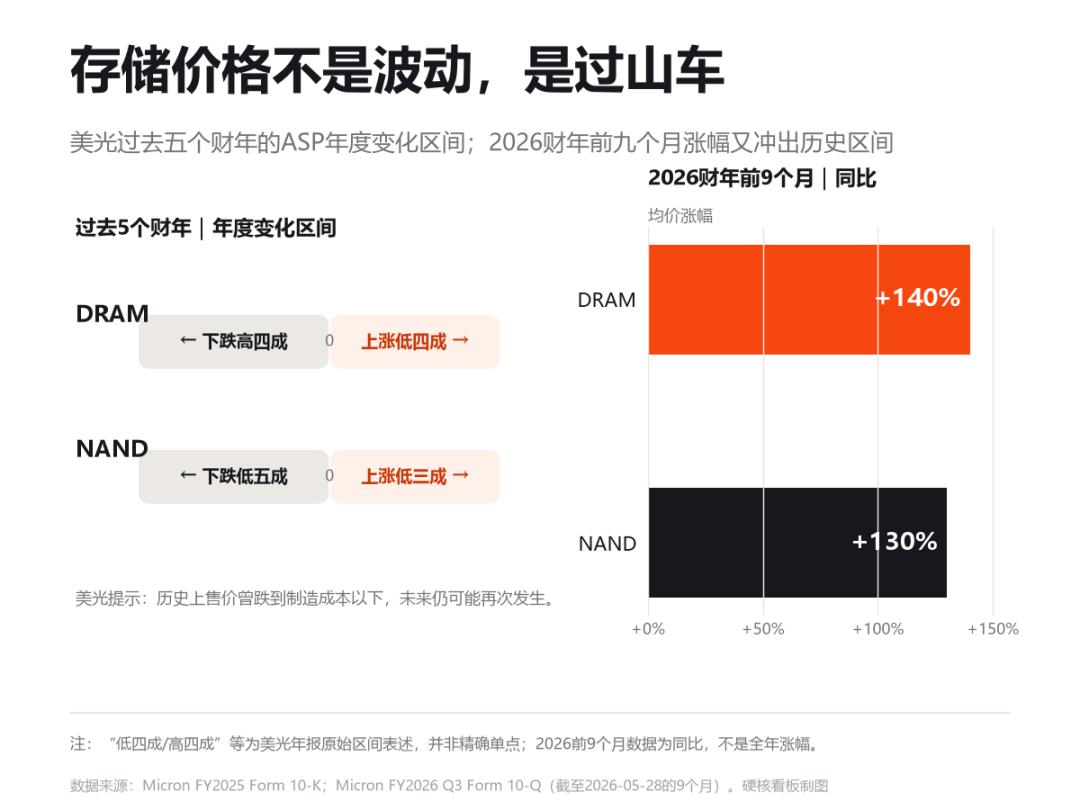
AI has indeed transformed the memory industry, but it has not eliminated the production capacity cycle. Training and running large AI models requires massive amounts of HBM and server DRAM, and a single AI server consumes far more memory value than a regular server.
The shift of advanced production capacity toward HBM has also tightened the supply of conventional DRAM. These changes may prolong the current market boom and make it more robust.
This is one of the primary drivers of Changxin's recent