With a profit of 43.3 billion yuan and a share repurchase of 40 billion yuan, CATL still considers its stock price too low.
Before the battery consumption tax came into effect, CATL dropped three consecutive major moves: interim results with a net profit of over 40 billion yuan, a share repurchase plan of up to 400 billion yuan, and a dividend of nearly 6.5 billion yuan.
This move precisely responded to the newly emerged variables in the market. A week ago, three government departments including the Ministry of Finance issued an announcement: a 2% consumption tax will be levied on lithium batteries starting from September, and the rate will rise to 4% in September 2027. The era of tax-free lithium batteries is over.
Facing market concerns, CATL made its stance directly with real money. As of the close on July 24, CATL's share price stood at 383 yuan, with a market value of about 1.8 trillion yuan. The upper limit of the repurchase is 573 yuan — a premium of nearly 50% over the current price.
CATL's message is straightforward: I earn enough, have enough cash, and am full of confidence in the future. However, the market's valuation of CATL is too low.
Let's do the math first: How much impact does the consumption tax actually have
In the first half of the year, the combined revenue from power batteries and energy storage reached 2453.9 billion yuan, corresponding to a tax burden of about 49 billion yuan at the 2% tax rate. By this estimate, if the revenue scale in the second half of the year is similar, the annual tax burden will approach 100 billion yuan.
CATL's management responded: "The new costs will be shared through negotiation between the company and downstream customers, and the overall impact is controllable."
The game behind the phrase "shared through negotiation" is very interesting. Ordinary battery manufacturers have almost no bargaining power when facing car companies, but CATL is different. Consumers recognize its batteries, and the impact of switching suppliers is far more troublesome than re-negotiating a quotation. Therefore, the consumption tax is most likely not to stay only in CATL's income statement. It will become a new bargaining chip in the next round of procurement negotiations. CATL tries to include part of the tax burden in the quotation, while car companies try their best to push it back.
The impact of the consumption tax on CATL may be two-sided. If CATL tries to pass the tax burden on to car companies, the motivation of car companies to support secondary suppliers will be stronger. The 2% tax rate does not seem large, but in an industry with a profit margin of 1.5%, a cost difference of several hundred yuan is enough to change procurement decisions.
But on the other hand, second-tier battery manufacturers also have to pay this tax. Their economies of scale and bargaining power are far inferior to CATL — their full-capacity production rate is less than half of CATL's, and their cost structure is already thinner. From this perspective, the consumption tax may accelerate industry reshuffling, squeeze out small and medium players that cannot withstand the cost, and further concentrate market share to leading companies.
These two forces may act simultaneously. If car companies accelerate the pace of adopting secondary suppliers, the consumption tax will erode CATL's moat; if second- and third-tier manufacturers cannot hold on and exit the market first, the consumption tax will instead clear the market for CATL.
In the long run, the policy direction is clear: sodium-ion batteries, solid-state batteries, and fuel cells are exempt from consumption tax until December 31, 2028. This is equivalent to the government encouraging the industrial chain to shift to non-lithium battery routes. Although CATL has also made layouts in these new technologies, its real foundation, scale advantages, and bargaining power are all built on the main line of lithium batteries. Once the speed of industrial transition exceeds expectations, the advantages accumulated in the past will instead become a burden.
How was the 43.28 billion yuan earned
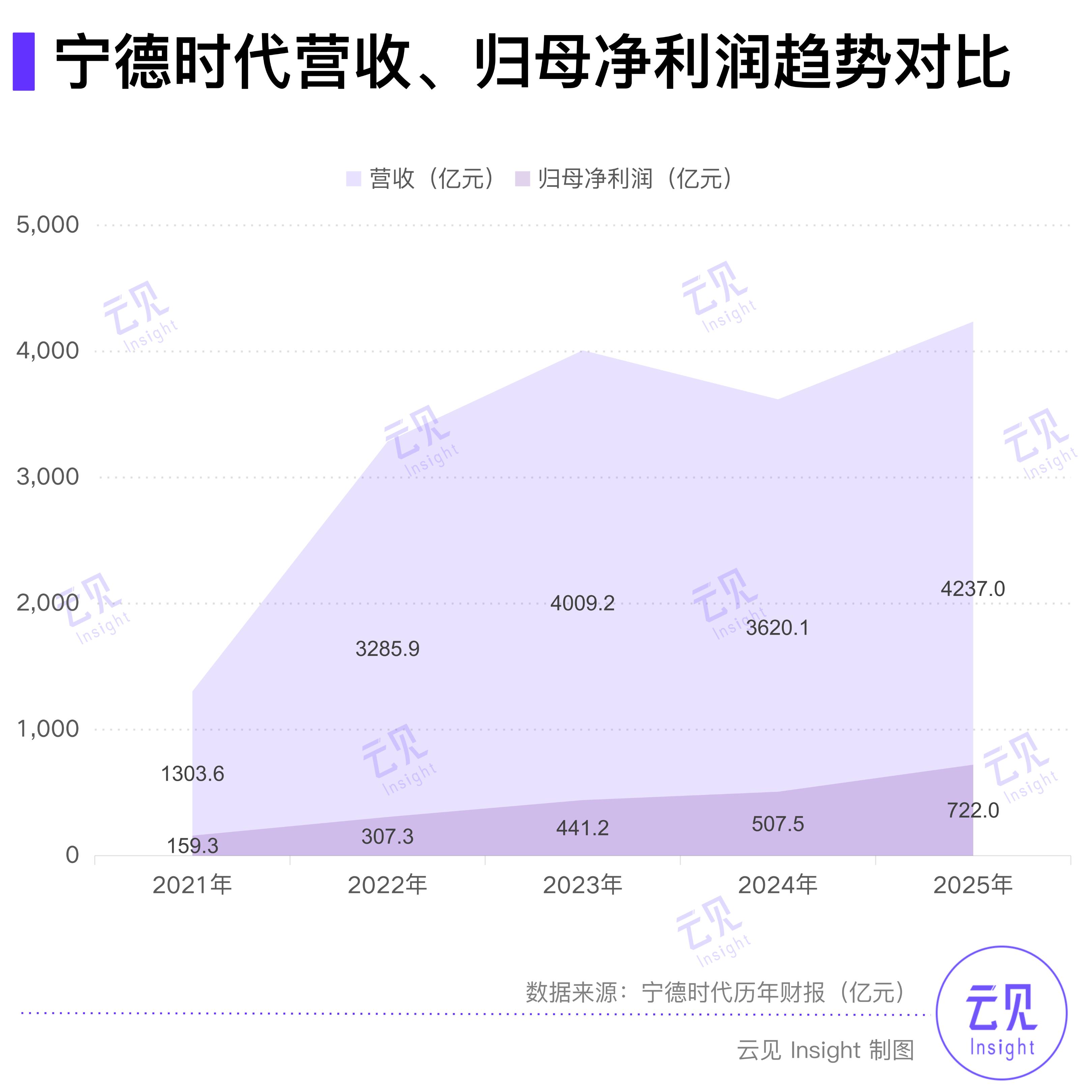
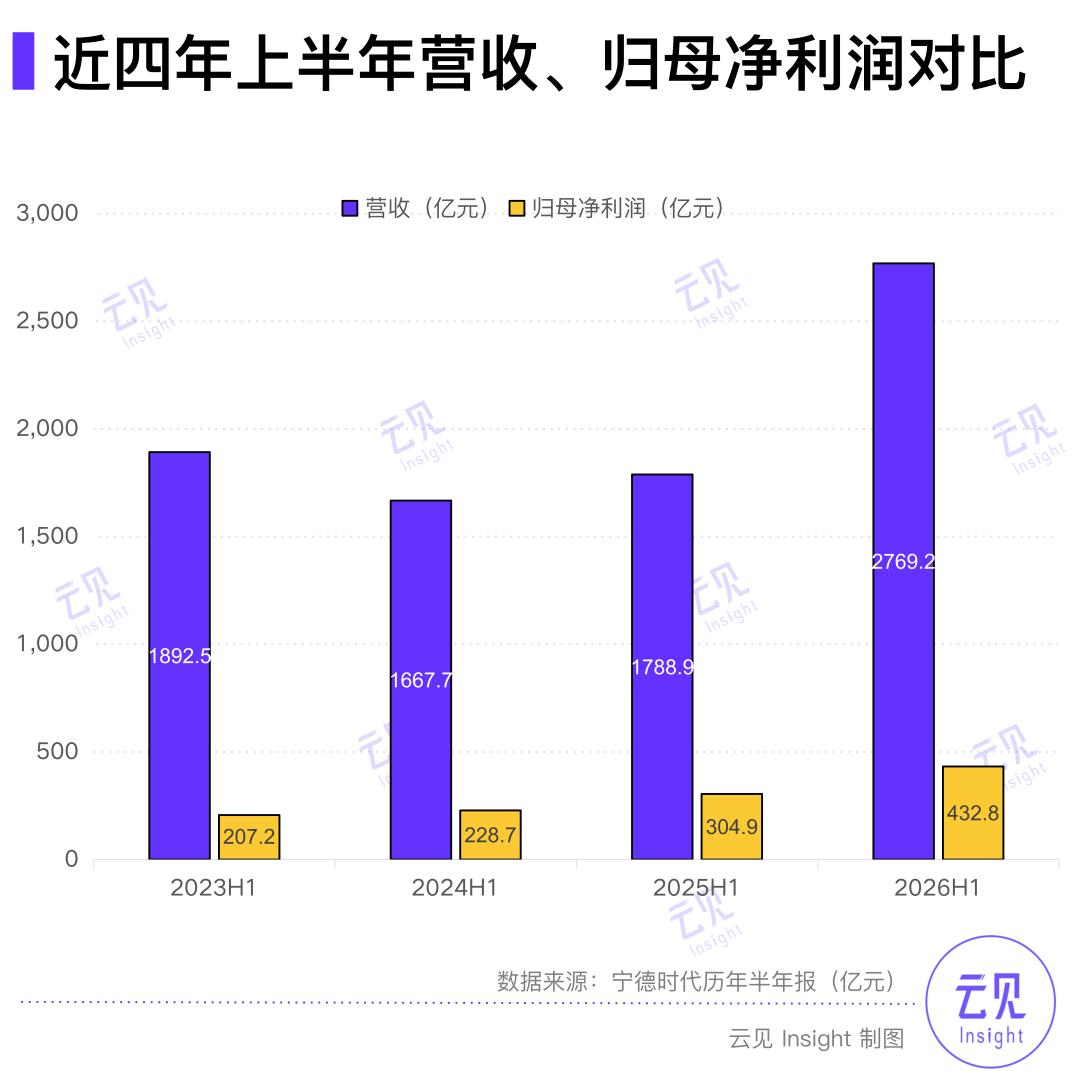
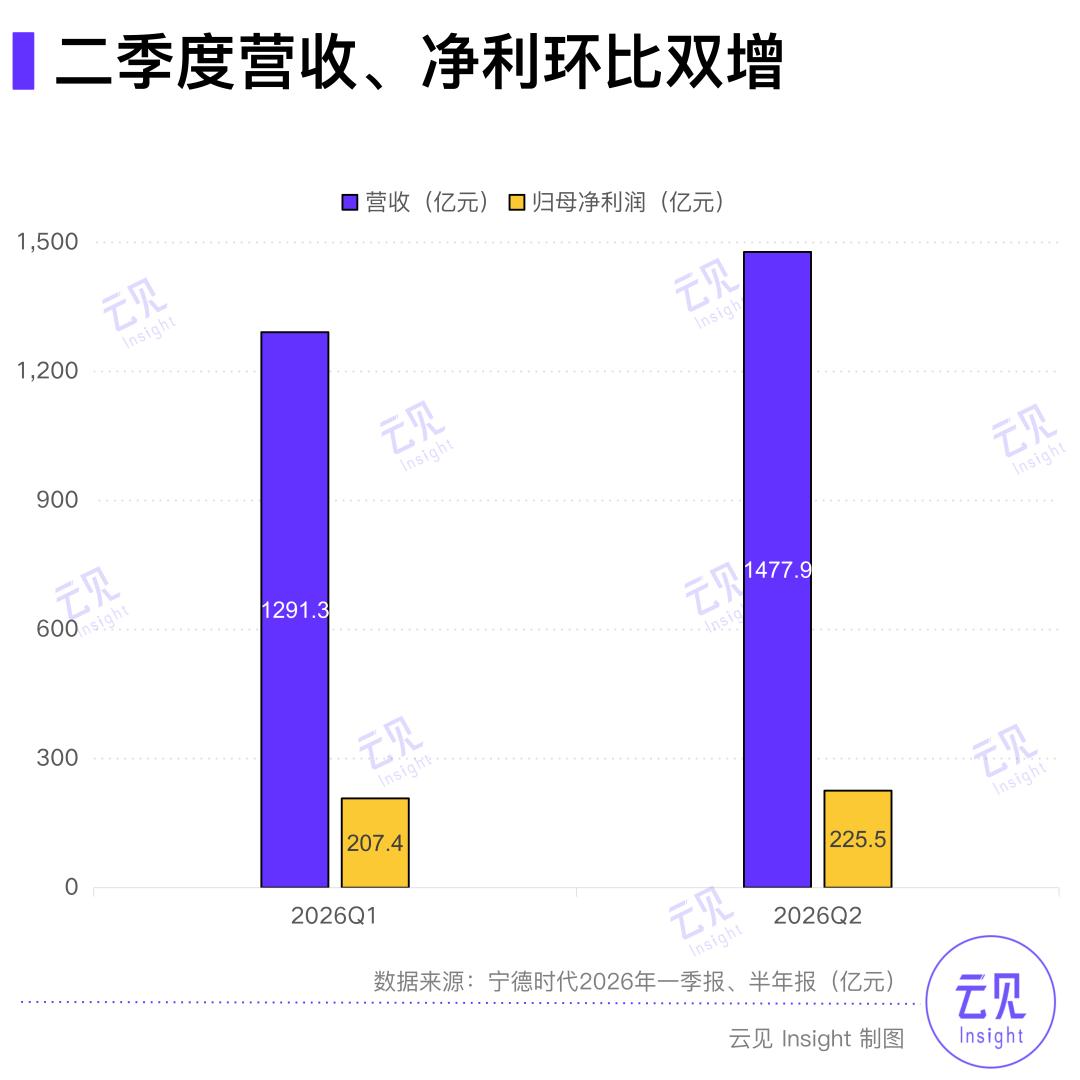
The semi-annual report shows that CATL's revenue was 2769.2 billion yuan, a year-on-year increase of 54.8%; the net profit attributable to shareholders was 432.8 billion yuan, a year-on-year increase of 42.0%. The non-recurring profit and loss deducted net profit was 390.1 billion yuan, a year-on-year increase of 43.4%. In the first half of the year, the company made a net profit of about 240 million yuan per day.
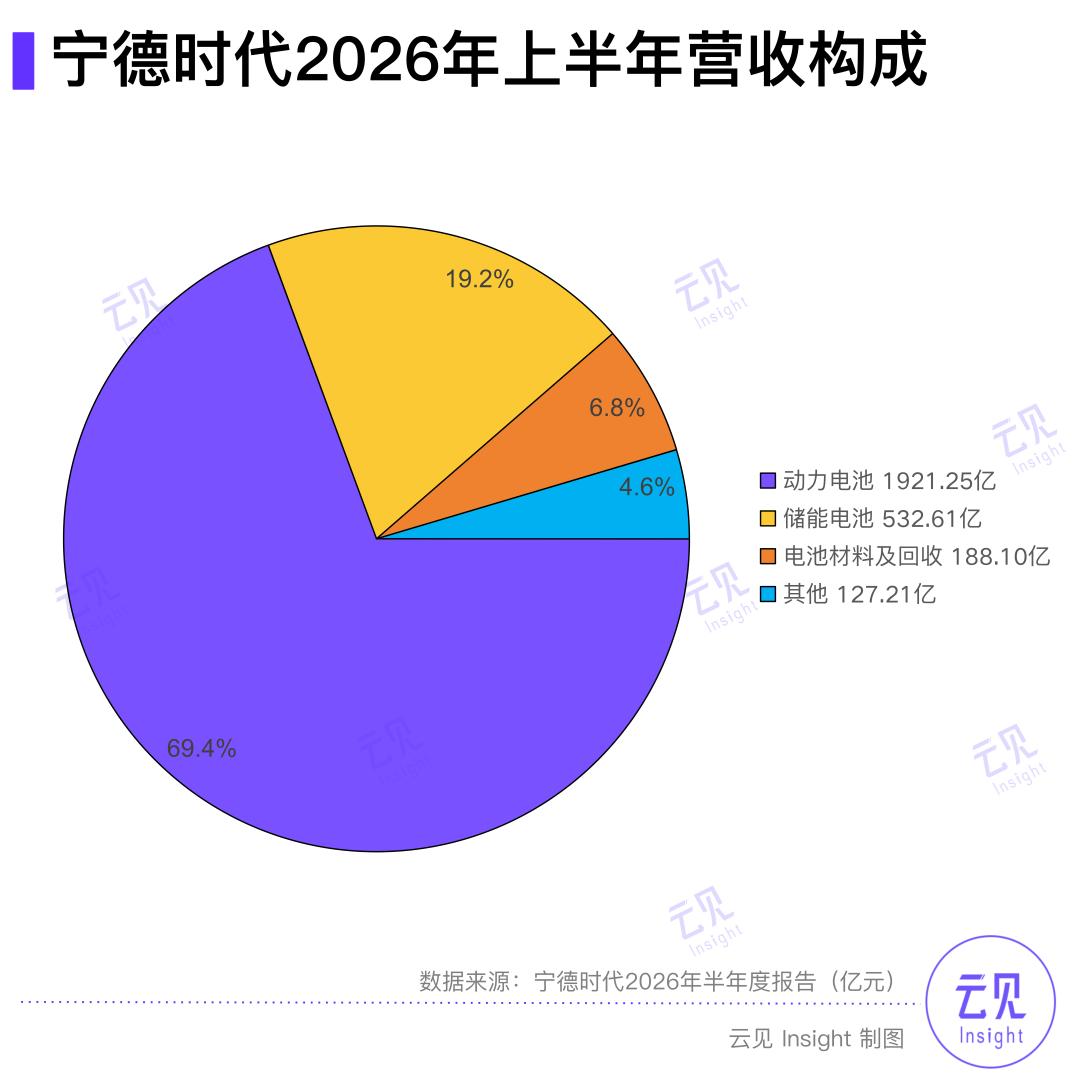
Breaking it down, the money comes from three sources.
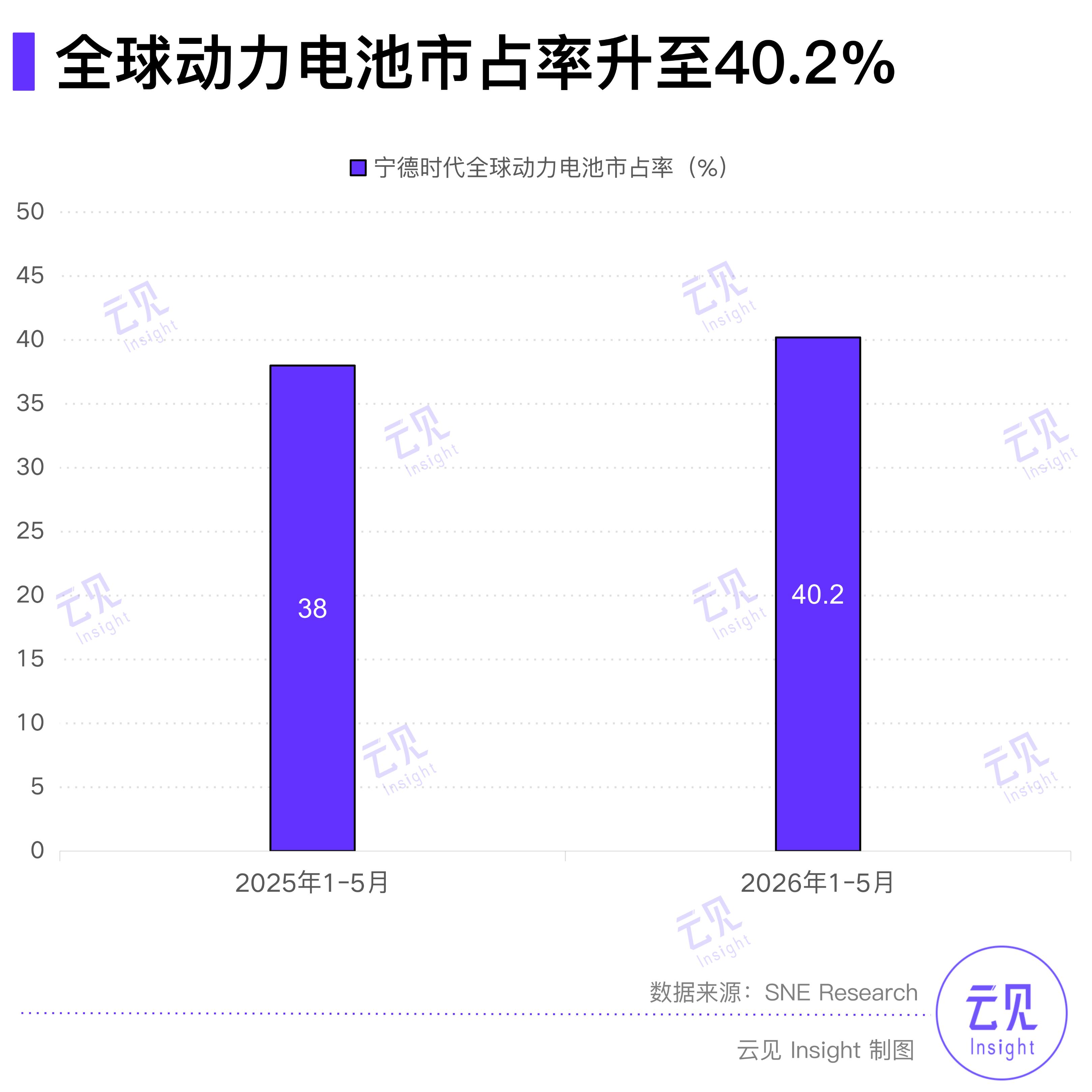
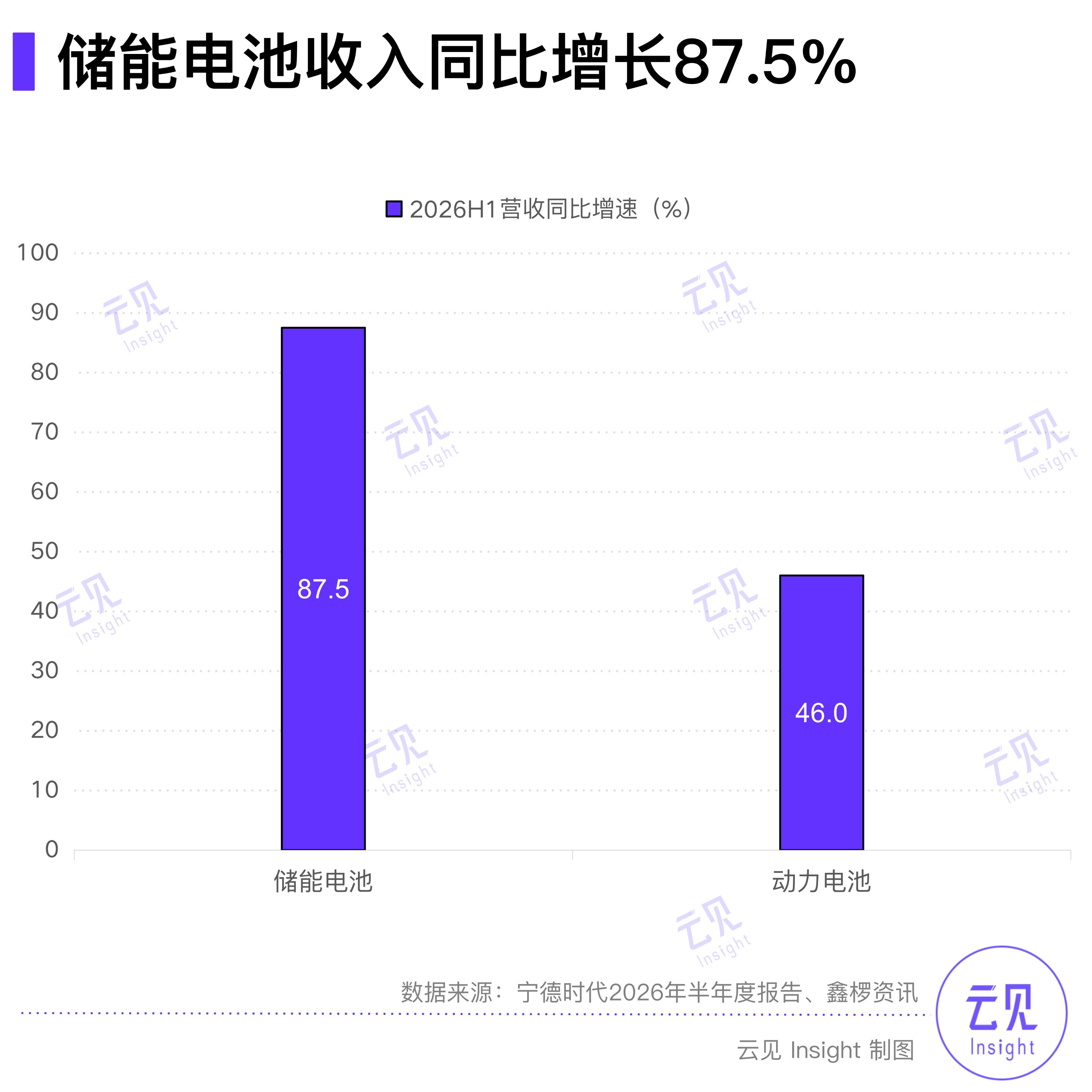
The revenue from power battery systems was 1921.3 billion yuan, a year-on-year increase of 46.0%, accounting for 69.4% of the total revenue. This is the core business. Data from SNE Research shows that from January to May 2026, CATL's global market share of power batteries was 40.2%, a year-on-year increase of 2.2 percentage points. The domestic installation share in passenger vehicles was 46.7%, a year-on-year increase of 5.6 percentage points, approaching the 50% threshold. The domestic market share of ternary batteries is 75.2%, which means that for every 4 ternary batteries sold in high-end models, 3 are from CATL.
The revenue from energy storage battery systems was 532.6 billion yuan, a sharp year-on-year increase of 87.5%, accounting for 19.2% of the total revenue. Energy storage was the fastest-growing sector in the first half of the year. Data from Xinlu Information shows that from January to June 2026, CATL's shipment of energy storage batteries ranked first in the world. The expansion of AI computing power and data centers has driven huge off-grid energy storage demand, and the potential demand of a single data center can reach 15 to 20 GWh.
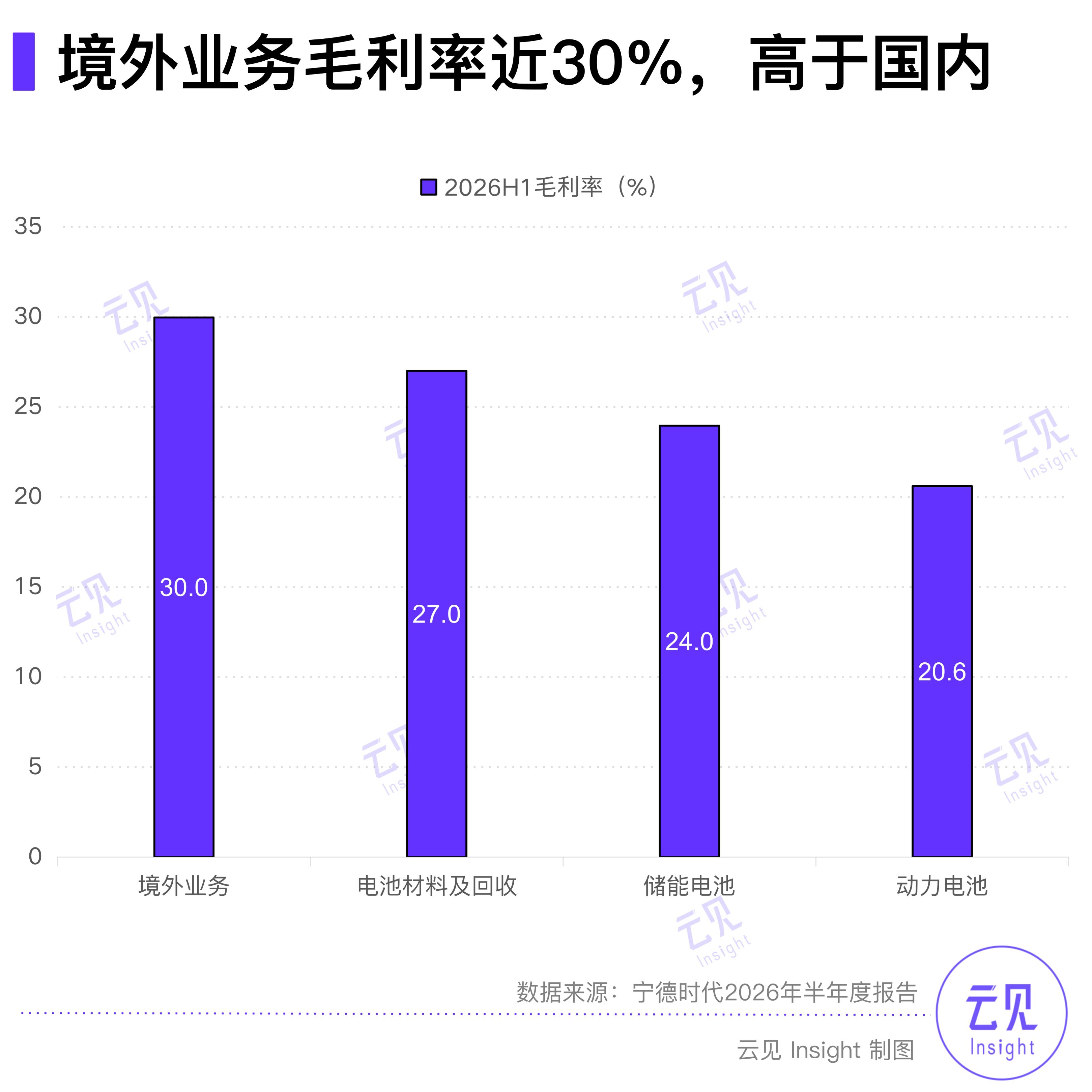
The revenue from battery materials and recycling was 188.1 billion yuan, a year-on-year increase of 67.2%, with a gross profit margin of 27.0%, a year-on-year increase of 5.8 percentage points. This is the business segment with the largest increase in gross profit margin among the three. The complete industrial chain layout from lithium mining to recycling gives CATL a say in the pricing of upstream resources.
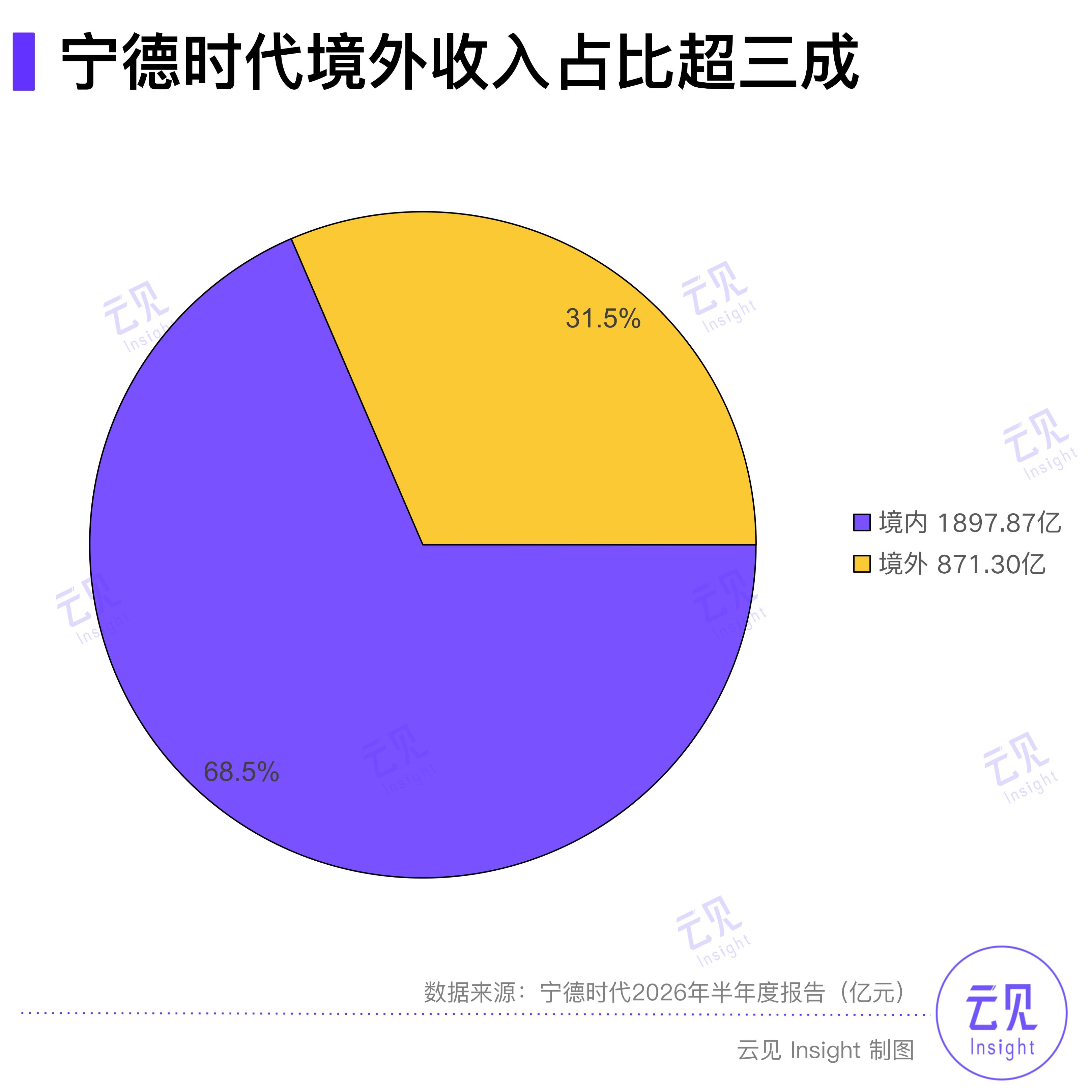
Overseas revenue was 871.3 billion yuan, accounting for 31.5% of the total revenue, with a gross profit margin of 30.0%, a year-on-year increase of 1.0 percentage point against the trend. In contrast, the domestic gross profit margin was 21.2%, a year-on-year decrease of 1.8 percentage points. The same battery is sold more than 40% more expensively overseas than in China. The German factory has become profitable, and the Hungarian factory is ramping up production.
There are also hidden concerns in the numbers — the gross profit margin of power batteries was 20.6%, a year-on-year decrease of 1.8 percentage points. The gross profit margin of energy storage was 24.0%, a year-on-year decrease of 1.6 percentage points. The declining gross profit margin indicates that the price pressure from downstream customers has been transmitted to battery manufacturers.
What does a 94.9% capacity utilization rate mean
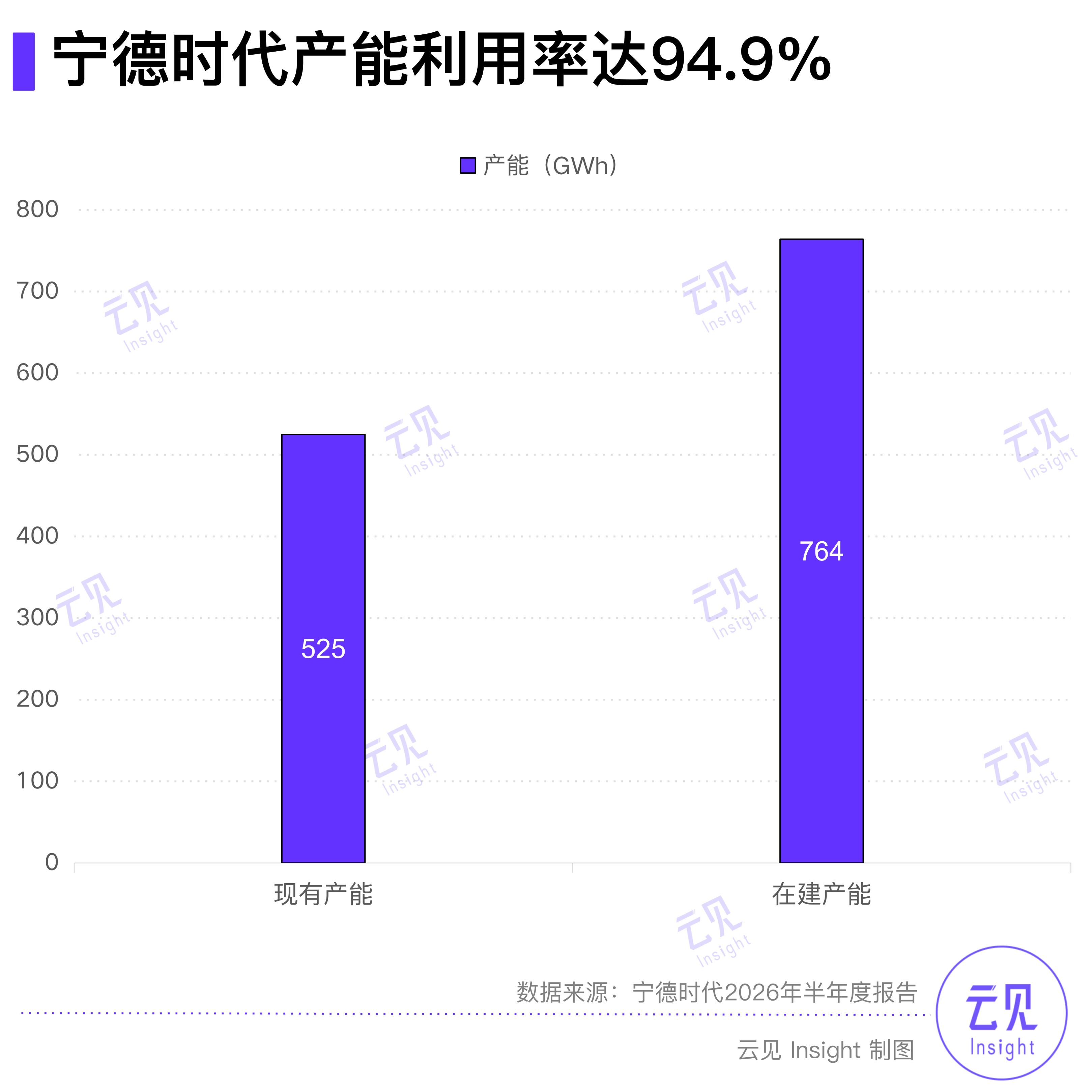
In the first half of the year, CATL's total capacity of battery systems was 525 GWh, with an actual output of 498 GWh, and the capacity utilization rate was 94.9%.
What level does this number represent in the industry? In the same period, the capacity utilization rate of second-tier battery manufacturers generally struggled between 40% and 50%. CATL is operating at nearly full capacity, while the production lines of second- and third-tier manufacturers are operating at less than half of their capacity.
Capacity utilization directly determines the unit depreciation and amortization cost. 94.9% means that fixed assets with a book value of 1693.8 billion yuan are operating at their physical limit, and the fixed costs in the manufacturing process are spread extremely thinly. This is the most direct buffer for CATL when facing price pressure from downstream customers.
The capacity under construction is even more staggering: 764 GWh, more than double the current total capacity. Making such a large-scale capital expenditure in a counter-cyclical stage means, on the one hand, betting on the penetration rate of new energy vehicles and energy storage demand in the next three to five years, and on the other hand, it is more straightforward — to lock in long-term agreement prices for raw material procurement through large-scale capacity expansion, and at the same time, seize the latest generation of production lines during the window of technological iteration, so that when second- and third-tier manufacturers try to catch up with old production lines, they find that they cannot even reduce costs to your level. This is not an arms race; this is a "positioning battle".
But will the 764 GWh become a depreciation burden in the future? No one can answer this question now.
It's not that we won't cut prices, it's that we can't
The 432.8 billion yuan net profit adds new evidence to the assertion that "car companies are working for CATL".
In the first half of 2026, Great Wall Motors' net profit was between 2.35 billion yuan and 2.6 billion yuan, Changan Automobile's was between 740 million yuan and 970 million yuan, Seres had a net loss of 1.5 billion yuan to 1.8 billion yuan, and GAC Group had a net loss of 4.06 billion yuan to 4.57 billion yuan. Among these four companies alone, the two profitable ones added up to a maximum of 3.57 billion yuan, and the two loss-making ones lost a maximum of 6.37 billion yuan in total.
The average profit margin of the entire vehicle industry is about 1.5%, hitting a new low in nearly a decade. The sales profit margin of the automotive industry in the first quarter was only 3.2%. For a model with a terminal selling price of about 200,000 yuan, the net profit per vehicle is only about 3,000 yuan.
In this context, CATL's profitability has instead become a kind of "original sin". In response, ZENG Yuqun responded in an interview with the media: "The lithium battery industry has not suffered the same disastrous consequences as the photovoltaic industry now, because CATL is propping up the prices. As long as CATL lowers the prices, the industry will be worse off than photovoltaics."
The implication is: It's not that CATL earns too much, but that it doesn't earn enough. If CATL cuts prices, the entire battery industry will collapse.
CATL does not cut prices, but car companies hope to use cheaper batteries to reduce costs and get rid of dependence on a single supplier. That's why second-tier battery manufacturers still have room to survive.
Li Auto has announced that starting from this year, all models will uniformly adopt a dual-battery strategy, with self-developed batteries and CATL batteries supplied in parallel. Secondary suppliers such as Sunwoda, CALB, and EVE are also eroding CATL's market share. From January to June 2026, BYD's domestic market share fell back to 17.5%, but other second-tier manufacturers are growing rapidly in the energy storage and mid-to-low-end markets.
What CATL sells on the surface is battery cells, but in essence, it sells range, safety, fast charging, and the certainty of mass production delivery. But when car companies start building their own battery factories and supporting secondary suppliers, this certainty is no longer irreplaceable.
400 billion yuan repurchase does not change the fundamentals
There are three core figures in the repurchase plan: a scale of 200 billion to 400 billion yuan, an upper limit of 573 yuan per share, and cancellation rather than incentive.
573 yuan represents a 50% premium over the current price of 383 yuan. This is not a rational repurchase pricing, but a signal — the company is telling the market that CATL is undervalued.
Cancellation-type repurchase means that the shares are no longer in circulation, directly increasing the earnings per share and net assets per share of remaining shareholders. Calculated based on the upper limit of 400 billion yuan and 573 yuan, it