Why hasn't drone delivery achieved explosive growth yet?
"The biggest problem in the industry right now is that we have scenarios, pilot projects, and use cases, but no operational network." On July 22, at the Low-Altitude Logistics Themed Forum of the International Low-Altitude Economy Expo, Zhang Yazhe, Head of China Aviation Capacity and UAV Projects at J&T Express Co., Ltd., avoided delving into technical specifications and instead brought up this very real practical challenge.
Over the past few years, drones have continuously expanded their application boundaries, from transporting agricultural products in mountainous areas to supplying materials to islands, from emergency medical delivery to park logistics. "Drone delivery" has long moved out of the laboratory, and there is no shortage of successful cases, but the industry has never seen the expected large-scale explosive growth.
Why? Drones have already proven they "can fly", but what determines whether the industry can cross the commercialization threshold is a logistics network capable of sustained operation.
The Industry Has Crossed Its First Threshold
"As of now, China Post UAV has built more than 290 regular flight routes across 22 provinces nationwide, with a cumulative total of over 85,000 flight sorties, a total flight mileage exceeding 1.1 million kilometers, and the transportation of over 380 tons of various materials," Fu Congyi, Regional Director of China Post UAV (Beijing) Co., Ltd., released a set of data.
From mountain postal routes to island supply, from mail transportation to medical material delivery, these routes cover multiple typical logistics scenarios, which also means that drone logistics has completed the leap from technical verification to scenario verification.
However, most of China Post UAV's routes are still concentrated in special scenarios, and there are not many cases that have truly entered the mass logistics system. In other words, the industry has verified that drones have flight capabilities, but a continuously operating logistics network has not yet taken shape.
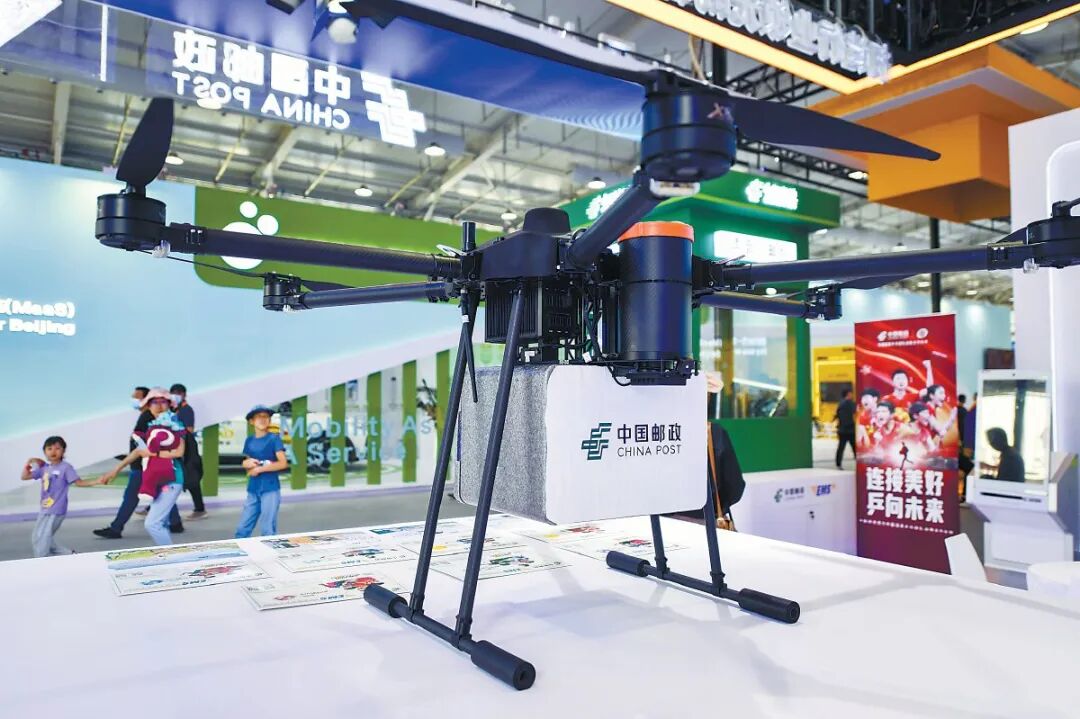
J&T's practices also confirm this point. In recent years, J&T has continuously explored using drones to solve the problems of low transportation efficiency and high costs in mountainous areas. In Fengjie, Chongqing, in the past, navel oranges were transported by manual porters with a daily transportation capacity of about 1,000 kilograms; after drones were put into use, the daily transportation capacity increased to about 10,000 kilograms, boosting transportation efficiency by nearly 10 times.
"Many people see the efficiency improvement, but what logistics companies care more about is whether it can become a long-term, stable, and replicable transportation capacity," Zhang Yazhe said. "If there are only a few sorties per day, even the most advanced aircraft cannot easily spread out the costs. Only by forming a route network with high-frequency operations can low-altitude logistics truly have commercial value."
The launch of the Fengjie project confirmed that drones can open up transportation scenarios that are difficult for traditional logistics to cover, but it leaves a more critical question: how to replicate a single successful case into a logistics network that can operate continuously?
Why Is It So Hard to Get the Network Up and Running?
"Low-altitude logistics is not about who can fly better, but about who can calculate the accounts clearly, operate more frequently, and run more stably," Sheng Liang, Vice President of EHang Future, calculated an operational account: what really determines the cost is not a single flight, but the number of daily sorties on a route, the annual flight duration of a single aircraft, and the continuous and stable transportation demand. Only by continuously increasing flight frequency and equipment utilization can the unit transportation cost have room to decline.
EHang Future is deploying large logistics drones and eVTOL transportation platforms. The focus of industry competition has long moved beyond the comparison of aircraft performance to a contest of operational efficiency.
What truly supports road logistics has never been individual vehicles, but a complete network covering warehousing, trunk transportation, distribution nodes, and scheduling systems; similarly, low-altitude logistics needs to build a high-frequency transportation network instead of just opening scattered routes.
In addition to operational efficiency, shortcomings in infrastructure also restrict industry development. Yu Zhengfei, Deputy General Manager of Anhui Low-Altitude Technology Development Co., Ltd., pointed out that if low-altitude logistics wants to achieve large-scale development, the first step is to solve the standardization of infrastructure. Without unified ground infrastructure, it is impossible to form a complete network in the air.
In recent years, Anhui Low-Altitude Technology Development Co., Ltd. has continuously participated in the construction of low-altitude infrastructure and the exploration of operational systems. "Currently, the industry still lacks unified standards in areas such as take-off and landing site construction, land attribute identification, and the division of construction and operation entities. It is difficult to achieve interconnection between different regions, which raises the cost of cross-regional operations," Yu Zhengfei said.
The construction of a low-altitude logistics network includes a complete set of supporting systems such as standardized take-off and landing sites, charging and swapping facilities, communication guarantee systems, and flight supervision platforms. Yu Zhengfei believes that only when ground infrastructure is first connected into a network can the air logistics network truly operate smoothly.
It's Not About Who Flies Farther, But About Who Can Land Faster
Who should operate this low-altitude logistics network? And which scenarios should be prioritized for implementation?
At present, the low-altitude logistics industry chain has formed a typical pattern of "strong at both ends and weak in the middle". On one end, drone companies continue to iterate aircraft performance; on the other end, logistics companies hold transportation scenarios and order resources. However, there is still a gap in the professional operation field that can integrate aircraft, airspace, stations, and logistics demands.
"What everyone discusses most today is drones, but what is really missing are the people who can organize drones into a network. In the future, we need professional operation entities similar to air freight forwarders." Zhang Yazhe said that operators do not simply manufacture drones or only take logistics orders, but coordinate route planning, flight scheduling, airspace coordination, and capacity organization to connect scattered aircraft and scenarios into a continuously operating network.
This also means that the competition in low-altitude logistics is shifting from equipment competition to competition in operational systems.
Even if the network framework is gradually built, it does not mean that all logistics scenarios are suitable for drones. Reporters from *IT Times* have noticed a change: compared to previous years when people were hotly discussing the "last mile" of low-altitude logistics, more and more companies are shifting their focus to feeder transportation this year.
Zhang Yazhe proposed a future three-level transportation system for low-altitude logistics: "Trunk - Feeder - Last Mile". The trunk line undertakes cross-regional transportation, the feeder line connects regional nodes, and the last mile completes terminal distribution. At this stage, the scenario that is easiest to form a commercial closed loop is not the last-mile distribution, but feeder logistics.
Last-mile distribution scenarios such as communities and parks have short distances, scattered cargo volumes, and large order fluctuations, making it difficult to support high-frequency operations; feeder scenarios such as mountain agricultural product transportation, island material supply, and cross-regional medical distribution not only have stable demand but also can give full play to the advantages of drones in traversing complex terrain and shortening transportation time.
"High-value, high-frequency, relatively long-distance transportation scenarios are easier to achieve a viable business model," Sheng Liang concluded.
Feeder logistics has already begun to generate actual revenue for enterprises. There are not many domestic enterprises engaged in cross-sea logistics transportation at present. United Aircraft has promoted the implementation of intelligent maritime logistics. Relying on the TD550 unmanned helicopter, it has opened up a fixed flight channel between CNOOC's offshore oil drilling platforms and onshore terminal factories in the Beibu Gulf area of the South China Sea, directly transporting food, medicine, and equipment spare parts from land to offshore platforms. According to calculations, after the implementation of this drone transportation solution, it can save the enterprise about 10 million RMB every year, not counting the additional value brought by reduced carbon emissions.
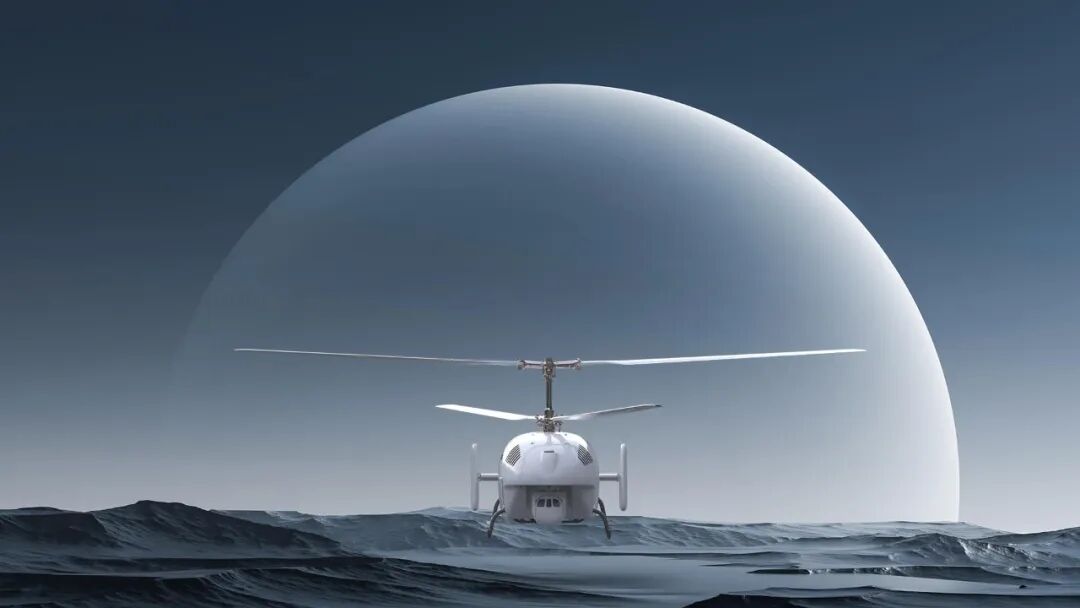
United Aircraft TD550 Unmanned Helicopter
"Affected by weather factors such as typhoons, maritime transportation is easily interrupted. Traditional manned helicopter transportation is not only costly but also has stricter requirements for meteorological conditions. The high salinity at sea also puts higher demands on equipment reliability," said Sun Liye, Vice President of United Aircraft Group.
The commercial breakthrough for low-altitude logistics is unlikely to emerge in mass consumption scenarios, but may appear in high-value, high-frequency professional scenarios that are difficult for traditional logistics to cover. For example, Beluga Routes, which focuses on the research and development of large cargo drones, focuses on developing high-payload, long-range transportation platforms and plans to prioritize entering regional logistics transportation rather than being limited to last-mile distribution.
The core value of drones is not to replace traditional logistics, but to fill the capacity gap in the high-cost and low-efficiency links of traditional logistics.
Low-altitude logistics is entering a critical period of commercialization. The competition is not about who has aircraft that can fly farther and carry heavier loads, but about who can take the lead in integrating transportation scenarios, infrastructure, and operational systems. Only when scattered pilot projects are connected into a network can low-altitude logistics truly enter a new stage of "full operation".
This article is from the WeChat Official Account "IT Times" (ID: vittimes), author: Lin Fei, editor: Sun Yan, published with authorization from 36Kr.