With launch costs slashed by two-thirds directly, when rockets become "reusable assets", how should we re-evaluate the trillion-level space market?

In 1522, Juan Sebastián Elcano led the battered wooden carrack *Victoria* — the last remaining hull of Magellan's fleet — on a grueling voyage back to Seville, Spain. He completed the circumnavigation that Magellan had left unfinished, marking the first recorded global voyage in human history.
In the early days of the Age of Discovery, constrained by inherent structural limitations of early vessels, every transoceanic expedition became a high-stakes gamble with no regard for cost.
It was not until the advent of the galleon, with its more durable, stable structure and greater suitability for standardized mass production, that transoceanic trade became a predictable, repeatable commercial norm, laying the foundation for a globalized civilization.

Juan Sebastián Elcano

Diagram of a Portuguese galleon
Five hundred years later, the narrative of great ocean exploration is being reenacted in the Age of Spaceflight.
Over the past half-century, increasingly sophisticated rockets have emerged one after another, but the exorbitant cost of "single-use" systems has long kept spaceflight a cost-disregarding adventure. Then SpaceX proved to the world: Spaceflight can be a business with clear, calculable returns.
Today, China's space industry has formally entered its own era of reusable rockets. On July 10, 2026, the Long March 10B carrier rocket was successfully caught by a capture net over the South China Sea, marking the first controlled recovery in the history of Chinese launch vehicles.
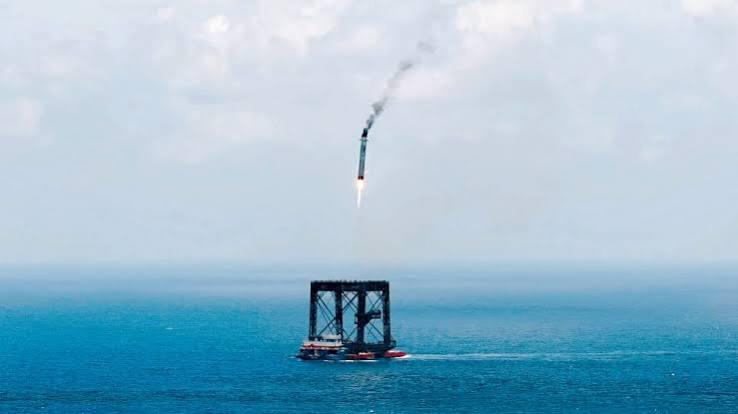
Recovery of the Long March 10B carrier rocket

Cutting Dead Weight:
Net-Based Recovery vs. "Chopstick" Tower Capture
When discussing rocket recovery, the core target is typically the first stage.
As the lowest segment of a multistage rocket, the first stage is usually the largest and heaviest component.
It houses the rocket's core propulsion system and carries the vast majority of its fuel, tasked with propelling the entire vehicle out of the dense atmosphere during the initial launch phase, before separating from the upper stages once its mission is complete.
With the successful return of the Long March 10B's first stage, the global space industry has quickly turned its attention to its unique recovery method: net-based recovery.
After the separation of the first and second stages, the Long March 10B's first stage gradually reduces its altitude through coasting attitude adjustment, propulsive deceleration, and aerodynamic deceleration. As it approaches the sea surface, it begins precise coordination with the waiting recovery vessel *Pilot*.
The recovery vessel features a large open cubic metal structure on its deck, across which four high-tensile steel cables are tensioned in a "grid" pattern, forming a mobile capture mechanism.
This is not a one-way process where the rocket seeks out a fixed ship; instead, both the rocket and the vessel dynamically compensate for deviations based on real-time position data to locate each other with pinpoint accuracy.
As the rocket slowly enters the net system, the platform tracks its descent trajectory in real time and dynamically adjusts the cables. Once the rocket's onboard latching hooks deploy and securely engage the cables, the cables immediately absorb the rocket's remaining kinetic energy until it comes to a complete, stable stop.
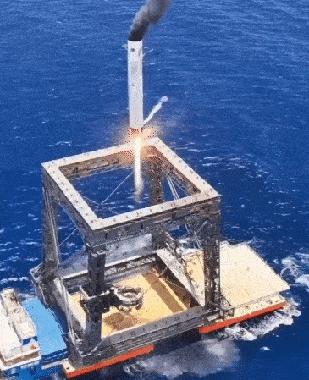
Net-based recovery
Before the debut of net-based recovery, the tower capture system (colloquially known as the "chopstick rocket grab") used by SpaceX's Starship was the world's most prominent and validated recovery solution.
In October 2024, Starship successfully achieved first-stage recovery for the first time during its fifth test flight. This landmark feat was later replicated successfully during its seventh and eighth test flights.
After releasing the upper stage, the Starship first stage adjusts its flight trajectory to return to the launch site, and when descending to an altitude of several dozen meters above the ground, it performs a vertical hover directly above the same launch pad from which it lifted off.
At this point, two massive robotic arms mounted at the top of the launch tower rotate inward and close, firmly clamping onto the pins beneath the rocket's grid fins, prompting the booster to shut down its engines immediately.

Tower capture system
GGV Capital states that there is no absolute optimal solution between net-based recovery and tower capture.
Tower capture allows the rocket to remain suspended from the robotic arms, making subsequent inspections straightforward and drastically shortening the turnaround time for reflight. SpaceX founder Elon Musk has stated that Starship could potentially achieve high-frequency flight operations of one launch per hour within three years.
However, this model relies heavily on large, fixed ground infrastructure and demands near-perfect control precision — the rocket must be captured at an extremely precise time and position, and missing the window would incur enormous costs.
In contrast, net-based recovery relaxes the fault tolerance margin in the final phase, allowing a maximum landing deviation of up to 10 meters for the rocket.
The tradeoff, however, is the need for the offshore platform to maintain stability against wind and waves. The recovery vessel for the Long March 10B is equipped with a DP2 dynamic positioning system, which effectively counteracts drift and sway caused by ocean waves.
Additionally, since the cables must extend, retract, and deform in coordination with the rocket, this approach places strict demands on the cables' nanosecond-level adjustment and shock-absorption capabilities.
Earlier, the more common method of rocket recovery was the "landing leg vertical recovery" used by SpaceX's Falcon 9, which relies on four legs to perform a hard landing.
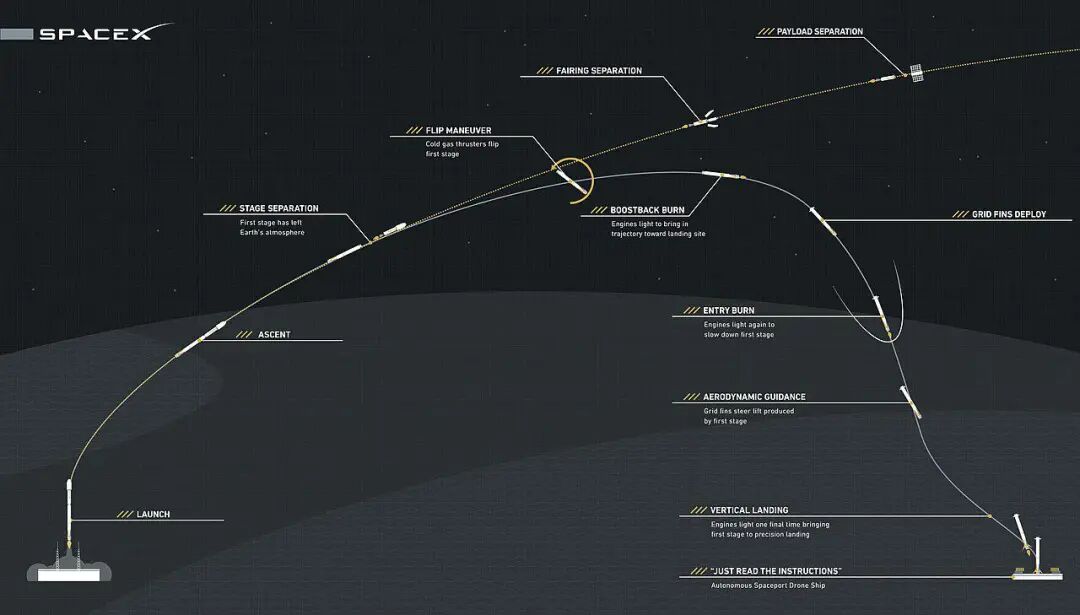
Diagram of Falcon 9 recovery
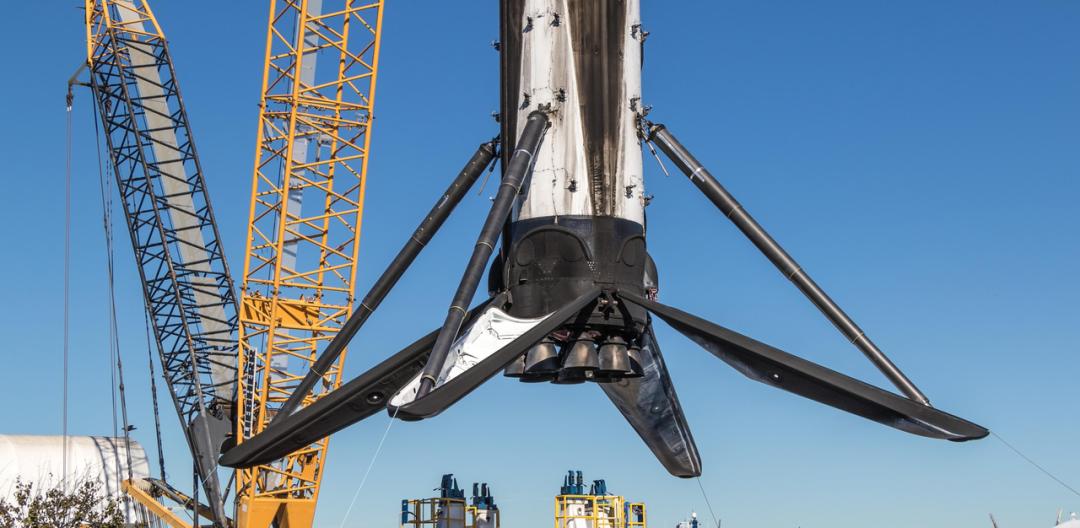
Falcon 9 landing legs
The "landing leg vertical recovery" model has a clear disadvantage: the rocket must carry heavy landing legs into the air, and this unavoidable dead weight significantly reduces the vehicle's payload capacity.
From GGV Capital's perspective, both net-based recovery and tower capture are essentially optimization strategies that eliminate the dead weight of traditional landing legs to free up more space for payloads.
Taking Falcon 9 as an example, its four landing legs weigh approximately 2.4 tons in total, accounting for 7% of the entire rocket's mass. In the most common offshore vertical recovery configuration, its payload capacity loss reaches 23% (the capacity loss is even higher for land-based vertical recovery).
According to public data, the Long March 10B using net-based recovery has controlled its payload capacity loss to around 10%.

Transforming the "Money Pit"
Recovering the first stage has become an absolute consensus in the global space industry, as it is the core path to achieving cost-effective launches.
Among all components of a rocket, the first stage is the most expensive and critical part.
According to Elon Musk's 2018 disclosure, the first stage of Falcon 9 accounts for 60% of the rocket's total manufacturing cost, the second stage for 20%, the fairing for 10%, and the remaining 10% covers launch process expenses.
Once the first stage can be successfully recovered and reflown, the entire commercial logic of spaceflight will be completely restructured: launches will no longer be one-off, costly consumables, but will become reusable assets that spread costs across multiple missions.
The more reflights a stage completes, the more the dominant manufacturing cost of the first stage is diluted, leading to a sharp, precipitous drop in per-launch costs.
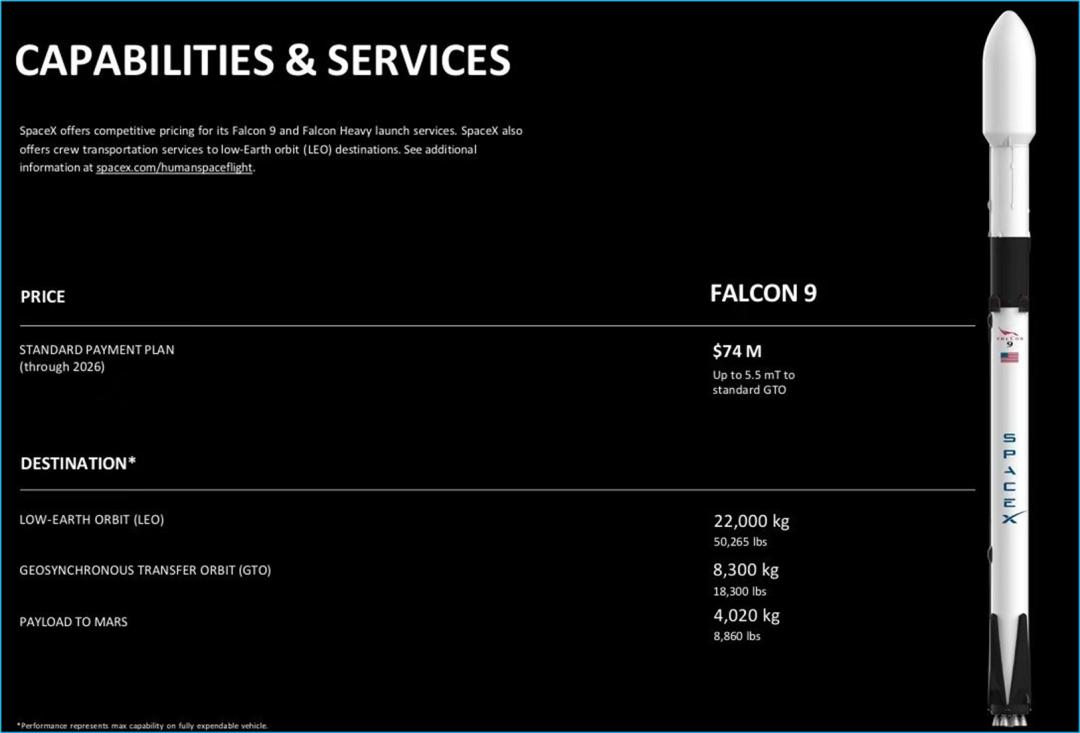
Falcon 9 2026 launch pricing
By 2026, Falcon 9 has completed more than 600 total recoveries, with a single rocket setting a reuse record of 36 flights.
The publicly quoted commercial launch price of Falcon 9 has dropped to $74 million, roughly one-third the cost of traditional rocket launches.
Benefiting from its high reuse rate, Wolf Research estimates that Falcon 9's marginal cost has now fallen to approximately $14 million; the upcoming Starship is expected to further reduce this figure to below $3-5 million, or even lower.
Turning back to China's Long March 10B, successful recovery is only the starting point of the closed-loop process — reuse rate is the key to ensuring long-term commercial sustainability.
Behind reusability lies an extremely complex systematic engineering process, involving inspection and refurbishment of core structural components such as engines and fuel tanks.
This phase can easily turn into a "cost trap," as demonstrated by the United States' Space Shuttle program.
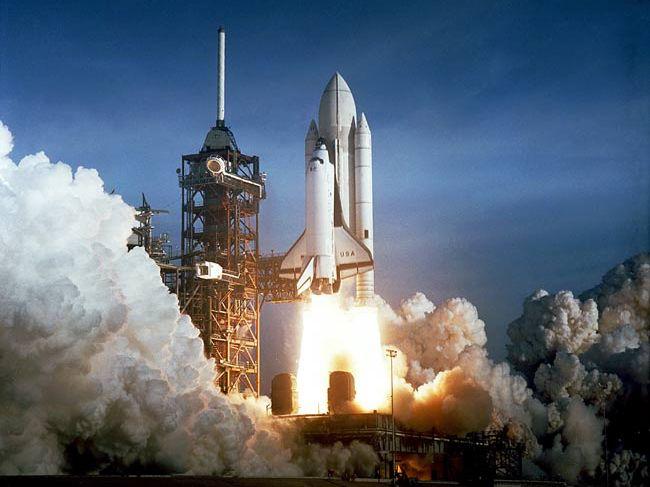
The Space Shuttle
The original ambitious vision for the Space Shuttle was also to reduce costs through reusability. However, since it was designed to carry both crew and cargo, its requirements for space, propulsion, and safety were pushed to the extreme, resulting in an extremely complex component structure.
Every post-mission refurbishment required enormous manpower and material resources, and the turnaround time between flights stretched to several months.
Ultimately, the Space Shuttle's per-launch cost not only failed to decrease, but ballooned to an astronomical figure.
The original projected per-launch cost was $54 million, but over the entire lifecycle of the Space Shuttle program, the actual per-launch cost reached more than $1 billion, 20 times over the budget.
To avoid falling into a similar predicament and drastically improve turnaround efficiency, one of the key consensus points in the current industry is to focus on fuel — using methane instead of kerosene as a propellant.
From GGV Capital's perspective, traditional kerosene propellants have a high carbon content, which easily causes carbon deposition and coking in the tiny, intricate pipelines of engines after combustion, requiring extensive disassembly and intervention during cleaning and refurbishment.
Methane, the main component of natural gas, burns almost completely without leaving residues — this inherent advantage makes it the ideal propellant for reusable rockets.
