2026 Research Report on the "Catering + Cultural Tourism" Trend: Deep Integration of Catering and Cultural Tourism, Five Major Modes Reconstruct Consumption Logic
At present, "Catering + Cultural Tourism" is evolving from its past role as a supporting amenity in scenic spots to a core touchpoint that drives consumers' travel decisions. To systematically sort out the underlying logic and implementation keys of this trend, the RedCatering Industry Research Institute has released the "Catering + Cultural Tourism Trend Research Report 2026".
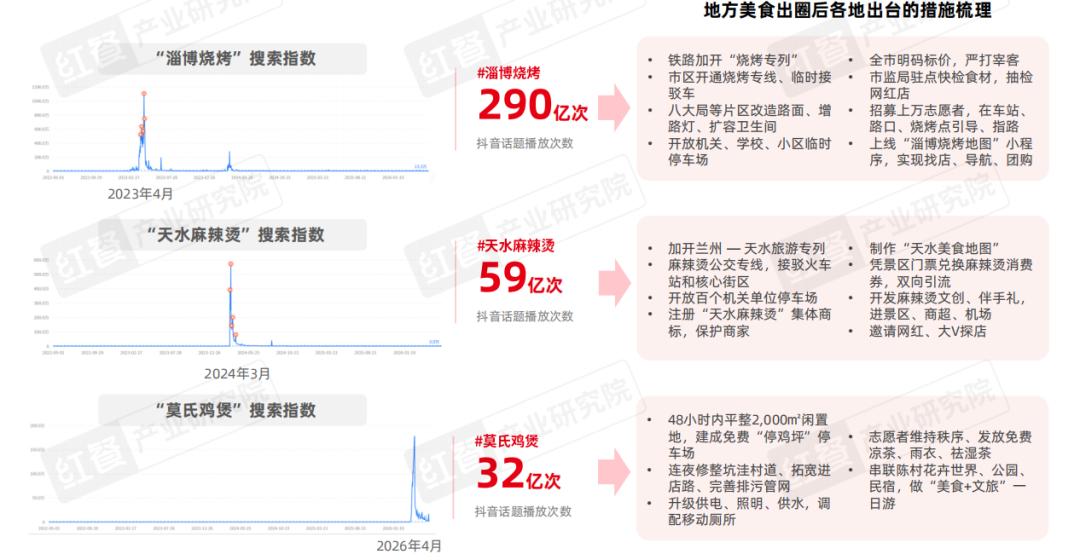
In recent years, local cuisines such as Zibo barbecue, Tianshui spicy hot pot, and Mo's Chicken Hotpot have successively become viral hits on the Internet, driving a rapid boom in regional cultural tourism in a short period of time. Catering is gradually no longer just a "standard feature" of travel, but has become a direct reason for tourists to "travel to a city for a specific flavor". At the same time, scenic spots, catering brands, and local governments are working together to deeply integrate authentic cuisine, local culture, and tourism experiences, giving rise to a variety of innovative business formats.
To this end, the RedCatering Industry Research Institute has launched the "Catering + Cultural Tourism Trend Research Report 2026", which deeply analyzes the new opportunities for the integration of catering and cultural tourism from dimensions including the development status, five major models, successful cases, and development keys of "Catering + Cultural Tourism".
The Integration of Catering and Cultural Tourism is Deepening, and Traffic Reception Capability Has Become a Key Factor
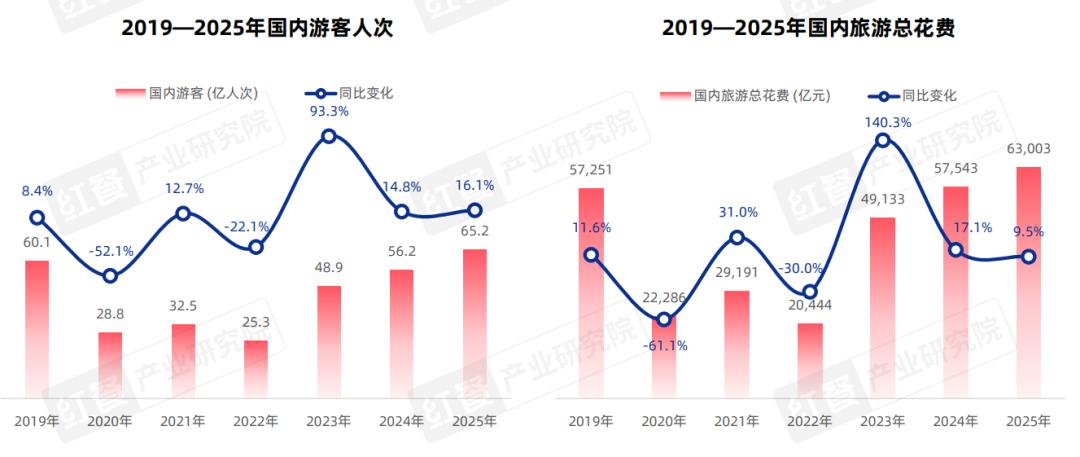
In recent years, the domestic tourism market has maintained a continuous growth trend. Data from the National Bureau of Statistics shows that the number of domestic tourist visits reached 6.52 billion in 2025, a year-on-year increase of 16.1%, maintaining double-digit growth for two consecutive years. The growth of domestic tourism has also driven the growth of regional catering consumption. The integration of "Gourmet + Cultural Tourism" is deepening day by day, and the two complement each other.
Meanwhile, local governments are also actively promoting activities such as food festivals, local gourmet competitions, and cultural tourism carnivals. Authorities including the Ministry of Commerce and the Ministry of Culture and Tourism have continuously launched a series of activities such as "Chinese Food Gala" and "5·19 China Tourism Day". Cities including Beijing, Shanghai, and Harbin have also held local food activities one after another, providing rich opportunities for the integration of catering brands and cultural tourism.
At the same time, the era of traffic has also accelerated the integration of catering and cultural tourism, and traffic reception capability has become a decisive factor for the operation of catering brands and local governments. In recent years, local cuisines such as Zibo barbecue, Tianshui spicy hot pot, and Mo's Chicken Hotpot have successively become viral hits on the Internet, driving a rapid boom in regional cultural tourism in a short period of time. Local governments have taken swift action to implement corresponding measures in all aspects such as transportation connection, market regulation, and environmental facilities, successfully handling the explosive arrival of tourists.
The Five Major Models of "Catering + Cultural Tourism" Center on Delivering a Complete and Comprehensive Consumption Experience
In the past, catering mostly existed as a supporting role in scenic spots, relying on explosive passenger flow during holidays. Most operators sought profits from tourists from the perspective of "one-time business", resulting in inflated pricing and serious product homogeneity. Today, catering has become a core part of the cultural tourism experience, and authentic and distinctive local cuisines have become key touchpoints that drive cultural tourism decisions.
When catering becomes the core driving force of cultural tourism, how can the two be truly integrated? The RedCatering Industry Research Institute has sorted out five effective paths that have been verified by the market. Although these five models differ in implementation methods, their core is to integrate catering and cultural tourism to provide tourists with a complete consumption experience.
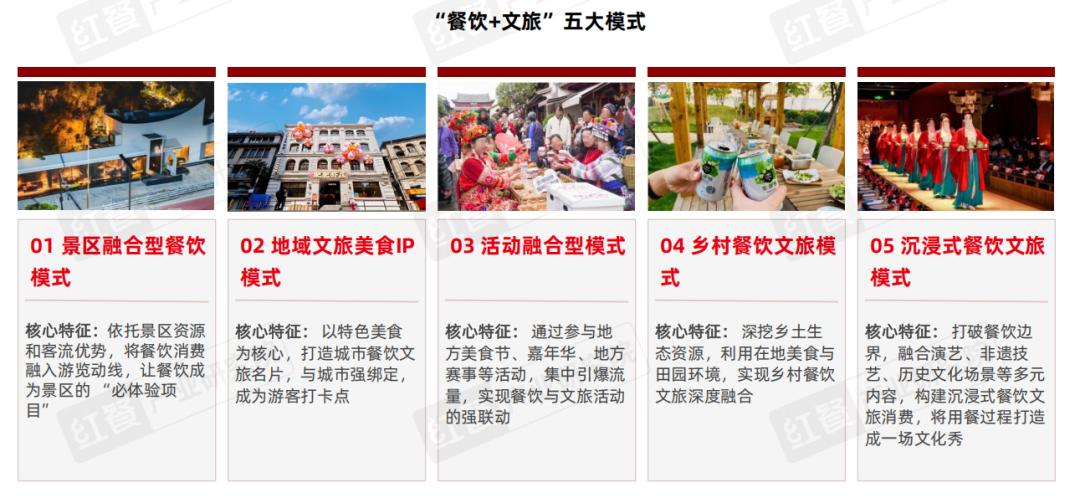
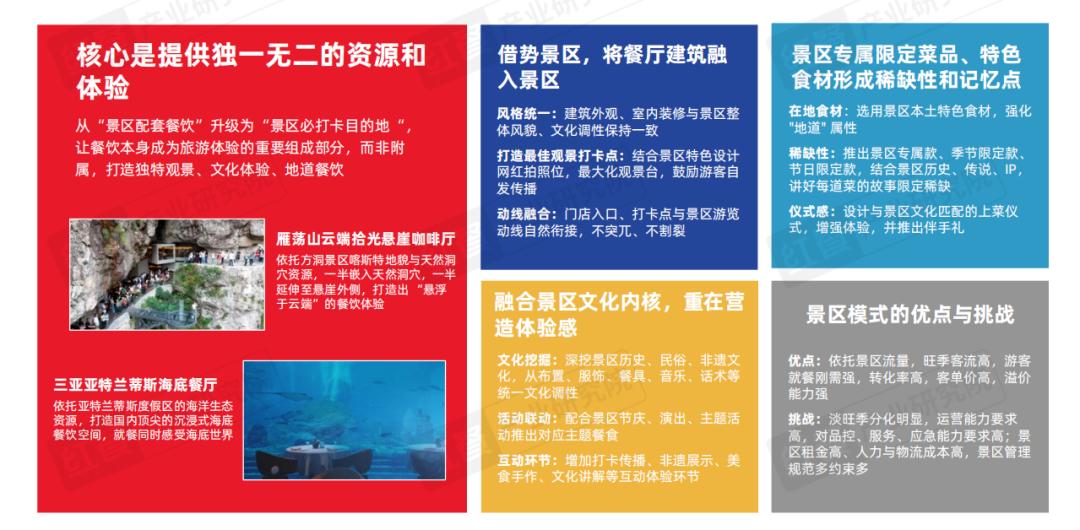
1. Scenic Spot Integrated Catering Model: Integrate Restaurants into Scenic Spots to Make Catering a "Must-Experience Item" of the Scenic Area
The scenic spot integrated catering model relies on the natural passenger flow and unique resources of the scenic area, embedding restaurants into the tour route, so that catering itself becomes a "must-experience item" of the scenic spot. It can be specifically divided into two types: one is to integrate the restaurant with the characteristics of the scenic spot to create a "scenic-level" catering destination; the other is for the scenic spot to actively explore the gourmet business format to create distinctive local cuisines, themed banquets, and other offerings.
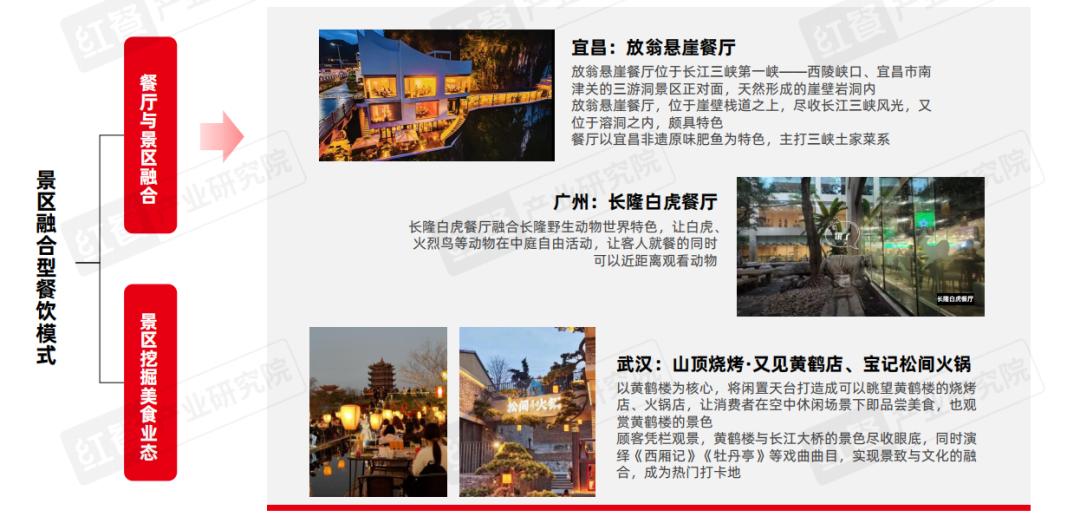
For operators, the core of upgrading a restaurant from "supporting catering in scenic spots" to "a must-check-in destination in the scenic area" lies in providing unique resources and experiences, leveraging the scenic area to integrate the building into the landscape, creating the best viewing and check-in point to achieve a natural connection of the tour route; digging deep into the history, folk customs, and intangible cultural heritage of the scenic spot to unify the cultural tone; launching exclusive limited dishes and seasonal limited products for the scenic spot to enhance scarcity and memorable points.
2. Regional Cultural Tourism Gourmet IP Model: Build a Regional Catering Business Card to Attract Tourists for Check-in
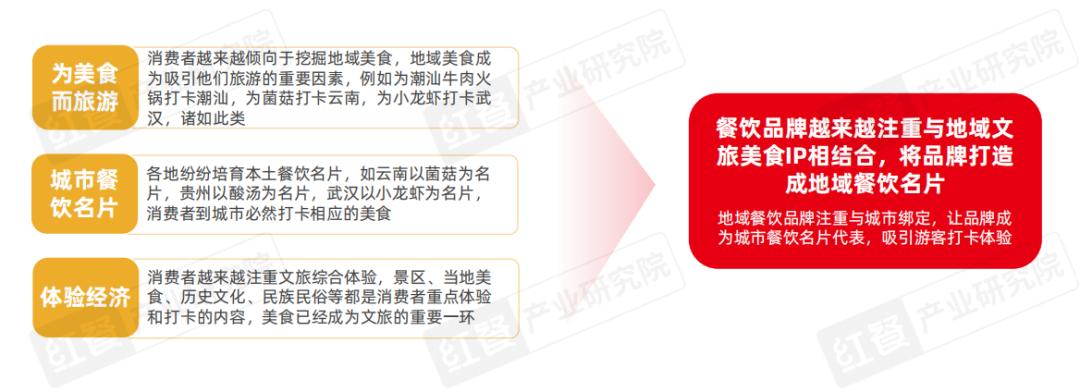
Under the general trend of cultural tourism integration, consumers are no longer satisfied with "seeing the scenery", but rather "traveling to a city for a specific flavor". Under this trend, various regions are actively building urban catering business cards centered on characteristic ingredients or dishes. Catering brands, especially regional brands, take the initiative to integrate local genes into products, spaces, and cultural expressions, striving to become a representative symbol of the city that "must be checked in". More and more regional catering brands are committed to "representing a city", and by deeply binding the city IP, they rise from "regional brands" to "regional cultural tourism business cards".
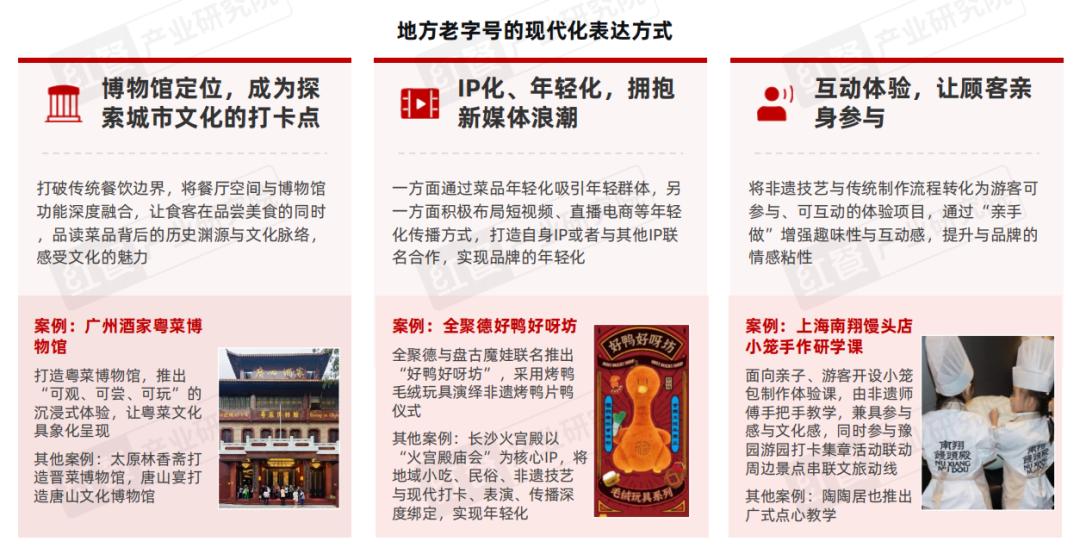
Local time-honored brands, with their high popularity and profound heritage, are naturally key check-in targets for tourists, but many local time-honored brands are too traditional in communication and dishes, failing to integrate well with modern cultural tourism. Therefore, the focus of local time-honored brands is to express traditional crafts and intangible cultural heritage cuisines in a younger and more interesting way, and enhance tourists' participation and memorable points in terms of visiting, interaction, and experience, so as to deeply bind with local cultural tourism and achieve mutual success.
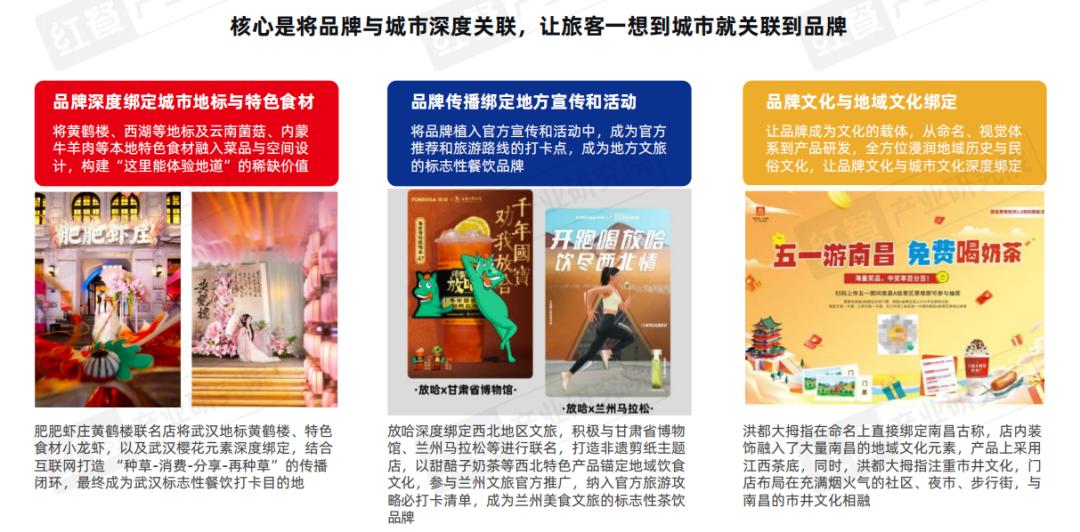
The core of chain catering brands is to strive for a deep connection with the city, that is, to integrate with all aspects of the city and participate in various official activities of the city through the connection and integration of urban landmarks, elements, characteristic ingredients, promotional activities, and regional culture. The store decoration, products, and brand atmosphere are bound to the city, so that consumers can form the association in their minds, making tourists think of the brand as soon as they think of the city.
3. Activity Integrated Model: Achieve Short-term Viral Traffic of the Brand in the Region Through In-depth Participation in Local Characteristics
The activity integrated model mainly refers to catering brands achieving local traffic explosion and sales growth by deeply participating in local characteristic activities, with the core focus on driving short-term traffic. Local activities come in various forms, including regional folk festivals, food cultural festivals/cultural tourism carnivals, intangible cultural heritage food markets, local sports events, etc. Brands can flexibly choose according to their own characteristics or short-term goals.
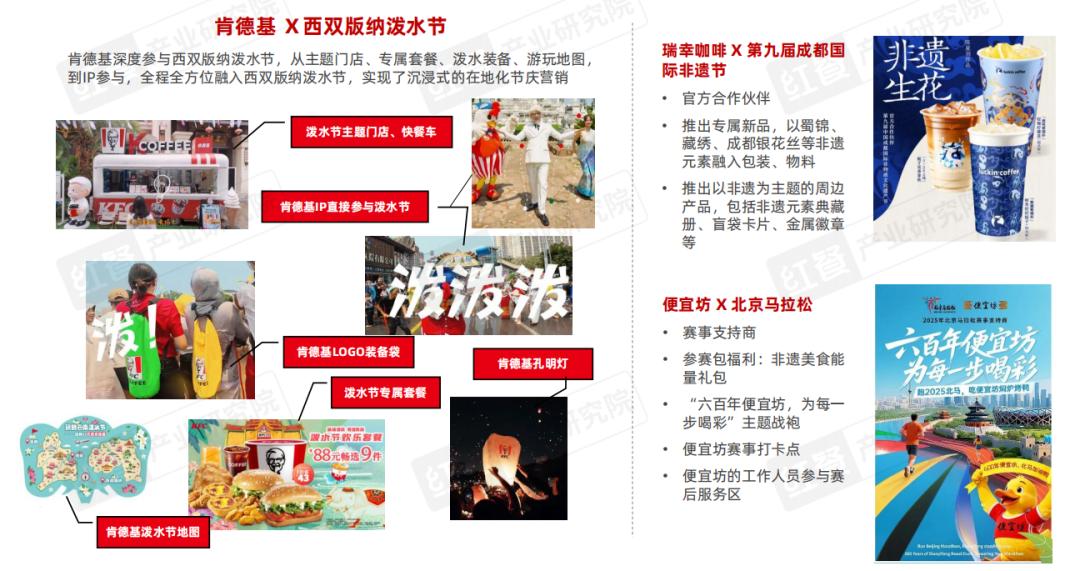
The cooperation methods of the activity integrated model are very diverse, including sponsorship and naming rights, activity co-branding, pop-up stores, etc. Brands can flexibly choose according to their own goals, budgets, and operational capabilities. At the same time, the activities are highly topical, which can help catering brands quickly gain short-term local traffic.
The key to the success of the activity integrated model lies in precise activity selection, in-depth content co-creation, and continuous relationship operation. Brands must go beyond the traditional role of sponsors, using methods such as customized products, peripheral derivatives, and session implantation to let consumers see brand elements in all links of the activity, and design "shareable" elements to stimulate participants' spontaneous communication and amplify the word-of-mouth effect.
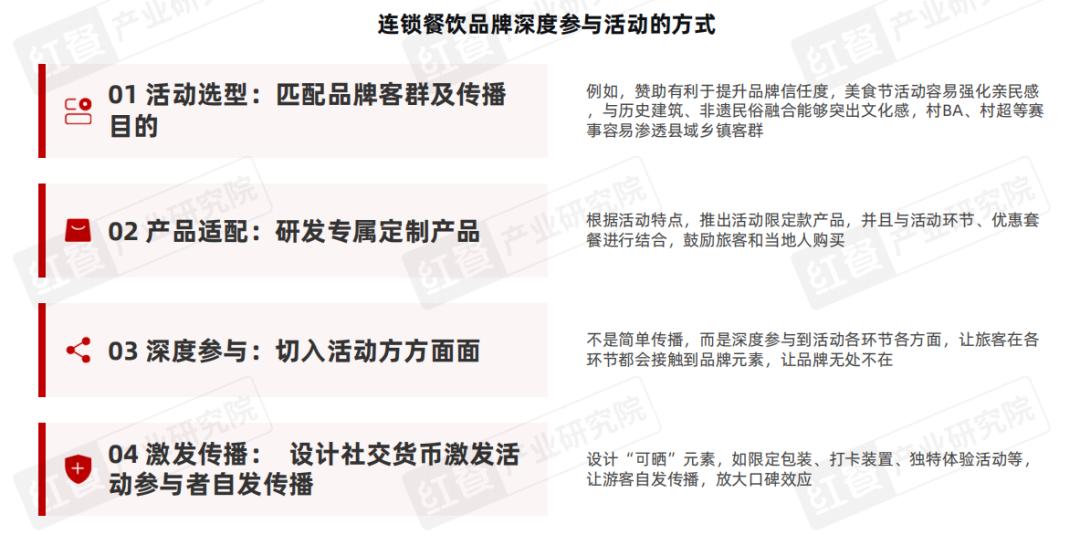
4. Rural Catering Cultural Tourism Model: Based on Rural Natural Ecology and Local Culture, Deeply Integrate Local Cuisine with Rural Tourism
The rural catering cultural tourism model takes the unique rural idyllic mountain and forest ecology and local folk culture as the development foundation, deeply binds local native ingredients and farmhouse flavors with rural leisure tourism scenarios, and relies on the non-replicable rural natural resources to create an immersive rural dining experience that is close to nature, relaxing and healing.
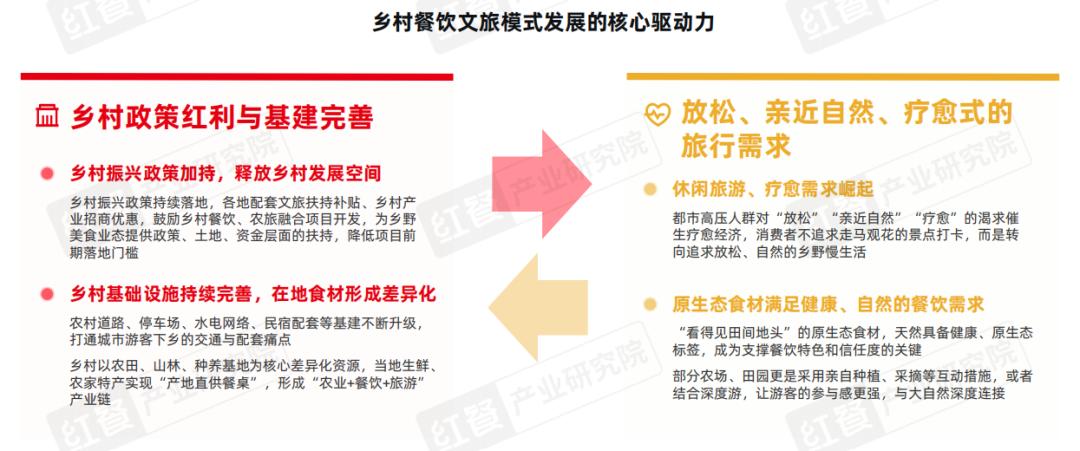
Various regions are actively exploring the rural catering cultural tourism model. For example, Heytea collaborates with the tea industry to create an integrated cultural tourism route of tea garden picking, tea making, and tea drink check-in; Tongnan, relying on the advantages of its million-mu vegetable industry, launches the characteristic Tongnan Vegetable Banquet, supported by idyllic parks to allow tourists to immerse themselves in the farming idyllic scenery; "Hunao Kitchen" transforms the traditional farmhouse model, designing immersive farmhouse catering experiences such as field picking, interactive cooking, and interesting ceremonies to meet the social check-in needs of young groups.
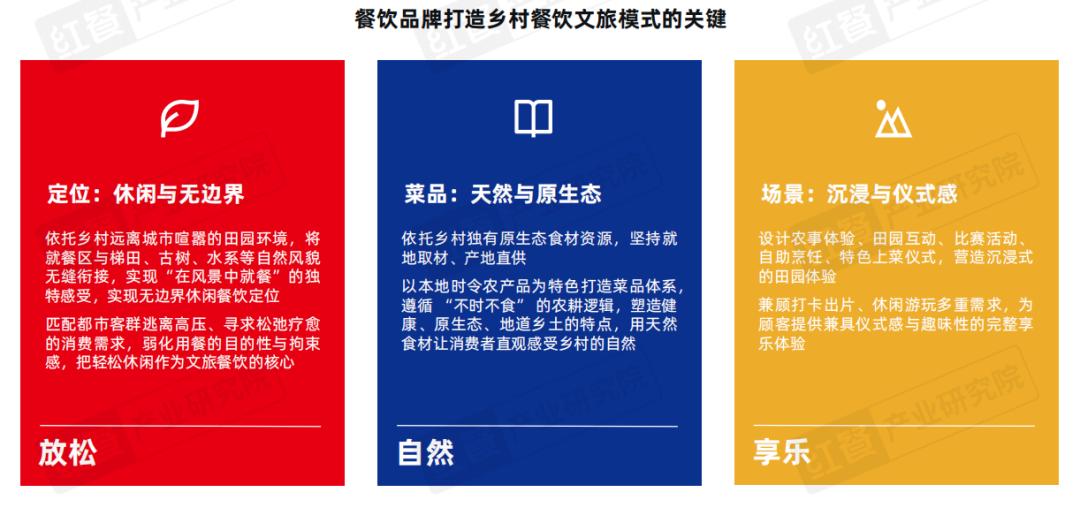
The key to building a rural catering cultural tourism model is to take leisure as the core positioning, seamlessly connect the dining area with natural landscapes such as terraced fields, ancient trees, and water systems; adhere to the principle of using locally sourced ingredients and direct supply from the origin, following the farming logic of "eating only seasonal food"; design farming experience, idyllic interaction, and characteristic serving ceremonies to create an immersive idyllic experience that combines a sense of ritual and fun.
5. Immersive Catering Cultural Tourism Model: Evolve from a Single Catering Consumption to a Full-Sensory Cultural Immersive Experience
The immersive catering cultural tourism model reconstructs the logic of catering consumption. Food is no longer the only core, but one of the carriers of cultural experience. By building real scenes such as historical ancient styles, ethnic folk customs, and themed performances, and integrating multiple elements such as intangible cultural heritage performances, plot interactions, ancient style etiquette, and light and shadow atmosphere, brands upgrade catering into a full-sensory cultural show, allowing consumers to feel emotional value and cultural resonance while dining.
Brands usually build cultural themes centered on the unique local history, folk customs, and ethnic culture. For example, Yuxian Capital in Beijing focuses on the royal court catering culture of the Ming and Qing Dynasties; "Haisi Fu" in Guangzhou takes the Maritime Silk Road culture as its theme; "Shuyan Fu" in Chengdu centers on the Shu-style royal banquet culture; Zhaya Chieftain Manor in Shangri-La focuses on the living culture of Tibetan chieftains. Tourists can deeply experience the profound local history and culture through the brand's stores.
