A 2.5-yuan iced cup has stolen the summer of barbecue and beer.
The World Cup has ended, Messi bid farewell through tears, and the "Twilight of the Gods" saga has drawn to a close. China boasts the largest group of Messi fans in the world. Every time the Argentina national team plays, statistics show that nearly 40 million viewers stay up late to turn on their TVs to watch the matches.
Among these fans are the post-2000s new generation of football lovers, as well as many born in the 1980s and 1990s. Each generation has its own way of enjoying football: in the past, it was internet cafes, beer, and barbecue. Today's young people prefer staying at home, relaxing on the sofa, and sipping premium spirits. However, as Messi has become a legendary hero, the young people who watch him play are increasingly living atomized lives, opening one chilled glass after another for a moment of solitary slight intoxication.
We Grew Up Watching Messi Play
In 2006, 19-year-old Messi, wearing the No.19 jersey, made his debut at the Germany World Cup. Coming on as a substitute in the match against Serbia and Montenegro, he contributed one goal and one assist, instantly revealing his extraordinary potential to the world.
That year, Li Rui, a freshman from Jiangsu, was a quick-moving shadow striker on his college team. As a fellow football enthusiast, he would project himself onto this young player making his first appearance, syncing with his state, observing his footwork, and trying to understand his mindset as he navigated through a field of towering opponents.
"He plays football with his own unique worldview," Li Rui would break down his observations over barbecue at the campus's "Dive Street" food stalls, sharing his thoughts with roommates and teammates.
Edamame, barbecue, and beer were the three essentials for watching the World Cup that summer. That year, Baidu Barbecue originated in Shenyang, and many people mistakenly thought that Robin Li had ventured into the catering business.
Korean-style fried chicken, riding the wave of the BBQ trend, set up stalls on every street. New stars also emerged in the beer market: Snow Beer rose to challenge the long-standing duopoly of Tsingtao and Yanjing Beer.
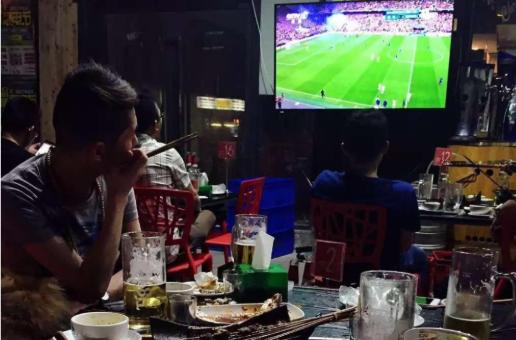
Figure | Beer + barbecue already feels like a nostalgic social ritual of a bygone era
Under the influence of low-alcohol drinks, Li Rui and his classmates' football discussions were mixed with a hint of complex social interaction — football is never just football; it is a prism that reflects young people's attempts to understand each other's worldviews.
After that World Cup debut, Messi advanced rapidly. At the 2014 Brazil World Cup, he carried the aura of the Golden Ball Award and walked through the shadows of Maracanã Stadium. At the 2022 Qatar World Cup, Messi played all 7 matches, scoring 7 goals and providing 3 assists, leading Argentina to the championship and turning a long journey into a perfect ending.
Now, Messi's temples show traces of time, and Li Rui has become a typical office worker immersed in the daily grind.
During this US-Mexico-Canada World Cup, most matches kick off in the early morning Beijing time. The old "Dive Street" has long disappeared, and Li Rui can no longer stay up late. At most, on weekend mornings, he will make himself a drink at home under the summer sun and curl up on the sofa.
In the quiet house, the loudest sounds are the cheers from the football field on the screen, and the lively shaking of ice and spirits in the chilled glass.
Li Rui says that making drinks in a chilled glass is a "solitary energy-absorbing trick" his colleagues taught him, as an introvert.
Messi's drinking preferences are widely shared on social media. With an annual income of 1 billion yuan, his favorite private indulgence is said to be "red wine mixed with Sprite" — a drink so simple it seems almost unrefined.
On Chinese social media, out of affection for Messi, fans have created numerous "Messi cocktail lists" or "team-themed special drink recipes." One relatively popular creation is called the "Blue-White Promise."
Start with a chilled glass, pour in lemon juice first, then add 30ml of gin. Next, pour 20ml of blue curacao and ice into another glass, mix them well, and slowly pour the mixture onto the top layer of the first glass. The resulting white-blue gradient perfectly embodies the romance of Argentina.
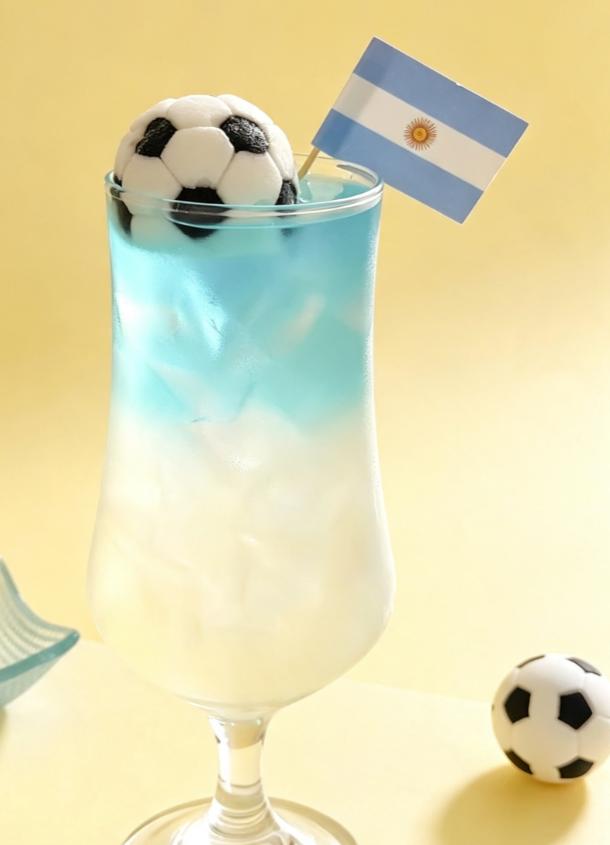
Figure | The "Blue-White Promise" shared on social media
Li Rui was never part of the "cocktail-making crowd" before; he preferred the straightforward act of twisting open a bottle of Snow Beer like he did in his 20s. But after trying the "Blue-White Promise" once, he unexpectedly fell in love with it quickly.
He gradually realized that the drinks have changed, and the times have changed too. As a working adult now, it is hard for him to gather a group of friends who can cheer or sigh together in front of the same screen. But drinking alone does not make him feel stifled; on the contrary, during those carefully measured moments of slight intoxication, he feels a 1-on-1 resonance with Messi on the screen.
Li Rui used to know nothing about Western spirits, but after making so many drinks, vodka, whiskey, white rum, and liqueurs — all completely blank in his past taste memory — have begun to take on colors, layers, and emotions. Gin is like the cool morning light, while blue curacao is like the afternoon sea.
One of his colleagues noticed Li Rui's change. Every afternoon, colleagues go to the nearby Freshippo store to buy health drinks, pre-cut fruits, or baked goods. But what Li Rui brings back from Freshippo are neatly stacked chilled glasses and slender bottles of Western spirits.
Drinks and football have always been perfect partners for creating atmosphere and sharing emotions. As time passes, beer has been replaced by new favorite drinks, and ice — a once-rare element — has become a new comfort for people like Li Rui.
Hot Water and Beer Are Being Left Behind: Why Are Young People Willing to Pay 2-3 Yuan for a Block of Ice?
In China, where the saying "drink hot water when you have a cold" is deeply rooted, people like Li Rui are still a minority. Take the chilled glass for making cocktails as an example: it was originally a foreign product, rarely seen in Chinese daily life.
In Asia, South Korea and Japan are the early leading "chilled glass markets." Statistics show that South Korea has a per capita annual consumption of 100 chilled drinks, while Japan's annual total consumption reaches 2.57 billion servings.
In contrast, Chinese people, who are used to drinking hot water, are almost "starting from scratch" in consuming chilled drinks. In 2021, chilled cups began to appear in mainstream supermarkets and street convenience stores.
In recent years, the chilled drink market has a relatively small total size but is growing rapidly. The annual per capita consumption in first-tier cities has reached 48 servings, exceeding the per capita coffee purchase volume, and the growth rate has exceeded 300% in the past two years.
As a colleague, Wang Meng is the person who introduced chilled drinks to Li Rui.
Li Rui remembers that once in the office, Wang Meng suddenly craved iced cola. She directly placed an order on Freshippo, bought a bag of ice cubes, poured them into a cup, added cola, and made the drink instantly.
Li Rui could not understand why someone would go through such trouble and expense. But Wang Meng told him that iced cola and iced beer just taste better than room-temperature versions. "Low temperatures suppress bitterness, enhance the crisp mouthfeel, and lock in the aroma."
This refreshing icy taste eventually won Li Rui over. As a Leo, he even did some research on chilled drinks and found that they have quietly gone through three generations of innovation in supermarkets, constantly launching new forms.
In 2021, the best-selling ice products were just "basic ice" packed in ice bags, used to make simple iced cola or iced coffee — simple but different from the past.
By 2023, "flavored ice" became popular. Just as plain yogurt evolved into strawberry-flavored and peach-flavored versions, ice cubes now come in flavors like lemon, grape, passion fruit, and coffee, allowing consumers to DIY fruity drinks at home.
By the 2026 World Cup year, "scenario-specific ice" has dominated supermarket shelves. Products like the "slow-melting ice" series for professional bars, ice buckets, and ice cubes in various special shapes have appeared on the shelves of supermarkets like Freshippo.
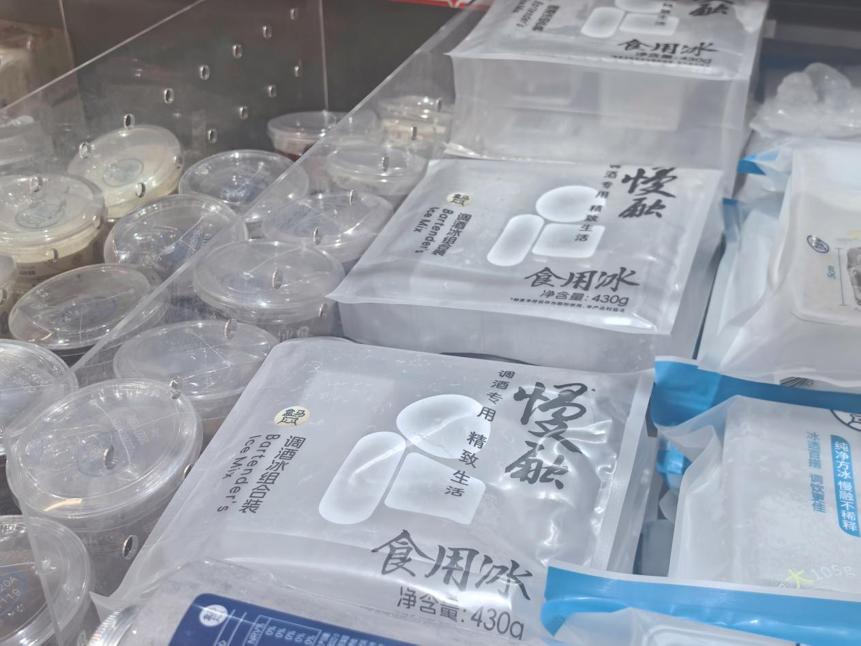
Figure | Slow-melting ice sold in supermarkets
Li Rui had never heard of "slow-melting ice" before. After checking, he learned that as the name suggests, it is ice that melts slowly, made with the advanced "24-hour slow-freeze ice-making technology."
Dong Yuanyuan, a chilled product buyer at Freshippo, once explained that "slow-melting ice" is first made with a "slow ice-making process." In the industry, quick-freeze technology that takes 15 minutes to 2 hours is commonly used, but the production of "slow-melting ice" is extended to more than 20 hours.
In terms of ice-making techniques, factories let water slowly condense at low temperatures while continuously stirring to expel air and impurities, resulting in ice cubes that are highly transparent, free of air bubbles, and high in density.
The effect of this process is that in a 26°C constant-temperature laboratory test, the ice cubes can stay frozen for up to 3.2 hours, 40% longer than ice made with traditional methods.
For fans watching Messi play, the best experience after finishing a full match is that their passion remains high, and the richness of the drink is still there, rather than being diluted into a bland, ordinary water.
In sharp contrast to the rapidly growing chilled drink market, beer sales during this World Cup have been mediocre, with marketing campaigns failing to make much of a splash.
Indeed, most matches of this World Cup are held in the middle of the night. No one would open a bottle of beer at such an awkward time and risk bloating their stomach. But a chilled mixed drink offers just the right level of slight intoxication, allowing people to stay awake to enjoy the game or fall asleep easily afterward.
Freshippo reported that the chilled drink category has grown by more than 30% year-on-year. After the World Cup started in June, sales of the slow-melting ice series specially developed for cocktails have seen an average weekly sequential increase of 220%.
However, there is no need to pit chilled drinks against beer. For many people, their chilled glass does not contain Western spirits — beer is almost always there.
What Is the Future of Chilled Drinks After the World Cup?
Chilled drinks were not created specifically for sports events. For consumers like Li Rui, "chilled slight intoxication" has long become a part of daily life.
Now every night when he gets home, he opens the refrigerator, takes out a chilled glass, and makes a drink according to his mood — like a ritual he performs every evening.
Taking a sip, Li Rui feels that he has come alive again after a long time. The era when he and his roommates could chat freely on "Dive Street" in the evening is gone. As a working adult whose freedom is limited, he now only follows a monotonous daily routine between the company and his home.
"It feels like we all live in the same city, but there is a huge gap between us. Everyone has their own walls around their life. While this protects privacy, people are becoming more and more atomized, with no emotions left but KPI pressure. So my solitary drinking can be seen both as entertainment and as a form of healing," Li Rui says.
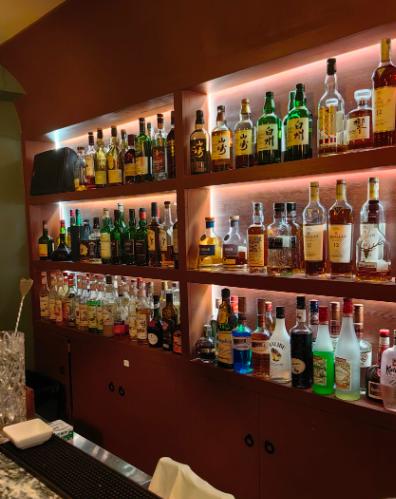
Figure | Many young people now have a wine cabinet at home
In real life, the number of chilled drink consumers like Li Rui is generally increasing, although their total number is still not as large as that of beer lovers. But this consumption trend seems to represent the future of Chinese consumption, incorporating many of the most popular elements of current daily life.
It is a fashionable, self-pleasing, and personalized consumption choice for young people. On social media, chilled glasses have become a "canvas" for DIY creations, with related topics receiving over 100 million views.
The price of these products also meets young people's current demand for "spending a small amount of money to get great pleasure."
Freshippo, for example, has reduced the price of pure ice cups from 4.9 yuan to 2.5 yuan through automated production, optimized packaging materials, and reduced logistics costs, while emphasizing that quality is not compromised to achieve accessible value for consumers.
Considering that many people actually do not know how to make cocktails, Pernod Ricard, a French company, has partnered with Freshippo to "sell solutions," launching pre-packaged chilled drink sets on supermarket shelves.
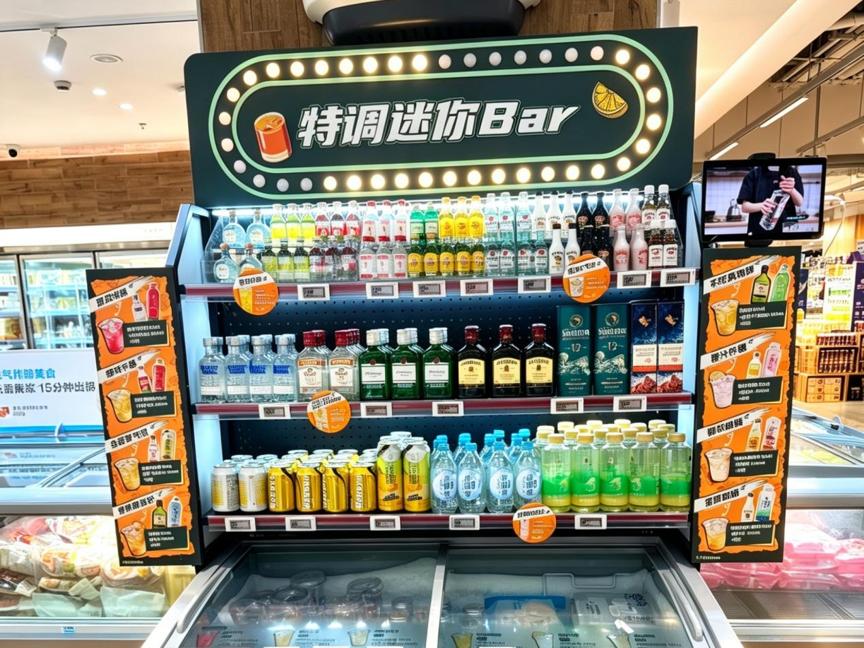
Figure | A supermarket counter that "sells cocktail-making solutions"
Consumers can buy a small bottle of base spirit, matching soft drinks, professional chilled ice, and a recipe card all at once. Following the steps to open the bottle, pour the ingredients, and enjoy, they can easily recreate a bar-quality cocktail at home.
By purchasing these items in bulk at regular supermarkets, the cost of a chilled Western spirit drink can easily be kept low. Calculations show that making a Gin Tonic with a chilled glass at home costs less than 20 yuan, while a bar version usually starts at 60 yuan.
Through bundled sales and joint marketing of chilled ice and matching soft drinks, supermarkets have successfully driven