Shortly after he handed over the "Asia's first nucleic acid testing stock", he turned around and dived into a brand new battlefield.
Twenty years ago, RNA interference was a little-known cutting-edge concept in overseas laboratories. China had no mature pipelines, no supporting industrial chains, and no capital presence, and the entire sector could barely see a glimmer of industrialization. Two decades later, small nucleic acids have suddenly become a golden track in biomedicine — local enterprises are flocking to the sector, with large-scale financings, overseas BD deals, and positive clinical progress emerging one after another. But behind the boom, few people know that the foundation of this track was built by a generation through 20 years of quiet, dedicated efforts.
The *History of Small Nucleic Acids* series anchors on the life trajectories of trailblazers to review the complete evolution of China's small nucleic acid industry from scratch. The opening figure is Dr. Lu Yang, founder of Sirnaomics. As one of the earliest pioneers in China who dived deep into small nucleic acid delivery and created Asia's first listed nucleic acid drug company, his 40-year journey of scientific research and entrepreneurship has engraved the 20 years of exploration, struggles, and breakthroughs of China's small nucleic acid industry.
Tampa, Florida, this emerging tech and financial bay area in the United States, enjoys a mild climate all year round, with natural hot springs interwoven with blue seas and sandy beaches. Lu Yang now spends his daily life here in peace.
Since stepping down from the entrepreneurial burden of shuttling between China and the U.S. in early 2025, he has been residing here for a long time, enjoying a rare period of tranquility.
However, this tranquility forms a stark contrast to his turbulent life over the past 40 years. From being a student in the first cohort of the combined bachelor-master-doctor program at Sun Yat-sen University after the resumption of the national college entrance examination, to serving as a core researcher in Novartis' gene therapy division; from making a stunning debut in his first startup with the world's first SARS siRNA data that demonstrated viral inhibition, to personally building Sirnaomics, the Hong Kong Stock Exchange 18A benchmark nucleic acid enterprise. Throughout his long journey of scientific research and entrepreneurship, he has always been relentless in two pursuits: the intractable nucleic acid delivery technology, and the even harsher capital cycles.
With 40 years of scientific research experience, two full entrepreneurial cycles, and a mix of contradictory labels, he is: a hardcore scientist deeply rooted in original delivery technologies, a first-generation returnee entrepreneur who managed operations across China and the U.S., and an industry pioneer swept by capital cycles. We try to restore every key decision through scenario-based events, dissecting the ideals and realities of the first-generation trailblazers in China's small nucleic acid industry.
"For Sirnaomics, the listing was only a midway stop. My nucleic acid entrepreneurship is still ongoing to this day." During our conversation, Lu Yang thinks sharply, and his memory of every key milestone is as precise as if it happened yesterday. He does not dwell on past glories; instead, he often looks back at those unfinished technical routes. Even under the sweeping industry boom, he remains that clear-minded "minority."
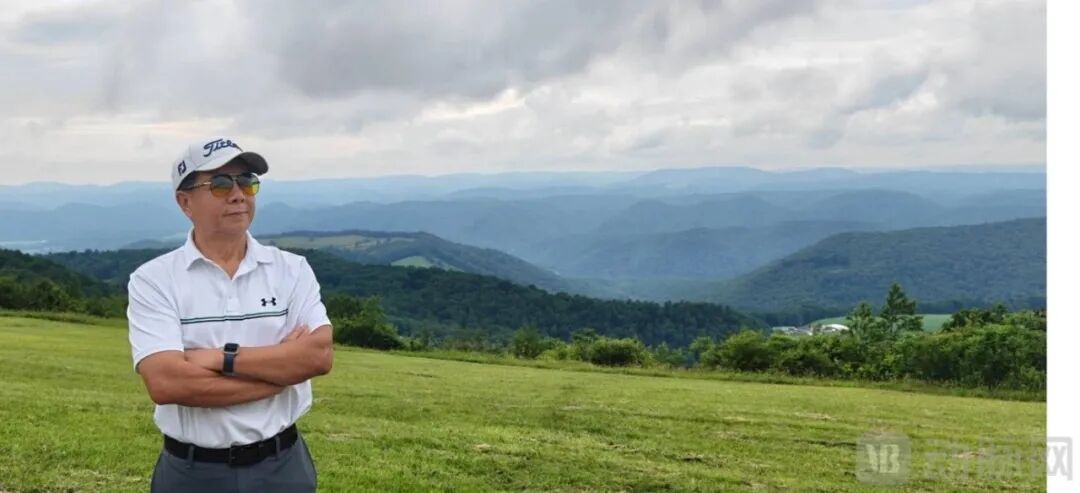
Serial entrepreneur Lu Yang's efforts in nucleic acid innovative drugs are still ongoing! (Photo provided by the interviewee)
From Novartis training to going all-in: He bet everything on nucleic acid delivery in the industry winter
In June 1987, Lu Yang obtained his doctoral degree from Sun Yat-sen University. After teaching at the university for only two months, he boarded a flight to the University of Maryland to conduct postdoctoral research. After completing his training at the University of Maryland, Lu Yang immediately joined the Georgetown University School of Medicine, where he worked for another two years before being promoted to researcher. With two postdoctoral stints and one year as a researcher, Lu Yang laid a solid scientific research foundation.
A lecture at the Georgetown School of Medicine auditorium in 1990 became a watershed in his career. "Father of Gene Therapy" French Anderson presented cases of children treated with gene therapy, representing the earliest successful trials of gene therapy. A 4-year-old girl suffering from severe combined immunodeficiency (commonly known as "bubble boy disease") had her immune deficiency successfully repaired after treatment, marking that gene therapy had moved from concept to reality.
Anderson's legacy goes far beyond a single clinical trial. He built the ethical and regulatory framework for gene therapy, established the fundamental understanding of viral vector technology, and drew the first safety channel for this discipline full of unknowns. Even though legal scandals in his later years landed this pioneer in prison, his status as the "founder of gene therapy" on the scroll of scientific history has never shifted because of that. This is a digression.
Lu Yang was also attracted by Anderson's presentation and the prospects of gene therapy. After entering the industry, as his related work involving gene therapy at Georgetown University was recognized, he soon joined Genetic Therapy Inc (GTI) — the world's first gene therapy company, also founded by French Anderson. Less than a year later, this enterprise was acquired by Sandoz for $300 million, and later integrated into Novartis.
The GTI acquisition was Lu Yang's first close contact with the capitalization of scientific research. This acquisition instantly created more than 20 millionaires within GTI, while the annual salary of researchers at that time was only $60,000 — a huge disparity. After cashing out his small number of shares, Lu Yang bought his daughter the piano she had long loved, and bought his wife a new diamond jewelry. This acquisition also made Lu Yang realize that only by commercializing top-tier technologies can their clinical value be maximized.
During his seven years at Novartis, he dived deep into delivery vectors such as LNPs and peptides, learning and honing R&D management skills, which laid the foundation for his subsequent entrepreneurship.
The year 2000 became a watershed for the global gene therapy industry. Multiple safety scandals broke out simultaneously: the death of a child patient in an adenovirus clinical trial, tumors induced by long-term AVR administration in mice, and multiple children developing leukemia in a French retrovirus clinical trial. Novartis directly shut down the entire GTI pipeline, and the entire industry fell into a winter. Most peers chose to switch to small molecule or antibody tracks to avoid risks, but Lu Yang made a counterintuitive decision: go all-in on non-viral nucleic acid delivery systems with no genetic risks.
Based on this forward-looking judgment, Lu Yang wrote a business plan in 2000, which resonated perfectly with his then-supervisor Dr. Martin Woodle, an expert also focusing on non-viral vector research.
Different from the mainstream viral vector route at that time, Lu Yang proposed a more ambitious vision: to use non-viral vector technology to build a gene function identification platform. In his view, the Human Genome Sequencing was about to be completed, and the focus of the scientific community would definitely shift from "reading the genetic code" to "deciphering gene functions." Whoever could first clarify the protein functions corresponding to tens of thousands of genes would hold the key to the next round of drug R&D.
This business plan precisely provided the most urgently needed technical tool for that "post-genome era."
Subsequently, in 2001, Lu Yang co-founded Intradigm Corporation (a combination of the concepts "intra" and "paradigm") with Dr. Martin Woodle. Lu Yang served as executive vice president to coordinate all R&D work, while traveling between the NIH and state governments to apply for innovation funds, and immersing himself in the laboratory to verify nucleic acid delivery solutions.
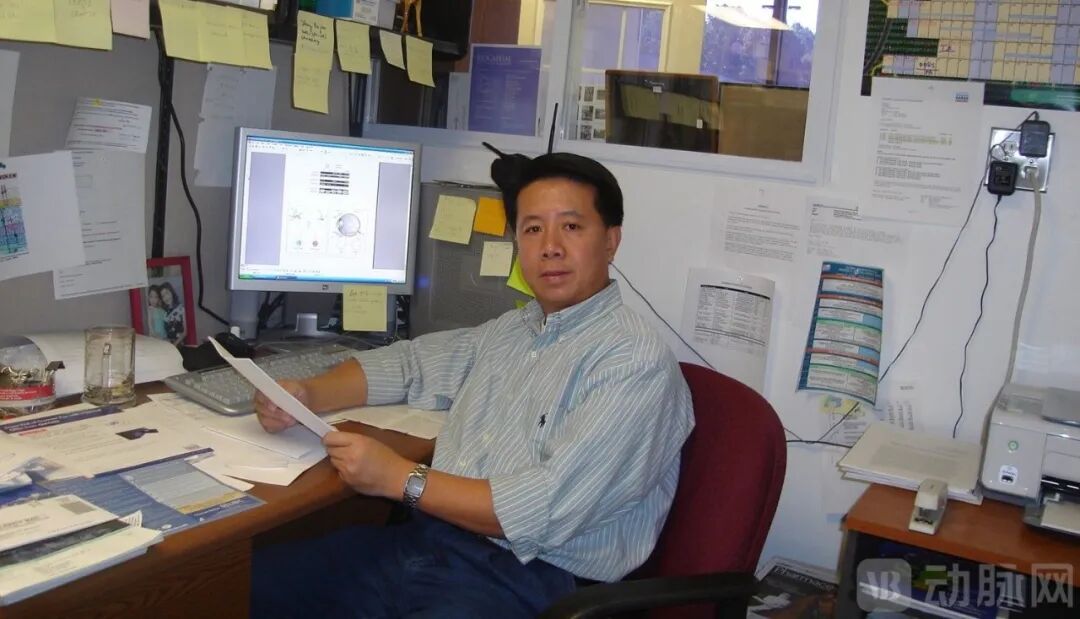
Exploring the mechanism of RNA interference in animal models and summarizing high-level research results. Lu Yang at the Intradigm lab in the U.S. (2005) (Photo provided by the interviewee)
Speaking of the combination of the two concepts, there is an interesting anecdote behind it. In 2006, Andrew Fire and Craig Mello won the Nobel Prize for discovering the mechanism of RNA interference. This achievement, published in *Nature* as early as 1998, confirmed that RNAi can efficiently and specifically silence disease-causing genes.
For the entire industry, this was a clear technical trigger signal: the era of small nucleic acid drugs had officially kicked off.
Lu Yang has long-standing interactions with the two Nobel laureates, Fire and Mello, and they often discussed and exchanged ideas at various international academic conferences. During a conversation, he asked Mello: "What is your deepest insight? What supported you to come this far and finally win the Nobel Prize?"
Mello's answer was concise: Collaboration.
"In addition to focusing on your own research and integrating the resources in hand, what is more important is to fight side by side with the best minds in the world." Mello said. This creed of open collaboration deeply touched Lu Yang.
In his view, it was precisely by complementing each other's strengths that Mello and Fire finally completed that exceptional discovery worthy of the Nobel Prize. This collaborative innovation mindset also became an important cornerstone for Lu Yang to build an industry-university-research ecosystem spanning China and the U.S. in the future.
When SARS broke out in 2003, Lu Yang, who was in the U.S., keenly realized that his siRNA technology might play a role in this crisis. As a graduate of Sun Yat-sen University, he had a deep network of connections in Guangzhou.
At that time, the R&D team at Intradigm happened to have a scientist from the Institute of Virology, Chinese Academy of Medical Sciences in Beijing, who had a thorough understanding of the structure and mechanism of RNA viruses — this made Lu Yang convinced: it was time to act.
He quickly identified a breakthrough: the University of Hong Kong had Asia's top antiviral laboratory at that time. Lu Yang immediately contacted Professor Zheng Bojian from HKU, sent the delivery system loaded with siRNA to Hong Kong, and successfully completed the world's first cellular experiment using small nucleic acids to inhibit the SARS virus.
After finishing the cell experiments, Lu Yang collaborated with Professor Qin Chuan from the Institute of Laboratory Animal Science, Chinese Academy of Medical Sciences to promote the pharmacodynamic study in primates. Professor Li Baojian from Sun Yat-sen University provided key support for the project, and also facilitated his in-depth cooperation with academician Zhong Nanshan.
Subsequently, this research was officially incorporated into the "Guangzhou SARS Prevention and Control Science and Technology Research Collaboration Group", with academician Zhong Nanshan serving as chief consultant, and Professor Li Baojian and Lu Yang co-leading the research group.
The data from the complete animal trials were highly effective. Lu Yang wrote the paper which was published in *Nature Medicine* in September 2005. Upon the release of the results, People's Daily, Xinhua News Agency, and *Nanfang Daily* reported on it intensively, causing a quick sensation within China, while also drawing massive attention from overseas media. It was selected as one of the 100 Top Science Stories of the year by the U.S. *Discover* magazine.
This was the first time Chinese researchers stood at the global forefront in the field of small nucleic acid antiviral research.
In May 2006, Intradigm, which held core patents for early-stage double-stranded RNA in the industry, was acquired by a consortium led by Genentech. The acquisition consideration allowed Lu Yang to reap his first bucket of gold, completing a full closed loop from startup to exit after M&A. Intradigm later merged with the UK's Silence Therapeutics and listed in London.
Shortly before leaving Intradigm, Lu Yang secured the global usage rights for PNP peptide delivery patents covering three major scenarios: skin, eyes, and respiratory tracts in advance, which became the core technical ace for his second startup.
The original inventor of the PNP (Peptide Nano-Particle) delivery technology was James Mixson, who had just transferred from the U.S. National Institutes of Health (NIH) to become a professor at the University of Maryland in the late 1990s.
This highly promising intellectual property, however, hit a wall at the university. The more senior professors on the review committee, on one hand, lacked the judgment to evaluate this new technology brought by the young professor, and on the other hand, had no intention of risking university funds. The university's attitude was clear: If we misjudge this thing, the money will be wasted; if you really think it's a gold mine, then pay for it yourself.
Mixson happened to be someone who didn't care much about money. Born into a banking family, his family wealth gave him the confidence to ignore the cold treatment within the system. He simply paid out of his own pocket to keep the patent firmly in his hands.
This in turn gave Lu Yang an opportunity. When Intradigm was founded, Lu Yang successfully obtained the license for PNP technology from Mixson. After starting his second startup and founding Sirnaomics in 2007, Lu Yang fully acquired all rights related to PNP through multiple rounds of compliant technology transfers. PNP thus became the technical cornerstone for Sirnaomics to take off.
However, it was precisely the relentless pursuit of this "self-controllable" technology and the choice to focus on the oncology field that later slowed down the pace of Sirnaomics' BD expansion. Lu Yang admitted frankly: "If we had chosen to imitate overseas delivery technologies at a later stage, Sirnaomics might have developed much faster. But that is the price of pursuing original delivery technologies."
In this regard, Professor Yang Zhenjun from the School of Pharmaceutical Sciences, Peking University, commented pointedly: "PNP has dragged down Sirnaomics, this technology has become too complicated." But behind this "complexity" is Lu Yang's almost stubborn persistence in the original path — even at the cost of development speed.
In January 2007, Lu Yang officially left Intradigm, converted the study in his Maryland home into a temporary office, and the prologue of Sirnaomics' entrepreneurship began.
5 and a half months sprint for "Asia's first listed stock": Caught in the capital winter, stepped down from management
In March 2007, Sirnaomics was registered in Maryland, USA. With entrepreneurial funds in place, Sirnaomics moved to a new office location, then purchased all the experimental instruments left behind by Intradigm during its relocation at a low price, and the new company began to operate.
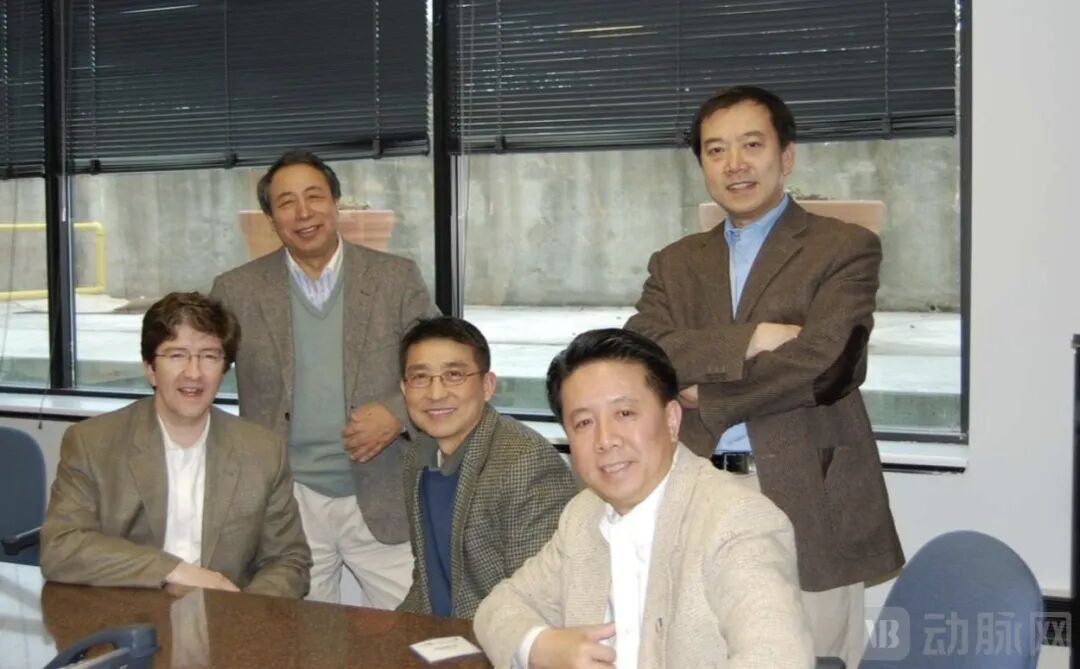
The founding team of Sirnaomics in the U.S.: From left to right: David Evans, Yang Hongjun, Xu Jun, Lu Yang, Ji Jianjun (Photo provided by the interviewee)
In the second half of 2007, approaching the end of the year, Lu Yang embarked on an inspection trip back to China. The opportunity for this trip was strongly facilitated by a Shanghai friend who worked in Maryland.
Lu Yang's partner composition is quite international, including both local American collaborators deeply rooted in technology, and a group of passionate Chinese scientists. In this cross-cultural atmosphere, that Shanghai-born partner invited Lu Yang: "You are very familiar with Guangdong, China, but you may not understand the industrial environment in Shanghai. Let me take you for a look."
This keen insight from a fellow townsman finally facilitated Lu Yang's first return to China to explore the market, and also laid the groundwork for his cross-Pacific entrepreneurial layout spanning China and the U.S. in the future.
The first stop was Zhangjiang, Shanghai. The local government offered a startup subsidy of 150,000 RMB, but for building a nucleic acid laboratory, this sum of money was far from enough. After knocking on the door of Zhangjiang, he turned his sights to the Suzhou Industrial Park.
At that time, the Suzhou Industrial Park was still in its early stages of development. The person who received them was Liu Yuwen, the person in charge of the Nano Science and Technology Park. This manager with a multinational enterprise background and excellent bilingual skills immediately recognized the value of this team. She didn't beat around the bush, and directly extended an olive branch: "Register and settle here now, and we will immediately give you 500,000 RMB; for renovating the