The physical AI for automakers has finally been implemented: Xpeng IRON has launched small-batch trial production, and Li Auto will release its corresponding product within the year.
As competition in the new energy vehicle market becomes increasingly fierce, automakers are searching for the next new business growth point.
XPeng, one of China's new EV-making forces, has announced new progress in its embodied intelligence business.
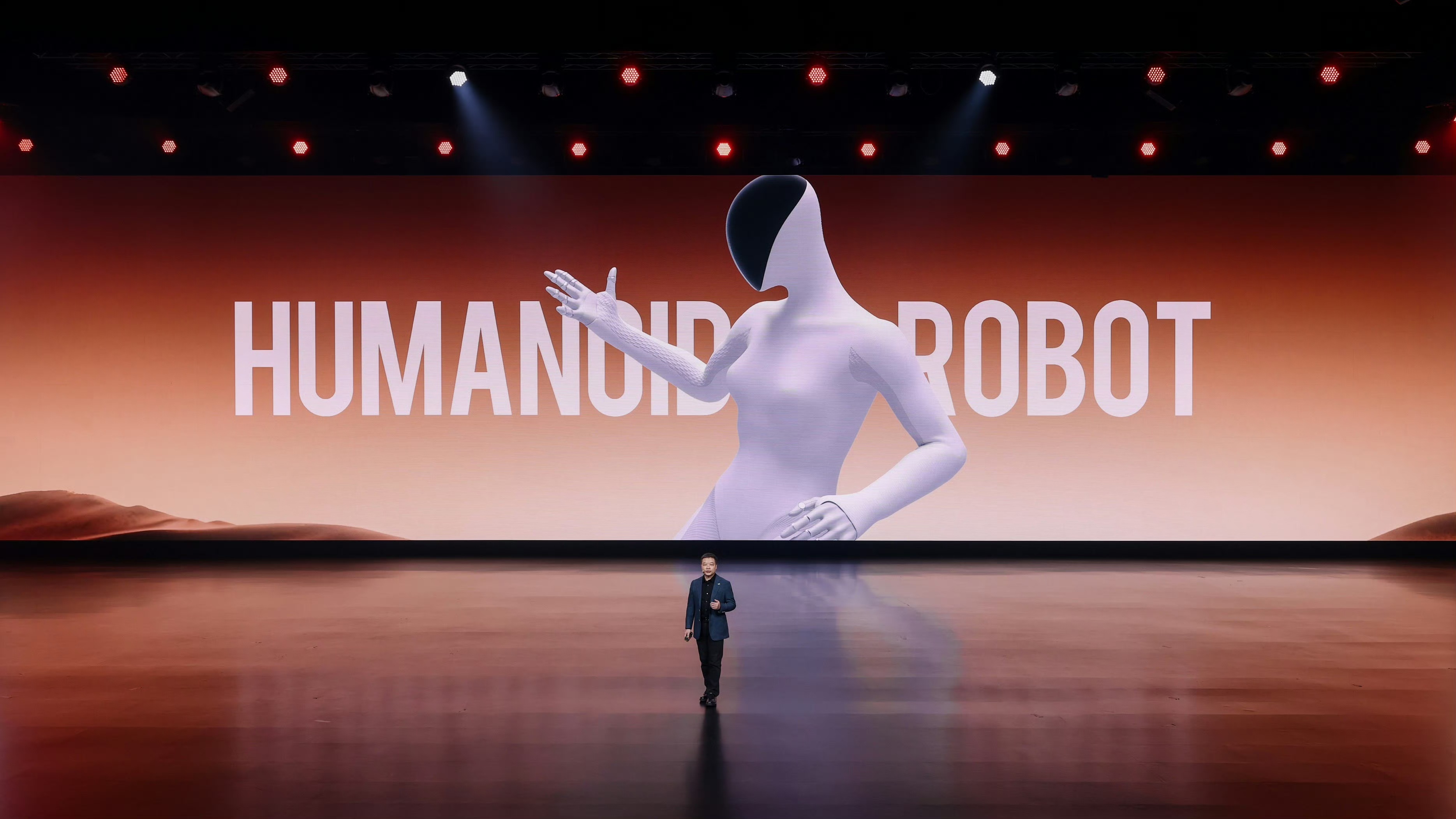
According to media reports, XPeng's humanoid robot has recently begun small-batch production at its Guangzhou factory, and the mass production line for the humanoid robot has entered the final joint commissioning phase, meaning official mass production is now counting down.
(Image source: XPeng)
For XPeng, developing embodied intelligence is a key step toward its vision of physical AI, and it represents another new growth area beyond its smart electric vehicles and flying cars.
But challenges also arise: as XPeng builds its embodied intelligence ecosystem, what are its target application scenarios? Are automakers flocking to build robots investing in the future, or taking a reckless gamble?
From vehicles to robots: XPeng's physical AI landscape is expanding
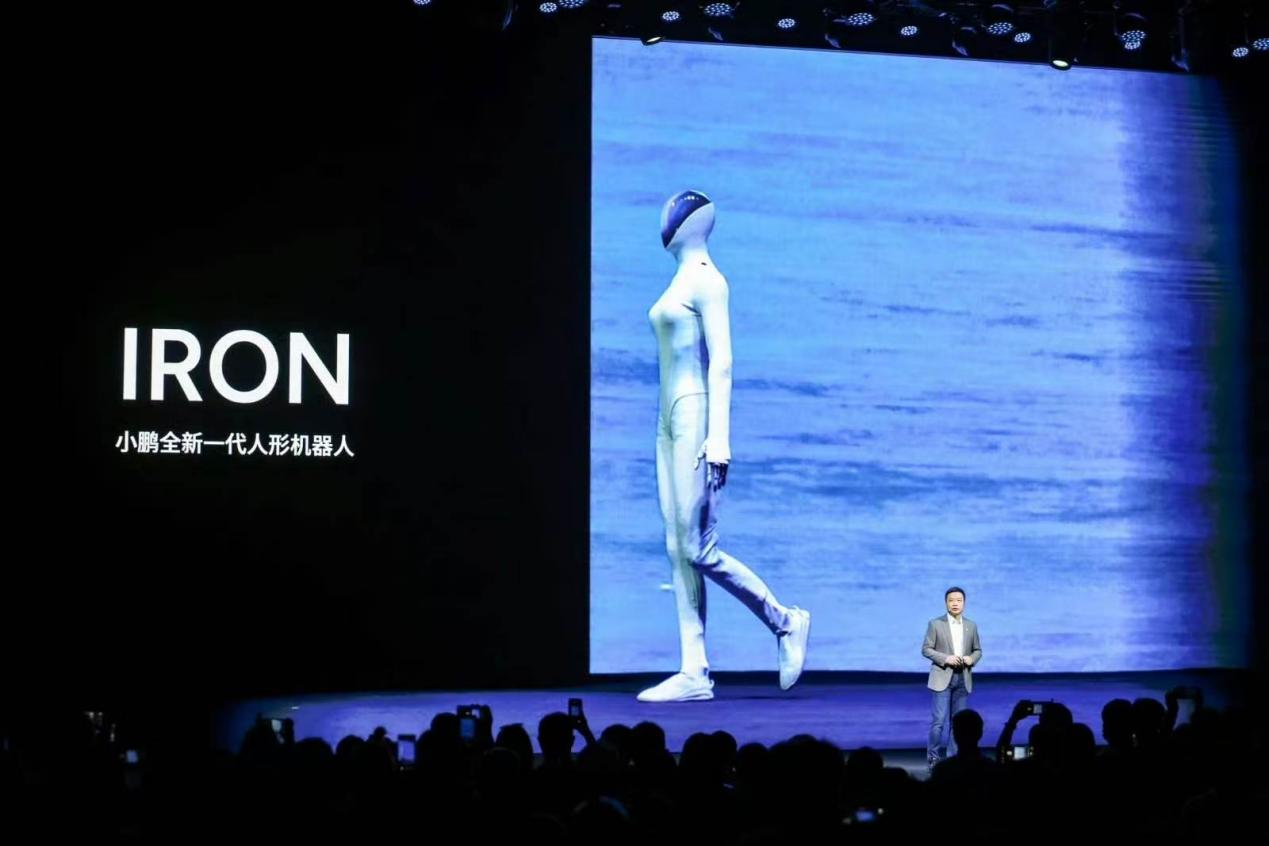
At the 2025 XPeng Tech Day, XPeng's first-generation humanoid robot, IRON, made its official debut. The company also showcased its technical explorations in humanoid structure, motion control, and large AI models.
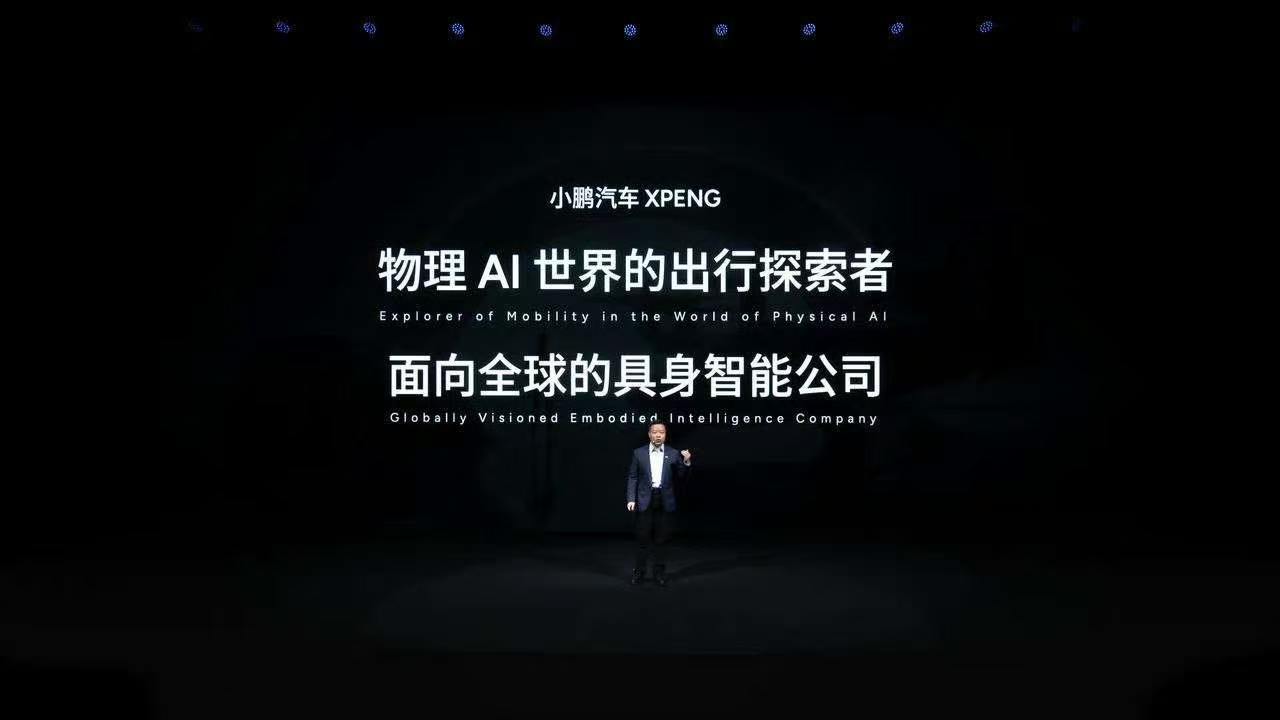
The 2025 XPeng Tech Day focused on physical AI, and He Xiaopeng formally announced at the event that XPeng Motors has updated its positioning to "an explorer of mobility in the physical AI world, and a global-facing embodied intelligence company."
(Image source: XPeng)
The carriers for XPeng's embodied intelligence cover four categories: "AI vehicles, Robotaxis, humanoid robots, and flying cars."
This clearly shows that humanoid robots are of great significance to the development of XPeng's physical AI and embodied intelligence technologies.
So what exactly is physical AI? Simply put, traditional AI mostly solves tasks on devices like smartphones and computers, while physical AI requires AI to enter real-world environments and interact with the physical world.
Physical AI is not unfamiliar to automakers like XPeng, and it will be their core development direction in the future.
Why is that? Because smart cars constantly interact with the physical world. Especially in recent years, the algorithms for intelligent assisted driving have gradually shifted from rule-based control to end-to-end frameworks, further evolving toward VLA (Vision-Language-Action) systems and world models. AI algorithms are becoming more deeply integrated into the physical world.
At the technical level, vehicles need to perceive road environments, understand driving scenarios, and make decisions based on real-time changes. The development of autonomous driving technology essentially aims to equip machines with the ability to understand and process the real world.
From this perspective, smart cars and humanoid robots share many common features. In other words, the perception, algorithm, and control capabilities accumulated in the automotive sector can be transferred to the robotics field.
For example, cameras, LiDAR, AI algorithms, motion control, and electric drive systems are all technologies that both smart cars and robots require.
However, robots differ from smart cars: cars operate in road environments, while robots face more complex human living and industrial environments. Compared with cars, robots need to handle more sophisticated scenarios, placing higher demands on computing power, algorithms, and even hardware.
In other words, smart cars are just the starting point for connecting AI to the physical world, while intelligent robots are the inevitable path to further advancing physical AI technology.
So for XPeng, what does the future hold for humanoid robots?
At the 2025 XPeng Tech Day, XPeng demonstrated several scenarios where IRON could integrate into users' daily lives. However, for XPeng and the current state of AI technology, it is still too early to make humanoid robots fully functional family members powered by AI. In the short term, the foreseeable application scenarios are most likely in factories and retail stores.
The first scenario is factories. At last year's XPeng Tech Day, XPeng officially announced that Baosteel would become an ecological partner for the XPeng IRON robot project.
Zou Jixin, Party Secretary and Chairman of Baosteel, stated: "In the future, XPeng IRON will be deployed at Baosteel to explore application scenarios in complex industrial fields such as inspection, and iterate and evolve through practical use."
Another application scenario is the commercial sector. XPeng also announced at last year's Tech Day that its new-generation IRON will be prioritized to enter commercial scenarios to provide services, such as guided tours, shopping guidance, and patrol assistance.
According to public information, IRON will be deployed in XPeng Motors' retail stores as shopping guides starting in the first quarter of 2027.
In fact, the application of embodied intelligence in factories and retail settings shares similar logic with autonomous driving training.
Vehicles collect massive amounts of data on roads every day, improving their capabilities through algorithm training; after robots enter real environments, they also need large volumes of data to enhance their intelligence.
This means that the early applications of XPeng's robots not only help humans share part of their workload but also collect data to accumulate "experience" for future iterations and upgrades.
Therefore, XPeng's humanoid robots entering trial production is more like taking the first step toward industrialization. Its significance is comparable to the launch of the P7, which first featured high-speed NGP (Navigation Guided Pilot) — it marks the beginning of technological emergence, not a sign of full maturity.
XPeng's robots still need some time to reach their own "XNGP moment."
Why are automakers collectively focusing on humanoid robots?
In fact, XPeng is not the only automaker paying attention to humanoid robots. In recent years, more and more car companies have gradually entered this field.
The earliest and most high-profile company in this space is undoubtedly Tesla.
Tesla's Optimus robot has become a benchmark project attracting attention from the global automotive industry.
Tesla internally believes that Optimus will eventually surpass its automotive business in both business scale and commercial value. Elon Musk has stated that Optimus will become Tesla's most popular product in history.
Tesla's advantages are similar to XPeng's: it has autonomous driving algorithms, visual perception capabilities, large-scale manufacturing capacity, and an AI training system.
In May this year, Tesla launched the first batch of mass production of the Optimus Gen-3 (Tesla's third-generation general-purpose humanoid robot) at its Fremont factory in California.
In July this year, the original Model S and Model X production lines at Tesla's Fremont factory were officially dismantled. The vacated factory space will be used to build production lines for the Optimus humanoid robot, marking that Tesla's development focus will gradually shift from automobiles to robots.
The Optimus robot has already entered the industrial manufacturing sector. Currently, 50 units of Optimus Gen-3 are deployed at Tesla's Shanghai Gigafactory, responsible for four key processes: vehicle seat installation, interior assembly, component handling, and quality inspection.
BYD, the domestic new energy giant, also revealed its humanoid robot R&D plan during an internal interview program in June this year.
Li Ke, Executive Vice President of BYD, stated that at this stage, BYD is focusing on industrial robots, and BYD itself is the largest user of its own industrial robots. At the same time, BYD is also advancing the R&D of humanoid robots.
Li Auto, another new EV-making force in China alongside XPeng, has also accelerated its humanoid robot R&D. Currently, Li Auto has planned two robot products: a two-wheeled robot and a bipedal robot. The two-wheeled robot, primarily targeting factory scenarios, is scheduled to be publicly released within this year.
From the examples above, it is clear that automakers are entering the humanoid robot space for two main reasons:
First, as vehicles become more intelligent, they are gradually transforming from transportation tools into smart terminals, and robots may become the next generation of smart terminals after automobiles.
Second, humanoid robots can drive the coordinated development of their own industries. The R&D of robots can also technically feed back into the automotive industry, and even robots can participate in the production and manufacturing processes of automobiles.
Will robots become XPeng's next growth point?
In the short term, the robotics business is unlikely to replace automobiles as XPeng's new revenue pillar, and it will even go through a lengthy "cash-burning" phase.
This is similar to the development journey of smart electric vehicles over the past decade.
From initial technical R&D to large-scale sales, then to widespread public acceptance, and finally achieving profitability, new EV-making forces have had to go through a long cycle, and many brands have dropped out halfway for various reasons.
It took more than a decade for the new energy vehicle market to gradually mature, and humanoid robots may also go through a similar process.
But in the long run, robots could indeed become an important direction for XPeng's future growth.
(Image source: XPeng)
The reason is that the automotive industry is entering a new stage of intelligent competition. By choosing to enter the humanoid robot track, XPeng is essentially securing one of the first tickets to the next generation of smart terminals.
Of course, this competition will not be easy. Just like the first decade of smart car development, some automakers will survive, while many more will be eliminated. For XPeng and other car companies that have stepped into the humanoid robot track, robots are not a quick way to make money, but a technical investment for the next decade or even decades.
More than half of 2026 has passed, and the next XPeng Tech Day is approaching. We look forward to XPeng showcasing more new progress in physical AI and embodied intelligence at this year's event.