The once-overlooked sexy giant that raked in nearly 500 million yuan a year from Chinese women has regained its top position.
After the "one-size-fits-all" boom, the lingerie market is undergoing a new shift of power and a cycle of aesthetic preferences.
Third-party monitoring rankings for the 2026 618 shopping festival show that the top spot in Tmall's lingerie category by GMV (Gross Merchandise Value) no longer belongs to long-time frontrunners Bananain or Ubras, but rather to Victoria's Secret (hereinafter referred to as "VS"), which was once widely written off by the market. During the 2025 Double 11 shopping event, VS still ranked behind these two emerging domestic brands.
The performance during a single promotional event might be coincidental, but financial data is far more convincing. VS Global reported net sales of $1.56 billion in the first quarter of fiscal 2026 (ending May 2, 2026), representing a 15% year-on-year increase. Its net profit reached $48 million, compared to a net loss of $4 million in the same period the previous year, marking a successful turnaround from loss to profitability.
Looking specifically at its China business, according to disclosures from Regina Miracle International (Holdings), the joint venture VS China established with VS Global generated revenue of HK$2.799 billion (approximately 2.4 billion RMB) in fiscal 2026 (ending March 31, 2025), up 42.4% year-on-year, with net profit surging more than 5 times to HK$525 million (approximately 450 million RMB). Back in fiscal 2020, VS China had recorded an annual loss of HK$669 million.
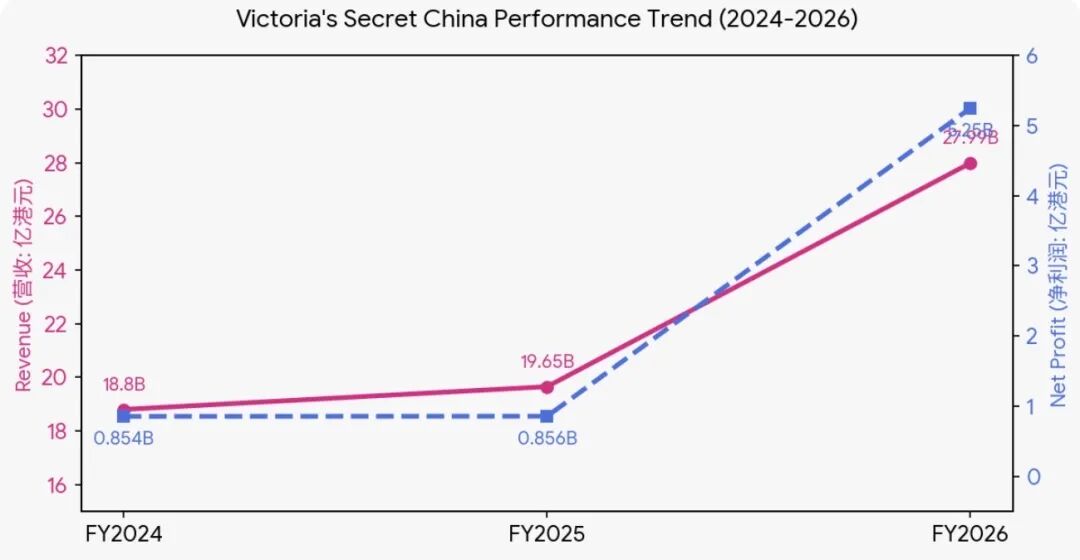
Regina Miracle is one of the world's largest manufacturers of premium lingerie. In 2022, it formed a joint venture with VS Global, holding a 49% stake. Today, with the soaring performance of VS China, this investment return has become the cornerstone of Regina Miracle's results, even contributing more profit than its original OEM manufacturing business.
VS is making a strong comeback. Since Ubras and Bananain are not publicly listed companies, their audited financial results are not publicly available. The latest public annual GMV figures for these two emerging brands still date back to 2024 — Ubras recorded 3.5 billion RMB, while Bananain approached 7 billion RMB.
Both Ubras and Bananain rose during the new consumption wave, quickly capturing user attention by leveraging traffic dividends. However, after years of a high-profile "wire-free" and "one-size-fits-all" lingerie trend, some consumers have begun to pursue a new form of freedom that combines "exquisiteness" and "sexiness".
In this tug-of-war between aesthetics and business, how exactly did the long-established giant VS pull itself out of the mire and climb back to the top step by step?
The girls who once abandoned VS are quietly coming back
At 1 a.m., Lin Yao, an office worker in Shanghai, kept refreshing the live-streaming page.
The host on the screen was enthusiastically showcasing a lingerie collection called "Anti-Gravity". Lin Yao calculated her discount coupons: 20% off for two items, combined with cross-store full reductions and live-stream red envelopes, a lingerie originally priced at four to five hundred RMB would cost her only a little over 100 RMB. "This is barely more expensive than Ubras, but it's Victoria's Secret," Lin Yao said to herself.
On VS's Tmall flagship store, the "Anti-Gravity" lingerie in Yang Mi's signature style has shown "over 100,000 units sold", while the new "Anti-Gravity Plus" model endorsed by Shan Yichun has sold more than 80,000 units. On Xiaohongshu, many users are sharing tips on how to buy an Anti-Gravity lingerie at a favorable price; some are seeking low-cost strategies, and others are looking for people to place group orders together, which quickly received hundreds of replies.
If we go back five or six years, the market popularity of VS was a completely different story.
In 2019, the VS Fashion Show, which had run for 24 years, was announced to be suspended. Those multi-million-dollar "Angels" were labeled as "body anxiety creators" and accused of "narrowly defining the perfect figure" amid the rising wave of female awareness. In the capital market, the stock price of VS's parent company kept declining, like a bird with broken wings.
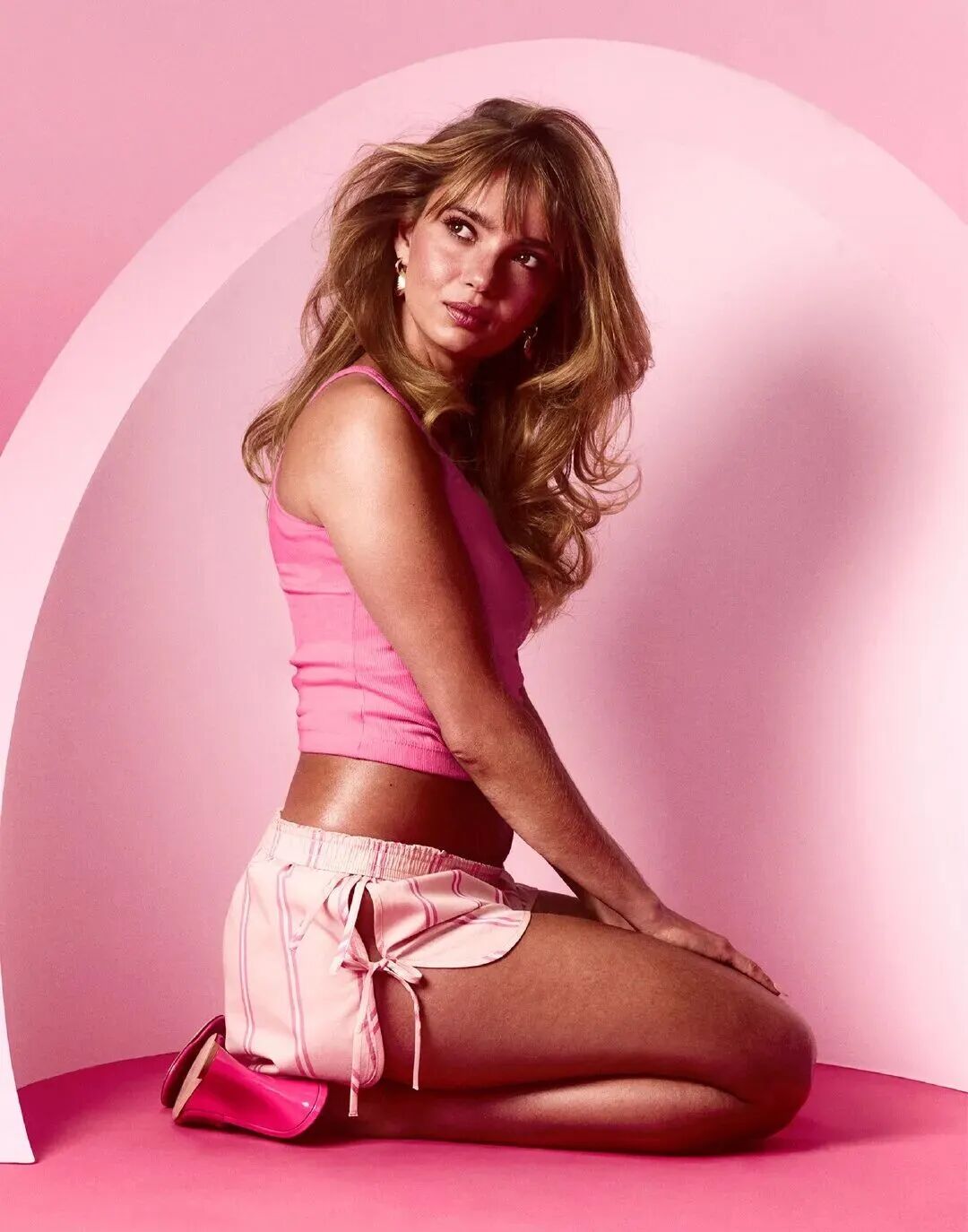
That same year in 2020, VS China lost HK$669 million, and the loss still exceeded HK$100 million the following year. According to 2018 data from Euromonitor International on foreign high-end lingerie brands, VS once held a 12.7% market share in China, which shrank rapidly to a single-digit percentage three years later.
Along with the backlash against "sexiness-centric" aesthetics, an opposing consumption narrative was sweeping across the Chinese market.
Ditching underwires and lace for comfort, freedom and ease became the dominant theme. Local emerging brands represented by Ubras and Bananain quickly found their way into Chinese women's wardrobes with their innovative one-size-fits-all lingerie.
Back then, VS's flagship stores in China were largely deserted. Those delicate French lace designs seemed bulky, outdated and uncomfortable in the face of the "one-size-fits-all" trend.
How did it make a sensational comeback?
The turning point for VS's resurgence in China came in 2022.
That year, VS made an extremely bold decision: to form a joint venture with Regina Miracle, the world's largest manufacturer of premium molded-cup lingerie based in Shenzhen, and transfer a 49% stake in its China business to the partner. This meant VS no longer had to follow the "global standards" set by its Ohio headquarters, enabling a far more thorough localization.
If you examine VS's current hit products, you will find they are no longer art pieces designed only for runway supermodels. Take the "Anti-Gravity" collection as an example — its core technology comes from Regina Miracle: a gel-encapsulated support system called "jelly strips". It eliminates restrictive underwires, using an elastic polymer material to provide soft support for the bust from the bottom and sides.
This kind of localized responsiveness is also reflected in the "radical" transformation of its spokesperson strategy.
VS used to be a highly recognizable definer of aesthetics, with its early brand ambassadors being angel supermodels like He Sui and Ming Xi. But later, it signed Zhou Dongyu in China. When the slender, approachable actress appeared on posters wearing VS pajamas, it sparked widespread discussion — some said this was no longer the "old VS", but many more girls felt a sense of inclusion.
It was precisely this "sense of unexpectedness" that allowed VS to break free from its historical baggage more quickly. After that, the mature sophistication of Yang Mi, the athletic dynamism of Eileen Gu, the authenticity and candor of Yang Zhentian, and the laid-back self-assurance of post-2000s artist Shan Yichun have successively deconstructed diverse interpretations of "sexiness" for different personalities.
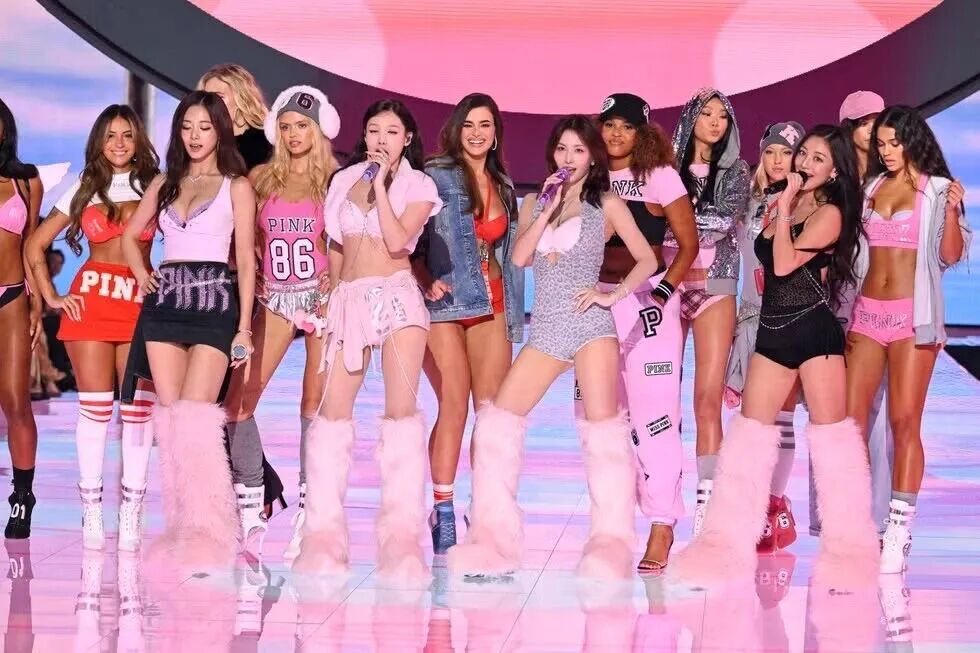
VS has stepped down from the lofty runway to stand beside ordinary girls. Even more importantly, it has adjusted its pricing strategy downward.
With the strong support of Regina Miracle's supply chain, VS has launched a "price penetration" strategy in China. Its once high-end positioning of 600-800 RMB has been lowered to the 150-300 RMB range in live-stream sales channels. After carefully combining orders and applying coupons, girls can purchase a VS lingerie for just over 100 RMB.
This price point precisely falls within the core price band of Ubras and Bananain. When a local brand and a globally renowned brand are priced similarly, or the latter is even cheaper, the gap in brand power begins to show. VS has started to make inroads into the territory that once belonged exclusively to local brands.
VS has seized the "aesthetic vacuum" in lingerie consumption
Girls who enthusiastically combine orders for discounts have turned the Chinese market into one of the most important growth engines in VS's global footprint.
Their renewed affection and desire for VS stem partly from the brand's radical changes and dedicated localization efforts, and partly from a quiet consumer rebellion and shift taking place in the lingerie market.
Many women who have worn one-size-fits-all lingerie for years have found that while the comfortable "vest-style" design offers great freedom, the lack of long-term support for breast shape may lead to issues such as sagging and spreading. Additionally, by simplifying complex size ranges into S, M, L, one-size-fits-all products are a compromise in wearing experience for users with different breast shapes, lacking the sizing precision of traditional lingerie.
As established industry players and a flood of new brands have rushed to enter the segment, the one-size-fits-all concept has evolved from a differentiated, scarce selling point to a basic industry standard. The early traffic dividend for this category has peaked, and the track has entered a stage of stock competition.
If you look at the latest moves by Ubras and Bananain, you may sense a hint of anxiety. The industry standard for "Free-Size Knit Brassieres" led by Ubras last year was implemented on July 1 this year, providing clear quantitative criteria and testing basis for "comfort". The brand has transformed from a category pioneer to a standard-setter, which to some extent raised the entry barrier for latecomers. Bananain, on the other hand, has tried to break away from the single lingerie framework. At its 10th anniversary press conference in April this year, it repositioned itself as a "Somatic Sensation Science Company" and established a "Somatic Sensation Science Research Institute".
The competitive moat in the lingerie industry is not deep. After exiting the high-growth phase, these brands are searching for new growth narratives.

A middle ground has emerged between "sexiness that sacrifices comfort" and "highly unrestrained comfort". It is by stepping into this vacuum — "comfortable sexiness" — that VS has climbed back to success.
This may represent another shift in consumer aesthetics in the lingerie sector.
On the foundation of comfort and functionality, emotional satisfaction and aesthetic appeal have become new factors that girls are more willing to spend on without hesitation.
More importantly, beyond lingerie, VS has built a strong product ecosystem over decades: pajamas, fragrances, body lotions... VS's beauty and fragrance business has its own dedicated Tmall flagship store, with its best-selling body lotion recording more than 500,000 units sold. This independent VS business has reached a scale close to $1 billion, generating strong cash flow.
On Xiaohongshu, many girls' consumption journey follows this path: they are first attracted by an "Anti-Gravity" lingerie, then discover that VS's silk pajamas have more distinctive designs, and finally pick up a summer-scented body lotion along the way... This cross-selling capability and brand appeal are what local brands that grew up relying on single hit products still lack to a certain extent.
Compared to some emerging brands that are still selling a "functional solution", VS is offering a desirable "lifestyle", which may be the key to its strong comeback today.
A similar logic can be observed in The Beast, an art lifestyle brand that sells scented candles and flower bouquets. It also ranked on the 2026 Tmall 618 lingerie rankings, competing head-to-head with major lingerie giants. This confirms that lifestyle brands with strong brand power can exert a "dimensionality reduction strike" effect on traditional vertical brands across blurred category boundaries.
Therefore, the logic behind VS's resurgence is simple: when consumers find that the once unattainable "Angel" brand now not only understands their bodies, but also caters to their budget, its overtaking of competitors has to some extent become a natural outcome.
This article is from WeChat official account "World Wide Net Merchant" (ID: txws_txws), written by ZHANG Hangying, published with authorization from 36Kr.