9 Hours at the Silicon Valley Titans' Gathering: Some Truths About "Humans and Robots" | Special Report
36Kr「Workplace Bonus」(ID: ZhiChangHongLi)
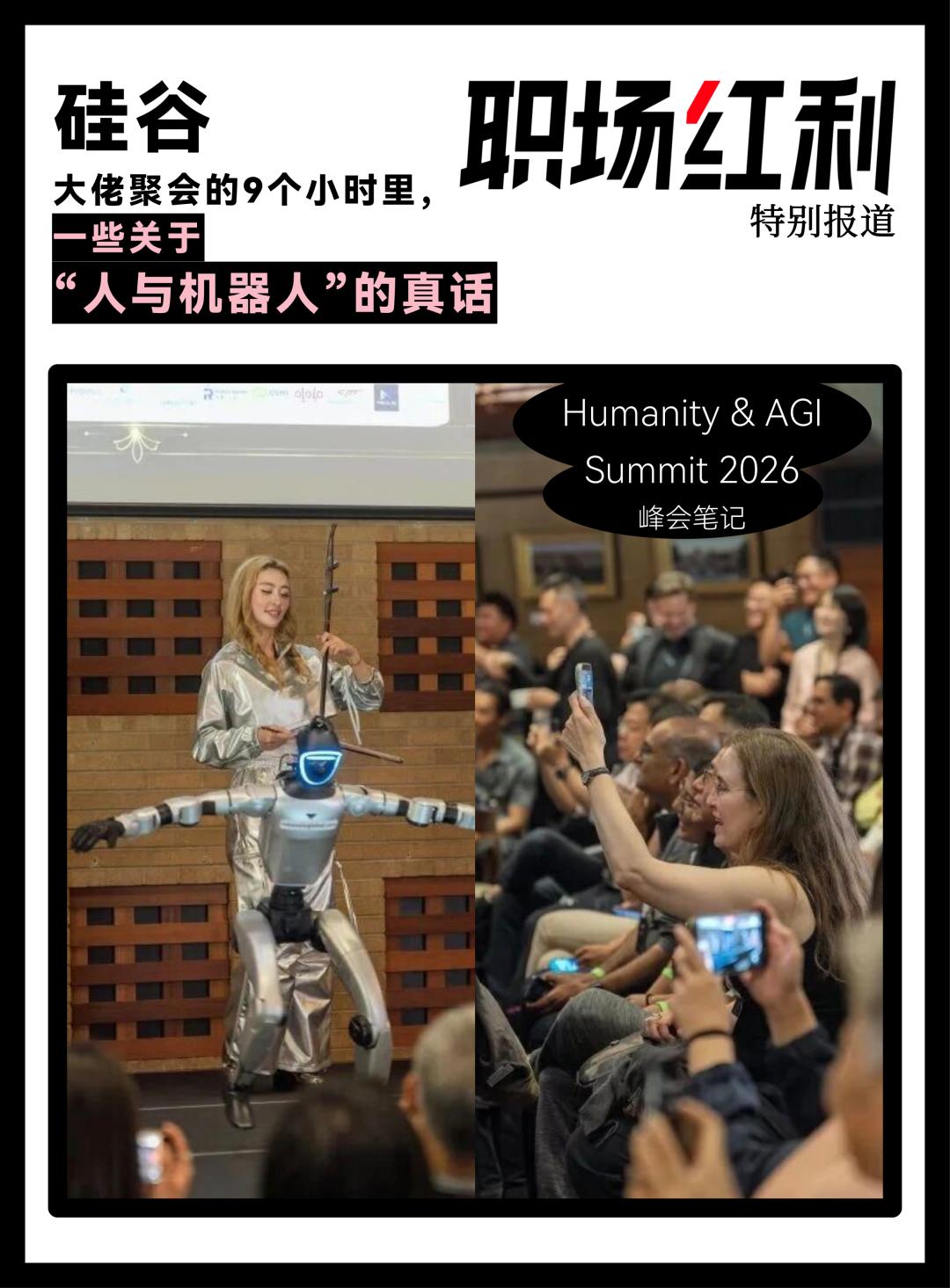
The performances of two star Chinese robot companies have simultaneously appeared in the academic heartland of Silicon Valley, USA.
On July 12, at the Stanford Faculty Club. During the intermission of a tech summit, internationally renowned erhu performing artist Hina Zhang played the piece Race Horse, accompanied on stage by a Unitree robot; as the final notes of Levitating faded away, a Agibot robot completed its interactive performance.
Beyond the visual spectacle, attendees grew increasingly curious about the real-world state of robotics. In an era swept up by the marketing hype of robotics companies, people are eager to hear unvarnished truths.
Founder of AMINO Capital, widely known as "Silicon Valley Master Li," Larry Li stated during the afternoon investment forum: "I've seen countless demos where these robots dance flawlessly on stage... but once the performance ends, it takes three or four people to physically carry them off the stage."
The summit, titled Humanity & AGI Summit 2026 , was co-hosted by AIRA (American AI Robotics Alliance) alongside multiple partner organizations, running from 9 a.m. to 6 p.m. The event opened with an exclusive video keynote from Yuval Noah Harari, author of the global bestseller Sapiens: A Brief History of Humankind. Featured speakers included Skild AI founder Deepak Pathak, Cheetah Mobile Chairman Fu Sheng, Stanford Medicine Professor John Ioannidis, alongside scholars from CMU, NVIDIA, Oracle, Wharton School, and prominent Silicon Valley investors.
At this event, half of the discussions around "robots" focused on demystifying the field. Meanwhile, conversations about "humans" centered on human work, human trust, and human organization... all topics that resonate deeply across both Chinese and global industries and workplaces.
The summit kicked off with an opening address from AIRA Chairman Yong Wang: Over the past few decades, AI has largely existed in the digital realm; today, it is stepping into the physical world alongside robots. "The future of AGI cannot be driven by technology alone," scientists, entrepreneurs, policymakers, and society at large must all be part of the conversation, as systems of trust, accountability, and governance need to evolve in tandem with technological advancement.
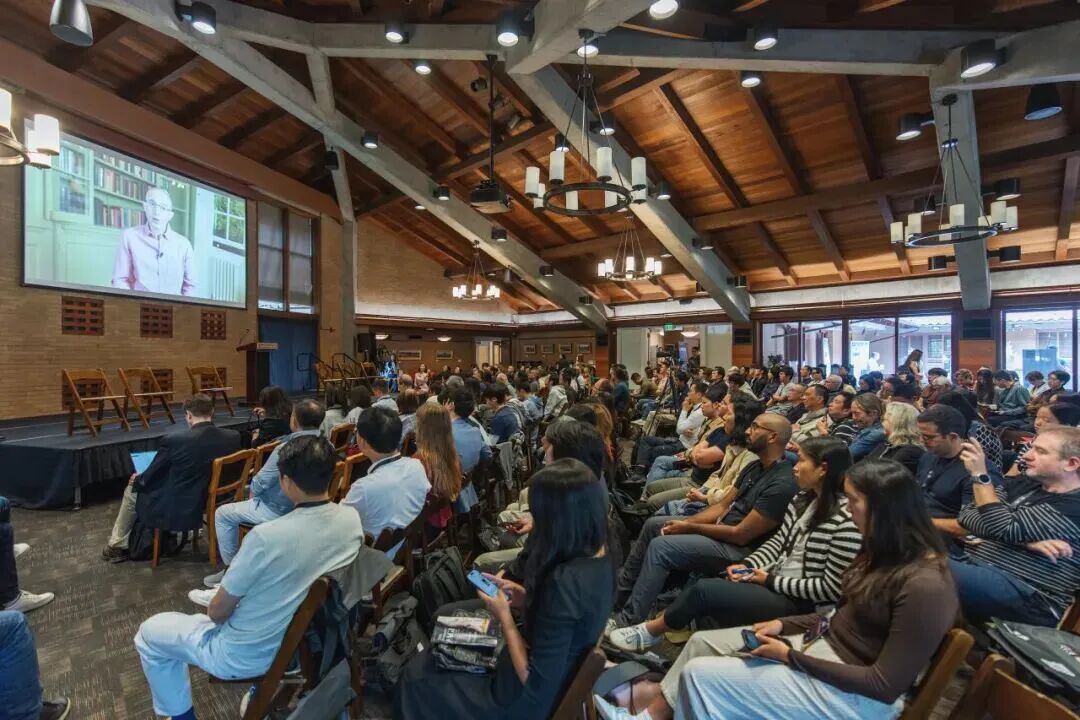
● Yuval Noah Harari, author of the global bestselling Sapiens trilogy, delivered an opening video keynote titled Towards the AGI Tipping Point
And the presence of Harari carried even greater significance, setting a tone and reminder for all attendees at the start of the event to embrace "technological self-reflection" —
Humanity, conditioned by science fiction, has grown accustomed to fearing a "robot rebellion," yet the real risks unfold quietly. AI is evolving from a mere "tool" to an autonomous "Agent," and society is growing increasingly dependent on algorithmic systems that we cannot fully comprehend or oversee, giving rise to a new kind of "digital bureaucracy." Historically, the printing press did not directly spark the Age of Enlightenment; it first unleashed a flood of information noise, rumors, and extremist ideas. It was only after humanity gradually built editorial systems, fact-checking mechanisms, libraries, and schools that this massive volume of information was transformed into actionable knowledge.
Below are the on-site notes from Workplace Bonus.
[A Dose of Reality: Robots Are Not Ready Yet]
The core message of the keynote delivered by CMU professor, Skild AI co-founder and CEO Deepak Pathak was to demystify the robotics industry.
He introduced the well-known Moravec's Paradox: For machines, "the hard things are easy, and the easy things are hard." The reason for this is that humans perform perceptual and motor tasks intuitively, drawing on a lifetime of accumulated experience and common sense, while robots must learn these capabilities entirely from scratch. Seemingly complex actions like backflips, jumps, and dance moves only require precise control over one's own body, with no need for deep understanding of the external environment — making them surprisingly easy for machines. Walking up a flight of stairs, by contrast, is far more challenging: the robot must constantly perceive and interpret the outside world to identify where the steps are, their height, and how to avoid obstacles with every single step.
"Viral videos online showcasing robot breakthroughs are deeply misleading. The fact that a robot can dance does not mean it understands the world around it."
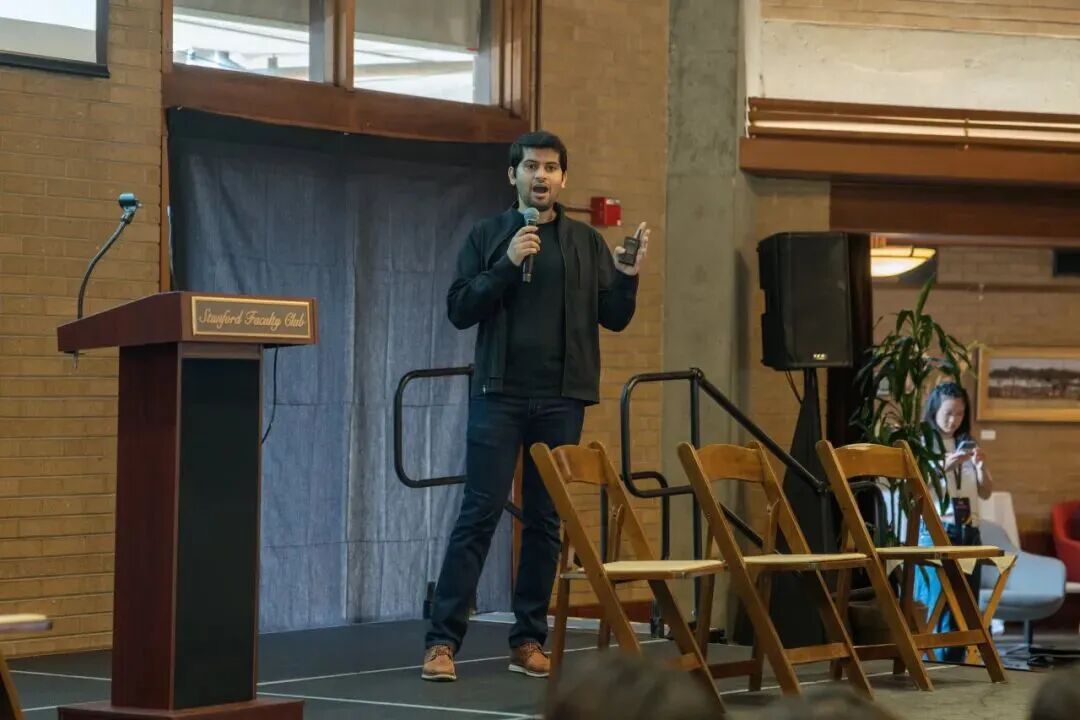
● Professor Deepak Pathak, Co-founder of Skild AI, delivered a keynote titled Building a Universal Brain for Robots
Why is the evolution speed of robots far slower than that of large language models? His answer boils down to "data." While large language models have the entire internet to learn from, robotics data must come directly from real-world physical operations — and those operations themselves rely on intelligent systems to function, creating a classic "chicken-and-egg" dilemma. The potential solution, he suggests, is to develop a "universal robotic brain": Any robot, any task, one brain. Simulated data provides massive scale, human video datasets offer rich diversity, and real-world operation data ensures authenticity. According to Deepak, this system has already been deployed in NVIDIA's factory GPU assembly lines, with ongoing exploratory applications at Foxconn's production facilities in Taiwan.
So just how far away are we from "the GPT moment for robotics"? The most honest answer we heard throughout the entire event came from ZhengYi Luo, Senior Research Scientist at NVIDIA's General Embodied Intelligence Lab: "Every time someone asks me how many years it will take, I say three to five years — and 'three to five years' usually means I have no real idea."
Cheetah Mobile Chairman and CEO, OrionStar founder Fu Sheng offered an even more direct assessment during his speech: "Humanoid robots will not achieve large-scale commercialization within the next 5 years." It is worth noting that he himself is actively operating a robotics business.
Today, roughly 70% of all humanoid robots are sold to research institutions. "Academic research and commercialization are two completely different things, which clearly shows the market is not yet ready to pay for these products." He outlined three core reasons for this gap: On the software side, robots lack sufficient real-world physical data, meaning "the true ChatGPT moment for robotics has not yet arrived." On the hardware side, core components have not formed a mature industrial supply chain — "a single faulty joint could take an entire month to repair." And in terms of form factor, wheeled robots can reduce costs by roughly 90% while covering 95% of real-world application scenarios, yet humanoid robots cost more than ten times as much, often performing exactly the same tasks. "Customers want solutions to their problems, not a machine that just looks like a human."
Capital markets always move faster than industrial development. Zheng Mengwen, host of the capital forum and co-founder of Robotics Home, cited data from Dealroom stating that global robotics companies have raised $5.58 billion in funding this year, hitting an all-time high; yet global shipments of humanoid robots in 2025 are estimated to be only around 30,000 units. She also noted that Tesla has raised its annual production capacity target for the Optimus V3 to 70,000 units, while Unitree Technology reported full-size humanoid robot revenues of 821 million RMB in 2025 — order stories are making headlines, even as viable commercialization models remain unproven.
Larry Li echoed these observations with his investment strategy. He explained that AMINO Capital does not prioritize investments in humanoid robots, focusing instead on two key areas: first, data — how to generate usable robotics datasets for other companies; second, general-purpose robots that are "not 'human-like,' but 'general,' capable of completing a wide range of tasks, even if they cannot do absolutely everything."
[The Companies That Survive Do Not Chase "Human-Like" Design]
What kinds of robotics companies are actually thriving in the real world? The afternoon forum presented several illustrative real-world examples.
Tony Ho, Vice President of Ninebot, shared that the company had previously experimented with multiple directions including hotel delivery robots, before finally achieving breakthrough success with robotic lawn mowers, whose products now serve approximately one million households worldwide. He summed up the lesson clearly: "Don't hold a hammer looking for nails — first, fully understand what your customers' actual problems are."
Fu Sheng defined his success formula as "high demand, repetitive tasks, and controllable use cases." During this year's Spring Festival, he spent several months in a wheelchair after a skiing injury, and discovered that the biggest pain point for elderly wheelchair users was frequent collisions with doors and furniture. He then integrated robot navigation and obstacle avoidance technology into wheelchairs, and his first batch of these upgraded products has already been sold to European markets.
If finding genuine market demand was the winning strategy in the industry's early phase, then the key to the next stage is driving down delivery costs — previously, deploying a single robot required sending engineers on-site to spend one or two days debugging the system, but now, AI agents can complete full self-configuration in just 30 minutes.
For B2B robotics companies, deployment costs are quite literally the make-or-break threshold for achieving large-scale commercialization.
Associate Professor at UCLA and Chief AI Scientist at Coco Robotics Bolei Zhou reminded attendees that robotics companies must identify their own unique benchmark metrics and niche vertical markets, just as researchers do in academic work.
He cited the cautionary tale of iRobot: the company that achieved massive success with the Roomba vacuum cleaner was trapped for years in the single home cleaning scenario, and eventually found itself in a vulnerable position under pressure from Chinese competitors' lower costs and improved performance. In December 2025, iRobot filed for bankruptcy protection and was acquired by its Chinese contract manufacturer, Shenzhen Shanchuan Robotics.
Ryan JB Taylor, Partner at Fusion Fund, reviews nearly 1,000 robotics companies every year, and describes the most common failure mode as a "slow death": companies raise funding through flashy demos and marketing content, but never manage to achieve real commercialization. He defines his investment focus as the "4D" scenarios — Dangerous, Dirty, Dull, and Dear. "The fastest-growing companies in our portfolio are almost all operating in the dangerous and dirty use cases."
[The Trust Crisis: A Deepfake Victim's Fightback]
"I became a victim of Deepfake pornographic content." The most emotionally charged segment of the entire event had nothing to do with robots at all.
Breeze Liu, founder of Alecto AI, graduated from UC Berkeley and works in venture capital. One day, she discovered at least 800 links to forged deepfake content targeting herself across the internet, with 142 of these links hosted directly on Microsoft's servers.
She reached out to the tech giant for help, only to receive the response: "We do not have the technology to address this."
She was forced to file individual takedown requests one by one for every link.
This traumatic experience motivated her to advocate for the Take It Down Act — the first federal law in the United States specifically targeting this type of malicious content, which was signed into effect in May 2025.
At the forum, Breeze Liu shared the story of her great-grandmother. As a Chinese woman born in an earlier era, her great-grandmother never learned to read, never left her hometown, and was forced to undergo foot binding as a young child. "Foot binding may be a thing of the past, but new forms of harm have emerged. In my view, Deepfake abuse is the digital equivalent of foot binding."
"98% of all Deepfake content is pornographic, and 99% of its victims are women," Breeze Liu stated. The Alecto AI platform she founded not only provides Deepfake detection and takedown services, but also offers all these services completely free of charge for individual users. "Charging survivors for this protection is something I cannot morally justify."
Speaking to the broader trust crisis created by new technologies, Stanford Medicine Professor and leading evidence-based medicine scholar John Ioannidis added a critical perspective from the research world: after analyzing the publication records of 317 AI unicorn companies, he found that their combined research output accounts for a mere 0.1% of global AI academic literature. This means there is almost no correlation between a company's valuation and its actual scientific contribution. "Roughly one in every seven academic papers today contains falsified data, amounting to about 1 million fraudulent papers published every year."
[What Is Capital Investing In? How Can Companies Survive?]
The very nature of human work is being fundamentally rewritten.
Kin Fu, founder and CEO of Metix AI, shared two illustrative stories. A young engineering graduate from a top university with internship experience at a major tech company sent out 1,082 job applications in a single week, and received almost no responses. A robotics company founder interviewed 22 candidates over three months, only to find one truly qualified hire — who ultimately accepted a better offer from a different firm.
Today, base annual salaries for core R&D roles in the robotics industry already range from $300,000 to $500,000. "The single biggest bottleneck facing this industry right now is not capital, computing power, or model performance — it is talent. People who can actually translate cutting-edge technology into real-world products are extremely scarce."
"Companies are still using old-fashioned criteria like educational background, previous employer, job titles, and keywords to find the talent they need for the future." He identifies this as the core problem. The top-performing employees of the future will be those who can skillfully leverage AI models, intelligent agents, automation tools, and optimized workflows to collaboratively create value alongside AI. The highest-performing organizations of the future will compete on the density of high-value talent, not headcount — "30 truly exceptional employees can easily deliver more value than 300 average workers."
The title of his speech itself summed up his core conclusion: Robots Won the Work. Humans Win What's Next. While AI can generate solutions and execute tasks, it cannot take true accountability for outcomes. Automation will continue to advance, but ultimate responsibility will always rest with human beings.
Associate Professor at the Wharton School and Director of the Mack Institute for Embodied Intelligence Lynn Wu drew on a large-scale study of the Canadian economy, finding that widespread corporate adoption of robots actually leads to net employment growth — but the required skill sets for these jobs are completely transformed.
She cited AI exposure research published by Anthropic and OpenAI: investment professionals have an AI exposure rate of 95% to 99%, social media workers 85% to 90%, while plumbers and electricians have less than 10% exposure. As a professor herself, her own AI exposure rate is 99%, "but I am not afraid at all — I am excited." Software engineering jobs have already