JAC Motors has made its foray into the high-end market, but ended up leaving high-net-worth individual stock investors trapped in huge losses.
JAC is currently in a situation of stark contrast.
On June 25, the Zunjie V800 and V680 under JAC Motors officially opened for pre-orders. Within 23 days, the pre-order volume for the two models exceeded 10,000 units, with the V800, priced at 800,000 to 1,200,000 yuan, accounting for approximately 80% of the total orders.
This means that a million-yuan MPV, which has not yet announced its final official price or started deliveries, has already secured around 8,000 pre-orders before its formal launch.
However, at the same time, JAC Motors, the parent brand behind Zunjie, has seen its stock price decline continuously in the capital market.
As of July 24, JAC Motors' share price closed at 19.64 yuan, down more than 60% from its peak of 58.81 yuan a year ago. Meanwhile, Ge Weidong and Zhang Jianping, who invested heavily in JAC's private placement at the beginning of the year betting on Zunjie's success, are now trapped in a deep loss position.
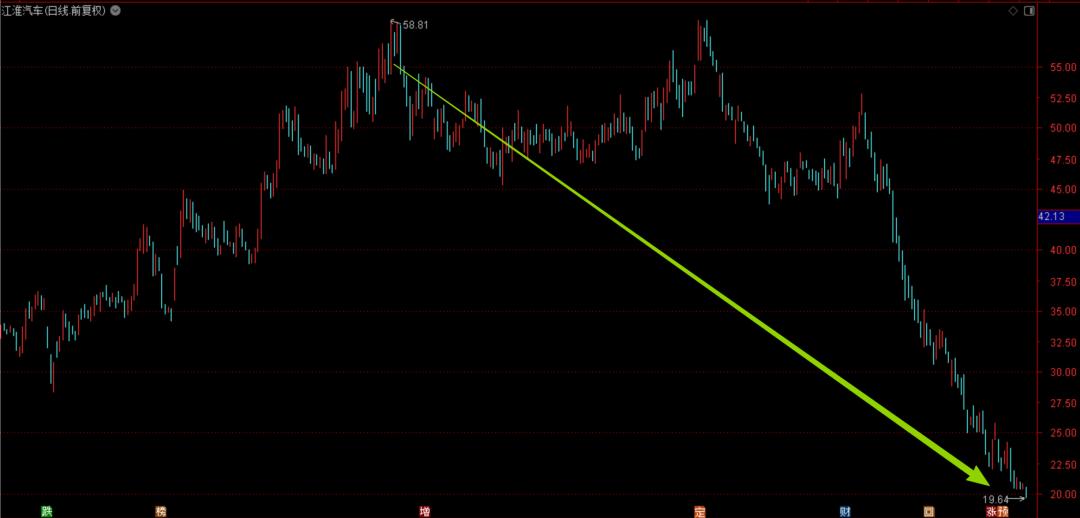
On one side, the pre-orders for the new high-end models are booming, while on the other, JAC's stock price keeps falling. Zunjie has successfully entered the high-end market, so why is the listed company behind it showing a sharp "diving" trend in its share price?
01 Zunjie: The Higher the Price, the Better the Sales
Zunjie seems to have never intended to follow the conventional path right from its inception.
In recent years, as new energy vehicles have thrived, Chinese automotive brands pursuing high-end positioning usually follow a gradual path: they first establish a firm foothold in the 200,000 to 300,000-yuan market, then launch flagship models, and gradually penetrate the "56E" market occupied by the Mercedes-Benz E-Class, BMW 5-Series, and Audi A6L.
But Zunjie's first model, the S800, directly skipped this entire stage. With a price range of 708,000 to 1,018,000 yuan, the S800 immediately competes head-to-head with the Mercedes-Benz S-Class, BMW 7-Series, and Audi A8L, while its higher-trim versions even include the Maybach S-Class in its benchmarking lineup.
While other brands are still figuring out how to break into the high-end market of BBA, Zunjie has already secured a seat at the table of million-yuan executive sedans.
This is widely recognized as the "hell-level challenge" in the automotive industry. In 2025, the total annual sales of China's passenger vehicle market reached 23.553 million units, of which models priced below 200,000 yuan accounted for as high as 72.9% (the 100,000 to 150,000-yuan segment had the highest share at 30.0%). Models priced above 200,000 yuan made up only 27.1%, while those above 590,000 yuan accounted for a mere 2%.
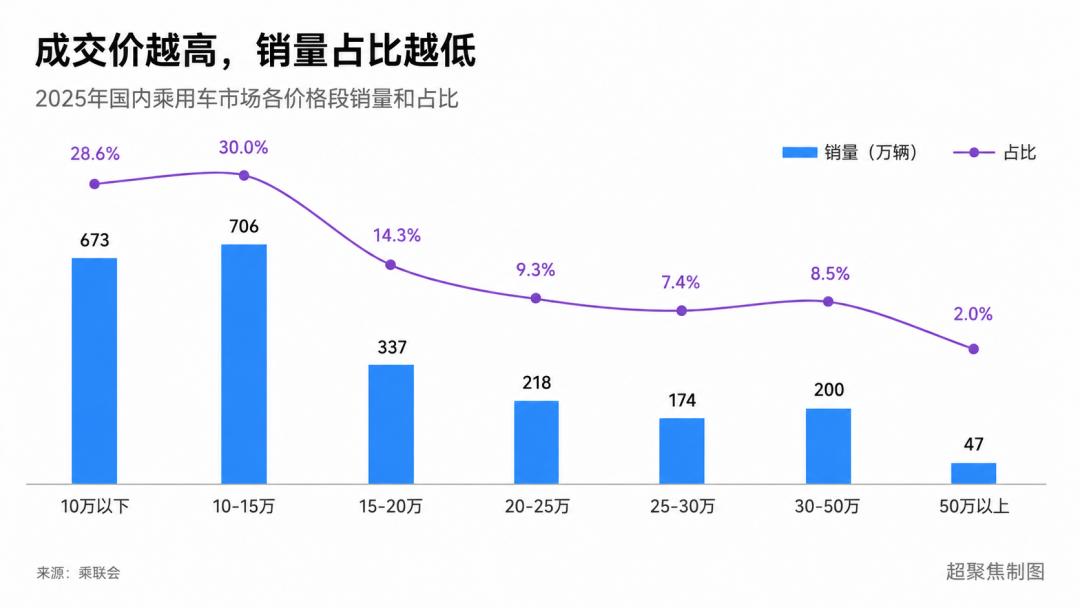
At this price point, consumers are no longer just purchasing vehicle configurations, interior space, and intelligent driving capabilities; they are also paying for brand heritage, social recognition, and status symbolism. The premium that traditional luxury brands have built over decades or even centuries cannot be easily shaken by a single product launch event, a few in-car screens, or a configuration sheet.
Before the S800, no domestic sedan had ever dared to set its price anchor above 700,000 yuan and achieve large-scale deliveries.
But with the support of Harmony Intelligent Mobility, Zunjie has delivered impressive results. Last December, the S800 achieved monthly deliveries of over 4,200 units, topping the luxury sedan market above 700,000 yuan. By June this year, even as its monthly insurance registration volume had declined from its delivery peak, the S800 still ranked first in that price segment. In total, the cumulative deliveries of the S800 have approached 19,000 units.
For a domestic sedan with a starting price exceeding 700,000 yuan, this performance has proven that consumers are not unwilling to pay a million-yuan price tag for Chinese automotive brands. Zunjie has thus completed its most difficult step: transforming from a cooperative project affiliated with JAC and Huawei into a genuine luxury brand recognized by high-net-worth consumers.
According to normal business logic, Zunjie could have leveraged the brand momentum built by the S800 to expand into the lower-priced, larger SUV market, and capture higher sales volumes with a model priced at 400,000 to 500,000 yuan. However, Zunjie chose not to take this "easy path."
After the S800 entered a stable delivery phase, Zunjie shifted its focus to launching its second battle in the ultra-luxury MPV market. The V680 has a pre-price range of 650,000 to 900,000 yuan, while the V800 directly reaches 800,000 to 1,200,000 yuan. Its price has surpassed that of domestic high-end MPVs such as the Zeekr 009 and Denza D9, heading straight for the market segment occupied by the Toyota Alphard and Lexus LM.
In the just-concluded June, sedans accounted for 38.8% of the market, SUVs for 56.6%, while MPVs made up only 4.6% — the smallest market size among the three major passenger vehicle categories. Ultra-luxury MPVs priced above 800,000 yuan are even more of a niche within a niche.
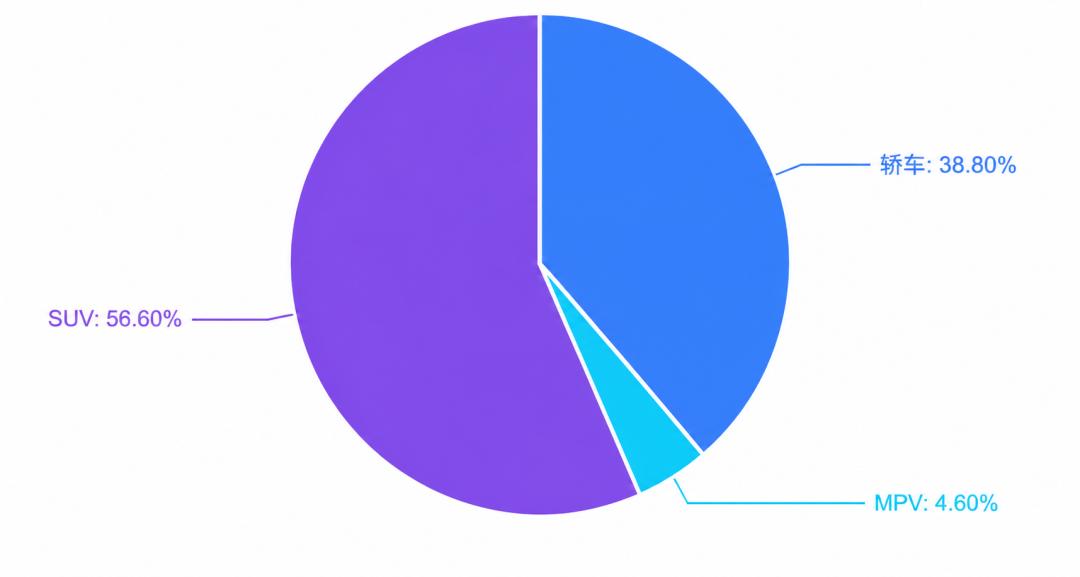
But being niche does not mean lacking value. Over the past few years, models like the Denza D9 and Zeekr 009 have proven that Chinese brands have the capability to poach high-end MPV users from traditional models such as the Buick GL8 and Toyota Alphard.
This plays exactly to Zunjie's strengths. As a follow-up product to the S800, the V800, with its million-yuan price tag, is almost targeted at the exact same group of consumers, attempting to redefine what a million-yuan MPV should offer through its dimensions, cabin experience, intelligent driving, and flagship configurations.
This strategy, at least judging from the pre-order performance, remains highly effective.
The V800 and V680 received over 10,000 orders in 23 days of pre-sales, with the higher-priced V800 accounting for approximately 80% of the total. Consumers did not shift to cheaper versions due to the 800,000 to 1,200,000-yuan pre-price; instead, the majority chose the flagship model.
From the S800 to the V800, Zunjie is gradually turning the success of a single model into widespread high-end brand recognition. For a new player that has only existed for two years without a century-old brand heritage, this in itself is a rare achievement.
However, this victory appears to belong more to Harmony Intelligent Mobility and the consumer awareness it has built, rather than to JAC Motors, the "contract manufacturer" itself.
02 Zunjie Thrives, Institutional Investors Suffer Heavy Losses
While Zunjie's high-end brand story is gaining momentum, the investment accounts of retail investors who backed JAC are facing steep losses.
In February this year, JAC Motors completed a private placement of nearly 3.5 billion yuan at an issue price of 49.88 yuan per share. Among the eight subscribers, Ge Weidong and Fang Wenyan (wife of Zhang Jianping) each invested 1 billion yuan, receiving approximately 20.048 million shares respectively, making them the two largest investors in this round of private placement.
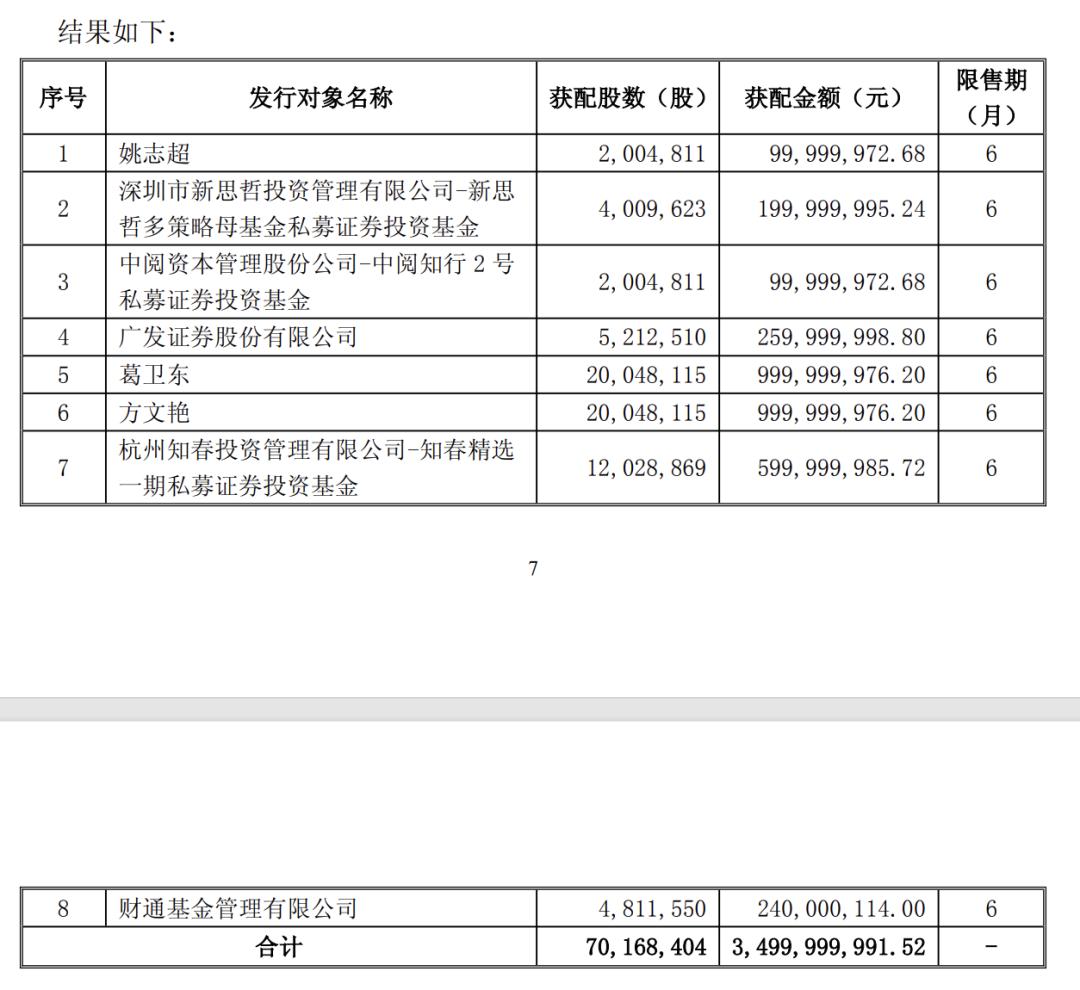
But calculated based on the closing price of 19.64 yuan on July 24, the share price has already dropped by more than half from the issue price. The market value of both private placement positions is now only about 394 million yuan, with each investor recording a floating loss of over 600 million yuan, bringing the total combined floating loss to over 1.2 billion yuan.
What is even more thought-provoking is that before the privately placed shares were released from the lock-up period, Fang Wenyan had already started reducing her holdings. From June 10 to 23, she sold a total of 9.235 million previously held tradable shares, cashing out approximately 290 million yuan based on the average transaction price during that period.
Although this reduction does not involve the privately placed shares that are still under lock-up, the fact that Zhang Jianping and his wife have taken the initiative to cut their positions, while not necessarily admitting defeat, clearly shows that their patience in the heavy bet on Zunjie is being eroded by the falling share price.
The reason for JAC Motors' continuous share price decline is not complicated: the capital market has gradually realized that Zunjie's high-end brand story cannot yet support JAC's financial performance.
In 2025, JAC Motors achieved operating revenue of 46.476 billion yuan, a year-on-year increase of 10.35%, but its net profit attributable to shareholders still recorded a loss of 1.703 billion yuan, with its non-recurring loss reaching as high as 2.5 billion yuan. Entering 2026, this situation has not improved significantly. JAC expects its net attributable loss in the first half of the year to be around 740 million yuan, and its non-recurring net loss to be approximately 986 million yuan, almost unchanged from the same period last year.
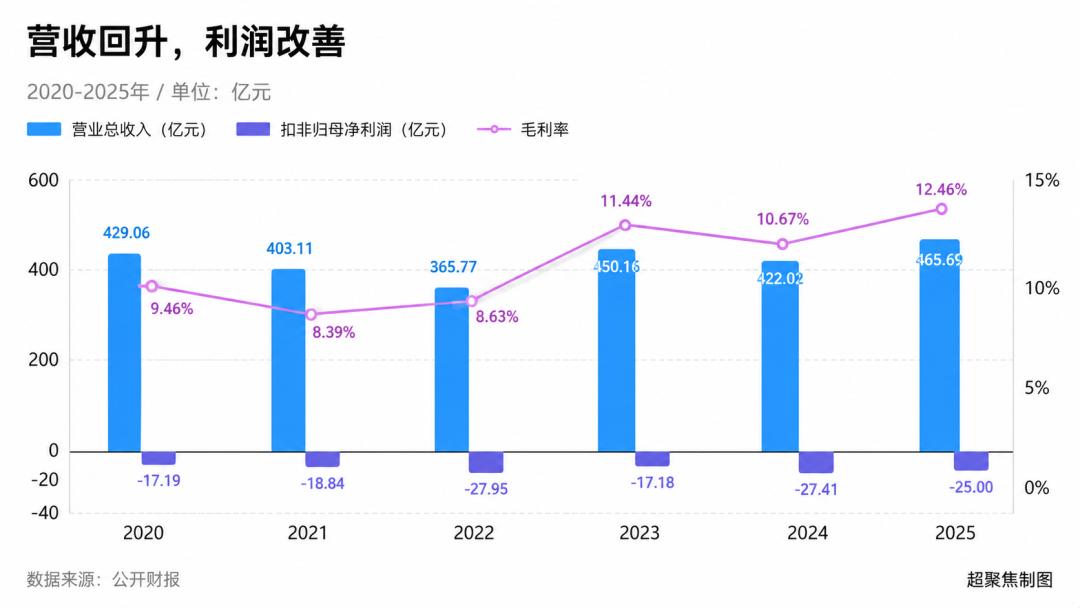
In other words, even though the S800 has successfully entered the million-yuan market, it has not yet pulled JAC out of its loss-making state.
The main reason is that Zunjie's proportion in JAC's overall business is still far too small.
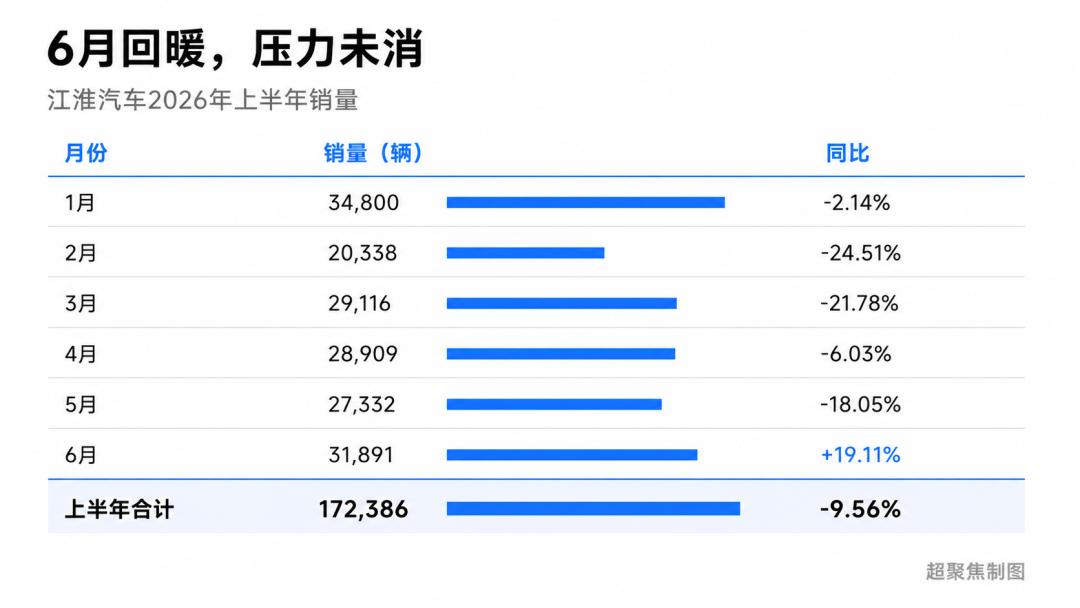
In the first half of 2026, JAC Motors' cumulative sales reached 172,400 units, down 9.56% year-on-year; among them, SUV sales decreased by 27.96% year-on-year, and sedan sales dropped by 36.17%. The incremental sales brought by Zunjie are not enough to offset the decline in traditional passenger vehicle and other business segments.
At the same time, building an ultra-luxury brand itself requires extremely large capital investment.
From new model R&D, the construction of exclusive production plants, to brand marketing and service system development, Zunjie is still in a heavy investment phase. The revenue generated from selling a million-yuan luxury car cannot be simply equated to JAC's profits; nearly 19,000 S800 units have set a new record for domestic luxury car sales, but it is difficult to immediately cover all the costs of a comprehensive automotive group.
In its performance forecast, JAC also attributed its losses to declining sales, losses from joint ventures, and exchange rate fluctuations. Among these, investment losses from joint ventures amounted to approximately 130 million yuan, and exchange gains decreased by about 390 million yuan year-on-year. While Zunjie is making upward breakthroughs, JAC's existing business and cost burdens are still dragging it down from behind.
This is the real reason behind JAC Motors' continuous share price decline. Perhaps Ge Weidong and Zhang Jianping did not misjudge Zunjie's high-end development capabilities, but they overestimated how quickly Zunjie could improve JAC's profit statement.
The market previously expected JAC to replicate the successful turnaround of Seres through Zunjie: a hit model drives the growth of a brand, which in turn reshapes the entire listed company. However, the million-yuan sedans and ultra-luxury MPVs that Zunjie has chosen to focus on are inherently niche markets with limited capacity. Even if Zunjie continuously ranks first in its segmented segments, it is difficult to quickly achieve the hundreds of thousands of units in sales volume that AITO has reached.
When Zunjie delivers on brand prestige, but the capital market expects strong profit performance, JAC Motors' valuation has to be recalculated.
Therefore, JAC is currently in an awkward intermediate position. Its high-end brand image may have been established, but profits have not yet followed; pre-orders have exploded, but the share price is still falling. Whether retail investors Ge Weidong and Zhang Jianping have bet on the right direction may need another one or two years to be verified.
At least for now, there is still a gap that can only be bridged over time between Zunjie's soaring brand positioning and JAC's actual financial performance.
This article is from the WeChat public account "Super Focus foci", written by Sean, and published with authorization from 36Kr.