Young people who cannot afford DJI and Insta360 are queuing up to rent action cameras.
"One device can bring in 1,500 yuan a month during peak seasons."
Last summer vacation, Wang Qiang simply posted a video about renting out his DJI Pocket 3, with the initial intention of testing the waters and recouping some of his costs. Unexpectedly, as soon as the video went live, he received a hundred or two private messages, with dozens of people scrambling to rent that single device.
After spotting the business opportunity, he immediately scaled up his operations. Now he owns 30 to 40 devices, and all slots for August are fully booked long in advance.
Online rentals, which cost several times less than Wang Qiang's prices, are even more booming: on a certain camera rental platform, the number of orders for the DJI Pocket 3 has exceeded 110,000, while popular digital camera models from Canon only see a little over 1,000 orders.
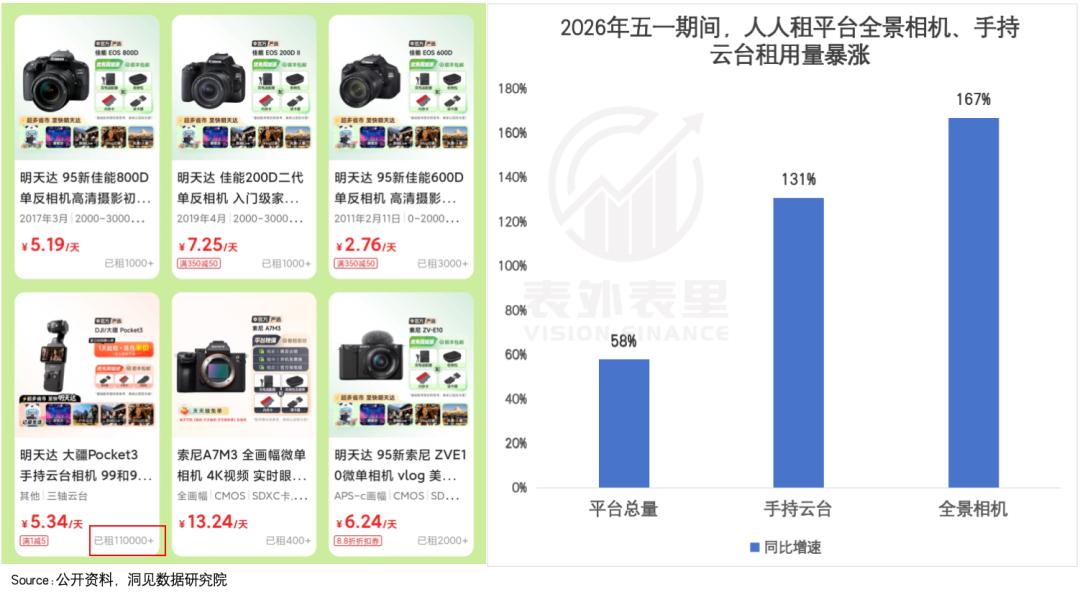
This red-hot market exists solely because young people who embrace the "enjoy your gear" mindset "want to own one no matter how much money they have", and action cameras have even become one of the "three essential items for the college entrance examination" for the post-2005 generation.
But the harsh reality is that not only are their wallets strained, their time and energy are also occupied by work and studies, making it impossible for them to use the devices they want.
Looking at the digital products that have been gathering dust at home for ages, young people who are returning to rational consumption are lining up to "rent instead of buy" — getting a quick taste of the fun first, before deciding if the product is truly a necessity for them.
Behind this ultra-popular camera rental business lies a new consumer philosophy among young people that balances rationality and sentiment.
An Action Camera Is a Social Calling Card
Han Xiaoniu experienced a "special treatment" the very first time she brought an action camera out to dinner two years ago.
The waiter greeted her with a big smile and led her to the best table in the restaurant. The store manager even stopped by specially to chat with her, and insisted on giving her a signature dish on the house.
To her secret delight, she later realized the staff had spotted the DJI Pocket 3 in her hand and assumed she was a restaurant reviewer. "I never expected it would actually make me look so professional."
What surprised her even more was that when she just posted two photos with the DJI watermark on her WeChat Moments, all her friends flooded into the comment section, and even sent private messages asking about her user experience, hoping to borrow the camera for a few days.
After a short chat, she found that the Pocket 3 she bought just to follow the trend was a highly sought-after model that many people in her social circle couldn't get their hands on. "Especially the entry-level version, it sells out the second it goes on sale."
Since "everyone was raving about it", Han Xiaoniu cherished this "hidden gem" even more. She not only used it to shoot videos for her students at the international school where she worked, but also brought it along on travels and concerts, and started to seriously explore all its features.
Fortunately, this device only has two buttons: one for powering on and one for recording, so it's very easy to operate. Plus, the color performance is stunning — especially for human faces, "the output gives you that cool, fair skin tone" with no need for retouching at all.
In comparison, the original photos taken with a phone not only distort facial contours, but also make the face look dull. In the past, Han Xiaoniu would spend a lot of time carefully editing her face in retouching apps before posting on WeChat Moments, but the edited results were far less "vibrant" and "authentic" than the direct outputs from the DJI camera.
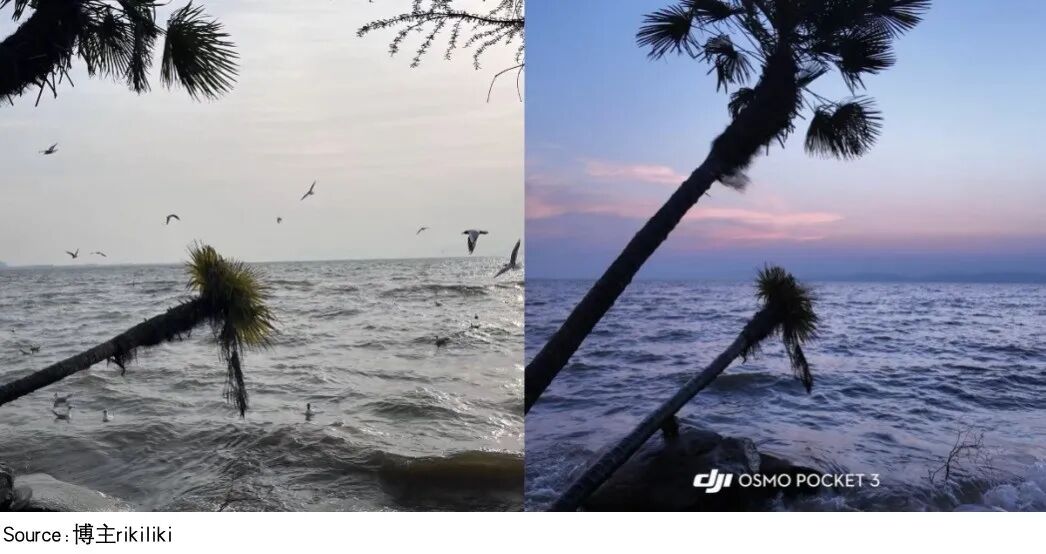
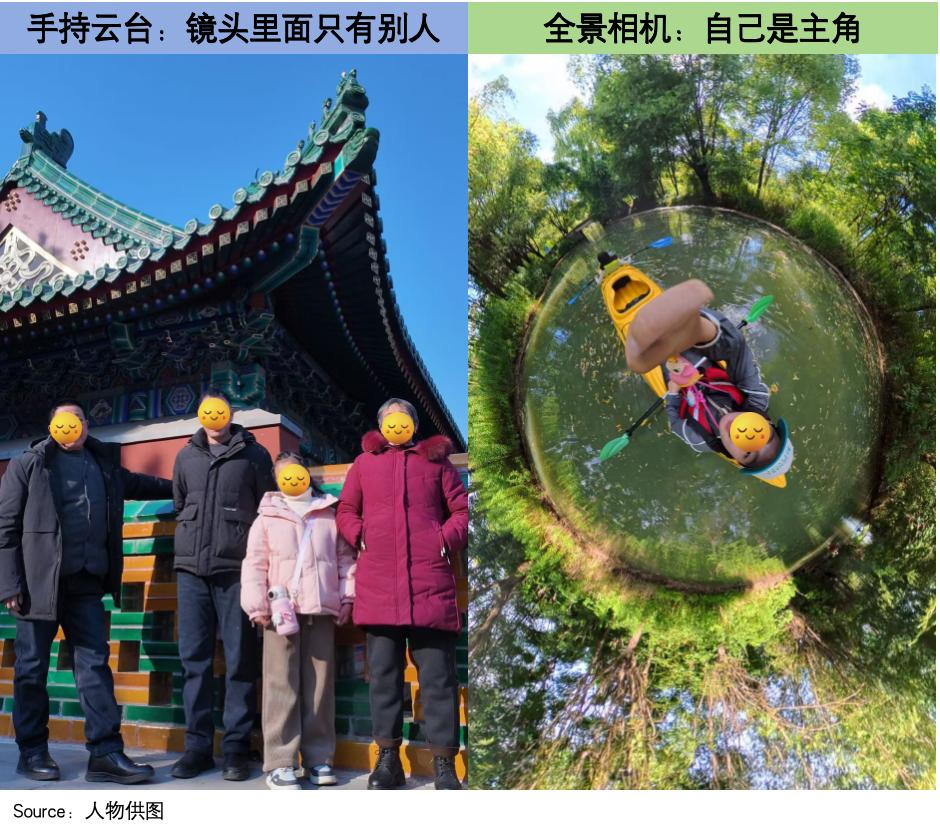
Once the vanity faded away, the deeper fun and value of using the device began to emerge. Han Xiaoniu, who saw the real "gap" in quality, became genuinely obsessed with action cameras. She not only used it far more often, but also wanted more, and later bought an Insta360 panoramic camera. She loves that the Insta360 can film her from 360 degrees, and also enjoys its diverse shooting modes like "bullet time" and "little planet view".
After mastering all the functions proficiently, she started to run her own video content channels. Han Xiaoniu studied the official promotion strategies, so she deliberately keeps the brand watermark on her videos. "If my video goes viral, the brand might reach out to me and send me free accessories or give me traffic boosts."
Nowadays, more and more young people like Han Xiaoniu are "pleasing themselves" and "investing in themselves" by shooting videos. According to this year's official report, over 10 million medium and long videos are posted on Xiaohongshu every month, with more than 42 million people creating this type of content on the platform.
When "shooting videos" has become a stress reliever for young people in their high-pressure, exhausting daily lives, the arrival of DJI and Insta360 just adds fuel to the fire, drawing more young people who haven't tried this hobby into the community.
Shunshun is one of the people who got hooked by action cameras. She has a stable public sector job, but after working for a long time, the job inevitably feels tedious, and her biggest hobby in her spare time was staying at home.
It wasn't until a friend waved an action camera in front of her that she thought it looked fun and decided to "join in". At first, she just rented a camera to take some casual shots, but gradually she started to research shooting angles, content structuring, and video editing techniques.
"Videos have this sense of realism and the vibe of daily life, just like you're back in that exact moment." This positive feedback made her want to capture little moments in her daily life nonstop.
In the past, during Lunar New Year, she would only take a single photo of the full dinner table with her phone. But now, she will deliberately bring an action camera home, capturing the smoke rising from the kitchen when her parents are cooking, and the smiling faces of relatives chatting in the living room — all these moments spark her creative inspiration.
However, even though she has grown increasingly dependent on her action camera, she hesitated for a very long time when facing the price tag of several thousand yuan. It was only after renting it nine times and realizing that the action camera had become a real necessity for her that she finally bit the bullet and bought a brand new one.
It's very common for people to be put off by the price, since most action camera consumers are young people with "tight wallets". An impulsive purchase would most likely not bring them wonderful footage, but a device that ends up gathering dust.
That's exactly how the camera rental market was born.
Action Cameras Get Better, Yet Young People Start Renting
While all her friends started to "own a DJI or Insta360 each", Lingzi, a long-time action camera enthusiast, stopped buying new ones.
This year, Lingzi went to a wedding in Hong Kong and found many guests holding action cameras. A friend who never even bothered to take tourist photos before had actually bought the full top-tier set. But after thinking about it, she found it quite reasonable: with an action camera, Victoria Harbour can be shot in all its dazzling, glamorous glory, while the footage from her phone would be overexposed the second she moves slightly, looking like light pollution.
"Between a regular camera and a smartphone, there's exactly a gap that an action camera fills." She shared that the best video recording phone is the iPhone, but a 512G iPhone 17 costs nearly 8,000 yuan, while most domestic flagship phones "prioritize photo quality over video recording". As a result, average consumers have long faced the awkward situation where "their phone isn't capable enough" and professional cameras are "too complicated to use".
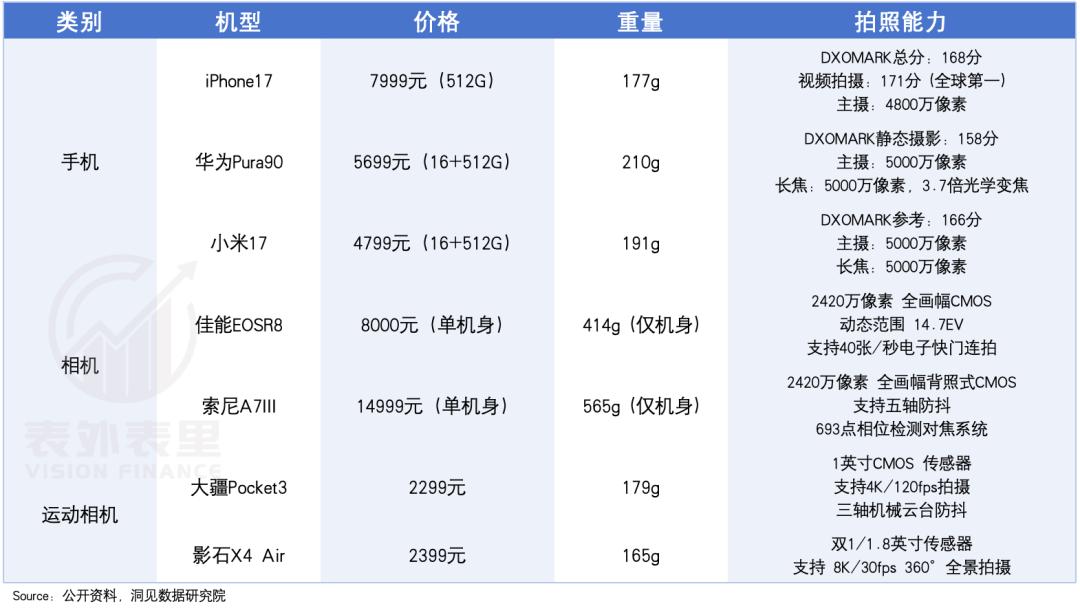
Action cameras that fill this gap have actually been around for a long time, "but the general public never really took to them," Lingzi says.
She bought a GoPro five years ago. After just ten minutes of outdoor shooting, the battery would overheat and shut down, and a single battery couldn't even last half an hour. Even after she finally finished shooting, she had to use a dedicated app to export the footage. The most ridiculous part was that the battery died for no apparent reason just because she used a non-original charger once.
And that "mediocre" product was already the "best option" back then. Lingzi recalls that DJI and Insta360 would release two or three new panoramic camera models every year, so the full set of equipment people just bought would become outdated very quickly; gimbal camera updates were also extremely slow... These immature products kept action cameras a niche hobby.
Things are different now. With the launch of landmark products like the DJI Pocket 3 and Insta360 X5, the core imaging architecture of mainstream domestic action camera models has become stable. A flagship device can be used for two or three years without needing an upgrade, so many regular consumers are starting to get into action cameras.
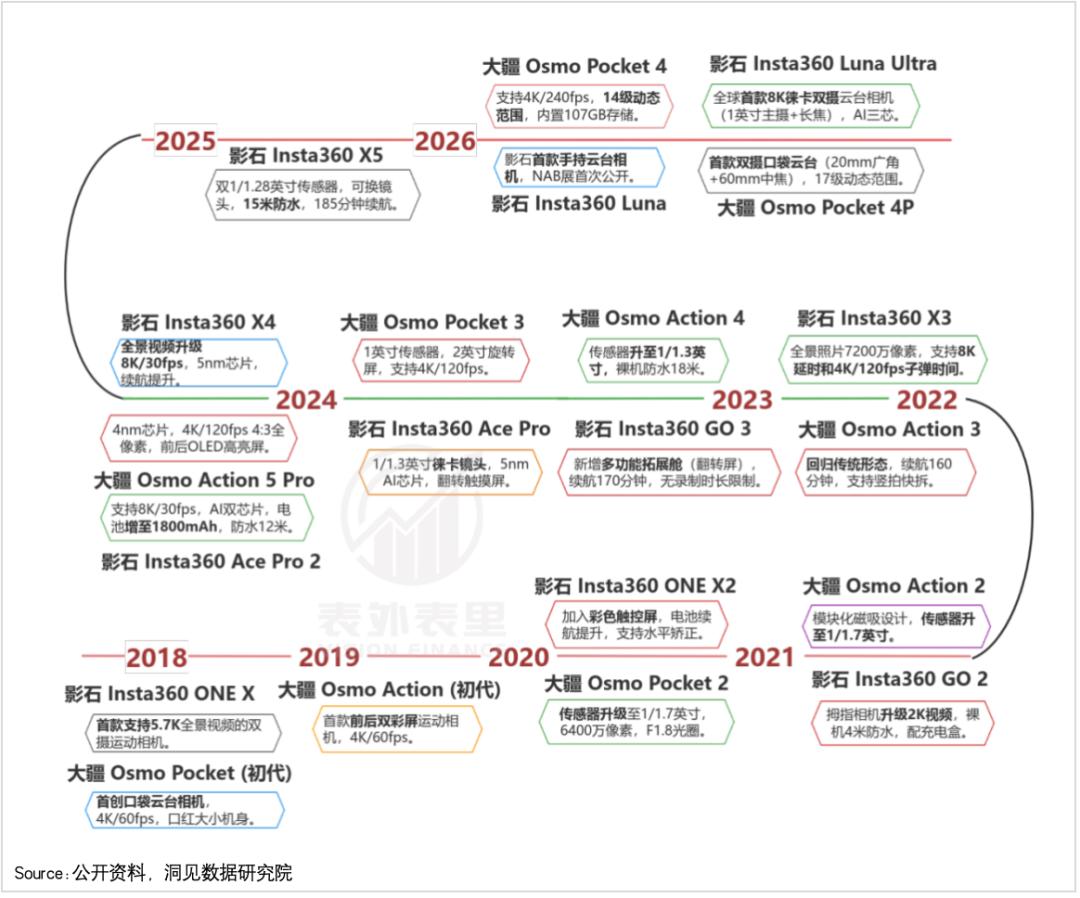
"The DJI Pocket 3 has sold 10 million units. A camera in this niche category priced at three to four thousand yuan has achieved sales numbers that only top-selling smartphones can hit," Lingzi says. But the downside of this massive popularity is that countless competitors have started eyeing this lucrative market.
Last year after the National Day holiday, Lingzi saw news that DJI was selling products at steep discounts. She opened her phone and found that the Pocket 3 in her shopping cart had been cut by 700 yuan from 3,499 yuan to 2,799 yuan, which made her overjoyed. Insta360 has been pushing hard in the gimbal camera space, breaking into DJI's traditional market, sparking a price war in the industry — a development she is very happy to see.
Considering that the price will drop even further when the Pocket 4 launches, Lingzi decided to wait a bit longer. She never expected that more and more players would enter this field: OPPO, vivo, and Honor all announced that they will launch gimbal cameras in 2026, and Canon is also developing interchangeable lens designs that DJI doesn't offer.
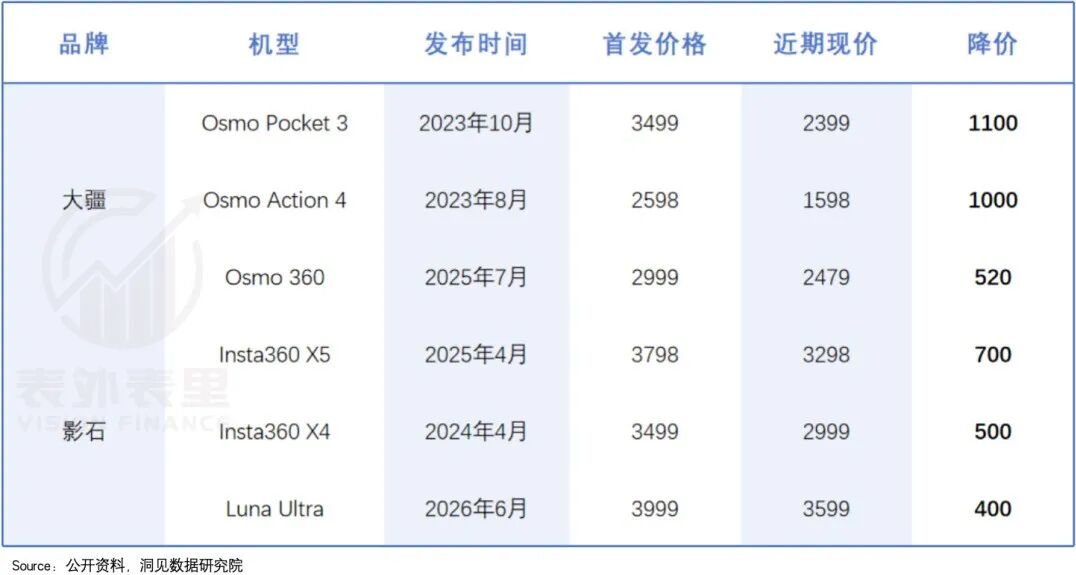
The brutal price war has only just begun. Lingzi doesn't want to be the sucker who "buys early and loses out early", so she decided to "wait and see".
In contrast, Wanwan, who got "burned by the price drops", has nothing but regret. As a 996 office worker at a big tech company, she barely has any time to rest. She bought an action camera last year simply because her phone ran out of storage, and the videos she recorded at concerts were too shaky.
But after she actually got the device, it stayed at home most of the time, and she rarely used it. Plus, its main strength is video recording, but when she travels, she needs to take far more photos. For photos, she still has to use her phone, or spend more money to buy a mirrorless camera.
Looking at the depreciating device, she sighed, "I would have been better off renting one." She did the math: she spent 3,000 yuan on the camera, plus a lot of extra accessories, hundreds of yuan just on memory cards. But renting it once for a 20-day trip costs less than 200 yuan, which is far more cost-effective.
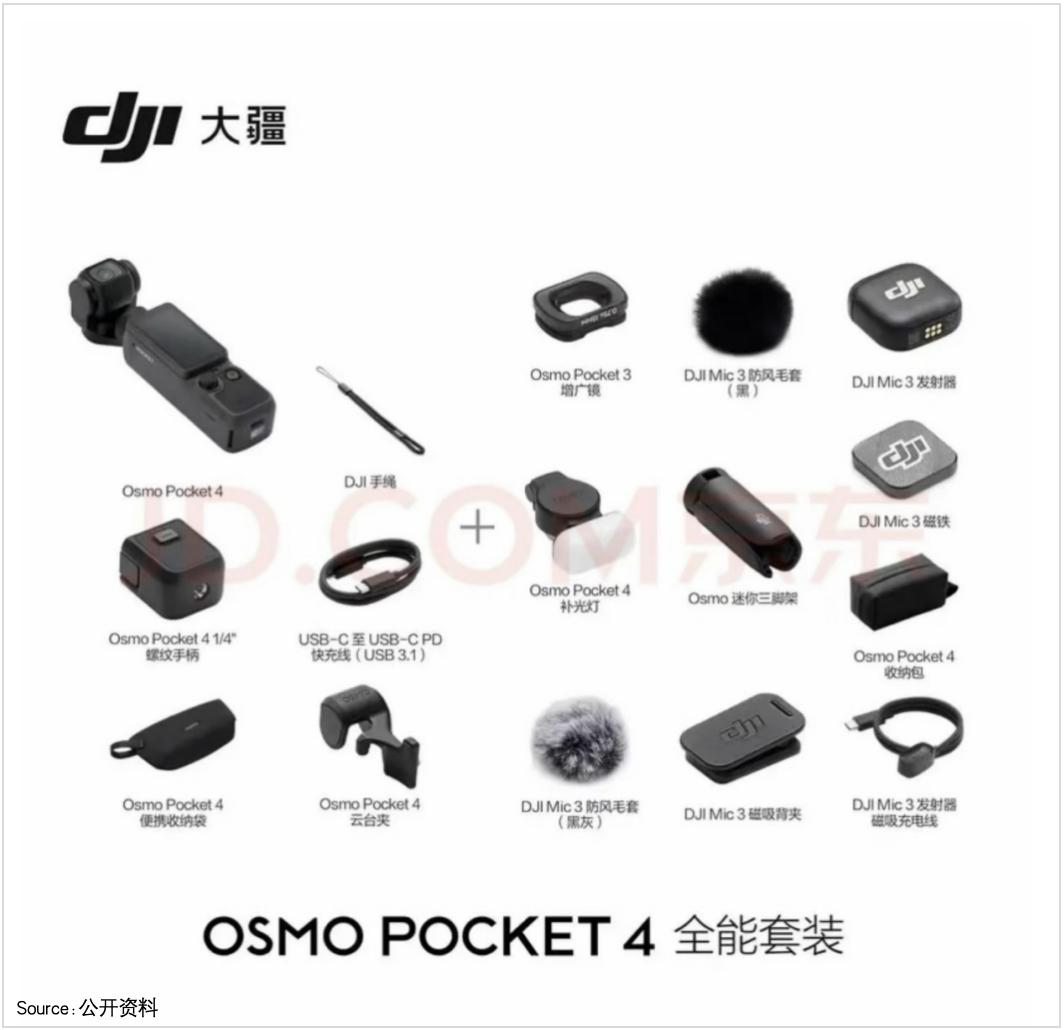
Wang Qiang, the camera rental business owner, was in the exact same situation as Wanwan before. He watched his DJI, which he bought in 2024, sit idle at home for half a year — not only wasting his money, but also making the device lose value every day.
When he noticed that many people online were looking to "rent cameras", he started posting videos to promote his rental service. In just one year, he used the money earned from renting out that first device to buy dozens of new units. What's more, DJI provides a "swap anytime" service: even if the camera is completely crushed, he can directly exchange it for a brand new one, so he never has to worry about the devices being damaged by renters.
There are plenty of other people who want to seize this business opportunity just like him. He found that the number of action camera rental merchants has doubled compared to two years ago, and a large number of dedicated rental platforms have also emerged. Especially many young people who just want to "get some cash back" from their unused devices at home are offering extremely low rental prices, driving the daily rate down to just a few yuan.
But Wang Qiang isn't afraid of competitors taking his clients. He was among the first group of people to enter this industry, and his years of work experience have given him a solid understanding of business logic.
He focuses exclusively on instant offline DJI rentals. Not only does he have a first-mover advantage in business scale, he can also set his daily rental price at 40 to 50 yuan, and he has also built a very complete risk control system for managing rented devices. Now, all he has to do is ride the tide of the industry's growth to keep his business stable.
He believes that "as long as new action camera models keep coming out, there will always be money to be made."