Tesla's Robotaxi officially hits the road: an unrestrained money-burning "epic high-stakes gamble"
As the steering-wheel- and pedal-free Cybercab glides through the morning streets of Austin, it stands as an undeniably visually striking symbol of the future. On July 22, 2026, Tesla officially opened its fully safety-driver-free Robotaxi service to the public. However, the capital market's verdict on this "milestone" was: failing grade.
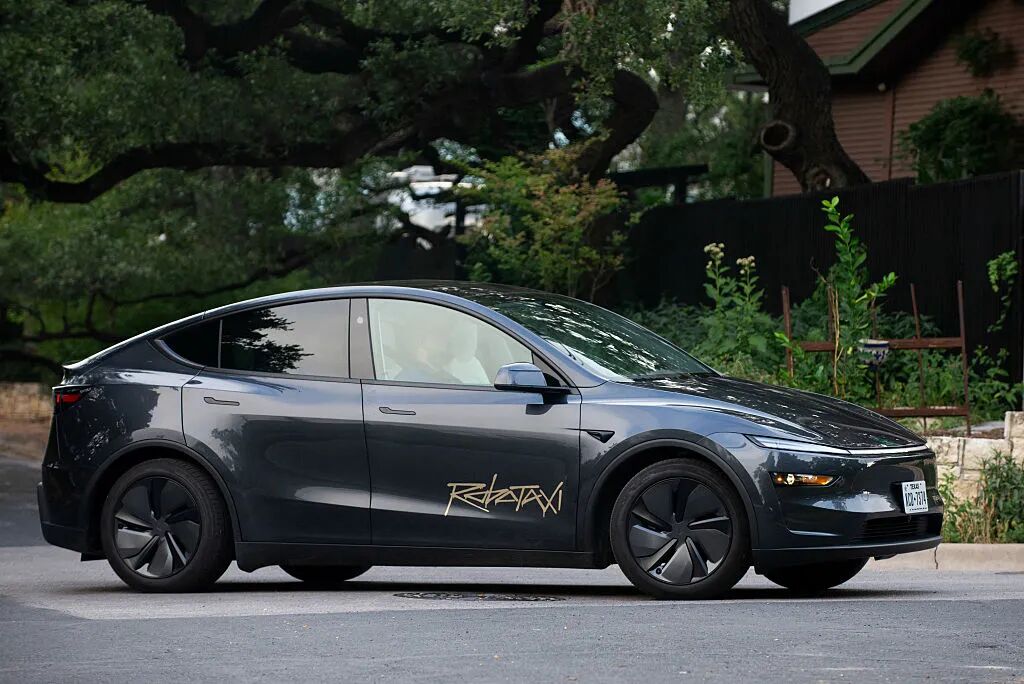
On that very same day, Tesla's stock price fell by roughly 4% in after-hours trading, and plummeted by a staggering 13.5% in the subsequent trading session. The reason was none other than the freshly released Q2 earnings report, which revealed a negative free cash flow as high as 1.1 billion USD, alongside a capital expenditure (Capex) plan that took everyone completely by surprise.
This is precisely the price of what Musk called "we should spend money as quickly as possible".
A report card full of "contrasts"
Tesla's latest quarterly report is riddled with contradictions.
Let's start with the bright side: Total revenue reached 28.24 billion USD, marking a 26% year-on-year increase that exceeded market expectations. Vehicle deliveries have also returned to growth, with 480,126 units delivered in Q2, dispelling the previous slump. The energy and services business also delivered record-breaking profits, standing out as one of the few bright spots on the financial statements.
Yet beneath the glossy surface lies a rapidly deteriorating core.
The automotive business gross margin (excluding regulatory credits) stood at a mere 16.3%, falling short of market expectations. More concerningly, the overall operating margin has plummeted to a dismal 1.4%, representing a sharp 269 basis point year-on-year decline. Simply put, Musk sold more cars but made less money — profits were entirely devoured by aggressive expansion and price wars.
But this was only the appetizer. The main course was the unshackled surge in capital expenditure.
The 25 billion USD AI spending spree plan
Tesla's Q2 capital expenditure hit 5.79 billion USD, surging 142% year-on-year, marking its first negative quarterly cash flow in nearly two years. The full-year Capex guidance was even raised to over 25 billion USD, with further growth projected over the next two to three years.
Where is all this money going? The answer lies in Musk's blueprint: Cybercab production lines, the Optimus humanoid robot, AI training computing power, and the ambitious in-house developed chip factory.
Specifically, the Texas Gigafactory has begun Cybercab production, with a disclosed installed annual capacity of over 125,000 units; the Fremont Factory has shut down the old Model S/X production lines and fully converted its facilities to Optimus assembly equipment, while Texas is also building a dedicated robot production plant; the disclosed installed computing power of the Texas Cortex 1 and Cortex 2 computing hubs exceeds 90MW and 115MW respectively; the Austin wafer fab has also advanced construction and equipment procurement, with the goal of securing long-term supply capabilities for logic and memory chips.
What Tesla is undertaking is no longer just "building a few more car models" — it is attempting to integrate vehicles, energy, computing power, chips, and labor into a single balance sheet. The automotive industry thrives on scale reuse, but this time Musk has extended his frontlines deep into the heart of multiple industries.
During the earnings call, Musk went to great lengths to reassure investors, drawing parallels to Henry Ford's mass production of the Model T back in the day, claiming this is "the fastest industrial expansion in the United States since World War II". He even argued that "a slightly lower capital efficiency is acceptable" in order to seize the first-mover advantage. But this very statement is precisely where the problem lies.
Wall Street's patience is running thin
In stark contrast to Tesla is Alphabet, which released its earnings report on the same day. Google Cloud's revenue surged 82% year-on-year to 24.768 billion USD, with operating profits skyrocketing by 212%, proving to the market that AI investments have begun to generate tangible, hard-cash returns. Even so, due to negative cash flow caused by its own staggering 44.9 billion USD quarterly Capex, Alphabet's stock price did not escape the sell-off, falling by more than 7% the next day.
The shared predicament for both companies is that: "The market is prioritizing Capex over profitability".
Alison Porter, portfolio manager at Janus Henderson, stated on CNBC that this is Alphabet's strongest quarterly revenue growth in five years, and Google Cloud is "an excellent barometer for the entire AI wave". But this optimism failed to reverse the market's pessimistic sentiment.
Ben Barringer, Head of Technology Research at Quilter Cheviot, pointed out to CNBC that "Investors appear to be focused on the sharp rise in capital expenditure and the weaker margin outlook, while the ongoing delays to Gemini 3.5 Pro and the lack of a standout product launch have raised questions about whether Alphabet's AI investments are translating into a clear competitive advantage".
Tesla's situation is even more awkward. Unlike Google, it does not have a mature cloud business that can immediately monetize AI capabilities. Its core automotive business is still profitable, but the margins are as thin as squeezing toothpaste, making it impossible to support such a massive capital-burning plan.
This means that Tesla's AI narrative is still stuck in the "storytelling" phase for now. Whether it's the per-unit economic model of Robotaxi or the mass production timeline of the Optimus robot, both are fraught with uncertainty. The return cycle for such massive investments remains ambiguous. Musk has promised that "all of this will bring incredible returns", but that promise looks rather pale in the face of cold, hard data.
A high-stakes gamble that rewrites Tesla's DNA
From a strategic perspective, Musk's decision is clear and resolute: transform Tesla from a car-dominant manufacturer into a company leading AI in the physical world. To achieve this, he is willing to sacrifice short-term profitability, even allowing margins in the core automotive business to decline, to go all-in on the future.
However, the cost of this high-stakes gamble is becoming increasingly onerous. Tesla CFO Vaibhav Taneja revealed that to accelerate investments, the company has secured debt financing facilities of up to 30 billion USD. Once activated, this will alter the balance sheet structure the company has maintained since 2019.
This all-or-nothing courage is awe-inspiring, but the risks are equally obvious. If the large-scale deployment of Cybercab falls behind schedule, if FSD's regulatory approval hits a wall, or if Optimus cannot make it out of the factory floor for a long time, every dollar invested today could turn into a liability that crushes its future.
As funds shift from current profits and cash flow to factories, equipment, production capacity, and infrastructure, related depreciation, R&D, and supply chain costs will hit the financial statements long before corresponding revenue is generated. This painful period of "only inputs, no outputs" tests not only Musk's resolve, but also the capital market's patience.
When Robotaxis are truly running on the streets of Austin, it may not mark the final chapter of "the future has arrived", but rather the beginning of an even more brutal, more capital-intensive race. The Cybercab on Austin's streets is a dice roll where Tesla has staked all its chips. It could lead to the multi-trillion-dollar annual business empire Musk has predicted, or leave a massive hole on its balance sheet. The only certainty is that in this gamble over the future, Musk has pushed all his chips onto the table — no one can tell for sure before the cards are revealed whether this is the eve of a golden age, or the prologue to a shattered imperial dream.
This article is from the WeChat Official Account "Shan Zi", authored by Rayking629, and published by 36Kr with authorization.