BMW China, keeps fighting despite numerous setbacks
BMW is entering an unprecedented "product gap period" in the Chinese market.
In July, domestic i3 and iX1 models built on the Cluster Architecture (CLAR) fuel-electric coexisting platform were successively discontinued, while production of the i5 was suspended. The first model based on the Neue Klasse all-electric dedicated platform, the long-wheelbase version of the iX3, will not be delivered until the fourth quarter. The product gap for sedan models is even longer, as the long-wheelbase version of the Neue Klasse i3 is not expected to be domestically produced until 2027.
Reporters visited multiple BMW 4S stores in Beijing and found that current all-electric models such as the i3 and i5 are in the final stages of inventory clearance, with some outlets having only one or two units left in stock.
BMW's passive situation in the Chinese market has a long history. In 2022, BMW's sales in China were about 792,000 units, a year-on-year decline of 6.4% — marking the first drop for BMW in the Chinese market since 2005. After a brief rebound to 825,000 units in 2023, annual sales plummeted to 714,500 units in 2024, down 13.4% year-on-year, and further fell to 625,500 units in 2025.
On July 10, BMW released its second-quarter production and sales data: the brand delivered 591,000 vehicles globally in the second quarter, a year-on-year decrease of 4.9%, with cumulative deliveries of 1.157 million units in the first half of the year, down 4.2% year-on-year. Among these figures, the Chinese market only saw 117,800 units delivered in the second quarter, a sharp 30.2% year-on-year decline, with cumulative deliveries of 261,800 units in the first half, down 20.4%. In the first quarter of this year, the Chinese market's share of BMW's global sales dropped from a peak of 33.5% to 25.5%, and by the second quarter, this proportion fell further to around 20% — Europe has officially replaced China as BMW's largest regional market worldwide.
More urgent than the decline in sales is the lag in electrification transformation. In the first quarter of 2026, the penetration rate of new energy vehicles in the Chinese market reached 54.1%, while in the same period, BMW's new energy penetration rate in China was only 6.2%. By June, China's new energy retail penetration rate had risen to a record high of 62.8%, and the gap between BMW and the overall market continues to widen.
Can BMW still find its own moat in the Chinese market?
01
From the earliest to the latest
BMW was the first traditional luxury brand to mass-produce all-electric vehicles.
In 2013, BMW launched the i3, becoming the first traditional luxury brand to mass-produce all-electric cars at a time when China's new energy market was still in its infancy. The i series was then largely shelved, and it was not until 2020 that it made a comeback with the domestically produced iX3 on the CLAR platform. In 2023, BMW China launched a price reduction wave, with an annual discount rate as high as 17.66%. Taking the i3 as an example, its official guide price was 353,900 yuan, the terminal landing price in the first half of 2023 was about 250,000 yuan, and it further dropped to below 200,000 yuan by 2024. The iX3 also saw substantial discounts, with some regions offering price cuts of over 130,000 yuan in 2024, bringing the bare car price down to the 240,000~270,000 yuan range. In 2023, the i3 once exceeded monthly sales of 6,000 units thanks to steep price cuts, but this momentum did not last long. By the first quarter of 2026, the combined sales of BMW's three domestically produced all-electric models (i3, iX1, i5) amounted to only 5,680 units. In July 2026, the older generation of products collectively exited the market.
The CLAR platform is essentially a fuel-electric coexisting architecture — internal combustion engine vehicles and electric vehicles share the same body structure. The advantage is flexibility and controllable costs, but the trade-off is that electric vehicles must always make compromises to accommodate the structure of gasoline cars. The battery layout is limited by the space originally reserved for engines and transmission shafts, forcing the cabin floor to be raised; the bandwidth and computing power of the distributed electrical and electronic architecture cannot support real-time processing and OTA iterations required for advanced intelligent driving; the fast-charging upper limit of the 400V voltage platform lags behind the mainstream 800V standard.
Source: AI-generated
But among the BBA trio, BMW has the slowest transition from the fuel-electric coexisting platform to the all-electric dedicated platform. Mercedes-Benz launched the EQC on the MEA platform in 2019 and rolled out the EVA all-electric platform in 2021. Audi, relying on the PPE platform co-developed with Porsche, released the Q6L e-tron in 2024 and launched it in 2025. BMW did not transition its CLAR platform to the Neue Klasse all-electric dedicated platform until 2026.
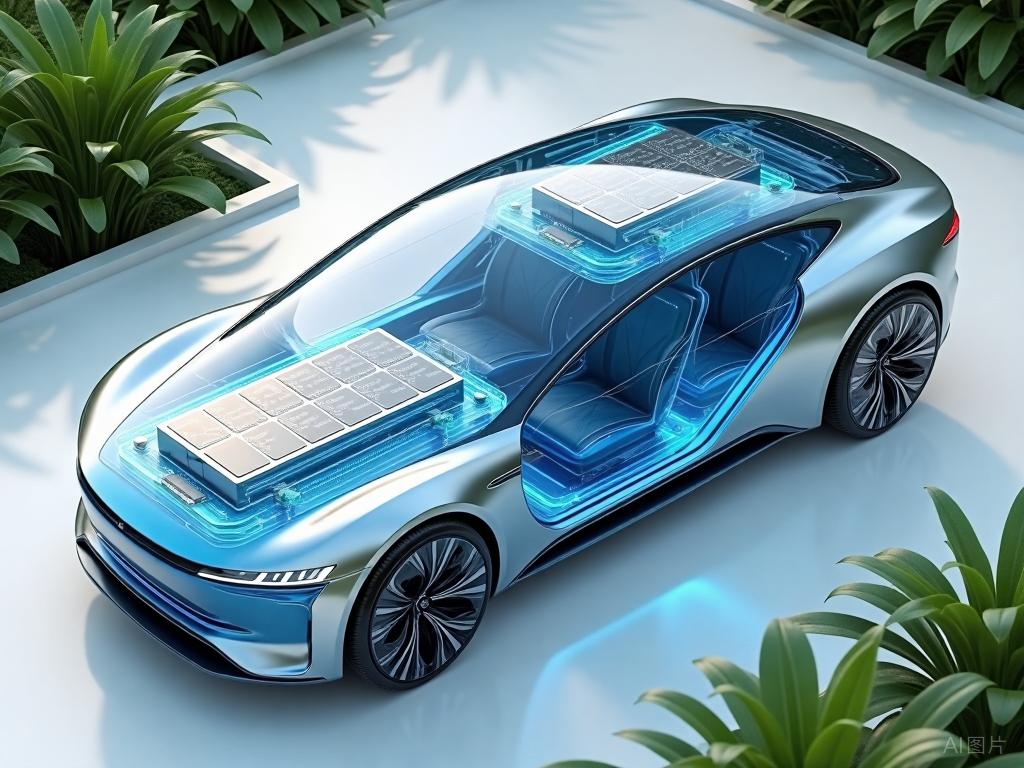
According to public information, the batteries, electric drives, and electrical/electronic architecture of the Neue Klasse platform are all redesigned from scratch for pure electric use, and no longer share the body structure with gasoline vehicles. The long-wheelbase version of the Neue Klasse iX3 is the first model to be launched, featuring the 6th generation eDrive electric drive technology and large cylindrical batteries, with a CLTC cruising range exceeding 800 kilometers and support for 800V ultra-fast charging. 70% of the cabin operating system's source code is developed and optimized in China, the intelligent driving system is co-developed with Momenta, and the infotainment system integrates Alibaba's Tongyi large model and Huawei's HarmonyOS ecosystem.
To support this platform, BMW continues to increase investment in Shenyang. Since 2010, the cumulative investment in the Shenyang production base has exceeded 100 billion yuan. Among them, the Lydia Plant, which opened in 2022, has a total investment of 15 billion yuan and is BMW's first plant worldwide designed specifically for the production of all-electric vehicles. The long-wheelbase Neue Klasse iX3 is scheduled to start production at the BMW Brilliance Shenyang Plant in the second half of 2026, followed by the launch of at least 6 Neue Klasse models within 24 months; by 2027, BMW will launch more than 40 new and facelifted vehicles equipped with Neue Klasse technologies.
Unlike the "converted from gasoline" products of the CLAR era, all technical layouts of the Neue Klasse are built from the ground up around a pure electric architecture — this is BMW's first truly "native all-electric" vehicle platform.
02
Old system under pressure
To a certain extent, the root cause of the struggles of German luxury brands does not lie in technology.
Peng Bo, Head of the Automotive and Industrial Practice at Alvarez & Marsal Greater China, pointed out in an interview with *China Entrepreneur* that the predicament of German automakers essentially stems from the inertia of their old systems — the decision-making mechanism still follows the layered reporting model of the internal combustion engine era, with long demonstration cycles for new technologies, high verification standards, and a decision-making orientation that prioritizes risk control and profits over user experience.
This rigor was a quality guarantee in the era of gasoline vehicles, but it has slowed down the transformation pace in the new energy era. In contrast, the management of Chinese new energy vehicle companies directly engages with users and products, pushing new technologies to be quickly deployed in vehicles while staying on the front line to perceive market changes; senior executives at German headquarters are far removed from consumers and market frontlines, with excessively long information acquisition chains. The difference between the two decision-making models has widened the gap in response speed to market changes.
This has impacted BMW China across three dimensions: production, distribution channels, and personnel.
On the production side, the Shenyang production base has an annual capacity of about 830,000 units, while BMW's sales in China in 2025 reached 625,500 units. If extrapolated based on the trend of the first half of this year, annual sales will face significant pressure, leading to underutilization of production capacity. After domestic all-electric models were discontinued in July, electric vehicle production capacity will be temporarily idle until the long-wheelbase Neue Klasse iX3 goes into production in the fourth quarter.
On the distribution channel side, Peng Bo stated that the dealer networks of traditional foreign luxury brands were originally designed to support annual sales of 700,000 to 900,000 units, but now annual sales expectations have dropped to the 500,000-unit level, resulting in an overscaled dealer network.
Data released by the J.D. Power research institute shows that as of the first quarter of 2026, the number of BMW dealer outlets in China has dropped to 630, a decrease of 33 compared to the same period last year. According to public reports, at the end of April 2026, Mercedes-Benz, BMW, and Audi collectively lowered dealer assessment targets, with some BMW stores seeing task reductions of about 20%.

Source: AI-generated
On the personnel side, in May 2026, Oliver Zipse, who had led BMW for nearly seven years, stepped down as Chairman and was succeeded by Milan Nedeljković (Nikolai), an engineer who joined BMW in 1993. Earlier in April, Johannes Seibert replaced Gao Xiang as President and CEO of BMW Group Greater China. Notably, Seibert had no prior work experience in the Chinese market, and his career highlight was driving significant growth in electric vehicle sales in the German market — the public interprets this appointment as BMW's intention to replicate the electrification experience proven in Europe to China.
Whether this replication will be successful remains to be seen.
Peng Bo offered a benchmark for testing: "The head of the China region must be able to name the competitors, pricing, and consumer characteristics of every product in China at any time — if they cannot answer these questions, it means the institutional mechanism has not changed." He believes that as long as the internal mechanism truly shifts to a user-oriented approach, German brands still have room for recovery in two years.
03
Challenges for the Neue Klasse
The first hurdle for Neue Klasse products is pricing.
Years of price wars have reshaped consumers' price expectations. At the beginning of 2026, BMW implemented official price cuts for 31 models, with the flagship all-electric i7 M70L seeing a price reduction of up to 300,000 yuan; the fuel-powered X1 had a terminal discount of 70,000 yuan, and the all-electric i3's terminal selling price has dropped to 188,000 yuan. The official selling price of the Neue Klasse iX3 has not yet been announced, and the market generally expects it to be above 300,000 yuan.
Mercedes-Benz's all-electric GLC was launched on July 8 with a price range of 299,900 to 339,800 yuan, which almost overlaps with the expected price of the long-wheelbase BMW iX3. If the new car is priced too high, consumers may not accept it; if priced too low, it will be difficult to restore profit margins.
BMW Group disclosed during its Q2 earnings call on July 10, 2026, that global orders for the Neue Klasse iX3 are about to exceed 100,000 units. Since the vehicle was first launched in Europe, the real market demand in China can only be verified after the new car is delivered.
A salesperson at a BMW 4S store in Beijing revealed that reservations for the long-wheelbase Neue Klasse iX3 have been accepted since its debut at the Beijing Auto Show in April, with a deposit of 5,000 yuan that is fully refundable if the customer does not proceed with the purchase. Although the official price has not been announced yet and display cars are not fully available in stores, the outlet has already received more than 20 deposit orders, with most customers still waiting for the official pricing to be released.
Sales models are also changing. Starting with the long-wheelbase Neue Klasse iX3, BMW's electric vehicles in China will adopt a "fixed-price" model, meaning a unified national selling price without relying on terminal bargaining. At the same time, the company plans to complete the reorganization of its dealer network by mid-2026, with some outlets transitioning to after-sales service-only locations.
Intelligent features are another major challenge. For a long time, BMW's brand foundation has been built on "pure driving pleasure" — handling, chassis tuning, and driving feel are its differentiated labels. But in the 200,000 to 400,000-yuan electric vehicle market, consumers' decision-making logic has changed. A BMW dealer told *China Entrepreneur* that after customers enter the store, they pay more attention to the intelligent cabin and advanced assisted driving, while the decision-making weight of handling performance has significantly decreased.
Source: AI-generated
In the past, consumers valued brand heritage, mechanical quality, and riding experience; today, urban assisted driving, intelligent cabins, and high-voltage fast-charging platforms have become new value anchors.
To make up for these shortcomings, BMW has chosen to partner with local suppliers such as Momenta and Alibaba. Peng Bo pointed out that the suppliers' technologies and strategic directions are not problematic, and German brands have taken the right step in introducing China's leading suppliers. The problem lies with themselves — engineers still have a relatively weak understanding of intelligence, and their verification standards for new technology applications are overly conservative, resulting in the same supplier solutions being installed in foreign luxury brand vehicles with a clear gap in the final user experience. In his view, this capability shortfall will take more than a year to resolve.
The long-wheelbase Neue Klasse iX3 is about to be delivered in the fourth quarter of this year — whether this platform can simultaneously prove that its new technologies are reliable and its old system can successfully transform will be the key to BMW regaining a foothold in the Chinese market.