In-depth Investigation: What Is China Literature's Motive for Developing a Paid Comic Drama App?
The short drama sector has welcomed another heavyweight player.
At the beginning of July, China Literature officially launched Qidian Drama, its first dedicated video app focusing on IP-adapted series. According to App Store listings, the product is positioned as "the official and authorized series app of Qidian Read", designed to provide dynamic comics and high-quality episodes for book fans and drama enthusiasts.
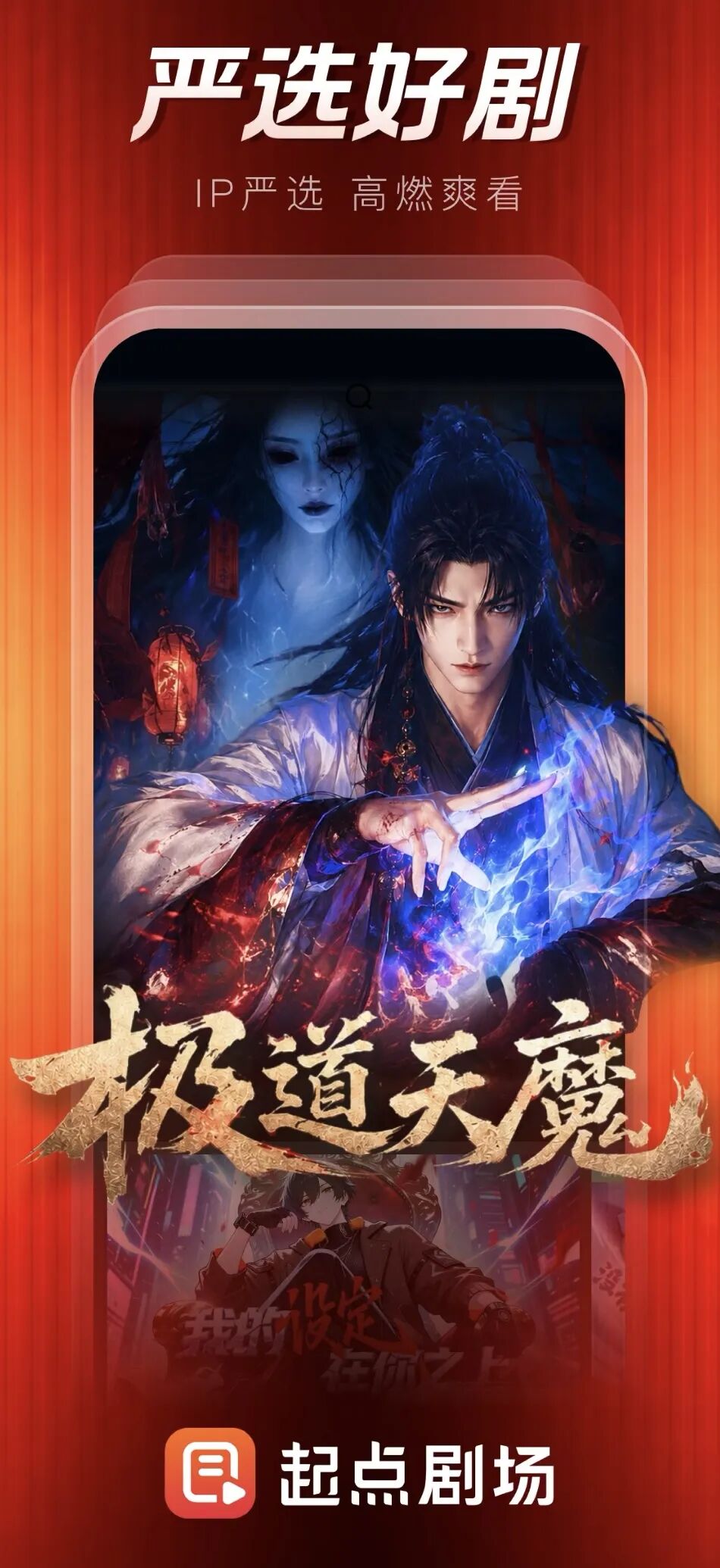
Image source: App Store
This means that China Literature has finally decided to step in directly and build its own streaming platform from scratch, which many outsiders believe "should have been done long ago".
Prior to this, although China Literature is one of the most important IP hubs in China, there has always been a certain gap between it and the distribution channels of derivative content — in the early days, most of the film and television adaptations of Qidian web novels were distributed on long video platforms such as Tencent Video and iQiyi. Later, with the boom of short dramas, most of its IP short dramas flowed to short video platforms and emerging short drama apps. Then, when the "manhua-drama" war kicked off, China Literature's IPs played the role of upstream suppliers in a series of emerging niche channels like Huolong...
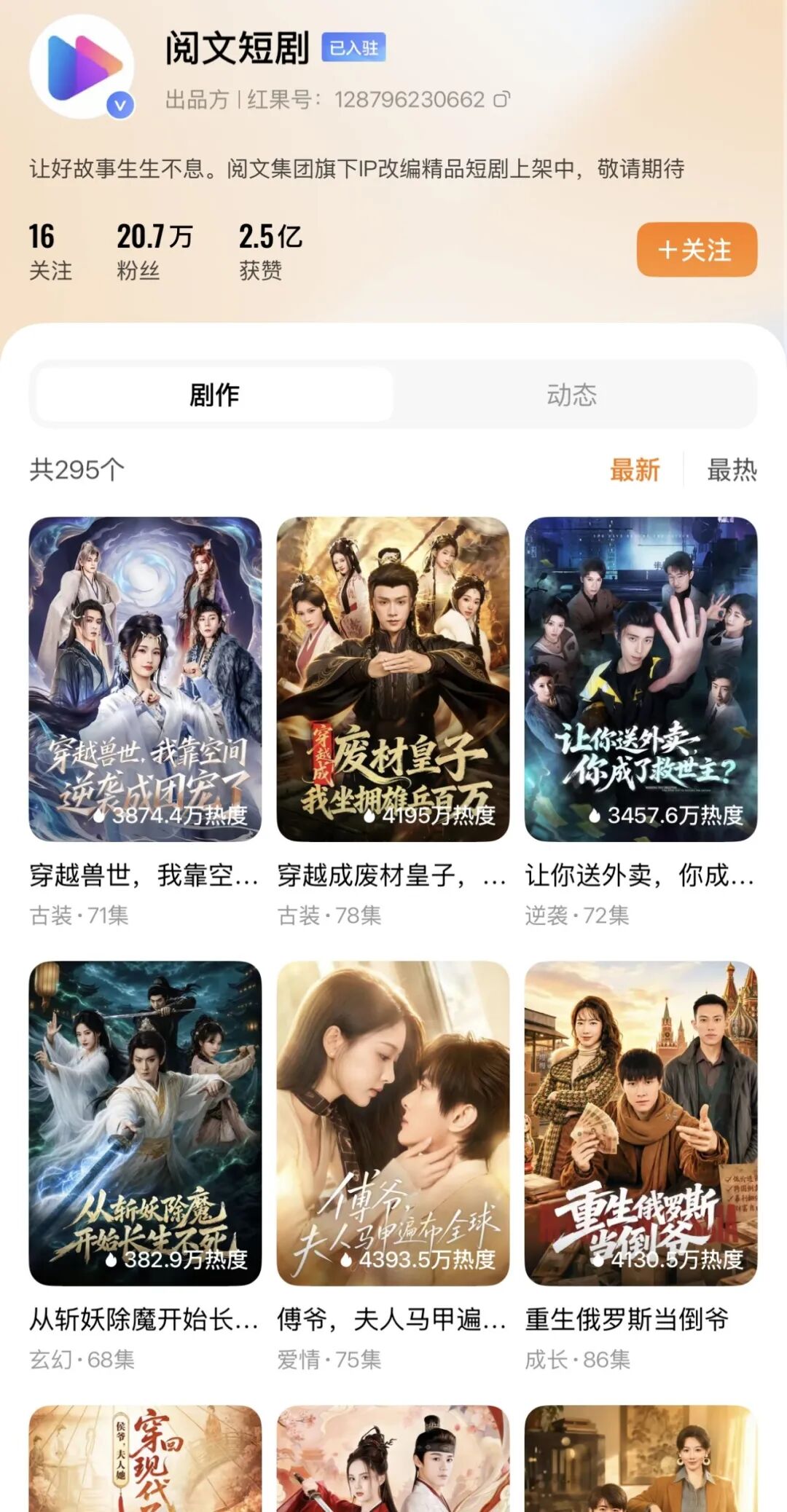
Image source: Hongguo Short Drama App
Until now, the turning point has finally arrived.
After an in-depth hands-on test, we try to discuss: What exactly makes Qidian Drama different from the existing short drama and manhua-drama apps on the market? To what extent can its birth reshape China Literature's previous business landscape? In the ever-changing content consumer market, who will pay for this fledgling Qidian Drama?
How does the heritage of a veteran web novel platform shape a manhua-drama app?
The almost retro "quietness" is my first impression of Qidian Drama.
It should be noted that after years of vigorous development of the short drama market, users have long been accustomed to homepages that automatically play dramas as soon as they open the app, and have seen endless algorithm-driven infinite scrolling feeds.
In contrast, Qidian Drama's homepage is much more restrained. At a glance, the top recommendation area takes up most of the screen space, and every once in a while, it slides just like a traditional portal website, rotating a limited number of manhua-drama posters.
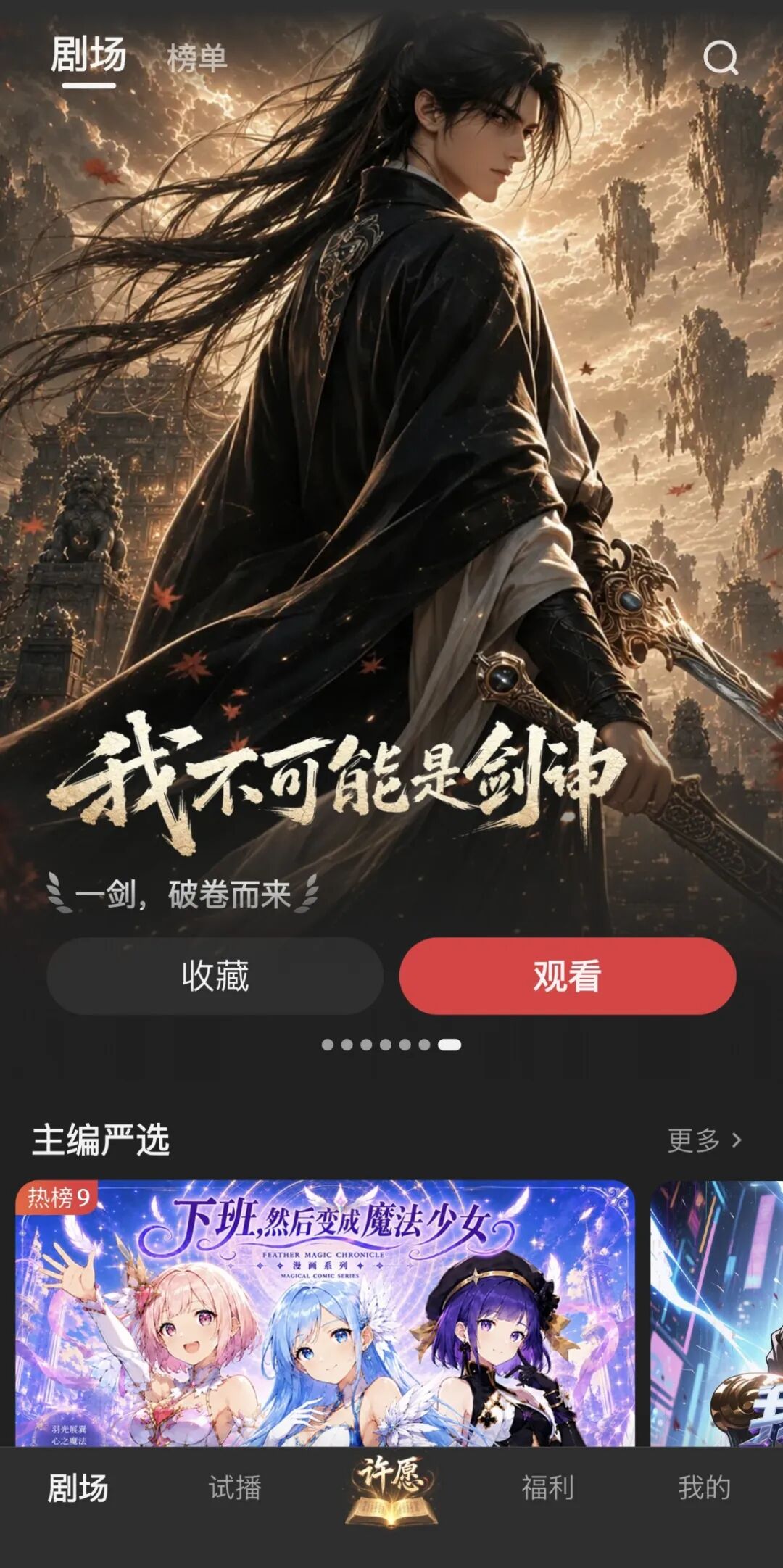
Image source: Qidian Drama App
Apart from that, all sections on the entire homepage remain static, and the same goes for the drama page and the ranking page. Scrolling from top to bottom, you will find that Qidian Drama is like a display rack of picture albums, filled with all kinds of covers, and its information presentation logic is in the same vein as its parent app, Qidian Read.
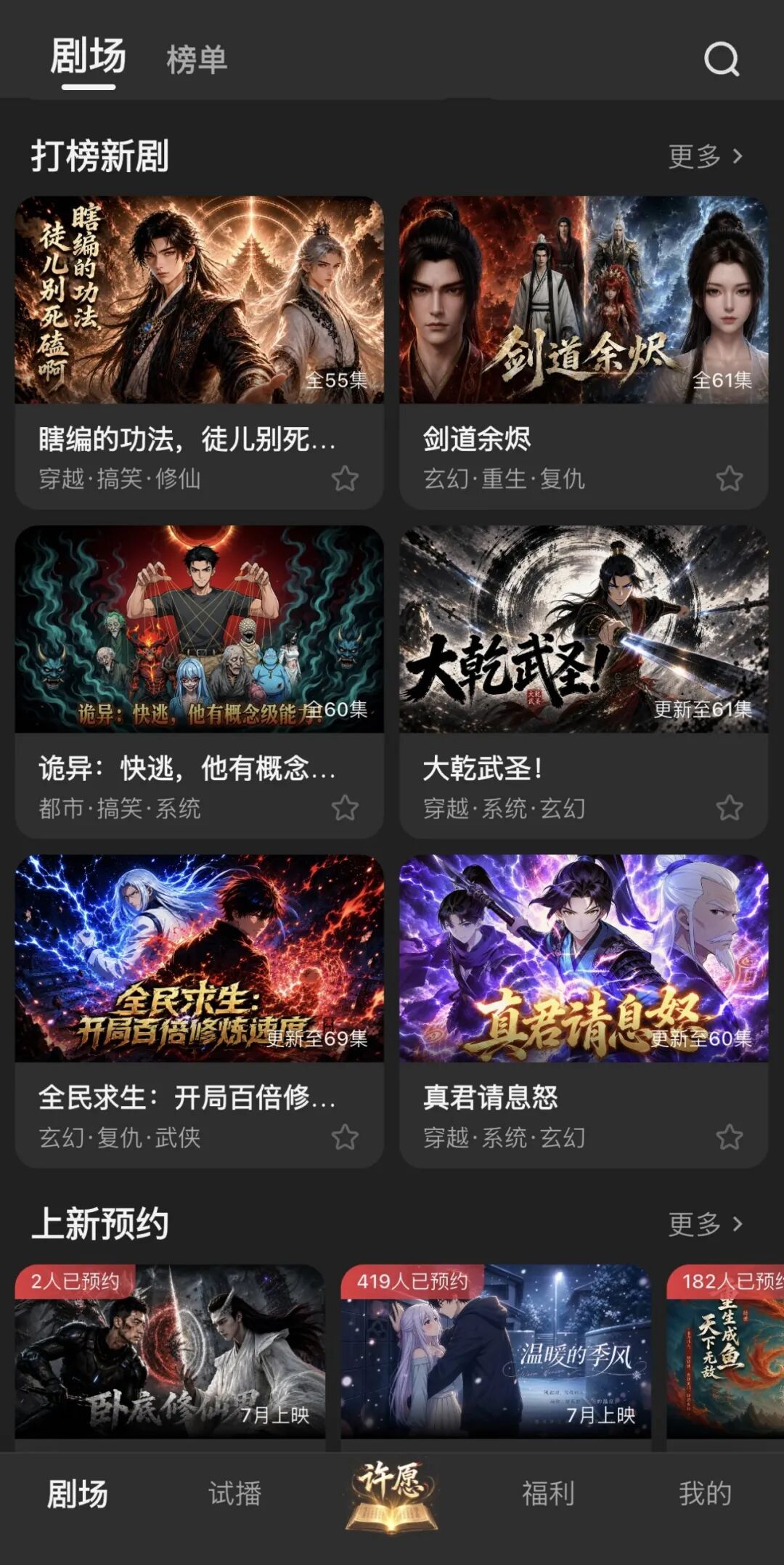
Image source: Qidian Drama App
With this distribution approach, it is almost impossible for users of Qidian Drama to passively watch a manhua-drama. The video player will only be triggered when the user actively clicks on the cover.
Moreover, judging from the content supply after Qidian Drama's launch, horizontal-screen manhua-dramas adapted from China Literature's IPs are the absolute mainstream. Taking the popular ranking list on July 20 as an example, the top 10 works on the list are all horizontal-screen episodes, and all of them carry a creation statement that "the content is generated by AI".
As a result, between browsing the recommendation page and starting to follow a drama, there is an extra step of "rotating the phone". In actual experience, compared with other short drama apps, the product experience of selecting a drama and switching to full horizontal screen in Qidian Drama is actually closer to a combination of traditional long video platforms and web novel websites.

Image source: Qidian Drama App
At the same time, in the core content layer, the underlying web novel platform heritage of Qidian Drama is further highlighted.
Currently, based on different background settings, the manhua-dramas on Qidian Drama are divided into 5 categories: modern, ancient, urban, post-apocalyptic, and fictional, with themes covering 6 types: xianxia (fantasy cultivation), xuanhuan (mystical fantasy), time travel, political intrigue, revenge, and mystery — all classic and popular genres in web novels.
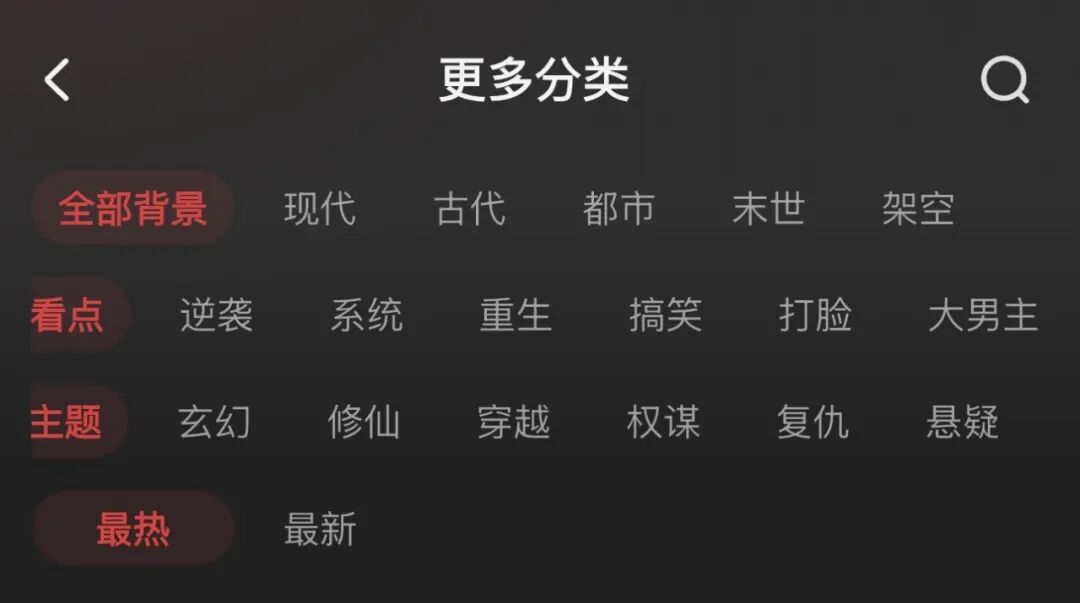
Image source: Qidian Drama App
Looking at the first batch of launched manhua-dramas, from the classic Eastern Xuanhuan-style *After Ascension* to the infinite-flow benchmark *Thriller Paradise*, all are top-tier male-focused IPs with a strong Qidian style, which veteran readers can recognize at a glance.
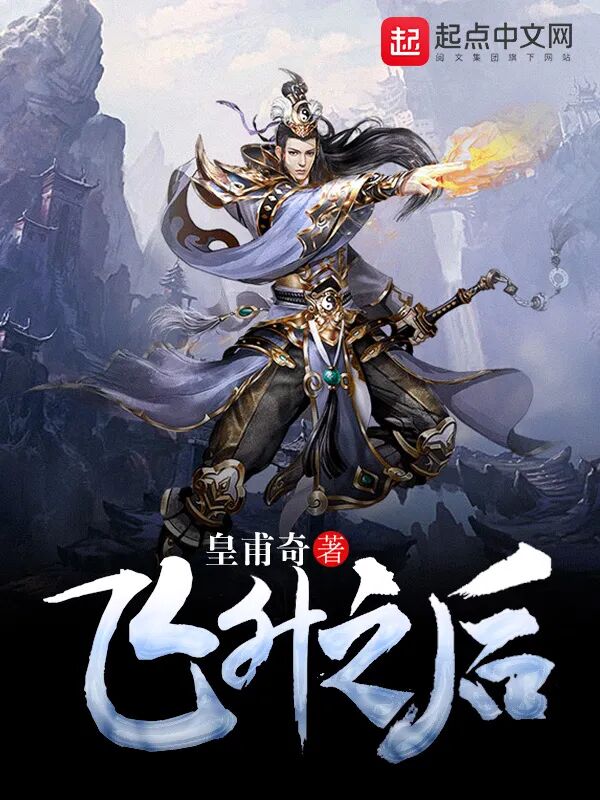
Image source: Qidian Chinese Network
Not only that, fans who are familiar with these original works will also find that although Qidian Drama is positioned as a drama-watching platform, it is actually only a thin line away from the function of reading novels.
Take the highly-rated manhua-drama *In the United States: My Uncle Don Quixote* on the popular ranking list as an example, its detail page is equipped with three jump buttons: "Creative Team", "Original Author", and "Read the Original Novel".
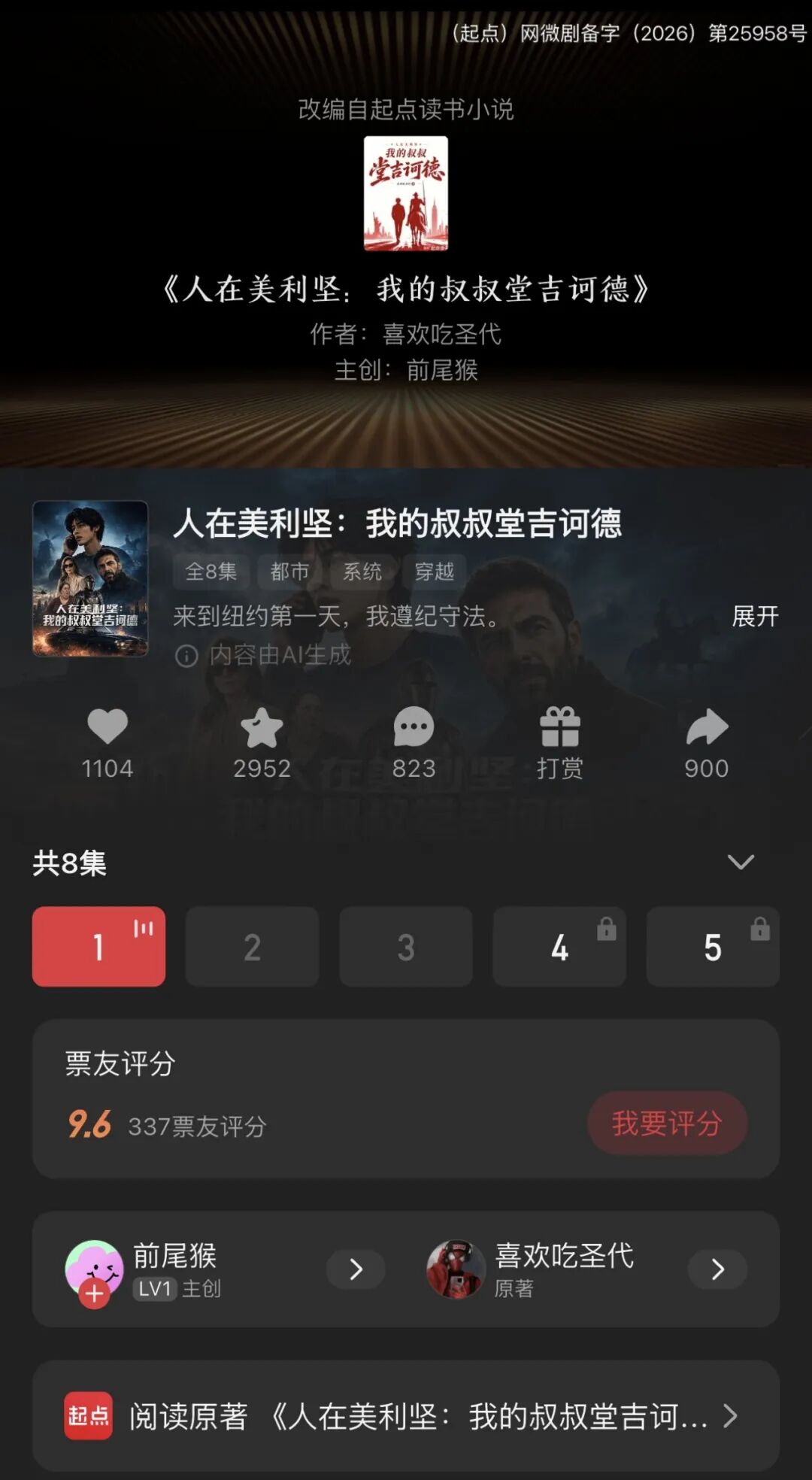
Image source: Qidian Drama App
In this way, viewers who are not satisfied can horizontally explore more dramas. As long as users click into the homepage of the creative team "Qianwei Hou", they can see the team's likes data and other manhua-drama works, and choose to follow if they are interested. This design is exactly the same as that of mainstream short drama apps on the market, with the goal of promoting the retention and settlement of creators and users.
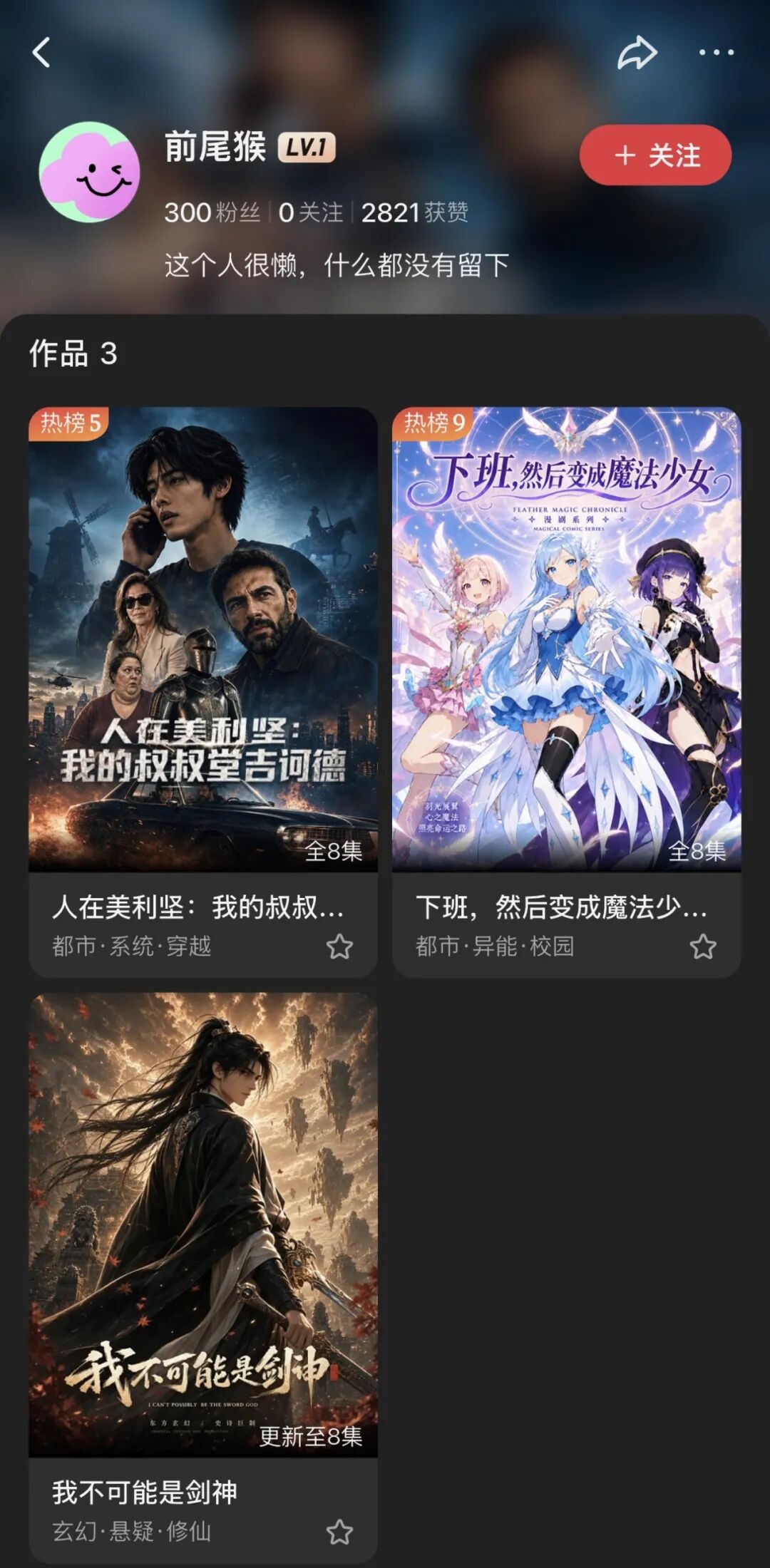
Image source: Qidian Drama App
On the other hand, veteran book fans whose interest is aroused by the manhua-drama can solve their "novel shortage" in reverse. They can jump to Qidian Read with one click to read the text version of *In the United States: My Uncle Don Quixote*, or go to the personal page of the original author "Xihuan Chi Shengdai" to try to find more stories that suit their tastes.
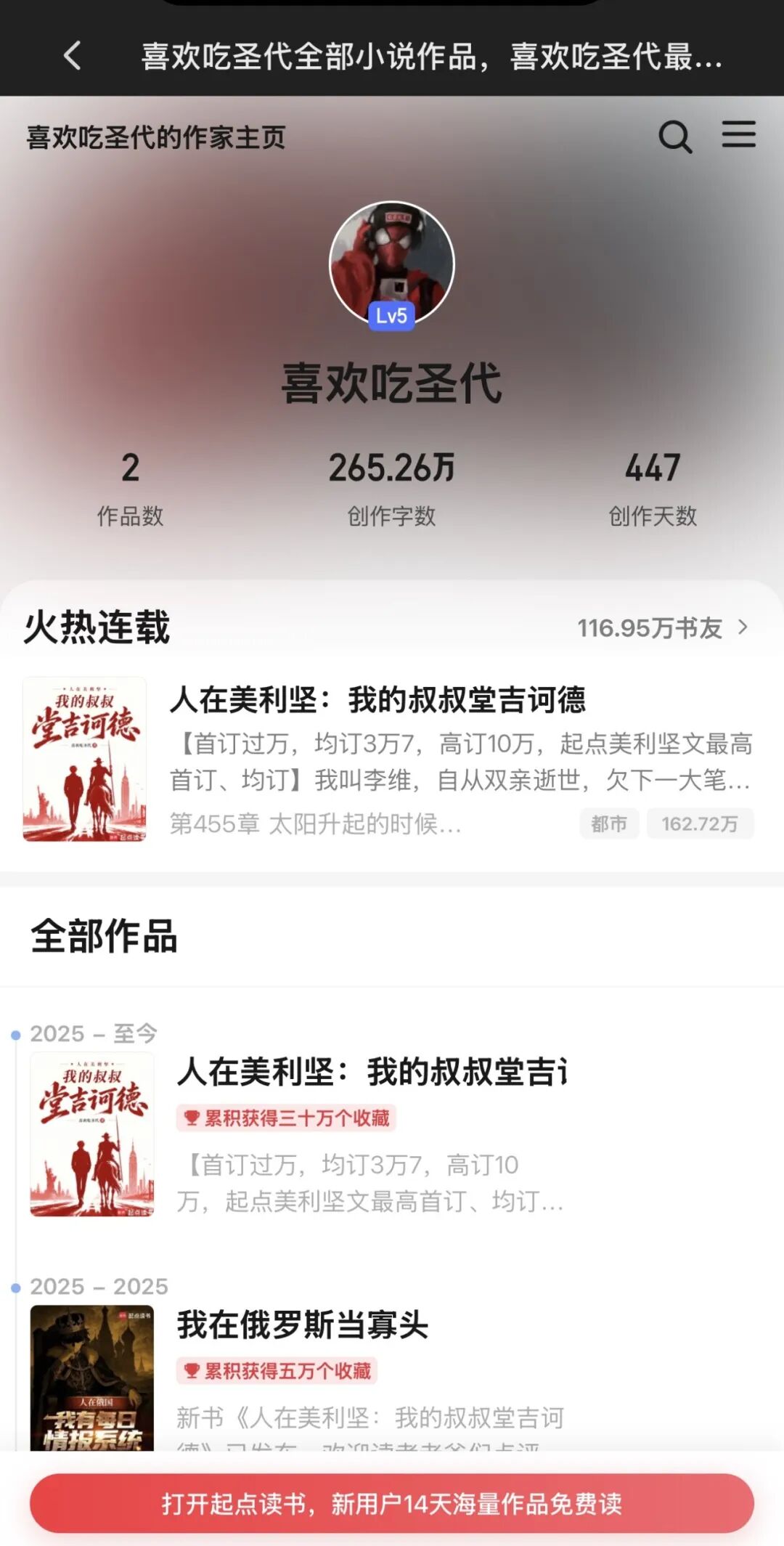
Image source: Qidian Drama App
From this perspective, Qidian Drama has actually opened up an additional customer acquisition entry for Qidian's main web novel business.
For China Literature, this also means that its IP business has finally achieved "internal circulation" through its own channels — first, authors create web novels on Qidian Read, then the web novel IPs are authorized to manhua-drama creators, then the creators distribute the manhua-drama works to Qidian Drama, and finally Qidian Drama redirects users back to Qidian Read...
Can this "non-mainstream" manhua-drama gameplay win over Qidian's original book fans?
In 2026, China Literature is no longer satisfied with the simple upstream role of "IP licensor", but is seeking stronger control over its distribution channels.
However, in today's short drama market, it is by no means easy to build a new platform from scratch. China Literature is clearly well aware of this.
So we can see that Qidian Drama has been tightly bound to its main web novel position since its launch. Its user acquisition strategy can be summed up in one sentence: to leverage the most mature group of paying readers in China's web novel industry to support the new channel.
In fact, if you open any manhua-drama on Qidian Drama now, you will find many book fans in the comment section who are "gathering" for the "300 coins (virtual tokens available on Qidian Read, equivalent to 3 RMB)". And these senior readers who want to "earn" coins to read novels are exactly the core users that Qidian Drama is targeting.
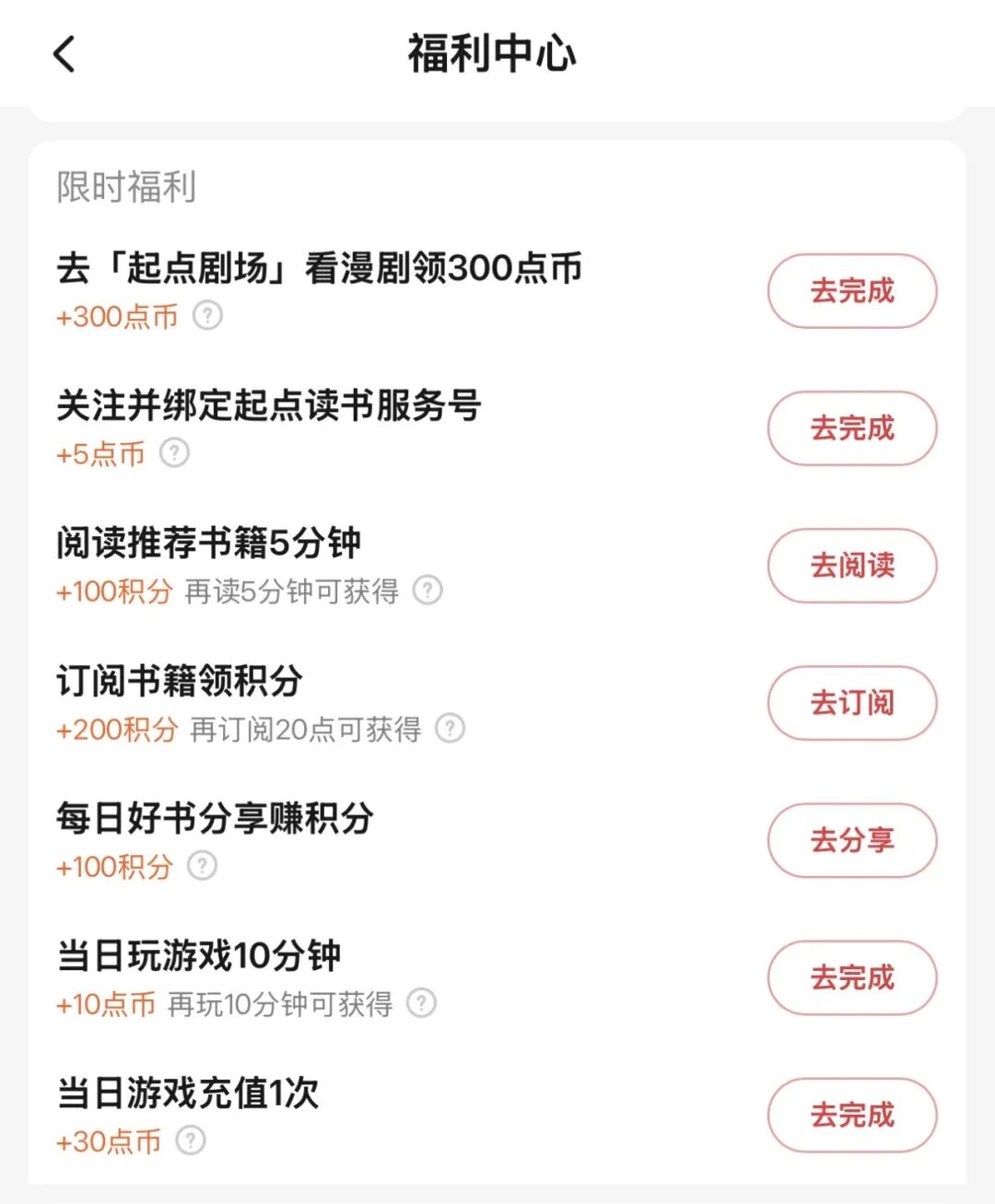
Image source: Qidian Read App
To attract their attention, 300 coins alone may not be enough. Therefore, in addition to the recommendation and ranking modules that are common in manhua-drama apps, Qidian Drama has added many additional designs that meet the needs of original book fans.
On the one hand, compared with its "peers", Qidian Drama has set up an additional "Editor-in-Chief's Strict Selection" section, which displays about 13 manhua-dramas after clicking, including work posters and one-sentence introductions.
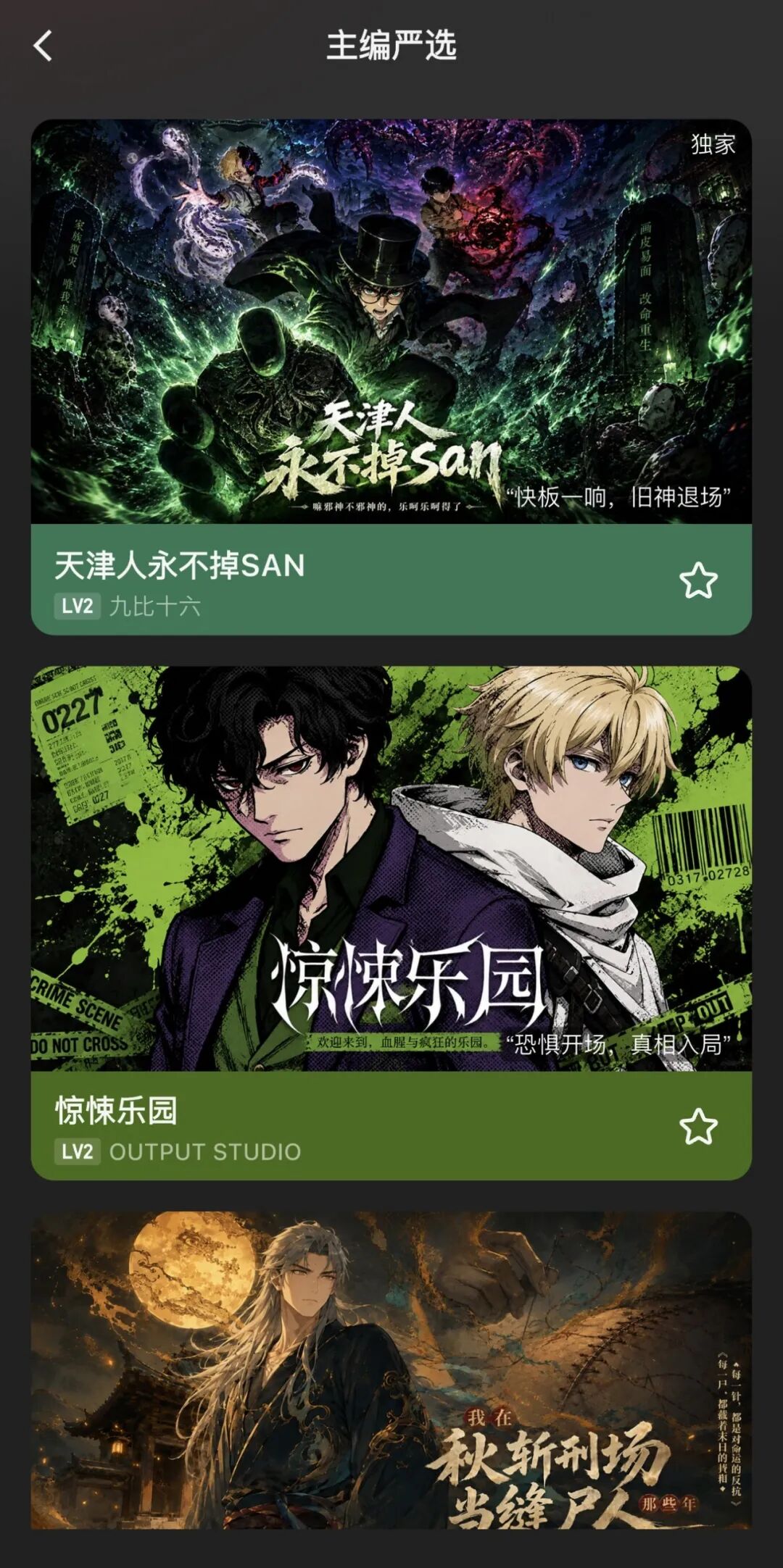
Image source: Qidian Drama App
For long-time Qidian users, this recommendation logic based on editorial judgment is extremely familiar.
It should be noted that compared with free reading platforms known for their strong distribution capabilities, Qidian Read has long placed the role of "editor" at the core of the entire paid subscription ecosystem. Even when the platform is increasingly embracing algorithms, the signing process for all published works on Qidian still requires manual review.
Moreover, to this day, Qidian's "Sanjiang · New Trend of Web Novels" is still one of the most influential and user-focused recommendation positions.
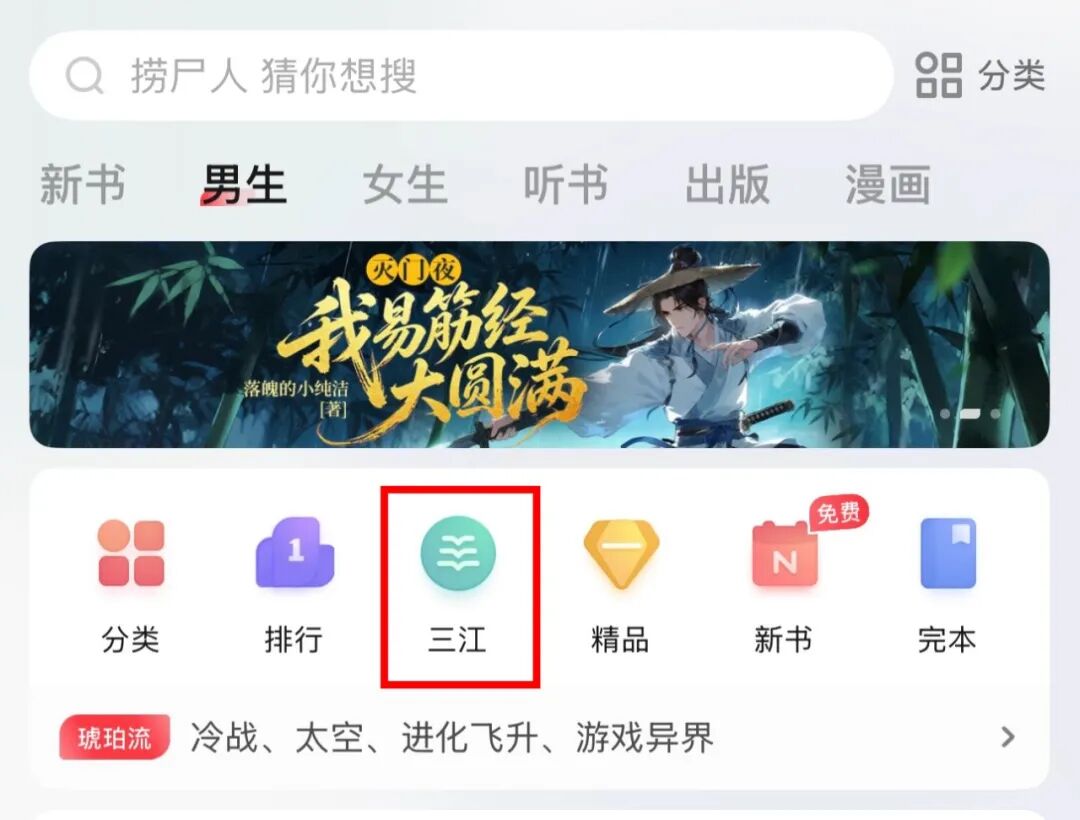
Image source: Qidian Read App
According to the official description, this section is designed to showcase "high-potential new works with excellent writing and novel themes carefully selected by editors every week", and each recommendation retains historical records just like a classic magazine. The reason why the paid reading ecosystem can maintain its vitality under the impact of new models is largely due to the endorsement of human aesthetics and the trust assets built through years of practice.
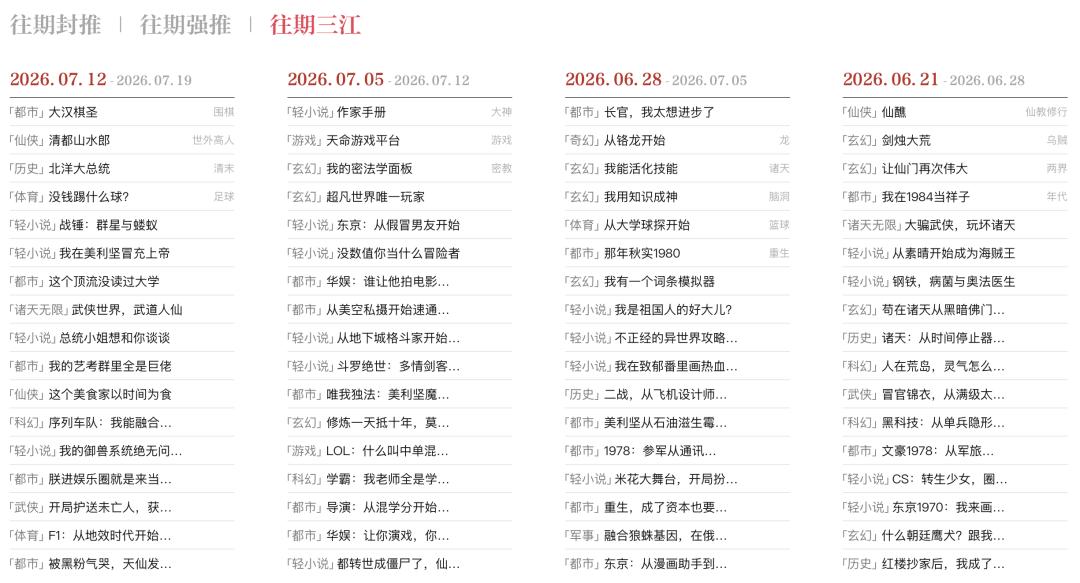
Image source: Qidian Chinese Network
This is why Qidian Drama chose to use "Editor-in-Chief's Strict Selection"