From Lawrence Ng to Joey Wong, why are celebrities willing to "sell" their faces to AI?
A legendary Hong Kong screen goddess has now embraced AI.
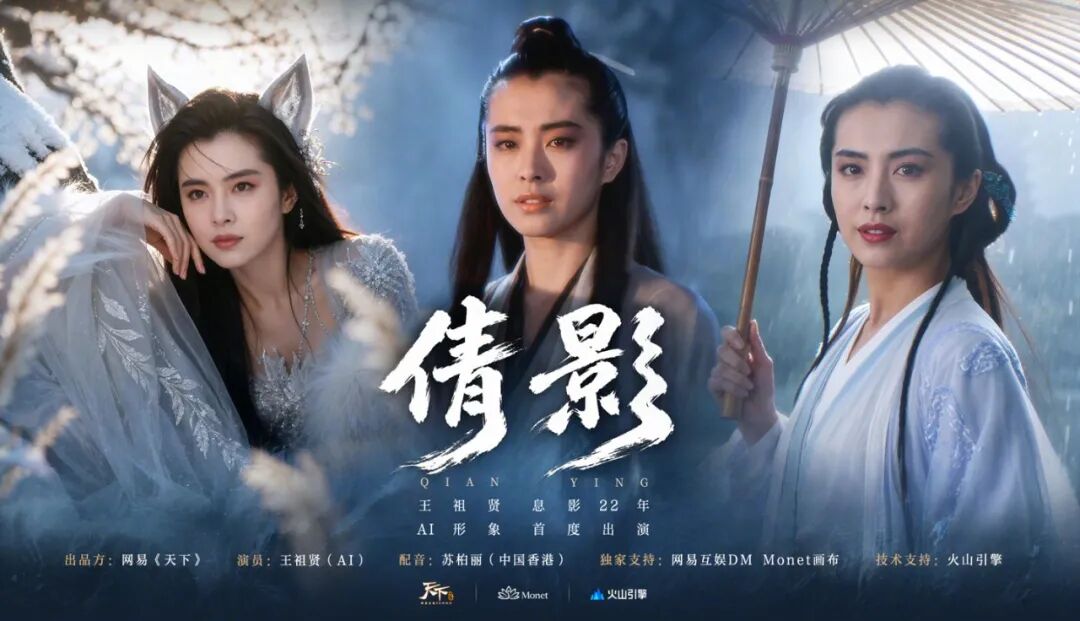
In mid-July, Joey Wong, who had not made a public appearance for a long time, officially authorized her youthful portrait materials to NetEase's PC game Tianxia, marking another landmark case of commercial authorization for celebrity AI portraits and reigniting public discussions about AI recreating classic celebrity images.
In fact, as AI continuously integrates into content industries such as film, television, games, and advertising, the classic images of celebrities are gradually evolving from past film and television memories into licensable, operable, and sustainably developable digital assets. AI not only extends the lifecycle of celebrity IPs but also opens up new possibilities for commercial value development.
So why is Joey Wong willing to "sell" her face to AI? Will AI portrait authorization become a new path for the celebrity IP business?
01
Why is Joey Wong willing to "sell" her face to AI?
Joey Wong's collaboration with NetEase's Tianxia this time is not a traditional celebrity endorsement, but an AI commercialization attempt centered on portrait rights.
In terms of the cooperation model, the two parties have defined clear boundaries. Joey Wong herself did not appear in person, but authorized her portrait materials from the age of 20 to 30 for the development of content related to Tianxia, using AI technology to recreate classic roles including Nie Xiaoqian and Bai Suzhen. This authorization is limited to the development of this game IP and does not involve other commercial scenarios.
At the specific implementation level, the two parties jointly launched Shadow of Beauty, the first domestic game industry's fully AIGC commercial video with official celebrity authorization, with technical support from NetEase Interactive Entertainment's DM Monet Canvas and Volcano Engine. At the same time, the AI image has also been introduced into the game content, presented in the form of a digital NPC and an exclusive "Shadow of Beauty, Ghostly Soul" themed costume, which players can claim for free.
To a certain extent, this cooperation provides a new path for the commercial development of celebrity portraits in the AI era.
In the past, celebrity images mostly served specific commercial scenarios such as endorsements and promotions; with the participation of AI technology, authorized classic portraits have begun to enter scenarios such as games, virtual content, and digital derivatives, transforming from one-time commercial materials into content assets with sustainable development potential.
And it is no accident that Joey Wong has become a representative of this special case.
As she said in her greeting to players: "I am also very lucky to have accompanied the youth of many people and to be remembered in everyone's hearts."
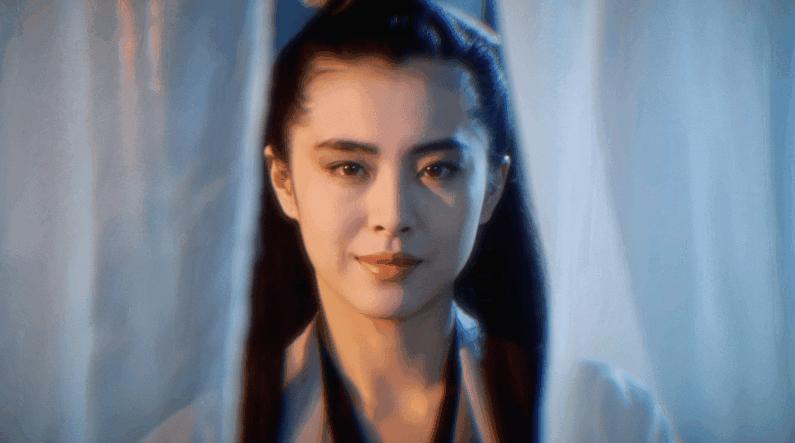
Joey Wong has retired from acting for more than 20 years, but in public memory, her images in works such as A Chinese Ghost Story and Green Snake have not faded. The emergence of AI technology just provides a way to connect the past and the present, bringing these classic characters that existed on the silver screen back into the public eye.
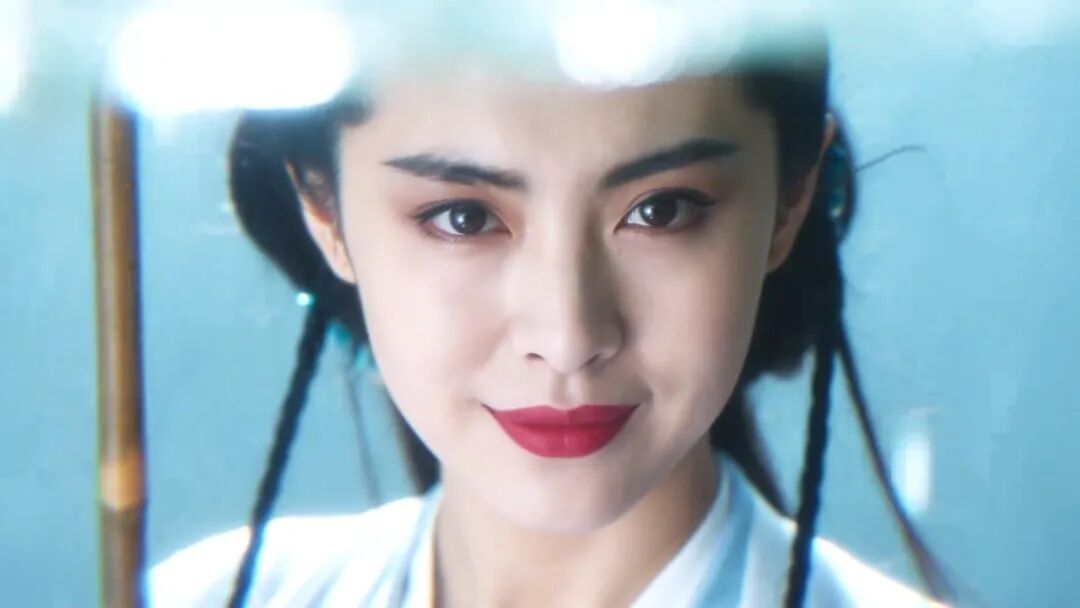
Therefore, Joey Wong's willingness to authorize her face to AI is not simply out of nostalgia, but a comprehensive choice made between image management, private life, and commercial value.
In the past few years, AI face-swapping short videos and AI live-stream selling accounts have continued to emerge, and various unauthorized AI-generated celebrity images have long circulated on the Internet. For artists, relying on personal efforts to safeguard rights one by one is not only time-consuming and costly, but also difficult to completely eliminate infringement.
Rather than passively pursuing accountability after infringement occurs, it is better to proactively establish authorization rules. Through formal commercial agreements to clarify usage scenarios, cooperation periods, and authorization scopes, celebrities can regain control over the use of their portraits in the AI era and reduce the risk of arbitrary misuse. This change is essentially a shift for celebrities from passively safeguarding their rights to actively managing their own image assets in the face of the AI era.
At the same time, Joey Wong, who has faded out of the entertainment industry for many years due to reasons such as age and life plans, has also returned to the public eye in another form with the help of AI, responding to the long-awaited expectations of fans to a certain extent.
Over the years, Joey Wong has publicly stated many times that she has no intention of returning to the entertainment industry. In contrast, AI provides a lower-cost and more clearly bounded approach.
She does not need to film in person or re-engage in high-intensity entertainment activities. By simply opening up her classic images from her youth, she can complete a reunion with the public. This method not only sustains the long-standing nostalgic sentiment, but also maintains her current life state, finding a new balance between public expectations and personal boundaries.
A more practical reason comes from the consideration of commercial value development.
A large number of classic silver screen images left over from the golden era of Hong Kong films are themselves the most recognizable and long-term valuable IP assets of artists. In the past, these assets mainly relied on the re-screening of film and television works, copyright distribution, peripheral derivatives and other methods to continuously release value; the emergence of AI has further broadened the commercial boundaries.
Different from traditional commercial cooperation, AI portrait authorization does not rely on artists to continuously invest time and energy. By only authorizing their classic images from their youth, the IP that has been precipitated for many years can re-enter commercial scenarios such as games, advertising, and cultural tourism.
Compared with one-time commercial performances or short-term endorsements, this type of authorization has a longer operation cycle and stronger replicability. For artists who have faded out of the entertainment industry and have no intention of frequently participating in commercial activities, this is undoubtedly a business model with lower investment, longer cycle, and sustainable operation.
02
Will AI authorization become a new business for celebrities?
Joey Wong is not the first celebrity to try AI portrait authorization.
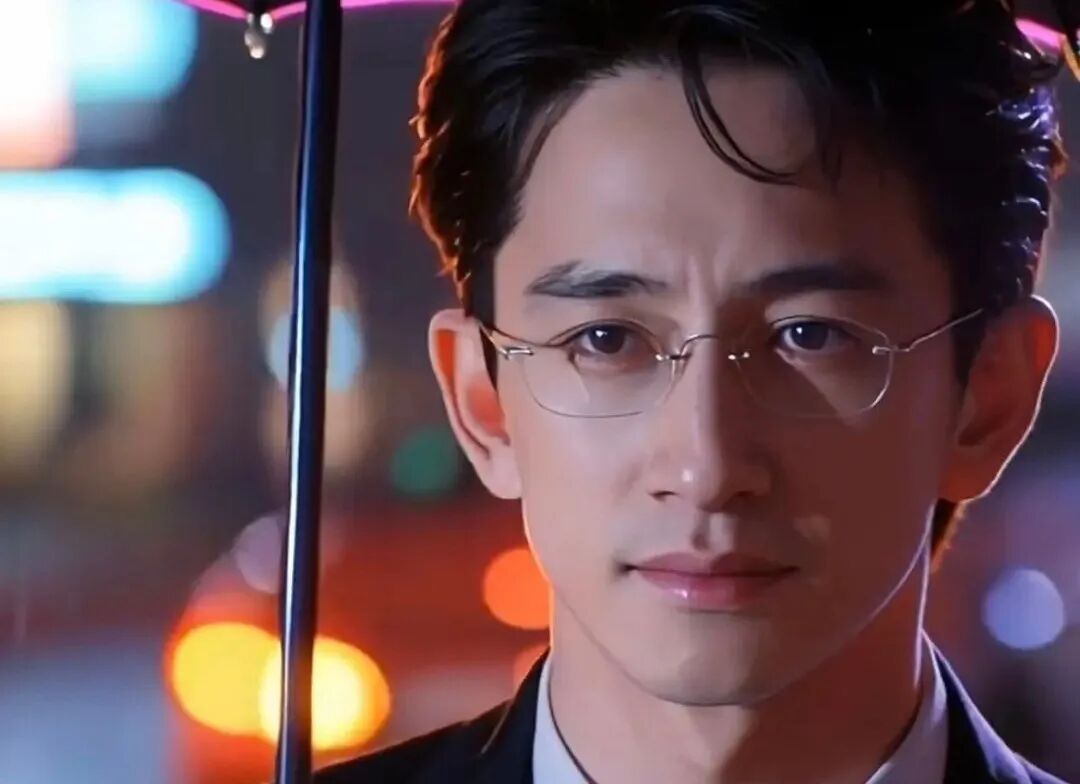
At the end of June this year, 62-year-old Hong Kong actor Lawrence Ng Kai Wah authorized his youthful portrait resources to a movie created with AI technology. According to him, he watched part of the finished film in advance, was satisfied with the final presentation, and obtained a "quite considerable" authorization income.
From the public feedback, the attempts of the two Hong Kong stars have also received relatively positive evaluations. Many netizens said they are willing to see veteran stars return to the public eye through AI technology, and some even bluntly stated that "this is the correct use of AI".
Interestingly, this forms a sharp contrast with the cautious attitude that audiences previously showed towards virtual actors created entirely by AI and the AI authorization of active artists.
In March this year, Yaoke Media officially announced the signing of AI actors Qin Lingyue and Lin Xiyan. Due to their stiff expressions and resemblance to Zhai Zilu and Zhao Jinmai, it quickly sparked huge controversy. Although the company responded that it would not use AI actors in live-action dramas, it was still questioned by many audiences, who believed that "replacing real people with pseudo-humans" not only weakens the value of actors but also violates the core logic of performing arts. In the end, the short drama projects of Qin Lingyue and Lin Xiyan received mediocre market responses, and their social accounts have basically stopped updating since May. In April this year, when iQiyi announced the launch of the Nado Pro "AI Artist Library", the public reaction was almost reactive, and it was once again pushed to the forefront of public opinion.
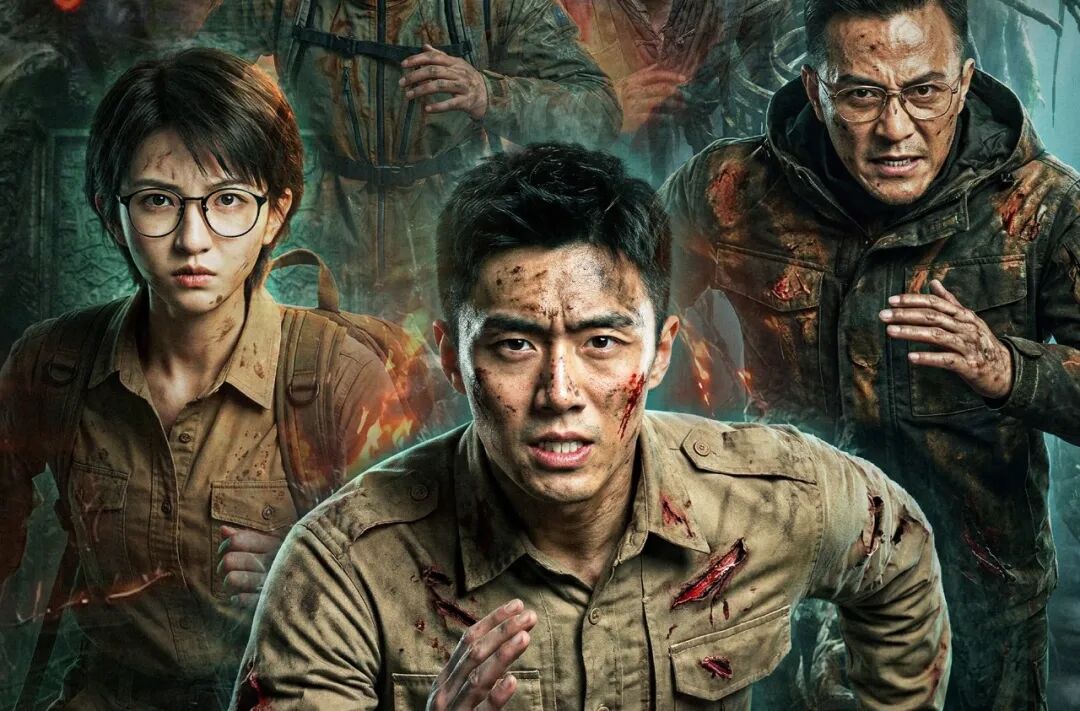
The fundamental reason for the completely different public reactions to these three types of "AI + actor" explorations lies in the different positioning of AI technology in them.
Different from AI actors created out of thin air and the AI authorization of active artists, the AI portrait authorization represented by Lawrence Ng and Joey Wong recreates market-proven classic symbols such as Nie Xiaoqian and Zhang Wuji. If the industry used to focus on discussing "AI replacing real actors", then this type of attempt is "AI empowering real actors".
Here, AI is more like a technical carrier rather than a subversive content form. For this reason, it opens up new imagination for the combination of AI technology and the actor community.
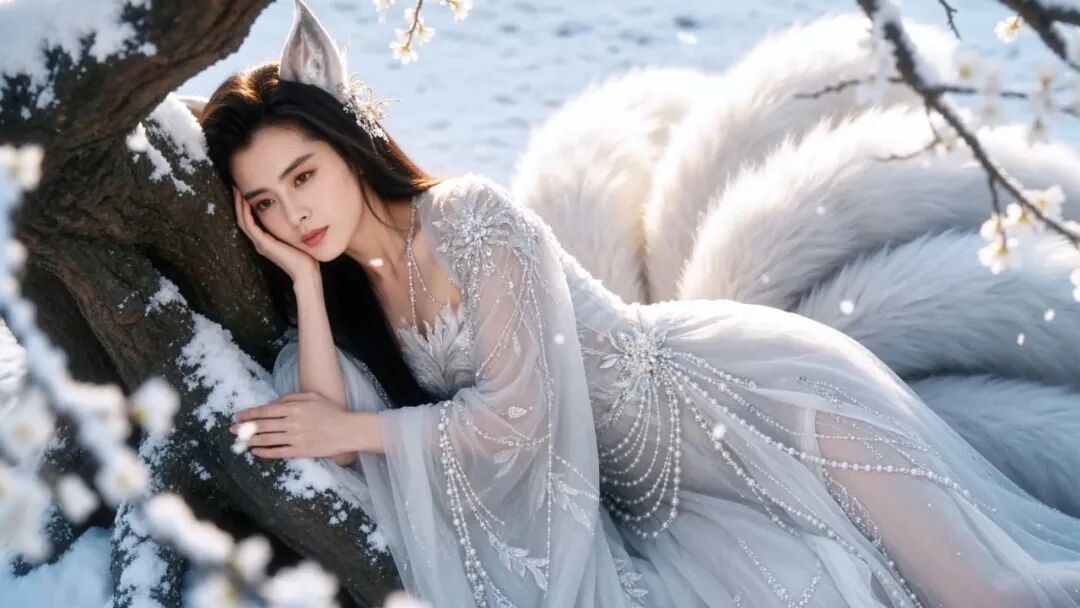
However, it is still too early to say that AI portrait authorization will become a new business for celebrities.
At present, it is more like a special business belonging to a few artists, rather than a new model that can be universally replicated across the entire entertainment industry.
First of all, it needs to be emphasized that market demand does exist.
In the past, a large amount of AI face-swapping content relied heavily on unauthorized celebrity images, exposing platforms and brands to infringement risks, while official portrait authorization can provide a more stable commercial path. For content creators, AI technology reduces the time and cost of live-action shooting; for artists, it provides a new way to redevelop IP assets, which is the basis of cases such as Joey Wong and Lawrence Ng.
However, at present, AI portrait authorization is more suitable for veteran stars who have faded out of the entertainment industry and have strong era memories. It makes little sense for stars who are still active in the entertainment industry and on the rise. On the one hand, they lack classic roles that have been precipitated for decades and the accumulation of audience nostalgia, so the increment brought by AI portrait authorization is limited; on the other hand, opening up digital images too early may also weaken the scarcity and market value of real people, leading to audience doubts about "over-consuming personal images".
Secondly, the entertainment industry still has stereotypes about AI technology. For AI portrait authorization to eliminate the concerns of celebrities and move from individual cases to a mature business model, problems in law, technology and other fields need to be resolved.
The core legal challenge lies in how to adapt traditional portrait authorization rules to the development of digital images in the AI era.
AI portrait authorization involves model training, digital image generation, and subsequent content development. Once the model is trained, the same set of digital images can theoretically be continuously called to generate new content.
If the authorization boundaries are not clear, it is easy to have problems such as "one-time authorization, repeated use" and even cross-scenario invocation of digital images. This means that AI portrait authorization needs to establish more detailed authorization rules than traditional celebrity endorsements, forming unified norms for links such as usage scope, authorization period, model retention, and secondary development.
Therefore, at this stage, AI portrait authorization is more suitable as a supplement to the traditional commercial value of celebrities. Artists and partners will also prefer short-term, limited-scope cooperation, and large-scale long-term authorization still needs to wait for the technology and commercial environment to further mature.
Conclusion
From the controversy over AI actors to Lawrence Ng and Joey Wong taking the lead in trying AI portrait authorization, the discussion in the entertainment industry about the relationship between AI technology and real actors is entering a new stage.
Compared with the question of whether AI will replace real actors, what is more worthy of attention is how AI and real actors can coexist. For celebrities with classic works and era memories, AI technology provides a way to connect the past and the present; for the entire industry, the application of technology also needs to be based on respect for the emotions of artists and audiences.
After all, what the audience wants is not a uniform digital image. Perhaps the real value of AI technology is not only to reduce costs and increase efficiency, but also to give new vitality to those classic contents that have been precipitated.
This article is from the WeChat official account "Entertainment Pioneer", written by Wang Ye, edited by the Pioneer Editorial Department, and published with authorization from 36Kr.