The myth that luxury cars hold their value well has been shattered. Is the era of picking up great bargains in the used car market around the corner?
The automotive industry saw a "Crazy Thursday" with six new car launch events held in a single day.
Xu Jun, Senior Vice President of Leapmotor, lamented: The intensity of competition in the automotive industry has far exceeded that of the mobile phone industry.
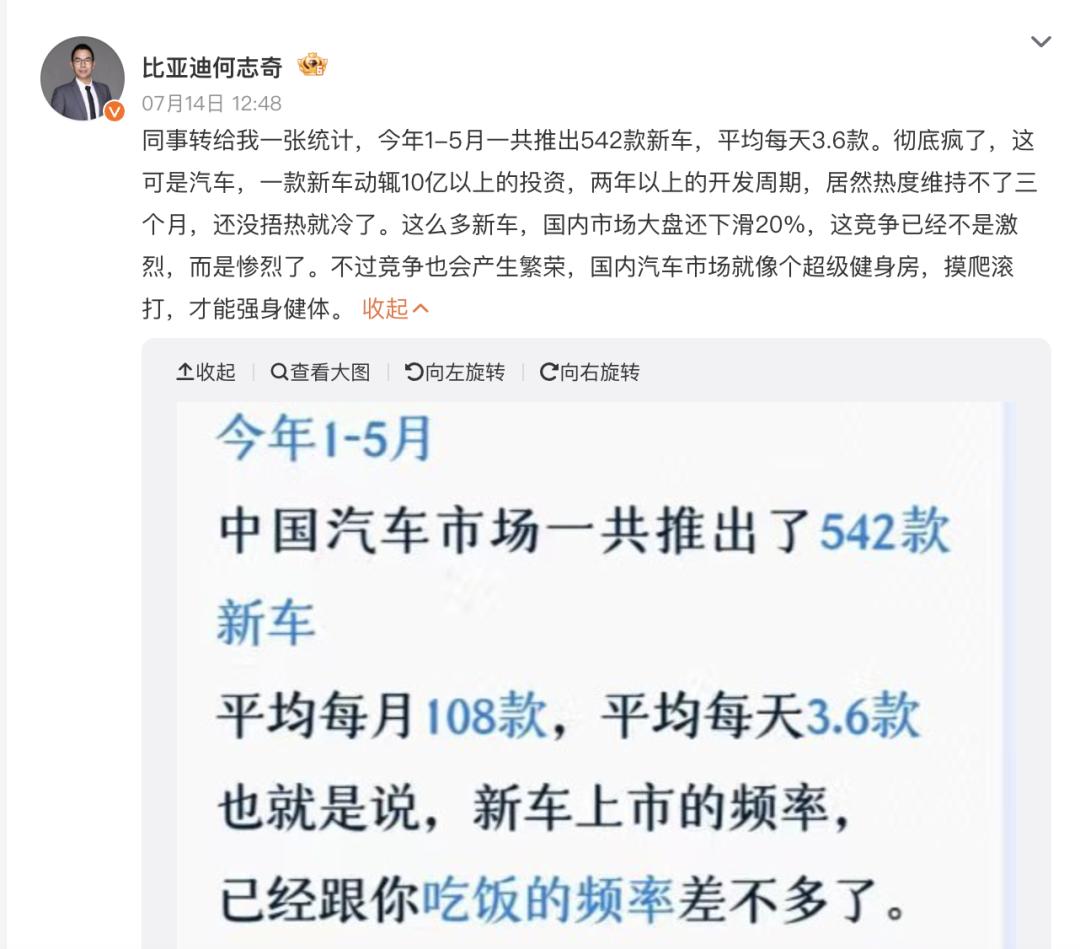
He Zhiqi, Vice President of BYD, put it more directly: 542 new car models were launched from January to May this year, averaging 3.6 models per day, yet the overall market still declined by 20%. This competition is no longer just fierce—it is brutal.
While the new car market is locked in a cutthroat battle, the used car market is quietly undergoing an unprecedented upheaval — in the first five months of this year, the transaction ratio of new cars to used cars reached 1:1 for the first time.
On one side is the frantic internal competition in the new car market, and on the other is the quiet rise of the used car sector. The simultaneous occurrence of these two phenomena is by no means accidental. Today, we will clarify the underlying logic behind this.
Why are used cars suddenly becoming so popular?
To understand why used car sales are surging, we must first figure out why the new car market is slumping.
In the first half of this year, national new car retail sales reached 8.71 million units, down more than 20% year-on-year. There are three main reasons:
First, the vehicle purchase tax has driven away consumers. This year, the new energy vehicle purchase tax is levied at a 50% reduction, directly raising the cost of new cars. Consumers calculate that buying a used version of the same model not only exempts them from the purchase tax, but also costs 20% to 30% less.
Second, price cuts have actually scared consumers away. In 2025 alone, 177 passenger vehicle models saw price reductions; in the first five months of 2026, another 77 models continued to drop in price, with new energy vehicles seeing a 12.5% decline and fuel vehicles a 14.6% decline.
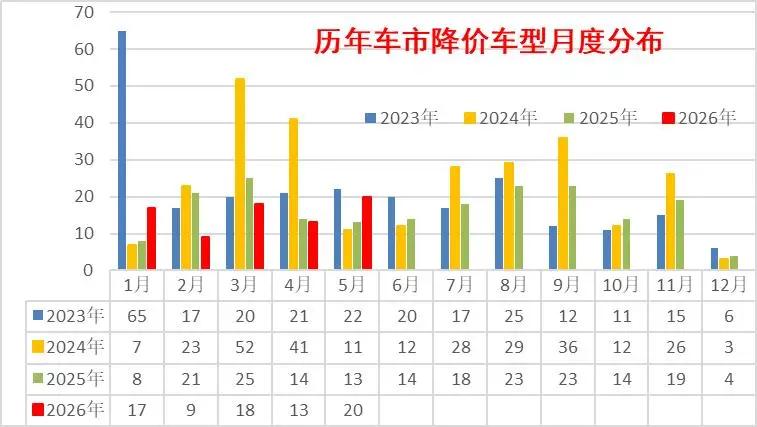
As new car prices keep falling, consumers are hesitant to make purchases. Who can guarantee that the car they buy today won't drop by tens of thousands of yuan in price tomorrow? As a result, a large amount of demand has shifted to the relatively price-stable used car market.
Third, the distinctiveness of new car models is diminishing. In the first half of the year, 630 new car models hit the market. Among the 379 SUV models, only 23 had average monthly sales exceeding 10,000 units, accounting for a mere 6% of the total.
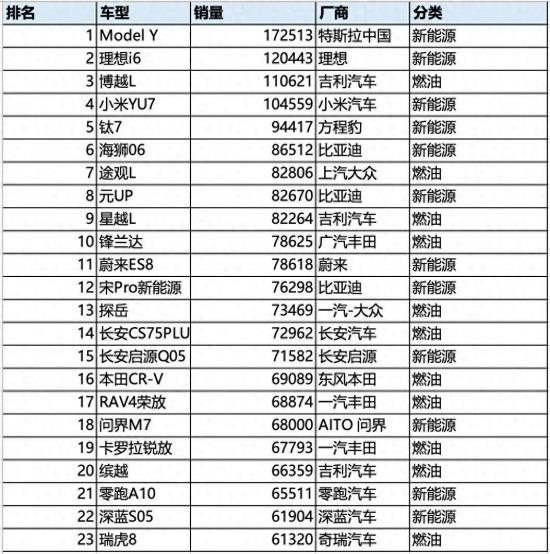
More and more car models look increasingly similar — large screens, intelligent driving, 800V architecture, all of which are standard across brands. Consumers are starting to experience widespread new car fatigue.
Li Bin from NIO even warned that people should be prepared for a 15% to 20% year-on-year decline in domestic retail sales for the full year.
The Myth of Luxury Car Value Retention Has Completely Collapsed
While new car competition intensifies, the used car market is also facing an unprecedented price massacre.
Investigations by multiple media outlets show that in Qingdao, a Bentley Flying Spur originally priced at 5.2 million yuan is now listed for only 268,000 yuan for models over 8 years old; the entry-level Porsche Macan is as low as 150,000 yuan; and a Volkswagen Touareg that cost nearly 900,000 yuan new is now being sold as a used car for 68,000 yuan.
What was the strongest selling point of luxury cars in the past? It was their strong value retention — you could still sell them for a good price after driving them for three years. But this logic has completely failed now. A used car dealer said, "In the past, depreciation over a year would not exceed 30%, but in May this year, prices dropped by 30% in just one month. Even cars being transported on flatbed trucks were seeing their prices fall along the way."
Why has the market collapsed so drastically?
The root cause is not in the used car market, but the entire fuel-powered luxury car system is crumbling. Porsche's deliveries in China in the first quarter of this year plummeted by 21% year-on-year;
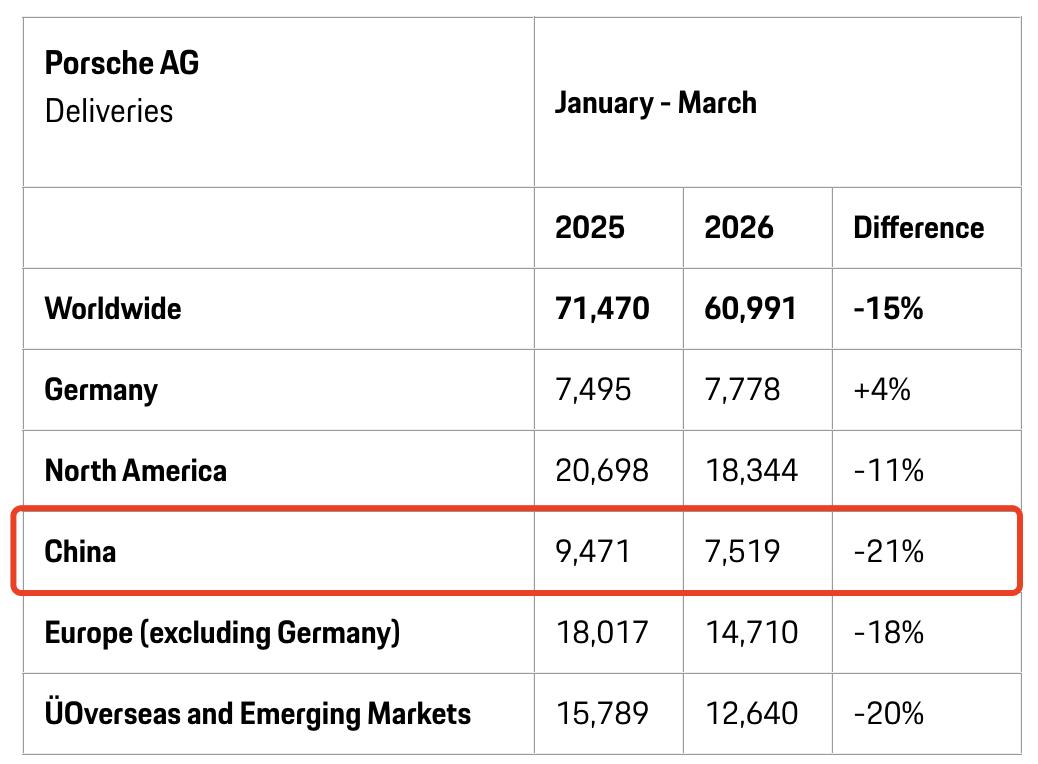
Mercedes-Benz's sales in China in the first half of the year dropped by 28% year-on-year, while BMW and Audi are also struggling with a 20% decline.

With new cars in such a difficult situation, the value of used cars naturally declines accordingly.
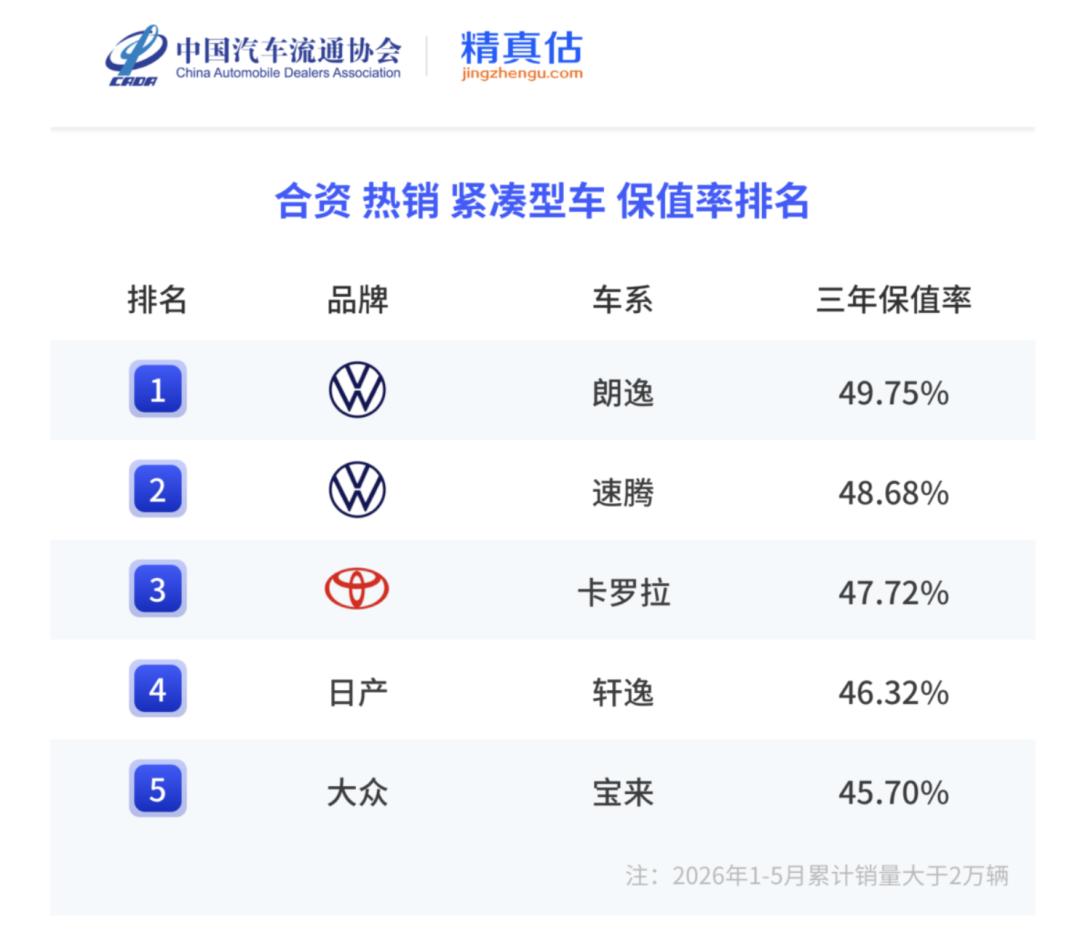
The data gives the harshest answer. The average three-year value retention rate of fuel vehicles has dropped from 67.6% in 2022 to 52.7%; among the best-selling compact cars of joint-venture brands, the Lavida, Sagitar, and Corolla, none have a value retention rate exceeding 50%.
Now that fuel vehicles no longer retain their value, where are consumers turning their attention?
New Energy Used Cars Become a Dark Horse
While used fuel vehicles are depreciating, used new energy vehicles are gaining momentum.
In the first five months of this year, the transaction volume of used new energy vehicles reached 685,400 units, a year-on-year increase of 25.7%. This figure is almost 10 times the growth rate of the overall used car market.
Why is this happening?
The underlying logic is clear. The purchase tax exemption is the direct trigger, but more crucially, the supply side is continuously expanding. New energy vehicles now account for nearly half of new car sales, and a large number of car owners replace their vehicles with newer models after just two or three years, leading to a constant influx of nearly-new cars into the used market. A joint report released by the China Association of Automobile Manufacturers and Hejun Consulting shows that the average age of new energy passenger vehicles is only 1.8 years, and vehicles with an age of 1 to 3 years account for as high as 90% of the total.
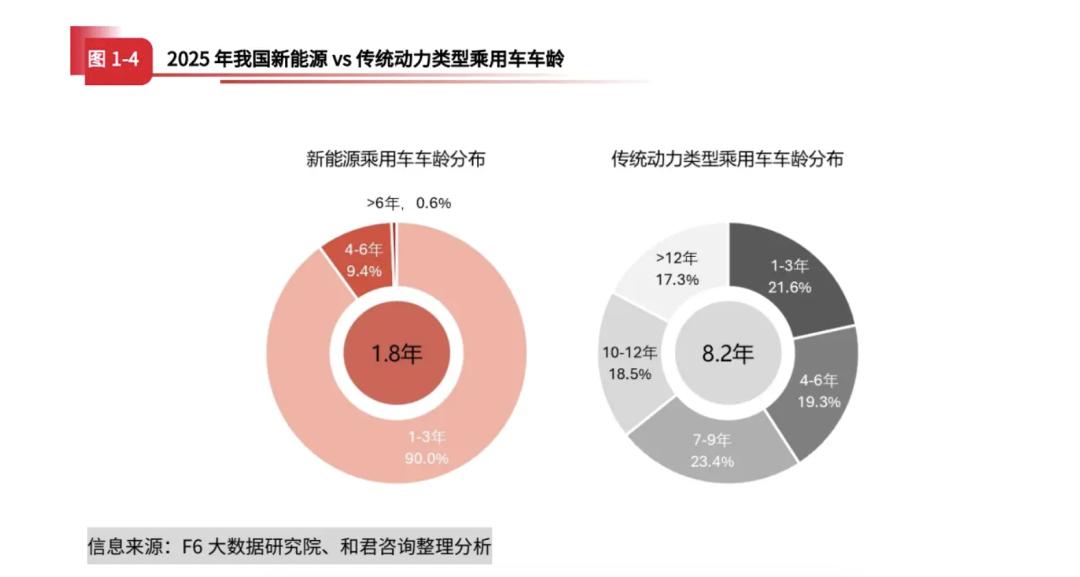
In other words, the new energy vehicle you buy on the used market today is very likely a nearly-new car that has only been driven for one or two years, with configurations even better than the new car within your budget.
According to data from the China Automobile Dealers Association, the national penetration rate of used new energy vehicles has risen from 3.6% at the end of 2022 to 11.6% in April 2026. It is becoming a real choice for more and more ordinary consumers.
However, we must point out a harsh reality: the rise in used car transaction volume does not mean that industry practitioners are making money. On the contrary.
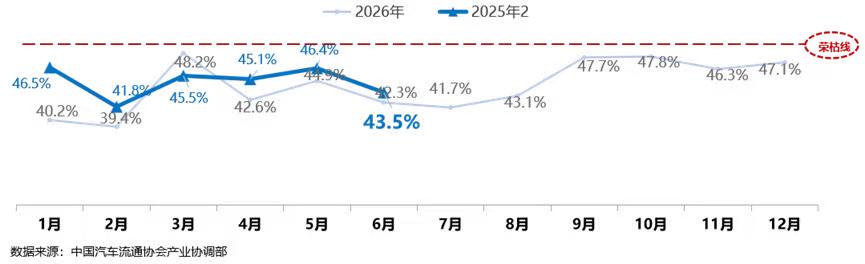
Data from the China Automobile Dealers Association shows that in the first half of 2025, the proportion of loss-making used car dealers has climbed to 73.6%. In June 2026, the Used Car Manager Index was only 43.5%, staying below the break-even line for several consecutive months.
Among nearly one million registered used car business entities across the country, more than half have a gross profit margin of less than 4%, whereas in the past, the gross profit margin in this industry often reached 20% to 30%.
Transaction volumes are rising, but no profits are being made. A large number of family-run shops and small independent dealers are being forced out of the market at an accelerated pace, and industry reshuffling has already begun.
Conclusion
But this reshuffling is not the end — it is the beginning of a reconstruction.
Luo Lei, a representative from the China Automobile Dealers Association, put forward two judgments.
First, China has a total vehicle population of 360 million units, yet the annual turnover rate of used cars is only 6%, compared to 15% to 20% in mature markets like the United States. This huge potential market is far from being fully activated.
Second, the "trade-in" policy dividend continues to be released, coupled with the two blue-ocean tracks of used new energy vehicles and exports. The industry does not lack growth opportunities; what it lacks are capable players who can seize this wave of growth.
His suggestion is: Manufacturers and dealers should leverage their chain operation advantages to make used cars a new pillar for profit growth and brand building.
For ordinary consumers, this is actually a rare window of opportunity. Facing the increasingly competitive new car market and the increasingly attractive used car market, will you choose to buy a brand-new car, or hunt for a nearly-new one on the used market? Share your thoughts in the comments section.
This article is from the WeChat public account "Auto Market Stories" (ID: autostinger), written by Peng Fei, and authorized for release by 36Kr.