The Chinese team won the World Cup. What the Chinese national football team could not achieve, the robot has accomplished.
In the summer of 2026, another World Cup that has nothing to do with the Chinese national football team came to an end... But there's no need to feel disappointed. As the famous national fortune balancer, the worse the Chinese national football team performs, the more rapidly other fields will develop.
Sure enough, good news came from the tech circle the other day. At the RoboCup, both the Chinese teams and Chinese products successfully claimed the championship titles.
01
The Robot Arena
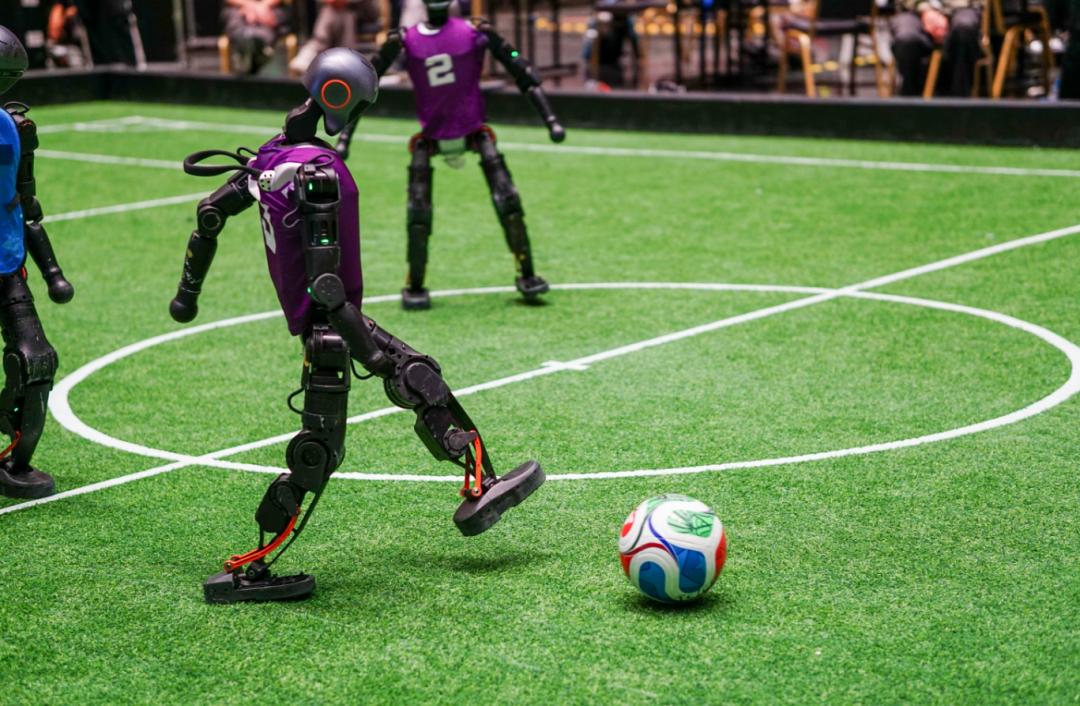
In July 2026, the RoboCup 2026 was held in Incheon, South Korea, gathering 364 teams from 45 countries and regions around the world. In the highly anticipated Large-Size Humanoid League of the football event, Tsinghua University Vulcan Team and China Agricultural University Mountain-Sea Team met in the final, staging an "all-Chinese showdown". In the end, Vulcan won 6-2, successfully defending its world championship title.
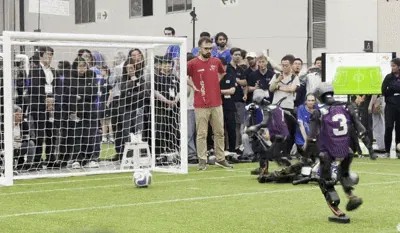
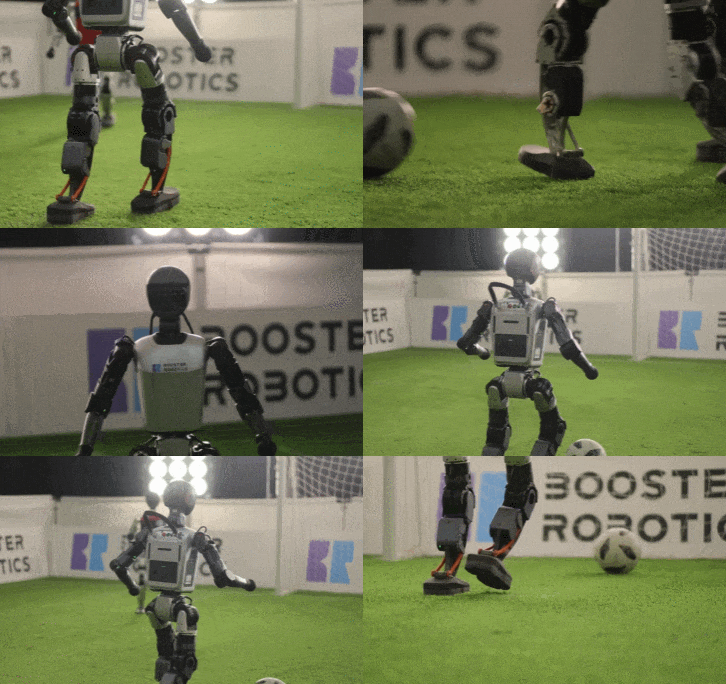
Both teams used the Booster T1 robot, developed by the Chinese technology company — Unitree Evolution. Standing 118 cm tall and weighing 30 kg, its degrees of freedom, knee joint torque, rotation range and other design elements are specially optimized for football movements.
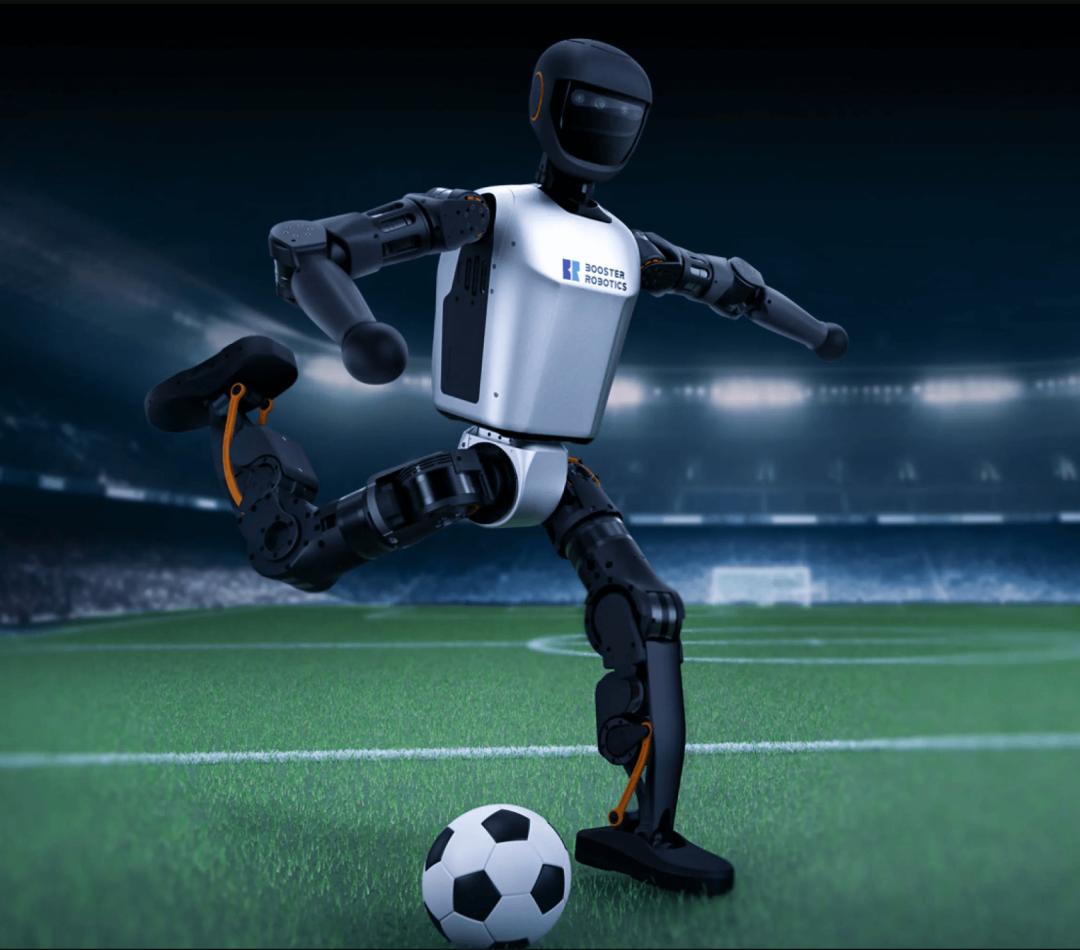
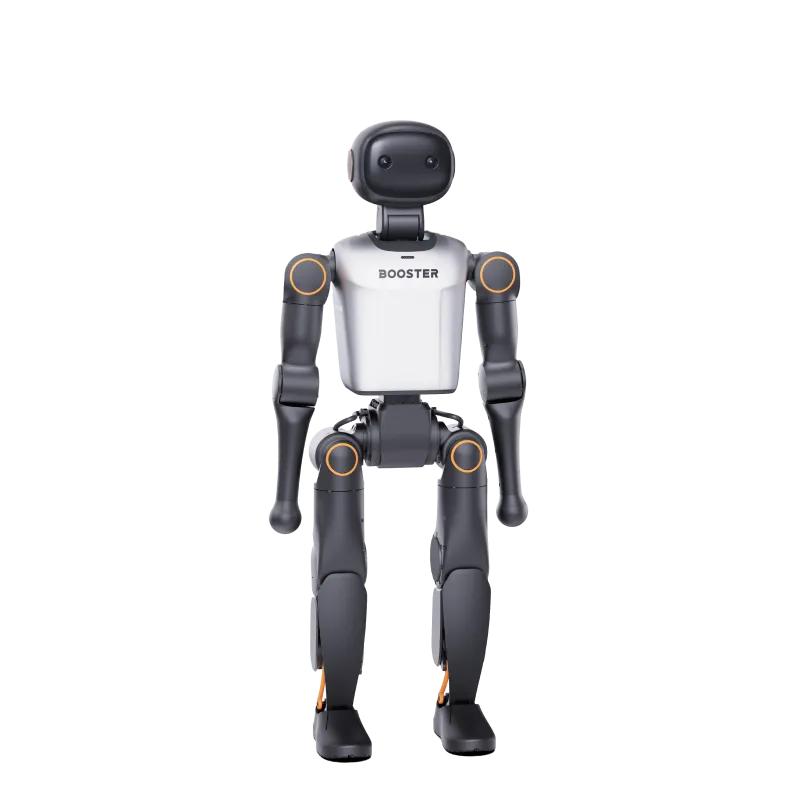
The champion of the Medium-Size League, Germany's B-Human team, and the champion of the Small-Size League, Wuhan University's Invictus team, also adopted Unitree Evolution's Booster K1 and K1 air. A single Chinese company directly took home all the gold medals in the bipedal humanoid football categories. In this World Cup, a total of 38 participating teams used products from Unitree Evolution.
To understand how remarkable this achievement is, we first need to talk about the prestige of RoboCup. It is currently one of the world's largest and highest-level international robotics and AI competitions, and also the most academically significant event. It has been running since the 1990s, with a long history and great influence.
The idea for this competition was first proposed by several Japanese scholars. In the 1990s, Japan's robotics industry was at its peak, with nearly half of the world's newly installed industrial robots produced in Japan. Japanese companies also held a monopoly in components such as precision reducers, servo motors, and sensors. Giants like Sony and Honda had even begun developing humanoid robots. Looking at this scene of vibrant growth and thriving competition, the Japanese began to imagine the future, hoping that by 2050, a fully autonomous humanoid robot football team would be developed to beat the human World Cup champion team in a formal match following FIFA rules.
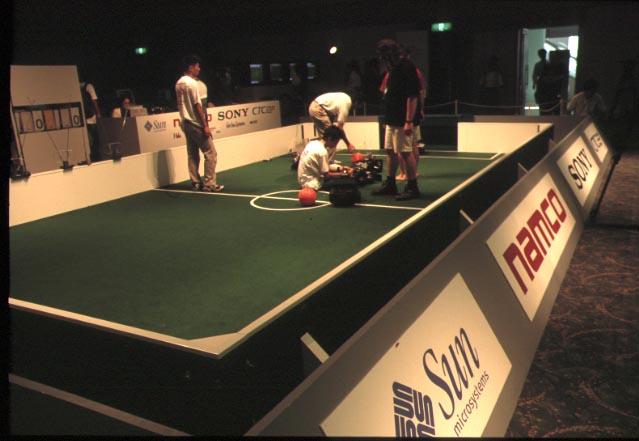
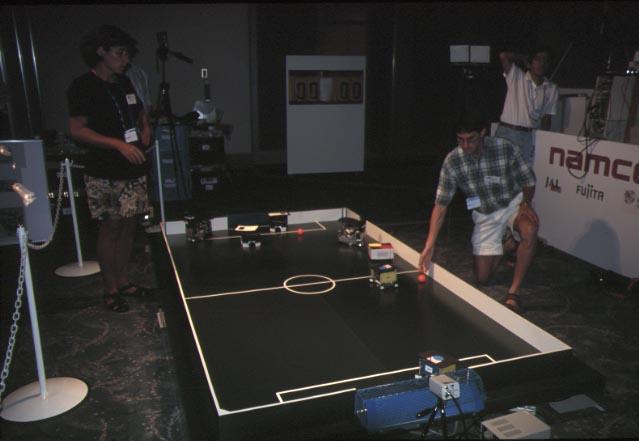
To achieve this goal, the competition strictly limits human intervention and remote control, locking the confrontation into a contest of machines + algorithms. This forces the scientific community to overcome the most core technologies in the fields of artificial intelligence and intelligent robotics, such as multi-agent collaboration, autonomous robot decision-making, real-time computer vision perception, complex motion control, and dynamic adversarial reasoning. If these hurdles can be overcome to make robots master football, a sport that requires both skill and tactics, then other tasks will be a piece of cake.
In 1997, the first competition was held in Nagoya, Japan. Most of the 40 participating teams used components provided by Japanese manufacturers to build dedicated platforms, paired with their own algorithms. In the end, the championships of the three football divisions were divided between the United States and Germany, which had strong industrial foundations. In the following competitions, most of the awards were also taken by teams from Western developed countries, Japan, and South Korea.
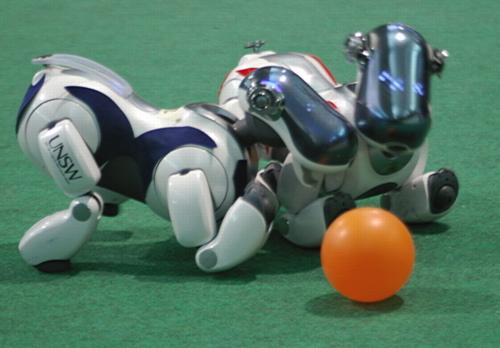
As the competition evolved, organizers allowed teams to use off-the-shelf robots from third-party companies. Sony's AIBO robotic dog, QRIO bipedal humanoid robot, Fujitsu's HOAP-1 robot, and SoftBank's Pepper robot, NAO robot all once played key roles on the field.
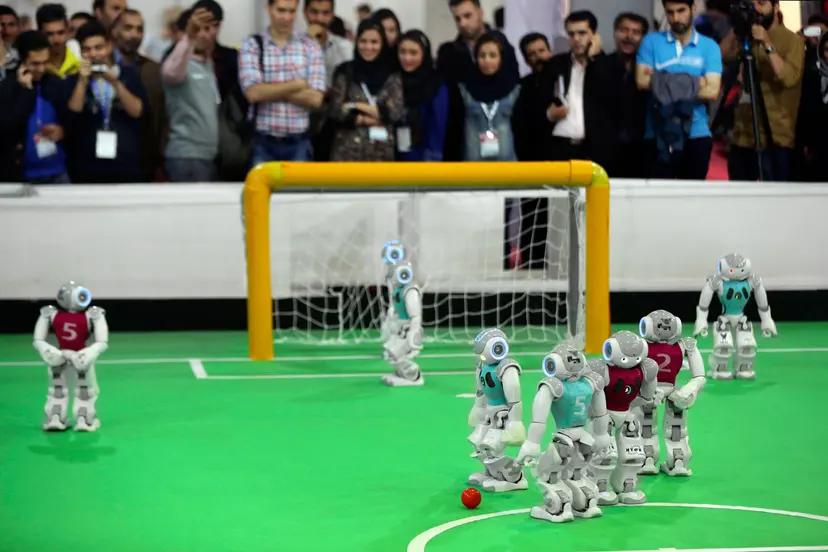
After more than ten RoboCup competitions, the number of participating teams has grown from dozens to hundreds. Young people in China have also actively participated, but they never won a championship for a long time, always playing the role of runners-up. Chinese robotic products also had no presence on the green field.
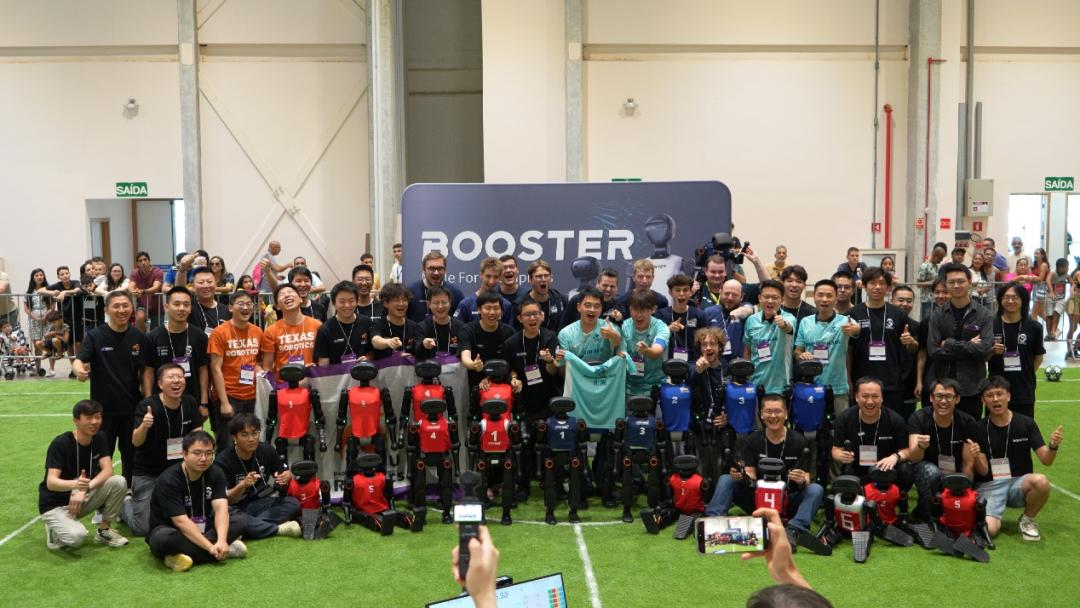
It wasn't until 2025 that Tsinghua University's Vulcan Team brought back the first championship for China. They used the Booster T1 at that time. This year, more teams at home and abroad adopted the same model. With no difference in hardware, the Vulcan Team successfully defended its title with more powerful algorithms, proving its strength. And Unitree Evolution has directly established its dominance in the field.
02
Buying Is Better Than Building From Scratch
The fundamental reason why Chinese robots have dominated the competition is that their cost-performance ratio is extremely high. Using off-the-shelf products saves both money and energy, allowing teams to focus their efforts on algorithms.
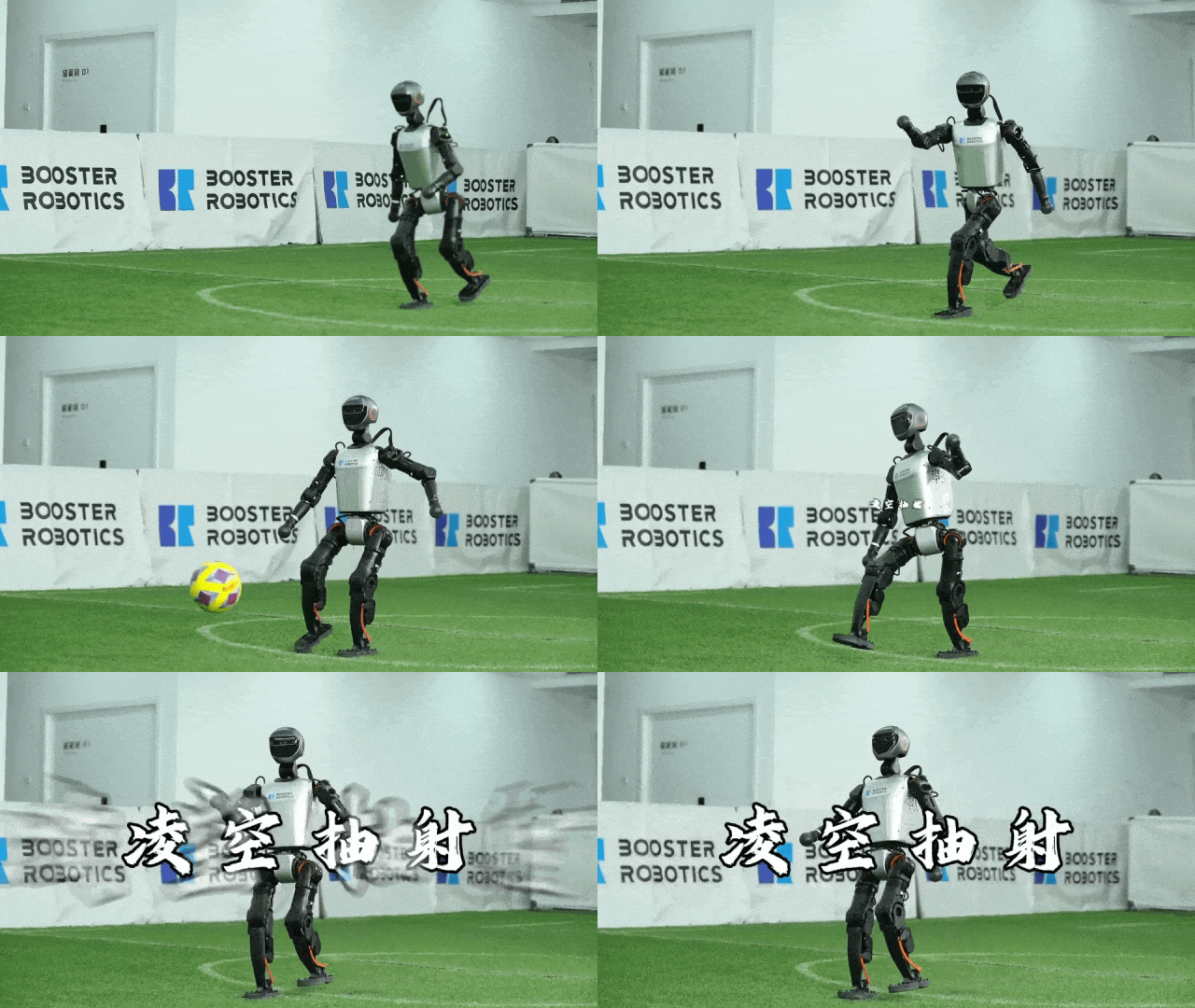
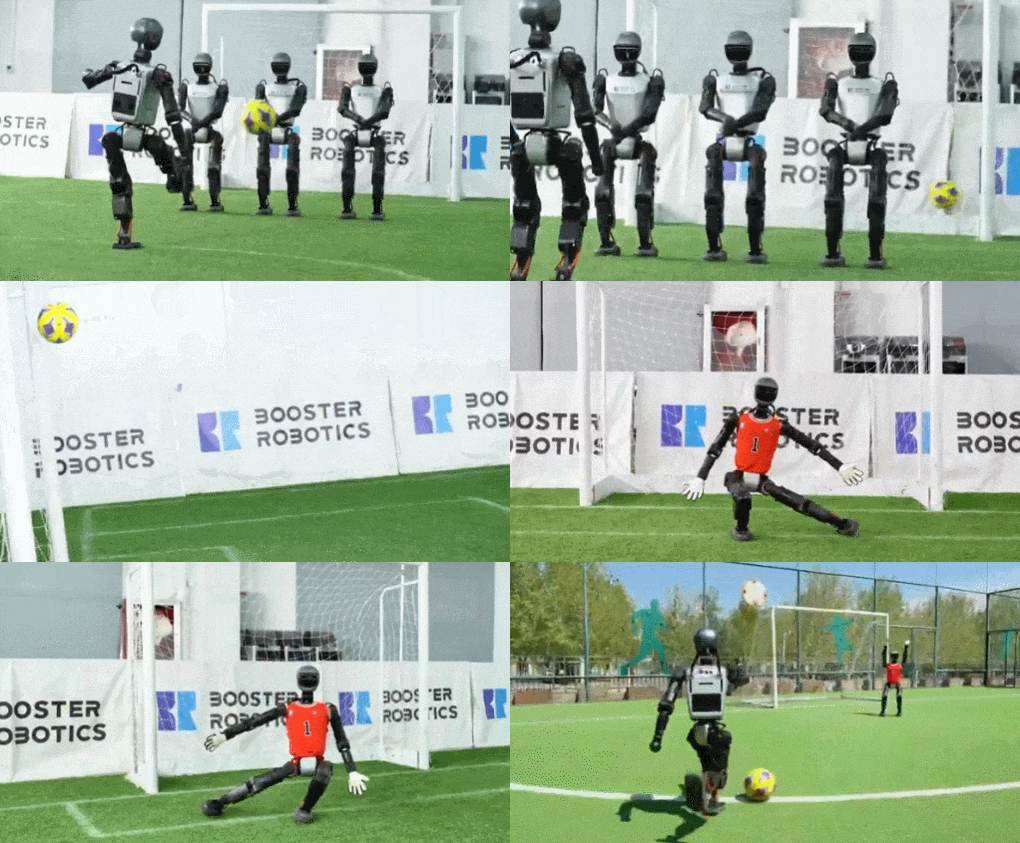
These specialized products from Unitree Evolution are equipped with capabilities for omnidirectional walking and powerful kicking, and they can even stand up on their own after falling, greatly expanding the players' room for performance and making the competition more fluid and exciting. In the past, robots could only stagger the ball into the goal, but now they can shoot with full force. Previously, when a robot fell, team members had to enter the field to pick it up, but now it can perform a neat flip to get back into the game immediately.
(Beijing Daily)
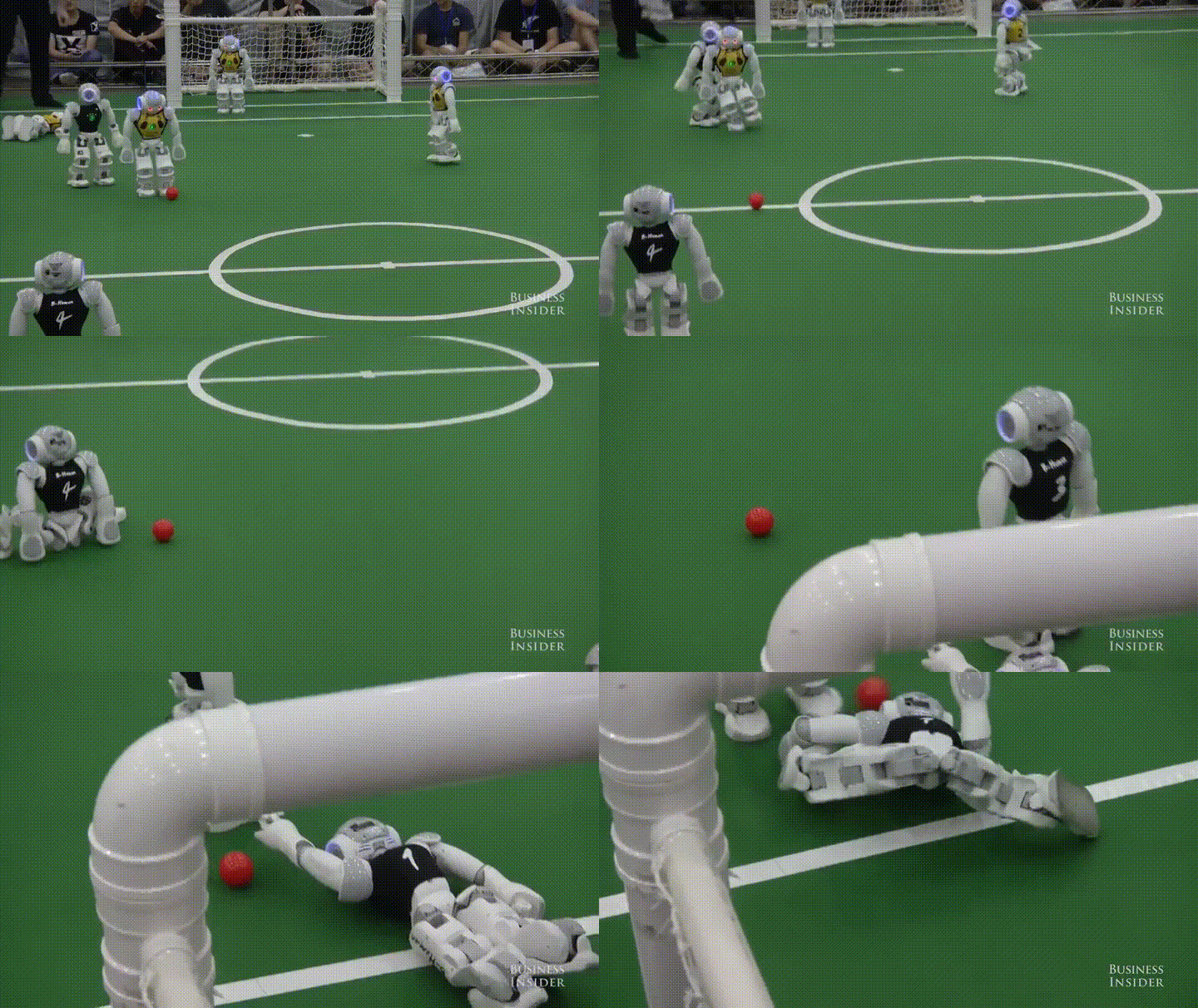
Compared with the performance of Japanese products used by previous RoboCup teams, both reaction speed and dexterity are far inferior to Unitree Evolution's products. The gap is as big as that between a Gundam and a toy.
(BUSINESS INSIDER)
Moreover, Unitree Evolution considered durability from the very beginning, reinforcing the design heavily to give the products excellent impact and drop resistance. In the company's own test videos, beating with wooden sticks, hitting the head with wine bottles, and crushing stones on the chest caused no damage to the Booster T1. During football matches, robots frequently collide with each other or fall. In the past, self-built platforms and Japanese products were too fragile, often breaking down halfway through the competition. This problem is completely eliminated by switching to Chinese products.
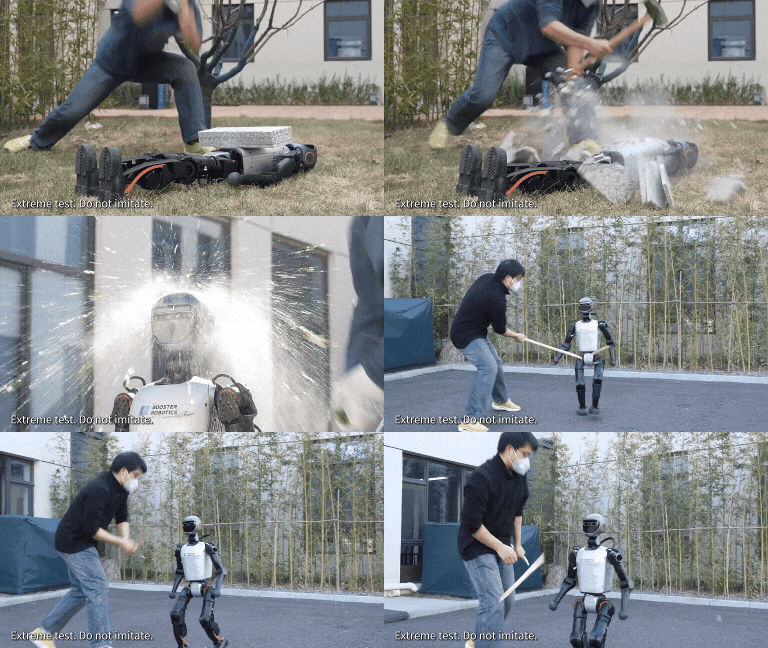
More importantly, on top of comprehensive performance, it is also affordably priced. According to foreign media reports, the developer-oriented price of the Booster T1 is $20,500, making it the cheapest product that meets the competition rules. In comparison, a similar product Alice 5 from South Korea's AeiROBOT costs as high as $60,000. The Booster K1, used in lower divisions, is priced at only $4,999 — a total no-brainer purchase.
According to reports from the host country South Korea's media, users have given zero negative reviews, and all buyers are satisfied. Some strong teams that used to build robots by hand now directly buy ready-made products.
(Korea Business)
However, foreign media also raised their concerns. Some scholars believe that as Chinese robots completely dominate the competition, RoboCup, which was once used to measure the development level of humanoid robots in various countries, has lost its reference value. Now, it can only be said that the competition is about who can develop better algorithms based on Chinese hardware.
Professor Hwang Myung-jung from the Department of Mechanical and Information Engineering at Seoul National University said: "If Chinese robots are widely used in South Korea, domestic robots will disappear. Therefore, local development teams need additional support." Professor Han Jae-kwon from the Department of Robotics at Hanyang University, who has participated in the competition for many years, gave the same prediction: "RoboCup is a preview of the robotics industry. If the phenomenon of Chinese robots sweeping the industrial field is realized within four to five years, Chinese robots are expected to dominate major industries around the world."
In a sense, they do have reasons to worry.
As we mentioned earlier, football is a highly complex physical confrontation environment. To make robots play football involves extremely complex self-developed algorithms for fully autonomous visual recognition, positioning, navigation, and tactical coordination. Running on the field, getting up after falling, and turning quickly also place extremely high requirements on the robot's gait control and joint balance. On the surface, RoboCup looks like a performance show, but in essence, it is a very hardcore competition for cutting-edge technologies. As long as you can play football well, similar logic can be applied everywhere, such as controlling robots for performance, companionship, and services.
It can even be applied to... you know what I mean.
