Kimi K3's explosive launch: How can the "laggards" get back a seat at the table?
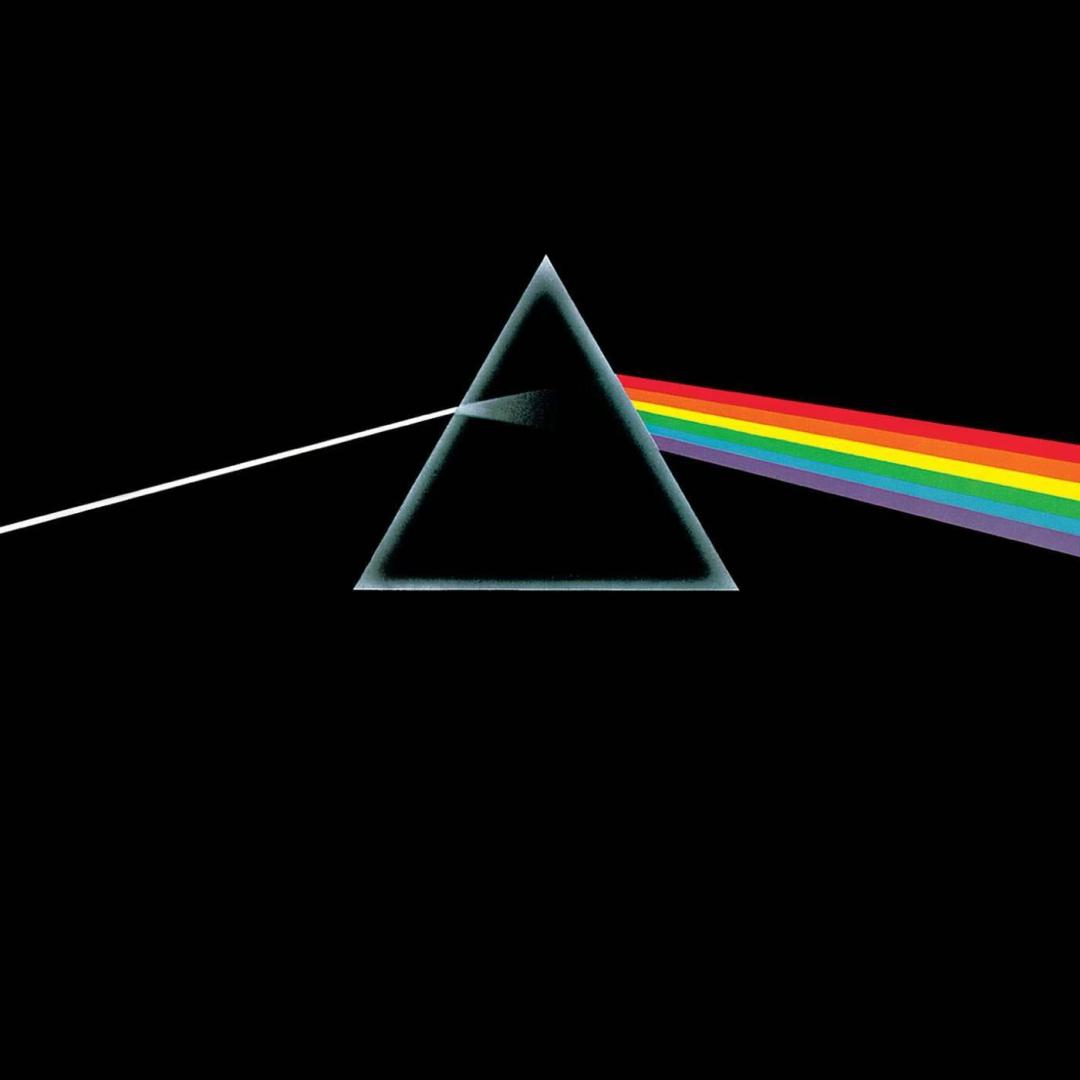
"Let me see how many people are using Kimi" — comments like these keep popping up under Pink Floyd's album The Dark Side of the Moon on music streaming platforms.
A 1973 British progressive rock album has become a "spiritual totem" for China's AI founders to pay tribute to, and even drawn a "team-building" gathering of AI users. Pink Floyd could hardly have imagined that, in addition to their contributions to popularizing physics, they would also achieve a "brand exposure" moment in the tech industry.
Beyond the jokes, the real story of domestic AI products is far more dynamic than the comment sections. On one hand, there's news that Manus may be "bought back" by Chinese capital. On the other hand, the launch of Kimi K3 has reignited waves of attention for this early product that had almost "disappeared" from the mainstream spotlight.
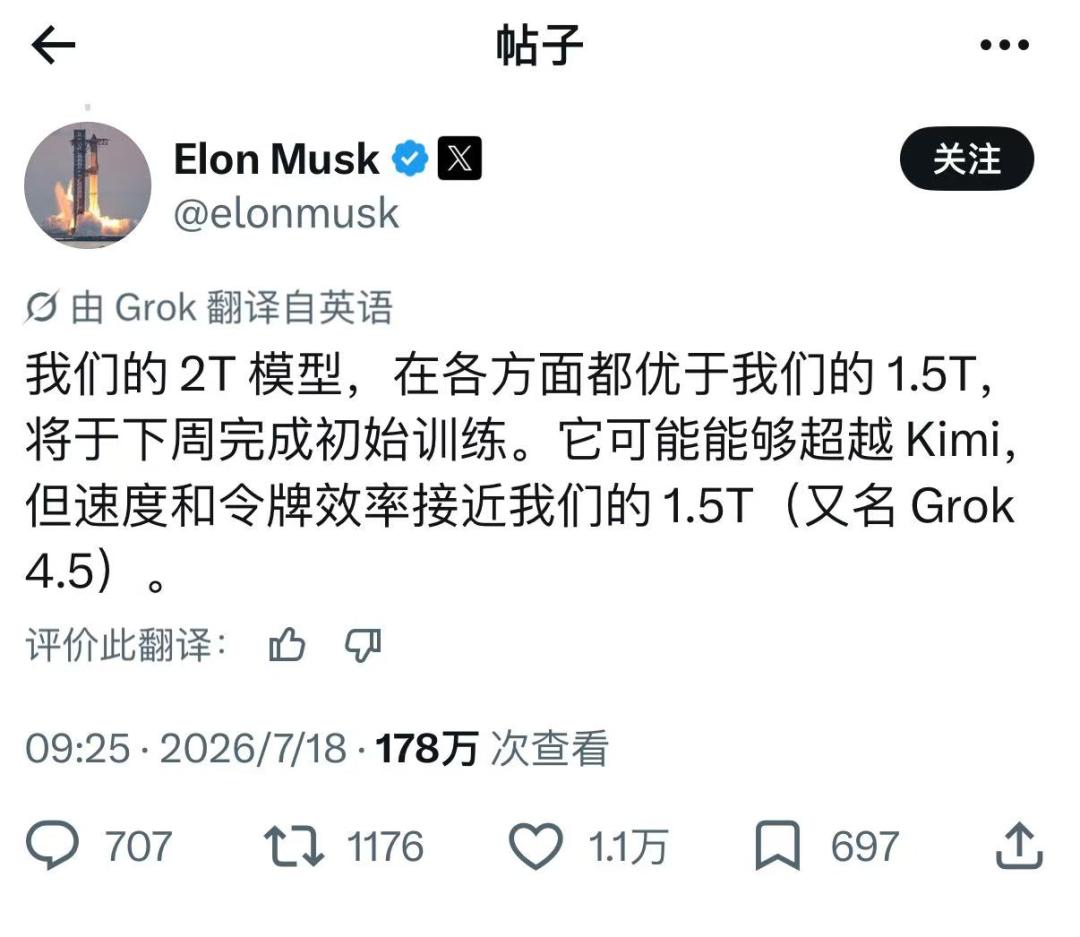
Late on the night of July 19, the Moonshot AI Kimi team released an announcement: because user requests far exceeded projections within 48 hours of Kimi K3's launch, and due to tight computing power resources, they would temporarily suspend new user subscriptions for Kimi, prioritizing limited computing resources to protect existing subscribed users. On July 21, a Kimi representative responded to media questions about Elon Musk's claim that his new model "might surpass Kimi": "We'll wait and see, and we welcome everyone to compete together. He has confidence, but we have even stronger confidence."
Dark horses emerge, and there are even more dark horses behind them. The race of AI products can be described as a game of "cognitive time difference": a 3-month lead counts as a "century moat," while a 3-day lag is enough to push a top-tier player out of the top 10. What makes Kimi qualify to "return to the table" again?
From long texts to mini-games: Did Kimi turn the tide by "taking on tasks"?
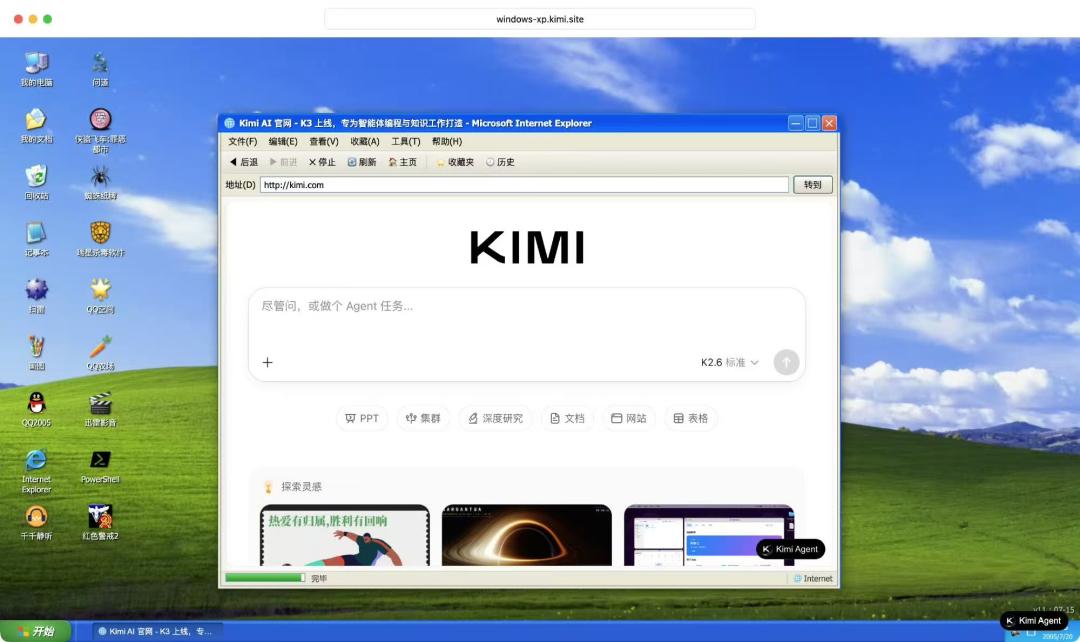
This isn't the first time Kimi has "exploded" into public view. Back in early 2024, Kimi rose to fame overnight with its "lossless long text" capability.
For the general public at that time, AI was still a distant, abstract technical term, and people's expectations for it were essentially a "question-and-answer" style encyclopedia. Kimi delivered a brand-new interactive experience: finishing reading tens of thousands of words quickly.
On social media, college students shared how convenient and useful Kimi was for assisting with reading papers. Other reports claimed that Kimi was included in the "Academic Integrity Toolkit" of Tsinghua University and Peking University, guiding students to use AI reasonably to assist with paper writing.
Papers, financial reports, long contracts... Those lengthy documents that used to require hours of focused reading were fully taken over by AI for the first time. Back then, Kimi was like an AI reading assistant with exceptional memory, taking over the "prefrontal cortex" of many office workers and graduate students — which became the label for its first viral success.
But the commercial moat of "outsourcing the prefrontal cortex" was quickly breached, and the user attention that Kimi once monopolized was rapidly diluted. As DeepSeek broke through the open-source market with a highly disruptive architecture, Tencent's Yuanbao entered the market strongly leveraging the WeChat ecosystem and massive user acquisition spending, Douyin's Doubao and Alibaba Cloud's Qwen quickly followed up to "make long text free," not to mention Manus, which is more similar to Kimi, also became "hot before its official launch": its beta access codes were resold for tens of thousands of yuan, its user waiting list surged to 2 to 2.6 million people in a short time during the beta period, and its valuation skyrocketed to $500 million.
During that Spring Festival when many young people started using AI for fortune-telling, DeepSeek quickly established a firm foothold in the consumer market. Data shows that without any advertising investment, DeepSeek gained 125 million new users in January 2025, 100 million of whom visited the platform within just seven days.
After the subsequent user acquisition war and marketing frenzy, Kimi once kept a low profile, and was even questioned by some market voices as a "dark horse losing momentum." In the all-staff letter at the end of 2025, YANG Zhilin, founder of Moonshot AI, mentioned that in 2026, the company would "focus on agents in products and commercialization, not target absolute user numbers, continuously pursue the upper limit of intelligence, create greater productivity value, and achieve order-of-magnitude growth in revenue scale."
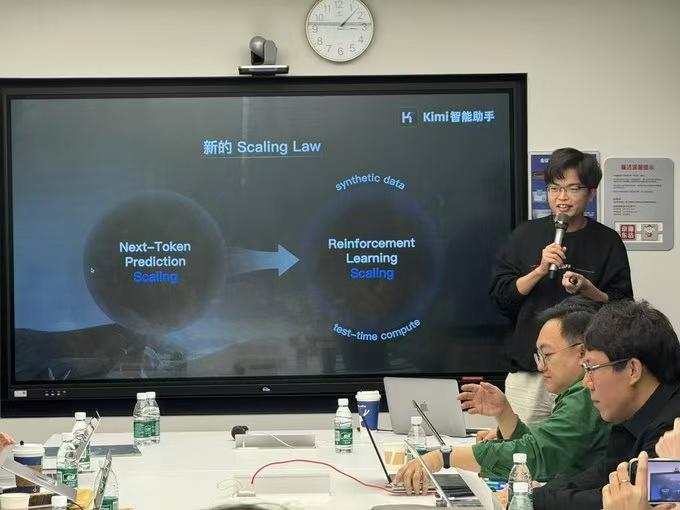
According to QuestMobile data, the monthly active users of the Kimi App dropped from 21.653 million in the first quarter of 2025 to 9.027 million in the fourth quarter, once being regarded as a "negative example" in AI entrepreneurship.
In fact, the iteration speed of AI products is always unexpectedly fast. Manus, which became an overnight hit in March 2025, fell out of favor in the mass market in less than half a year. In April 2026, the $2 billion acquisition deal between Manus and Meta was officially banned by regulatory authorities, and was defined by the market as a "bath-style overseas exit."
In the AI technology sector, there is only one way to get back to the table: the iteration of the technical foundation.
In July 2026, Kimi implemented the KDA hybrid linear attention mechanism in its latest version Kimi K3. Built based on the KDA hybrid linear attention mechanism (Kimi Delta Attention) and Attention Residuals technology, it natively supports visual understanding and has a 1 million-token context window. As the world's first open-source 3-trillion parameter model, it is designed for cutting-edge intelligent scenarios such as long-range programming, knowledge work, and reasoning.
Although the official introduction admitted that "the overall performance of Kimi K3 still lags behind the strongest closed-source models Claude Fable 5 and GPT-5.6 Sol," it quickly ranked on public leaderboards.
On the Code Arena leaderboard on July 16, Kimi K3 ranked first with a score of 1679, surpassing Claude Fable 5's 1631 points and GPT-5.6 Sol's 1618 points. It also ranked fourth on the Agent Arena leaderboard — the former assesses whether AI can directly "build products," while the latter assesses whether AI can independently "complete tasks."
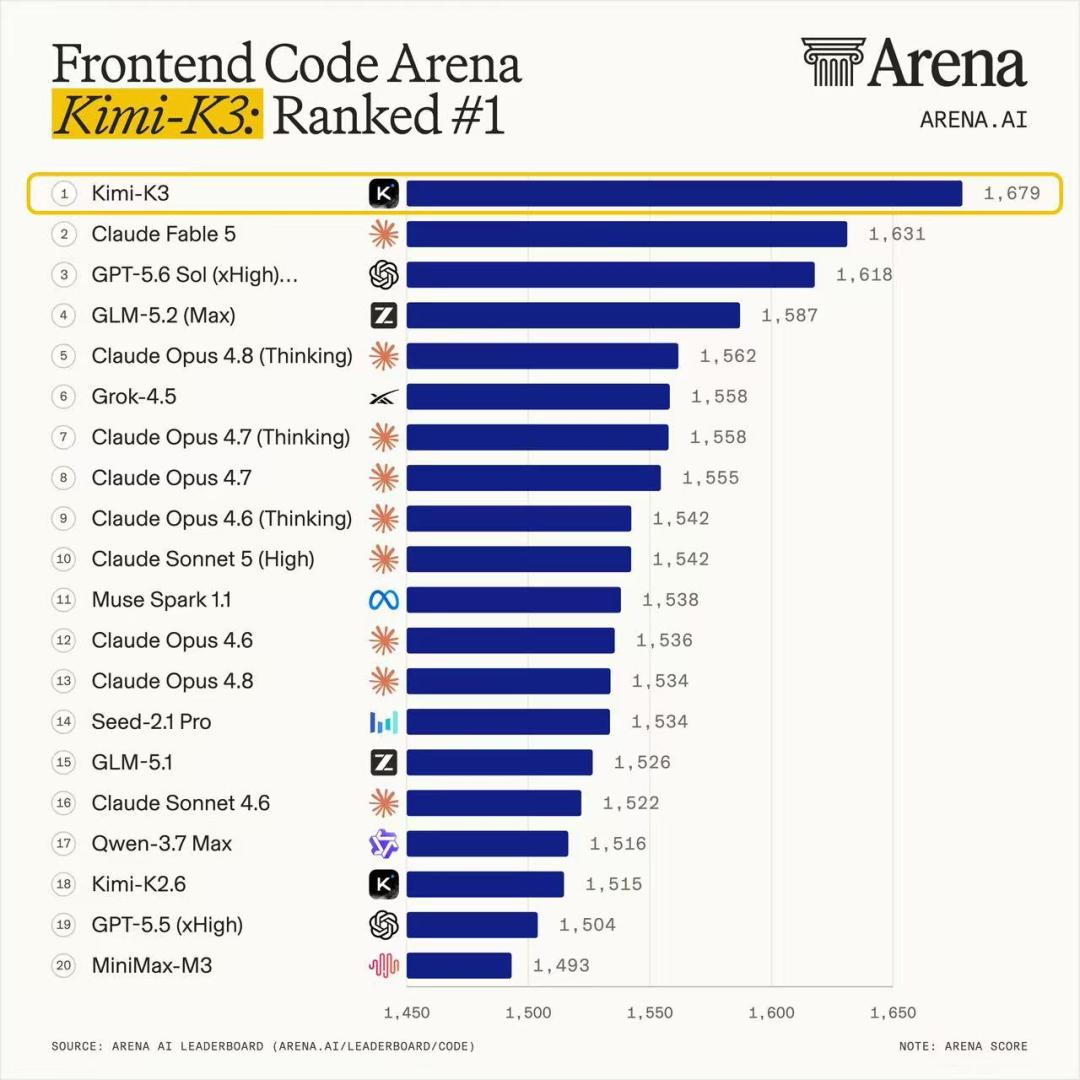
The performance on the two leaderboards provides a footnote to Kimi's "resurgence": Kimi K3 has evolved from an early long-text AI assistant to a global-level model centered on product creation and agent execution capabilities. But what truly pushed Kimi beyond tech leaderboards into the public spotlight was a much lighter scenario: using AI to make mini-games.
On communities like Xiaohongshu and Jike, generating HTML mini-games with Kimi has become a trend. No need to understand Unity, no need to know programming — as long as you describe your ideas clearly, "making Snake" or "recreating Monument Valley" can turn into an interactive page in just a few minutes.
What tasks are contemporary users assigning to AI?
An interesting phenomenon is that while professional media are still arguing about the frame rate, consistency, and physical laws of AI-generated videos, ordinary users are often the first to realize "monetization from their interests." The usage scenarios of AI are shifting from "demonstrating miracles" to "integrating into daily life."
This integration is not just about frequent use, or making memes and surfing the internet — it's the formation of a "task-assigning" logic. Users are starting to use AI like assigning tasks, and the complexity of these tasks is increasing rapidly.
The first layer of "task-assigning" is unlocking personal expression. This May, WANG Luodan shared an AI-generated short film All Can Be Auctioned on social platforms. She admitted that this was a brief "detour from her main career," turning a story that had been left in her draft folder for a long time into a visualized short film with AI.

Every step from the script to storyboards, digital assets, and the design of each character is indispensable. She spent from 12 a.m. "drawing cards" (generating random results) until 4 or 5 a.m. without getting a single satisfying shot, and finally generated the desired footage at 5 or 6 a.m.
In addition, HUANG Xiaoming used AI to generate two songs, one of which themed around midlife crisis, and he said frankly that "the lyrics are quite touching." DU Hua, CEO of Yuehua Entertainment, even revealed on a variety show that within just 7 days of the Spring Festival, the AI-generated videos she made had accumulated 30 to 40 million views. Although there was cooperation and promotion from AI products behind this, the imagination-unleashing power of AI for celebrities also works for ordinary people.
The second layer of "task-assigning" is creating products. On social media, some netizens shared their experience of using AI Agent products to make mini-games, usually recreating classic games or creating derivative works of existing mini-games.
Some netizens recreated mini-games such as Monument Valley and Animal Hot Springs. In an AI mini-game prompt sharing group, she mentioned that making mini-games with AI only has two main steps: first, clearly express your ideas, requirements, and inspirations; second, let AI generate a complete set of prompts that AI itself can understand, then feed that prompt back to AI, which can maximize the potential of AI tools.
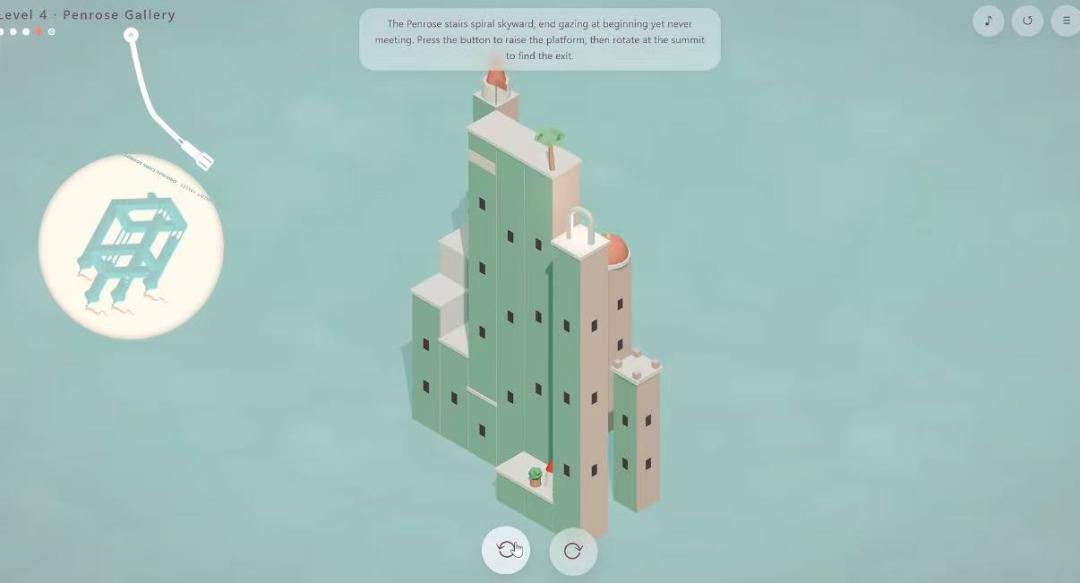
Users can generate "animal version of Audition" or "ancient costume version of Road Rash" with simple prompts. In short, users are shifting from being recipients to prompt creators, as long as they learn "how to describe their needs to AI." Users describe a game idea, Kimi returns the code, users test, give feedback, and iterate — the interaction is two-way and continuous.
The third layer of "task-assigning" is embedding into workflows. Shortly after the new version was released, the announcement about tight computing resources for Kimi K3 precisely proved the scale of this task-assigning logic. The fact that user requests exceeded projections within 48 hours shows that a large number of users are embedding Kimi into their continuous workflows.
The decision to suspend new user subscriptions and prioritize protecting existing users is itself a value statement: when computing power is scarce, Kimi chooses to protect deep users rather than pursue user numbers. This forms a sharp contrast with the 2024 strategy of massive ad spending to acquire users. The "not targeting absolute user numbers" that YANG Zhilin mentioned in the all-staff letter is being implemented through product decisions.
It's worth noting that these features are certainly not exclusive to Kimi. At the current stage, Kimi's advantage lies in the combination of long context processing capability and code generation capability. In addition, as the world's first open-source 3-trillion-parameter model, Kimi K3 has made arrangements in Agent execution capabilities.
Products like Doubao, Qwen, DeepSeek, and Yuanbao all hold their own positions, and the head effect is gradually intensifying. Manus, whose features are closest to Kimi, is expected to be bought back under Tencent's lead. According to multiple media reports, Tencent is leading a consortium of Chinese capital to buy back all equity of Manus from the US internet company Meta at a valuation of about $2 billion. Tencent will become the largest single shareholder without holding a controlling stake, and Manus will continue to operate independently in Singapore.
Among numerous AI products, the final outcome of this race is far from being reached, and the only thing certain is that the tide will keep surging nonstop.
This article is from WeChat Official Account "Entertainment Unicorn" (ID: yuledujiaoshou), author: Akagi Bottle, editor: Sugar-Fried Hawthorn, published with authorization from 36Kr.